
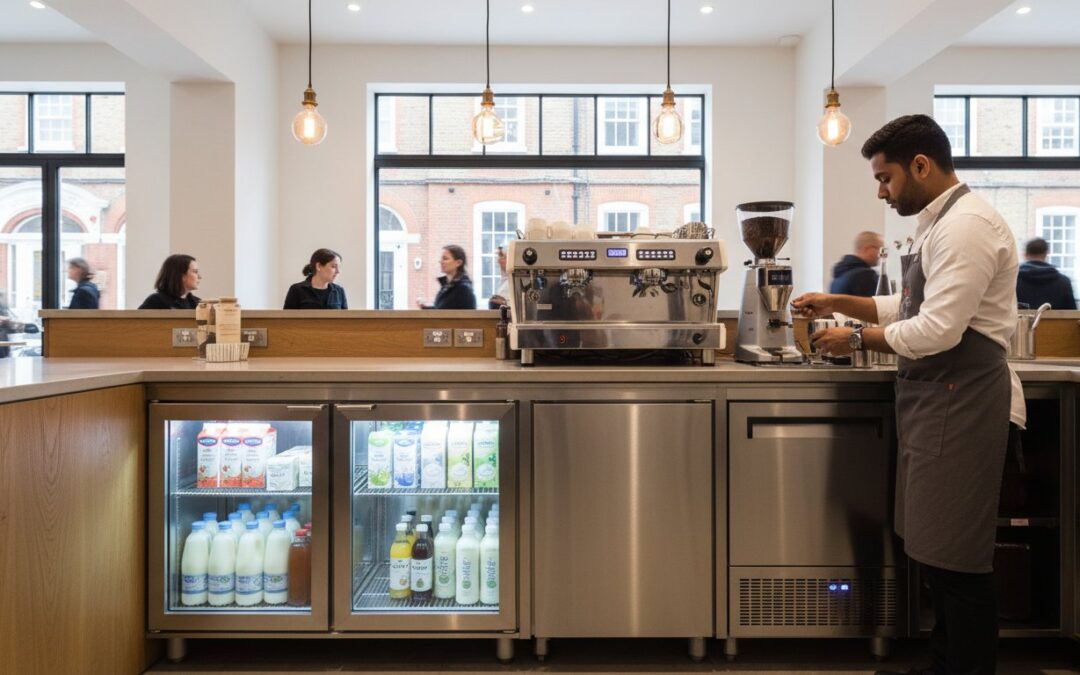
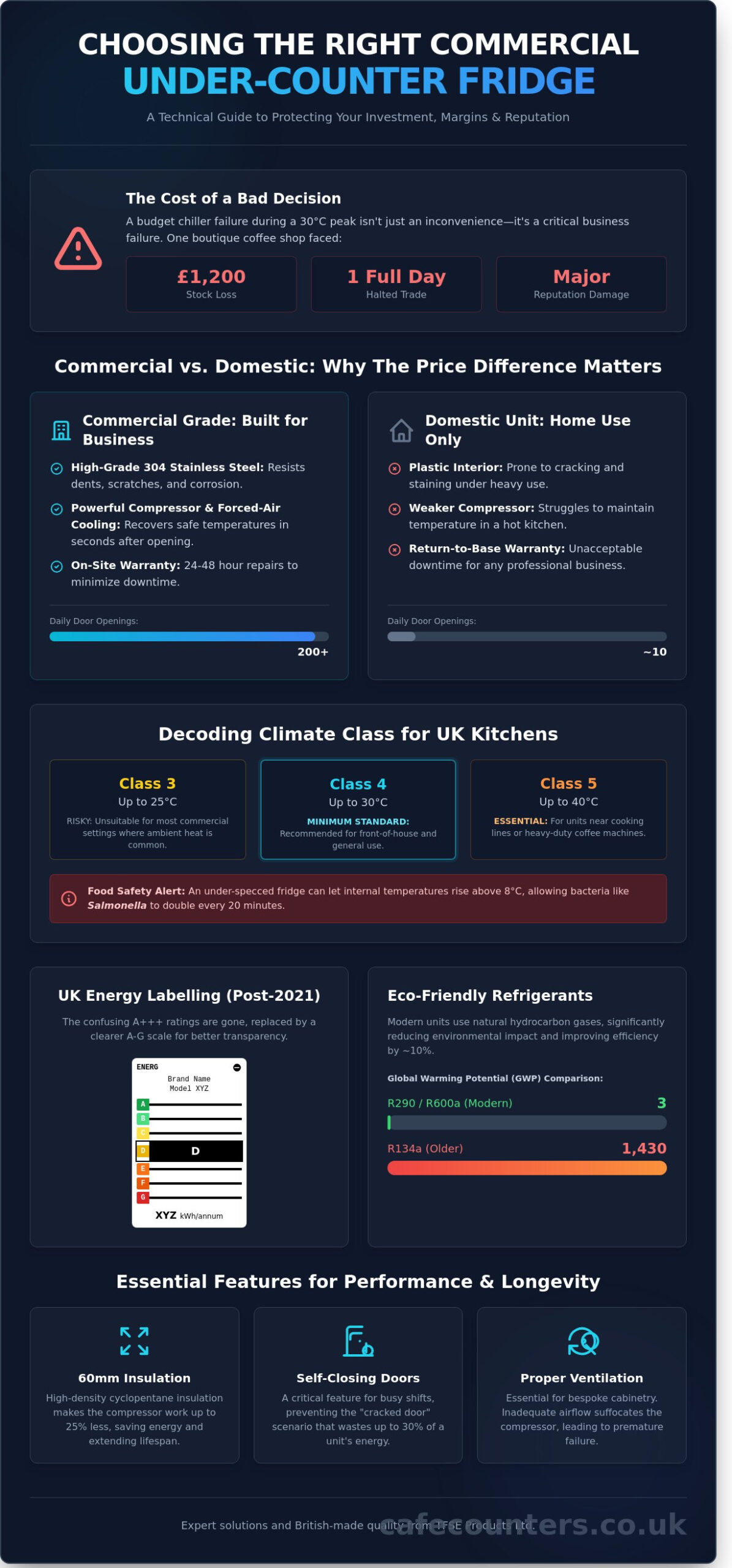
Last August, a boutique coffee shop faced a £1,200 stock loss and a full day of halted trade when their budget chiller failed during a 30°C peak. This scenario is a stark reminder that in a professional kitchen, the wrong equipment doesn’t just cost you a repair fee; it halts your entire operation. You likely already recognise that a high-performing under counter fridge is the backbone of an efficient service line, yet finding a unit that fits a bespoke counter without skyrocketing your energy bills remains a constant challenge.
This guide from TFSE Products Ltd promises to help you select a unit that balances British-engineered durability with the ergonomic flow your staff need to thrive during the morning rush. We will break down the essential technical markers of commercial-grade units, covering everything from high-ambient temperature ratings to the latest 2024 energy efficiency standards. By the end, you’ll have the expert knowledge required to choose a refrigeration solution that protects your margins and maintains your professional reputation for years to come.
Key Takeaways
- Learn why selecting the right under counter fridge is essential for maximising your cafe’s floor plan and improving service flow.
- Understand the UK Energy Labelling system and why Climate Class 4 or 5 is a non-negotiable requirement for busy commercial kitchens.
- Discover how to calculate essential ventilation requirements to prevent premature equipment failure in bespoke cabinetry.
- Explore the functional benefits of different configurations, from energy-efficient solid doors to high-visibility glass displays.
- Gain insight into the advantages of British-made quality and our ‘Concept to Completion’ approach to seamless refrigeration integration.
The Strategic Role of an Under Counter Fridge in Cafe Design
A commercial-grade under counter fridge is a precision-engineered cooling unit built to slide seamlessly beneath standard 900mm work surfaces. In the high-density environment of a London cafe, where commercial rents in prime districts often exceed £100 per square foot, these units are non-negotiable. They allow operators to utilise the full height of their service area without sacrificing valuable floor space. By moving refrigeration below the sightline, businesses create an open, inviting atmosphere that facilitates better customer interaction.
The distinction between ‘back-bar’ and ‘back-of-house’ units is critical for operational flow. Back-bar units typically feature glass doors and internal LED lighting to drive impulse purchases of bottled beverages. Conversely, back-of-house units prioritises robust, solid stainless steel doors and Gastronorm compatibility for ingredient storage. Choosing the wrong type often leads to wasted energy or slowed service. When staff can reach milk or fresh garnishes without leaving their station, ergonomics improve instantly. This reduction in physical travel can shave 15 seconds off every drink order, a vital gain during the morning rush.
Commercial vs. Domestic: Why the Price Difference Matters
Domestic fridges rely on plastic interiors that crack under heavy use. Commercial units utilise high-grade 304 stainless steel to withstand the rigours of a professional kitchen. The compressor power is the most significant factor. A domestic fridge is designed for roughly 10 door openings a day; a busy London barista will double that number in twenty minutes. Commercial cooling systems use forced-air technology to recover safe temperatures in seconds. Additionally, commercial warranties provide on-site repairs within 24 to 48 hours, ensuring your business doesn’t grind to a halt during a heatwave.
Maximising Efficiency in Your Cafe Layout
Placement determines profit. Positioning refrigeration at the ‘point of use’ near coffee or prep stations prevents staff from crossing paths, which reduces the risk of collisions and spills. This logical progression from storage to assembly is a hallmark of professional shopfitting. Integrating these units into a bespoke cafe counter ensures a flush, professional finish that eliminates dirt traps. This turnkey approach combines high-end aesthetics with the durability required for a high-volume catering environment, resulting in a seamless workflow that supports both staff well-being and customer satisfaction.
Technical Specifications: Climate Class and Energy Efficiency
Selecting an under counter fridge for a high-volume London venue requires a technical perspective that goes beyond simple dimensions. Since the 2021 UK Energy Labelling reforms, the industry has moved to a simplified A to G scale. This change eliminated the confusing A+++ categories, providing a more transparent view of a unit’s annual kWh consumption. Efficiency starts with the core build. High-density cyclopentane insulation, typically 60mm thick, acts as the primary barrier against ambient heat. Thinner insulation forces the compressor to work 25% harder, directly increasing your monthly electricity bill and shortening the equipment’s lifespan.
The transition to eco-friendly refrigerants is now a standard requirement for any future-proofed business. Modern units utilise R290 (propane) or R600a (isobutane) gases. These hydrocarbons have a Global Warming Potential (GWP) of just 3. For comparison, the older R134a gas has a GWP of 1,430. Transitioning to these natural refrigerants doesn’t just meet UK environmental targets; it improves heat transfer efficiency by roughly 10%, leading to faster pull-down times during peak service hours.
Decoding Climate Class Ratings for the UK Market
Climate class determines the maximum ambient temperature a unit can handle while maintaining a safe internal temperature of 5°C or below. In a cramped London bar where glasswashers and coffee machines run constantly, a Class 3 unit (rated up to 25°C) will likely fail. When a fridge is under-specced, internal temperatures can spike above 8°C, allowing bacteria like Salmonella to double every 20 minutes. We recommend Class 4 (up to 30°C) as a minimum for front-of-house, while Class 5 (up to 40°C) is essential for units situated near cooking lines or heavy-duty espresso stations where ambient peaks of 35°C are common.
Energy Saving Features to Look For
Operational habits impact efficiency as much as the hardware itself. Self-closing doors are a critical feature for busy shifts; they prevent the “cracked door” scenario that can waste up to 30% of a unit’s energy in a single afternoon. Modern digital controllers, such as those from Dixell or Carel, provide 0.1°C precision and allow for “eco-mode” settings during out-of-hours periods. Our consultants often recommend these features when designing a bespoke bar layout to ensure long-term reliability. Small components also offer a high ROI:
- LED Lighting: Consumes 80% less energy than traditional fluorescent bulbs and emits zero heat into the cabinet.
- High-Efficiency Fans: Use brushless DC motors to move air more effectively with lower wattage.
- Removable Gaskets: Ensure a 100% airtight seal that’s easy to clean, preventing cold air leaks.
Choosing the Right Configuration: Doors, Drawers, and Display
Selecting the correct setup for an under counter fridge depends entirely on your bar’s workflow and front-of-house goals. While aesthetic appeal matters in a prestigious London cocktail lounge, the technical specifications dictate long-term profitability. You must evaluate the internal capacity carefully; gross volume represents the total empty space, but net volume reveals the actual usable storage after accounting for internal fans, shelf rungs, and cooling coils. In high-specification units, this difference often accounts for a 22% to 30% reduction in practical space. Our team always advises clients to measure their most frequent stock items against the net dimensions to ensure a seamless fit.
Solid Doors vs. Glass Doors
Solid door units are the workhorses of the back-bar. These models offer superior thermal insulation, often reducing energy consumption by up to 35% compared to standard glass alternatives. They hide messy stock and require less frequent cleaning than glass, which shows every fingerprint. Conversely, glass doors are essential merchandising tools. In a 2023 survey of UK hospitality venues, clear product visibility was shown to increase impulse beverage sales by 18%. To maintain performance, ensure glass units feature triple glazing and low-E coatings to prevent condensation in humid bar environments. Stainless steel finishes remain the gold standard for hygiene, as they resist the acidic spills common in high-volume service.
The Rise of Refrigerated Drawers
Drawers have revolutionised ergonomic access in busy London kitchens and bars. Instead of bending down to peer into the back of a cabinet, staff pull the stock directly into their line of sight. This configuration is particularly effective for garnish prep or high-frequency ingredients. It’s a design choice that prioritises the health and speed of your team.
- Workflow Efficiency: Most professional drawers are designed to fit 1/1 Gastronorm pans, allowing a seamless transition from the prep station to the fridge.
- Durability: High-end manufacturers use heavy-duty runners rated for 50kg loads to withstand the constant motion of a Friday night shift.
- Thermal Retention: Drawers retain cold air better than doors because the heavy chilled air stays settled in the drawer base when opened, rather than “falling” out of the unit.
Investing in a bespoke configuration ensures your equipment supports your staff rather than slowing them down. Whether you choose the visibility of glass or the ergonomic efficiency of drawers, focus on the build quality of the hinges and runners. These small mechanical details are what separate a domestic-grade unit from a robust commercial under counter fridge capable of surviving 15 hours of continuous operation daily.
Planning for Integration: Ventilation and Bespoke Fitment
Inadequate ventilation causes 85% of refrigeration failures in London’s hospitality sector. When an under counter fridge is boxed into custom cabinetry without proper airflow, the compressor overheats, leading to component burnout and voided warranties. Calculating breathing space is the first step in any professional installation. Rear-breathing units typically require a 50mm gap at the back and sides to function efficiently, whereas front-breathing models allow for a tighter fit by venting through the plinth.
Our team uses precise CAD modelling to ensure every unit integrates flawlessly into your bespoke counter design. This digital precision eliminates the risk of on-site adjustments that compromise the structural integrity of your bar. We also prioritise levelling feet to provide a minimum 15mm floor clearance. This small detail is vital for passing Food Standards Agency inspections, as it allows staff to clean beneath the unit and prevents the accumulation of dust that can clog condenser coils.
Managing Heat Output in Custom Counters
Maintaining a prestigious aesthetic doesn’t mean sacrificing performance. We design CNC-machined vents and stainless steel grilles that facilitate airflow without ruining the look of your frontage. Placing a cooling unit next to a glasswasher or oven creates a heat trap that forces the unit to work 30% harder. For high-end display requirements, drop-in units often provide a more seamless alternative to standard cabinets, keeping products at a stable 2°C while blending perfectly into the worktop surface.
Ergonomics and Worktop Integration
The standard 900mm counter height must align with your under counter fridge to create a continuous, functional work surface for staff. Door swings are another critical factor; a 600mm door opening into a narrow 1200mm gangway can cripple staff efficiency during a busy Friday night shift. We map these movements within your commercial kitchen fabrication plan to ensure a logical workflow from storage to service, keeping the bar running smoothly during peak hours.
Ready to build a bar that performs as well as it looks? Speak to our specialist designers to finalise your integration plans.
Expert Solutions: British-Made Quality from TFSE Products
TFSE Products Ltd understands that London’s hospitality sector operates at a relentless pace. We manufacture our units in the UK to ensure lead times remain under 6 weeks, providing a distinct advantage over international suppliers who often face 12-week delays. Our “Concept to Completion” service removes the friction from bar design. We don’t just supply equipment; we engineer specific environments. Our stainless steel back-bar units are built using 304-grade steel to resist the corrosive effects of acidic spillages and heavy usage common in high-volume city venues. We balance technical performance with high-end aesthetics, ensuring every under counter fridge we install contributes to both your operational speed and your venue’s atmosphere.
Bespoke Back-Bar and Storage Solutions
London bars often occupy unique architectural footprints, from converted railway arches to narrow Grade II listed buildings. We specialise in customising dimensions to fit these awkward spaces, ensuring no square inch of floor space is wasted. By integrating patisserie displays with your under-counter storage, we create a unified, prestigious aesthetic that reinforces your brand identity. Our clients choose from diverse finishes, including powder-coated palettes or brushed brass, ensuring the refrigeration matches the interior design perfectly. This bespoke approach allows for seamless workflows that off-the-shelf units simply cannot provide.
The TFSE Assurance: Installation and Beyond
Professional commissioning is the difference between a unit that lasts 4 years and one that lasts 10. Our engineers ensure every under counter fridge is balanced for optimal airflow and energy efficiency the moment it’s switched on. We prioritise robust, functional design because we know that equipment failure on a busy Friday night is a significant financial risk. Our commitment to quality is backed by a meticulous manufacturing process that has served the UK market for decades.
- Site surveys conducted within 48 hours of your initial enquiry.
- In-house manufacturing ensures 100% quality control over every weld and component.
- Technical support from UK-based specialists who understand local regulations.
- Turnkey installation services that minimise downtime during renovations.
Our team is ready to help you optimise your service area. Contact our expert team today to schedule a comprehensive site survey and design consultation to bring your vision to life.
Securing Your Cafe’s Operational Future
Selecting a high-performance under counter fridge isn’t merely a purchase; it’s a strategic investment in your cafe’s daily rhythm and long-term profitability. By prioritising correct climate classes and energy-efficient specifications, you reduce overheads while ensuring food safety remains absolute. Precision is the foundation of a functional service area. Our team utilises full CAD modelling for every bespoke project, ensuring your refrigeration integrates seamlessly into your workflow.
With over 30 years of British manufacturing expertise, TFSE Products delivers robust solutions that withstand the pressures of a busy high-street environment. We don’t just supply equipment; we provide expert installation and commissioning across the UK to guarantee your system operates at peak performance from day one. You deserve a workspace that works as hard as you do. Our end-to-end management takes the stress out of your renovation, moving your project from a concept to a completed physical space with total reliability.
Request a site survey for your bespoke cafe counter and refrigeration today and let’s start building your ideal service environment.
Frequently Asked Questions
What is the difference between a domestic and a commercial under counter fridge?
Commercial units are engineered with higher-grade 304 stainless steel and powerful compressors designed to handle the rigours of a professional kitchen. While a domestic fridge is built to be opened 12 times a day, a commercial under counter fridge must maintain a consistent 2°C to 5°C even when the door is opened 60 times an hour during a peak London lunch service. Using a domestic model in a business setting usually voids your commercial insurance and fails to meet UK Food Standard Agency (FSA) safety requirements.
How much ventilation space does an under counter fridge need?
Most standard professional units require a minimum clearance of 50mm at the rear and 25mm on both sides to ensure adequate airflow. Without this 50mm gap, the compressor works 25% harder to dissipate heat, which increases annual energy costs by approximately £55 and significantly shortens the lifespan of the motor. If your bar layout requires a flush fit, we recommend selecting a front-breathing model specifically designed to be built into bespoke cabinetry without side gaps.
What does ‘Climate Class’ mean and why is it important for my cafe?
Climate Class indicates the maximum ambient room temperature a fridge can operate in while keeping food at a safe internal temperature. For a standard London cafe, you need at least a Climate Class 4 unit, rated for 32°C; however, if the unit sits near a pizza oven or grill, a Class 5 unit rated for 40°C is vital. Choosing a lower class for a hot kitchen leads to a 20% increase in energy consumption and puts your stock at risk of spoiling when the kitchen heats up.
Can I use a glass door fridge for food storage or is it just for drinks?
Glass door units are primarily designed for bottled beverage display because they lack the high-density insulation found in solid-door models. A glass door typically loses heat 15% faster than a solid stainless steel door, making it less efficient for storing open perishable foods like raw meat or dairy. If you want to showcase fresh produce, ensure the unit is specifically rated for food safety, as many basic bottle coolers cannot recover their set temperature fast enough for food hygiene standards.
Are refrigerated drawers better than doors for a busy kitchen?
Refrigerated drawers offer superior ergonomic benefits and better cold air retention than traditional doors in high-volume environments. When you pull a drawer open, the cold air remains trapped in the compartment, whereas a standard door allows 40% of the internal cold air to escape instantly. For a chef managing a 120-cover service, drawers provide faster access to prepped ingredients and help maintain a steady 3°C core temperature more effectively than a standard door unit.
How do I clean and maintain the condenser on my under counter unit?
You should clean the condenser coil every 30 days using a soft brush or a vacuum to remove dust and grease. A blocked condenser is responsible for 80% of refrigeration breakdowns in the UK hospitality industry. Taking 10 minutes each month to clear the airway protects your £1,400 investment and ensures the unit continues to operate at the peak efficiency levels promised during your initial shopfitting.
What is a Gastronorm (GN) compatible fridge and do I need one?
A Gastronorm compatible fridge is built to fit standard-sized GN pans, such as the 1/1 GN size which measures 530mm x 325mm. This compatibility allows your team to move prep trays directly from the workstation into the fridge without wasting time transferring food between different containers. In a busy 50-seat bistro, using GN-compatible equipment saves staff an average of 20 minutes in cleaning and prep time during every single shift.
How long should a professional under counter fridge last?
A high-quality professional unit should provide reliable service for 8 to 12 years if it’s maintained according to the manufacturer’s guidelines. Models built with premium components like Embraco compressors and high-grade insulation typically last 4 years longer than budget alternatives. Investing in a robust unit from the start reduces the total cost of ownership by eliminating the £250 emergency call-out fees often associated with cheaper, less durable equipment.