
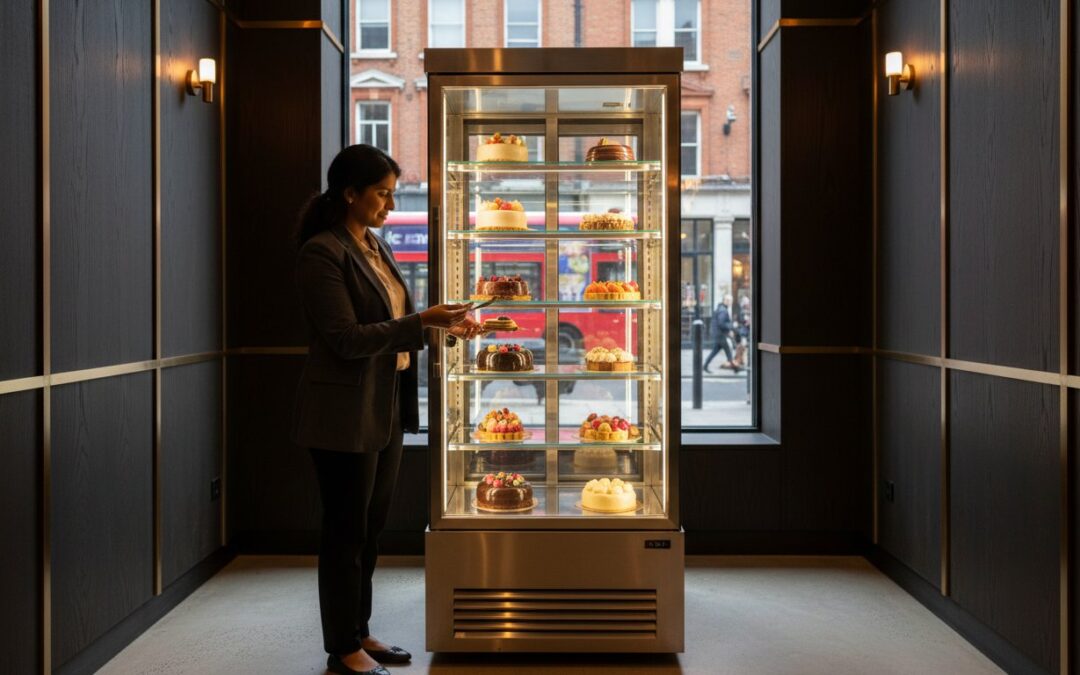
Is your current cake display refrigerator acting as a silent salesman or a drain on your monthly margins? With energy costs for older, inefficient units often exceeding £1,100 per year, the choice of refrigeration is a critical commercial decision rather than a simple equipment purchase. You understand that on a competitive UK high street, your patisserie must look impeccable; yet you are likely tired of battling condensation that hides your best work or struggling with standard units that refuse to fit your bespoke counter layout.
We agree that a display should be a stunning visual centrepiece that works as hard as your front-of-house team. This professional guide will show you how to balance high-end aesthetics with the technical precision required to maximise sales and ensure long-term freshness. We will explore how to achieve total compliance with UK food safety regulations while maintaining low operational costs through superior British engineering. From choosing the right glass technology to understanding ergonomic design, this is your roadmap from an initial concept to a finished, functional space.
Key Takeaways
- Learn how to leverage visual merchandising to turn your front-of-house into a high-conversion sales tool that captures impulse buys.
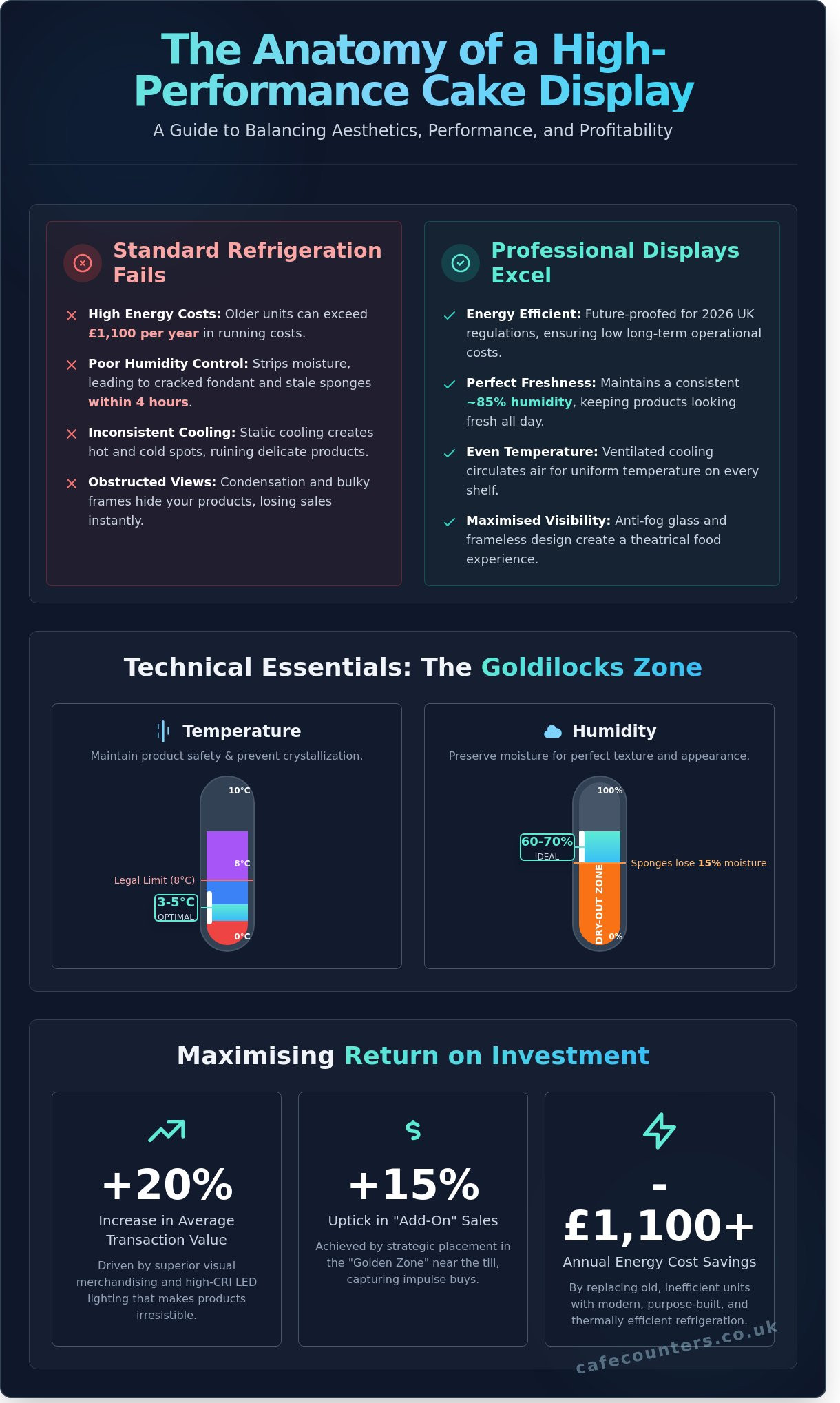
- Understand the technical precision required to maintain the “Goldilocks Zone” of 3°C to 5°C, ensuring your patisserie remains fresh and safe.
- Identify the ideal cake display refrigerator configuration for your specific space, whether you require a compact countertop unit or a dramatic floor-standing tower.
- Discover how to future-proof your investment by navigating the upcoming 2026 UK energy labelling regulations to reduce long-term operational costs.
- Explore the advantages of a “Concept to Completion” partnership that combines British manufacturing heritage with bespoke design expertise.
Why Your Cake Display Refrigerator is the Heart of Your Front-of-House Strategy
A cake display refrigerator is far more than a simple cold storage unit. It acts as a silent salesperson, bridging the gap between your kitchen’s craft and a customer’s impulse to buy. In a competitive UK high street where 70% of purchasing decisions happen at the point of sale, your display is the primary driver of front-of-house revenue. It transforms a functional necessity into a sophisticated visual merchandising asset that defines your brand’s quality before a single word is spoken.
The psychology of the “first bite” is a powerful force in the hospitality sector. Visual stimulation triggers an immediate emotional response. If a pastry looks dry or sits behind fogged glass, the sale is lost instantly. High-end patisserie requires precise humidity control that domestic fridges simply cannot provide. While a standard cooler might keep items cold, it often strips moisture from the air. This leads to cracked fondant and stale sponges within four hours of display. Professional-grade units maintain a consistent 85% humidity level, ensuring your products look as fresh at 4:00 PM as they did at 8:00 AM.
Choosing the right equipment means understanding the technical divide between basic refrigeration and specialized patisserie cabinets. Cheap, entry-level units often rely on static cooling, which creates inconsistent temperature zones. This results in some cakes being too soft while others are nearly frozen. Professional displays use ventilated cooling systems to circulate air evenly across every shelf. This reliability is why serious operators invest in purpose-built technology rather than repurposed beverage coolers.
- Humidity Control: Prevents delicate creams from skinning and sponges from drying out.
- Precision Lighting: Uses specific colour temperatures to make chocolate and fruit glazes appear vibrant.
- Thermal Efficiency: Maintains internal temperatures even when the unit is opened 50 times an hour during peak service.
The Impact of Visual Merchandising on ROI
A well-illuminated display can increase average transaction values by up to 20%. This isn’t a mere estimate; it’s the result of creating a theatrical food experience that differentiates you from generic high-street chains. By utilizing LED lighting with a high Colour Rendering Index (CRI), you highlight the textures and tones of your bakes. We recommend using glass-to-glass joins to eliminate bulky frames. This provides an unobstructed view of the various types of display cases available, ensuring the customer’s focus remains entirely on your products rather than the hardware housing them.
Strategic Placement within Your Cafe Layout
Positioning is critical for flow and conversion. Placing your cake display refrigerator so it’s visible immediately upon entry sets an expectation of premium quality. Integrating the unit into the “Golden Zone” near the till encourages a 15% uptick in “add-on” sales as customers wait to pay. For your staff, ergonomics are equally vital. A unit that allows for seamless rear-loading ensures that restocking doesn’t interrupt the customer’s view or breach hygiene standards during the 12:30 PM lunch peak. This logical progression from entry to purchase creates a frictionless environment that rewards the customer for their visit.
Technical Essentials: Balancing Aesthetics with British Food Safety Standards
Your cake display refrigerator isn’t just a shop window; it’s a precision-engineered climate chamber designed to protect your margins. For any patisserie handling high-risk ingredients like fresh cream, soft cheeses, or custard, adhering to British Food Safety Standards is a non-negotiable legal requirement. You must maintain the “Goldilocks Zone” between 3°C and 5°C. This range sits safely below the 8°C legal limit for chilled foods in England and Wales, providing a buffer during busy service periods while preventing the icy crystallization that ruins a delicate mousse. Precision is everything. A 2°C fluctuation can be the difference between a crisp macaron and a soggy disappointment.
Humidity control is the silent partner of temperature. In a standard fridge, air is stripped of moisture, which is catastrophic for patisserie. Ideally, your display should maintain a humidity level between 60% and 70%. When levels drop below 50%, sponge cakes can lose up to 15% of their moisture content within just four hours of display. We design our units to balance this moisture, ensuring that your icings don’t melt into a sugary puddle and your sponges don’t turn into cardboard. It’s about preserving the “just baked” texture from the morning rush until the final sale of the day.
Compliance also extends to the mechanics hidden beneath the counter. Under current UK F-Gas regulations, the industry is moving away from high-GWP (Global Warming Potential) gases. Modern, eco-friendly refrigerants like R290 (Propane) are now the gold standard. R290 has a GWP of just 3, compared to older refrigerants like R404A which had a GWP of 3,922. Transitioning to these sustainable options isn’t just an ethical choice; it future-proofs your business against tightening environmental legislation and reduces your annual energy expenditure by approximately 20%.
Finally, we must consider the science of light. We exclusively use LED lighting with a Colour Rendering Index (CRI) of 90 or higher. A low CRI makes food look grey and unappealing. A high CRI ensures the deep reds of a glazed strawberry or the rich, velvety browns of a chocolate ganache appear vibrant and true to life under the glass. If you are currently planning a new layout, choosing the perfect patisserie display for your cafe involves matching these technical specs to your specific product range.
Ventilated vs. Static Cooling: Which is Right for Your Bakes?
Ventilated cooling uses internal fans to circulate chilled air, ensuring a uniform temperature across every shelf, even when the unit is fully stocked. It’s the reliable choice for high-traffic cafes where the doors are frequently opened. Static cooling, however, relies on natural convection. It doesn’t move air as aggressively, making it the superior choice for delicate, uncovered patisserie that is prone to drying out. For businesses with diverse menus, dual-zone units allow you to house ambient sourdough alongside chilled eclairs in one seamless footprint.
Lighting and Visibility Solutions
The tone of your LED lighting should reflect your brand identity. 3000K warm tones create a traditional, “homely” feel for artisanal bakes, while 4000K cool white offers a crisp, modern aesthetic for high-end chocolate work. To ensure these visuals aren’t obscured, we utilize anti-fogging technology. In the humid UK climate, opening a shop door can cause instant condensation. Heated glass or double-glazed “low-E” panels prevent this fogging, ensuring your display remains crystal clear. Investing in a high-specification cake display refrigerator allows you to showcase your craft without the barrier of misted glass or dull lighting.
Choosing the Right Configuration: Countertop, Floor-Standing, and Bespoke Solutions
Selecting the correct configuration for your patisserie display is a pivotal decision that dictates your shop’s daily workflow and overall sales potential. For small London cafes where every square inch carries a high rental cost, a countertop cake display refrigerator offers a compact footprint without sacrificing visibility. These units typically occupy less than 0.75 square metres of counter space; this makes them a strategic choice for urban grab-and-go sites that need to maximise their limited floor area. They provide an immediate eye-level temptation for customers queuing to pay, which is essential for driving add-on sales.
In contrast, high-volume retailers and prestigious bakeries often require the dramatic impact of floor-standing patisserie towers. These vertical units maximise display capacity by utilising height, often featuring four or five tiers of adjustable glass shelving. This configuration draws the eye upward and creates a visual focal point that can increase impulse purchases by up to 25% compared to smaller, horizontal units. Because these towers stand independently, they offer greater flexibility in your floor plan, allowing for 360-degree visibility if placed centrally within a boutique environment.
Durability remains a cornerstone of British craftsmanship at TFSE Products Ltd. We prioritise high-grade 304 stainless steel and toughened safety glass over cheaper plastic alternatives. While plastic components might lower initial capital expenditure, they often yellow, crack, or scratch within 12 to 18 months of heavy use. Stainless steel provides a robust, hygienic surface that aligns perfectly with UK food safety management for caterers, ensuring your equipment withstands the rigours of a busy commercial kitchen while maintaining a pristine appearance for years.
Standard vs. Bespoke: Evaluating the Investment
A standard off-the-shelf unit works well for standalone requirements, yet it often creates “dead space” when integrated into a full counter run. Gaps of even 40mm between units collect dust and detract from a professional finish. Our bespoke integrated units eliminate these inefficiencies entirely. By opting for a custom-sized cake display refrigerator, you ensure a seamless transition between the serving area and the chilled section. We can customise the external finishes to match your specific brand identity, whether you require powder-coated metals or specific stone cladding to match your counter design.
The Role of CAD Modelling in Selection
Precision is non-negotiable in professional shopfitting. We use advanced CAD modelling to place your chosen display unit into a 3D digital twin of your floor plan before any manufacturing starts. This process allows you to visualise the unit’s scale and customer sightlines accurately. It also ensures that technical requirements, such as the 13-amp power supply or specific ventilation gaps, are mapped out to avoid costly on-site adjustments. You can explore our full Bespoke Counter Design Process to understand how we bridge the gap between your initial vision and a functional, physical reality.
Maximising ROI: Energy Efficiency, Durability, and Maintenance
Investing in a high-quality cake display refrigerator isn’t just an aesthetic choice; it’s a strategic financial decision. While the initial purchase price often dominates the conversation, the true cost of ownership reveals itself over a five to ten-year period. Energy-efficient units can save a bakery or café upwards of £2,500 in electricity costs over their lifespan compared to budget alternatives that bleed cold air. By 2026, the UK will implement stricter energy labelling regulations for commercial refrigeration, forcing a shift towards models that meet higher efficiency thresholds. Choosing a unit that already aligns with these upcoming standards ensures your business remains compliant and avoids the “efficiency tax” of rising utility rates.
Longevity depends on the health of your compressor and fans. A daily maintenance routine, such as checking door seals for splits and monitoring temperature logs, prevents minor issues from escalating. We’ve found that 75% of compressor failures are caused by blocked condensers. Choosing a model with an easy-access condenser allows staff to perform a five-minute vacuum of the coils every 30 days. This simple task ensures the motor doesn’t overwork in a hot kitchen, extending the unit’s life by years.
Energy Efficient Features to Look For
High-density polyurethane insulation and double-glazed glass are non-negotiable standards for modern patisserie displays. These components create a robust thermal barrier, allowing the cake display refrigerator to maintain a steady 4°C without constant cycling. Variable speed compressors provide another layer of efficiency. Unlike traditional models that only run at 0% or 100%, these adapt to the heat load of the room, reducing energy consumption by 30% during quieter periods. Night blinds are also a practical addition; pulling them down during closing hours reduces thermal loss by 15% and protects your stock from light degradation.
Durability and After-Sales Support in the UK
British-made units offer a distinct advantage for UK businesses. Sourcing spare parts from local manufacturers often reduces lead times from three weeks to 48 hours. This speed is vital when a fan motor fails during a busy weekend. Robust 304-grade stainless steel fabrication provides the structural integrity needed for high-traffic environments where units are frequently moved or cleaned. It resists the corrosive effects of cleaning chemicals and remains looking prestigious for years.
Planning for professional commissioning is the final, essential step in your purchase. Over 90% of warranty claims are rejected because the unit wasn’t installed according to the manufacturer’s specific environmental requirements. A qualified engineer ensures the ventilation clearances are correct and the gas pressures are balanced. This professional handover validates your warranty and guarantees the unit operates at peak efficiency from the moment it’s switched on.
From Concept to Completion: The TFSE Approach to Patisserie Displays
TFSE Products Ltd has spent 35 years establishing itself as a premier name in UK food display manufacturing. Our reputation isn’t built on outsourced imports; it’s forged in our own 15,000 square foot London-based manufacturing facility. By keeping production on British soil, we maintain absolute oversight of every weld, glass seal, and refrigeration component. This hands-on approach ensures that every cake display refrigerator leaving our floor meets the exacting standards required for high-traffic commercial environments. We don’t believe in “one size fits all” because we know your business has its own unique rhythm and architectural constraints.
We operate as your Expert Partner rather than a simple supplier. This journey begins with a comprehensive site survey where our engineers assess your floor plan, electrical capacity, and customer flow. Industry data suggests that a large percentage of installation delays in the catering sector stem from poor initial site assessments. We eliminate this risk by managing the process from the first sketch to the final commission. You get a single point of contact who understands the technical nuances of your specific build, ensuring the transition from concept to completion is seamless and stress-free.
Bespoke Serving Solutions for Prestigious Clients
Our portfolio spans across the retail, education, and high-end hospitality sectors. We’ve delivered tailored solutions for prestigious London landmarks and independent patisseries alike. Each project focuses on the TFSE promise: equipment must be robust, functional, and aesthetically superior. For a project completed in 2023 for a luxury hotel group, we integrated a bespoke cake display refrigerator that maintained a consistent 4°C while operating in an ambient temperature of 30°C. We use high-grade 304 stainless steel and toughened safety glass to ensure our counters withstand the rigours of daily commercial use while remaining easy to sanitise.
Your Next Steps to a Stunning Display
Ready to transform your space? We provide detailed site surveys across the South East and Greater London area. To make the most of your consultation, it helps to have your basic floor dimensions and estimated daily throughput figures ready. Our designers use this data to recommend the most efficient layout for your staff and customers. We focus on ergonomic heights and accessibility to ensure your team can serve efficiently during peak hours. Our team is ready to help you navigate the technical requirements of refrigeration, lighting, and finishes to create a display that truly sells.
The process of upgrading your patisserie shouldn’t be a gamble. By choosing a partner with in-house British manufacturing capabilities, you’re investing in long-term reliability and local support. Whether you’re a boutique bakery or a large-scale educational caterer, our commitment to quality remains the same. Take the first step toward a more profitable and professional display today.
Secure Your Vision with British Manufacturing Excellence
Investing in a high-specification cake display refrigerator represents a strategic commitment to both food safety and visual merchandising. By balancing energy efficiency with robust British engineering, your business secures a long-term asset that drives impulse purchases while protecting your margins. Since 1991, Cafe Counters has refined manufacturing processes to ensure every unit meets rigorous UK standards and withstands the demands of a busy commercial environment.
Our approach simplifies the complex journey of shopfitting. We provide a bespoke CAD design service as standard, ensuring your chosen configuration fits your unique floor plan perfectly. From the initial layout to final installation, our Concept to Completion service removes the operational friction often associated with new builds. You’re not just buying a fridge; you’re partnering with a specialist who understands the nuances of the British hospitality sector. It’s time to transform your front-of-house into a prestigious destination for your customers. We’re ready to help you showcase your craft.
Explore our range of British-made Patisserie Displays
Frequently Asked Questions
What is the ideal temperature for a cake display refrigerator?
The ideal temperature for a cake display refrigerator is between +2°C and +5°C to maintain the structural integrity of creams and sponges. This specific range prevents bacterial growth while ensuring pastries don’t dry out. We calibrate our units to these precise parameters so your delicate patisserie stays fresh for up to 72 hours without losing its visual appeal or taste.
How do I prevent condensation on my cake fridge glass?
You can prevent condensation by selecting a unit with heated glass or high-quality double glazing. At Cafe Counters, we utilise double-glazed units with a low-emissivity coating that reduces thermal transfer by 40%. This technology ensures a crystal-clear view of your products even in humid environments where ambient temperatures exceed 25°C, keeping your display looking professional throughout the day.
Can I have a bespoke cake display made to fit my existing counter?
We can design and manufacture a bespoke cake display specifically to fit your existing counter dimensions and aesthetic. Our in-house engineering team uses 3D CAD software to create a seamless integration that matches your current shopfitting. This bespoke approach allows for a Concept to Completion service where we manufacture a drop-in or countertop unit that fits within a millimetre of your available space.
What is the difference between a patisserie display and a standard deli counter?
A patisserie display differs from a deli counter by maintaining a higher humidity level of approximately 70% to prevent cakes from drying out. Deli counters often use forced-air cooling that is too aggressive for delicate pastries. Our patisserie units also feature tiered glass shelving and specialised lighting designed to enhance the vibrant colours of glazes rather than the matte textures of meats.
How much electricity does a commercial cake display fridge use?
A standard 1200mm commercial cake display refrigerator typically consumes between 5kWh and 12kWh of electricity per 24-hour period. Newer models equipped with R290 refrigerant and EC fans reduce energy consumption by up to 30% compared to older R404A systems. We provide energy-efficient specifications that help lower your annual utility bills by approximately £150 per unit based on average UK commercial energy rates.
Are LED lights in cake fridges safe for the food?
LED lights are perfectly safe for food because they emit zero UV radiation and negligible heat compared to traditional fluorescent tubes. This prevents the hot spots that can melt chocolate or discolour delicate icing. Our integrated LED systems operate at a cool temperature, which reduces the load on the refrigeration compressor and extends the shelf life of your desserts.
What maintenance is required for a commercial refrigerated display?
You should clean the condenser coil every 30 days and inspect the door gaskets weekly for any signs of wear or air leaks. Dust buildup on the condenser can increase energy usage by 20% and lead to compressor failure. A simple monthly maintenance routine ensures your unit operates at peak efficiency and avoids the £250 average cost of an emergency engineer call-out.
Do I need a floor drain for my refrigerated cake display?
Most modern refrigerated displays don’t require a floor drain because they include an automatic electric condensate evaporation tray. These trays collect the moisture removed from the air and use heat from the compressor to evaporate it. For high-volume sites with frequent door openings, we can install a plumbed drainage solution to manage the 2 to 4 litres of water generated daily during defrost cycles.