
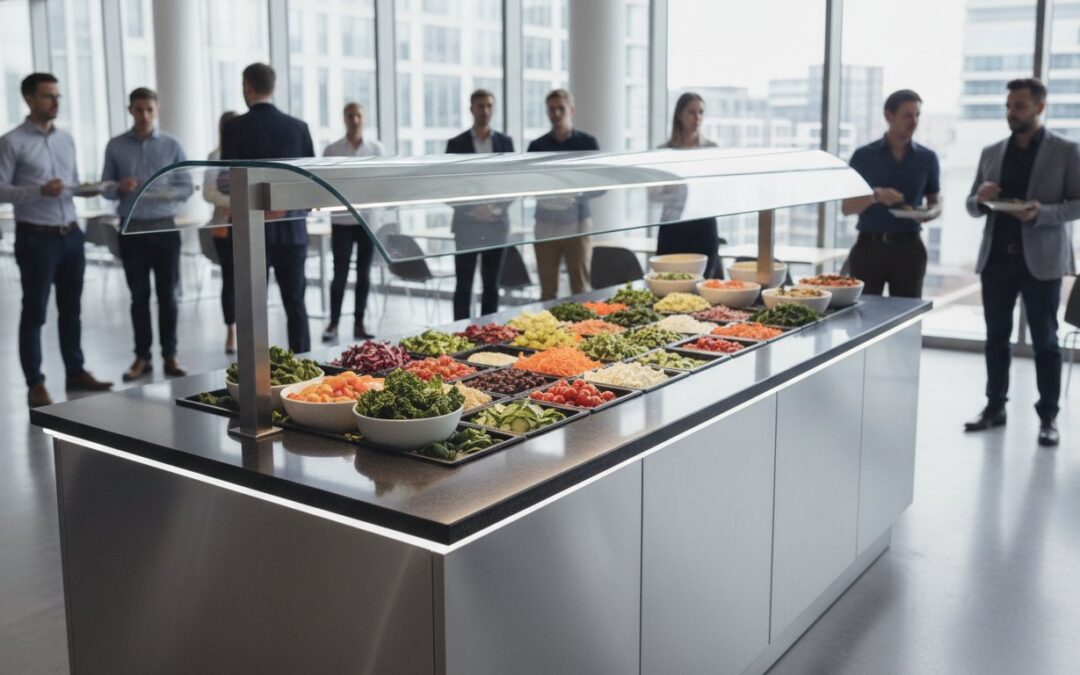
With 74% of UK consumers yet to visit a premium salad or grain bowl chain, the potential for growth in the fresh-focused sector is immense for operators who prioritize quality presentation. You likely recognize that a successful installation isn’t just about cooling; it’s a strategic balance between strict hygiene compliance and a high-end aesthetic that draws the eye. Dealing with rising energy costs and the frustration of equipment that doesn’t fit your specific floor plan can make the procurement process feel like a significant burden. This guide will show you how to select and implement commercial salad bars UK that maintain peak freshness while reducing operational overheads through British engineering precision.
We’ll walk you through the essential technical requirements, from ensuring your refrigeration stays below the best-practice 5°C threshold to meeting the latest allergen labeling standards under Natasha’s Law. You’ll learn how bespoke CAD modeling and internal UK production can solve the common headaches of cheap, unreliable imports. By the end of this guide, you’ll have a clear roadmap for creating a durable, efficient serving area that enhances your professional reputation and keeps your produce crisp from the first customer to the last.
Key Takeaways
- Learn how modern salad bars act as strategic hubs for the “fresh and healthy” sector, moving beyond simple refrigeration to drive venue profitability.
- Identify the critical technical differences between static and ventilated cooling to ensure your produce remains crisp while maximizing energy efficiency.
- Determine whether bespoke commercial salad bars UK or standardized units best serve your floor plan, especially in high-traffic environments where flow is essential.
- Apply ergonomic design principles to prevent bottlenecks during peak hours and maintain strict compliance with UK food hygiene regulations.
- Understand the advantages of UK-based manufacturing and CAD modeling to guarantee a precision fit and reliable after-sales support for your project.
Understanding the Role of Commercial Salad Bars in Modern Foodservice
Modern foodservice operators in Britain are moving away from the traditional, static buffet toward dynamic, high-visibility stations that prioritize ingredient integrity. When you invest in commercial salad bars UK, you aren’t simply buying a refrigerated well; you’re commissioning a focal point for your venue. These units serve as a stage where the vibrant colors of fresh produce communicate quality and health-conscious values to your patrons. The history of the salad bar demonstrates a clear evolution from simple side-dish troughs to the sophisticated, chef-led “bowl” concepts that dominate today’s high streets.
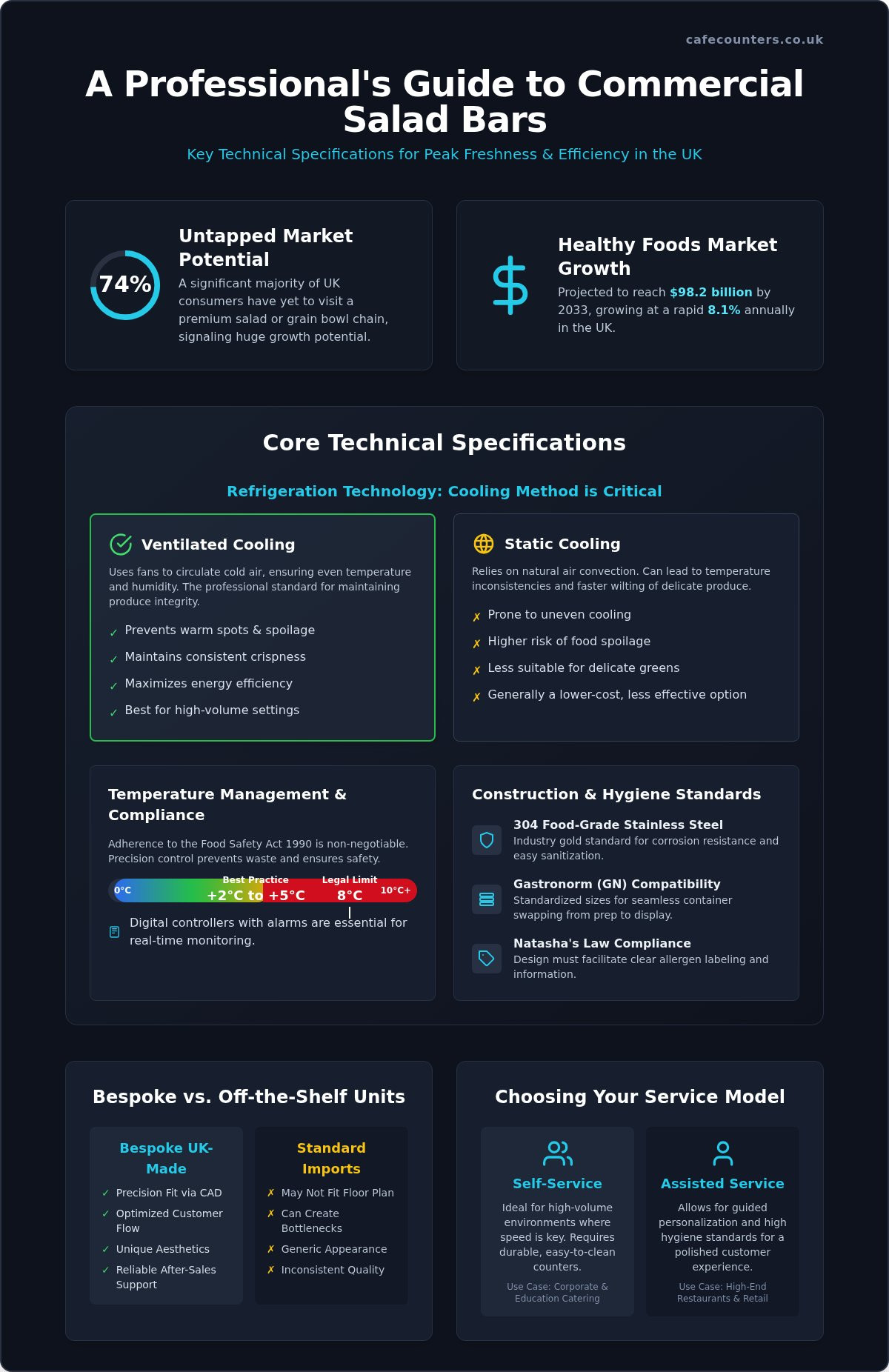
The UK healthy foods market is expected to reach a revenue of $98.2 billion by 2033, growing at an annual rate of 8.1%. This shift reflects a consumer base that demands transparency and freshness. A professional display unit elevates the perceived value of your menu, allowing you to command premium price points for curated grain bowls and protein-led salads. It’s about creating an environment where the equipment works as hard as your culinary team to maintain an artisanal aesthetic while meeting rigorous technical standards.
Key Applications Across the Hospitality Sector
Choosing the right service model is the first step in your design journey. Self-service units are ideal for high-volume environments like educational and corporate catering, where speed of service is paramount. In these settings, durability and ease of cleaning are essential, often requiring robust bespoke serving counters that can withstand heavy daily use. Conversely, assisted-service models are becoming the standard for high-end restaurants and premium retail. This approach allows for guided personalization, where staff assemble curated bowls, maintaining high hygiene standards and ensuring a more polished customer experience.
The Economic Impact of High-Visibility Displays
Efficiency in a commercial kitchen directly correlates to your bottom line. High-performance units reduce food waste by maintaining precise temperature controls, typically between 0°C and 5°C, ensuring produce stays crisp rather than wilting. Beyond waste reduction, these displays act as silent salespeople. By integrating strategic Grab & Go displays alongside your main counter, you can capture impulse sales from time-poor customers. This dual-format strategy increases the average transaction value by catering to both the sit-down diner and the office worker seeking a nutritious lunch on the move.
Essential Technical Specifications for UK Commercial Salad Bars
Specifying the right technical components is what separates a high-performance installation from a standard refrigerated unit. When you evaluate commercial salad bars UK, the most critical decision involves the cooling method. Static cooling relies on natural air convection; however, ventilated systems use fans to circulate air evenly across the produce. Ventilated cooling uses forced air circulation to maintain a consistent temperature and humidity level throughout the display, preventing warm spots that can lead to premature spoilage.
Operational flexibility in a busy kitchen depends on Gastronorm (GN) compatibility. These standardized dimensions allow your team to swap out containers seamlessly between prep areas and the front-of-house display without decanting ingredients. For long-term durability, food-grade 304 stainless steel remains the industry gold standard. It offers unparalleled resistance to corrosion from acidic dressings and is easy to sanitize, which is vital for maintaining the professional standards expected in British hospitality.
Refrigeration and Temperature Management
Compliance with the Food Safety Act 1990 requires meticulous temperature control. While the legal limit for chilled food is 8°C, best practice in the UK sector dictates a tighter range of +2°C to +5°C to maximize shelf life. Professional units utilize digital controllers that provide real-time monitoring and audible temperature alarms. These features offer peace of mind, alerting staff immediately if a component fails or if a door is left open during peak service. This technical precision ensures that your delicate greens and protein toppings remain crisp and safe for consumption throughout the day.
Lighting and Visibility Features
Visual impact is achieved through strategic visibility. Modern LED lighting is essential because it enhances the vibrant colors of your ingredients without emitting the heat associated with traditional bulbs. This prevents “hot spots” that can wilt lettuce or dry out fresh garnishes. Sneeze guards and gantries provide a necessary barrier for hygiene while remaining accessible for either self-service or staff-assisted assembly. Custom glass configurations, such as curved or angled panels, can be designed to eliminate glare and offer customers an unobstructed view of your menu.
Investing in energy-efficient components significantly reduces long-term overheads. High-density insulation and high-efficiency compressors help maintain the cold chain without drawing excessive power. If you’re planning a new layout, choosing a bespoke serving counter allows you to integrate these technical features into a unit that fits your specific floor plan perfectly.
Bespoke vs. Off-the-Shelf: Finding the Right Fit
Choosing between a custom-built solution and a pre-fabricated unit is a pivotal moment in any kitchen fit-out. While standardized units offer the convenience of immediate availability, they frequently fall short when faced with the irregular floor plans common in the UK hospitality sector. Specifying bespoke commercial salad bars UK ensures that your equipment is built to the exact millimetre, turning potential obstacles into efficient service points. This level of precision eliminates the “dead space” often found with off-the-shelf equipment, which can otherwise become a hygiene trap and a waste of valuable real estate.
A custom approach allows for deep integration with your existing layout, such as matching the aesthetic and height of your deli counters. This creates a cohesive front-of-house environment that reinforces your brand’s commitment to quality. Although bespoke projects involve a longer initial timeline for CAD modelling and internal production, the long-term operational ROI is superior. You gain a unit that’s optimized for your specific menu and workflow, rather than forcing your staff to work around the limitations of a generic box.
The Advantages of Custom Fabrication
Design flexibility is the hallmark of professional manufacturing. By working with an expert partner, you can specify exterior finishes that align with your interior design, from high-grade stainless steel to specialized decorative panels. Beyond aesthetics, custom fabrication allows for the seamless integration of diverse equipment like heated soup kettles or ambient display tiers for artisan breads. This holistic design process also makes it easier to follow the UK Allergen Guidance for Food Businesses. We can design physical barriers or dedicated zones within the counter to prevent cross-contact between ingredients, protecting both your customers and your reputation.
Evaluating Off-the-Shelf Units for Smaller Operations
For start-ups or venues with limited footprints, a standard mobile unit might be the most logical starting point. These units offer portability and a lower initial capital outlay. However, you must look beyond the price tag. Prioritize models that use standard GN sizing to ensure you aren’t locked into proprietary containers. It’s also vital to confirm that the manufacturer maintains a robust UK parts inventory. A minor component failure shouldn’t lead to a total service shutdown because a replacement part is stuck in a global shipping queue. Reliability is the cornerstone of a professional kitchen; choose a unit that promises a steady hand in your daily operations.
Designing for Efficiency: Customer Flow and Hygiene Standards
Successful commercial salad bars UK rely on more than just high-performance cooling; they require a layout that anticipates human behavior. Treating these units as standalone appliances is a common oversight that leads to service bottlenecks. Instead, we view the salad station as a critical component of a comprehensive commercial food display counter system. This integrated approach ensures that the transition from selection to payment is seamless, maintaining a steady rhythm even during the intense UK lunch rush.
Ergonomics play a vital role in both staff productivity and customer satisfaction. When your team can replenish ingredients without disrupting the flow, and customers can reach every topping with ease, your operational efficiency climbs. Design choices like radiused internal corners and flush-fit components directly facilitate faster hygiene rotations, allowing your staff to focus on service rather than difficult maintenance tasks.
Optimising the Customer Journey
Applying a “Left-to-Right” logic is the standard for self-service environments. Patrons instinctively look for plates or bowls at the start of the run, followed by base greens, proteins, and then smaller garnishes. Positioning dressings and cutlery at the very end of the counter prevents customers from doubling back, which is the primary cause of congestion in smaller UK venues. Placing high-demand items in the center of the display can help distribute the crowd and keep the line moving steadily. Standardizing the counter height at an inclusive level ensures that the vibrant display is visible and accessible to every customer, including those with limited mobility.
Meeting UK Food Safety Regulations
Meeting the rigorous expectations of an Environmental Health Officer (EHO) starts with the physical design of your equipment. Surfaces must be non-porous and resistant to the acidic nature of many salad dressings; food-grade stainless steel is the professional choice here. If your menu evolves to include warm grains, roasted vegetables, or hot proteins, you must integrate Vision Heated Counters to maintain the legal 63°C safety threshold. Daily maintenance is simplified when you use removable support bars and GN pans that can be cycled through a high-temperature dishwasher. We recommend a strict daily checklist that includes verifying digital temperature logs and checking that all magnetic seals are free from debris to ensure the longevity of your refrigeration system.
If you’re looking to refine your layout, our team can help you design a bespoke serving counter that balances aesthetic appeal with operational logic.
UK-Manufactured Excellence: The TFSE Approach
The journey from a conceptual menu to a physical service point requires more than just a purchase; it demands a partnership with a manufacturer that understands the nuances of the British hospitality landscape. Choosing commercial salad bars UK that are designed and built in-house ensures a level of quality control that cannot be matched by retailers who act as third-party intermediaries. Since 1991, we’ve prioritized internal production facilities to maintain absolute authority over every weld, joint, and refrigeration component. This end-to-end management acts as a conceptual anchor for your project, providing a single point of accountability from the first sketch to the final commissioning.
Working directly with a UK manufacturer alleviates the stress of complex commercial fit-outs. You aren’t limited by what’s in a warehouse; instead, you’re invited to share your vision with a team that has the technical expertise to bring it to life. This collaborative approach ensures that the final physical space mirrors your operational requirements and brand identity perfectly.
Precision Engineering and CAD Modelling
Before a single sheet of stainless steel is cut, our advanced CAD modelling provides a digital twin of your proposed counter. This phase is vital for visualizing how the unit will sit within your specific environment, allowing for adjustments before manufacture begins. We use these models to plan the technical integration of services, ensuring that power supplies and drainage points are positioned exactly where they’re needed within the structure. This level of meticulous planning eliminates the “dead space” and installation errors often associated with standardized equipment, ensuring that your bespoke serving counters fit with millimetre precision the moment they arrive onsite.
Installation and Technical Integration
Our commitment to your project continues through the installation and commissioning process. Professional commissioning is a vital step that validates your refrigeration warranty and ensures the system operates at peak energy efficiency from day one. Our installation teams work with a deliberate pace to minimize onsite disruption, allowing you to meet tight handover deadlines or maintain existing service schedules. Because we value our regional heritage and geographic proximity, we provide a steady hand of support long after the initial fit-out. Having the manufacturer nearby means you benefit from direct access to technical expertise and local after-sales care, ensuring your equipment remains a reliable asset for years to come.
Future-Proofing Your Fresh Food Service
Selecting the right equipment is a strategic investment in your brand’s longevity. By prioritizing technical precision and ergonomic design, you ensure that your venue meets the growing demand for healthy, high-quality dining. We’ve explored how commercial salad bars UK have evolved into sophisticated service hubs where every millimetre of space contributes to operational efficiency. Whether you’re managing a high-traffic corporate canteen or a premium retail space, the key to success lies in a layout that balances strict hygiene compliance with a professional aesthetic.
With over 30 years of experience in hospitality fit-outs, we understand the unique pressures of the UK market. Our advanced CAD modelling and UK-based manufacturing facility ensure that every bespoke unit we produce delivers total quality control and a precision fit. We’re here to turn your vision into a durable physical reality that supports your team and delights your customers. Contact our expert design team for a bespoke salad bar consultation to begin your next project with a steady, reliable partner. We look forward to bringing your vision to life.
Frequently Asked Questions
Do I need a floor drain for a commercial salad bar?
You don’t necessarily need a floor drain for every unit, as many modern designs incorporate internal evaporation trays for condensate. However, if you are installing high-capacity commercial salad bars UK with frequent defrost cycles, a permanent floor drain is the most reliable way to manage moisture. This reduces manual maintenance and prevents potential slips in your service area. We can advise on the best drainage strategy during the initial site survey to ensure your installation remains safe and efficient.
What is the difference between static and ventilated cooling in a salad bar?
Static cooling relies on the natural convection of cold air, which is quieter but can lead to uneven temperatures. In contrast, ventilated cooling uses high-efficiency fans to circulate air throughout the display. This ensures that every ingredient remains at a consistent +2°C to +5°C range, which is critical for food safety compliance. While ventilated systems are more effective at maintaining temperature during high-traffic periods, they require precise humidity control to prevent delicate produce from wilting.
Can I customise the exterior finish of my salad bar to match my cafe decor?
Customisation is a core benefit of choosing commercial salad bars UK manufactured to your specific requirements. You can select from a wide range of exterior finishes, including powder-coated steel, high-pressure laminates, or natural stone tops to align with your venue’s aesthetic. This flexibility ensures that your serving counter acts as a seamless extension of your interior design rather than looking like a generic, standalone appliance. Our CAD modelling process helps you visualise these finishes before the manufacturing process begins.
How many Gastronorm pans do I need for a standard salad bar?
The number of pans depends on your menu complexity and the physical dimensions of the refrigerated well. A standard 3xGN1/1 unit can accommodate various configurations, such as nine GN 1/3 pans for a wide variety of toppings or six GN 1/2 pans for bulkier items. Using the Gastronorm system allows your team to swap out ingredients seamlessly from prep areas. We typically design counters to accommodate the most flexible pan layouts to suit your specific service volume.
What are the cleaning requirements for a refrigerated salad display?
Professional hygiene standards require a daily wipe-down of all food-contact surfaces using sanitizers that meet BS EN 1276 standards. Removable components, such as GN pans and support bars, should be cycled through a high-temperature dishwasher every evening. It’s also vital to clean the condenser filters monthly to maintain energy efficiency and prevent motor strain. Regular maintenance of the magnetic door seals ensures the unit maintains its thermal integrity, protecting your produce and your long-term refrigeration warranty.
Is it better to have a mobile or fixed salad bar for a school canteen?
Mobile units are often the practical choice for schools where the dining hall serves multiple purposes, allowing the salad bar to be stored away after service. These units feature heavy-duty castors and fold-down tray slides for easier transport. However, for dedicated high-volume canteens, a fixed bespoke counter offers superior durability and can be integrated with services like power and drainage. A fixed installation also allows for a more professional, permanent aesthetic that mirrors modern healthy dining concepts.
How much power does a commercial salad bar typically consume?
Most standard refrigerated displays operate on a 230V single-phase supply and can be powered by a standard 13-amp plug. The actual consumption varies based on the size of the unit and the efficiency of the refrigeration system, typically ranging from 0.5kW to 1.5kW. Choosing a unit with high-density insulation and energy-efficient compressors will significantly reduce your long-term operational overheads. We provide exact electrical specifications for each bespoke design to ensure your site’s power infrastructure is sufficient.
What is a sneeze guard, and is it legally required in the UK?
A sneeze guard is a transparent barrier, usually made of toughened glass, designed to protect open food from contamination. Under the Food Safety and Hygiene Regulations 2013, you are legally required to protect food from any risk that could render it unfit for human consumption. In a self-service environment, a professionally fitted sneeze guard or gantry is the industry standard for meeting this requirement. It balances hygiene with visibility, ensuring your customers can see the fresh produce clearly.