
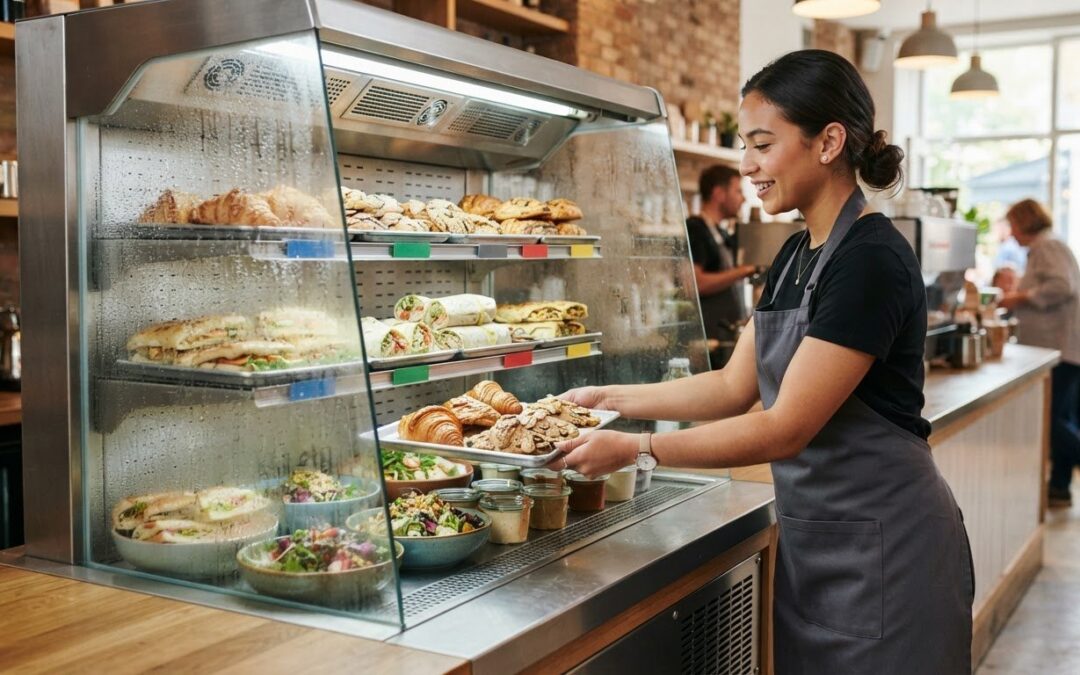
Freshness depends on what staff put at the front, not just what arrives in the kitchen. The best practices for food rotation in displays are to follow FIFO, placing older stock at the front and newer stock behind it, while using the earliest Use-By date first. Keep chilled food at or below 5°C and leave cold-air outlets clear so stock can stay properly chilled.
In a busy service, deliveries and popular items selling quickly can disrupt an orderly display. A consistent routine helps staff rotate stock, identify food that needs attention and keep airflow clear for safe display conditions. This guide covers staff training, labelling and stock organisation, first-out zones and display arrangements that do not obstruct cold-air circulation.
Key Takeaways
- Build staff training around clear receiving, labelling and temperature-recording routines so each shift handles stock consistently.
- Use FIFO to place older stock at the front, while letting the earliest Use-By date determine what gets used first.
- Make colour-coded first-out zones easy to spot, helping staff identify priority stock quickly during service.
- Arrange display stock to protect cold-air circulation and follow the food safety rules that apply to your part of the UK.
Staff food safety and stock rotation training
Train every shift to follow the same display checks, labelling routine and replenishment method. Use a written checklist to record what staff inspect and flag missed dates or temperature readings for action.
Check Display Labels
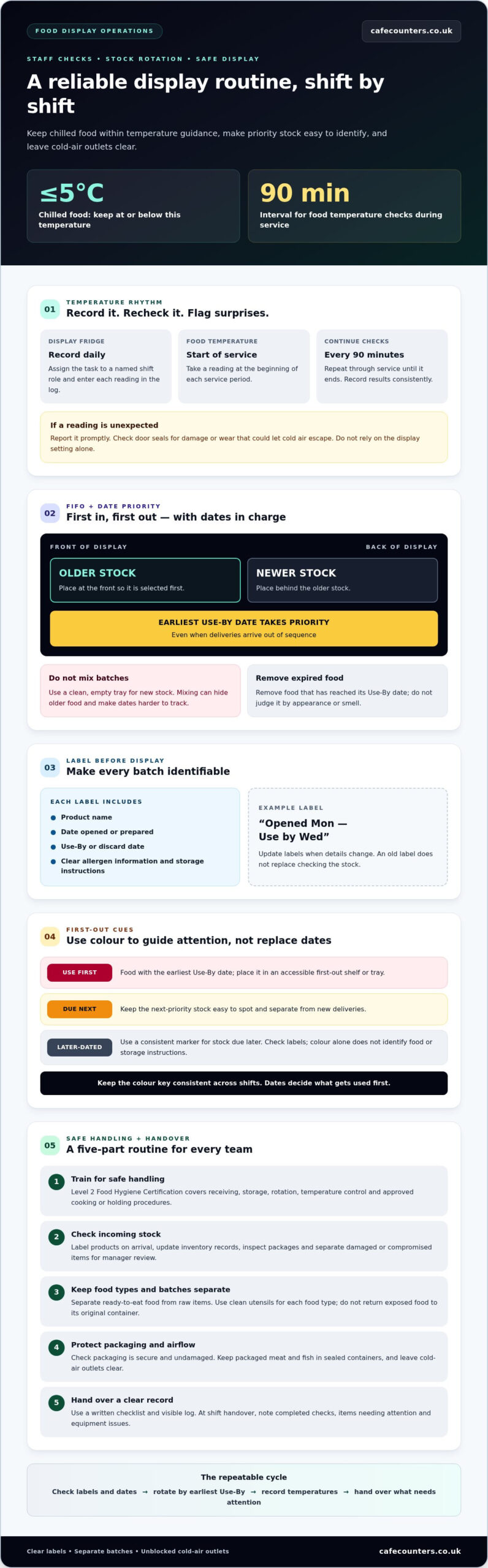
Check every label before food goes into the display. Include the product name, the date it was opened or prepared, and its Use-By or discard date. Make allergen information and storage instructions easy for staff and customers to read. For example, “Opened Mon – Use by Wed” shows when the food was opened and when it should be discarded. Update labels when details change, and never treat an old label as a substitute for checking the stock.
Handle Food During Replenishment
Keep ready-to-eat food separate from raw items when replenishing deli or fresh-food displays. Check that packaging is secure and undamaged before loading food, and store packaged meat and fish in sealed containers to prevent leaks. Use clean utensils for each food type, and do not return exposed food to its original container. These steps help reduce cross-contamination risks during busy service.
- Train staff in safe handling. Level 2 Food Hygiene Certification covers safe receiving, storage, rotation, temperature control and approved cooking or holding procedures. Use these topics to structure staff instruction and practical checks.
- Record display-fridge temperatures daily. Assign the task to a named shift role, enter each reading in the log, and report an unexpected reading promptly. Inspect door seals for damage or wear that could let cold air escape.
- Check food temperatures through service. Take readings at the beginning of each service period and every 90 minutes thereafter until service ends. Show staff how to record results consistently, rather than relying on a display setting alone.
- Check incoming stock and records. Label products with dates on arrival, update inventory records and perform regular stock checks. Staff should inspect packages before storage and separate any damaged or compromised items for manager review.
- Review the routine with each team. Use shift handovers to note completed checks, items needing attention and equipment issues. A visible log lets the next team continue monitoring without guessing what has already been done.
FIFO stock rotation
Use FIFO when replenishing a display: put older items at the front and newer items behind them. Check Use-By dates as well, because the earliest date takes priority even when deliveries arrive out of order. This date-led check is one of the best practices for food rotation in displays, helping staff select the right batch first.
-
Use Older Stock Before Expiry
Bring forward stock with the earliest Use-By date, even if it arrived after other items. Check dates before each replenishment and place the next-due food where staff will select it first. FIFO means “first in, first out”, but date order takes priority when deliveries arrive out of sequence. Remove food that has reached its Use-By date rather than judging it by appearance or smell.
-
Rotate Buffet and Salad Bar Food
Replenish buffet and salad bar displays with fresh, identified batches rather than topping up trays already in service. Keep each ingredient separate so staff can track its date and avoid mixing food with different histories. In Salad Bars, arrange ingredients in clear sections and bring forward the next batch only after checking its label. Keep serving utensils clean and replace them when needed to help reduce contamination risks.
-
Avoid Mixing New and Older Food
Use a clean, empty tray for new stock instead of adding it on top of food already on display. Mixing batches makes dates harder to track, disrupts FIFO and can hide older food beneath fresh portions. It also makes it more difficult to identify the batch to remove if a date has passed or contamination is suspected. Keep batches separate and clean the tray between uses.
- Set a consistent front-to-back routine. Put older stock at the front and newer stock behind it, then check the earliest Use-By date before service. Store unopened reserve stock separately from food on display, and never top up old dry goods with new stock. Mixing dry goods disrupts FIFO and makes dates harder to track. To apply the best practices for food rotation in displays, keep batches identifiable throughout storage and service.
Colour-coded storage and first-out zones
Use consistent colour cues to make priority stock easy to spot during storage and service. Keep the colour key the same, and use Use-By dates to decide what staff select first.
- Choose a simple colour key. Assign one colour to food that needs using first, another to stock due next, and a neutral marker to later-dated stock. These colours are visual prompts, not substitutes for reading labels. Explain the key to every shift so staff interpret each marker the same way.
- Create a dedicated first-out zone. Mark a clearly accessible shelf or tray for food with the earliest Use-By date. For example, staff can move the next-due sealed salad ingredients into this zone after checking their dates. Keep the zone separate from new deliveries to make the priority clear.
- Apply colours to storage locations and labels. Use matching shelf markers and removable labels on containers, so the cue stays with the food when it moves. Include the product name and Use-By or discard date. Never use a colour alone to identify food or its safe storage instructions.
- Let dates override the colour order. Check dates regularly, especially when deliveries arrive out of sequence. Food with the earliest Use-By date must be used first, even if it arrived later. Change its marker when its priority changes, and remove food that has reached its Use-By date.
- Keep chilled stock in suitable conditions. Place first-out chilled items within the designated chilled storage area, not on an unchilled counter while staff organise shelves. Keep products identifiable and separated, so moving one item doesn’t hide another label or disrupt the established order.
- Review zones during stock checks. Compare the first-out area with dated stock records, correct misplaced items and clear empty spaces. Ask staff to report unclear or missing colour markers during handovers. This routine helps teams spot forgotten stock, follow proper rotation and reduce avoidable food waste.
What are the UK food safety rules for displaying and rotating food?
- Apply the correct national rules. According to The National Archives (UK legislation), the Food Safety and Hygiene (England) Regulations 2013 apply to food businesses in England. Use the rules relevant to your UK nation when setting food handling and display procedures; don’t treat this England-specific regulation as applying across the whole UK.
- Control chilled food temperatures. Keep cold food at or below 8°C. Chilled display cabinets are recommended to operate at or below 5°C, giving staff a practical temperature target for display. Monitor open-fronted cabinets closely because exposure to surrounding air can cause temperature fluctuations.
- Keep hot food at the required holding temperature. Manage hot food displays carefully to help keep food safe. Check the food itself and record readings, rather than relying only on the cabinet setting. If hot food is held at 63°C, it can be kept at that temperature for up to 2 hours.
- Track food displayed outside temperature control. Cold food displayed outside chilled storage may be displayed for a single period of up to 4 hours after production. Mark when it was put out, using a date-and-time label or coloured dot, so staff can act before that period is exceeded.
- Separate and protect displayed food. Keep ready-to-eat items away from raw food in deli and fresh-food displays. Cover food to help prevent contamination, and use cabinets or wind shields to protect it. Don’t stack chilled food or block cold-air outlets, since both can interfere with circulation.
- Make the display practical to manage. Keep food away from cabinet walls and direct sunlight, and avoid overfilling shelves. Clear positioning helps staff see labels and maintain airflow while rotating stock. For a display designed around your service and food presentation, plan a food display layout.
TFSE Products: Patisserie Displays
TFSE Products Ltd can help when your display layout makes stock rotation, visibility or daily handling difficult. Its Patisserie Displays present cakes and pastries, while Integrate Drop-in Units, Grab & Go Displays and Salad Bars serve other foodservice settings.
Choosing display equipment is part of creating a workable service area. Consider how staff access stock, follow first-in-first-out routines and keep cold-air outlets clear while replenishing. A layout that supports these tasks can make rotation easier to maintain while keeping the display orderly and appealing.
Contact TFSE Products Ltd to discuss display equipment for your foodservice space.
Make your display work for the way you serve
During your next service review, look beyond individual stock checks. Note where staff pause, where replenishment interrupts customer flow and which parts of the display are hardest to keep organised. These observations can help shape a layout around how your team works, rather than forcing staff to adapt to an awkward arrangement.
The best practices for food rotation in displays are easier to maintain when equipment, product presentation and staff routines work together. TFSE Products Ltd offers Patisserie Displays, Integrate Drop-in Units and Grab & Go Displays for different foodservice settings. Choose equipment to suit the foods you present and how customers and staff move through the space.
Discuss your display requirements with TFSE Products Ltd and explore a practical next step for your foodservice area. Contact TFSE Products for display support, and move forward with a setup designed around your operation.
Frequently Asked Questions
What does FIFO mean for rotating food in displays?
FIFO means “first in, first out”: use older stock before newer stock. Delivery order can help, but the earliest Use-By date takes priority, even if that item arrived later. For example, compare dates across deliveries before loading the display. FIFO is therefore a date-led routine, not simply a rule to move whichever stock has been stored longest.
How often should chilled food be checked and rotated in a food display?
Check display-fridge temperatures daily, and take food temperature readings at the start of each service period and every 90 minutes until service ends. Rotate stock whenever deliveries arrive, before replenishing, and during regular stock checks. These checks serve different purposes: temperature records monitor chilled conditions, while date checks identify which food should be selected next. Record readings and act on any issue promptly.
How do you set up a FIFO system for food displays step by step?
Sort stock by Use-By date, then put the earliest-dated items in the easiest position to reach. Place later-dated stock behind them, keeping batches identifiable. Label food when it is opened or prepared, and update inventory records as stock moves into the display. Compare dates again during each replenishment and remove food that has passed its Use-By date.
What display rotation records and stock checks should food businesses keep?
Keep temperature logs, dated product labels and inventory records showing stock movements and checks. Record display-fridge readings daily, alongside food readings taken during service. At regular stock checks, compare the display with recorded dates, flag damaged packaging and identify food approaching its Use-By date. Clear, detailed records also help trace affected batches in the event of a recall or suspected contamination.