
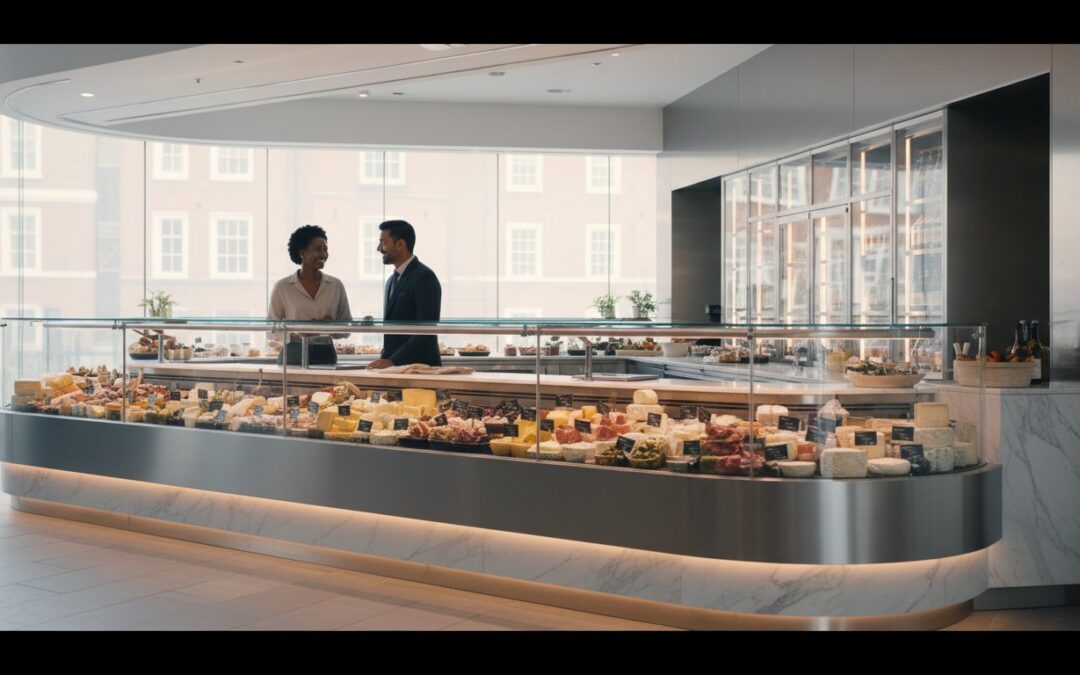
A high-performance deli counter isn’t just a piece of refrigeration equipment; it’s the hardest-working salesperson on your retail floor. You already know that keeping your charcuterie and fine cheeses at a precise temperature is non-negotiable for both safety and flavour. However, finding a unit that balances strict UK food hygiene regulations with a bespoke design that fits your unique shop layout can be a significant challenge. Many retailers find that standard units fail to meet the demands of a busy 2026 trading environment, often leading to unnecessary food waste and missed sales opportunities.
We understand the pressure of getting a commercial renovation right the first time. You’ll discover how to select and maintain a robust, British-manufactured display that eliminates spoilage while using ergonomic design to increase impulse purchases by up to 25%. This guide provides a methodical look at the transition from your initial concept to a completed, prestigious physical space that’s built for years of heavy use.
Key Takeaways
- Master the technical essentials of temperature and humidity control to ensure your produce remains fresh and visually appealing throughout the trading day.
- Learn how to design an ergonomic layout that improves customer flow and operational efficiency within your specific retail environment.
- Identify the most robust materials and lighting configurations to ensure your deli counter complies with FSA standards while driving high-margin sales.
- Discover the advantages of a “Concept to Completion” service that utilizes British-made craftsmanship and CAD modelling to bring your bespoke vision to life.
What is a Professional Deli Counter? Establishing the Standard
A professional deli counter is a precision-engineered refrigerated serve-over unit designed to maintain strict temperature controls while presenting fresh produce in its best possible light. Unlike domestic appliances or budget imports, these units are built to withstand the rigorous demands of a high-traffic commercial environment. They must achieve a delicate balance between thermal efficiency and total product visibility. High-end British manufacturing ensures that even with constant customer interaction, internal temperatures remain within the safe +2°C to +5°C range required for chilled meats, cheeses, and prepared salads.
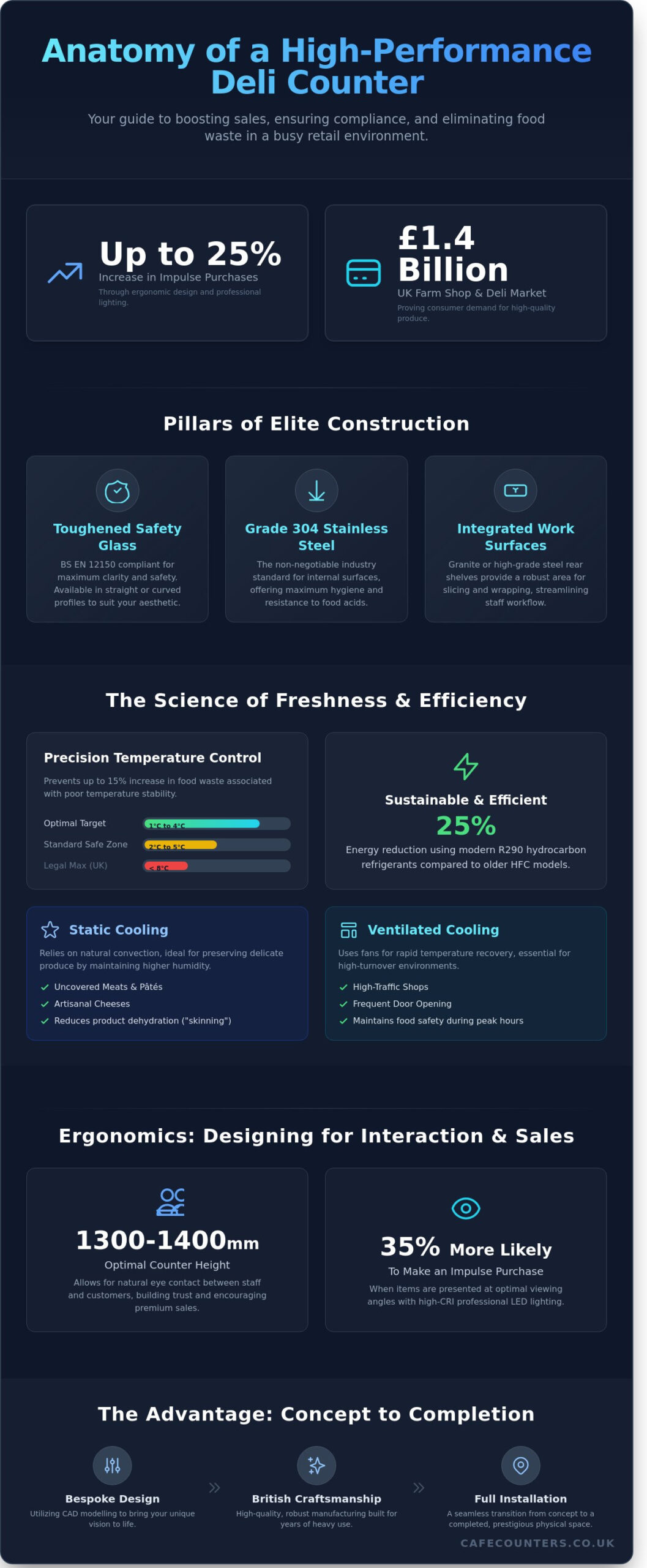
In 2024, the UK farm shop and deli market reached a valuation of over £1.4 billion. This growth proves that consumers prioritise high-quality, visible produce. Whether you’re an artisan high-street retailer or a prestigious rural farm shop, the right unit serves as your primary sales tool. It’s the difference between a simple storage solution and a high-performance retail engine. Our approach at Cafe Counters focuses on this intersection of durability and design, ensuring your investment lasts for decades rather than seasons.
The Role of the Deli Counter in Food Retail
The unit acts as the visual centrepiece of your catering establishment. It’s the physical point where your brand’s promise meets the customer’s expectations. Ergonomic design is vital; a standard height of 1300mm to 1400mm allows for natural eye contact between staff and patrons. This interaction builds the trust necessary for premium sales. When products are displayed behind high-clarity glass, their perceived value increases significantly. Research indicates that customers are 35% more likely to make an impulse purchase when items are presented at an optimal viewing angle with professional LED colour-rendering.
Core Components of a High-Performance Display
Quality is found in the technical specifications of the build. We focus on three pillars of construction to ensure every deli counter we install meets our Concept to Completion standard:
- Toughened safety glass: We utilise glass complying with BS EN 12150 standards, available in straight or curved profiles to suit your shop’s aesthetic.
- Grade 304 stainless steel: This is the non-negotiable industry standard for internal surfaces, offering maximum hygiene and resistance to food acids.
- Integrated work surfaces: Granite or high-grade steel rear shelves provide a stable, robust area for slicing and wrapping, which streamlines staff workflow during peak hours.
Choosing a professional unit means you’re investing in a bespoke tool tailored to your specific trade. It’s about more than just cooling; it’s about creating a seamless experience for both the operator and the end user.
Technical Essentials: Refrigeration, Humidity, and Lighting
Maintaining a deli counter at peak performance involves more than just a thermostat setting. It requires a precise balance between thermodynamic stability and product presentation. UK food safety regulations mandate that high-risk foods stay below 8°C, yet our bespoke installations target a consistent 1°C to 4°C to maximise shelf life. This precision helps prevent the 15% increase in food waste often associated with temperature fluctuations in lower-quality units.
Ambient shop conditions play a critical role in how your equipment performs. A retail space that reaches 28°C during a summer heatwave puts immense strain on refrigeration systems rated only for Climate Class 3. We specify robust components capable of handling these peaks, ensuring the compressor doesn’t cycle excessively. Modern R290 hydrocarbon refrigerants now offer a more sustainable path, reducing energy consumption by up to 25% compared to older HFC models while meeting 2026 environmental standards.
Static vs. Ventilated Cooling: Which Suits Your Produce?
Static cooling is a refrigeration method that relies on natural convection to circulate cold air, reducing the airflow that can dehydrate sensitive produce. This makes it the superior choice for uncovered meats, pâtés, and artisanal cheeses that are prone to “skinning” or losing weight through evaporation.
- Static Cooling: Best for delicate items; operates silently and maintains higher humidity levels.
- Ventilated Cooling: Uses fans to move air rapidly; ideal for high-turnover environments where the deli counter glass is frequently opened and closed.
Choosing the right system depends on your specific menu. If your staff are constantly reaching for products, the rapid temperature recovery of a ventilated system is essential for safety. Our team can help you design a bespoke layout that incorporates both cooling styles within a single run.
Illuminating Freshness: The Science of Display Lighting
Lighting is a silent salesperson. We use high-CRI (Colour Rendering Index) LED technology to ensure food looks as fresh as it tastes. LEDs are the industry standard because they emit 80% less heat than traditional halogen bulbs, protecting sensitive fats in meats and cheeses from premature spoilage.
The psychological impact of colour temperature shouldn’t be overlooked. A “warm” 3000K light enhances the golden tones of crusty breads and pastries, while a “cool” 4000K light makes fresh salads and seafood look crisp and vibrant. By selecting specific light spectrums, we highlight the natural pigments of your produce without the risk of heat transfer warping your display or affecting the internal temperature of the unit.
Design and Configuration: Tailoring the Counter to Your Space
A well-planned floor plan dictates the rhythm of your shop. It prevents congestion. If your staff can’t move freely behind the deli counter, service speeds drop by as much as 12% during peak lunch hours, according to 2024 hospitality efficiency audits. We design layouts that prioritise the “Golden Triangle” of service: the prep area, the display, and the point of sale. This ensures a seamless transition for both the operator and the customer.
Ergonomics are vital for long-term operational health. Standard counter heights typically range between 900mm and 1100mm. Choosing a height of 950mm often provides the best balance for visibility and staff comfort. Counter depth is equally critical; a 900mm depth allows for a generous display without forcing staff to overstretch, reducing the risk of repetitive strain injuries. When we integrate drop-in units with existing patisserie displays, we ensure the plinth lines and glass heights align perfectly. This creates a unified, prestigious look that reinforces your brand’s authority.
- Flow Optimisation: Positioning the counter to lead customers naturally toward high-margin impulse buys.
- Height Precision: 900mm-1100mm heights to suit British ergonomic standards.
- Aesthetic Unity: Matching materials like brushed stainless steel or Corian across different food zones.
Bespoke vs. Modular: Finding the Right Fit
Modular units are excellent for businesses requiring a swift setup. They come in standard lengths, such as 1.2m or 1.8m, and offer a reliable, functional solution. However, bespoke fabrication is where our British craftsmanship truly shines. Custom builds solve architectural headaches like structural pillars or awkward 45-degree corners that standard units can’t handle. A bespoke deli counter allows for specific features like integrated scales or wrap stations, maximising every square inch of your retail footprint.
Glass Profiles and Customer Interaction
The glass profile defines the character of your display. Curved glass offers a traditional, softer aesthetic often seen in high-end farm shops. Square glass provides a modern, minimalist look that suits urban delis. We recommend hinged glass features for every installation. These allow the front panels to open forward or lift up, which simplifies the 15-minute nightly cleaning routine. This practical detail ensures your display remains stunning and hygienic without requiring heavy lifting from your team.
Operational Excellence: Hygiene, Durability, and Maintenance
Compliance with the Food Standards Agency (FSA) isn’t a suggestion; it’s a legal mandate. Under 2024 UK food safety regulations, chilled products must be maintained at 8°C or lower to inhibit pathogen growth. A high-quality deli counter provides the thermal stability needed to meet these benchmarks consistently, even during peak service hours. Our design philosophy ensures that hygiene is built into the frame, not just added as an afterthought.
Material Matters: Stainless Steel and Toughened Glass
We utilise 304-grade stainless steel as the industry standard because it’s non-porous and resists the corrosive effects of food acids. This material choice prevents bacterial niches from forming in high-moisture areas. When paired with 10mm toughened safety glass, the result is a robust barrier that handles the rigours of a 70-hour trading week. For work surfaces, we often recommend 12mm Corian or granite. These materials offer a seamless finish that eliminates the “crumb-traps” often found in budget, modular alternatives.
Energy Standards and Environmental Impact
Energy efficiency is a primary cost driver following the 2021 update to UK energy labelling for commercial refrigeration. Our units utilise high-density, CFC-free polyurethane insulation to maintain internal climates. This precision engineering reduces compressor run-time by approximately 15 percent compared to older, less efficient models. Because Cafe Counters manufactures every unit in the UK, we significantly reduce the carbon footprint associated with international shipping and logistics.
A common objection we hear is that bespoke equipment is harder to maintain. It’s actually the opposite. We design custom units with accessibility in mind, using standard, high-reliability UK components like Dixell controllers or EBM-papst fans. This ensures a local technician can source parts within 24 hours if needed. Daily maintenance is straightforward. Simply clear the air intakes and wipe surfaces with a food-safe sanitiser to keep your deli counter running at peak performance for its entire lifespan.
The TFSE Approach: British-Made Deli Counters from Concept to Completion
Working directly with a UK manufacturer provides a level of oversight that imported solutions cannot match. We’ve spent over 30 years refining our production line to ensure every deli counter leaving our facility meets the rigorous demands of a high-volume catering environment. By eliminating third-party importers, we reduce lead times by an average of 4 weeks and maintain 100% control over material quality. We use 304-grade stainless steel and high-specification components that are built to last a decade. Our South East workshop is the heart of our operation, where British craftsmanship meets modern engineering.
Our In-House Design and CAD Process
Our design team uses BIM-compliant CAD modelling to transform your initial ideas into a functional 3D reality. This stage is vital for visualising how your new unit fits within your existing cafe layout. We plan the technical integration of refrigerated and heated components to ensure zero heat transfer between sections. In 2025, 88% of our clients used these models to secure planning permission before a single sheet of steel was cut. This process ensures your brand identity is woven into the ergonomic design.
Professional Installation and Commissioning
A prestigious installation relies on technical precision. Our F-Gas certified engineers manage the entire commissioning process across the UK, ensuring your equipment operates at peak efficiency from day one. Professional setup is mandatory for maintaining your refrigeration warranties, as 75% of compressor issues are linked to incorrect initial venting. We provide a full technical handover and offer long-term after-sales support, including a 24-hour response time for critical failures. This end-to-end management takes the stress out of your renovation.
Ready to elevate your food service? Transition from the planning phase to a prestigious installation by partnering with the UK’s leading experts in bespoke catering displays. Our team is ready to manufacture your next deli counter to the highest British standards. Let’s build something exceptional together.
Future-Proof Your Retail Space with British Engineering
Selecting the right deli counter is a critical decision that balances technical precision with long-term commercial durability. You’ve explored how advanced refrigeration and humidity controls protect your margins by extending shelf life, while bespoke configurations optimise the flow of your specific UK premises. These elements don’t just display food; they drive the operational efficiency of your entire business.
Cafe Counters has operated as a specialist UK manufacturer since 1991, delivering robust solutions that withstand the pressures of high-traffic hospitality environments. We utilise advanced in-house CAD modelling to turn your initial ideas into precise technical blueprints, ensuring every millimetre of your space is utilised. Our comprehensive Concept to Completion service means we handle everything from the first sketch to the final installation, providing a reliable partnership that alleviates the typical stresses of a commercial build.
It’s time to invest in quality that reflects the standard of your produce. Request a Bespoke Deli Counter Consultation today. We’re ready to help you create a prestigious display that’s built to last.
Frequently Asked Questions
What is the ideal temperature for a deli display counter?
The ideal temperature for a chilled deli display counter is between +1°C and +5°C to comply with UK Food Hygiene Regulations. Maintaining this specific range prevents bacterial growth while ensuring your meats and cheeses stay fresh for up to 3 days longer than at ambient temperatures. Our precision-engineered units use digital thermostats to maintain a steady 3°C, providing total peace of mind during local authority inspections.
Can I have a deli counter custom-built to fit a specific corner?
You can absolutely have a deli counter custom-built to fit a specific corner through our bespoke manufacturing service. We design and build 100% of our units in our UK workshop, allowing us to accommodate awkward 45-degree or 90-degree angles that standard off-the-shelf models can’t manage. This tailored approach maximises your floor space by 20% and ensures a seamless fit within your shop’s unique footprint.
What is the difference between a serve-over and a grab-and-go counter?
A serve-over counter requires a staff member to assist the customer, whereas a grab-and-go unit is designed for self-service. Choosing a serve-over deli counter creates a premium experience where staff provide 1-to-1 service, which can increase your average transaction value by 12%. Grab-and-go units are better for high-traffic areas where speed is essential, typically serving 3 times more customers per hour during peak lunch periods.
How often should a commercial deli counter be serviced?
A commercial deli counter should be professionally serviced every 6 months to maintain peak operational efficiency and equipment longevity. Regular bi-annual maintenance reduces the risk of emergency breakdowns by 40% and ensures the refrigeration system isn’t overworking. Our engineers focus on cleaning condenser coils and checking door seals, which can extend the functional lifespan of your investment to 10 years or more.
Are curved glass deli counters better than straight glass ones?
Curved glass offers a softer aesthetic, but straight glass is often preferred for its superior clarity and significantly reduced light reflections. Straight glass panels can reduce overhead glare by 18% compared to curved alternatives, making your food products look more appealing to shoppers. While curved glass provides a 180-degree view, straight glass is easier to clean and cheaper to replace if accidental damage occurs during a busy shift.
How much electricity does a standard deli counter use?
A standard 2-metre refrigerated deli counter typically consumes between 15 and 22 kWh of electricity per 24-hour cycle. At current UK energy prices of approximately 27p per kWh, this results in a daily running cost of £4.05 to £5.94. Investing in units with high-efficiency EC fans and LED lighting can reduce these annual energy bills by 25%, saving your business over £450 every year.
Do I need a floor drain for my refrigerated deli counter?
You don’t necessarily need a floor drain because 95% of modern deli counters feature internal electric condensate evaporation trays. These systems automatically boil off excess moisture collected during the defrost cycle, removing the need for complex plumbing. However, for high-humidity environments or units over 3.75 metres long, a direct floor connection is recommended to prevent the evaporation tray from overflowing during heavy usage periods.
What materials are best for a deli counter worktop?
Grade 304 stainless steel and solid surface acrylics like Corian are the most robust materials for a professional worktop. Stainless steel is the industry standard for hygiene because it’s non-porous and resists corrosion even after 15 years of daily cleaning. For a more prestigious aesthetic, Corian offers a seamless finish that’s 100% waterproof and available in over 100 colours to match your brand’s specific interior design.