
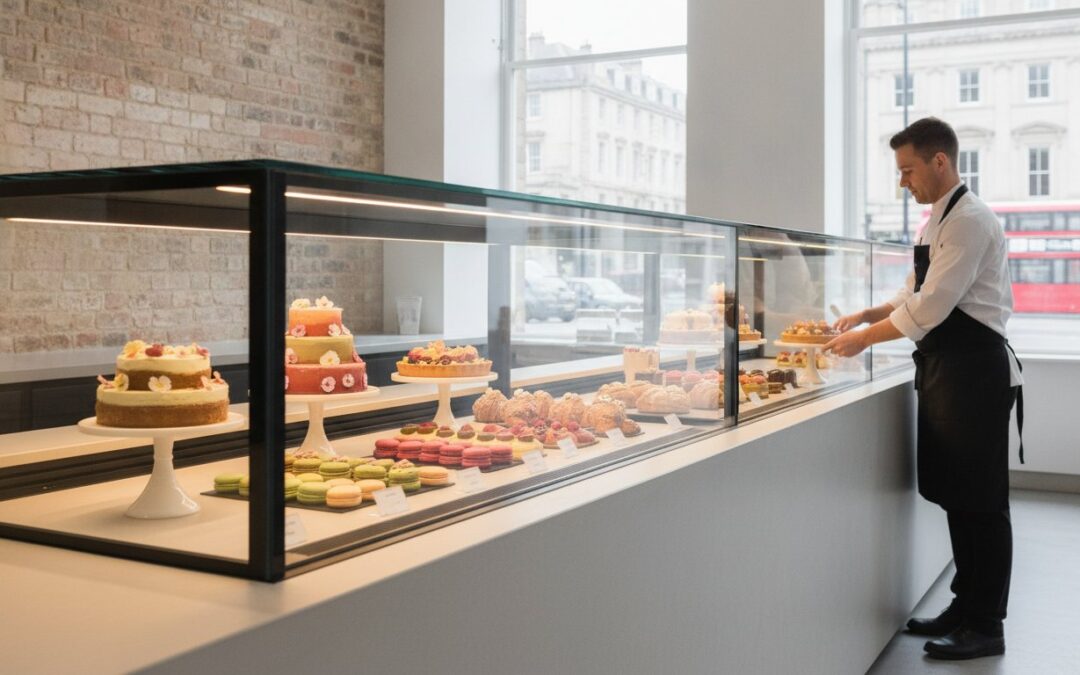
What if your patisserie display is actually costing you more in lost sales and energy waste than the artisanal cakes inside it are worth? It’s a common frustration for bakery owners who deal with condensation blocking their best work or off-the-shelf units that simply don’t fit their shop’s footprint. When you invest in patisserie display counters UK professionals recommend, you’re looking for more than just refrigeration. You’re looking for a precision-engineered stage that protects your margins and your reputation.
We understand that a reliable, attractive display is the heartbeat of a successful café or patisserie. This guide helps you select, design, and install the perfect unit to maximise your sales and ensure long-term freshness. You’ll learn how to achieve a seamless integration into your existing counter run while meeting the strict energy efficiency and food safety standards of 2026. We’ll walk you through the technical advantages of British-made equipment, from CAD-modelled bespoke designs to the latest low-GWP refrigerant technology that keeps your operating costs under control.
Key Takeaways
- Learn how professional lighting and glass clarity transform your refrigeration into a merchandising tool that drives impulse purchases.
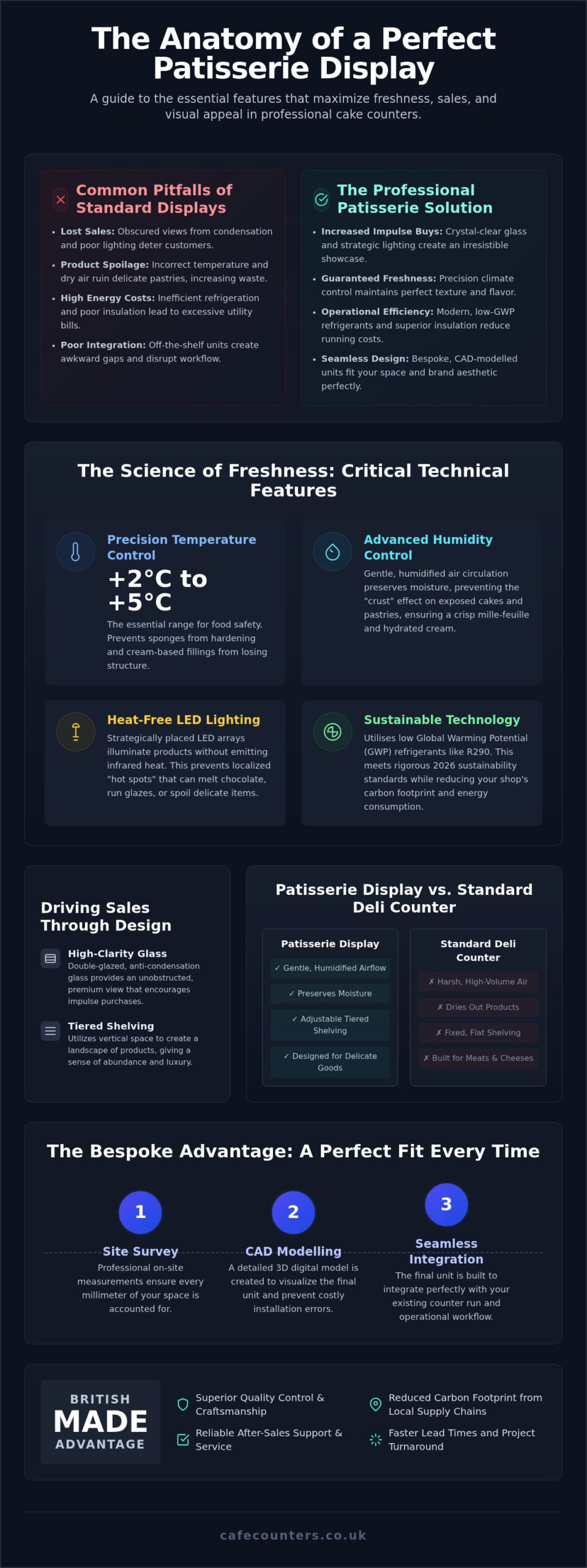
- Understand the precision temperature requirements (+2°C to +5°C) and humidity controls needed to maintain pastry texture and prevent spoilage.
- Explore the benefits of bespoke patisserie display counters UK built to integrate seamlessly into your specific shop dimensions and workflow.
- Discover how CAD modelling and professional site surveys prevent costly installation errors and ensure a perfect fit for your equipment.
- Evaluate the operational advantages of British-made displays, from superior quality control to the environmental benefits of local supply chains.
Maximising Visual Impact: Why Patisserie Display Counters Are Essential for UK Hospitality
A professional patisserie display is far more than a simple refrigeration unit; it functions as a high-specification merchandising tool that directly influences your bottom line. In the competitive UK hospitality market, the quality of your patisserie display counters UK choice often dictates whether a customer walks past or stops to make a purchase. These units act as a silent salesperson, bridging the gap between your kitchen’s craft and the customer’s desire. When you select a professional display case, you aren’t just buying a fridge; you’re investing in a precision-engineered stage designed to elevate your brand aesthetic.
The Sensory Experience of Food Display
Effective food display relies on creating a sense of abundance and luxury. By utilizing vertical space through tiered shelving, you can build a product landscape that feels generous and enticing. Maintaining a consistent temperature is vital to this sensory experience. Fluctuating levels can ruin delicate glazes or cause chocolate to bloom, destroying the visual appeal you’ve worked hard to create. Modern units must balance this visibility with energy efficiency. High-performance double glazing and precision thermal breaks help UK café owners manage rising utility costs without sacrificing the customer’s view of the merchandise.
Patisserie Displays vs. Standard Deli Counters
A common mistake in retail fit-outs is assuming a standard deli counter can handle delicate pastries. Patisserie requires specific airflow patterns to prevent the “crust” effect caused by drying out. While deli counters prioritize high-volume cooling for meats and cheeses, patisserie units focus on gentle, humidified air circulation that preserves moisture. The shelving in a patisserie unit is usually more adjustable to accommodate tall cakes or delicate tarts. You also need to consider the service model. Assisted-serve configurations offer a high-end feel that protects the product, while self-serve units are better for high-traffic environments where speed is the primary driver. Choosing the wrong configuration can lead to wasted space and lost sales.
The Science of Freshness: Critical Technical Features of Professional Cake Displays
Freshness in a high-end bakery isn’t accidental; it’s the result of precise engineering. While the visual appeal discussed in the previous section draws the customer in, the technical performance of patisserie display counters UK keeps them coming back. Maintaining a precise temperature range between +2°C and +5°C is essential for food safety and product integrity. If the air is too cold, delicate sponges harden; if it’s too warm, cream based fillings lose their structure. We focus on achieving this balance through advanced thermal management that meets the rigorous 2026 sustainability standards. Modern units now utilise low-GWP refrigerants like R290, which offer superior cooling capacity while significantly reducing your shop’s carbon footprint.
Humidity control is the unsung hero of pastry preservation. Without it, exposed products succumb to the “crust” effect, where the air strips moisture from the surface of your cakes. Professional displays mitigate this by managing airflow speed and moisture levels, ensuring a mille-feuille remains crisp while the pastry cream stays hydrated. To compliment this, the shift toward heat-free LED arrays is now standard. Unlike traditional bulbs, these lights don’t emit infrared heat, preventing localized “hot spots” that can melt chocolate or cause glazes to run. When planning your layout, choosing the right patisserie displays ensures your technical requirements meet your aesthetic goals.
Advanced Refrigeration and Airflow
Ventilated cooling is generally superior for patisserie because it uses fans to circulate air evenly across every shelf. This eliminates the temperature pockets often found in static cooling systems. However, this air movement must be gentle to avoid drying out the product. Automatic defrost cycles are also critical. They prevent ice build-up on the evaporator, which otherwise forces the compressor to work harder and increases energy bills. By using high-performance, high-density polyurethane insulation, we ensure that the cold stays inside the cabinet, providing a reliable environment for your stock while keeping operational costs low.
Glass Technology and Visibility
Visibility is only useful if it’s consistent. In many UK environments, high ambient humidity can lead to condensation on the glass. We solve this using heated glass or advanced anti-mist coatings that maintain total transparency 24/7. Frameless, bonded double-glazed designs provide an uninterrupted look, making the glass almost invisible to the customer. We also incorporate UV-protected glass in our builds. This feature is vital for preventing the degradation of natural food colourings and delicate fats, which can be damaged by prolonged exposure to shop lighting or natural sunlight through a storefront.
Bespoke vs. Standard: Choosing the Right Counter Configuration for Your Space
Selecting the right configuration for your shop floor requires a careful balance between immediate availability and long-term operational harmony. Standardized patisserie display counters UK retailers often choose are excellent for quick-turnaround projects where a standalone unit meets the immediate need. However, for establishments aiming for a premium, integrated aesthetic, bespoke manufacturing offers the ability to match your display units to a specific shop layout. This eliminates the wasted space often found when forcing off-the-shelf units into unique architectural corners or existing counter runs.
Standard Professional Units
Standard standalone cake display fridges are built to common industry dimensions, making them a reliable choice for smaller cafes or modular kitchen setups. In the UK market, you’ll typically find depths of 675mm or 525mm, designed to pass through standard doorways and fit into conventional layouts. While these units offer shorter lead times, they don’t always align with the height of your serving staff or the specific eye-level of your customers. If you need a reliable cooling solution within a tight timeframe, a standard unit provides a predictable, high-quality result without an extensive design phase.
The Bespoke Manufacturing Process
The bespoke route transforms your refrigeration into a primary design feature. By tailoring the height, width, and shelving to your specific product range, you ensure that every square inch of the unit works to generate revenue. This process often involves integrating drop-in units into a continuous counter surface, creating a seamless flow that guides the customer from the entrance to the point of sale. Our internal production facilities allow us to coordinate these displays with other commercial food display counters, ensuring a unified look across refrigerated, ambient, and heated sections.
Material choices play a critical role in this alignment. While high-grade stainless steel remains the benchmark for hygiene and durability, bespoke cladding allows you to use materials like stone, timber, or custom laminates that match your interior design scheme. This level of customisation ensures that your technical equipment doesn’t look like an industrial afterthought but rather a central part of your brand’s physical identity. Using CAD modelling, we help you visualise this integration long before the first piece of steel is cut in our UK facility, ensuring the final physical space matches your original vision.
Planning Your Installation: From CAD Modelling to Professional Commissioning
The transition from an initial vision to a functional shop floor is a meticulous process that requires more than just a tape measure. A professional site survey acts as the foundation for any successful project involving patisserie display counters UK businesses rely on for their daily trade. We use this initial phase to identify potential pitfalls, such as restricted access points or uneven flooring, before they become costly delays. By employing CAD modelling, we allow you to visualise the final layout in high detail before any metal is cut. This digital blueprint ensures that every millimetre of your space is utilised effectively, providing a steady, reliable hand in what can often be a complex construction environment.
Managing the technical services behind the scenes is just as critical as the front-facing aesthetic. Refrigerated units require specific electrical loads and, in many cases, dedicated drainage for condensate. We guide you through these requirements early in the design phase to ensure your site is prepared for the arrival of your equipment. Professional commissioning follows the physical installation, where we verify that the equipment operates perfectly within its specified parameters. This final check is vital for long-term reliability and equipment longevity, as it ensures the internal components are tuned to your specific shop environment.
Designing for Operational Efficiency
Creating a space that works for both your patrons and your team is essential for sustained profitability. We focus on ensuring a smooth cafe customer flow around the display area to prevent bottlenecks during peak hours. Ergonomic considerations are equally important; we design for ease of cleaning and serving to reduce staff fatigue. Depending on your service model, you might prefer the security of rear-access units for staff-led service or front-access configurations for high-traffic self-service environments. These choices impact how quickly you can restock and how easily your team can maintain hygiene standards throughout the day.
The Installation Journey
The on-site setup phase is where our methodical planning translates into a physical reality. Our team manages the technical integration of drop-in refrigerated displays, ensuring they sit perfectly flush with your bespoke counter runs. Once the physical installation is complete, we conduct rigorous post-installation testing and provide staff training on basic maintenance and controller operation. This end-to-end management alleviates the stress of the build, allowing you to focus on your grand opening. If you’re ready to begin your project, you can view our range of professional counters to see how we bring these technical details to life.
The British Manufacturing Advantage: Why TFSE Products Ltd Leads in Patisserie Display Solutions
Choosing patisserie display counters UK businesses can trust involves looking beyond the spec sheet to the origin of the equipment. Many competitors act as resellers for imported units, which often limits your ability to customise or receive direct technical support. At TFSE Products Ltd, we’ve operated our own UK-based manufacturing facility since 1991. This direct oversight ensures that every weld, glass bond, and refrigeration component meets our rigorous quality standards before it leaves the factory floor. By choosing locally produced equipment, you also significantly reduce the carbon footprint associated with international shipping and complex global supply chains, aligning your business with modern sustainability expectations.
End-to-End Project Management
TFSE Products Ltd acts as your expert partner, guiding you through the journey from an initial concept to a finished physical space. Our end-to-end project management means you have a single point of contact who understands both the design aspirations and the technical constraints of your project. We’ve spent decades transforming retail spaces with bespoke cafe counters that blend aesthetic appeal with high-performance engineering. Our commitment to high-end CAD design allows for precision engineering, ensuring that your patisserie display integrates perfectly with other counters, even in challenging architectural layouts. This collaborative approach alleviates the stress of commercial projects by projecting total competence and reliability at every stage.
Long-Term Reliability and Maintenance
We design our units for long-term reliability and ease of maintenance. A common frustration with imported units is the difficulty in sourcing parts or accessing internal components for routine servicing. We prioritise serviceability by ensuring easy access to key mechanical parts, which reduces downtime and extends the life of your investment. By using high-grade materials like food-grade stainless steel and heavy-duty double glazing, we build equipment that withstands the daily pressures of a busy commercial environment. Comprehensive after-sales support comes directly from the people who built the unit, providing you with the technical expertise required to bring your vision to life and keep it running. This focus on durability ensures your investment pays off through years of trouble-free operation, providing a steady, reliable hand for your business’s future.
Elevating Your Retail Space with Precision Engineering
Selecting the right equipment is a pivotal decision that impacts your brand’s visual identity and your daily operational costs. We’ve explored how technical features like humidity control and heat-free LEDs protect your products while driving impulse sales. By choosing patisserie display counters UK retailers trust, you ensure that your shop floor operates with maximum efficiency and style. A well-planned display doesn’t just store food; it creates an experience that justifies premium pricing and builds customer loyalty.
Since 1991, TFSE Products Ltd has provided a steady hand in the manufacturing of high-performance food displays. Our process includes expert CAD modelling for every bespoke project, followed by comprehensive UK-wide installation and commissioning to guarantee long-term reliability. We’re ready to help you translate your vision into a physical reality that delights your customers and secures your investment. Trusting in British craftsmanship means choosing durability, quality control, and a partner who understands the unique pressures of the UK hospitality sector.
Contact TFSE Products Ltd for a Bespoke Patisserie Display Consultation and take the first step towards a superior retail environment. We look forward to bringing your project to life.
Frequently Asked Questions
What is the ideal temperature for a patisserie display counter?
Chilled patisserie display counters UK regulations require must maintain a temperature between 0°C and 5°C to ensure food safety. Our specific units are designed to operate within a precision range of +2°C to +6°C. This range is critical for maintaining the structural integrity of cream based fillings while preventing sponges from hardening. Consistent temperature management ensures your delicate pastries remain fresh and safe for consumption throughout the trading day.
Do I need a floor drain for my refrigerated cake display?
Whether you need a floor drain depends on the specific refrigeration system and the volume of condensate your unit produces. While many modern standalone units feature automatic condensate evaporation systems, high-capacity or bespoke integrated displays may require a dedicated plumbed waste connection. We identify these requirements during the initial CAD modelling and site survey phase. This proactive planning ensures your shop floor remains dry and meets all local hygiene standards without unexpected plumbing issues.
Can I integrate a patisserie display into an existing counter run?
You can absolutely integrate a patisserie display into an existing counter run using specialised Integrate Drop-in Units. These components are designed to sit flush within a custom aperture, creating a seamless visual transition between refrigerated and ambient sections. This approach is ideal for maintaining a unified brand aesthetic while maximising your available floor space. Our design team uses precision measurements to ensure the drop-in unit aligns perfectly with your current counter’s height and depth.
How often should I service my patisserie display unit?
You should schedule a professional service for your patisserie display unit at least every six to twelve months. Regular maintenance involves cleaning the condenser coils, checking refrigerant levels, and verifying that door seals remain airtight. This preventative approach extends the lifespan of the compressor and ensures energy-efficient operation. Keeping a consistent service record also helps you remain compliant with F-Gas regulations and prevents the sudden equipment failure that leads to costly product waste.
What is the difference between ventilated and static cooling for cakes?
Ventilated cooling uses internal fans to circulate chilled air evenly across every shelf, whereas static cooling relies on natural convection. For patisserie, ventilated systems are generally superior because they eliminate warm spots and recover temperatures quickly after the doors are opened. While static cooling is quieter and less likely to dry out exposed products, modern ventilated patisserie display counters UK professionals choose use precision airflow to maintain humidity while ensuring a consistent temperature for every cake.
How long does a bespoke patisserie display take to manufacture?
The manufacturing timeline for a bespoke patisserie display typically ranges from six to ten weeks, depending on the complexity of the design and material choices. Because we operate our own UK-based manufacturing facility, we maintain total control over the production schedule and quality checks. This timeframe includes the initial CAD design phase, material procurement, and rigorous factory testing. We provide a clear project schedule from the outset so you can coordinate your shop’s grand opening with confidence.
Are LED lights better for patisserie displays than fluorescent ones?
LED lights are significantly better for patisserie displays because they emit virtually no infrared heat. Traditional fluorescent bulbs can create localized hot spots that melt chocolate or cause delicate glazes to run. LEDs are also more energy-efficient and offer a higher Colour Rendering Index (CRI), which makes the natural colours of your cakes appear more vibrant and appetizing. Switching to LED arrays reduces your operational costs while ensuring your products look their absolute best under the glass.
Can I choose custom materials for the exterior of my display counter?
You have full flexibility to choose custom materials for the exterior of your display counter to match your interior design scheme. While the internal structure uses food-grade stainless steel for hygiene, the external cladding can range from high-end stone and timber to custom laminates or powder-coated metals. This level of customisation ensures that your technical equipment integrates seamlessly with your brand’s aesthetic. We work closely with your designers to ensure the chosen materials are both durable and visually striking.