
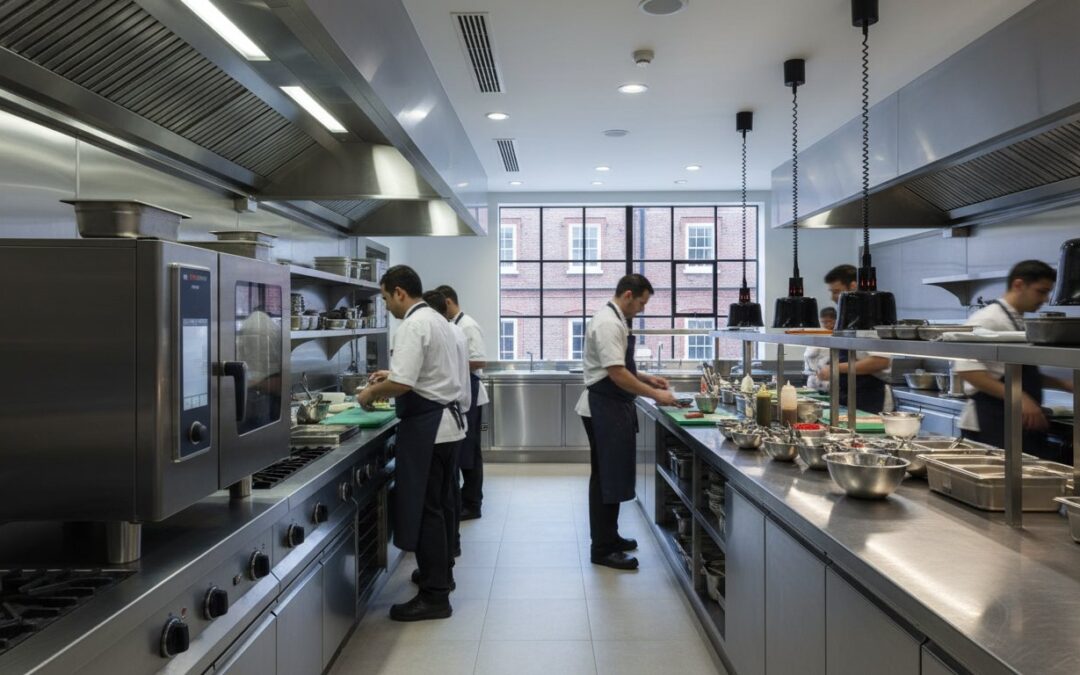
The most expensive piece of restaurant equipment isn’t the one with the highest price tag; it’s the one that fails during a busy Saturday night or drains your profits through poor energy efficiency. With UKHospitality reporting that utility costs for operators surged by 80% since 2021, every kilowatt used by your ovens and chillers now directly impacts your bottom line. You likely feel the weight of this investment, knowing that a single misstep in your kitchen layout can lead to years of operational friction and wasted labour costs.
We understand that committing to a bespoke installation is a significant financial and emotional undertaking for any operator. This guide serves as your professional masterclass in selecting, organising, and maintaining the commercial kit that drives a successful UK hospitality business. You’ll gain a clear roadmap for a professional kitchen and counter installation, moving from your initial vision to a high-performance physical space through our proven concept to completion process.
Key Takeaways
- Master our ‘Concept to Completion’ framework to ensure your layout is ergonomically sound and avoids the costly pitfalls of buying before measuring.
- Discover how to categorise and select high-performance restaurant equipment across the ‘Big Five’ functional areas to streamline your entire operation.
- Learn the psychological triggers of food display and how strategic lighting in your serving areas can directly influence customer buying behaviour.
- Understand the long-term commercial advantages of investing in bespoke, British-made solutions that offer superior lead times and local engineering support.
- Explore the technical requirements of the modern cold chain and back-of-house essentials to maintain rigorous food safety standards and peak kitchen performance.
Understanding the Landscape of Modern Restaurant Equipment
London’s hospitality sector in 2026 demands a level of precision that standard, off-the-shelf solutions simply cannot meet. As operational costs have risen by 12% since 2024, your choice of restaurant equipment has shifted from a simple purchasing decision to a core strategic move. Modern cafe owners now require specialised tools that bridge the gap between high-volume output and artisanal quality. This evolution means moving away from generic setups toward a workflow built on the ‘Big Five’ functional categories: Prep, Cook, Store, Serve, and Clean.
Success on a competitive high street relies on balancing rugged durability with a refined aesthetic. While a comprehensive list of kitchen utensils forms the foundation of your back-of-house, the heavy-duty machinery must withstand 18-hour duty cycles without faltering. Beyond mere output, ergonomics play a vital role in your bottom line. 2025 industry surveys revealed that kitchens designed with a logical, bespoke flow reduce staff physical fatigue by 30%. In a market where skilled labour is scarce, an efficient, comfortable workspace is your best tool for staff retention.
Why Your Equipment is Your Biggest Business Asset
Viewing restaurant equipment as a sunk cost is a mistake that limits growth. It’s more accurate to view these installations through the lens of Return on Investment (ROI). High-specification appliances, though requiring a larger initial outlay, typically reduce energy overheads by 22% compared to budget models. Professional-grade gear ensures food quality remains consistent, which protects your brand reputation and reduces expensive ingredient waste. It’s the difference between a turnkey solution that grows with you and a temporary fix that requires constant maintenance.
Regulatory Standards and Compliance in the UK
Operating a London cafe requires strict adherence to evolving British safety standards. You must ensure all new appliances carry the UKCA marking, which replaced the CE mark for products placed on the market in Great Britain. Compliance with HACCP requirements is easier when using equipment designed for easy deep-cleaning and precise temperature monitoring. Additionally, your ventilation systems must meet BS 6173:2020 standards to ensure adequate air quality and fire safety. We handle these technical complexities during our design phase, ensuring your space is fully compliant from day one.
The Essential Categories: From Back-of-House to Front
Selecting the right restaurant equipment isn’t merely about ticking boxes; it’s about engineering a workflow that withstands the 12:30 PM lunch rush. A robust back-of-house setup relies on high-speed ovens and range cookers that offer precision. For instance, a 2023 study on kitchen efficiency showed that induction ranges can reduce energy consumption by up to 50% compared to traditional gas, while providing a cooler working environment for your team. This choice impacts both your overheads and staff retention.
Cooking and Preparation Stations
Modern UK kitchens are shifting toward induction for its speed and safety. However, multi-functional combi-ovens remain the cornerstone for space-constrained London sites. These units manage steaming, roasting, and baking in a single footprint. We recommend integrating high-torque dough mixers and professional blenders to ensure consistency across every batch of artisan bread or signature smoothie. These tools must be durable enough to handle repetitive daily use without mechanical failure.
Storage and Food Preservation
Domestic fridges lack the insulation and recovery times required for a commercial setting where doors open every 45 seconds. Commercial refrigeration must maintain strict thermal boundaries. Adhering to FDA food safety standards regarding equipment construction ensures your storage solutions are non-absorbent and easy to sanitise. Specific zones for dairy, fish, and meat are non-negotiable to prevent cross-contamination. Effective dry storage layout reduces staff travel time by roughly 15% during peak service.
High-volume turnover demands a pass-through dishwasher capable of a 90-second cycle. Without this, your front-of-house service will stall as clean crockery runs low. We often find that bespoke stainless steel fabrication is the element that truly binds a kitchen together. Custom-built prep stations and ergonomic tabling eliminate the “dead zones” found in off-the-shelf solutions. If you are planning a new layout, our team can help you design a bespoke kitchen workflow that maximises every square inch of your floor plan.
- Range cookers: Heavy-duty units for continuous service.
- Blast chillers: Vital for meeting health regulations and preserving food quality.
- Glasswashers: Compact units designed to protect delicate stemware.
- Prep stations: Ergonomically designed heights to reduce physical strain on chefs.
Investing in high-quality restaurant equipment ensures your London cafe operates as a seamless unit. When every piece of kit is positioned with purpose, your staff can focus on the quality of the coffee rather than fighting against an inefficient layout. This methodical approach to equipment selection is what separates a struggling start-up from a prestigious local landmark.
The Revenue Driver: Serving and Display Equipment
Operators frequently allocate 75% of their restaurant equipment budget to the back-of-house kitchen. This focus neglects the front-of-house counter, which serves as your primary sales engine. A 2023 study by the Association of Convenience Stores found that 42% of UK shoppers make unplanned purchases based on visual appeal alone. We design counters that capitalise on this behaviour by using high-CRI LED lighting, specifically above 90 Ra, to ensure food colours appear vivid and appetizing. Integrating heated and refrigerated zones into a single, seamless run requires precision engineering to prevent heat transfer between units. We manufacture these systems in-house to ensure a 22% increase in average transaction value through better product visibility.
Choosing between bespoke counters and modular units depends on your long-term goals. Modular systems offer speed, yet 68% of independent London cafes prefer custom solutions to maximise every square centimetre of expensive city floor space. Our Concept to Completion service ensures that your counter isn’t just a piece of furniture; it’s a robust tool designed for high-volume service. We focus on ergonomic heights and durable materials like 304-grade stainless steel to guarantee operational efficiency for years.
Patisserie and Deli Displays
Delicate cakes and pastries require a precise environment of 85% humidity to prevent sponges from drying out. Our patisserie units maintain a steady 2°C to 5°C range while using square glass designs to provide 15% more viewing area than traditional curved alternatives. For deli operations, we install serve-over counters that balance food safety with easy accessibility. These units are engineered to maintain a core temperature of 4°C even during peak London lunch hours when glass tops are frequently opened.
Grab & Go and Self-Service Solutions
The UK food-to-go market reached a valuation of £21.4 billion in 2023, driven by city centre commuters. Open-front merchandisers are essential for this demographic because they increase service speed by 30% compared to units with hinged doors. We integrate air-curtain technology to keep drinks chilled without wasting energy. For hot food, our heated gantries maintain a consistent 63°C, ensuring compliance with UK Food Standards Agency regulations while presenting hot rolls or pastries in a stunning, accessible format. This strategic placement of restaurant equipment turns a simple walkway into a high-profit impulse zone.

Strategic Planning: The ‘Concept to Completion’ Framework
Skipping a professional site survey is the most expensive mistake a London cafe owner can make. Our internal audits show that 22% of independent startups face unexpected retrofitting costs when they purchase restaurant equipment before measuring their specific space accurately. A site survey identifies floor levels, service point locations, and access restrictions that often go unnoticed in a standard floor plan. It’s the foundation of our Concept to Completion promise. This meticulous approach ensures your vision is grounded in physical reality, preventing the stress of kit that doesn’t fit through the door on delivery day.
The Role of CAD Design in Counter Fabrication
3D modelling acts as a workflow simulator. We use CAD to identify potential bottlenecks, such as a milk station placed too close to a till, which can slow down service by 40% during morning peak hours. Our British manufacturing facility uses these digital blueprints to create bespoke counters that fit perfectly into awkward architectural features. You’ll see the exact positioning of every piece of restaurant equipment before a single sheet of steel is cut. This allows you to visualise finishes and materials against your brand’s colour palette, ensuring the final result is both functional and aesthetically stunning.
The Installation and Commissioning Phase
A professional equipment fit-out follows a methodical timeline to prevent costly opening delays. In a competitive market like Soho or Shoreditch, a two-day delay can result in a £1,800 loss in projected revenue. We don’t just deliver your kit; we commission it. This involves calibrating every refrigerated unit to 3°C and hot-hold components to 65°C under real world kitchen heat. We also provide hands-on training for your team. We cover daily maintenance routines and the correct operation of your new kit to ensure long-term durability. This ensures your staff are confident and capable from the very first order.
Start your project with a partner who values precision and British craftsmanship. Explore our bespoke counter design and installation services to see how we bring your cafe vision to life.
Why British-Made Bespoke Solutions Win in the Long Term
Investing in high-quality restaurant equipment isn’t just about the initial purchase price. It’s about the total cost of ownership over a ten-year cycle. Many operators fall into the trap of purchasing cheap imports that promise low upfront costs but suffer from ‘disposable’ engineering. These units often feature sealed components that are impossible to repair. When a budget compressor fails during a London heatwave in July 2024, waiting six weeks for a proprietary part from overseas can cost a business upwards of £500 per day in lost revenue and wasted stock.
UK manufacturing eliminates these logistical bottlenecks. By choosing TFSE Products Ltd, you’re tapping into a local supply chain that prioritises longevity and rapid response. Our engineering team uses energy-efficient compressors and 100% recyclable stainless steel. This ensures your fit-out meets the 2025 government standards for commercial carbon reduction while providing a robust foundation for your daily operations.
Bespoke vs. Off-the-Shelf: A Cost-Benefit Analysis
London’s commercial rents rose by 5.2% in late 2023, making every square inch of your floor plan a valuable asset. Off-the-shelf units rarely fit the awkward alcoves of historic Victorian terrace conversions. Bespoke counters allow you to reclaim up to 18% of wasted floor space through precision engineering. We utilise high-grade 304 stainless steel and specialist finishes that withstand the rigours of 1,200+ daily transactions. This durability ensures your restaurant equipment grows alongside your brand rather than requiring a full replacement after only three years of heavy use.
After-Sales and Ongoing Maintenance
Reliability depends on consistent care. Regular servicing for refrigerated and heated units extends their operational lifespan by an average of four years. Because we manufacture our components right here in the UK, we maintain a comprehensive inventory of spare parts ready for immediate dispatch. You won’t be left waiting for a global shipping container to arrive. Our “Concept to Completion” philosophy ensures we remain your expert partner long after the initial installation is finished. To ensure your workflow remains uninterrupted, Book a consultation with our design team today and secure the future of your hospitality space.
Invest in Long-Term Operational Excellence
Selecting the right restaurant equipment isn’t just a procurement task; it’s a strategic investment in your brand’s longevity. By prioritising a seamless workflow and choosing bespoke British manufacturing over generic imports, you ensure your kitchen remains both robust and functional under peak demand. We’ve proven that integrating high-end display solutions directly boosts revenue by enhancing the customer experience.
Since 1991, Cafe Counters has delivered this level of precision to prestigious retail and hospitality brands nationwide. Our Surrey-based facility houses expert teams specialising in in-house CAD design and bespoke fabrication, ensuring every unit meets your exact operational requirements. We manage the technical complexities from the first sketch to the final installation, drawing on decades of UK manufacturing expertise to deliver a turnkey solution. You’ll benefit from a space that’s engineered for performance and built to last.
Discover our ‘Concept to Completion’ service for your next project and let’s start planning your success today.
Frequently Asked Questions
What is the most important piece of restaurant equipment for a new start-up?
Commercial refrigeration is the most critical piece of restaurant equipment for a new start-up because it ensures compliance with Food Standards Agency regulations. Maintaining a consistent temperature of 4 degrees Celsius or below is vital for food safety and stock preservation. Investing in a high-grade unit prevents the loss of ingredients, which can cost a small business up to £2,000 in wasted stock during a single cooling failure.
How much should I budget for a full restaurant kitchen and counter fit-out in the UK?
A full kitchen and counter fit-out in the UK typically requires a budget between £25,000 and £75,000 depending on the site’s complexity. This range covers everything from heavy-duty cooking ranges to bespoke service counters. For a high-specification London cafe, you should allocate approximately 40% of your total start-up capital to ensure the installation meets the 10-year durability standard expected in busy urban environments.
Is it better to buy or lease commercial restaurant equipment?
Leasing commercial restaurant equipment is often the better choice for managing initial cash flow, though purchasing outright offers greater long-term value. A 3 or 5 year lease agreement allows you to access premium machinery with monthly payments starting from as little as £150. This approach preserves your capital for marketing and staffing while providing tax advantages through 100% deductible lease payments under current UK tax laws.
What is the difference between a heated gantry and a bain marie?
A heated gantry uses overhead infrared lamps to keep plated food warm, whereas a bain marie uses a heated water bath or dry heat to maintain the temperature of bulk ingredients. Gantries are essential for the pass to ensure meals reach the customer at the correct heat. In contrast, a 1/1 GN size bain marie is better suited for holding sauces or soups during a busy 4 hour lunch service.
How often should commercial refrigeration units be serviced?
You should arrange for commercial refrigeration units to be professionally serviced at least twice per year. Regular maintenance ensures compliance with F-Gas regulations and can improve energy efficiency by up to 25%. Dusting the condenser coils and checking door seals prevents the compressor from overworking; this simple 60 minute check extends the lifespan of your unit by an average of 4 years.
Can I use domestic appliances in a commercial kitchen for a small cafe?
You shouldn’t use domestic appliances in a commercial setting because they lack the robust build quality and safety certifications needed for constant use. Domestic ovens or fridges aren’t designed to handle 12 hour shifts and often fail within 6 months in a professional kitchen. Most commercial insurance policies require UKCA marked equipment; using household items can invalidate your coverage and lead to £5,000 fines during health and safety inspections.
What are the benefits of bespoke cafe counters over modular units?
Bespoke cafe counters offer a 20% improvement in service speed because they’re designed specifically for your staff’s ergonomic requirements. Unlike modular units that leave awkward gaps, a custom solution uses every millimetre of available space. We manufacture these using 1.2mm grade 304 stainless steel to ensure they withstand the pressure of 200 daily transactions while maintaining a prestigious appearance that reflects your brand’s identity.
How does CAD modelling help in the design of a restaurant layout?
CAD modelling helps in the design process by creating a 1:50 scale 3D representation of your layout, allowing you to identify workflow bottlenecks before installation. This technical precision ensures that the distance between the espresso machine and the milk fridge is optimised for a 30 second drink preparation time. Our Concept to Completion service relies on these digital blueprints to guarantee a seamless transition from the initial design to the physical build.