
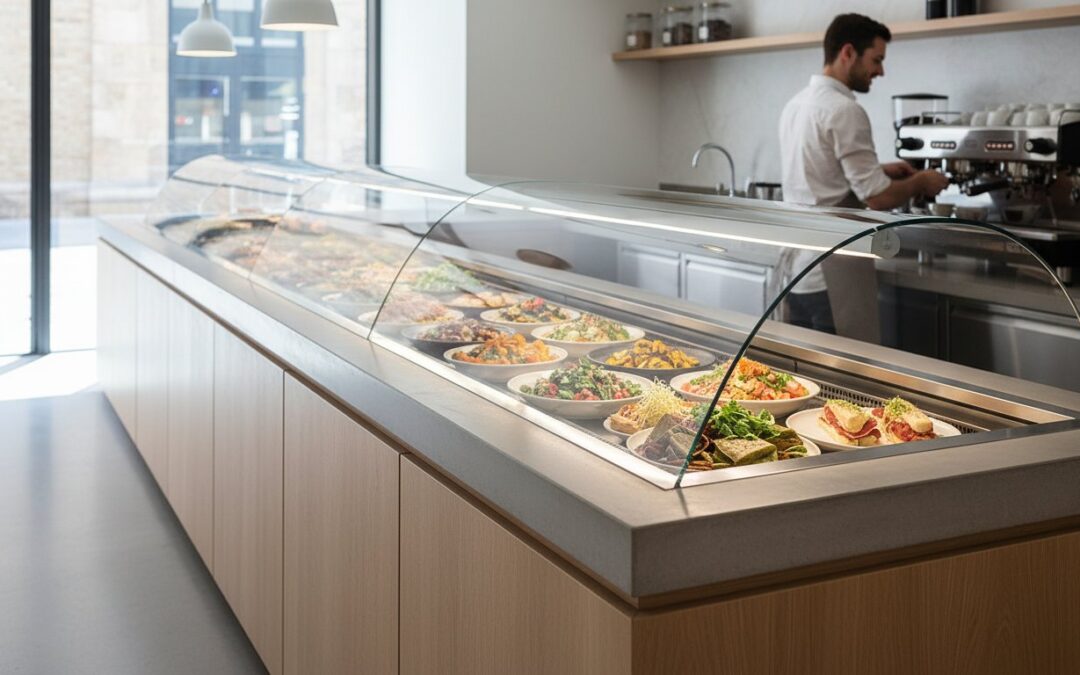
The most expensive bespoke counter in the UK is essentially a liability if the refrigeration fails within its first six months due to restricted airflow. It’s a common frustration for operators who invest in high-end aesthetics only to be met with compressor burnout or fluctuating temperatures. Integrating drop in refrigerated display units requires more than just a jigsaw and a power socket. It demands a meticulous understanding of ventilation pathways and thermal dynamics to protect your investment and maintain food safety standards.
We know you value a seamless finish where the equipment feels like a natural extension of the joinery rather than an afterthought. This guide provides the technical blueprint to select, specify, and integrate these units for a high-performance food service counter. You’ll learn how to navigate the 2026 energy efficiency regulations and ensure M1/M2 temperature stability while minimizing operational noise. We’ll walk you through the journey from initial cut-out dimensions to the final, prestigious installation that delivers both style and long-term durability.
Key Takeaways
- Achieve a prestigious, flush finish by understanding the precision engineering and exact “cut-out” dimensions required for seamless counter integration.
- Select the ideal cooling technology for your menu, ensuring your drop in refrigerated display units offer high-humidity or high-velocity air based on your specific food service needs.
- Protect your investment by mastering technical essentials like adequate condenser ventilation and adherence to UK Climate Class 3 standards for reliable performance.
- Maximise operational efficiency and food safety using industry-standard Gastronorm sizing and HACCP-compliant digital controllers for meticulous temperature monitoring.
- Leverage the advantages of bespoke British manufacturing to benefit from faster lead times and a comprehensive “Concept to Completion” service tailored to your unique space.
Understanding Drop-In Refrigerated Display Units
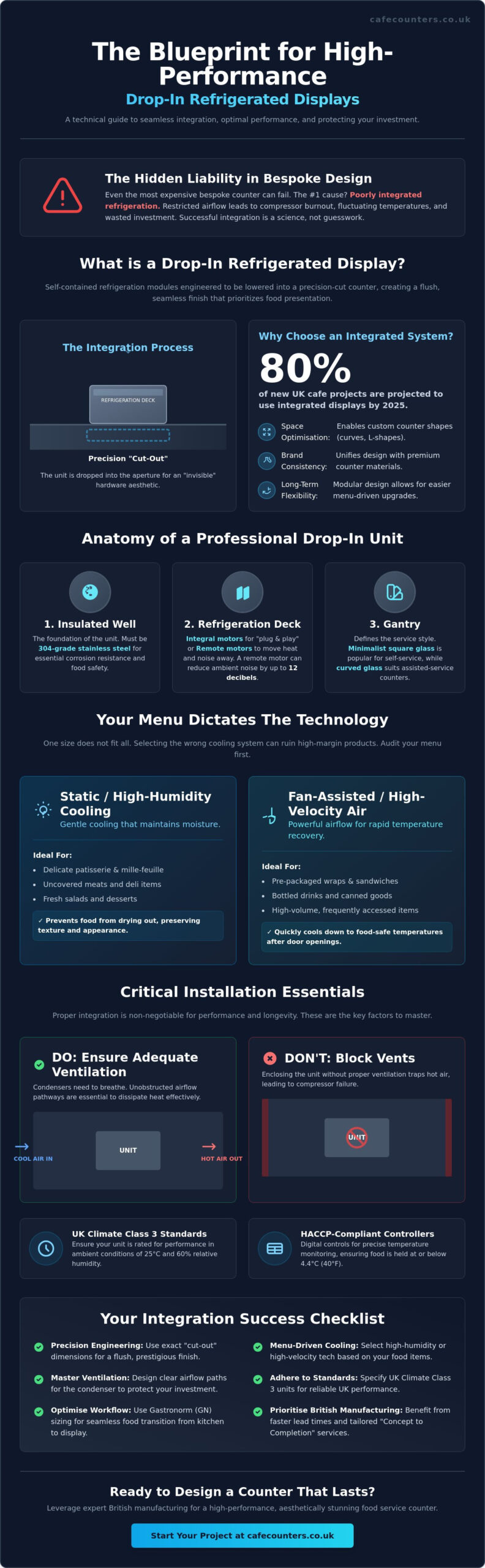
Drop-in refrigerated display units represent the pinnacle of professional counter design. These systems are self-contained or remote refrigeration modules engineered to be lowered into a precision-cut aperture within a serving counter. This integration creates a flush, seamless finish that prioritises the visual appeal of fresh food over the bulky exterior of traditional machinery. By 2025, industry data suggests that over 80% of new-build UK cafe projects favour this integrated approach to achieve a high-end, bespoke aesthetic.
The primary advantage is the “invisible” nature of the technology. When the machinery is hidden beneath the counter surface, the customer’s focus remains entirely on the product. This is a foundational concept in Understanding Display Cases and their role in modern merchandising. In the UK hospitality sector, these units are now standard in prestigious university refectories, high-street coffee chains, and corporate dining rooms where brand identity is paramount.
Operators must distinguish between different configurations to suit their specific menu. Chilled wells are designed to hold Gastronorm pans for salads or deli items. Frost tops provide a frozen surface for displaying platters or seafood directly on ice. Gantry-style displays incorporate glass structures to offer tiered merchandising for bottled drinks or pre-packaged snacks.
Key Components of a Professional Drop-In
The foundation of any high-quality unit is the insulated well. We insist on 304-grade stainless steel because its 18% chromium and 8% nickel content provides the essential corrosion resistance needed for food safety. The refrigeration deck is the engine of the unit. You can choose an integral motor for a “plug and play” setup, or a remote motor to move heat and noise away from the serving area. Remote motors can reduce ambient noise levels in a quiet cafe by up to 12 decibels. Finally, the gantry defines the service style. Minimalist square glass profiles are currently favoured for self-service, while curved glass often suits assisted-service deli counters.
When to Choose Drop-In over Freestanding
Space optimisation is the most compelling reason to invest in drop in refrigerated display units. Because they sit within the counter, they allow for ergonomic workflows and bespoke counter shapes, such as curves or tight L-shapes, that freestanding units can’t accommodate. This flexibility ensures your equipment fits your building, rather than your building being dictated by the equipment.
Brand consistency is another vital factor. Drop-ins allow you to use premium materials like Corian, granite, or natural oak for the counter frontage, maintaining a unified interior design palette. Long-term flexibility is also a major benefit. If your menu evolves, you can often swap individual modules or upgrade the refrigeration deck without the need to demolish and rebuild the entire counter structure. This modularity protects your capital investment as your business grows.
Selecting the Right Unit for Your Service Style
Your menu dictates the technical specifications of your cooling system. A common mistake in commercial fit-outs is treating all refrigeration as equal; however, a delicate mille-feuille requires a high-humidity environment to prevent pastry from drying out, while a pre-packaged wrap thrives in high-velocity airflow. When specifying drop in refrigerated display units, you must first audit your product mix. High-margin patisserie items benefit from static cooling that maintains moisture. Conversely, high-volume deli items require fan-assisted cooling to recover temperatures quickly after frequent door openings or in open-front configurations.
Capacity planning involves more than just measuring available floor space. You must balance display volume with peak-hour footfall. A unit that is too small leads to constant restocking, which disrupts service flow and increases labour costs. A unit that is too large results in “dead zones” that look unappealing to customers. Professional operators typically look for a 20% buffer in capacity to handle seasonal surges without compromising the USDA refrigeration safety standards of 40°F (4.4°C) or below, which are essential for preventing bacterial growth.
The Role of GN Sizes in Counter Planning
Gastronorm (GN) compatibility is the foundation of professional kitchen modularity. This standardised system allows you to move food seamlessly from prep stations to the display unit without decanting. Most drop in refrigerated display units are designed around 1/1 GN dimensions (530 x 325mm). A 2-section unit typically holds two 1/1 GN pans, while 3-section and 4-section configurations provide the linear length needed for diverse menus. You can mix and match smaller containers, such as 1/2, 1/3, or 1/6 GN sizes, within these sections to create a varied, textured display that keeps ingredients separated and organised.
Display Styles: Patisserie vs. Deli vs. Salad Bars
Patisserie displays prioritises aesthetics and visibility. These units often feature tiered glass shelving and specialised LED lighting that doesn’t emit heat. The goal is to elevate the product, making high-margin cakes and tarts the focal point of the shop floor. For salad bars, the focus shifts to functionality. Deep-well units are necessary to hold larger volumes of fresh produce, and easy-clean stainless steel surfaces are vital for maintaining hygiene standards during busy lunch shifts.
Deli counters require a strategic balance of temperature retention and customer visibility. For high-traffic areas, refrigerated grab and go display units with open fronts allow for frictionless service. These units use an air curtain to maintain a cold barrier. If your service style is assisted, a glass-fronted unit provides a prestigious look while offering better energy efficiency. If you are unsure which configuration suits your workflow, our team can provide a bespoke counter design consultation to ensure your equipment matches your operational reality.
Technical Considerations for Seamless Counter Integration
Achieving a flush, professional finish with drop in refrigerated display units requires more than a steady hand; it demands millimetre-perfect precision during the fabrication phase. A discrepancy of just 2mm in the cut-out dimension can lead to unsightly gaps or, worse, a unit that fails to sit level, putting undue stress on the frame. We ensure that every installation begins with a rigorous assessment of the counter aperture to guarantee the flange sits perfectly on the substrate.
Electrical requirements are equally specific. While smaller 600mm or 900mm units typically utilize a standard 13A UK plug-and-play connection, larger high-capacity models or multi-deck displays often require a 16A or 32A single-phase hardwired connection. This ensures the system handles the initial compressor pull-down without tripping circuits. Managing condensate is the final technical hurdle. You must choose between an internal electric evaporation tray or direct plumbing into a gravity drain. For high-volume sites, we recommend direct plumbing to eliminate the 15% energy overhead required to power an evaporation heater.
CAD Modelling and the Design Phase
Precision starts in the digital realm. We provide professional CAD blocks and Revit files to architects and shopfitters to ensure the drop in refrigerated display units integrate flawlessly with the overall shop fit. This is vital when working with premium materials like Granite, Corian, or 304-grade stainless steel, where mistakes are costly to rectify. We plan for service access from the outset. This means incorporating removable decorative panels or hinged doors so engineers can reach the compressor and electrics without dismantling the entire counter structure. This foresight reduces long-term maintenance costs by approximately 20%.
The Ventilation Golden Rule
Ventilation is the single most important factor in unit longevity. An integral refrigeration motor generates significant heat that must be dissipated. We follow a strict golden rule: provide a minimum of 200cm² of free airflow for both the intake and the exhaust. Without this, the unit will suffer from short-cycling. This occurs when the condenser breathes its own hot exhaust air, forcing the compressor to work 40% harder to maintain temperature. This doesn’t just spike energy bills; it often leads to premature compressor failure within the first 24 months. We utilize bespoke decorative grilles that match your counter aesthetics while maintaining the high-flow throughput necessary for optimal performance.
- Precision Cut-outs: Essential for structural integrity and hygiene seals.
- Airflow Management: Prevents “short-cycling” and protects the 5-year compressor warranty.
- Power Specification: Verifying 13A vs 16A requirements before the first fix.
- Access Strategy: Ensuring the unit is maintainable without site disruption.
Maximising Food Safety and Operational Efficiency
Selecting the right drop in refrigerated display units requires a balance between aesthetic appeal and rigorous technical standards. In the UK, the baseline for any professional installation is Climate Class 3. This standard ensures the unit maintains internal temperatures even when ambient room conditions reach 25°C with 60% relative humidity. For busy cafes where ovens and coffee machines raise the local temperature, choosing a unit below this specification risks both food safety and compressor longevity.
Modern units now feature HACCP-compliant digital controllers as standard. These systems do more than display numbers; they log temperature fluctuations and provide audible alerts if a door is left ajar. By 2026, energy regulations have solidified the transition to R290 natural refrigerants. This hydrocarbon gas has a Global Warming Potential (GWP) of just 3, compared to older synthetics like R404A which exceeded 3,900. When combined with high-density polyurethane insulation, these units reduce daily running costs by approximately 18% compared to decade-old models.
Understanding Performance Levels (M1 vs. M2)
Temperature consistency is categorized by “M” ratings. M1 units maintain a range between -1°C and +5°C, making them the essential choice for high-risk items like fresh meat, sushi, or complex deli products. If your menu focuses on pre-packaged sandwiches, dairy, or bottled drinks, an M2 rating (-1°C to +7°C) is typically sufficient. For a deeper dive into how these temperatures affect your specific display needs, consult our ultimate guide to deli counters.
Lighting and Visibility
The visual impact of your food directly influences impulse purchases. We’ve seen a significant shift toward 3000K “warm white” LEDs, which enhance the natural colours of fresh produce more effectively than the clinical “cool white” bulbs of the past. To ensure your products remain the hero of the display, specify anti-reflective glass. This treatment reduces glare by 90%, ensuring customers see the food rather than their own reflection. Proper positioning is also vital; avoid placing drop in refrigerated display units directly opposite large shopfront windows where afternoon sun can cause both glare and unwanted heat gain.
Operational efficiency also depends on the ease of maintenance. Our bespoke units feature removable deck trays and lift-up evaporators, allowing staff to complete deep cleans in under 10 minutes. This focus on hygiene prevents the buildup of debris that can block drainage and cause costly service calls. It’s a practical approach that protects your investment and ensures your team can focus on service rather than scrubbing hard-to-reach corners.
If you’re ready to upgrade your front-of-house with high-performance equipment, you can view our full range of bespoke catering solutions today.
Bespoke British Manufacturing: The TFSE Advantage
Choosing TFSE Products Ltd means investing in a Concept to Completion partnership that eliminates the uncertainty of standard equipment procurement. We manage the entire lifecycle of your project, starting with precision CAD designs that integrate seamlessly into your architectural plans. Because we manufacture our drop in refrigerated display units directly in our UK facility, we provide a level of agility that overseas suppliers cannot match. While imported units often face 10 to 14-week lead times and rigid sizing, our British production line allows for bespoke dimensions and faster delivery schedules, ensuring your project stays on track for its launch date.
Our commitment to British craftsmanship extends to long-term operational reliability. We maintain an extensive inventory of local parts and a network of engineers, which is critical for minimising downtime in a high-pressure catering environment. Sustainability is also a core pillar of our manufacturing process. By sourcing materials locally and reducing the transport distance of finished goods, we significantly lower the carbon footprint of your kitchen fit-out. This local approach supports the UK economy while providing you with a robust, high-performance solution built to endure the rigours of commercial use.
Customisation Beyond the Catalogue
Standard catalogues often fail to account for the unique constraints of historic buildings or modern architectural visions. We specialise in modifying gantries to suit non-standard heights, ensuring that your display remains ergonomic for staff and accessible for customers. Our aesthetic flexibility is unmatched, offering bespoke stainless steel finishes that range from a classic brushed look to high-end mirror-polished or durable powder-coated options in any RAL colour. We also excel in technical integration, such as housing heated and chilled units within the same seamless counter run to provide a unified look for your food service area.
Professional Installation and Commissioning
A successful installation begins long before the equipment arrives on site. Every TFSE project includes a comprehensive site survey to verify services and structural apertures, effectively eliminating measurement errors that could cause delays. Once the drop in refrigerated display units are in place, our engineers perform a rigorous commissioning process. This includes:
- Testing airflow patterns to ensure consistent temperature distribution across all shelves.
- Checking gas levels and system pressures to meet F-Gas regulations.
- Calibrating digital controllers for precise thermal management.
- Verifying that drainage and electrical connections meet all safety standards.
This meticulous attention to detail ensures your equipment operates at peak efficiency from the moment it’s switched on. If you’re ready to elevate your food service space with precision-engineered equipment, contact TFSE Products Ltd to discuss your bespoke counter project today.
Future-Proof Your Service with Precision Engineering
Successful counter integration requires a perfect balance between technical durability and aesthetic appeal. Choosing the correct drop in refrigerated display units is a critical step in maintaining food safety standards and streamlining your daily operations. By focusing on seamless installation and high-grade materials, you ensure your investment delivers long-term value and withstands the rigours of a professional catering environment. It’s about creating a space that works as hard as your team does.
Since 1991, we’ve manufactured bespoke display solutions in the UK, helping clients transform their visions into functional realities. Our expert CAD modelling and site survey services eliminate the guesswork, providing a precise fit for any service style or architectural constraint. We pride ourselves on our Concept to Completion project management, handling every technical detail from the initial design to the final installation. Our team is ready to help you build a robust, prestigious space that reflects the quality of your brand and serves your customers with absolute reliability.
Explore our range of British-made drop-in units and discover how our manufacturing expertise can elevate your next project.
Frequently Asked Questions
What is the difference between an integral and a remote drop-in unit?
Integral drop in refrigerated display units house the cooling motor within the unit itself, making them a straightforward plug-and-play solution for most layouts. Remote units connect to a condenser located in a separate plant room or outside the building. This removes heat and noise from the serving area, which is vital for high-end boutique environments. While remote systems require professional pipework installation, they often extend the equipment’s lifespan by 20 percent compared to self-contained models.
How much ventilation does a drop-in refrigerated unit actually need?
A standard integral unit requires a minimum of 200cm² of free airflow for both the intake and exhaust vents to function correctly. Insufficient ventilation causes the compressor to work 30 percent harder, leading to premature component failure and increased energy bills. We recommend installing functional laser-cut grilles in the counter plinth. This ensures the system maintains a consistent core temperature of 2°C to 5°C without overheating the internal cabinetry.
Can I install a drop-in unit into an existing wooden counter?
You can install a drop-in unit into an existing wooden counter provided the structure is reinforced to support weights that often exceed 100kg. It’s essential to line the cutout with a moisture-resistant barrier or a stainless steel collar to prevent condensation from rotting the timber. Our team typically uses a 1.5mm thick mounting flange to create a seamless, hygienic seal. This protects your bespoke joinery while ensuring the unit remains level during busy service periods.
What are Gastronorm (GN) sizes and why do they matter for drop-ins?
Gastronorm (GN) sizes are a standardized European measurement system, governed by the EN 631 standard, that ensures containers fit perfectly into professional catering equipment. A standard GN 1/1 pan measures 530mm x 325mm, allowing operators to move food seamlessly from ovens to drop-in displays. Using these sizes eliminates wasted space in your display, typically increasing product density by 15 percent. It also simplifies inventory management as you can swap out empty pans for full ones in seconds.
How do I clean the condenser on a drop-in display?
You should clean the condenser coil at least once every 30 days using a soft brush or a vacuum cleaner to remove dust buildup. A blocked condenser reduces cooling efficiency by up to 25 percent and is the leading cause of service call-outs in the UK. Simply remove the access panel or plinth grille to reach the fins. Regular maintenance ensures your drop in refrigerated display units operate quietly and maintain the strict food safety temperatures required by local authorities.
Do drop-in units come with a warranty for commercial use?
Most professional units carry a 12-month or 24-month parts and labour warranty specifically for commercial applications. This coverage is distinct from domestic warranties and assumes the equipment’ll run 24 hours a day in a demanding environment. At Cafe Counters, we provide a dedicated aftercare service to ensure your investment remains protected. Always check that your installation meets the manufacturer’s ventilation specifications, as failing to do so can void your warranty 100 percent of the time.
What is the lead time for a bespoke British-made drop-in unit?
The standard lead time for a bespoke, British-manufactured drop-in unit is typically between 4 and 6 weeks from the point of design approval. This timeframe allows for precision engineering, assembly, and rigorous 24-hour factory testing before dispatch. Choosing UK-made equipment often reduces shipping times by 14 days compared to European imports. It also ensures that spare parts are readily available within 24 to 48 hours should you require them in the future.
Are drop-in units more energy-efficient than freestanding displays?
Drop-in units are often more energy-efficient because they’re encased within insulated counter joinery, which provides an extra thermal layer. Modern high-specification models use R290 hydrocarbon refrigerant, which has a Global Warming Potential of just 3. This transition from older gases can reduce annual running costs by approximately 15 percent. When integrated correctly with precise thermostats, these units maintain stable temperatures more effectively than freestanding models that are exposed to ambient draughts.