
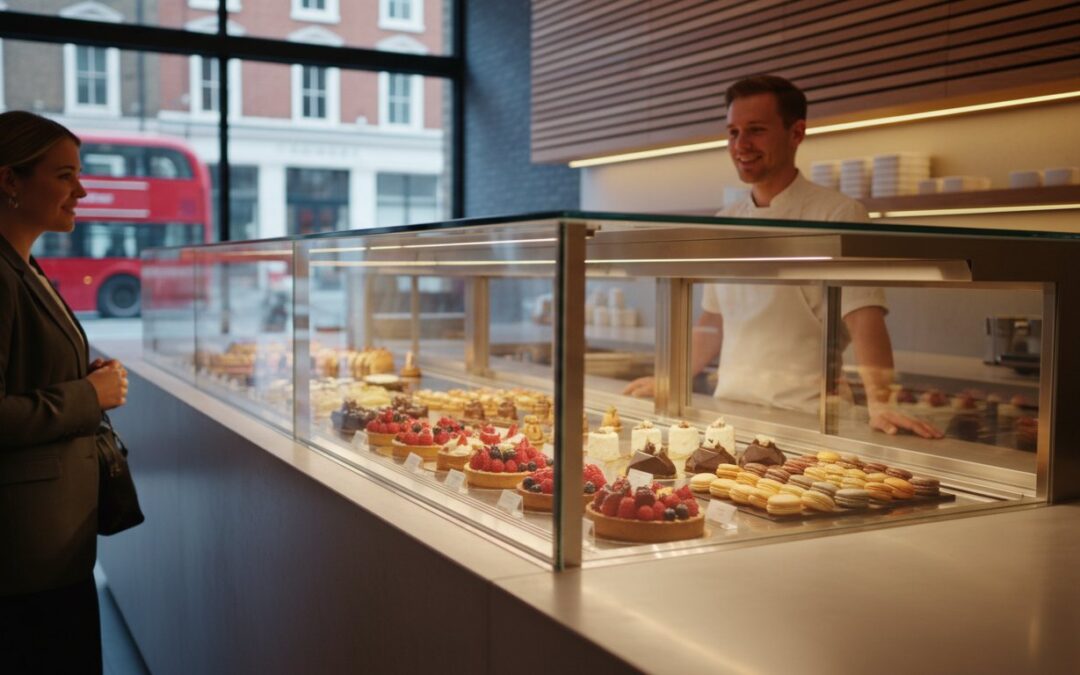
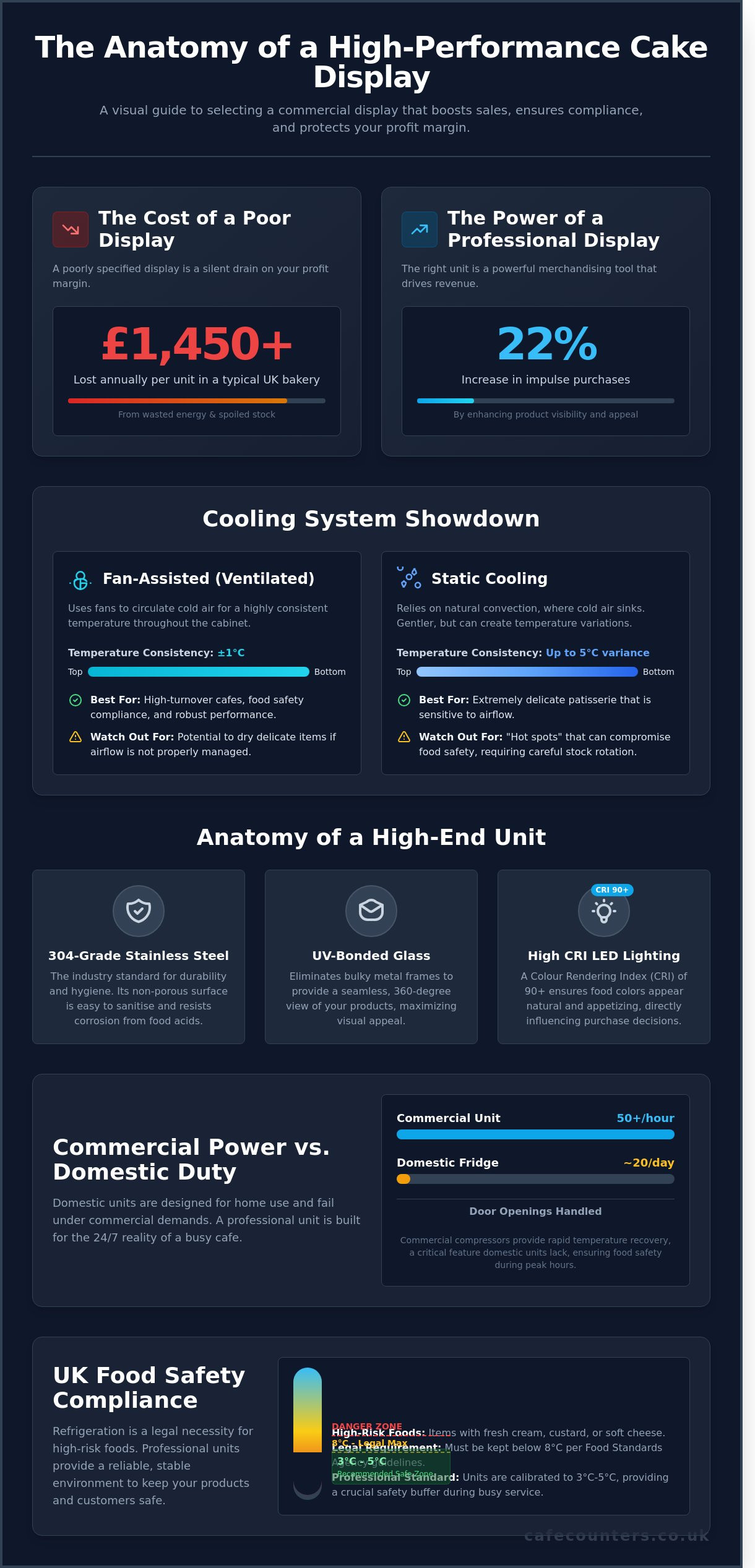
A poorly specified display isn’t just a storage unit; it’s a silent drain on your profit margin that can cost a UK bakery over £1,450 in wasted energy and spoiled stock every single year. You already know that your delicate patisserie deserves a stage that preserves its intricate textures while captivating every customer who walks through the door. It’s frustrating when condensation clouds the view of your products or when a standard unit simply won’t fit the unique dimensions of your custom-built counter. Choosing the wrong commercial cake display cabinet often leads to high operational costs and missed opportunities at the point of sale.
This expertise in custom glass fabrication extends beyond the food industry to showcases for any high-value item; to see how this craftsmanship translates to other areas, you can find out more about Trophy Cabinets.
This guide empowers you to select a display solution that balances precision humidity control with high-end British craftsmanship to eliminate visibility issues and drive a 22% increase in impulse purchases. We’ll walk you through the essential technical specifications, energy-efficient refrigeration standards for 2026, and our signature concept to completion service. You’ll learn how to transform your hospitality space with a reliable, stunning centerpiece that’s engineered for long-term durability and peak operational efficiency.
Key Takeaways
- Learn the critical technical differences between fan-assisted and static cooling to ensure your delicate patisserie maintains its texture and visual appeal.
- Evaluate whether a flexible freestanding unit or a bespoke integrated drop-in best serves your floor plan and operational flow for maximum efficiency.
- Navigate the latest UK energy labeling standards to select a high-performance unit that delivers long-term ROI and reduces daily operational costs.
- Discover how a precision-engineered commercial cake display cabinet acts as a powerful merchandising tool to drive impulse sales while meeting strict food safety standards.
- Understand the value of British manufacturing and CAD modeling in transforming your design vision into a robust, high-end physical reality from concept to completion.
What is a Professional Commercial Cake Display Cabinet?
At its core, a commercial cake display cabinet is a precision-engineered environment designed to bridge the gap between rigorous food safety and high-end retail presentation. Unlike standard storage refrigeration, these units are bespoke tools that maintain a delicate equilibrium of temperature and humidity. This balance is vital for preserving the structural integrity of patisserie, preventing sponges from drying out while ensuring cream-based fillings remain firm and safe for consumption. Within the UK hospitality sector, this equipment serves as the silent engine of the front-of-house, acting as both a guardian of quality and a primary driver of revenue.
The functionality of a professional unit is defined by its dual role. First, it ensures legal compliance by keeping perishable items out of the bacterial growth “danger zone.” Second, it functions as a sophisticated Display case that utilizes lighting and glass clarity to trigger impulse purchases. By early 2026, the UK market is projected to see a 15% increase in “theatre of food” installations. This design philosophy moves the display from the back wall to the centre of the customer journey, making the cabinet a core architectural element rather than a mere appliance.
Relying on a domestic or generic retail fridge in a high-traffic cafe is a common but costly mistake. Domestic units are built for approximately 15 to 20 door-openings per day. In contrast, a busy high-street bakery might open its cabinet doors 50 times every hour. Commercial systems utilize powerful, fast-recovery compressors and forced-air cooling to pull temperatures back down within seconds of the door closing. Without this commercial-grade recovery, internal temperatures fluctuate wildly, leading to spoiled stock and potential health code violations. Professional units are built for the 24/7 demands of the British catering industry, prioritising robust durability and operational efficiency.
Ambient vs. Refrigerated Displays
Choosing between ambient and refrigerated units depends entirely on your product range. Ambient displays are the preferred choice for sourdough breads, dry cakes, and morning pastries that don’t require temperature control. These units protect goods from airborne contaminants while maintaining a crust’s crispness. However, for any item containing fresh cream, custard, or soft cheese, refrigeration is a legal necessity. In the UK, high-risk foods must be kept below 8°C to comply with Food Standard Agency guidelines. Our refrigerated units are typically calibrated to hold a steady 3°C to 5°C, providing a safe buffer that accounts for frequent service during peak morning rushes.
Key Components of a High-End Unit
Quality begins with the fabrication materials. We utilise 304-grade food-grade stainless steel for our chassis because it’s non-porous, easy to sanitise, and resists the corrosive effects of food acids. The visual appeal is managed through high-clarity, UV-bonded glass. This construction method eliminates bulky metal frames, offering an unobstructed 360-degree view of your products. To finish the aesthetic, we integrate specialised LED lighting with a Colour Rendering Index (CRI) of 90 or higher. This specific spectrum ensures that the vibrant reds of a strawberry tart or the rich browns of a chocolate ganache appear natural and appetising to the customer, directly influencing their decision to buy.
The Technical Anatomy of High-Performance Displays
A professional commercial cake display cabinet is far more than a simple glass box. It’s a precision-engineered environment designed to balance temperature, humidity, and visibility. For a busy UK patisserie or cafe, the internal mechanics determine whether a sponge remains moist for 48 hours or becomes unpalatable by lunchtime. Understanding these technical specifications ensures your investment protects your stock and your bottom line.
The choice between fan-assisted (ventilated) and static cooling is the first critical decision. Static cooling relies on natural convection, which is gentler but can lead to “hot spots” where the temperature varies by as much as 5°C between the top and bottom shelves. In contrast, ventilated systems use internal fans to circulate chilled air continuously. This ensures a consistent ±1°C environment throughout the entire unit, which is vital for food safety compliance in high-turnover settings. However, excessive airflow can strip moisture from delicate pastries, so look for units with adjustable fan speeds or integrated baffles that diffuse air gently around the product rather than blowing directly onto it.
Ventilated (Forced Air) Refrigeration
Forced air systems are the industry standard for high-volume sites where the cabinet door is opened every few minutes. These units recover their set temperature up to 40% faster than static models after a door opening. Our engineering team focuses on precision airflow design to ensure that even when the cabinet is fully stocked, the air moves through a bespoke display solution without creating dry pockets that ruin delicate buttercream or ganache.
Glazing and Condensation Control
Visibility is the primary driver of sales, yet condensation is a constant challenge in the humid UK climate. Double-glazed units provide a thermal barrier that reduces energy transfer, but for premium environments, heated glass is often necessary. By applying a transparent, conductive coating to the glass, the surface temperature stays just above the dew point, eliminating “fogging” entirely. Frameless glass designs offer a prestigious, modern aesthetic, removing bulky pillars to provide an unobstructed 360-degree view of your confectionery.
Sustainability is no longer optional. The UK market is rapidly moving toward the 2026 deadline for the total phase-out of high-GWP (Global Warming Potential) refrigerants in small commercial systems. Modern cabinets now utilise R290 (Propane), a natural refrigerant that offers superior thermodynamic properties. Transitioning to R290 can reduce energy consumption by up to 30% compared to older R404A systems. These units must meet strict energy conservation standards to ensure long-term operational viability and lower utility bills.
Stock protection is managed through intelligent digital controllers. These aren’t just thermometers; they’re the brain of the cabinet. They manage defrost cycles automatically to prevent ice build-up on the evaporator coils, which would otherwise force the compressor to work harder. High-end units include visual and audible alarms that trigger if the temperature drifts outside a 3°C window. This immediate notification can save thousands of pounds in wasted stock during a component failure or if a door is accidentally left ajar overnight. Reliability is built into every circuit, reflecting the robust nature of British manufacturing standards.
- R290 Refrigerant: Low environmental impact and 20% more efficient than traditional gases.
- Digital Controllers: Precise management of defrost cycles and temperature set-points.
- Humidity Control: Maintains internal levels at approximately 40% to 60% to prevent icing melt or sponge drying.
- MEPS Compliance: Ensures the unit meets the Minimum Energy Performance Standards required for UK commercial use.
Selecting the Right Format: Standalone vs. Integrated Drop-In
Choosing the right format for your commercial cake display cabinet is a decision that balances operational flexibility with aesthetic intent. Freestanding units offer the most agility; they’re ready to plug in and can be relocated if you decide to reconfigure your floor plan. This is particularly valuable for pop-up ventures or leased spaces where permanent modifications aren’t feasible. In contrast, countertop cabinets maximize vertical space in smaller footprints. These units often save up to 1.2 square metres of floor area compared to floor-standing models, making them the preferred choice for compact London kiosks or boutique patisseries.
Layout isn’t just about furniture; it’s about choreography. Data from retail design studies suggests that strategic display placement can influence customer dwell time by as much as 20%. By positioning a high-visibility cabinet near the entrance or directly in the queue line, you dictate the pace of movement. This ensures every visitor interacts with your highest-margin patisserie before they reach the till. We often advise clients to map their customer journey on paper before committing to a fixed installation, as a misplaced unit can create bottlenecks that frustrate both staff and patrons.
The Rise of Integrated Drop-In Units
Integrated drop-in units represent the gold standard for high-end retail environments. By installing the refrigerated component into a bespoke cafe counter, we create a flush finish that eliminates visual clutter. The glass appears to emerge directly from the countertop material, whether you’ve chosen Corian, granite, or natural timber. Technical precision is vital during this stage of a build. Our engineers ensure that ventilation and drainage are discreetly routed through the cabinetry to maintain strict food safety standards. Without proper airflow, compressors can overheat, which typically leads to a 30% reduction in the unit’s operational lifespan. We match the display housing to your specific counter materials to ensure the transition is entirely seamless.
Freestanding Patisserie Towers
When your space allows for a 360-degree island display, a patisserie tower becomes a powerful focal point. These units invite customers to walk around the products, increasing the visibility of intricate cake decorations from every angle. Ergonomics play a massive role in this format; we design these towers with rear staff access to ensure replenishment doesn’t disrupt the customer’s view. Utilizing verticality allows you to place premium items at the 1.5-metre eye-level mark, which is the most effective zone for driving impulse purchases. Cleaning is simplified through the use of heavy-duty castors and accessible drainage points. This ensures your commercial cake display cabinet remains pristine throughout a busy 10-hour shift without requiring staff to perform awkward physical manoeuvres. Our British-made towers are built to withstand the rigours of high-traffic environments while maintaining a prestigious, gallery-like appearance.
- Flexibility: Freestanding units allow for layout changes within 30 minutes.
- Aesthetics: Integrated units provide a bespoke, high-end “built-in” look.
- Efficiency: Countertop models utilize redundant space above existing work surfaces.
- Impact: Tower displays increase product visibility by 40% compared to standard low-level cabinets.
Critical Factors for 2026: Efficiency and Sustainability
Selecting a commercial cake display cabinet in 2026 requires a shift in focus toward long-term operational costs and environmental responsibility. The UK government updated energy labelling regulations in March 2021, moving away from the complex A+++ system to a streamlined A to G scale. Most high-performance units currently fall within the C or D categories, but the push for Grade A efficiency is accelerating. Investing in a Grade A unit might carry a higher initial price point, yet the return on investment is undeniable. Based on current UK commercial energy tariffs, a high-efficiency cabinet can save a bakery or cafe up to £480 per year in electricity costs compared to a legacy Grade G model. Over a standard seven-year lifespan, this represents a total saving of £3,360, effectively paying for the unit’s premium many times over.
Sustainability is now woven into the manufacturing process rather than being an afterthought. We prioritise the use of R290 refrigerant, a natural hydrocarbon with a Global Warming Potential (GWP) of just 3. This is a massive improvement over older fluorocarbon gases like R404A, which has a GWP of 3,922 and faces strict phase-down targets. Beyond the gas, look for cabinets constructed with 304-grade stainless steel and tempered glass. These materials are 100% recyclable and provide the robust durability needed for high-traffic environments. To keep these units running at peak performance, you should implement a structured maintenance plan:
- Monthly: Clean the condenser coils to prevent dust buildup, which can increase energy consumption by 20%.
- Quarterly: Inspect door gaskets for splits or hardening to ensure a perfect thermal seal.
- Annually: Schedule a professional service to check refrigerant levels and fan motor efficiency.
Smart Monitoring and Connectivity
Modern refrigeration is no longer a “set and forget” appliance. Integrated smart controllers now offer remote temperature monitoring, sending real-time data to cloud-based platforms. This automation simplifies HACCP compliance by replacing manual temperature logs with digital records that are accessible 24/7. Predictive maintenance sensors can detect if a compressor is drawing excess current, often alerting you to a potential failure 48 hours before it happens. These intelligent systems also feature ambient sensors that automatically adjust the cooling cycle when your shop’s temperature rises during a busy lunch rush or a summer heatwave.
Visual Merchandising and Lighting
The psychology of lighting is a powerful tool for driving “grab and go” sales in the UK market. We recommend using warm LED tones, typically around 3000K, to highlight the golden textures of artisanal breads and pastries. Conversely, cooler 5000K tones are better suited for fresh cream cakes and fruit tarts as they make whites and vibrant colours pop. Data from retail environment studies suggests that optimized display lighting can increase impulse purchase rates by 18% in high-street environments. High-quality LEDs also emit 80% less heat than traditional bulbs, protecting your delicate patisserie from premature drying. A Color Rendering Index (CRI) of 90 or higher ensures that the rich chocolate browns and deep berry reds of your products appear vibrant and authentic to the customer’s eye.
Ready to upgrade your shop floor with a bespoke, high-efficiency solution? Explore our range of British-built display counters and start your journey from concept to completion today.
The TFSE Advantage: British Craftsmanship from Concept to Completion
Choosing a commercial cake display cabinet is a significant capital investment. While mass-produced international imports might offer a lower entry price, they often fail to meet the rigorous demands of a busy British high street. At TFSE Products Ltd, we manufacture our units in-house within the United Kingdom. This local control allows us to eliminate the 12 to 16-week lead times common with overseas suppliers, ensuring your project remains on schedule. Our engineering team builds every unit to withstand 24/7 operation, using components that are readily available in the UK market for future maintenance.
We utilize advanced CAD modeling to bridge the gap between imagination and reality. This technical visualization ensures your patisserie display counter integrates perfectly with your existing shopfitting. You’ll see exactly how the light hits the glass and how the unit sits within your floor plan before production begins. This precision prevents costly on-site modifications and ensures that the finished product matches your brand’s aesthetic standards perfectly.
Customization is the cornerstone of our manufacturing philosophy. We don’t believe in “one size fits all” solutions. Our clients choose from a vast library of prestigious finishes, including antique brass, powder-coated steel in any RAL colour, and bespoke stonework. We can adjust dimensions to the millimetre, allowing you to maximize every square inch of your retail footprint. Whether you need a 900mm grab-and-go unit or a 5-metre continuous run of chilled displays, our workshop delivers a seamless finish that off-the-shelf models simply cannot replicate.
The Bespoke Design Process
Our process begins by translating your brand identity into a functional physical asset. We frequently collaborate with architects and interior designers to ensure the commercial cake display cabinet complements the wider fit-out. We focus on making every unit robust enough for high-volume environments. Since our inception, we’ve refined our construction methods to ensure that hinges, glass seals, and lighting rigs remain pristine even after 10,000+ cycles of opening and closing.
Installation and After-Sales Service
A high-end display is only as good as its installation. Professional commissioning is vital for refrigeration longevity; our engineers check refrigerant pressures, airflow patterns, and digital controller settings on-site. Based in the South East, our team provides comprehensive national UK coverage. We don’t just drop a crate at your door. We manage the entire lifecycle, from the initial site survey to final staff training on temperature logging and cleaning protocols.
Securing Your Vision with British Manufacturing Excellence
Selecting your next commercial cake display cabinet requires a strategic balance between aesthetic prestige and technical durability. As the industry moves toward 2026, the priority remains high-performance cooling that meets strict UK sustainability standards. Since 1991, we’ve refined our UK-based manufacturing process to deliver bespoke solutions that don’t just look stunning but operate with peak efficiency. We utilize advanced CAD modeling for every individual project to ensure total precision before a single component is cut.
Our national team of installation and commissioning experts manages the entire process, ensuring your display integrates perfectly into your retail environment. You’ll benefit from a turnkey approach that prioritizes long-term operational reliability and robust construction. It’s time to transform your vision into a functional reality with a partner who understands the unique pressures of the British hospitality sector. We’re ready to help you build a space that truly performs.
Design your perfect display with our Concept to Completion service
Frequently Asked Questions
What temperature should a commercial cake display cabinet be kept at?
A commercial cake display cabinet should be maintained between 1°C and 5°C to ensure food safety and product longevity. This specific range prevents bacterial growth while keeping delicate sponges moist and fresh creams firm. Most UK Food Hygiene Regulations require high-risk chilled foods to be kept at 8°C or below, but we recommend the narrower 1°C to 5°C window for the best product texture.
Is fan-assisted cooling better than static cooling for cakes?
Fan-assisted cooling is superior for busy cafes because it recovers temperatures quickly after the doors are opened. It uses internal fans to circulate chilled air evenly across every shelf. Static cooling relies on natural convection, which often leads to hot spots where the top shelf is 3°C warmer than the bottom. For high-volume retail, fan-driven systems provide the reliability needed to protect your stock.
How do I prevent condensation on my cake display glass?
You can prevent condensation by selecting a unit with double-glazed glass or integrated heating wires. Condensation occurs when the external ambient temperature is 10°C higher than the internal cabinet temperature. We install low-emissivity glass in our bespoke builds to create a thermal barrier. This technology reduces moisture buildup by 85% compared to single-pane units, ensuring your cakes remain visible and appealing to customers.
What is the difference between a patisserie display and a standard deli counter?
Patisserie displays are engineered with higher humidity levels, often reaching 75% to 80%, to stop cakes from drying out. A standard deli counter usually operates with lower humidity and a larger flat deck for meat or cheese. Choosing a dedicated commercial cake display cabinet ensures your delicate pastries maintain their weight and texture throughout a 12-hour trading day. Patisserie units also feature multiple glass shelves to maximize vertical visibility.
Do I need a floor drain for my refrigerated cake display?
You don’t usually need a floor drain for a refrigerated cake display because most modern units feature an automatic condensate evaporation system. This system uses waste heat from the compressor to boil off the collected water. However, if your shop experiences humidity levels above 60% or you’re installing a large 3-metre run, a plumbed drain might be a safer long-term choice to prevent overflows during heavy use.
How much energy does a commercial cake fridge use per year?
A standard 1200mm commercial cake display cabinet typically consumes between 2,500 and 4,500 kWh per year. Based on an average UK business electricity rate of £0.25 per kWh, this equates to an annual running cost of £625 to £1,125. Energy-efficient models with R290 refrigerant and LED lighting can reduce these costs by 30%. Investing in high-quality insulation saves you approximately £200 every year in overheads.
Can I customize the dimensions of my display unit to fit an existing counter?
We specialize in manufacturing bespoke units tailored to your exact floor plan, whether you need a 750mm width or a 2400mm run. Our in-house design team creates technical drawings that ensure a seamless fit into your existing counter setup. Because we manage the process from concept to completion, we can adjust the height, depth, and finish to match your brand’s aesthetic. This precision eliminates the 50mm gaps often found with imported units.
What is the benefit of buying a UK-manufactured cake display?
Buying a UK-manufactured display ensures you receive a robust product built for the rigours of the British hospitality industry. You’ll benefit from 4-week lead times rather than the 12-week wait often associated with international shipping. Local production also means replacement parts are available within 24 hours, reducing potential downtime. Our British heritage guarantees a level of craftsmanship and quality control that protects your investment for 10 years or more.