
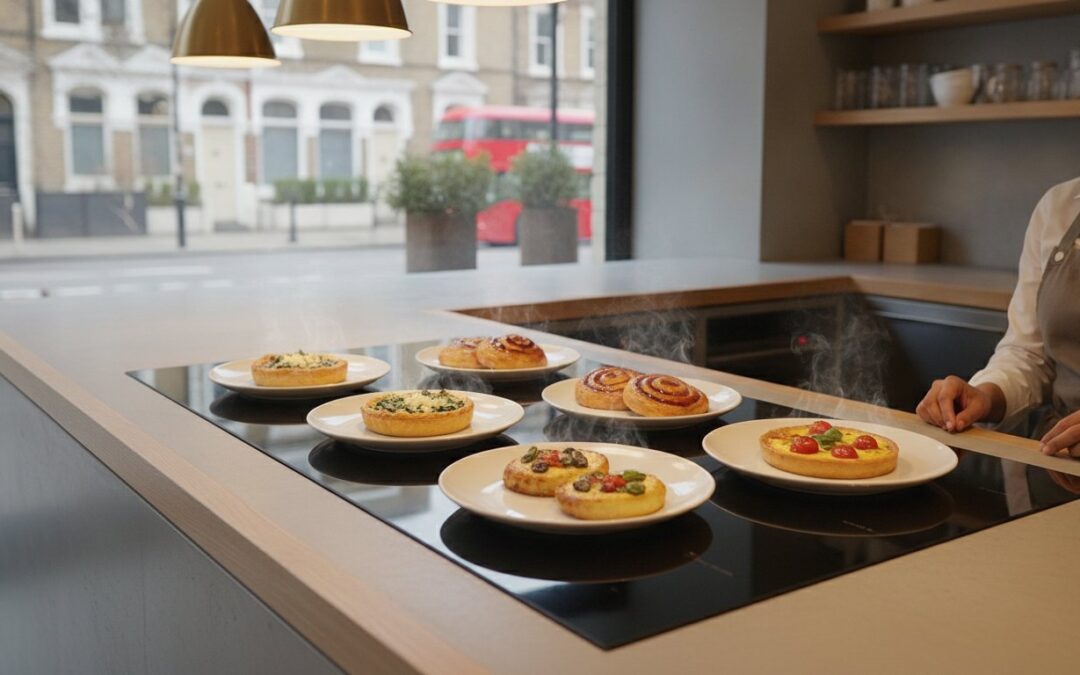
The visual appeal of a boutique cafe is often undermined by the industrial look of traditional warming equipment that fails to keep delicate dishes at their peak. You’ve likely felt the frustration of watching premium ingredients lose their texture or cool unevenly because your current setup can’t maintain a precise thermal balance. Integrating a heated ceramic top display into your front-of-house changes this dynamic by bridging the gap between high-end design and rigorous commercial performance. It’s a solution that respects both your culinary vision and your operational bottom line.
In this professional guide, we’ll demonstrate how these units utilize advanced glass-ceramic surfaces to provide superior heat retention while reducing energy consumption. We’ll examine why leading professionals are moving away from traditional stainless steel wells in favor of surfaces that are easier to sanitize and comply with the latest 2026 safety regulations regarding mineral migration. You’ll discover how to select equipment that maintains food safety without sacrificing the artisanal aesthetic of your space, ensuring every dish remains as perfect as the moment it was plated.
Key Takeaways
- Understand the technical benefits of toughened glass-ceramic surfaces and how they provide superior thermal conduction compared to traditional metal tops.
- Compare the hygiene and maintenance advantages of dry-heat systems over wet-well bain maries to streamline your back-of-house cleaning protocols.
- Learn how to accurately specify a heated ceramic top display by assessing your available counter footprint and specific UK power requirements.
- Discover the value of bespoke integration and CAD modelling when matching professional heating units to your brand’s unique material palette.
- Identify the operational differences between conductive and infra-red heat to ensure your specific menu items maintain their ideal texture and safety.
What is a Heated Ceramic Top Display?
A heated ceramic top display represents the evolution of professional hot-holding technology, moving away from the cumbersome water baths of the past toward a streamlined, dry-heat solution. At its core, this equipment is a precision-engineered serving surface designed to maintain consistent temperatures for prepared dishes. Unlike traditional metal tops that can suffer from hot spots or rapid cooling, these units utilize specialized glass-ceramic panels to distribute heat with remarkable uniformity. Understanding What is a Heated Ceramic Top Display? requires looking at it as a hybrid of a high-performance thermal conductor and a luxury design element. It’s a staple in environments where presentation is as vital as the menu itself, such as artisan bakeries, high-end deli counters, and contemporary hotel buffet lines.
The surface material isn’t standard glass. It’s a toughened glass-ceramic composite engineered to withstand extreme thermal shock and heavy commercial use. This material is prized in the catering industry for its non-porous nature, which prevents the absorption of food odors and bacteria. In an era of heightened safety awareness, particularly with the 2026 updates to food-contact regulations, the ability to effortlessly sanitize a flat, seamless surface is a significant operational advantage. These displays don’t just keep food warm; they provide a hygienic stage that meets the rigorous demands of modern public health standards.
The Components of a Professional Heated Topper
Precision defines the internal architecture of a professional unit. High-performance heating elements are positioned directly beneath the ceramic surface, governed by sophisticated thermostatic controls. This allows operators to dial in exact temperatures, preventing the accidental drying or overcooking of delicate items like pastries or glazed meats. The housing is typically constructed from high-grade stainless steel, a hallmark of durable UK manufacturing. This robust chassis ensures the unit remains stable and resilient in high-traffic environments. For added protection, many setups include integrated gantries or glass sneeze guards, which shield the food from environmental contaminants while maintaining a clear line of sight for the customer.
Visual Impact in Modern Food Service
Modern food service has shifted away from the purely “industrial” look of exposed stainless steel toward a more boutique, curated aesthetic. A heated ceramic top display fits this trend perfectly with its sleek black or tinted finish. This dark, reflective surface creates a high-contrast background that makes the natural colors and textures of fresh food stand out. It transforms a standard hot-holding area into a premium showcase. When customers see hot grab-and-go items displayed on a clean, modern ceramic surface rather than a cluttered steam table, their perception of quality increases. It signals a level of care and professional investment that resonates with discerning diners who value both hygiene and style.
The Science of Ceramic Heat: Efficiency and Consistency
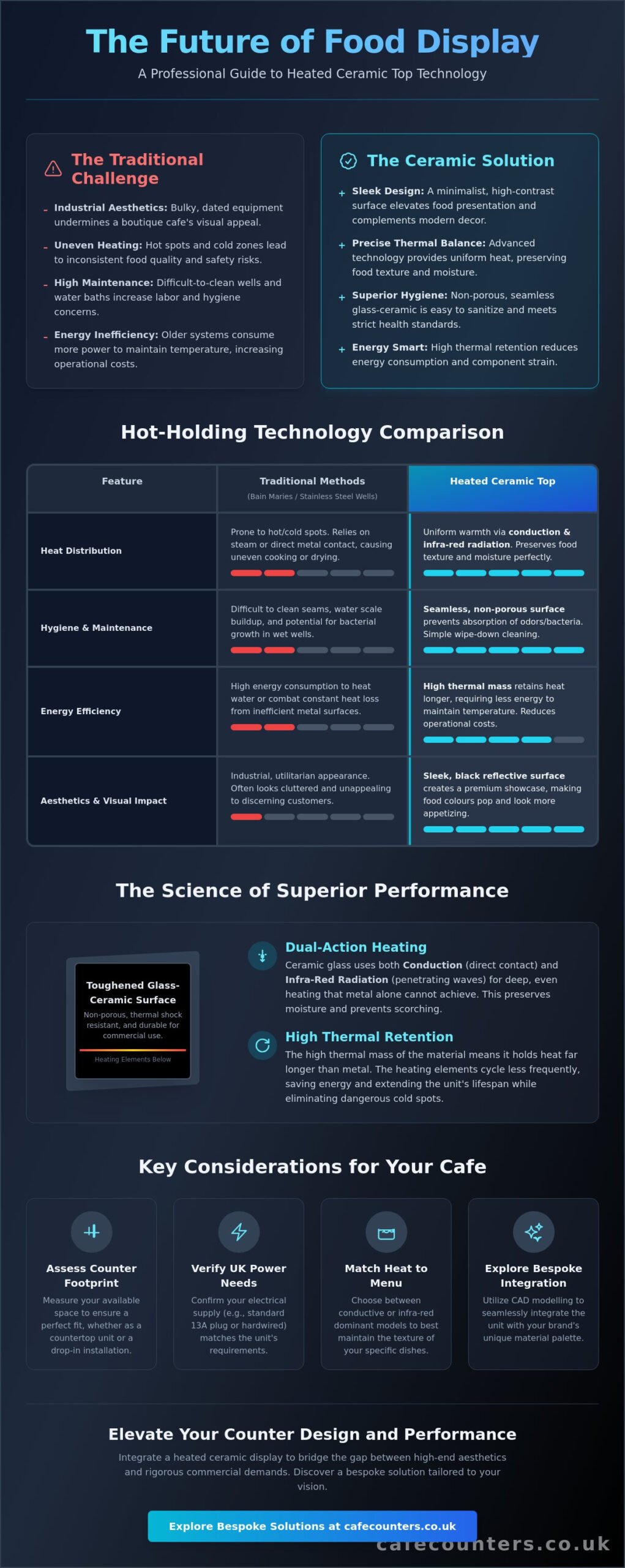
The efficiency of a heated ceramic top display lies in its unique ability to manage thermal energy through both conduction and infra-red radiation. While stainless steel relies almost entirely on direct contact to transfer heat, ceramic glass acts as a high-performance emitter. It projects infra-red waves that penetrate the food more deeply and evenly than metal alone. This dual-action approach ensures that your menu items aren’t just scorched at the base while the top remains lukewarm; instead, they receive a consistent wrap of warmth that preserves both texture and moisture. It’s a technical advantage that becomes immediately apparent when serving dense proteins or delicate side dishes that are prone to drying out.
Thermal Retention and Heat Distribution
Ceramic glass possesses a high thermal mass, meaning it retains heat far longer than traditional materials. Once the surface reaches its set point, the internal heating elements cycle less frequently, which significantly reduces the strain on the components. This stability is vital for eliminating the dangerous “cold spots” often found in older dry-heat systems. Ensuring uniform warmth is one of the Key Considerations for Specifying a Heated Display, as it directly impacts your ability to meet strict food safety standards. The molecular structure of toughened ceramic glass allows it to withstand rapid temperature fluctuations during peak service without cracking or warping.
Energy Performance in 2026
As the commercial foodservice equipment market grows toward a projected $37.08 billion in 2026, the industry’s focus has shifted decisively toward energy efficiency and smart technology. Modern heated ceramic top display units now frequently incorporate IoT-enabled sensors that monitor surface temperatures in real-time. These systems ensure that energy is only consumed when necessary to maintain the precise thermal profile you’ve selected. Compared to open-well bain maries, which lose significant energy through steam and evaporation, a ceramic top operates with much lower wattage requirements and zero water consumption.
Integrating these efficient units into your workflow doesn’t just lower your utility bills; it supports a more sustainable, less humid kitchen environment. If you’re designing a new front-of-house area, our bespoke serving counters can be engineered to house these displays with minimal heat transfer to the surrounding cabinetry. This level of technical integration is what separates a standard installation from a professional, long-term asset. It’s about building a space that performs as well as it looks while maintaining a steady, reliable hand on your operational costs.
Ceramic vs. Stainless Steel and Bain Maries
Choosing between a traditional bain marie and a modern heated ceramic top display often comes down to a balance of operational speed and presentation quality. Traditional wet-well systems rely on steam to maintain food temperature, a method that’s reliable but inherently messy. The constant need for plumbing, water monitoring, and the eventual drainage of tanks adds significant labor to the end-of-shift routine. In contrast, a dry-heat ceramic top eliminates these logistical burdens. It creates a cleaner environment where steam doesn’t cloud the glass display or soften the crispy textures of fried or roasted items. By removing water from the equation, you’re not just simplifying the workflow; you’re protecting the integrity of your menu.
Stainless steel has long been the industry workhorse, yet it’s prone to micro-scratches and dulling over time. These small abrasions can harbor bacteria and mineral deposits, making deep cleaning a laborious task. Ceramic glass is fundamentally different. Its non-porous surface is resistant to the pitting and corrosion often seen in older metal wells, especially when exposed to acidic foods. While a stainless steel top might look “industrial” within a few months of heavy use, a ceramic surface maintains its deep, reflective luster, ensuring your front-of-house remains as polished as the day it was installed. This durability is essential for high-volume UK hospitality venues where equipment must withstand constant use without losing its aesthetic appeal.
Maintenance and Cleaning Protocols
Daily care for a ceramic surface is remarkably straightforward compared to the descaling required for wet-well units. A simple wipe-down with a non-abrasive cleaner prevents the carbonisation of food particles, which can occur if spills are left to bake onto the surface. Because the material is flat and seamless, there are no hidden crevices or gaskets where grease can accumulate. This ease of care is a primary reason why our bespoke serving counters frequently feature ceramic integration; it ensures the physical space remains hygienic with minimal effort from the staff.
Operational Flexibility
The versatility of a heated ceramic top display allows you to transition seamlessly between different service styles. During a busy lunch period, the unit accommodates standard Gastronorm (GN) pans for traditional carvery or buffet service. As the day progresses, these can be cleared to provide a flat, open surface for displaying wrapped hot paninis or boxed grab-and-go meals. This adaptability turns a single piece of equipment into a multi-functional asset. You can even use the surface for live serving stations, where the sleek black glass provides a sophisticated backdrop for the “theatre” of plating dishes directly in front of the customer.
Key Considerations for Specifying a Heated Display
Specifying a heated ceramic top display involves more than just selecting a surface area; it requires a methodical understanding of your venue’s peak throughput and technical constraints. You must balance the physical footprint of the unit with the electrical capacity of your site to ensure a seamless installation. It’s a process that moves from broad operational goals into fine technical details, ensuring the equipment performs reliably under the pressure of a busy service. Whether you’re planning a new build or upgrading an existing site, getting these initial specifications right prevents operational bottlenecks and costly retrofits later on.
Sizing and Capacity Planning
Start by calculating your maximum hourly throughput of hot items to determine the necessary surface area. Most professional units are designed around standard Gastronorm (GN) dimensions, allowing you to use 1/1, 1/2, or 1/3 pans in various configurations. This modularity is essential for operators who need to adapt their display from a breakfast service to a lunch carvery. When looking for a benchmark of thermal precision and build quality, Vision Heated Counters offer a professional standard that many UK businesses use to guide their capacity planning. Choosing a unit that’s too small leads to frequent restocking and temperature fluctuations, while an oversized unit wastes valuable counter space and energy.
Technical Integration and Airflow
Electrical infrastructure is a critical factor that often dictates which model you can install. While many smaller units run on a standard single-phase supply, high-capacity counters with integrated gantries may require a three-phase connection to maintain consistent temperatures across a large surface. You also need to consider the environment surrounding the unit. When housing these displays within a bespoke cafe counter, managing heat dissipation is vital to protect the cabinetry and nearby refrigerated displays. A minimum clearance of 50mm around the unit chassis is essential for safe under-counter installation and long-term operational health. This gap ensures that stagnant hot air doesn’t build up, which can otherwise damage sensitive thermostatic controls.
Visibility and protection should be integrated into the design from the beginning. Overhead gantries with integrated lighting don’t just shield the food from contaminants; they act as a visual spotlight that enhances the natural colors of your dishes. If you’re navigating the complexities of a new project, our team can provide the technical expertise needed to design and manufacture bespoke serving counters that perfectly house your chosen heating technology. This collaborative approach ensures that your equipment isn’t just an afterthought but a central, high-performing element of your front-of-house design.
Bespoke Integration: Elevating Your Counter Design
Standard off-the-shelf equipment often forces a compromise between operational needs and architectural vision. When you’re designing a high-end hospitality space, a standalone unit can break the visual flow of your carefully curated interior. Moving toward bespoke integration allows the heated ceramic top display to become a seamless part of the furniture rather than an afterthought. At TFSE Products Ltd, we specialize in manufacturing commercial food display counters that prioritize both technical efficiency and brand identity. This approach ensures your heating solution isn’t just a functional necessity but a deliberate design choice that enhances the customer journey.
A well-integrated counter acts as a silent partner in your service, providing a steady and reliable platform for your culinary offerings. By matching the ceramic unit to your brand’s specific material palette, you create a cohesive environment that resonates with quality. Whether your interior features natural stone, reclaimed timber, or modern composites, the sleek profile of a ceramic topper can be recessed for a flush finish. This level of customization is what separates a standard cafe from a premium destination, signaling to your customers that every detail of their experience has been meticulously planned.
The Design and Manufacturing Process
We utilize advanced CAD modeling to bridge the gap between an initial concept and a physical installation. This digital visualization allows you to see exactly how the integrated heated display will sit within the broader counter layout before a single piece of steel is cut. Every component is precision-engineered in our UK facility, ensuring a perfect fit that eliminates the unsightly gaps often found with retrofitted units. Our production process adheres to rigorous quality control standards, reflecting our deep-seated commitment to durability and regional artisanal pride. We understand that high-value hospitality fit-outs require a steady, reliable hand to manage the complexities of custom fabrication.
National Installation and After-Sales
The journey doesn’t end when the manufacturing phase is complete. Professional commissioning is essential for ensuring your heated catering equipment operates at peak efficiency from day one. Our national installation teams manage the entire process, providing a turnkey service that alleviates the stress of coordinating multiple contractors. This end-to-end project management acts as a conceptual anchor for our clients, offering reassurance that the finished space will match the original vision. We provide ongoing support and maintenance for hospitality chains across the UK, ensuring your investment remains a high-performing asset for years to come. Discover our range of bespoke cafe counters and integrated heated solutions to see how we can elevate your next project.
Mastering the Art of Hot Food Presentation
Choosing the right equipment is a fundamental step in protecting your culinary reputation and operational efficiency. We’ve explored how a heated ceramic top display bridges the gap between industrial performance and boutique aesthetics, providing a hygienic, energy-efficient platform for your menu. By focusing on thermal consistency and ease of maintenance, you create a service environment that’s both safe and visually striking. Moving away from off-the-shelf solutions toward a bespoke, integrated design ensures that your equipment works in harmony with your brand’s unique interior.
Since 1991, we’ve been dedicated to British-made quality, helping commercial operators navigate the complexities of high-end fit-outs. Our process utilizes advanced CAD modelling to ensure every component fits perfectly within your workflow, supported by our comprehensive national installation and commissioning services. We’re here to act as your expert partner, providing the technical precision and reliable project management required to bring your vision to life. Consult with our Expert Partners on your next bespoke counter project. Your path to a more efficient, high-performance food service space starts with a single, well-planned step.
Frequently Asked Questions
Is a ceramic top display better than a traditional bain marie?
A ceramic top display is often superior for dry-heat applications because it eliminates the plumbing and maintenance associated with water baths. While bain maries are reliable for specific wet-heat needs, ceramic glass provides a cleaner, more modern look that doesn’t soften crispy textures with excess steam. It also simplifies the end-of-shift routine by removing the need to drain and descale water tanks daily.
Can I place food directly onto the ceramic glass surface?
You can place wrapped food or certain dry items directly onto the ceramic glass, though most operators use it as a base for dishes or GN pans. The toughened glass-ceramic is non-porous and food-safe, making it an excellent conductor for pre-packaged hot grab-and-go items. It’s important to ensure the surface is properly sanitized before direct contact to maintain the high hygiene standards expected in professional kitchens.
How do I clean a commercial heated ceramic top without scratching it?
Cleaning a heated ceramic top display requires a soft cloth and a specialized, non-abrasive cream cleaner designed for glass-ceramic surfaces. You should avoid using steel wool, scouring pads, or harsh chemical strippers that can etch the glass over time. Regular daily maintenance prevents food sugars from carbonizing on the surface, ensuring the display maintains its deep, reflective luster for years of service.
What temperature should a heated display be set to for food safety?
For food safety compliance in the UK, hot-holding equipment should maintain food at a core temperature of 63°C or above. While the display surface temperature may be set higher to compensate for ambient cooling, the primary goal is to keep the product out of the danger zone. It’s vital to use a calibrated probe to verify that the food itself stays at a safe temperature throughout the entire service period.
Are heated ceramic displays energy efficient for 24/7 operations?
Heated ceramic displays are highly energy efficient because the glass-ceramic material possesses high thermal mass, retaining heat long after the elements cycle off. Modern thermostatic controls ensure the unit only draws power when necessary to maintain the set temperature. This makes them a sustainable choice for high-volume environments where equipment must run continuously without incurring excessive utility costs.
Do I need a special power supply for an integrated heated topper?
Power requirements depend on the size and configuration of the unit, with many smaller models operating on a standard 13A single-phase supply. However, larger integrated units or those with high-output heated gantries may require a 16A or 32A connection, or even a three-phase supply. You should always consult with your electrical contractor during the design phase to ensure your site’s infrastructure can support the specific load of your chosen display.
Can ceramic top displays be used for both GN pans and plated meals?
These displays are exceptionally versatile and can accommodate everything from standard Gastronorm (GN) pans to individually plated meals or bowls. The flat, uniform surface allows you to mix and match presentation styles, such as placing a large GN 1/1 pan of roasted vegetables alongside smaller porcelain dishes. This flexibility makes the ceramic top an ideal choice for buffet lines that transition between different service styles throughout the day.
How long does it take for a ceramic heated display to reach operating temperature?
A professional ceramic heated display typically reaches its operating temperature within 15 to 20 minutes of being switched on. This rapid heat-up time is a result of the efficient thermal conductivity of the glass-ceramic surface and the high-performance heating elements positioned beneath. We recommend turning the unit on shortly before service begins to ensure the surface is fully saturated with heat before any food is placed upon it.