
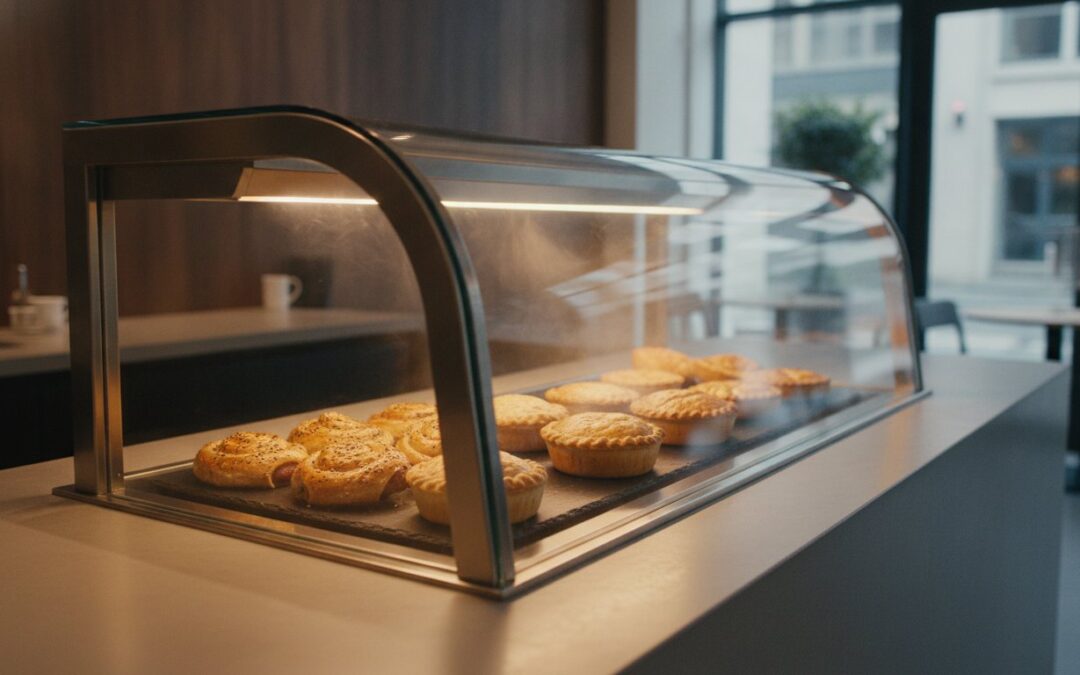
With the UK food-to-go market forecast to reach a staggering £24.9 billion by the end of 2026, the pressure to deliver perfect, piping-hot products has never been higher. You likely understand the frustration of seeing a batch of artisanal pastries lose their crispness or a signature dish dry out under poor lighting and inconsistent heat. It’s a constant challenge to balance the strict 63°C food safety requirements with the need for an energy-efficient, visually stunning heated food display cabinet that complements your brand’s aesthetic.
This guide will help you master the technical nuances of hot holding so you can maintain perfect food texture for hours while significantly increasing impulse purchases. We’ll explore everything from precision moisture control and UK safety compliance to the long-term operational benefits of choosing high-grade, bespoke British manufacturing over mass-produced alternatives. By the end, you’ll have the expertise to transform your display from a simple warmer into a powerful merchandising tool that drives both quality and profit.
Key Takeaways
- Learn how to balance strict UK food safety regulations with high-impact visual merchandising to drive impulse sales and maintain product quality.
- Understand the technical differences between dry and humidified environments to select the correct heat type for your specific menu items.
- Discover how to evaluate a heated food display cabinet based on its total cost of ownership, focusing on long-term durability and energy efficiency.
- Master operational compliance by utilizing digital controllers and temperature probes to maintain the legal 63°C threshold for hot holding.
- Identify the strategic advantages of bespoke UK manufacturing for achieving perfect aesthetic integration and superior performance in professional fit-outs.
Understanding the Role of Heated Food Display Cabinets in Modern Foodservice
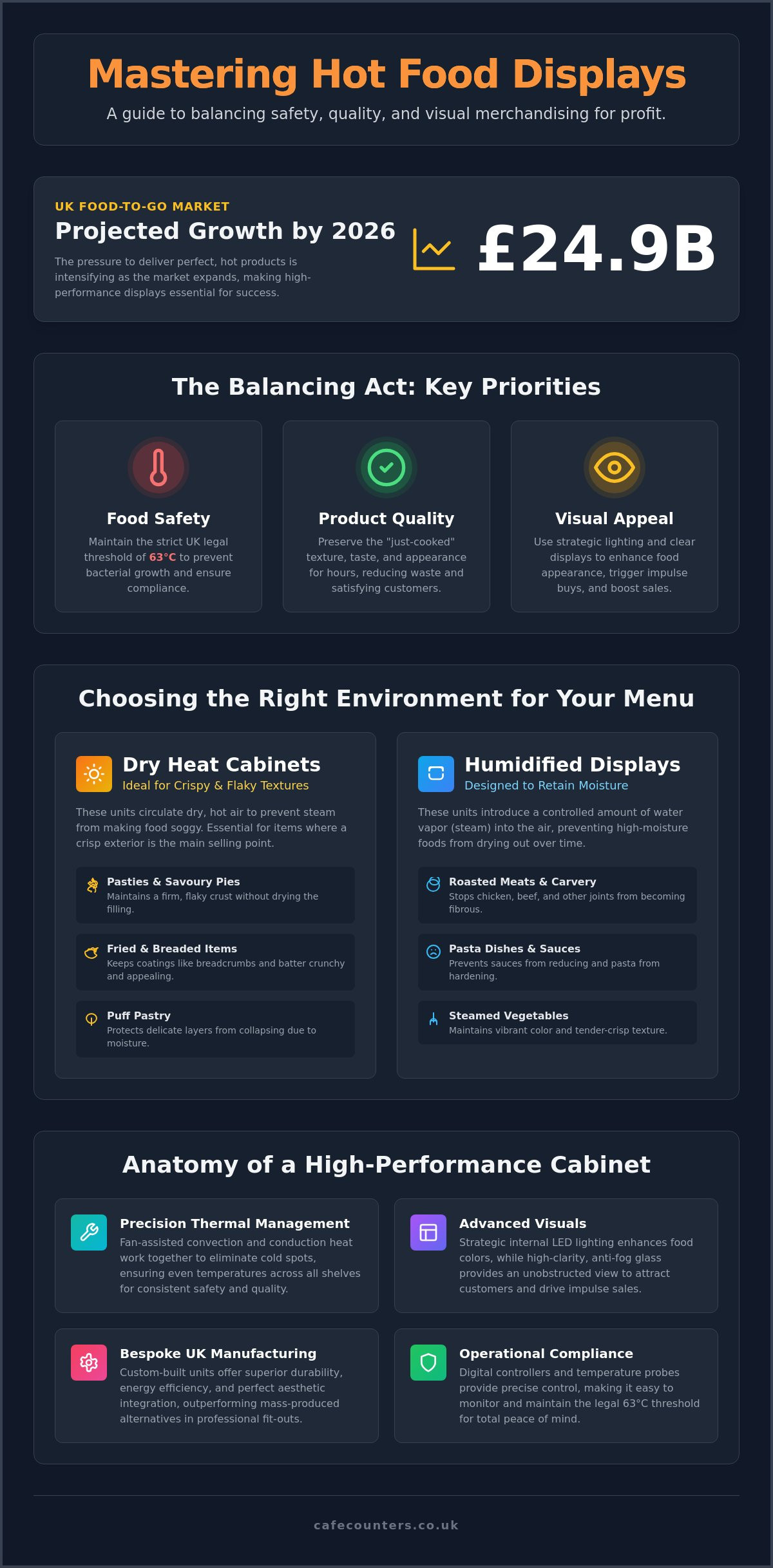
A professional heated food display cabinet is much more than a simple warming box; it’s a precision-engineered enclosure designed to hold prepared items at safe, palatable temperatures while acting as a primary sales driver. While a basic food warmer might suffice for back-of-house holding, a front-of-house cabinet must bridge the gap between strict food safety compliance and high-impact visual merchandising. In the demanding UK hospitality sector, these units ensure that every pasty, pie, or hot wrap stays above the legal 63°C threshold without sacrificing the sensory appeal that triggers a purchase.
Professional cabinets outperform rudimentary heat lamps or open warming trays by providing a controlled, sealed environment. Heat lamps often create intense hot zones that dry out the surface of the food while leaving the core dangerously cool. In contrast, a dedicated heated food display cabinet utilizes sophisticated thermal management to distribute heat evenly across every shelf. This consistency is vital in high-volume environments where rapid stock turnover and frequent door openings can otherwise lead to fluctuating temperatures and compromised safety.
How Heated Displays Maintain Food Quality
The secret to quality retention lies in the balance between convection and conduction heat. While conduction warms the product through direct contact with a heated surface, fan-assisted convection circulates warm air to envelop the food. This thermal stability eliminates the cold spots common in budget models. By managing airflow meticulously, professional units prevent moisture from settling on the product, which preserves that essential just-cooked appearance and prevents pastry from becoming soggy.
The Impact of Visual Merchandising on Hot Food Sales
Strategic internal LED lighting is essential because it enhances the natural colours of the food, making items appear fresher and more appetising to the passing customer.
Beyond lighting, the choice of materials plays a significant role in the customer journey. High-clarity glass equipped with anti-fog technology ensures that steam never obscures the view, even in humidified units. Tiered display configurations allow you to maximise product density and variety, ensuring that every item is visible and accessible without obstructing the vital flow of heated air that keeps the inventory safe.
Dry Heat vs. Humidified Displays: Choosing the Right Environment for Your Menu
Selecting the wrong environment for your menu is the fastest way to increase food waste and diminish your profit margins. A common mistake in the hospitality industry is applying a “one-size-fits-all” approach to hot holding, assuming that any heated food display cabinet will perform equally for all products. In reality, the science of moisture migration dictates that water always moves from areas of high concentration to low concentration. In a standard dry cabinet, the ambient air is “thirsty” for moisture, drawing it out of your food until a succulent chicken breast becomes fibrous and unappealing. Conversely, a humid environment will destroy the structural integrity of a perfectly baked puff pastry in minutes.
While maintaining the sensory appeal of your menu is a priority, safety remains the foundational requirement. Adhering to international food safety guidelines is non-negotiable; your equipment must hold food at 63°C or higher to prevent bacterial growth. However, the specific heating method you employ to reach that temperature determines whether your product remains “just-cooked” or becomes a liability. Identifying your core menu requirements before investing in a unit ensures you don’t end up with a cabinet that works against your ingredients.
Dry Heat Cabinets: Ideal for Crispy Textures
Dry heat units are the essential choice for items where a crisp, flaky, or crunchy exterior is the primary selling point. By maintaining a low-humidity environment, these cabinets prevent steam from being trapped against the food surface, which would otherwise lead to immediate sogginess. This environment is perfect for:
- Fried chicken and breaded goujons
- Traditional British pasties and savoury pies
- Handcrafted puff pastry items
When managing high-fat items in a dry heat environment, precision temperature control is vital to prevent oils from becoming rancid or the product from over-browning. Many operators find that a bespoke serving counter with dedicated dry heat zones provides the best results for high-volume service.
Humidified Heated Displays: Preserving Moisture
Key Features to Evaluate When Investing in a Professional Hot Display
Investing in a heated food display cabinet requires a shift in perspective from initial capital expenditure to the total cost of ownership (TCO). A lower price tag often masks the hidden costs of inefficient insulation, frequent component failures, and high energy consumption. Choosing a unit built with high-quality internal components doesn’t just improve reliability; it drastically reduces the frequency of expensive service calls that disrupt your daily operations. In a busy hospitality environment, a cabinet that remains operational for a decade is far more valuable than a budget import that requires replacement after three years.
Maintaining food hygiene is another critical factor that separates professional equipment from entry-level models. Cabinets designed with coved corners, removable glass, and seamless surfaces allow for rapid, thorough cleaning. This isn’t just about appearances; it’s about meeting strict UK health standards efficiently, ensuring that your staff spends less time scrubbing and more time serving. Professional fabrication ensures that the unit remains structurally sound even under the stress of constant heat cycles, preventing the door misalignments and heat leaks that plague cheaper alternatives.
Construction Materials: Why 304 Grade Stainless Steel is Essential
The choice of steel is the foundation of a cabinet’s longevity. While 430 grade stainless steel is common in cheaper units, it lacks the nickel content required to resist corrosion in the high-heat, high-moisture environments typical of foodservice. We prioritise 304 grade stainless steel because its superior chemical composition prevents pitting and structural warping over time. For a deeper look at how material standards impact your equipment, you can read more about commercial kitchen fabrication and the specific roles of different steel grades in professional environments.
Glass Configurations: Accessibility and Style
Your glass choice dictates both the visual impact of your display and the efficiency of your service flow. Square glass offers a contemporary, architectural look that maximises internal volume, while curved glass provides a traditional, softer aesthetic often preferred in artisanal bakeries. Beyond style, you must consider the service model. Grab & go displays facilitate high-speed transactions, whereas assisted service counters allow for better portion control and customer interaction.
Energy retention is equally vital for operational efficiency. High-performance units often feature double-glazed panels, which act as a thermal barrier to keep heat inside the cabinet rather than letting it escape into the shop floor. This technology is a hallmark of ENERGY STAR certified equipment, helping operators achieve significant energy savings. Some modern units can offer up to 50% energy savings compared to older, poorly insulated models, making them a much sounder investment for the 2026 commercial landscape.
Operational Compliance and Energy Efficiency Standards for 2026
Operational compliance in the UK hospitality sector is a matter of both legal necessity and professional pride. The Food Standards Agency is unequivocal: hot food must be held at 63°C or above to inhibit bacterial growth. While basic equipment might struggle to maintain this threshold during peak service, a high-specification heated food display cabinet provides the thermal stability required to meet these regulations consistently. Failing to hit these marks doesn’t just risk a poor hygiene rating; it puts your customers and your business reputation at significant risk.
Modern digital controllers have replaced the imprecise analogue dials of the past, offering the granular control needed for robust HACCP compliance. These systems allow you to monitor internal temperatures in real-time, providing a verifiable data trail for health inspectors. As of 2026, energy labelling has also become a critical factor in procurement. Manufacturers are now required to supply accurate energy labels featuring the UK flag, allowing operators to make informed decisions based on projected running costs. Choosing efficient equipment is a strategic move to future-proof your business against rising utility prices and stricter environmental building standards.
Maximising Energy Efficiency to Reduce Overheads
The efficiency of a cabinet is largely determined by its ability to retain heat rather than constantly generating it. High-density insulation within the stainless steel carcass acts as a thermal sponge, keeping the internal environment stable even in drafty shopfronts. Modern LED lighting and low-energy heating elements further reduce the daily draw on your power supply, which can lead to substantial savings over the unit’s lifespan. Thermal curtains in grab-and-go units create a recirculating air barrier that prevents heat loss through the open front without obstructing customer access.
If you’re planning a new fit-out or upgrading your existing equipment, it’s vital to choose units that balance performance with sustainability. Consult our experts for a site survey to identify the most efficient configuration for your specific space.
Temperature Monitoring and Food Safety
Visibility is your first line of defence in food safety. Clear, external temperature displays allow staff to verify the cabinet’s performance at a glance throughout the shift. Best practice involves recording these figures in a daily safety log at least three times per day. Sophisticated units now include integrated alarm systems that trigger if the temperature dips below a safe level. This immediate notification prevents costly food spoilage and ensures you never inadvertently serve a product that has spent too long in the “danger zone” between 8°C and 63°C.
Bespoke UK Manufacturing: Why Custom-Built Heated Displays Outperform Off-the-Shelf Units
Off-the-shelf imported units often present a compromise that professional operators can’t afford. While they might offer a lower initial entry point, these “one-size-fits-all” boxes rarely align with unique site dimensions or specific branding requirements. A bespoke heated food display cabinet manufactured in the UK allows for total control over both form and function. This ensures your equipment doesn’t just hold food safely but also integrates seamlessly with bespoke cafe counters to create a unified, high-end customer environment. When your display fits the space perfectly, you eliminate the awkward gaps where dust and debris collect, making your front-of-house both cleaner and more professional.
UK-based manufacturing also provides a level of long-term security that imports cannot match. When you’re dealing with complex heating elements and digital controllers, the availability of parts is critical. We’ve operated our own manufacturing facility since 1991, meaning we maintain deep technical knowledge of every unit we produce. If a component requires attention, you aren’t waiting weeks for a shipment from overseas; you’re dealing with a local partner who understands the urgency of your service schedule. This reliability is the hallmark of a professional fit-out, where durability is valued over fleeting aesthetics.
The Benefits of CAD-Modelled Integrated Solutions
CAD modelling is the cornerstone of our design process. It allows you to visualise the final layout before a single sheet of stainless steel is cut. This precision prevents costly site errors and ensures that every heated food display cabinet has the correct airflow and ventilation required for peak performance. Our design process includes:
- Detailed 3D visualisations to ensure the unit matches your vision.
- Meticulous airflow planning to prevent heat buildup in custom cabinetry.
- Customisation of finishes, including powder coating and stone tops, to reinforce brand identity.
Professional Installation and UK-Wide Commissioning
Professional setup is vital because heated units often have complex electrical requirements that go beyond a simple plug-and-play installation. Our national installation teams ensure that every unit is correctly commissioned to verify it meets the design specifications and safety regulations discussed earlier. The Vision Heated Counters range serves as a prime example of how integrated, high-performance design can transform a serving area into a highly efficient profit centre. This methodical approach ensures that your vision is brought to life with the technical expertise required for long-term operational success, providing a steady hand throughout the journey from initial idea to finished space.
Elevating Your Foodservice Standards with Precision Engineering
Integrating a professional heated food display cabinet into your operation is a strategic investment in both food safety and the customer experience. By mastering the balance between moisture control and thermal stability, you ensure that your products retain their just-cooked appeal throughout the busiest service periods. We’ve explored how high-grade 304 stainless steel construction and precision temperature monitoring reduce food waste while ensuring your business remains compliant with strict UK safety regulations.
Since 1991, we’ve specialised in high-efficiency integrated heated counters and bespoke fabrication from our dedicated UK facility. Our team provides a full CAD design and project management service to ensure your vision is executed with technical precision and artisanal care. Contact TFSE Products for a Bespoke Heated Display Consultation to discuss how our expert fabrication can transform your serving environment. Investing in a tailored solution today ensures your business remains efficient, reliable, and visually compelling for years to come. We look forward to helping you bring your vision to life.
Frequently Asked Questions
What is the legal minimum temperature for a heated food display in the UK?
The legal minimum temperature for hot holding food in the UK is 63°C. This threshold is established by the Food Standards Agency to ensure that harmful bacteria cannot multiply. It’s your responsibility to ensure that your equipment maintains this core temperature consistently throughout the service period to remain fully compliant with food safety regulations.
Can I use a heated display for both crispy and moist foods at the same time?
Holding both crispy and moist items in the same environment is generally not recommended because they require opposing humidity levels. A dry environment will dehydrate moist dishes, while a humidified heated food display cabinet will quickly make crispy pastries soggy. For menus with diverse textures, we suggest using zoned units or separate displays to preserve the specific quality of each product.
How often should I clean my commercial heated food display cabinet?
You should clean all food contact surfaces and glass panels in your cabinet daily. This prevents the buildup of grease and food debris that can harbour bacteria or cause unpleasant odours. A more thorough deep clean of the internal components and airflow vents should be conducted weekly to ensure the unit continues to operate at peak thermal efficiency.
What is the difference between a heated gantry and a heated display cabinet?
A heated gantry is an open overhead system typically used for short-term holding at a kitchen pass, whereas a cabinet is a fully enclosed unit designed for merchandising. Cabinets offer significantly better control over the internal environment and temperature stability. This makes them the superior choice for front-of-house areas where food must remain safe and appealing for several hours.
Do heated food displays require a special electrical connection?
Many standard countertop models operate on a standard 13-amp plug, but larger or bespoke units often require a more robust electrical supply. High-capacity displays or integrated counters might need a dedicated 16-amp or 32-amp connection. It’s always best to consult with our design team during the CAD planning phase to ensure your site’s infrastructure is sufficient for your chosen equipment.
How do I prevent glass condensation in my hot food display?
Preventing glass condensation requires a balance between internal humidity and the external ambient temperature. Professional units often feature anti-fog glass or heated glass panels to maintain clarity. Ensuring your cabinet isn’t placed directly in the path of cold air conditioning drafts will also help keep the view of your products clear and inviting for customers.
Is it better to have a countertop or a drop-in heated display?
The choice depends on your site’s layout and your desired aesthetic. Countertop units offer immediate flexibility and are easier to relocate if your service flow changes. However, a drop-in heated food display cabinet provides a much more seamless, high-end appearance by integrating directly into your serving counter, which is the preferred choice for bespoke professional fit-outs.
What is the average lifespan of a professional UK-manufactured heated cabinet?
A professional, UK-manufactured cabinet typically has an operational lifespan of 10 years or more when maintained correctly. Because we use high-grade 304 stainless steel and heavy-duty internal components, these units are built to withstand the rigours of daily commercial use. This longevity offers a much better return on investment compared to cheaper imports that often require replacement after only a few years.