
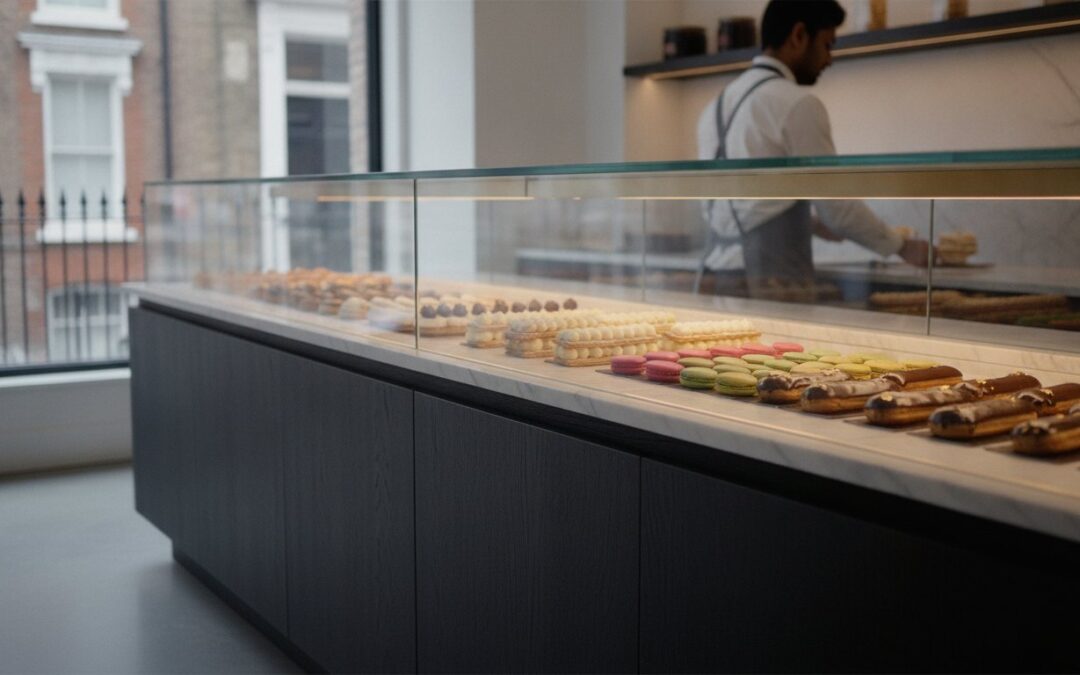
What if your most exquisite pastry is actually losing you money simply because of the glass it sits behind? While a stunning patisserie display counter design captures the initial gaze, it’s the invisible thermal engineering that ensures customers return for that perfect first bite. We know that a display unit must be more than a simple cabinet. It’s a high-performance tool where visual theatre meets technical precision to protect your margins and your brand’s reputation.
You’ve likely dealt with the frustration of condensation obscuring your best work or inconsistent temperatures that compromise a delicate mille-feuille. It’s stressful when standard units don’t fit your shop’s unique footprint or fail to maintain the strict 8°C required by UK food safety regulations for fresh cream. This guide will show you how professional design transforms high-end pastries into high-margin revenue through bespoke engineering. We’ll explore the critical balance of UK-manufactured durability, CAD-led customization, and the thermal accuracy needed to protect your artisanal creations from the first sketch to the final installation.
Key Takeaways
- Master the visual hierarchy techniques that transform your display into a silent salesperson, driving higher impulse purchase rates through strategic product placement.
- Identify the technical essentials, such as double-glazed glass and precision refrigeration, required to prevent condensation and keep delicate pastries perfectly fresh.
- Evaluate the critical differences between standard units and a bespoke patisserie display counter design to ensure your equipment fits your specific shop layout and brand identity.
- Improve operational efficiency by designing counters that balance high-impact customer views with ergonomic staff access and assisted-serve workflows.
- Learn how CAD modelling and local UK manufacturing eliminate project stress by providing a clear, methodical journey from initial design to final commissioning.
The Psychology of Patisserie Display Counter Design
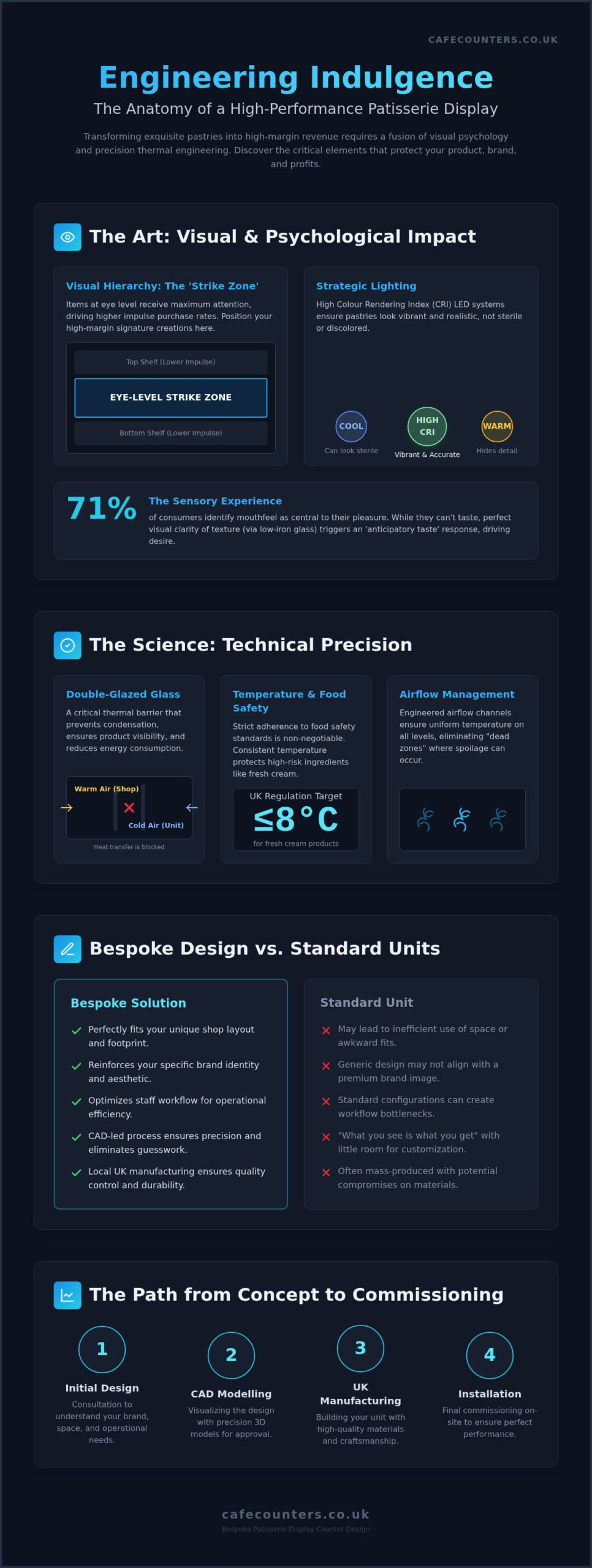
Successful patisserie owners understand that their products are their greatest marketing assets. A professional display case serves as more than just storage; it’s a meticulously engineered stage that acts as a silent salesperson for your brand. When we approach patisserie display counter design, we focus on the visual hierarchy to guide the customer’s journey. Items placed at eye level typically see higher impulse purchase rates because they occupy the primary field of vision. By positioning high-margin signature bakes in this central ‘strike zone’, you’re making the decision-making process effortless for the guest.
Lighting plays a pivotal role in this psychological engagement. We utilize high Colour Rendering Index (CRI) LED systems to ensure the deep reds of a raspberry tart or the golden hues of a croissant appear realistic and vibrant. Lighting that’s too cool can make delicate pastries look sterile, while lighting that’s too warm might hide the intricate details of your decoration. In assisted-serve environments, the counter becomes the centre of a theatrical performance where staff interact with guests over a transparent barrier of quality. This interaction builds a connection that self-service units simply cannot match.
The Sensory Experience of Indulgence
Visual clarity is paramount for triggering the desire to purchase. We recommend low-iron glass and minimal framing to reduce the physical and psychological barriers between the customer and the product. Industry data shows that 71% of consumers identify mouthfeel as a central element of their culinary pleasure. While they can’t taste the product through the glass, a well-lit display that highlights texture triggers an ‘anticipatory taste’ response. It’s about creating a sense of abundance. However, our design process ensures that this abundance never compromises airflow. Overstuffing a unit leads to hot spots and ruined stock, so we calculate shelf spacing with precision.
Beyond Aesthetics: The Freshness Factor
Technical Essentials for High-Performance Displays
High-performance patisserie display counter design relies on a foundation of thermal engineering that remains invisible to the customer but essential to the operator. While the visual appeal creates the initial draw, technical precision ensures that your investment continues to perform over years of heavy retail use. Achieving this requires a meticulous approach to refrigeration, glass technology, and airflow management. Adhering to strict food safety and temperature requirements is the non-negotiable baseline for any commercial unit, particularly when dealing with high-risk ingredients like fresh cream or egg-based custards.
Double-glazed glass is a critical component in this engineering mix. It acts as a thermal barrier, significantly reducing energy consumption while preventing the condensation that often obscures products in lower-quality units. When moisture builds up on the glass, it doesn’t just ruin the view; it signals to the customer that the climate control is failing. Proper ventilation is equally vital. Whether you are using standalone units or integrated drop-in units, the system must have adequate space to expel heat and intake cool air to prevent the compressor from overworking.
Internal shelving choice also impacts performance. While wire shelving offers superior airflow, glass shelves are often preferred in high-end patisseries for their premium aesthetic. To balance this, we design airflow channels that guide chilled air around the glass, ensuring every level maintains a uniform temperature without creating “dead zones” where spoilage could occur.
Refrigeration Engineering for Delicate Pastries
In a patisserie context, the choice between static and ventilated cooling is significant. Static cooling helps maintain higher humidity levels, which prevents delicate sponges from drying out, yet it can lead to uneven temperature distribution. Ventilated cooling provides exceptional consistency but requires precise calibration to avoid pastry desiccation. For cream-based products, maintaining a steady 4°C to 8°C is essential for safety and texture. Thermal stability is the ability of a display unit to maintain a consistent internal climate despite frequent door openings and varying external ambient temperatures.
Lighting Design for Visual Impact
Effective lighting must do more than just illuminate; it must enhance. We utilize LED gantries positioned at the front and top of each shelf to eliminate shadows, ensuring that products on the lower levels receive the same “hero” treatment as those at eye level. UV-free lighting options are standard in our designs to prevent the gradual degradation and discolouration of sensitive ingredients like chocolate or fruit glazes. By strategically placing these lights, we highlight the intricate textures and vibrant colours of your artisanal creations without introducing heat that could compromise the refrigeration system’s efficiency.
Bespoke vs. Standard: Choosing Your Design Framework
Deciding on the right framework for your patisserie display counter design depends on your operational timeline and the unique constraints of your site. Off-the-shelf units offer a rapid deployment solution for startups or smaller retail units. However, standard units often fail to maximize available floor space or address awkward architectural features like support pillars. A bespoke patisserie display counter design ensures that every millimetre of your retail space is working to generate revenue. When you invest in a custom solution, you’re choosing a piece of equipment that integrates perfectly with your specific workflow and brand aesthetic. Our UK-based manufacturing facility allows us to build counters that reflect your regional artisanal pride while ensuring industrial-grade durability.
Standard units are built for a generic user. They don’t account for the specific height of your staff or the unique flow of your customer queue. We often see clients struggle with standard units that leave awkward gaps where dust and debris collect. A bespoke counter eliminates these issues. It provides a steady, reliable hand in a complex retail environment, ensuring that the physical layout supports your sales goals rather than hindering them.
Integrating Drop-in Units for a Seamless Look
For many high-end bakeries, the goal is a flush-mount, seamless aesthetic that hides the bulky mechanics of refrigeration. This is where you should integrate drop-in units into your custom counter. These units allow for complete creative freedom with external cladding. You can use materials like reclaimed timber or branded panelling without compromising the core thermal performance. It’s essential to plan for under-counter ventilation during the CAD modelling phase. This prevents the compressor from overheating within the cabinetry. If your service model includes self-service options, you might also consider refrigerated grab and go display units to complement your assisted-serve sections.
Premium Materials and Finishes
Material selection is where aesthetics and hygiene intersect. While stainless steel remains the industry standard, many modern designs incorporate natural stone or solid surface countertops for customer-facing areas. These materials must meet strict NSF/ANSI 7 technical standards to ensure they are easy to sanitise and won’t harbour bacteria. We guide you through selecting the right glass profile too. Curved glass offers a classic feel. Square profiles project a contemporary, architectural vibe. Every choice, from the depth of the stone to the grade of the steel, is a deliberate step toward long-term operational efficiency.
Non-porous surfaces like Grade 304 stainless steel are required for any food-contact area. This isn’t just about rules; it’s about the longevity of your shop. Porous materials stain and harbour odours over time. By selecting durable, food-grade finishes, you’re protecting your investment for the next decade of service.
A well-considered patisserie display counter design does more than showcase cakes; it orchestrates the movement of your staff and guests. In the ‘assisted-serve’ hospitality model, the counter acts as both a stage and a workstation. You must balance the customer’s unobstructed view of your artisanal bakes with the server’s need for rapid, ergonomic access. If a counter is too deep, staff face physical strain during a busy shift; if it is too high, it creates a psychological barrier that can feel impersonal. We design with these meticulous measurements in mind to ensure your team remains efficient and your customers feel welcomed.
In the modern retail environment, your counter is also a primary marketing asset. Designing for social media shareability, or the ‘Instagrammable’ factor, involves creating clean lines and perfect lighting that encourage guests to photograph their experience. This organic promotion relies on a high-impact visual centrepiece that looks as good on a smartphone screen as it does in person. By integrating these aesthetic considerations into the functional layout, you turn every purchase into a potential brand endorsement.
Ergonomics for Staff Efficiency
Staff performance is directly linked to the physical design of their environment. Rear-access sliding doors are typically the preferred choice for high-volume sites, as they allow for rapid restocking without encroaching on the service aisle. Conversely, flip-down fronts provide unparalleled access for deep cleaning at the end of the day. We also integrate dedicated storage solutions for packaging and serving tongs within the counter structure itself. This keeps the workspace tidy and ensures that staff don’t have to turn their backs on the customer to find a box or a napkin, maintaining the flow of the theatrical ‘assisted serve’ experience.
Strategic Placement within the Cafe Layout
Your display should be the first thing a guest sees. Positioning the counter as a focal point upon entry establishes an immediate sense of quality and artisanal pride. This strategic placement influences queuing patterns, guiding customers past your high-margin items before they reach the till. For those managing multi-product environments, our ultimate guide to deli counters provides additional insights into managing diverse product lines. By carefully planning the relationship between the entrance, the display, and the point of sale, you can significantly increase secondary sales and impulse purchases.
If you are ready to transform your floor plan into a high-performance retail space, our team can provide a bespoke serving counter consultation to bring your vision to life with technical precision and artisanal flair.
The TFSE Process: From CAD Model to Installation
Bringing a complex patisserie display counter design to life requires a structured, methodical approach that eliminates the typical stresses of commercial renovation. We believe that the journey from an initial concept to a fully commissioned unit should be as precise as the thermal engineering within the counter itself. By managing the entire lifecycle of the project from our London-area facility, we maintain total oversight over quality control and production timelines. This end-to-end project management ensures that your vision is never lost in translation between different contractors.
Our commitment to UK-based manufacturing since 1991 provides our clients with shorter lead times and the reassurance of British craftsmanship. Local production means we can respond quickly to design changes and provide a steady, reliable hand throughout the construction phase. Every unit we produce is built to comply with stringent UK health and safety and food hygiene regulations, including HACCP principles. This ensures your display isn’t just a visual masterpiece; it’s a fully compliant piece of professional catering equipment designed for durability.
Technical Planning and CAD Visualisation
Advanced CAD modelling is the cornerstone of our design phase. We create detailed 3D visualisations that allow you to see exactly how the counter will sit within your specific architectural footprint. This process is vital for identifying potential clashes with existing utilities like floor drains or electrical points before any materials are cut. A comprehensive site survey serves as the critical foundation for every project, ensuring that every architectural nuance and utility connection is mapped with millimetre precision before manufacturing begins. We frequently collaborate directly with architects and interior designers to ensure the final patisserie display counter design integrates seamlessly with the wider cafe aesthetic.
Installation and Long-Term Performance
The final stage of our process involves full installation and professional commissioning. This isn’t a simple ‘plug and play’ scenario; our engineers calibrate the refrigeration components on-site to ensure they meet the specific thermal requirements of your products. This attention to detail at the commissioning stage is what guarantees the long-term performance and reliability of British-made equipment. We provide ongoing after-sales support to protect your investment for years to come. If you’re ready to start your journey, contact us for a bespoke counter consultation to discuss how our technical expertise can support your artisanal vision.
Elevate Your Artisanal Vision with Technical Precision
A high-performance patisserie display counter design is the bridge between your culinary expertise and your business’s commercial success. By prioritising the synergy of visual theatre and thermal engineering, you protect the delicate textures of your pastries while maximizing their retail impact. We’ve explored how technical essentials like precision refrigeration and ergonomic layouts reduce operational stress and drive high-margin revenue. Whether you are integrating drop-in units or commissioning a full bespoke counter, the goal remains the same: a reliable, high-impact centrepiece that reflects your brand’s commitment to quality.
Frequently Asked Questions
What is the ideal temperature for a patisserie display counter?
For high-risk items like fresh cream and custards, the display must maintain a temperature at or below 8°C to comply with UK food safety regulations. Many pastry chefs prefer a tighter range between 2°C and 5°C to preserve the structural integrity of delicate fillings. Maintaining this specific range ensures food safety while preventing the spoilage that can lead to significant revenue loss.
Should I choose a curved or square glass display for my cafe?
The choice between curved and square glass depends on your brand’s specific aesthetic and the architectural style of your cafe. Curved glass provides a softer, more traditional look that many classic bakeries prefer for its heritage feel. Square glass profiles offer a contemporary, architectural vibe that maximizes internal volume and aligns perfectly with modern minimalism trends.
How do I prevent condensation from forming on the display glass?
Using double-glazed glass is the most effective way to prevent condensation from obscuring your products. This technology creates a thermal barrier that reduces the temperature difference between the internal display and the external ambient air. Ensuring your patisserie display counter design includes high-quality gaskets and proper ventilation also stops moisture from building up on the glass surface.
Can a patisserie display be integrated into an existing counter?
You can seamlessly integrate a display into an existing layout by using specialized drop-in units. These units are designed to be flush-mounted into your current cabinetry, allowing for custom cladding that matches your shop’s branding. It’s essential to plan for adequate under-counter ventilation during the installation to protect the refrigeration system’s longevity and performance.
What is the difference between a deli counter and a patisserie display?
A patisserie display is specifically engineered to manage humidity levels that prevent delicate sponges and pastries from drying out. Deli counters are often designed for meat or cheese storage where different airflow patterns are required. While they look similar, the internal climate control in a patisserie display counter design is much more precise to handle sensitive, sugar-based products.
How much space do I need behind the counter for staff to operate the display?
We recommend leaving a minimum of 900mm to 1200mm of clearance behind the counter for staff to operate comfortably. This space allows for the full opening of rear-access sliding doors and provides enough room for two staff members to pass each other during peak service. Proper ergonomic planning ensures that restocking and serving don’t become bottlenecks in your operational flow.
Are LED lights better than fluorescent for food displays?
LED lights are superior to fluorescent options because they emit significantly less heat, which reduces the load on your refrigeration system. They also offer a higher Colour Rendering Index (CRI), making the vibrant colours of your pastries look more realistic and appealing. LEDs are more energy-efficient and have a much longer lifespan, reducing the frequency of disruptive maintenance in your retail space.
Do bespoke patisserie displays require special maintenance?
Bespoke displays don’t require more complex maintenance than standard units, but they do benefit from regular, professional servicing to maintain their high-performance standards. Keeping the condenser coils free of dust and checking the door seals regularly will ensure the system continues to operate with maximum thermal precision. Our UK-manufactured units use high-grade components that are designed for industrial durability and long-term service.