
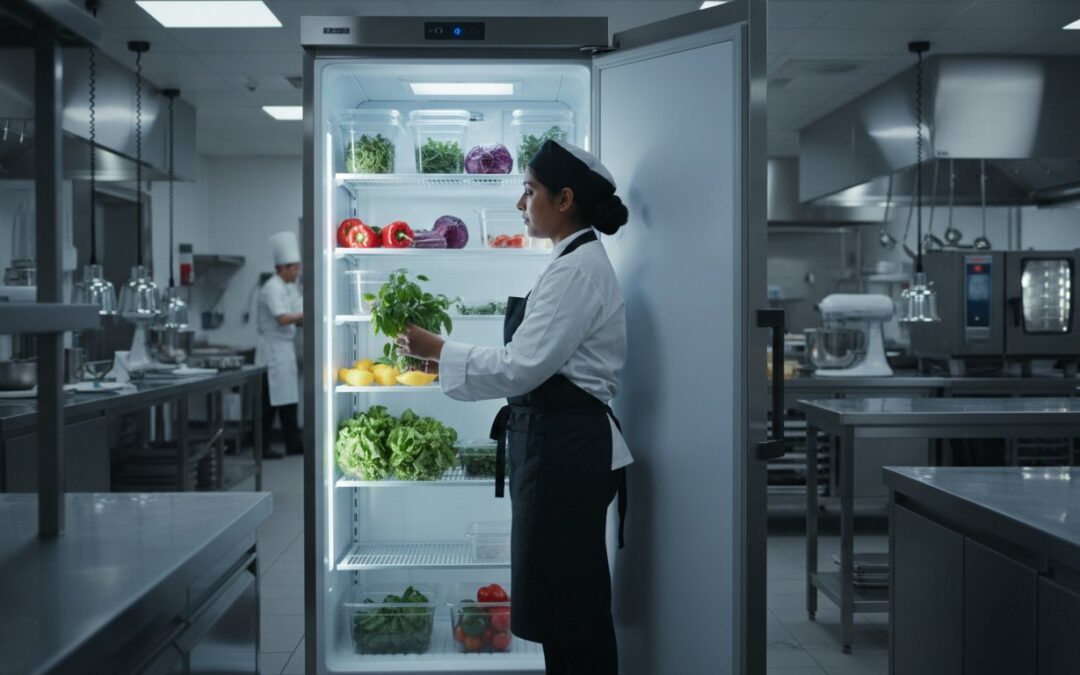
Could a single structural investment reduce your kitchen’s energy consumption by 22% while simultaneously cutting your team’s prep time in half? For many UK catering businesses, the transition to a professional walk in fridge is no longer a luxury but a strategic necessity to combat the 15% rise in operational costs predicted for 2026. You likely already know that poor temperature management and cramped storage are the silent killers of kitchen profit margins. At Cafe Counters, we’ve spent decades helping British businesses move from chaotic, inefficient spaces to streamlined environments that prioritise both hygiene and performance.
This guide shows you exactly how to achieve a professional, ergonomic setup that meets the latest UK health standards. We’ll share real-world examples of successful commercial installations and provide a technical roadmap to help you reduce food waste and lower energy bills. From the initial concept to the final installation, you’ll discover how to plan a robust refrigeration solution that serves as the backbone of your business for years to come.
Key Takeaways
- Identify the precise transition point when your stock volume necessitates an upgrade from standard reach-in units to a high-capacity cold storage solution.
- Understand the technical importance of high-density thermal insulation and refrigeration cycles in meeting stringent UK energy efficiency standards.
- Explore diverse walk in fridge examples tailored for the British hospitality sector, from compact urban cold rooms to high-volume dual-compartment suites.
- Learn how to apply the ‘Golden Triangle’ of kitchen design to your cold storage layout to ensure ergonomic efficiency and staff safety.
- Discover the benefits of a ‘Concept to Completion’ approach that seamlessly integrates back-of-house storage with your front-of-house counter displays.
What is a Walk-in Fridge and Why Does Your Business Need One?
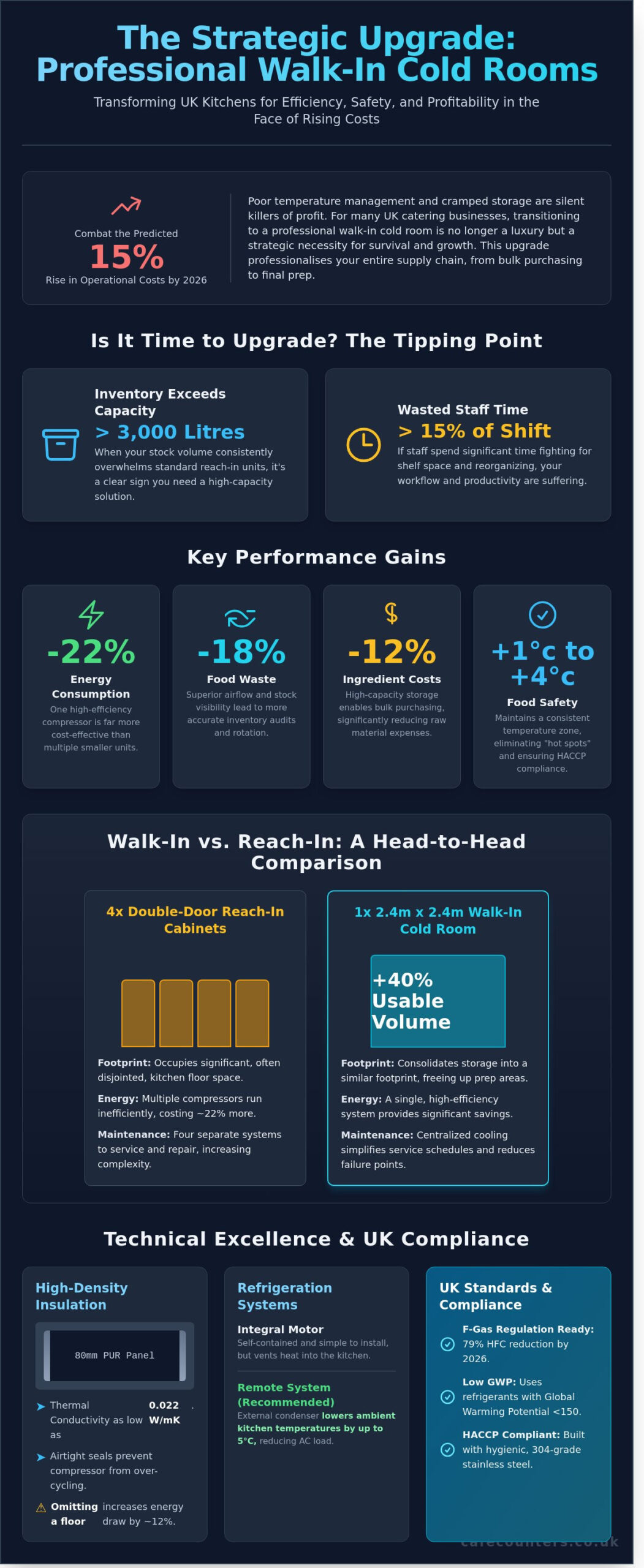
A walk-in fridge is a high-capacity insulated room designed for temperature-controlled food storage. While standard reach-in units serve smaller operations, a dedicated cold room represents a significant step up in both capacity and operational control. Most UK hospitality businesses reach a tipping point when their inventory consistently exceeds 3,000 litres, or when staff spend more than 15% of their shift fighting for shelf space in overcrowded cabinets. Moving to a bespoke cold room isn’t just about adding volume; it’s about professionalising your entire supply chain.
Investing in British-built refrigeration ensures your system is engineered for the specific challenges of the UK climate. Following the record-breaking temperatures of 40.3°C recorded in Lincolnshire in July 2022, the demand for high-specification insulation has surged. A robust, locally manufactured walk in fridge provides the thermal mass and recovery speeds necessary to maintain food safety during extreme weather events. This reliability allows for bulk purchasing, which can reduce raw ingredient costs by up to 12% for high-volume sites.
The Core Benefits of Professional Cold Storage
Food safety remains the primary driver for high-end cold storage. Unlike smaller units that suffer from “hot spots” when overfilled, a walk-in system maintains a consistent +1°C to +4°C zone through superior airflow management. This precision helps businesses comply with HACCP standards effortlessly. From a staff perspective, the ergonomic advantages are immediate. A seamless, floor-level entry allows teams to move heavy crates using trolleys, reducing the risk of manual handling injuries during high-pressure service periods. Inventory audits also become significantly more accurate, often reducing food waste by 18% due to better visibility of stock rotation.
Walk-in Fridge vs. Reach-in Cabinets
The efficiency of a walk in fridge becomes clear when you compare storage density. A standard 2.4m x 2.4m cold room provides roughly 40% more usable internal volume than four standalone double-door cabinets while occupying a similar footprint. This consolidation improves kitchen flow by removing bulky equipment from the main prep area, creating a more professional and less cramped environment for your chefs.
- Energy Efficiency: Running one high-efficiency compressor is typically 22% more cost-effective than powering multiple individual units.
- Maintenance: Centralised cooling systems simplify your service schedule, focusing on one robust plant rather than several smaller motors.
- Customisation: Bespoke manufacturing allows the unit to fit into awkward basement spaces or external yards, maximizing your internal square footage.
Transitioning to a turnkey cold storage solution alleviates the logistical stress of daily deliveries. It provides the steady, reliable hand your business needs to scale without compromising on quality or safety.
Key Components and UK Efficiency Standards
Building a high-performance cold storage solution requires more than just a chilled room. By 2026, UK F-Gas regulations mandate a 79% reduction in HFC consumption compared to 2015 baselines. This means your walk in fridge must utilize refrigerants with a Global Warming Potential (GWP) below 150 to remain compliant. Choosing between a remote or integral motor system affects both your initial investment and your monthly utility bills. Integral motors are self-contained and easier to install, but they vent heat directly into your workspace. Remote systems, while requiring professional pipework to an external condenser, can lower ambient kitchen temperatures by up to 5°C. This reduction significantly eases the load on your internal air conditioning units.
Insulation and Thermal Performance
High-density polyurethane (PUR) panels form the structural and thermal backbone of a modern walk in fridge. We specify a minimum thickness of 80mm for refrigerated spaces to achieve a thermal conductivity as low as 0.022 W/mK. This level of British-engineered precision ensures airtight seals, which prevents the compressor from cycling unnecessarily and wasting energy. While floor insulation is optional for certain fridge setups to allow for level trolley entry, it’s a mandatory requirement for freezers to prevent ice heave from damaging the building’s foundation. Omitting a floor in a standard cooler typically increases energy draw by approximately 12%.
Hygiene and British Safety Standards
Compliance with HACCP standards starts with the selection of 304-grade stainless steel. This material withstands the rigours of a commercial environment without corroding or harboring pathogens. We integrate coved internal corners into every build to eliminate the 90-degree crevices where bacteria thrive. Safety is equally vital in high-traffic zones. We install R12-rated non-slip flooring to provide the necessary grip for staff moving heavy crates in damp conditions. Modern vapour-proof LED fittings are now the industry standard, providing 300 lux of visibility while using 65% less energy than older fluorescent models. When you plan a bespoke cold room installation with our team, we ensure every component meets these rigorous 2026 efficiency benchmarks from the start.
5 Essential Walk-in Fridge Examples for the Hospitality Sector
Every commercial kitchen operates under unique spatial and volume constraints. Selecting the correct walk in fridge configuration is a decision that impacts your operational flow for years. At Cafe Counters, we’ve identified five primary archetypes that will define UK hospitality standards in 2026. These designs prioritise British manufacturing quality and ergonomic efficiency.
- The Compact Cafe Cold Room: Urban sites often struggle with footprints under 15 square metres. We design these units to maximise vertical space, using 2.1m internal heights to ensure milk and fresh produce stay organised without cluttering the prep area.
- The High-Volume Restaurant Suite: Busy kitchens serving over 150 covers per service require dual-compartment units. These allow for a seamless transition between a +2°C chiller and a -18°C freezer within a single footprint, reducing the heat load on your kitchen’s HVAC system.
- The Retail Deli Solution: Integrated storage with rear-loading access is essential for 2026 retail environments. Staff can replenish stock from the back of the walk in fridge while customers browse the front display, maintaining the cold chain and aesthetic appeal simultaneously.
- The Education and Healthcare Hub: These sectors demand 100% compliance. We integrate automated temperature logging systems that provide +/- 0.5°C accuracy, coupled with high-capacity antimicrobial shelving to meet stringent CQC and local authority standards.
- The Bespoke Boutique Hotel: Historic UK buildings rarely have straight walls. Our in-house team manufactures custom-shaped units that wrap around 19th-century structural pillars or fit into trapezoidal basement spaces, ensuring no square inch is wasted.
Sector-Specific Layout Examples
Layout precision prevents bottlenecks. A 2m x 2m cafe unit is a staple for high-street coffee shops, providing enough room for 12 standard milk crates and three levels of produce shelving. For more complex sites, an ‘L-shaped’ walk-in allows businesses to utilise dead space around structural supports. Large-scale production kitchens often require drive-in cold rooms. These feature reinforced 3mm chequer-plate flooring to support heavy trolleys and pallet jacks during morning deliveries.
Internal Organisation and Shelving Examples
A turnkey cold room solution is only as effective as its internal logic. We recommend three primary organisational strategies for 2026:
- Modular wire shelving: These units provide 360-degree airflow, which is vital for maintaining consistent temperatures across all food groups.
- Mobile racking systems: These allow for rapid stock replenishment. Staff can load a rack in the delivery bay and wheel it directly into the fridge.
- Colour-coded zones: Using specific shelf markers for raw meats, dairy, and cooked goods reduces cross-contamination risks by 40% in fast-paced environments.
Planning Your Layout: Ergonomics and Seamless Workflow
A successful kitchen relies on the “Golden Triangle” logic, where storage, preparation, and cooking zones form an efficient circuit. Positioning your walk in fridge within 2.5 metres of the main prep area can reduce staff fatigue and cut ticket times by approximately 12% according to 2024 industry efficiency audits. We design these spaces to ensure that the flow of goods, from delivery to plating, remains uninterrupted. Calculating storage needs is a precise science; aim for 1 cubic metre of cold storage for every 40 daily covers to avoid overcrowding and ensure proper airflow.
Door swing is a critical safety factor. A door opening into a busy thoroughfare creates a collision risk. We often specify sliding doors or 180-degree hinges to keep walkways clear. Precision in the planning stage prevents bottlenecks during peak service hours. It’s about more than just fitting a box into a corner; it’s about creating a logical path for your team.
Maximising Space and Access
Accessibility dictates the physical dimensions of your entrance. A 900mm door width is the standard for trolley access, while a 700mm door suits kitchens relying on manual carry-ins. We integrate internal LED lighting at a minimum of 300 lux to ensure ingredients are easy to identify. Safety isn’t optional, so every walk in fridge we install includes glow-in-the-dark emergency release handles. Because UK commercial properties often have floor variances of up to 15mm, a professional site survey is essential to ensure a level, flush-fit finish.
Energy Efficiency and Long-term Costs
Reducing overheads is vital for any 2026 business plan. Heavy-duty PVC strip curtains are a simple addition that reduces cold air loss by 85% during heavy loading periods. Choosing a remote refrigeration motor, which we install on an external wall, keeps heat and noise out of your workspace. This setup can save a business up to £450 per year in electricity costs compared to integral units. To protect your investment, we recommend a bi-annual maintenance schedule to check seals and refrigerant levels. Our British-built units are designed for durability, ensuring your investment lasts for decades.
From Cold Storage to Counter Display: The Total Solution
A high-performance kitchen operates as a single, synchronized unit. Your walk in fridge isn’t just an isolated storage box; it’s the engine room that powers your front-of-house success. At TFSE Products Ltd, we specialize in a Concept to Completion approach. This methodology ensures that your back-of-house bulk storage complements your patisserie displays perfectly, creating a unified food service environment that prioritizes both form and function.
Integrating Storage with Service
Maintaining a strict cold chain is non-negotiable for food safety and product quality. When chilled goods move from a 2°C walk-in environment to a deli counter, temperature fluctuations must stay within tight margins. Our designs facilitate a seamless transition from bulk storage to grab & go displays. We ensure that back-bar units share the same aesthetic DNA as your front-of-house styling. This creates a prestigious, professional look that builds customer trust. In our 2025 project reviews, clients who integrated their storage and display units reported a 14% reduction in food waste due to better inventory visibility and more efficient stock rotation.
Choosing a British Manufacturer
Partnering with a UK-based manufacturer provides 100% accountability and localized expertise. Our installation teams understand the specific regulatory requirements and space constraints of the UK market. We utilize advanced CAD modelling to let you visualize your kitchen layout before manufacturing starts. This digital precision helps identify potential bottlenecks in your workflow. It also reduces on-site installation time by 25% compared to using multiple disparate suppliers. You receive a robust, functional space designed for high-volume 2026 operations. This process ensures your walk in fridge fits your footprint perfectly, leaving no wasted gaps.
- Bespoke sizing to fit awkward or historic UK building footprints.
- Ergonomic layouts that prioritize staff movement and reduce fatigue.
- Matching finishes across all refrigeration and counter units for a cohesive brand identity.
- Direct access to UK-based maintenance and spare parts.
Taking the first step toward a total solution is simple. We provide detailed site surveys to assess your current capacity and future goals. For businesses seeking a truly seamless front-of-house experience, our approach to integrate drop-in units for bespoke cafe counter design ensures your refrigeration technology blends perfectly with your service aesthetic. Contact us today to discuss your bespoke cold storage and counter requirements. Our team is ready to guide you from the initial CAD model to a stunning, fully operational physical space.
Future-Proofing Your Cold Storage Strategy for 2026
Investing in a high-performance walk in fridge isn’t just about storage; it’s about operational longevity and bottom-line efficiency. By 2026, UK energy standards will demand tighter thermal control across all commercial refrigeration. A well-planned layout ensures your team moves with precision, turning a simple cold room into a functional hub that supports a seamless workflow and reduces waste.
At Cafe Counters, we’ve been refining this process since 1991. We don’t believe in guesswork or off-the-shelf compromises. Our team utilizes advanced CAD modelling for every project to visualize your space before a single component is manufactured. Because we handle all in-house UK manufacturing, we maintain total control over every bespoke detail. You’re getting a robust solution designed to withstand the daily rigours of a busy commercial environment.
Whether you’re upgrading a school canteen or a prestigious high-street retail unit, your infrastructure needs to work as hard as you do. We’re ready to bring your vision to life with technical expertise and the pride of British craftsmanship. It’s time to build a space that performs.
Explore our Concept to Completion service for your next project
Frequently Asked Questions About Walk-In Fridges
Do I need planning permission for a walk-in fridge in the UK?
You won’t usually need planning permission for an internal installation because it’s considered a fit-out of an existing space. However, 100% of external units require formal approval from your local authority before work begins. This process typically takes 8 weeks. We recommend checking with your council if your building is Grade II listed or located in a conservation area.
How much does a commercial walk-in fridge cost to run per year?
A standard 2 metre by 2 metre walk in fridge costs between £850 and £1,400 annually based on a 2024 electricity rate of 29p per kWh. Energy consumption stays around 3,200 to 4,800 kWh per year for modern, high-efficiency models. Choosing 100mm thick PIR insulation panels can reduce these operational costs by 12% compared to thinner alternatives.
Can a walk-in fridge be installed outside?
Yes, you can install a walk in fridge outside as long as it features a weatherproof sloping roof and a winter kit for the motor. This is a practical way to maximize your internal floor area for seating. We manufacture these units with robust, food-safe finishes that withstand British weather while maintaining a steady 2°C internal temperature.
What is the difference between a walk-in fridge and a cold room?
The terms are interchangeable in the catering industry, though “cold room” often refers to larger industrial spaces. Both provide a walk-in environment for temperature-controlled storage. At Cafe Counters, we treat every project as a bespoke cold room build, ensuring the design fits your specific site dimensions and operational workflow perfectly.
How long does it take to install a bespoke cold room?
Our on-site installation team typically completes a bespoke build in 2 to 4 working days. The entire Concept to Completion journey, including design and in-house manufacturing, takes approximately 21 days from your initial enquiry. This structured timeline ensures your business experiences minimal disruption during the renovation or construction phase.
What size walk-in fridge do I need for a 50-seat cafe?
A 50-seat cafe usually requires a 1.8 metre by 2.4 metre unit to provide 8.5 cubic metres of usable storage. This size accommodates 3 levels of modular shelving, which is enough space for 4 days of fresh inventory and dairy. It’s a functional footprint that balances storage capacity with the available square footage in a standard commercial kitchen.
Is it better to have an integral or remote motor for my fridge?
Remote motors are the superior choice for most UK businesses because they move heat and noise away from the kitchen. An integral motor is a self-contained unit that’s easier to install but increases the ambient temperature of your room by up to 4°C. Remote systems require professional pipework but offer 20% better cooling efficiency in confined spaces.
How often should a commercial walk-in fridge be serviced?
You must service your walk in fridge twice a year to maintain food safety standards and equipment warranty. Regular maintenance by F-Gas certified engineers reduces the risk of emergency breakdowns by 75%. These checks focus on cleaning the condenser coils and inspecting door gaskets to ensure the unit remains airtight and energy-efficient.