
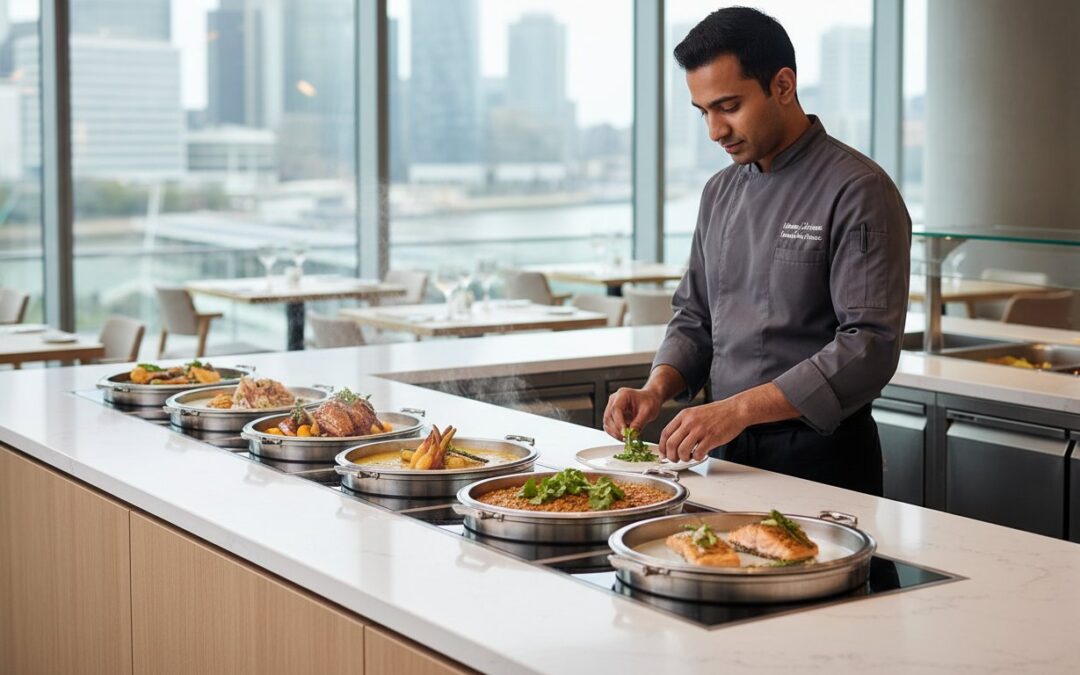
What if your most expensive kitchen investment is actually costing you more in food waste and lost customers than it ever earns back in sales? Maintaining the legal minimum of 63°C for hot holding while keeping your cafe aesthetic intact is a delicate balancing act that many operators struggle to master. You’ve likely dealt with the frustration of inconsistent temperatures that dry out your signature dishes or industrial-looking units that clash with your front-of-house design. Finding the right hot food servery counter UK requires a partner who understands that thermal precision and visual appeal must work in tandem.
This guide provides the technical clarity you need to specify and implement high-performance equipment that reflects British manufacturing excellence. You’ll discover how to design a seamless servery line that maintains food quality, reduces overheads through energy-efficient heating, and enhances the visual impact of your menu. We’ll walk you through everything from bespoke configurations and integrated drop-in units to the latest electrical safety standards and energy-saving trends for 2026. By the end, you’ll have a clear roadmap to transform your vision into a durable, functional reality.
Key Takeaways
- Understand how temperature precision acts as the vital link between culinary excellence and food safety, ensuring your dishes reach the customer exactly as intended.
- Evaluate the technical differences between wet-well and dry-heat systems to select the most efficient heating technology for your specific menu requirements.
- Learn how to use CAD modelling and ergonomic planning to eliminate service bottlenecks and create a seamless flow for both staff and guests.
- Identify the critical material specifications, such as 304-grade stainless steel, required to ensure your hot food servery counter UK provides long-term durability and energy efficiency.
- Discover the operational advantages of British-manufactured equipment, including direct manufacturer support and units tailored to fit unique UK architectural spaces.
The Strategic Role of the Hot Food Servery Counter in UK Hospitality
In any high-volume catering environment, the hot food servery counter UK serves as the critical transition point between the precision of the kitchen and the expectation of the customer. It’s not merely a piece of stainless steel furniture. It’s a strategic asset that dictates the final quality of the meal. A professional counter must preserve the chef’s intent by maintaining the exact texture and moisture levels of the dish while acting as a silent salesperson for the brand. When a counter is designed correctly, it bridges the gap between industrial performance and front-of-house elegance.
Maintaining Food Quality and Hygiene Standards
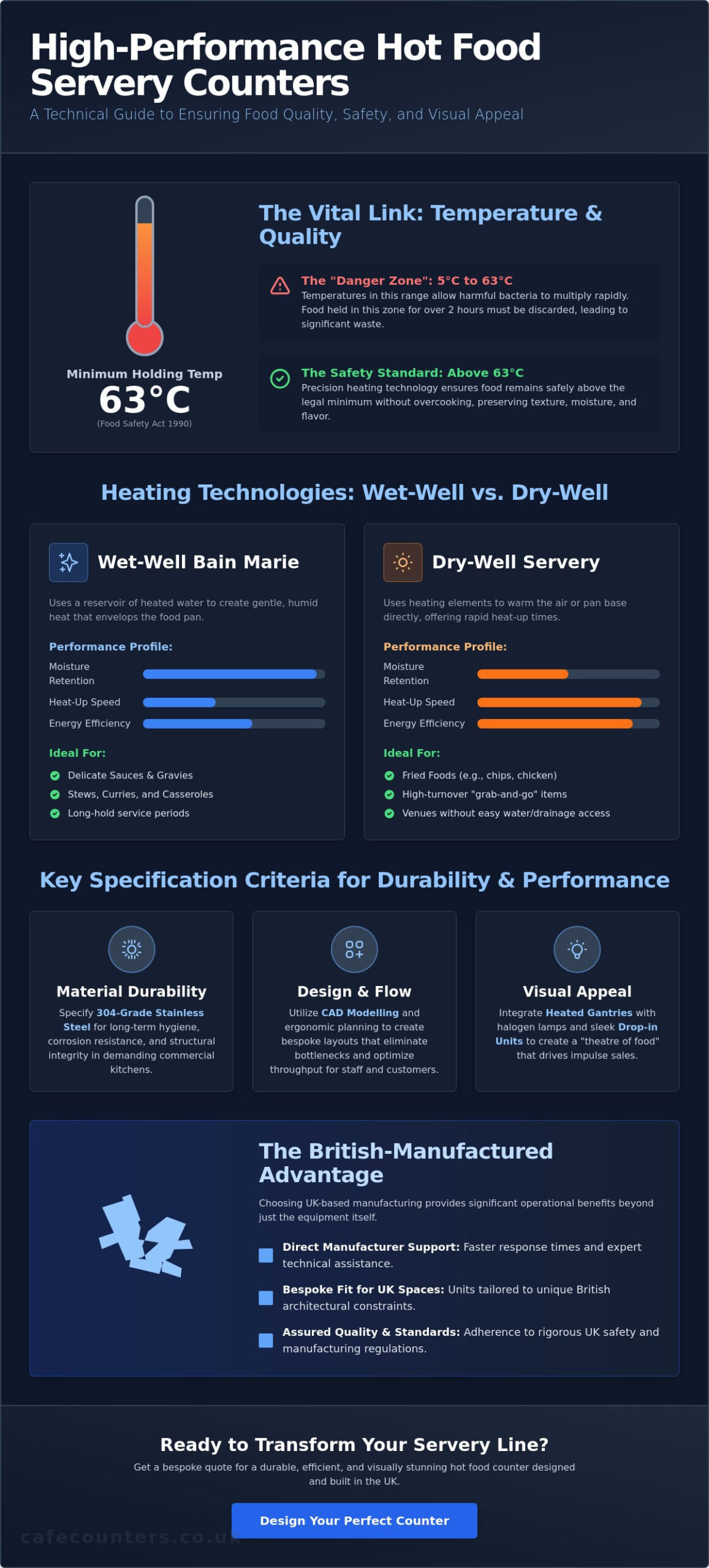
UK legislation is clear: hot food must be held at a minimum of 63°C to ensure safety and compliance with the Food Safety Act 1990. Falling into the “danger zone” between 5°C and 63°C allows bacteria to multiply, leading to potential health risks and costly food waste. Precision is the only way to avoid discarding stock after the two-hour legal limit for food held below the required temperature. High-performance counters provide the stability needed to stay safely above these margins without overcooking the product.
Beyond safety, the technical execution of heat delivery matters for the dining experience. Traditional Bain Marie heating technology provides a gentle, consistent environment that prevents delicate proteins from drying out or “crusting” at the edges. By ensuring even heat distribution across the entire pan, operators can significantly reduce spoilage. This reliability allows your team to focus on service rather than constantly monitoring fluctuating temperatures.
Enhancing the Visual Appeal of Hot Food
A well-designed counter does more than hold heat; it creates an invitation. The transition to a front-of-house setting requires a balance between industrial durability and design-led aesthetics. Using Heated Gantries equipped with halogen or ceramic lamps doesn’t just keep the food warm from above. It illuminates the textures and colours of the dishes, creating a “theatre of food” that drives impulse purchases. Warm lighting combined with clear sightlines can increase customer interest and perceived value.
When specifying Bespoke Serving Counters, the focus should remain on high-grade finishes that reflect your brand’s quality. A counter that looks purely industrial can diminish the perceived freshness of the meal. Instead, integrating Integrated Drop-in Units into a cohesive, high-end design allows the food to take centre stage. This approach ensures that the visual impact matches the culinary standard, turning a functional necessity into a powerful marketing tool for your venue.
Comparing Heating Technologies: Bain Marie vs. Dry Heat Servery Units
Selecting the correct heating method is a technical decision that directly impacts operational costs and food longevity. Every professional hot food servery counter UK relies on Gastronorm (GN) compatibility as its foundation. This industry-standard sizing allows for the seamless transfer of food pans from the oven to the servery line, reducing handling time and maintaining heat. However, the mechanism used to keep those pans warm varies significantly based on your specific menu requirements and service speed.
Bain Marie Systems: Wet vs. Dry Heat
Wet-well Bain Maries operate by heating a reservoir of water to create a gentle, humid heat. This environment is essential for moisture-sensitive dishes like delicate sauces, stews, and gravies that tend to “skin over” or burn when exposed to direct heat. Because the water surrounds the GN pan, heat distribution is incredibly even. Operators must ensure these units help them remain compliant with UK food safety regulations, which require food to be held at a minimum of 63°C. You’ll need to consider the practicalities of plumbing and drainage, as wet-well units require a dedicated water connection or a manual fill and empty routine.
Dry-well units offer a different set of advantages. They use heating elements to warm the air or the pan base directly, reaching service temperature much faster than their wet counterparts. These units are significantly easier to clean and maintain since there’s no water to drain or limescale to manage. For high-traffic environments like busy school canteens or workplace cafes where speed and hygiene are the primary drivers, dry-well technology is often the more practical choice. While they don’t provide the same moisture-rich environment, they’re highly efficient for dense proteins and starches.
Heated Gantries and Overhead Lamps
Maintaining temperature from the bottom is only half the battle. To prevent heat loss from the surface of the food, specifying the right overhead heat source is critical. Halogen bulbs are a popular choice because they provide instant heat and brilliant white light that makes the food look vibrant. In contrast, ceramic elements are more robust and offer exceptional longevity, though they lack the lighting benefits of halogen bulbs. Many operators prefer a combination of both to achieve thermal stability and visual impact.
Integrating professional heated gantries ensures that the temperature remains consistent from the base of the pan to the top layer of the food. For tiered displays, double-tier gantries allow you to maximize vertical space without sacrificing safety. If you’re planning a new layout, our range of bespoke serving counters can be configured with the exact combination of wet or dry heat and overhead lighting required for your specific menu.
Designing for Throughput: Bespoke Servery Layouts and CAD Planning
A hot food servery counter UK is only as effective as the space it occupies. While many suppliers sell pre-manufactured units that force your team to adapt to the equipment, a bespoke approach ensures the equipment adapts to your specific workflow. Achieving high throughput during peak service periods requires more than just heat; it requires a meticulously planned layout that eliminates friction between the kitchen and the customer. This process starts long before the installation, beginning with a deep understanding of your menu and volume.
Ergonomics and Staff Efficiency
Staff fatigue is a significant contributor to service slowdowns and operational errors. By designing tray slides and service heights tailored to your team’s needs, you reduce the physical strain of repetitive reaching and plating. Counter depth is equally vital. A counter that’s too deep slows down the serving process, while one that’s too shallow limits your display capacity and thermal stability. We focus on positioning controls and under-counter storage logically so that replacement GN pans and utensils are always within arm’s reach. Following the Food Standards Agency hygiene guidance, our bespoke designs prioritize smooth, non-porous surfaces that are easy to sanitise, ensuring ergonomic efficiency never compromises food safety.
Modern hospitality environments often demand a hybrid service model. Integrating your hot counter with refrigerated grab and go display units allows you to cater to both seated diners and customers in a hurry. This transition between hot and cold zones must be handled with technical precision. Proper insulation and thermal separation are required to prevent heat transfer from compromising the shelf life of your chilled stock. A well-planned hybrid line ensures a cohesive look while maximizing the revenue potential of every square metre.
CAD Modelling and Visualisation
Our process relies on detailed site surveys to identify the unique architectural quirks of UK properties, from uneven floors to awkward pillars. We use CAD modelling to visualise the customer journey, identifying potential bottlenecks in the queue before a single piece of steel is cut. These 3D models serve as a blueprint for success, allowing you to see exactly how the counter will sit in your space.
These drawings aren’t just for visual approval; they’re essential for coordinating with your electrical and plumbing contractors. It ensures that power points and drainage lines are precisely located, preventing costly on-site adjustments during the fit-out. Once the design is perfected, the transition to our UK-based factory fabrication begins. This methodical progression from initial idea to finished physical space guarantees that your Bespoke Serving Counters deliver long-term operational efficiency and a steady, reliable service flow.
Key Specification Criteria for UK Commercial Hot Counters
Specifying a hot food servery counter UK requires a move from broad design concepts to the fine technical details that determine long-term reliability. While the visual layout defines the customer journey, the hardware specifications dictate your daily operational overheads. Choosing the right components ensures that your equipment can withstand the rigours of a commercial environment while maintaining the thermal precision required for food safety. Every choice, from the grade of steel to the phase of the power supply, should be a deliberate step toward operational excellence.
Material Selection and Durability
The foundation of any professional counter is the quality of its stainless steel. While 430-grade steel is common in budget units, 304-grade stainless steel is the professional standard for food hygiene. Its high nickel and chromium content provide superior resistance to corrosion and pitting, which is essential in the high-moisture environment of a wet-well Bain Marie. Beyond the internal chassis, the choice of countertop material influences both durability and brand perception. While stainless steel is the practical choice for back-of-house, materials like granite or Corian offer a premium, artisanal feel for front-of-house service.
You must also evaluate the build quality of moving parts. High-traffic environments put immense pressure on hinges, sliders, and sneeze guards. Meticulous attention to these smaller components prevents the mid-service failures that lead to downtime. Toughened safety glass is a requirement for any display, though you’ll need to choose between the clean lines of flat glass and the softened aesthetic of curved panels. Each option carries different maintenance and replacement considerations that our team can help you weigh during the design phase.
Energy Efficiency and Operational Costs
Energy consumption is a primary concern for modern UK operators. High-density insulation is the most effective way to reduce heat loss, ensuring that the energy you pay for stays within the food pans rather than heating the room. When heat is retained effectively, heating elements don’t have to work as hard, which extends their lifespan and lowers your utility bills. Digital energy-saving controllers further enhance this by providing precise temperature management, preventing the “thermal overshoot” that wastes electricity and dries out food. Energy-efficient heated displays can pay for themselves through reduced operational costs.
Finally, consider the power requirements of your installation. While smaller, individual units often run on a standard 13-amp single-phase plug, comprehensive servery lines frequently require a three-phase electrical connection to handle the combined load of Heated Gantries and multiple heating elements. Coordinating these requirements with your site’s electrical capacity is a vital part of our project management process. To ensure your project meets these technical standards, we invite you to explore our range of bespoke serving counters designed for the unique demands of the UK market.
Why British-Manufactured Servery Counters Outperform Imported Alternatives
Choosing a hot food servery counter UK that’s manufactured domestically provides a level of quality control and operational security that imported units simply can’t match. When you invest in British-made equipment, you’re not just buying a product; you’re securing a partnership with a manufacturer that understands the specific pressures of the UK hospitality sector. From the initial site survey to the final installation, the proximity of our internal production facilities ensures that every detail is meticulously managed. This local presence eliminates the logistical risks and long lead times associated with international shipping, providing a steady, reliable hand for your project.
The primary advantage lies in the longevity of the equipment. Imported units often rely on proprietary components that are difficult or expensive to source when a repair is needed. By contrast, a British-manufactured counter is designed with readily available UK parts, ensuring that maintenance is swift and downtime is kept to an absolute minimum. Our heritage in artisanal manufacturing means we prioritize durability over fleeting aesthetics, using materials that are built to withstand the unique architectural quirks of UK properties, such as uneven floors or restricted access points.
Bespoke vs. Off-the-Shelf Solutions
While an off-the-shelf unit might seem like a cost-effective choice for a quick setup, it often carries hidden costs. Modifying a standard imported unit to fit a specific space frequently leads to compromised ergonomics and reduced thermal efficiency. Choosing a bespoke cafe counter ensures that the equipment is built around your specific menu and service volume. This tailored approach allows for the seamless integration of Heated Gantries and Integrate Drop-in Units exactly where they’re needed to optimize staff movement. In the long term, equipment designed specifically for your workflow provides a higher return on investment through increased serving speed and reduced food waste.
Installation and After-Sales Support
Reliability extends far beyond the point of purchase. Professional commissioning is essential for any heated equipment to ensure it operates at peak efficiency and remains compliant with safety regulations. Our national coverage ensures that our expert team is available for rapid response maintenance, providing the reassurance that your servery line will remain operational during your busiest periods. We take pride in our end-to-end project management, guiding you from the broad concept to the technical fine details of the finished space. To start your journey toward a high-performance servery line, Contact TFSE Products Ltd for a bespoke servery consultation and discover how our British manufacturing excellence can elevate your business.
Investing in Long-Term Operational Excellence
Specifying the right equipment is the difference between a high-traffic service that flows and one that falters. You’ve seen how balancing thermal precision with front-of-house aesthetics protects both your food quality and your brand reputation. By choosing the correct heating technology and high-grade materials like 304 stainless steel, you ensure your kitchen remains compliant while keeping overheads manageable. A well-planned servery line isn’t just a functional necessity; it’s a strategic asset that enhances the customer experience every day.
At TFSE Products Ltd, we’ve been manufacturing in the UK since 1991, acting as a steady, reliable partner for specialists in bespoke hospitality fit-outs. Our process moves methodically from advanced CAD modelling and detailed site surveys to the final installation of your hot food servery counter UK. This end-to-end management approach alleviates the stress of complex commercial projects and ensures that your vision is brought to life with meticulous detail. We invite you to explore our range of British-manufactured hot food servery counters and collaborate with our expert team. We look forward to helping you build a space that stands the test of time.
Frequently Asked Questions
What is the difference between a wet and dry Bain Marie?
A wet Bain Marie uses a reservoir of water to create gentle, humid heat, while a dry unit uses heating elements to warm the air or pan base directly. Wet-well systems are ideal for moisture-sensitive sauces and stews that might otherwise burn or skin over. Dry-well units offer faster heat-up times and easier cleaning because there’s no water to drain or limescale to manage.
Do I need a plumber for a hot food servery counter?
You’ll require a plumber if you specify a wet-well system with an automatic water fill or a permanent drainage connection. These installations ensure a steady supply of water and simplify the cleaning process at the end of service. If you choose a dry-heat unit or a manual-fill wet Bain Marie, plumbing isn’t typically required, though you must still consider drainage for cleaning purposes.
What are the power requirements for a commercial heated display?
Power requirements range from a standard 13-amp single-phase plug for small units to a dedicated three-phase supply for comprehensive hot food servery counter UK installations. Large servery lines with multiple heating elements and gantries often exceed the capacity of a standard socket. Our technical team coordinates with your electrical contractors during the CAD design phase to ensure your site’s infrastructure supports the total load.
Can I customise the finish of my hot food counter to match my cafe?
Every bespoke serving counter we manufacture can be customised with a wide range of high-end finishes to match your brand’s aesthetic. While the internal chassis is built from durable 304-grade stainless steel, the external panels and countertops can feature materials such as granite, Corian, or decorative laminates. This flexibility allows you to maintain a professional culinary environment that complements your decor perfectly.
How long does it take to manufacture a bespoke servery counter in the UK?
The lead time for a bespoke servery counter varies based on the complexity of the design and the specific materials selected. Because we manufacture everything in our own UK facility, we maintain total control over the production timeline and quality standards. We provide a detailed project schedule following the initial site survey and CAD approval, ensuring a steady progression from the initial concept to the final installation.
What is a heated gantry and do I need one?
A heated gantry is an overhead structure equipped with halogen or ceramic lamps designed to maintain food temperature from above. It serves two critical functions: preventing heat loss from the surface of the food and illuminating the display to enhance visual appeal. Most operators find a gantry essential for maintaining a safe hot food servery counter UK environment while creating an inviting display for customers.
How do I clean and maintain a commercial hot counter?
Daily maintenance involves wiping down all stainless steel surfaces with food-safe sanitisers and clearing any food debris from the heating wells. For wet-well systems, you must also descale the reservoir regularly to prevent limescale buildup on the heating elements. Meticulous cleaning not only ensures compliance with hygiene standards but also extends the operational life of the equipment by preventing corrosion and mechanical failure.
Are there energy-efficient options for hot food displays?
Energy-efficient options include high-density insulation and advanced digital controllers that prevent unnecessary heat loss and power consumption. These components work together to maintain stable temperatures with minimal energy input, directly reducing your annual utility bills. Specifying high-performance insulation ensures that heat is directed toward the food pans rather than escaping into the service area, which also improves the comfort of your staff.