
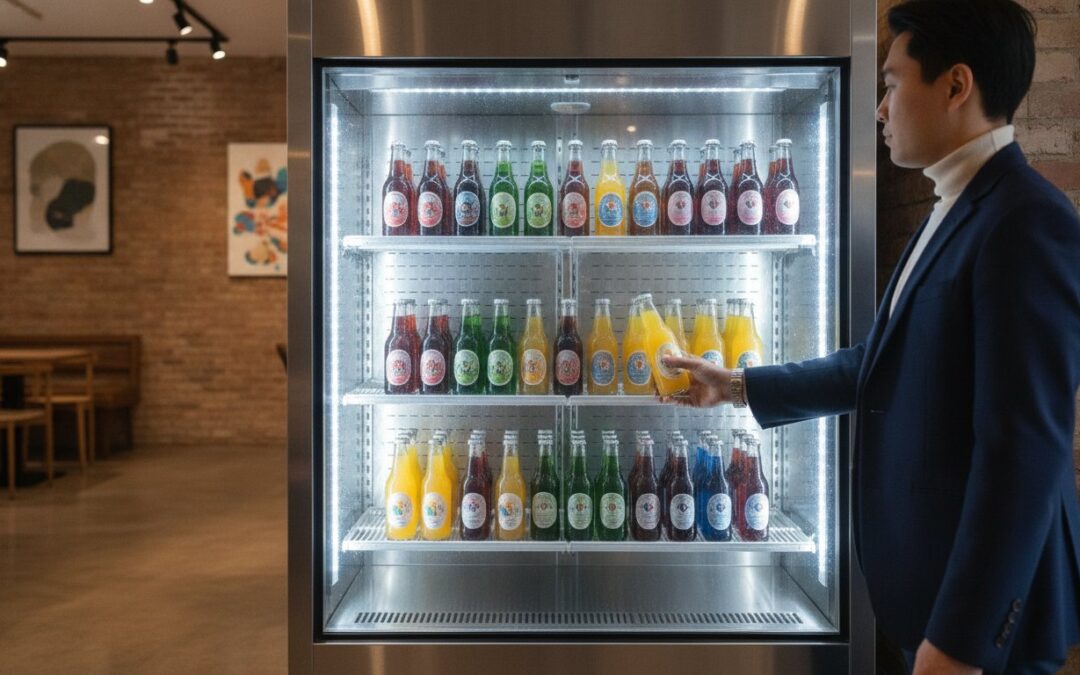
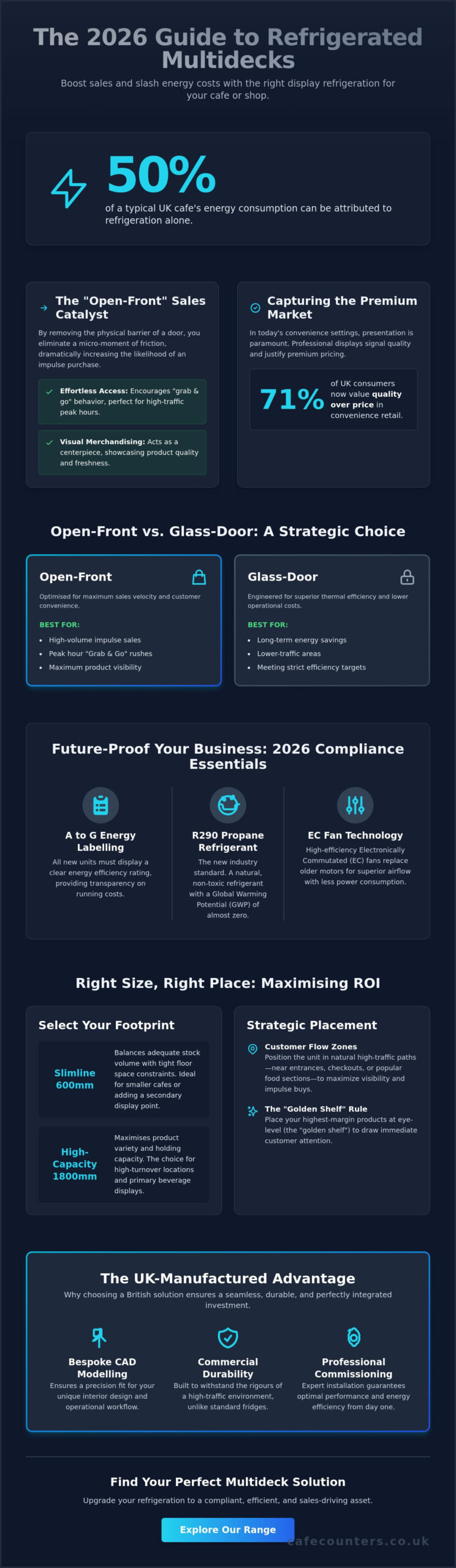
Did you know that refrigeration can account for as much as 50% of the total energy consumption in a typical UK convenience shop or cafe? For many operators, the refrigerated multideck for drinks is both their most essential sales tool and their most expensive asset to run. It’s frustrating to watch your profit margins disappear into high utility bills while you struggle with inconsistent cooling that puts your stock at risk. You shouldn’t have to choose between a unit that keeps beverages ice-cold and one that fits the refined aesthetic of your bespoke interior design.
This 2026 guide provides the roadmap to navigating current MEES regulations and the latest F-Gas phase-downs without compromising on display quality. You’ll learn how to specify a unit that maximizes grab-and-go sales through precision engineering and seamless integration into your serving area. We’ll cover everything from the transition to natural refrigerants to the specific operational advantages of UK-manufactured solutions. This technical insight ensures you can make a confident investment that balances artisanal pride with long-term commercial durability.
Key Takeaways
- Understand why the psychological “open front” design removes purchase barriers and acts as a catalyst for high-volume impulse sales in retail environments.
- Navigate the 2026 UK energy labelling requirements and the industry shift toward R290 propane refrigerants to ensure your facility remains compliant and efficient.
- Compare slimline 600mm units against high-capacity 1800mm models to select a footprint that balances stock volume with your specific floor space constraints.
- Apply the “Golden Shelf” rule and strategic layout planning to position your refrigerated multideck for drinks in the most profitable customer flow zones.
- Explore the advantages of British-manufactured solutions, including bespoke CAD modelling and professional commissioning, to guarantee a seamless integration into your space.
What is a Refrigerated Multideck for Drinks and Why is it Essential?
A refrigerated multideck for drinks is a vertical, tiered cooling unit designed specifically for high-visibility beverage display and effortless customer self-service. Unlike a standard storage fridge, these units are precision-engineered to maintain a consistent temperature curtain across multiple levels, even when the front remains open to the ambient air. This relies on sophisticated refrigeration technology that balances cold air circulation with external temperatures to keep beverages at food-safe levels. It’s a specialized piece of equipment that bridges the gap between industrial storage and high-end retail presentation.
The psychology of the “Open Front” is a powerful driver in retail success. By removing the physical barrier of a door, you eliminate a micro-moment of friction in the customer’s journey. When a chilled drink is within arm’s reach without needing to pull a handle, impulse purchase rates naturally climb. This design has evolved significantly. While once reserved for the utilitarian aisles of large supermarkets, modern multidecks are now central features in high-end bespoke cafe environments. They serve as both a functional cooling solution and a visual centerpiece that reinforces a brand’s commitment to quality and freshness.
Professional multideck merchandisers differ from standard beverage fridges in their airflow management and structural durability. They’re built to withstand the rigours of a commercial environment where the unit is accessed hundreds of times a day. A standard fridge’s compressor would struggle under this load, but a dedicated refrigerated multideck for drinks is designed for this exact high-traffic scenario. It ensures that the bottle at the very front of the shelf is just as cold as the one at the back, maintaining the integrity of your stock and the satisfaction of your customers.
The Role of Multidecks in Modern Grab and Go
High-traffic environments require equipment that can keep up with rapid stock turnover. Our professional Grab & Go Displays are built to support intense customer flow during peak morning and lunch hours. By integrating drinks displays directly with food offerings, operators can facilitate effective cross-selling. A customer grabbing a sandwich is far more likely to add a premium juice if it’s presented in a well-lit, easily accessible tiered unit. Since 71% of UK consumers now value quality over price in convenience settings, the professional presentation of your drinks becomes a critical factor in capturing that premium market share.
Open-Front vs. Glass Door Multidecks
Choosing between an open-front unit and a glass-door model involves a strategic trade-off. Open-front units offer the highest retail impact and convenience, which is ideal for high-volume settings where speed is the priority. However, glass-door multidecks provide superior thermal efficiency. With the 2026 energy standards in place, modern glass door technology has improved significantly. These units now use ultra-clear, low-emissivity glass to maintain visibility while drastically reducing energy consumption. We often recommend door-less units for high-traffic zones where the rapid turnover justifies the energy spend, while glass doors are the logical choice for areas where long-term operational costs are the primary concern.
Key Features and Energy Efficiency Standards for 2026
The regulatory landscape for commercial cooling has reached a critical junction. As of 2026, every refrigerated multideck for drinks sold in the UK must adhere to rigorous energy conservation standards, with clear A to G labelling providing transparency for the operator. Central to this shift is the near-universal adoption of R290 (Propane) as the standard refrigerant. This natural hydrocarbon offers a Global Warming Potential (GWP) of almost zero, replacing older, high-GWP synthetic gases that are now restricted. Choosing a unit that utilizes these eco-friendly cooling agents isn’t just a matter of compliance; it’s a commitment to future-proofing your business against rising utility costs and evolving environmental legislation.
Efficiency is driven by the internal components that work behind the scenes. High-efficiency EC (Electronically Commutated) fans have replaced traditional shaded-pole motors, offering significant reductions in power consumption while maintaining superior airflow. When paired with intelligent electronic controllers, these fans can modulate their speed based on real-time cooling demands. This precision prevents the unit from overworking, extending the lifespan of the compressor and lowering your monthly overheads. It’s this level of technical detail that separates professional-grade equipment from budget alternatives.
Visual appeal is non-negotiable in retail, yet lighting shouldn’t compromise thermal stability. Modern LED strips provide high-intensity illumination that makes product labels “pop” without adding the significant heat load associated with older fluorescent tubes. This allows you to showcase your beverage range in crisp, cool light while keeping the internal temperature stable. If you’re planning a new layout, choosing bespoke serving counters that integrate these efficient lighting systems can create a cohesive, professional look.
Advanced Air Curtain Technology
The performance of an open-front unit hinges on the stability of its air curtain. This invisible barrier of cold air is directed by honeycomb diffusers, which ensure the flow is laminar rather than turbulent. Laminar flow is essential because it prevents warm ambient air from being “sucked” into the cooling zone. It’s vital to remember that air curtain stability is sensitive to the surrounding environment. Placing a unit directly under an air conditioning vent or near a drafty entrance can disrupt this curtain, causing the unit to work harder and potentially leading to inconsistent product temperatures.
Sustainable Manufacturing and Materials
We believe that quality is rooted in how a unit is built. UK-manufactured multidecks often utilize high-grade, recyclable stainless steel, which offers far better longevity than thin, powder-coated alternatives. The density of the insulation is equally important. Using high-pressure injected polyurethane with an Ozone Depletion Potential (ODP) of zero ensures that the cabinet retains its thermal integrity for years. Mirrored stainless steel interiors are a popular choice for high-end cafes, as they reflect light and make the display appear deeper and more abundant without increasing the physical footprint of the unit.
Selecting the Right Multideck Specification for Your Space
Choosing the correct dimensions for a refrigerated multideck for drinks requires a careful balance between your available floor space and your peak-time stock requirements. We typically specify units ranging from 600mm slimline models, which are ideal for narrow boutique cafes, up to 1800mm high-capacity beverage walls designed for busy retail environments. The depth of the unit is just as critical as the width. While a standard depth unit maximizes your inventory capacity and reduces the need for frequent restocking, a slimline model preserves vital customer flow in smaller footprints without sacrificing vertical display area.
Internal shelf configuration is often overlooked but remains essential for a professional presentation. Adjustable shelving allows you to adapt to seasonal changes in beverage packaging, from slim cans to artisanal glass bottles. Beyond the physical shelves, you must decide between integral and remote refrigeration systems. Integral units are self-contained and offer a faster installation process, though they release heat and noise directly into the service area. Remote systems, which house the compressor elsewhere, are the preferred choice for quiet, high-end environments where maintaining a calm atmosphere is a priority. While energy ratings vary, selecting units that meet the high efficiency benchmarks seen in ENERGY STAR certified equipment ensures that your specification remains cost-effective over its entire operational life.
Bespoke vs. Off-the-Shelf Units
Standard, off-the-shelf units often struggle to align with the refined aesthetic of a bespoke cafe design. When you’re investing in a high-end interior, a generic white or silver box can disrupt the visual harmony of your space. Custom-fabricated multidecks allow for a seamless transition between your refrigeration and your serving counters. We often apply bespoke finishes, such as precision-matched wood panelling or stone cladding, to the exterior of our units. This ensures the equipment performs its technical function while looking like a deliberate part of the architectural vision rather than an industrial afterthought.
Technical Considerations: Drainage and Power
Practical installation requires a methodical approach to utilities. Modern multidecks should feature automatic condensate evaporation systems to eliminate the need for manual drainage trays. You also need to verify your site’s electrical capacity; while many smaller units run on a standard 13-amp plug, larger high-capacity models may require a 16-amp dedicated supply. Proper ventilation is the final, most crucial step. Without adequate airflow around the base or top of the unit, the compressor will overheat, leading to premature failure and costly downtime. We guide our clients through this technical journey to ensure every physical constraint is accounted for before the unit arrives on site.
Maximising ROI: Placement and Customer Flow Strategy
Investing in a high-performance refrigerated multideck for drinks is only the first step. To truly unlock its commercial potential, you must treat it as a strategic anchor within your floor plan. Positioning is everything. Placing the unit near the end of the customer journey, typically just before the point of sale, leverages the power of last-minute impulse decisions. This is where a thirsty customer, already committed to a purchase, will reach for a cold beverage to complete their order. Integrating a refrigerated multideck for drinks into your layout this way ensures the equipment pays for itself through increased transaction volume.
We follow the “Golden Shelf” rule to ensure maximum profitability. This principle identifies the shelves at eye level, roughly 1200mm to 1600mm from the floor, as the most valuable real estate. These zones should house your highest-margin items or signature artisanal drinks. Lower shelves are better suited for bulkier items or children’s beverages, ensuring ergonomics are considered for customers of all heights. When you combine this logical layout with high-CRI LED lighting and bespoke branding, your refrigerated display becomes a visual beacon that draws the eye without creating a cluttered or overwhelming environment.
Integrating Multidecks into the Customer Journey
Effective layout design guides the customer from the entrance directly to the till while passing high-value zones. Many successful operators use refrigerated grab and go display units to define queueing areas, turning a wait time into a browsing opportunity. It’s also vital to ensure a cohesive menu presentation. Aligning your beverage selection with your deli display counters allows for natural food-and-drink pairings, increasing the average transaction value. For a tailored layout that fits your specific space, you can contact our design team to discuss your project.
Maintenance for Longevity and Efficiency
Operational efficiency depends on a methodical maintenance schedule. The single most common cause of energy spikes and premature failure is a blocked condenser filter. When dust accumulates, the compressor must work significantly harder to maintain the air curtain, leading to increased wear. We recommend implementing a clear routine for your staff:
- Daily: Wipe down glass surfaces and check that the temperature display remains within the 2°C to 5°C range.
- Weekly: Inspect and vacuum the condenser filters to ensure unobstructed airflow.
- Monthly: Clean the honeycomb diffusers and check the door seals for any signs of perishing.
Look for signs of trouble like unusual vibration, excessive heat around the base, or a slight rise in internal temperature. Catching these issues early prevents the stress of a mid-service breakdown and preserves the long-term value of your investment. A well-maintained unit doesn’t just last longer; it runs quieter and costs less to operate every single day.
The TFSE Advantage: UK-Manufactured Multideck Solutions
Choosing a refrigerated multideck for drinks shouldn’t feel like a gamble. When you partner with a UK-based manufacturer, you gain a level of transparency and quality control that imported units simply can’t match. We manage the entire lifecycle of your equipment. This starts with the first conceptual sketch and ends with the final on-site commissioning on your shop floor. This end-to-end oversight ensures that every component meets our rigorous standards for durability and performance. By maintaining our internal production facilities, we provide a steady, reliable hand throughout the complex process of commercial fit-outs.
A successful installation begins long before the unit leaves our facility. We conduct detailed site surveys to account for architectural quirks, utility placements, and specific ventilation requirements. This meticulous planning is particularly vital when integrating your refrigeration into a bespoke cafe counter. It ensures a millimetre-perfect fit that eliminates unsightly gaps or airflow obstructions that could compromise the unit’s warranty. Professional commissioning is the final step in this journey, where we calibrate the sensors and airflow to guarantee the unit performs exactly as specified from day one.
CAD Modelling and Visualisation
We use advanced CAD technology to bridge the gap between an initial idea and the finished physical space. This process allows you to see exactly how your refrigerated multideck for drinks will integrate with other counter elements. It’s especially useful for ensuring a unified look when you’re combining the main display with integrate drop-in units for snacks or patisserie. Visualising these technical integrations before we cut a single piece of steel prevents costly mid-project changes. It gives you the confidence that the final serving area will be as functional as it is beautiful, reflecting your brand’s unique identity.
Comprehensive After-Sales and Support
Our commitment to your project doesn’t end when the installation team leaves. Being a regional manufacturer means we provide rapid access to genuine spare parts and expert technicians who understand our equipment inside and out. This proximity is a significant advantage for UK businesses that cannot afford extended downtime during peak trading seasons. We focus on long-term operational efficiency, ensuring your investment continues to drive sales for years to come. If you’re ready to elevate your beverage display with a solution built for longevity, you can request a bespoke counter consultation to start your project with a team that values precision and quality over speed.
Elevate Your Retail Performance with Precision Cooling
Choosing a refrigerated multideck for drinks is a significant investment that defines the efficiency and aesthetic of your retail space. We’ve detailed how navigating the 2026 energy regulations and understanding the psychology of the open-front display can directly increase your grab-and-go revenue. When you balance technical specifications like R290 refrigerants with a well-planned customer flow, you create a service area that’s both sustainable and highly profitable. It’s about moving beyond simple storage to implement a precision-engineered retail tool that works for your business every hour of the day.
Our team has been rooted in UK-based manufacturing since 1991, providing the technical expertise required to bring complex commercial visions to physical reality. We guide you through every stage, from meticulous CAD modelling to the final commissioning of your equipment, ensuring total reliability and quality control. Explore our range of professional Grab & Go displays and bespoke multideck solutions to find a partner who values quality and durability as much as you do. Your vision deserves a professional hand to ensure it performs perfectly for years to come.
Frequently Asked Questions
What is the ideal temperature for a drinks multideck?
The ideal operating temperature for a refrigerated multideck for drinks is between 2°C and 5°C. This range ensures that beverages remain crisp and refreshing for the customer while staying within safe food storage limits. Maintaining this consistency requires the unit to be loaded correctly; overstocking can block the air vents and cause the internal temperature to fluctuate.
How much energy does a refrigerated multideck use compared to a standard fridge?
A multideck typically consumes more energy than a standard closed-door fridge because it must constantly maintain an air curtain to repel ambient heat. However, the 2026 energy labelling standards have forced significant improvements in efficiency across the industry. Modern units using EC fans and R290 refrigerant have reduced this energy gap considerably compared to models produced a decade ago.
Can I put fresh food in a multideck designed for drinks?
You can store fresh food in a multideck designed for drinks as long as the unit is rated to maintain a consistent temperature below 5°C. Most professional beverage units are capable of this, making them suitable for sandwiches and dairy products. It’s essential to verify the specific manufacturer’s temperature class to ensure the air curtain is powerful enough for food safety compliance.
Do multidecks need a permanent drainage connection?
Permanent drainage isn’t always a requirement for modern multideck units. Many professional models feature an internal electric evaporation tray that handles the condensate automatically without the need for plumbing. In environments with exceptionally high humidity, a plumbed drainage connection might be recommended to prevent the evaporation tray from overflowing during intense cooling cycles.
Why is my multideck forming ice on the back panel?
Ice forming on the back panel usually indicates a restriction in airflow or a fault in the automated defrost cycle. If stock is pushed too close to the rear vents, the air cannot circulate properly, causing moisture to freeze on the cold surface. Regularly checking that stock remains within the designated load lines and ensuring the condenser is clean will often resolve these icing issues.
What is the difference between integral and remote refrigeration?
Integral refrigeration houses the entire cooling system within the cabinet itself, making it a simple “plug-and-play” solution for most sites. Remote refrigeration places the compressor unit outside the building, which removes heat and noise from your customer serving area. While remote systems require a more complex professional installation, they’re often the preferred choice for high-end cafes seeking a quieter, cooler atmosphere.
How often should I clean the condenser on my multideck?
You should clean the condenser filter on your refrigerated multideck for drinks at least once a month. In high-traffic retail areas or sites with significant airborne dust, a fortnightly check is more appropriate to maintain peak performance. A blocked condenser forces the compressor to run longer and hotter, which significantly increases your energy bills and risks a total system failure.
Are open-front multidecks still legal under new energy regulations?
Open-front multidecks remain completely legal under the current 2026 UK energy regulations and Minimum Energy Performance Standards (MEES). Manufacturers have met these stricter requirements through improved cabinet insulation and more efficient mechanical components. Operators can continue to use door-less units to maximize impulse sales while remaining fully compliant with environmental and energy laws.