
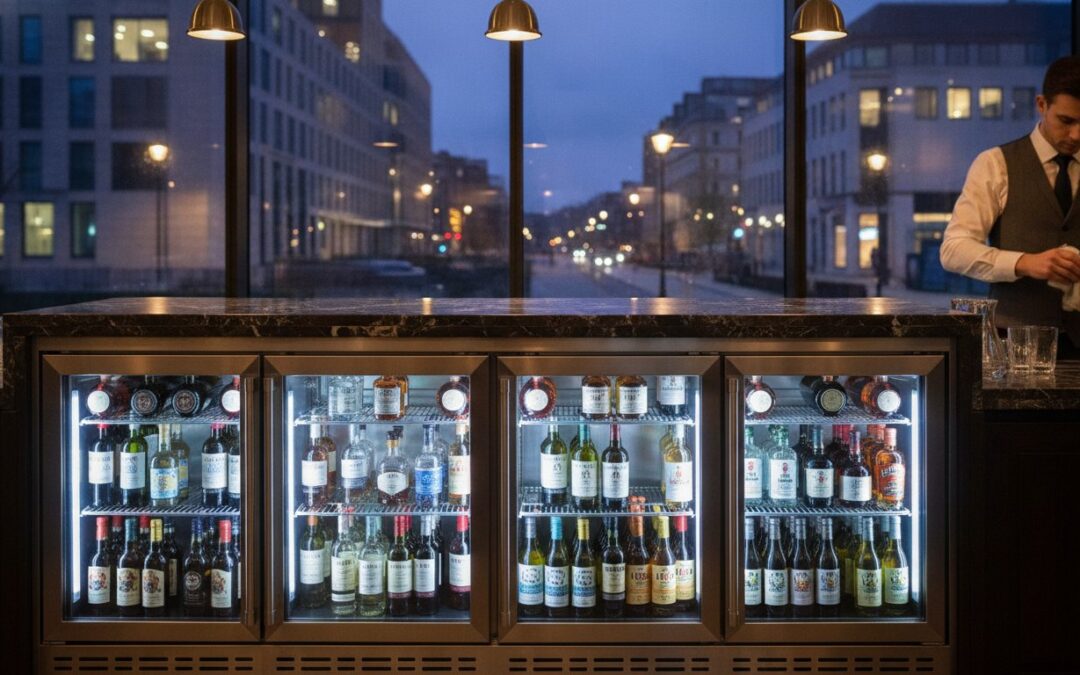
What if your refrigeration was a design asset rather than an energy-draining compromise? With cooling systems often accounting for up to 40% of a commercial building’s energy consumption, selecting high-quality commercial back bar coolers is a critical strategic decision rather than a simple equipment purchase. In a high-pressure hospitality environment, you need more than just a cold box. You require a precision-engineered solution that balances operational efficiency with the aesthetic demands of your bespoke space.
We understand the daily challenge of fitting high-performance equipment into restricted footprints without compromising on your interior design or your bottom line. This guide provides the technical clarity needed to select, integrate, and maintain units that align with your professional standards. You’ll discover how to navigate the transition toward stricter 2026 energy standards and the phase-down of older refrigerants while ensuring your beverages remain at perfect serving temperatures. We explore the benefits of UK-manufactured stainless steel and how advanced CAD modeling ensures a seamless fit within your unique architectural vision.
Key Takeaways
- Understand why high-performance commercial back bar coolers are essential for maintaining rapid pull-down temperatures in busy venues where domestic units fail.
- Evaluate equipment based on forced-air cooling for temperature uniformity. This ensures consistent serving temperatures even during peak service hours.
- Discover how CAD modelling and bespoke counter design allow for seamless, flush-mounted refrigeration that enhances your bar’s aesthetic.
- Maximise the lifespan of your investment by prioritising proper ventilation and energy-efficient compressors using eco-friendly refrigerants.
- Understand the long-term durability benefits of high-grade 304 stainless steel and the quality control advantages of British-manufactured solutions.
Understanding Commercial Back Bar Coolers for Professional Venues
Investing in professional commercial back bar coolers is about more than keeping bottles cold; it’s about managing the thermal recovery of your inventory in a high-pressure environment. Unlike standard refrigeration, these units are engineered for rapid pull-down temperatures. This means they can take a warm delivery of stock and bring it to the ideal serving temperature in a fraction of the time required by standard equipment. In the hospitality sector, where every minute of service counts, this capability is the difference between a satisfied customer and a lukewarm pint.
A standard domestic fridge is designed to be opened a few dozen times a day. In a thriving city bar or a busy restaurant, that door might swing open every ninety seconds. This constant exchange of air forces the cooling system to work overtime. Commercial units utilise a robust refrigeration cycle to recover lost temperature almost instantly. Without this industrial-grade performance, the internal temperature of a domestic unit would steadily climb throughout the night, potentially compromising the quality and safety of your beverages.
Beyond simple functionality, the back-bar area serves as a critical zone where storage meets service efficiency. It is often the most visible part of your operation. High-performance commercial back bar coolers don’t just store products; they act as a stage for your premium inventory. By combining precision engineering with thoughtful presentation, you can drive impulse sales while ensuring your staff have everything they need within arm’s reach.
The Role of Refrigeration in Hospitality Workflow
Maintaining consistent serving temperatures is vital for the integrity of craft beers, delicate wines, and high-end mixers. A professional cooling system supports high-speed service during peak hours by ensuring that every bottle pulled from the shelf is ready for immediate consumption. This level of reliability directly reduces product waste, as beverages don’t lose their carbonation or flavour profile due to temperature fluctuations. It allows your team to focus on the customer experience rather than worrying about whether the next bottle will be cold enough.
Glass Door vs. Solid Door Configurations
Choosing between glass and solid doors is a decision that balances merchandising needs with operational style. Glass doors are the gold standard for merchandising, allowing customers to see your range and enabling staff to manage inventory levels at a glance. They often feature LED lighting to highlight premium labels. Conversely, solid doors offer a discreet, built-in aesthetic that can be finished to match your bespoke counters. Solid doors are also slightly more energy-efficient and provide an extra layer of security for high-value stock when fitted with integrated locks.
Key Features to Evaluate When Selecting a Beverage Cooler
Selecting the right equipment requires a shift from viewing refrigeration as a commodity to seeing it as a technical component of your bar’s architecture. While many manufacturers market units based on a simple bottle count, professional operators look for shelf flexibility. You need to accommodate everything from slimline tonic cans to oversized champagne bottles without wasting vertical space. High-quality commercial back bar coolers provide adjustable, reinforced shelving that won’t sag under the weight of a full inventory, allowing you to customise the internal layout based on your specific menu requirements.
Performance in a busy environment depends heavily on forced-air cooling. This technology uses internal fans to circulate chilled air around every bottle, preventing the “warm spots” common in static cooling units. This level of precision is necessary to adhere to strict food safety guidelines, ensuring that every mixer and garnish remains at a safe, consistent temperature. Integrating units with self-closing doors further protects this thermal stability; it’s a simple mechanical feature that prevents accidental temperature spikes during a hectic shift. If you’re planning a new layout, our team can help you integrate these units into bespoke serving counters that maximise every millimetre of floor space.
Capacity and Dimensional Requirements
Standard under-counter heights are common, but bespoke venues often require custom low-profile units to fit beneath unique architectural features. When measuring your linear bar space, consider whether a single, double, or triple door configuration best serves your workflow. Be wary of the “internal depth” trap; some commercial back bar coolers may have impressive external dimensions but lose significant internal storage to the compressor housing or thick insulation. Always verify that the usable depth fits your specific glassware or specialised bottle shapes.
Temperature Control and Cooling Technology
Precision is paramount, which is why digital thermostats have replaced manual dials in professional settings. These controllers provide clear readouts and allow for fine adjustments, which is vital for venues serving temperature-sensitive craft ales or wines. Look for units featuring automatic defrost cycles; this ensures the evaporator coils stay clear of ice, maintaining operational reliability without manual intervention. Additionally, consider the ventilation path. Front-breathing units are essential for tight, built-in spaces, as they pull and exhaust air from the front, whereas rear-venting models require a significant gap behind the unit to prevent the compressor from overheating.
Modern hospitality aesthetics also demand high-quality internal LED lighting. Beyond just looking professional, cool-toned LEDs generate minimal heat compared to traditional bulbs, ensuring the refrigeration system doesn’t have to work harder to maintain its set point. This combination of visual appeal and technical efficiency defines the modern standard for professional beverage service, a benchmark also upheld by premium mobile bars like Intentional Espresso in their specialised event catering.
Integrating Back Bar Units into Bespoke Counter Systems
Professional bar design treats refrigeration as a structural element rather than a simple appliance choice. When you move beyond standalone units and opt for integrated systems, you eliminate the visual clutter and operational friction that can hinder a busy venue. By using high-performance stainless steel back-bar units as the foundation, we ensure that your commercial back bar coolers are flush-mounted, creating a clean and authoritative profile. This approach isn’t just about aesthetics; it’s about long-term durability. Custom stainless steel surrounds provide a non-porous, easy-to-clean surface that withstands the rigours of high-volume service while maintaining the highest hygiene standards.
To achieve this level of precision, we utilise advanced CAD modelling during the planning phase. This technology allows us to map out complex bar layouts in a digital environment, ensuring that every millimetre of space is accounted for before fabrication begins. It’s particularly vital when integrating cooling units into bespoke cafe counters, where space is often at a premium and every square inch must be functional. Meticulous planning also helps in selecting equipment that aligns with international energy efficiency standards for commercial coolers, ensuring your integrated design is as sustainable as it is visually striking.
Seamless Aesthetic Alignment
Achieving a cohesive ‘theatre’ of service requires matching the finish of your commercial back bar coolers with the surrounding cabinetry. We focus on eliminating the unsightly gaps that typically collect dust and debris in professional environments. By using custom gantries and integrated LED lighting, we can create a unified look that highlights your premium inventory. This level of detail transforms a functional storage area into a high-end design feature that reinforces your brand’s commitment to quality.
Ergonomics and Staff Workflow Optimisation
The placement of your refrigeration units directly impacts your team’s efficiency during peak hours. We position coolers to minimise staff ‘travel time’, ensuring that high-volume products are always within reach. This involves careful consideration of door swing directions to prevent obstructions in narrow walkways. By aligning counter heights with staff comfort, we reduce physical strain and speed up delivery. A well-planned layout doesn’t just look better; it creates a calmer, more methodical environment where your team can perform at their best.
Maximising Efficiency and Longevity in Bar Refrigeration
Efficiency in a professional environment is a long-term commitment, not just a headline figure on a spec sheet. When selecting commercial back bar coolers, the focus must shift from the initial purchase price to the Total Cost of Ownership (TCO). In 2026, this means prioritising units equipped with high-efficiency compressors and eco-friendly refrigerants such as R600a or R290. These natural refrigerants have a negligible Global Warming Potential (GWP) and are essential for compliance with the UK’s accelerated HFC phase-down. Beyond regulatory adherence, these components operate more effectively, reducing the workload on the system and extending the operational life of the unit.
Proper ventilation is the silent partner of refrigeration longevity. Even the most advanced commercial back bar coolers will suffer premature compressor wear if they cannot exhaust heat effectively. We ensure that every installation accounts for airflow, particularly in the tight confines of a bespoke bar. This technical foresight prevents the “short-cycling” that leads to component failure. Additionally, high-quality door gaskets are vital for maintaining thermal integrity. A degraded seal allows chilled air to escape, forcing the motor to run continuously. There is also a common misconception that industrial units must be noisy; however, modern precision engineering ensures that high-performance cooling now operates at decibel levels that won’t disrupt the atmosphere of your venue.
Energy Efficiency and Operational Costs
Reading energy labels in 2026 requires an understanding of the stricter Minimum Energy Efficiency Standards (MEES). With refrigeration and climate control accounting for up to 40% of a building’s energy consumption, moving from a D-rated unit to an A or B-rated model can reduce energy use by 30-40%. This represents a significant return on investment over the unit’s lifespan. In busy UK kitchens and bars, ambient temperatures can rise quickly; premium units are designed to maintain their set point even when the external environment reaches 30°C or higher, ensuring your stock remains protected during a heatwave or a peak Saturday night shift.
Essential Maintenance Protocols
Longevity is built on a foundation of methodical care. Routine condenser cleaning is the single most effective way to prevent catastrophic unit failure, as a blocked condenser forces the compressor to overheat. We also recommend a monthly inspection of door seals to ensure a perfect vacuum is maintained. To guarantee your equipment starts its life under optimal conditions, we provide a comprehensive installation and commissioning service. This professional oversight ensures all components are calibrated correctly, protecting your warranty and your investment from day one.
For a system designed to endure the rigours of a high-volume venue, explore our range of bespoke refrigeration solutions today.
Why British-Manufactured Back Bar Solutions Outperform Imports
Choosing British-made equipment is a strategic investment in reliability and precision. While imported units might offer lower initial costs, they often lack the material integrity and long-term support required for high-volume UK venues. By buying British catering equipment, you gain direct access to the manufacturers who understand the specific demands of the local market. This proximity ensures that your commercial back bar coolers are built to a higher standard, using local supply chains that guarantee the availability of parts and technical expertise long after the initial installation is complete.
UK manufacturing allows for the use of superior materials that imports often bypass to save on shipping weight. We utilise 304-grade stainless steel for our fabrication, which is a food-grade material known for its exceptional corrosion resistance and durability. Many imported alternatives rely on lower-grade alloys that can tarnish when exposed to the acidic spills and frequent cleaning common in a bar environment. By controlling the production process in our own UK facility, we ensure that every weld and finish meets our exacting standards for quality and hygiene.
Quality Control and Material Standards
Hygiene is a non-negotiable standard in professional hospitality. Food-grade stainless steel provides a non-porous surface that prevents bacterial growth, which is a critical factor for any area handling garnishes or open mixers. Unlike factory-standard units that follow a one-size-fits-all template, our custom-engineered commercial back bar coolers are designed to withstand the rigours of high-traffic environments. We subject our designs to rigorous durability testing, ensuring they can handle the constant door openings and heavy loading typical of a thriving British pub or city-centre cocktail bar.
The TFSE Products Ltd Expert Partner Approach
At TFSE Products Ltd, we position ourselves as your Expert Partner, providing total project management from the initial site survey to final commissioning. Our internal production facilities allow us to offer a level of customisation that importers simply cannot match. You aren’t just buying a fridge; you’re collaborating with a team that manages the CAD design, fabrication, and installation in-house. This end-to-end approach provides a single point of contact, alleviating the stress of coordinating multiple contractors and ensuring that your vision is realised with technical precision and artisanal pride.
Securing the Future of Your Beverage Service
Professional refrigeration is a foundational element of your venue’s operational success. By moving beyond standalone appliances and prioritising high-performance commercial back bar coolers, you ensure that your service remains efficient, sustainable, and visually cohesive. We’ve explored how technical features like forced-air cooling and precision digital thermostats work in tandem with bespoke counter design to create a seamless workflow that withstands the pressures of a modern hospitality environment.
As your Expert Partner, TFSE Products Ltd provides more than just equipment. From our UK-based manufacturing facility in the London area, we utilise advanced CAD modelling to ensure every unit fits your unique space with absolute precision. Our comprehensive service includes full installation and commissioning, giving you total confidence in the durability and performance of your fit-out. It’s time to transform your vision into a physical reality that reflects your commitment to quality and artisanal pride.
Ready to enhance your bar’s efficiency and aesthetic appeal? Contact TFSE Products Ltd for a Bespoke Counter Consultation and take the first step toward a professional, durable refrigeration solution that’s built to last.
If your venue plans extend to hosting live shows or corporate events, coordinating your technical requirements is just as important as your equipment; you can explore Per-Event Technical Production Fees to get a professional estimate for your AV and staging needs.
Frequently Asked Questions
Can back bar coolers be used to store food as well as drinks?
Most commercial back bar coolers are engineered specifically for beverage storage and aren’t suitable for open or perishable food. While they maintain cold temperatures, they often lack the precise humidity controls and internal configurations, such as gastronorm racking, required for food safety compliance. For food service, you should utilise dedicated refrigerated prep stations or deli counters that meet specific hygiene standards for raw or prepared ingredients.
What is the ideal temperature setting for a commercial bottle cooler?
The ideal temperature setting for a commercial bottle cooler typically ranges between 2°C and 8°C. For the majority of beers and white wines, a set point of 4°C ensures the product is refreshing without being so cold that it masks the flavour profile. Using digital thermostats allows you to maintain these levels with precision, ensuring every bottle served meets your professional standards and customer expectations.
Do commercial back bar fridges require a specific type of ventilation?
Commercial back bar fridges require dedicated ventilation paths to prevent the compressor from overheating and failing prematurely. Front-breathing units are essential for integrated, flush-mounted designs because they pull and exhaust air through the front plinth. If you use a rear-venting model, you must ensure a sufficient gap exists behind the unit to allow heat to dissipate; otherwise, the system’s efficiency will drop significantly.
How much clearance is needed for an under-counter back bar cooler?
For a standard rear-venting under-counter cooler, you should allow at least 5cm to 10cm of clearance at the back and sides. However, front-breathing units can be installed with minimal clearance at the rear, making them the preferred choice for tight, bespoke spaces. Proper spacing is a technical requirement that ensures the longevity of the cooling system by facilitating effective heat exchange during peak operation.
Are glass door coolers significantly less energy-efficient than solid doors?
While solid door units are slightly more energy-efficient due to superior insulation, modern double or triple-glazed glass doors are highly effective at maintaining thermal integrity. The minor energy difference is often offset by the merchandising benefits of glass, which allow staff to check inventory levels without opening the door. High-quality gaskets and low-heat LED lighting also play a significant role in narrowing this efficiency gap.
What is the average lifespan of a professional bar cooler with regular maintenance?
A professional commercial back bar coolers unit typically has an average lifespan of 7 to 10 years when supported by a methodical maintenance schedule. Routine tasks, such as cleaning the condenser coils and inspecting door seals, prevent the motor from overworking. Investing in British-manufactured units with high-grade stainless steel fabrication further extends this lifespan by resisting the corrosive environment of a busy hospitality venue.
Can I customise the dimensions of a back bar unit for a bespoke counter?
You can customise the dimensions and configurations of your refrigeration through our bespoke design and manufacturing service. We utilise advanced CAD modelling to integrate cooling units into unique counter layouts, ensuring a flush fit that standard off-the-shelf models cannot achieve. This flexibility allows us to build around architectural constraints while maintaining the high-performance cooling required for your specific beverage inventory.