
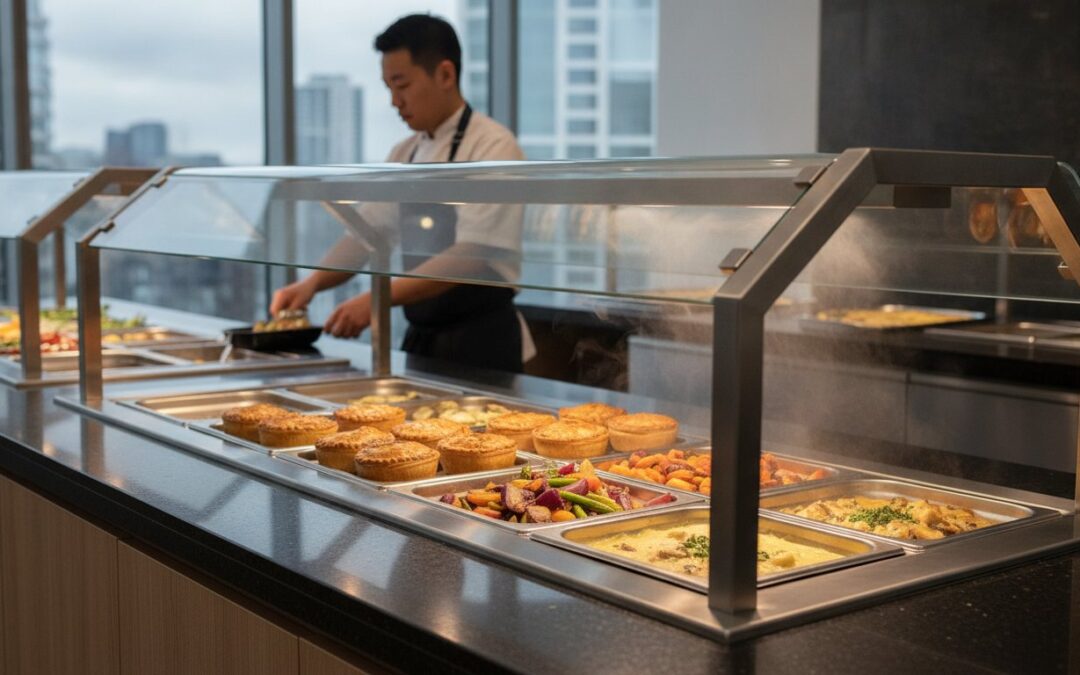
How much revenue is lost when a perfectly prepared dish loses its texture and appeal within thirty minutes of sitting under a heat lamp? You’ve likely felt the frustration of watching high-quality ingredients dry out or overcook because of an inconsistent heating element. It’s a common struggle to balance the legal requirement of holding food at 63°C with the desire to serve a meal that looks and tastes as though it just left the chef’s station.
Mastering the technical nuances of your heated food display counter is the only way to ensure your hot food remains at peak quality without skyrocketing your energy bills. This guide will walk you through the essential selection criteria for 2026, from understanding the “2-hour rule” for safety to preparing for the 2027 EPC Band C requirements. We’ll show you how to integrate precision-engineered units into a bespoke serving counter that protects your margins and your reputation through superior British craftsmanship.
Key Takeaways
- Understand the critical distinction between cooking and holding equipment to ensure your food remains safely above the legal 63°C threshold without compromising texture.
- Identify whether a wet or dry heat heated food display counter best suits your menu, balancing the need for humidity against the requirement for crispy finishes and easy cleaning.
- Utilise the Gastronorm (GN) sizing system to accurately plan your capacity, ensuring your service flow remains efficient during peak UK trading hours.
- Implement rigorous pre-heating and cleaning protocols to maintain high hygiene standards and extend the operational lifespan of your integrated units.
- Learn how bespoke CAD modelling and integrated drop-in units can transform a standard catering space into a high-end, cohesive serving environment tailored to your brand.
Understanding the Heated Food Display: Essential Hot Holding for Catering
A professional heated food display counter serves as a critical bridge between the kitchen and the customer. It isn’t merely a cabinet with a heating element; it’s a precision-engineered thermal management system. While primary cooking appliances focus on rapid heat transfer to reach safe internal temperatures, food warming equipment is designed to stabilize that heat without further altering the food’s texture or moisture content. It’s vital to distinguish between these two functions. Using a display unit to finish cooking is a safety risk, while using an oven to hold food for service often leads to a dry, unappealing product that loses its value quickly.
Dedicated heated counters offer far superior moisture retention compared to traditional overhead heat lamps. Lamps provide a localized, intense heat source that can quickly desiccate the surface of delicate proteins or pastries. In contrast, a modern heated food display counter uses controlled convection or steam to envelop the food in a consistent environment. For contemporary hospitality environments, integrated drop-in units have become the preferred choice for designers. These allow for a seamless, flush-mounted finish within a bespoke serving counter, combining high-performance engineering with the clean aesthetics required in high-end UK cafe fit-outs.
Why Temperature Control Matters in 2026
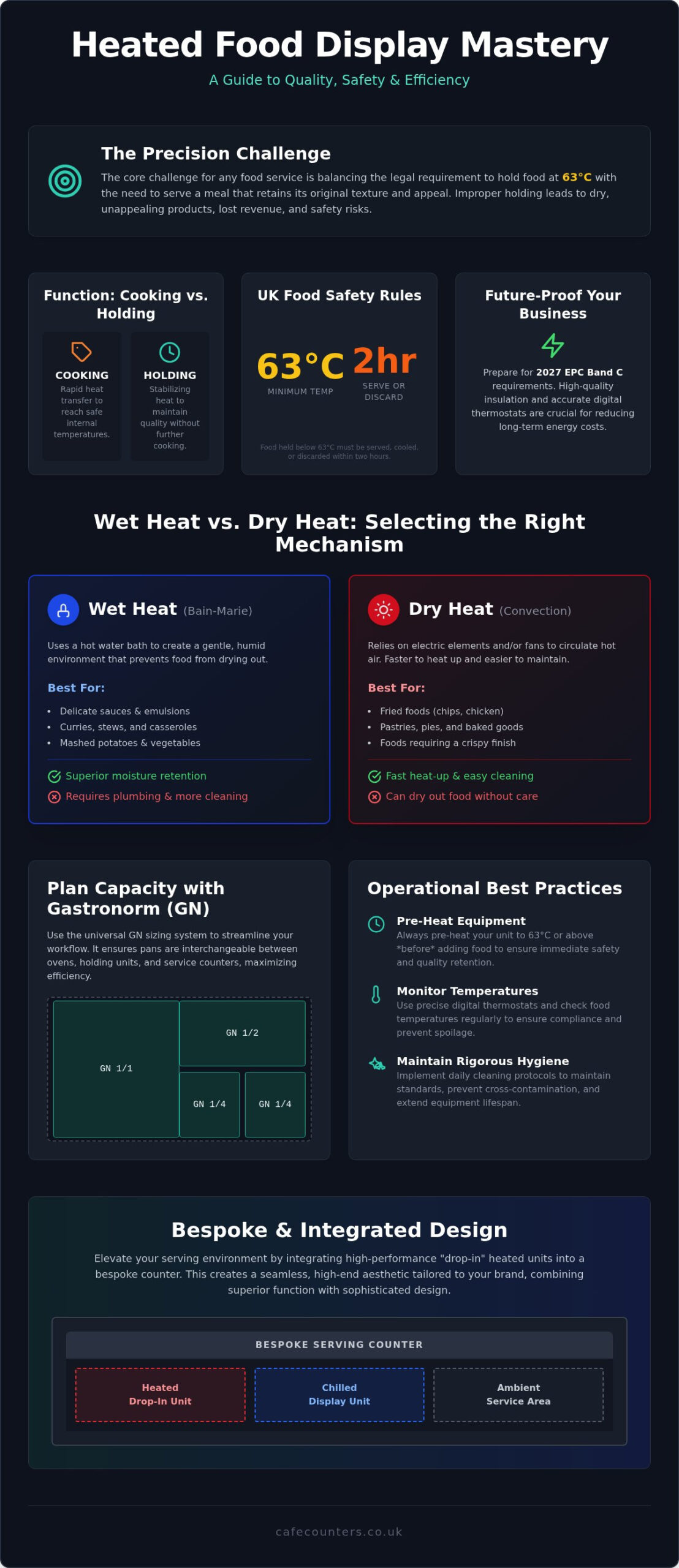
Precision matters for more than just taste. Under the Food Safety and Hygiene (England) Regulations 2013, all hot food must be held at or above 63°C. Falling below this threshold triggers the “2-hour rule,” after which the food must be served, cooled rapidly, or discarded. Modern digital thermostats are essential for compliance, as they prevent the localized hot spots that cause food spoilage or scorched edges. This stability is particularly important for delicate sauces and emulsions that can split if exposed to fluctuating temperatures. Furthermore, with EPC Band C requirements approaching in 2027, choosing a unit with high-quality insulation and accurate sensors is a practical necessity for long-term operational efficiency.
The Role of Heated Displays in Modern Service
Effective hot holding units facilitate a smoother customer flow by allowing for batch and hold service. This strategy enables your kitchen team to prepare high volumes during quieter periods, knowing the quality will remain consistent during the lunchtime rush. Beyond logistics, the visual impact of a well-lit display is a powerful driver for impulse purchases. A clear, condensation-free view of vibrant, steaming dishes can significantly increase average transaction values in retail environments. For operators seeking the highest standard of presentation and reliability, Vision Heated Counters represent a high-performance alternative, specifically designed to integrate into high-traffic commercial spaces with precision and durability.
Wet Heat vs. Dry Heat: Selecting the Right Mechanism for Your Menu
Choosing the correct heating mechanism is a pivotal decision in the design of any professional kitchen. While both methods aim to keep food above the legal 63°C limit as defined by UK food safety regulations, they achieve this through very different physical processes. A wet heat system, commonly known as a bain-marie, utilizes a hot water bath to create a humid environment. This steam acts as a gentle buffer, preventing the direct, harsh heat that leads to evaporation. Conversely, a dry heat heated food display counter relies on electric elements or fans to circulate warm air. This method is significantly faster to reach operating temperature and simplifies the daily cleaning routine for front-of-house teams.
The choice between these two systems often comes down to a trade-off between food science and operational agility. Wet heat units offer high thermal mass; once the water reaches temperature, it stays there with minimal fluctuation, which is excellent for energy-efficient holding over long shifts. Dry heat units are more reactive, allowing you to adjust settings quickly as your menu changes throughout the day. From an installation perspective, dry heat is often the preferred choice for retrofits because it typically requires only a standard electrical connection, whereas wet heat often necessitates dedicated plumbing and drainage infrastructure.
When to Choose a Wet Heat Bain Marie
Wet heat is the gold standard for delicate menus. If your service includes rich sauces, custards, or slow-cooked stews, the humidity provided by a water bath is indispensable. It keeps the product looking “just-cooked” for hours by preventing a dry skin from forming on the surface. However, you must account for the maintenance. In many parts of the UK, particularly in hard water areas, regular descaling is a non-negotiable task to prevent lime-scale from damaging the internal elements. You’ll also need to consider the staff time required for filling and draining the tanks if you don’t have a plumbed-in solution.
The Advantages of Modern Dry Heat Counters
Modern dry heat counters have evolved to offer exceptional temperature stability for denser items like mashed potatoes, pies, or crispy fried components. Because they don’t require water, they eliminate the risk of leaks and the chore of emptying heavy water tanks at the end of a shift. This makes them a highly flexible option for bespoke cafe counters where existing plumbing might be restricted or non-existent. For many retail environments, the energy-efficient performance and “plug-and-play” nature of dry heat make it the most practical choice for long-term durability. If you are planning a high-traffic service area, our team can help you design a custom solution that matches your specific menu requirements and space constraints.
Gastronorm Compatibility and Capacity Planning for Commercial Counters
A heated food display counter is only as effective as the vessels it holds. Gastronorm sizing has been the industry standard for modular equipment since the 1960s. This universal system allows caterers to move food seamlessly from prep to oven to display without transferring contents between containers. When planning your capacity, the depth of your GN pans is just as critical as the surface area. While 150mm deep pans offer high volume for bulk items like soup or mash, they require careful monitoring to ensure heat reaches the centre. For more delicate items, 65mm pans are often preferred as they allow for more even heat distribution and better adherence to safe hot holding practices.
Durability in high-volume environments depends on material choice. We utilize 304-grade stainless steel for all internal wells and gantry structures. This material provides the necessary corrosion resistance to withstand the salt and acidity found in professional kitchens, while its non-porous surface ensures hygiene standards remain uncompromised over years of heavy use. Investing in high-grade materials isn’t just about longevity; it’s about maintaining a professional appearance that reassures your customers of your commitment to quality.
Mastering the Gastronorm Layout
Efficiency during the lunch rush relies on a versatile layout. A standard 1/1 GN well can be configured to hold two 1/2 pans, three 1/3 pans, or even six 1/6 pans for smaller accompaniments. Using stainless steel adaptor bars is essential here; they don’t just secure the pans in place, they also seal the gaps to prevent heat from escaping the well. When calculating your requirements, always plan for at least 20% more pan capacity than your current menu demands. This buffer allows you to swap out empty pans for full ones instantly, maintaining a visual “abundance” that encourages sales even during peak periods.
Drop-in Units vs. Freestanding Models
For modern UK hospitality fit-outs, the choice often falls between standalone equipment and integrated drop-in units. Drop-in models offer a significant space-saving advantage by sitting flush within the worktop, creating a streamlined aesthetic that freestanding units can’t match. However, this integration requires expert fabrication. At TFSE Products Ltd, we use CAD modelling to ensure that your heated food display counter is thermally isolated from any adjacent refrigerated sections. Without this precision fit, heat bleed can force your salad bars or patisserie displays to work harder, leading to premature component failure and increased energy costs.
Best Practices for Hygiene, Temperature Control, and Maintenance
Maintaining a heated food display counter is a matter of operational discipline. It starts with the absolute rule of pre-heating. You should never place hot food into a cold unit; instead, allow the system to reach its set point for at least 20 minutes before service begins. This ensures the food stays above the 63°C safety threshold from the moment it leaves the kitchen. To remain compliant with Environmental Health Officer (EHO) standards, your team must maintain a rigorous temperature log, verified by independent probe thermometers twice daily. Periodic checks of the door seals and thermostats are also essential to prevent energy leaks, particularly in high-traffic units like a deli counter where frequent access can strain the heating elements.
Consistency in maintenance protects both your customers and your investment. A heated food display counter that is neglected will quickly become an energy drain and a hygiene risk. By integrating these checks into your opening and closing rotas, you ensure that the precision engineering of your unit continues to perform as intended. This methodical approach is what separates a professional catering environment from a standard kitchen, projecting a sense of total competence to anyone who steps behind your counter.
Daily Cleaning and Descaling
Cleaning protocols must be tailored to the heating method. For wet-heat units, daily draining is mandatory to prevent stagnant water and bacterial growth. In the UK’s many hard-water regions, lime-scale is a persistent enemy that can quickly coat internal elements. Use only non-abrasive, pH-neutral cleaning agents on your 304-grade stainless steel to avoid pitting or corrosion. When cleaning dry-heat units, ensure the heating elements are completely cool before wiping them down with a soft cloth. Avoid using excessive water near the electrical components to prevent internal damage and ensure long-term reliability.
Energy Efficiency and Long-Term Performance
Operational habits significantly impact your overheads. During quiet mid-afternoon periods, using stainless steel lids on your GN pans can drastically reduce heat loss and lower your electricity bills. It’s a simple step that pays dividends. A 1mm layer of lime-scale can increase energy consumption by up to 7%. Beyond daily care, professional commissioning of your restaurant equipment ensures that every sensor and element is calibrated for peak performance. If you’re looking to upgrade your current setup, contact our team to discuss a bespoke, maintenance-friendly design for your next project.
Bespoke Heated Solutions: Integrating Hot Displays into Your Counter
Integrating a heated food display counter into a bespoke front-of-house design requires more than just a cutout in a worktop. It demands a holistic understanding of how heat, humidity, and airflow interact within a finished physical space. By unifying heated gantries and bain maries into a single, custom-built counter, you create a cohesive aesthetic that projects total competence and artisanal pride. This unified look isn’t just for show. It facilitates a logical progression for the customer, guiding them from your hot signatures to your chilled accompaniments without the jarring visual break of standalone appliances.
Managing the technical challenge of thermal bridging is where our role as an expert partner becomes vital. When high-performance heating elements are positioned next to refrigerated units, the risk of heat bleed is high. We utilize specialized thermal breaks and CAD-verified insulation zones to protect the integrity of both temperature zones. This ensures your hot food remains at the legal 63°C threshold without forcing your refrigeration systems to overwork. It’s a balance of durability and operational efficiency that only bespoke manufacturing can provide, ensuring your heated food display counter performs perfectly for years.
The Design and CAD Modelling Process
The precision fit of our integrated drop-in units is the result of a rigorous CAD modelling phase. We invite you to share your vision, which we then translate into a detailed digital model to ensure ergonomics and staff efficiency are optimized before any metal is cut. This level of customization allows you to pair industrial-grade stainless steel with luxury finishes like natural stone, wood, or composite worktops. Since our UK production facility has been operational since 1991, we can manufacture to millimetre-perfect dimensions, ensuring your equipment fits your space exactly rather than forcing you to settle for standard sizes.
Full Project Management and Installation
We act as your collaborative ally throughout the entire build, from the initial site survey to the final commissioning of your equipment. Professional installation ensures that all power, water, and waste connections are positioned with surgical precision. This methodical approach avoids the common pitfalls of commercial fit-outs, such as mismatched services or poor drainage. Our regional artisanal pride is reflected in every joint and finish, promising a steady, reliable hand in a complex project. We don’t just deliver equipment; we deliver a fully operational environment designed for long-term profit.
Contact TFSE Products for a bespoke cafe counter consultation
Future-Proofing Your Hot Food Service
Selecting the right heated food display counter is a strategic investment that balances culinary excellence with operational safety. We’ve explored how matching the heating mechanism to your specific menu prevents food from drying out, and why precision Gastronorm planning is essential for maintaining a smooth lunchtime flow. By prioritizing high-grade 304 stainless steel and bespoke integration, you ensure your menu remains at peak quality while meeting rigorous EHO standards and long-term energy goals.
Since 1991, TFSE Products has manufactured high-end solutions right here in the UK. We combine advanced CAD modelling for a precision fit with full installation and commissioning services to alleviate the stress of your commercial project. Our team acts as your expert partner, translating your vision into a durable, energy-efficient serving space that drives impulse purchases and protects your margins. We’re ready to help you bring your vision to life with the steady, reliable hand your business deserves.
Request a Bespoke Counter Consultation for Your Cafe
Frequently Asked Questions
What is the difference between a bain marie and a soup kettle?
A bain marie is a modular well designed to accommodate various Gastronorm pans, whereas a soup kettle is a standalone, portable unit specifically for liquids. While both use indirect heat, a heated food display counter offers far more versatility for a diverse menu ranging from proteins to side dishes. Soup kettles are excellent for back-bar use, but they lack the visual impact and capacity of a fully integrated display well.
Can I use a heated food display to cook food from raw?
No, you cannot use a hot holding unit to cook food from a raw state. These systems are engineered to maintain safe temperatures (above 63°C) for food that has already been fully cooked. Attempting to cook in a display unit is a serious food safety violation and will result in uneven heat distribution. Always ensure your ingredients reach the correct internal temperature in an oven or range, such as those featured by Southern Select Equipment, before transferring them to the counter.
Do I need a plumber to install a wet heat bain marie?
Professional integrated wet heat units generally require a plumber for a seamless installation. While some countertop models are manual-fill, a bespoke serving counter usually includes plumbed-in drainage and water feeds to ensure staff efficiency. This prevents the manual labour and safety risks associated with carrying heavy containers of hot water across a busy kitchen floor at the end of a shift.
How long can I safely hold food in a heated display counter?
Most hot food can be held for approximately two to four hours before its quality begins to noticeably degrade. Legally, food must remain at or above 63°C in the UK. If the temperature drops below this point, the “2-hour rule” applies. This means the food must be served, rapidly chilled, or discarded within that window. Monitoring your heated food display counter with a probe thermometer is the only way to guarantee these standards.
Are dry heat bain maries more energy efficient than wet heat models?
Dry heat models are typically more energy efficient for shorter service periods because they reach operating temperature much faster than water-based systems. They eliminate the energy required to boil and maintain a large volume of water. However, for long, continuous shifts, the thermal mass of a wet heat system can sometimes offer more stable efficiency. The choice often depends on your specific menu and shift patterns.
What is the best Gastronorm pan depth for high-volume service?
For most high-volume environments, a 65mm Gastronorm pan depth is the professional standard. It ensures that heat penetrates the food evenly and provides an attractive, full-looking display that encourages sales. Deeper 150mm pans should be reserved exclusively for bulk liquids like soups or gravies. Using deep pans for solid foods often leads to cold spots in the centre, which can compromise safety.
How do I prevent my sauces from skinning over in a heated display?
Using a wet heat system is the most effective way to prevent sauces from skinning. The steam created by the water bath provides a humid environment that protects the surface of the food. If you’re using a dry heat unit, you’ll need to stir the product frequently and use lids whenever service allows. This keeps the moisture trapped within the pan rather than letting it evaporate into the air.
Is it necessary to use lids on Gastronorm pans during service?
Lids aren’t mandatory during active service, but they’re essential during quiet periods to retain moisture and heat. Using lids significantly reduces energy consumption and prevents your dishes from drying out or overcooking. For a busy lunch rush, many operators prefer to leave lids off for better visual impact. It’s a balance between presentation and maintaining the long-term quality of the ingredients.