
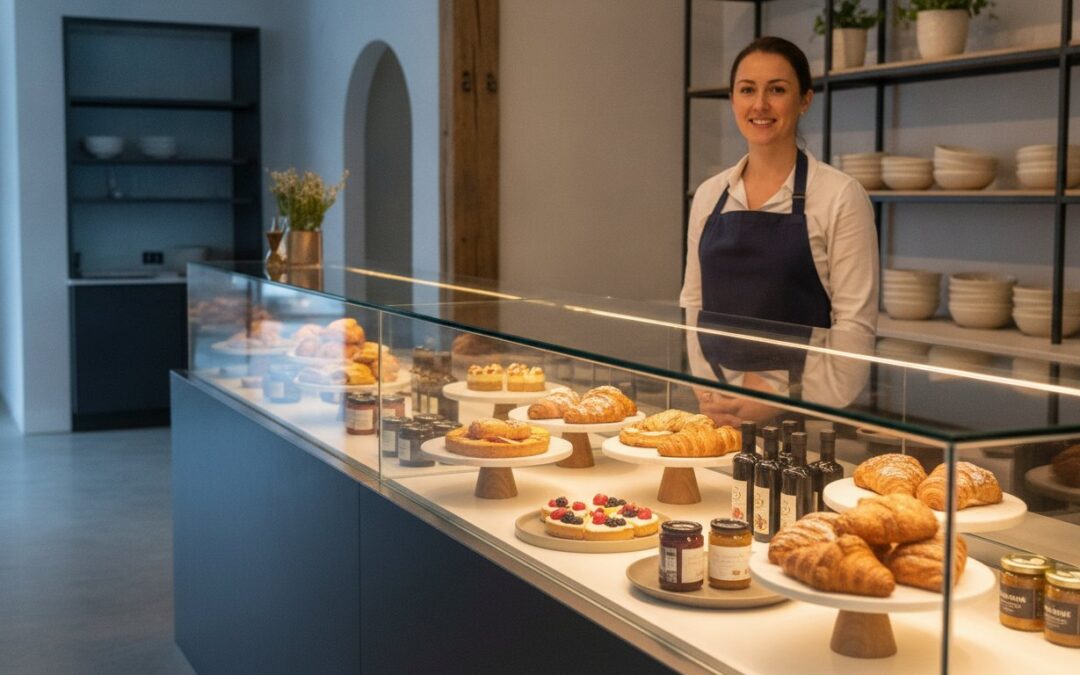
Your display glass isn’t just a window into your business; it’s a precision-engineered component that determines whether a customer makes a purchase or walks away. Most retailers understand the frustration of condensation clouding their best patisserie or the constant worry of a hairline crack appearing in a busy retail environment. When you get your glass selection for display counters wrong, energy bills climb because your refrigeration system is fighting a losing battle against poor insulation.
We believe that mastering the technical nuances of glazing is the key to alleviating these pressures. By choosing the right materials, you can transform operational headaches into a crystal-clear advantage that drives impulse buys and ensures your counter meets all UK health and safety standards. This guide provides a methodical look at how proper glazing enhances food visibility, ensures safety, and optimises thermal efficiency. We’ll walk you through everything from toughened safety glass to the latest in energy-efficient coatings, helping you build a display that is as durable as it is beautiful.
Key Takeaways
- Discover why glass is the primary driver of impulse buys and how to balance structural safety with maximum product visibility.
- Compare the technical benefits of toughened safety glass and laminated options to ensure your counter stands up to the pressures of a busy commercial environment.
- Master the science of glass selection for display counters to eliminate unsightly condensation and significantly improve the thermal efficiency of your refrigerated units.
- Learn how UV bonding creates seamless, hygienic glass-to-glass joints that offer a high-end aesthetic without the need for traditional metal frames.
- Understand how CAD modelling and in-house UK manufacturing provide the precision you’ll need for a perfectly fitted, bespoke display solution.
The Strategic Role of Glass Selection for Display Counters
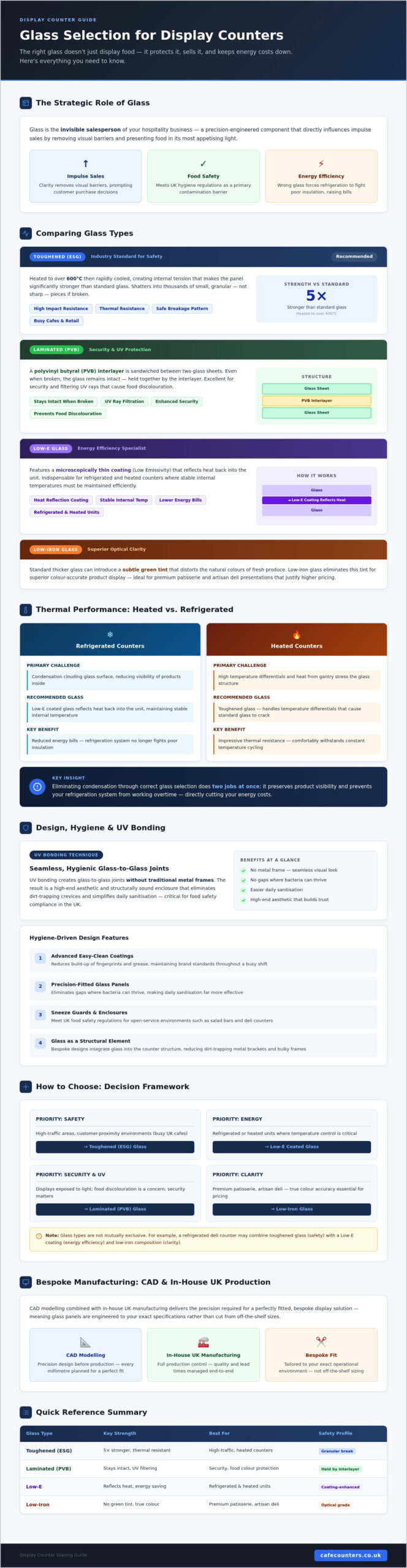
Glass is the invisible salesperson of your hospitality business. It bridges the gap between the kitchen and the customer, acting as a high-definition lens for your culinary offerings. When executed correctly, glass selection for display counters directly influences impulse sales by removing visual barriers and presenting food in its most appetising light. High-end patisserie and artisan deli items rely on this clarity to justify premium pricing; a dull or scratched surface immediately devalues the product within. This focus on premium presentation is a hallmark of luxury retail across many industries; for example, you can learn more about Juwelier Risch, a master goldsmith that understands how the right display enhances the value of fine craftsmanship. We see glass as a precision-engineered component that must align with your specific operational environment to ensure long-term durability.
Visibility vs. Durability: Finding the Sweet Spot
Achieving maximum visibility often feels like it’s at odds with the physical demands of a busy retail space. Thicker glass provides structural integrity, but it can sometimes introduce a subtle green tint that distorts the natural colours of fresh produce. To counter this, professional installations often utilise low-iron glass for superior clarity. In high-traffic areas, safety is non-negotiable. We specify toughened glass because of its exceptional impact resistance and the way it shatters into small, blunt pieces if broken, protecting both staff and customers. Frameless designs are particularly effective here. They create a seamless look that builds customer trust by offering an unobstructed view of your food’s quality and freshness.
Glass as a Hygiene Barrier
Beyond aesthetics, your glass serves a critical functional role as a primary hygiene barrier. In the UK, food safety regulations require robust protection against contamination, particularly for open-service environments like salad bars or deli counters. Professional glass selection for display counters incorporates sneeze guards and enclosures that meet these stringent standards without compromising the customer experience. This is where the marriage of design and functionality becomes vital for your daily operations.
- Advanced easy-clean coatings reduce the build-up of fingerprints and grease, ensuring your brand standards remain high throughout a busy shift.
- Precision-fitted glass panels eliminate gaps where bacteria can thrive, making daily sanitisation more effective.
- Bespoke counter designs allow for the integration of glass as a structural element, reducing the need for dirt-trapping metal brackets or bulky frames.
Choosing the right glass is a balancing act. It requires an understanding of your specific operational environment, whether that’s a quiet boutique cafe or a high-volume grab-and-go station. By prioritising both the psychological impact of visibility and the practical needs of safety, you create a display that doesn’t just hold food, but actively sells it.
Comparing Glass Types: Toughened, Laminated, and Low-E
Selecting the correct material is a foundational step in bespoke manufacturing. While standard float glass might suffice for domestic use, the professional kitchen demands something far more resilient. Your glass selection for display counters should reflect the specific stresses of your environment, whether that involves high heat from a gantry or the constant temperature cycling of a refrigerated unit. We categorise glass based on its safety profile, thermal properties, and optical clarity to ensure every installation is fit for purpose.
Toughened Glass: The Industry Standard for Safety
Toughened glass, often referred to as ESG, is the bedrock of commercial safety. During production, the glass is heated to over 600 degrees Celsius and then rapidly cooled. This process creates internal tension that makes the panel up to five times stronger than standard glass. If the glass does fail, it shatters into thousands of small, granular pieces rather than dangerous shards. This safety feature is vital in busy UK cafes where customer proximity is constant. It also boasts impressive thermal resistance, comfortably handling temperature differentials that would cause standard glass to crack under the strain of a heated display.
Laminated glass offers an alternative layer of protection. By sandwiching a polyvinyl butyral (PVB) interlayer between two sheets, the glass remains intact even when broken. This is an excellent choice for security or for filtering out UV rays that can cause food discolouration over time. For those focused on energy efficiency, Low-E (Low Emissivity) glass is indispensable. It features a microscopically thin coating that reflects heat back into the unit, helping you maintain stable temperatures and lower your electricity bills.
Low-Iron Glass: Achieving Maximum Product Vibrancy
Standard glass has a distinct green hue caused by iron oxide content. While subtle, this tint can dull the vibrant colours of your cakes and pastries. Low-iron glass undergoes a specific refining process to remove these impurities, resulting in a perfectly neutral finish. This clarity is why we recommend it for patisserie display counters, where the visual appeal of a delicate glaze or a fresh fruit tart is the primary selling point. While the initial investment is slightly higher, the increase in product vibrancy often leads to a higher rate of impulse purchases.
Our team can help you weigh these technical options to find a solution that balances performance with your project budget. If you’re planning a new layout, you might want to explore our range of bespoke serving counters to see how these glass types look in practice.
Thermal Performance: Glass for Heated and Refrigerated Counters
Thermal performance is where the technicality of glass selection for display counters directly impacts your monthly overheads. While clarity drives sales, insulation drives profit. In a refrigerated environment, the temperature differential between the chilled interior and a warm shop floor creates a constant battle against thermodynamics. If your glass isn’t up to the task, your refrigeration compressor works overtime to compensate for heat gain. This doesn’t just spike your energy bills; it shortens the operational lifespan of your mechanical components. We view glass as a thermal shield, engineered to maintain a strict climate regardless of external conditions.
Combating Condensation in Refrigerated Displays
Fogging occurs when warm, humid air meets a cold surface, causing moisture to precipitate and obscure your products. In professional commercial refrigerators, standard single-pane glass is rarely sufficient to prevent this. Double-glazed units (IGUs) provide a vital thermal buffer, keeping the external pane closer to ambient room temperature. For high-humidity environments, we often specify heated glass technology. This involves a microscopically thin, transparent conductive coating that applies just enough warmth to the glass surface to keep it above the dew point. This ensures your products remain visible during the busiest lunch rushes. Thermal breaks within the counter frame further assist this by preventing cold from ‘bridging’ between the interior and exterior surfaces.
Managing Heat Loss in Hot Food Displays
Heated displays present a different set of challenges, primarily related to thermal expansion and energy retention. Glass must withstand constant cycling between ambient and high temperatures without losing its structural integrity. Our Vision Heated Counters utilise specialised heat-reflective coatings that bounce infrared energy back towards the food. This keeps the core temperature of your items stable while significantly reducing the energy required to maintain those levels. It’s a methodical approach to design that prioritises long-term operational efficiency.
Safety is equally paramount in hot food environments. We design these units with insulated glass to ensure the external surface remains ‘cool to the touch’. This prevents accidental burns in high-traffic retail areas where customers or children might lean against the counter. By choosing glass with a low thermal conductivity rating, you create a professional barrier that protects your staff, your customers, and your profit margins. This meticulous attention to detail ensures your counter remains a safe, efficient, and reliable asset for years to come.
Design and Hygiene: UV Bonding and Structural Integrity
Structural integrity is the silent partner of aesthetic design. When we move beyond the thermal properties discussed earlier, we must focus on how the glass is physically assembled. UV bonding represents the pinnacle of modern glass selection for display counters, offering a level of precision that traditional mechanical fixings cannot match. This process uses a specialised adhesive that remains liquid until exposed to ultraviolet light, at which point it creates a bond that is often stronger than the glass itself. It allows us to create rigid, self-supporting structures that feel weightless, providing an unobstructed view of your products while maintaining the durability required for a high-traffic environment.
The Aesthetic of Frameless Glass
The move toward frameless glass isn’t purely a matter of style; it’s a strategic choice for hygiene and light management. Traditional metal frames create crevices where food debris and bacteria can accumulate, complicating your daily cleaning routine. By utilising UV-bonded glass-to-glass joints, we eliminate these ‘dirt traps’ entirely. This creates a seamless surface that is far easier to sanitise, ensuring your counter meets the strictest UK health standards. From a visual perspective, the absence of bulky frames allows ambient light to penetrate deep into the display, reducing shadows and making your food look more vibrant. To maintain this clarity, we recommend using non-abrasive, pH-neutral cleaners that won’t degrade the bonded joints over time.
Curved vs. Straight Glass: Impact on Customer Interaction
Choosing between curved and straight glass significantly alters how customers interact with your display. Curved glass offers a premium, ergonomic feel that draws the eye and softens the footprint of a large counter. However, it introduces manufacturing complexities; toughening curved glass requires meticulous control to ensure the structural strength remains consistent across the entire radius. Straight glass, while more traditional, offers superior versatility for integrated shelving and is often preferred for a bespoke deli counter where maximum internal volume is the priority.
Accessibility is another critical factor. We design our glass lids and serve-over sections with high-quality hinge systems that allow for easy cleaning and restocking. Whether you opt for the sleek lines of a flat-glass patisserie unit or the soft curves of a traditional deli display, the stability of the assembly remains our primary focus. We ensure every panel is specified to withstand the vibrations and physical contact typical of a busy retail shift. If you are ready to see how these design choices can transform your space, explore our range of bespoke serving counters to find the perfect fit for your vision.
The TFSE Advantage: Bespoke Glass Solutions for UK Hospitality
The transition from a technical concept to a physical installation requires a partner who understands the high stakes of the UK hospitality market. Since 1991, TFSE Products Ltd has defined its approach by a commitment to in-house UK manufacturing, ensuring that every detail of your counter is handled with artisanal pride and industrial precision. Unlike retailers who provide stock equipment, TFSE Products Ltd positions itself as an expert partner capable of managing the entire lifecycle of a project. This ensures that your glass selection for display counters isn’t just an afterthought, but a core component of a high-performing retail environment.
Precision Engineering with CAD Modelling
Detailed technical planning is the foundation of any successful bespoke project. TFSE Products Ltd utilises advanced CAD modelling to refine the specification of every glass panel before a single sheet is cut. This process allows you to visualise how the glass interacts with the counter’s structure, lighting, and cooling systems. It’s particularly vital when integrating drop-in refrigerated displays into existing joinery. By mapping out the exact dimensions and tolerances in a digital environment, TFSE Products Ltd eliminates the risk of site errors and ensures that the finished unit fits perfectly on the first attempt. This methodical preparation is what allows TFSE Products Ltd to deliver the complex, frameless aesthetics that modern hospitality interiors demand.
Professional Installation and Commissioning
The final phase of any fit-out requires a steady, experienced hand. Glass is a delicate material that requires expert handling to maintain its structural integrity and aesthetic clarity. The end-to-end service offered by TFSE Products Ltd includes a comprehensive site survey followed by professional installation and commissioning by their internal team. TFSE Products Ltd doesn’t just place the unit; the team ensures that all thermal seals are airtight, UV bonds are perfectly cured, and energy-efficient technologies are functioning at peak performance. This level of oversight guarantees that the thermal efficiencies discussed throughout this guide are realised in your daily operations.
Choosing British-made quality is a signature of long-term reliability. By maintaining its own production facilities, TFSE Products Ltd offers a level of quality control and after-sales support that imported alternatives cannot match. It’s a transparent process designed to alleviate the stress of commercial projects, providing you with a durable, high-end display that drives sales for years to come. Whether you’re launching a new deli or upgrading a patisserie, the team at TFSE Products Ltd is ready to bring your vision to life with the technical expertise your business deserves.
Investing in Long-Term Display Excellence
Mastering the technicalities of glass selection for display counters is a strategic investment that pays dividends in sales performance and operational efficiency. By prioritising high-clarity, low-iron glass and advanced thermal coatings, you eliminate the visual barriers of condensation while significantly reducing energy overheads. Structural choices like UV-bonded joints transform a standard counter into a hygienic, frameless masterpiece. Quality counts.
Since 1991, we’ve acted as an expert partner to the UK hospitality sector, providing end-to-end project management from design to physical reality. Our process includes full CAD design and site survey services to ensure your bespoke counter is specified with total precision. From our in-house UK manufacturing facility to our national installation teams, we provide the steady hand required for complex fit-outs. We invite you to request a bespoke counter consultation with our UK experts to begin your journey. Your vision, supported by our technical expertise, will create a display that truly stands the test of time.
Frequently Asked Questions
What is the best glass for a refrigerated cake display to prevent fogging?
Heated glass technology is the most effective solution for preventing fogging in refrigerated displays. It uses a transparent conductive coating to keep the surface temperature slightly above the dew point, which stops moisture from condensing. This ensures your products remain perfectly visible during busy shifts. For standard units, high-quality double-glazed units provide a thermal buffer that reduces the temperature difference between the glass and the ambient air, significantly lowering the risk of unsightly condensation.
Is toughened glass mandatory for food display counters in the UK?
Toughened safety glass is practically mandatory for commercial food displays in the UK to comply with BS EN standards and health and safety regulations. Standard glass poses a significant risk because it shatters into dangerous shards upon impact. Toughened glass is engineered to be up to five times stronger and breaks into small, blunt granules if compromised. This is vital for protecting both your customers and staff in high-traffic retail environments where accidental contact is a daily reality.
What is the difference between standard glass and low-iron glass?
The primary difference lies in optical clarity and colour rendering. Standard float glass contains iron oxide, which creates a noticeable green tint, especially on the edges. Low-iron glass undergoes a refining process to remove these impurities, resulting in a perfectly neutral, extra-clear finish. This makes it the superior choice for high-end patisserie displays where you want the natural colours of your food to appear as vibrant and appetising as possible to drive impulse buys.
Can UV-bonded glass support the weight of a heavy counter top?
UV-bonded glass joints are exceptionally strong and can support significant weight when correctly specified through our CAD modelling process. The adhesive creates a structural bond that is often stronger than the glass itself. This technology allows for the creation of seamless, frameless enclosures that maintain total stability. We ensure the glass thickness and bond surface area are calculated to handle the specific loads of your bespoke counter design, providing a durable and visually superior solution.
How do I clean professional display glass without damaging the coatings?
You should use a soft, lint-free microfibre cloth and a mild, pH-neutral glass cleaner to maintain professional displays. Avoid abrasive scrubbers or harsh chemicals like ammonia, as these can degrade easy-clean or anti-reflective coatings over time. For UV-bonded sections, don’t use solvents that could weaken the structural adhesive. Regular, gentle cleaning preserves your glass selection for display counters and ensures your food presentation remains at a premium standard throughout the day.
Does double glazing actually save money on commercial refrigeration costs?
Double glazing significantly reduces operational costs by acting as a thermal insulator. It creates a pocket of air or gas that slows the transfer of heat from your shop floor into the chilled unit. This reduces the load on your refrigeration compressor, meaning it runs less frequently. Over the lifespan of your glass selection for display counters, these energy savings often outweigh the initial investment while also extending the life of your critical mechanical components.
What is Low-E glass and do I need it for my heated display?
Low-E glass features a microscopically thin coating designed to reflect infrared energy. In a heated display, this coating bounces heat back toward the food rather than allowing it to escape through the glass. It’s highly recommended for maintaining stable core temperatures and improving energy efficiency. By keeping the heat where it’s needed, you ensure your products stay at safe serving temperatures while the external glass surface remains cooler to the touch for customer safety.