
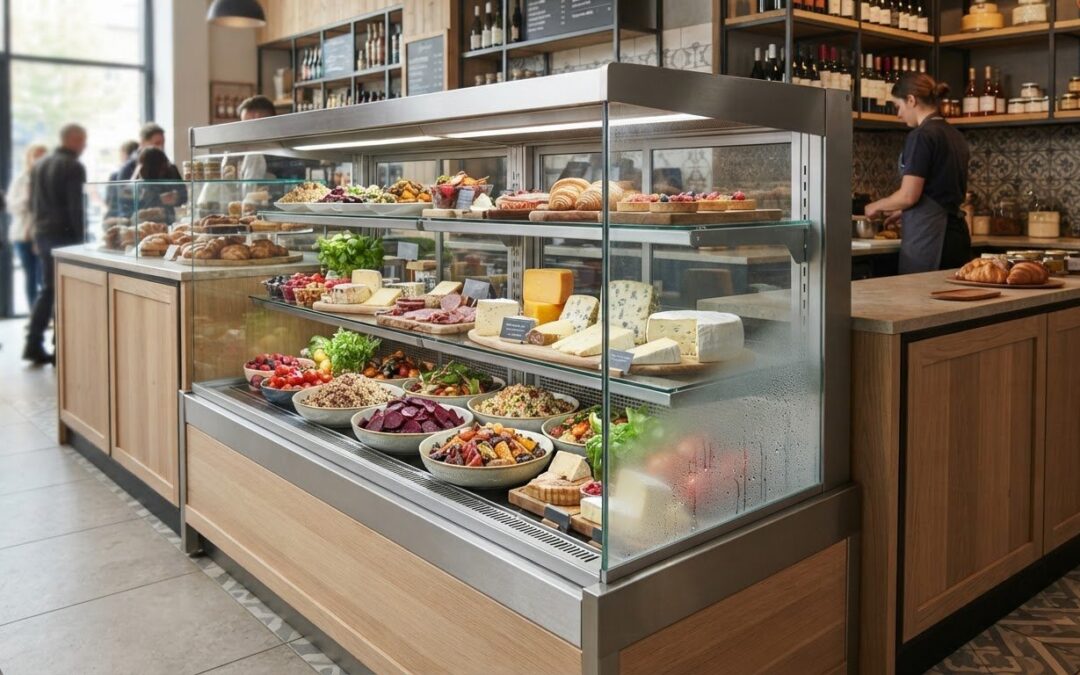
Did you know that commercial refrigeration systems often account for 30% to 50% of a food retail outlet’s entire electrical footprint? When your display glass fogs up, it isn’t just a visual nuisance. It’s a sign that your system is working harder than it needs to. Specifying the right anti-fog glass for refrigerated displays is no longer just about aesthetics; it’s a critical move for operational efficiency. You’ve likely felt the frustration of watching potential impulse sales slip away because customers can’t see your products through a wall of condensation. Constantly wiping down panes is a labor drain that doesn’t solve the underlying thermal struggle.
We understand that maintaining a professional, high-end presentation while managing rising energy costs is a delicate balance. This guide will show you how advanced anti-fog technologies protect your product visibility and drive sales without relying on inefficient, high-wattage heating elements. We’ll examine the transition from traditional active heaters to passive superhydrophilic coatings and explain how bespoke British engineering creates a crystal-clear showcase. You’ll discover how to choose a solution that reduces food waste and enhances your brand’s aesthetic through precision thermal management.
Key Takeaways
- Learn why the dew point is the primary driver of condensation and how ambient humidity in your serving area affects cabinet clarity.
- Compare the performance and lifespan of films, heated elements, and Low-E coatings to select the ideal anti-fog glass for refrigerated displays.
- Discover how high-clarity glazing reduces compressor load and eliminates the labor costs linked to constant manual cleaning.
- Master the process of matching specific glass technologies to your food type, ensuring optimal visibility for everything from salad bars to patisserie displays.
- Understand how integrated CAD modelling and British manufacturing allow for thermal management to be built directly into your custom counter’s design.
Understanding the Science: Why Refrigerated Displays Fog Up
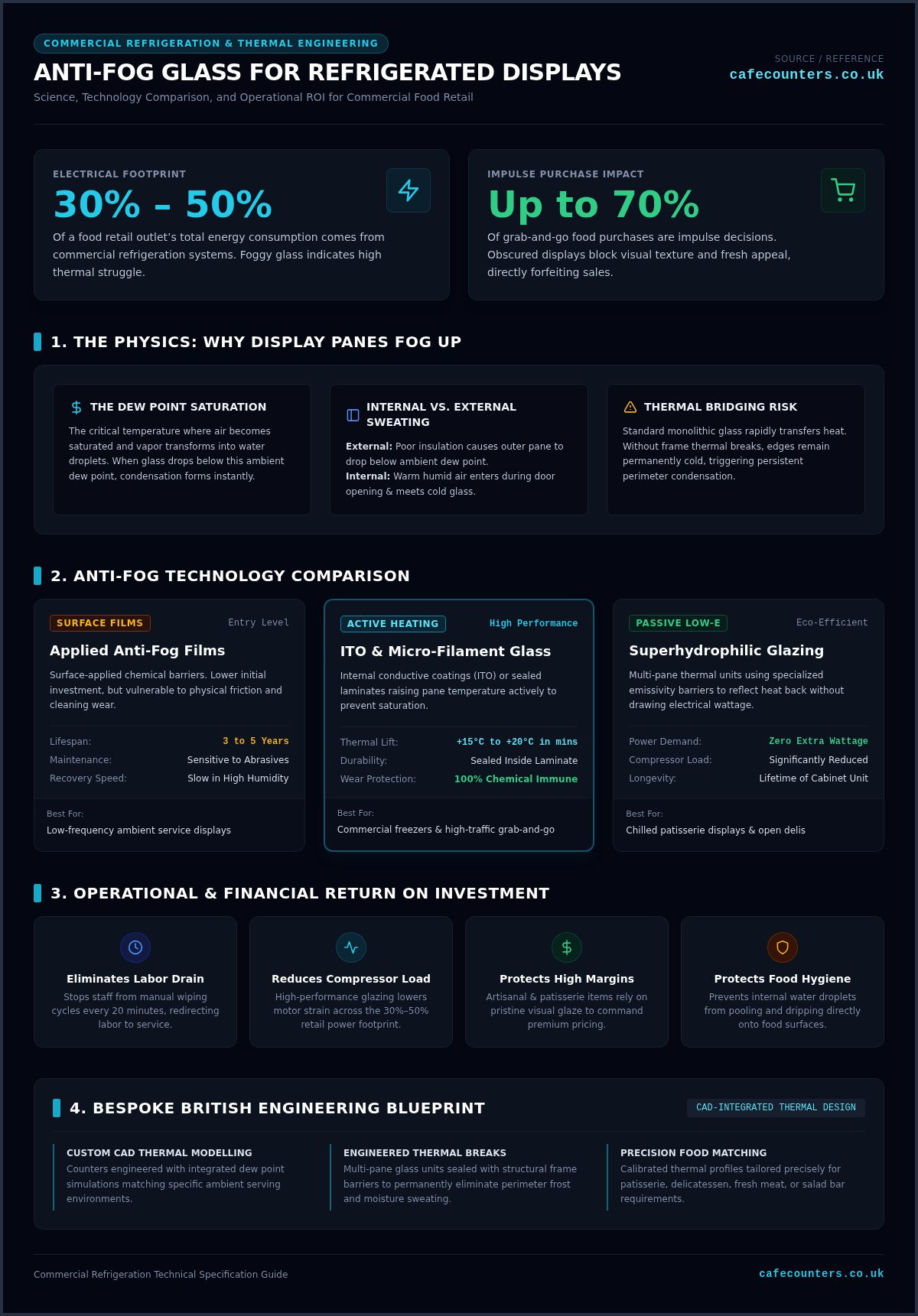
Condensation isn’t just a cosmetic flaw; it’s a physical reaction to temperature differentials. In commercial food service, we focus on the “dew point”. This is the specific temperature where air becomes saturated and water vapor transforms into liquid droplets on a surface. When the surface temperature of your display glass drops below the room’s dew point, fogging is inevitable. It’s a fundamental challenge for any operator trying to maintain a premium presentation.
UK cafes face unique environmental pressures. High ambient humidity, especially during autumn and winter months, means the air carries significant moisture. Every time a door opens or a customer stands near the counter, that moisture meets the chilled interior. This leads to “sweating” glass. This moisture isn’t just unsightly; it can compromise food hygiene by dripping onto products and erodes customer confidence in your food safety standards. If the glass looks dirty or wet, customers often assume the food isn’t fresh.
Operators usually deal with two distinct issues. External condensation occurs when the outer pane is too cold, usually due to poor insulation. Internal fogging happens when warm air enters the cabinet during service and hits the cold inner surface. Both require specific anti-fog surface treatments and technologies to maintain a clear view of your offerings.
The Physics of the Thermal Bridge
Standard monolithic glass acts as a thermal bridge. It allows heat to transfer rapidly between the warm shop floor and the cold cabinet interior. Without professional thermal breaks in the frame, the glass perimeter stays cold, triggering persistent fogging around the edges. In high-traffic environments where doors are frequently opened, this thermal imbalance becomes a constant battle. High-quality anti-fog glass for refrigerated displays mitigates this by using multi-pane units and specialized coatings that keep the glass surface temperature above the dew point.
The Hidden Cost of Poor Visibility
Visibility drives revenue. Research into retail behavior suggests that up to 70% of grab-and-go purchases are impulse decisions. If a customer can’t see the texture of a sandwich or the glaze on a tart, they simply won’t buy it. There is also a measurable labor cost to consider. Paying staff to wipe glass every twenty minutes is an inefficient use of resources that adds up over a fiscal year. Obscured patisserie displays represent a direct financial risk, as the high-margin artisanal products within remain invisible to the very customers prepared to pay a premium for them.
Comparing Anti-Fog Technologies: Films vs. Heated Glass vs. Low-E
2026 manufacturing has standardized three primary methods for maintaining clarity in commercial food environments. These include surface-applied anti-fog films, active heated glass, and passive Low-E coatings. While films offer a lower upfront cost, they are often sensitive to abrasive cleaners and typically require replacement every three to five years. For a professional environment, choosing high-quality anti-fog glass for refrigerated displays often means looking beyond temporary surface fixes toward integrated engineering that lasts the lifetime of the unit.
Understanding the principles of condensation and dew point is essential when comparing these options. If your display operates in a high-humidity environment, such as a deli with frequent door openings, a passive film might not provide the recovery speed required to maintain visibility. We focus on solutions that balance clarity with long-term operational costs, ensuring your display remains an asset rather than a maintenance burden.
Integrated Heated Glass Solutions
Active heated glass uses either Indium Tin Oxide (ITO) coatings or nearly invisible micro-filaments embedded within the glass laminate. These elements raise the glass surface temperature by 15°C to 20°C within minutes of activation. This technology is essential for freezers or high-humidity grab-and-go units where passive solutions struggle. Unlike films, these elements are sealed inside the glass unit; this protects them from physical wear and chemical damage. Modern controllers allow for precision temperature management, ensuring that delicate items aren’t compromised by excess heat. It’s a robust, long-term solution for demanding retail spaces where performance is non-negotiable.
Passive Performance with Low-E Coatings
Low Emissivity (Low-E) glass uses microscopic metallic oxide layers to reflect infrared heat while maintaining over 88% visible light transmittance. This approach focuses on insulation rather than active heating. By combining Low-E glass with argon gas filling, we achieve U-values as low as 1.1 W/(m²·K). This keeps the outer pane significantly closer to the ambient room temperature, preventing the external “sweating” common in poorly insulated units. Current UK regulations mandate an Energy Efficiency Index (EEI) of less than 80 for general displays, making this passive approach a regulatory necessity. It reduces the thermal load on the compressor, leading to substantial savings on monthly utility bills.
If you’re designing a high-end serving area, selecting the right anti-fog glass for refrigerated displays ensures your investment remains crystal clear. Integrated solutions offer a level of durability that standard imported units simply cannot match.
The Business Case: ROI of High-Clarity Refrigeration
High-end food retail relies on visual seduction. If a customer can’t see the product, the sale is lost. Investing in anti-fog glass for refrigerated displays offers a direct return on investment by maximizing the visibility of high-margin items. Beyond sales, the operational savings are significant. Modern commercial refrigerators equipped with integrated anti-fog technology eliminate the need for costly aftermarket fixes that often fail within a few years. Choosing built-in solutions ensures that your display remains a high-performing asset rather than a recurring maintenance expense.
Driving Impulse Purchases
In a fast-paced retail environment, refrigerated grab and go display units serve as silent salespeople. Clarity is synonymous with freshness in the mind of the consumer. When glass is crystal clear, it signals that the environment is clean and the temperature is strictly controlled. High-end patisseries often see a notable uplift in average transaction value simply by upgrading to specialized glazing. Customers are more likely to add a premium dessert to their order when they can appreciate the intricate details of the pastry without peering through a hazy or “sweating” pane.
Operational Efficiency and Energy Ratings
Energy consumption is a major overhead for any hospitality business. Modern anti-fog glass for refrigerated displays helps units meet stringent 2026 UK energy standards by reducing the parasitic heat load on the cabinet. By maintaining visibility, you significantly reduce “open door” time. Customers browse through the glass rather than holding the door open to see what is inside, which prevents chilled air from escaping and keeps the internal temperature stable. This efficiency is reflected in DOE commercial refrigeration equipment standards, which emphasize the importance of thermal performance in transparent assemblies.
The financial benefits extend to the hardware itself. Superior thermal efficiency reduces the strain on the compressor rack, directly extending the life of the refrigeration motor by preventing constant cycling and overwork. Over a ten-year period, the combination of lower utility bills, reduced maintenance labor, and higher sales volume makes engineered anti-fog glass a far more profitable choice than standard imported alternatives. It’s a pragmatic investment that pays for itself through improved operational longevity and consistent customer engagement.
Guide: Choosing Anti-Fog Features for Your Unit
Selecting the correct specification requires a structured approach that balances environmental factors with daily operational needs. Your first step is to assess the ambient conditions of your premises, paying close attention to relative humidity levels and direct airflow from entrance doors or HVAC systems. Second, match the glass technology to your specific product category to ensure your display remains crystal clear. Third, evaluate ongoing energy consumption against your long-term performance targets to avoid unexpected utility costs. Finally, consider the visual impact of glass thickness, as multi-pane units offer superior thermal resistance but require careful integration into high-end frameless counter designs.
Anti-Fog for Specific Display Types
Different food categories demand distinct thermal management strategies to protect both product quality and visual appeal. For example, high-traffic deli counters benefit significantly from integrated hot air blowing systems that sweep moisture away from the glass surface during busy lunch rushes. Conversely, premium patisserie displays often require active heated glass to prevent delicate chocolate and sugar work from degrading due to ambient moisture ingress. Closed-door units rely on rapid-recovery coatings to clear fog immediately after a customer closes the door, whereas open-front units use precise laminar air curtains to isolate the chilled zone. Specifying the correct anti-fog glass for refrigerated displays prevents localized condensation from disrupting these specialized microclimates.
Working with Your Manufacturer
Achieving permanent clarity requires close collaboration during the initial design phases of your project. Ask your manufacturer how they use advanced CAD modelling to predict thermal performance and eliminate cold spots before production begins. It’s equally important to understand the specific warranty on anti-fog performance and ensure the entire assembly complies with UK food safety regulations regarding holding temperatures. A seasoned manufacturing partner will guide you through these technical choices, ensuring your investment delivers long-term durability and flawless presentation.
If you are planning a new retail or hospitality layout, our team can help design a custom solution tailored to your environment. Contact us today to explore our bespoke serving counters and speak directly with a technical specialist.
Bespoke Engineering: The TFSE Approach to Permanent Clarity
At TFSE Products Ltd, we believe that true visual clarity is engineered into the structure of a counter, not added as a surface-level afterthought. Our approach to anti-fog glass for refrigerated displays relies on a seamless integration of material science and precision manufacturing. By managing the entire project lifecycle in-house, we ensure that every thermal break, glass seal, and heating element works in perfect harmony. This methodical process allows us to deliver bespoke solutions that maintain transparency in the most demanding commercial environments, providing a steady, reliable hand for your retail vision.
The transition from a design concept to a finished physical space requires more than just standard components. It demands a deep understanding of how different professional environments interact with refrigeration technology. We position ourselves as an expert partner, guiding you through the journey of creating a display that isn’t just functional, but also a high-end design statement. Our heritage in British manufacturing ensures that every unit is built to withstand the rigours of high-traffic hospitality settings while maintaining a professional, artisanal aesthetic.
Advanced CAD Modelling for Thermal Management
The journey begins with advanced CAD modelling, where we simulate airflow patterns to eliminate potential cold spots on the glass surface. This digital precision allows us to customise the heating intensity and insulation levels based on the specific ambient humidity of your shop floor. Whether you’re looking to integrate Vision Heated Counters alongside chilled units or need a standalone showcase, our modelling ensures that thermal management is built into the architecture of the frame. This proactive engineering prevents the condensation issues that often plague standard, mass-produced imported units.
Quality Control in UK Manufacturing
Operating from our facility since 1991, we maintain total control over every stage of production. Every piece of anti-fog glass for refrigerated displays undergoes rigorous testing to verify seal integrity and electrical performance before it leaves our workshop. This internal production capability acts as a signature of quality, ensuring that your counter arrives ready for a professional installation that meets the highest UK food safety standards. Because we are the manufacturer, our clients benefit from direct after-sales support and technical expertise that spans decades of regional experience.
Our collaborative process is designed to alleviate the stress of complex commercial projects by projecting total competence from day one. We invite you to share your vision with us, knowing that we have the technical expertise required to bring it to life with precision and durability. To discuss your specific requirements for a new servery or retail display, please Contact TFSE Products Ltd for a Bespoke Consultation with our design team.
Elevating Your Commercial Display Standards
Investing in a high-performance servery requires a shift in focus from basic cooling to integrated thermal management. We’ve explored how specifying the right anti-fog glass for refrigerated displays acts as a catalyst for impulse sales while simultaneously protecting your bottom line through improved energy ratings. Whether you’re managing a busy deli or a high-end patisserie, the distinction between a standard unit and a bespoke engineered display lies in the precision of its construction.
Since 1991, TFSE Products Ltd has specialized in UK-based manufacturing, utilizing advanced CAD thermal modelling to eliminate condensation at the design stage. Our comprehensive national installation service ensures that this technical excellence translates seamlessly into your physical space. By choosing a partner who values durability and artisanal quality, you ensure that your products remain the focal point of every customer interaction.
We invite you to Discuss Your Bespoke Refrigerated Display Project with Our Experts today. Let’s bring your vision to life with the steady, reliable hand that your commercial environment deserves.
Frequently Asked Questions
Does anti-fog glass for refrigerated displays use a lot of electricity?
Modern anti-fog glass for refrigerated displays is designed for high energy efficiency. Passive Low-E coatings consume no power at all. Active heated glass systems now utilize pulse-width modulation to energize only when environmental sensors detect a risk of condensation. This prevents the electricity waste associated with older, constant-heat models. By keeping the glass temperature just above the dew point, you maintain clarity without placing an unnecessary thermal burden on your refrigeration compressor.
Can I apply an anti-fog coating to my existing refrigerated counter?
While you can apply aftermarket PET films to existing units, they are rarely a permanent fix. These surface treatments are sensitive to abrasive cleaners and often require replacement every three to five years. For a professional, high-end finish, we recommend integrated manufacturing solutions. Building anti-fog technology into the glass unit during the bespoke production phase ensures long-term durability and a seamless aesthetic that aftermarket retrofits cannot replicate.
How long does the anti-fog property of modern glass last?
The lifespan depends entirely on the technology chosen. Integrated heated glass and Low-E coatings are sealed within the glass unit, meaning they typically last for the entire operational life of the counter. In contrast, surface-applied anti-fog films are degradable layers. These usually lose their effectiveness after three to five years due to physical wear and chemical cleaning. Choosing a built-in solution ensures your display remains clear without recurring maintenance costs.
What is the difference between Low-E glass and heated glass?
Low-E (Low Emissivity) glass is a passive technology that uses metallic oxide layers to reflect heat and improve insulation. It keeps the outer pane closer to room temperature to prevent external sweating. Heated glass is an active system using invisible wires or conductive coatings to physically warm the glass surface. While Low-E is excellent for energy savings, active heated glass is often essential for high-humidity environments where passive insulation isn’t enough.
Why does my refrigerated display fog up only during busy periods?
Fogging during busy periods is caused by a rapid increase in the local dew point. Every time a customer opens a door or stands near the counter, warm, moisture-laden air enters the chilled zone. In high-traffic environments, the frequency of these openings prevents the internal air from stabilizing, leading to internal condensation. Professional counters use engineered air curtains and rapid-recovery anti-fog glass for refrigerated displays to mitigate this specific operational pressure.
Is heated glass safe for delicate products like cream cakes or chocolate?
Yes, heated glass is perfectly safe for delicate items like patisserie or chocolate when managed by modern digital controllers. These systems allow us to customize the heating intensity so the glass remains clear without raising the internal cabinet temperature. By utilizing CAD modelling during the design phase, we ensure that the heat is directed only where it’s needed, protecting your high-margin cream cakes from any adverse thermal impact.
Are there specific cleaning requirements for anti-fog glass?
Cleaning requirements vary based on the specific glass type. Integrated heated glass and Low-E units are cleaned like standard glass because the technology is protected within the laminate. However, surface-applied anti-fog films require non-abrasive, pH-neutral cleaners and soft cloths to avoid scratching the hydrophilic layer. Using harsh chemicals on a film can strip the anti-fog properties, which is why we prefer manufacturing displays with built-in, durable glass technologies.
What ambient humidity level requires the use of heated glass?
Active heated glass is generally recommended when your ambient relative humidity (RH) consistently exceeds 60%. In the UK, indoor humidity can fluctuate significantly, especially during winter or in locations with high footfall. If your environment frequently hits these levels, passive Low-E glass may not be sufficient to prevent fogging during peak service. We use site-specific data to determine if your bespoke counter requires active heating to maintain permanent visual clarity.