
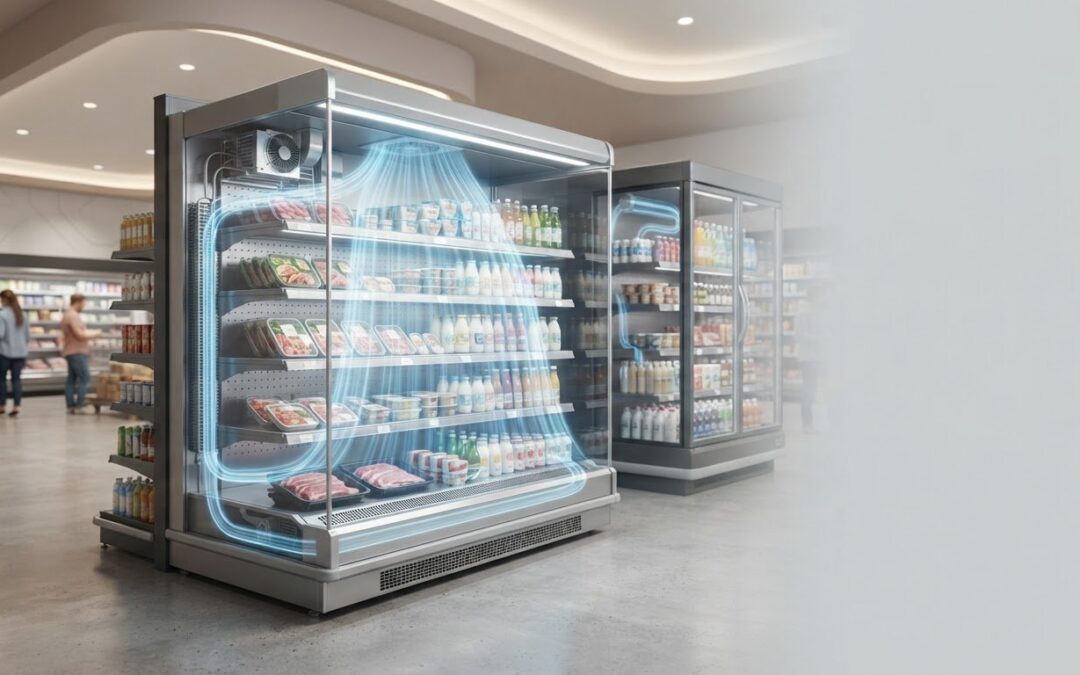
Cooling capacity alone doesn’t ensure consistent conditions across a refrigerated display. Cooled air needs a clear route through the cabinet: some open-front cases use a curtain of air across the opening, while closed cases circulate air within an enclosure. If that route is interrupted, product conditions and presentation may be affected. Understanding airflow management in refrigerated displays is useful when a case seems uneven or you’re comparing designs.
It’s reasonable to look closely at the refrigeration system, but the whole air path matters too. This guide explains how air moves through different display types and what to check when planning a layout or reviewing an existing unit. You’ll see how shelf arrangement, loading and customer access can affect airflow, and which design details to confirm in the specification. We’ll also cover practical questions to discuss with a manufacturer, so the intended use and counter layout inform your choice from the outset.
Key Takeaways
- Airflow management in refrigerated displays depends on the full route of cooled air through the cabinet, not cooling capacity alone.
- Trace the supply, circulation and return paths to understand how a display is designed to support product conditions.
- Compare open-front, serve-over and closed displays by considering access, intended use and the airflow questions specific to each format.
- When investigating possible airflow issues, check loading, openings, operating conditions and maintenance records, then compare your observations with the unit manual.
- Before choosing or planning a display, prepare details about products, service style, customer access, site layout and cleaning requirements.
How airflow management in refrigerated displays supports consistent cooling
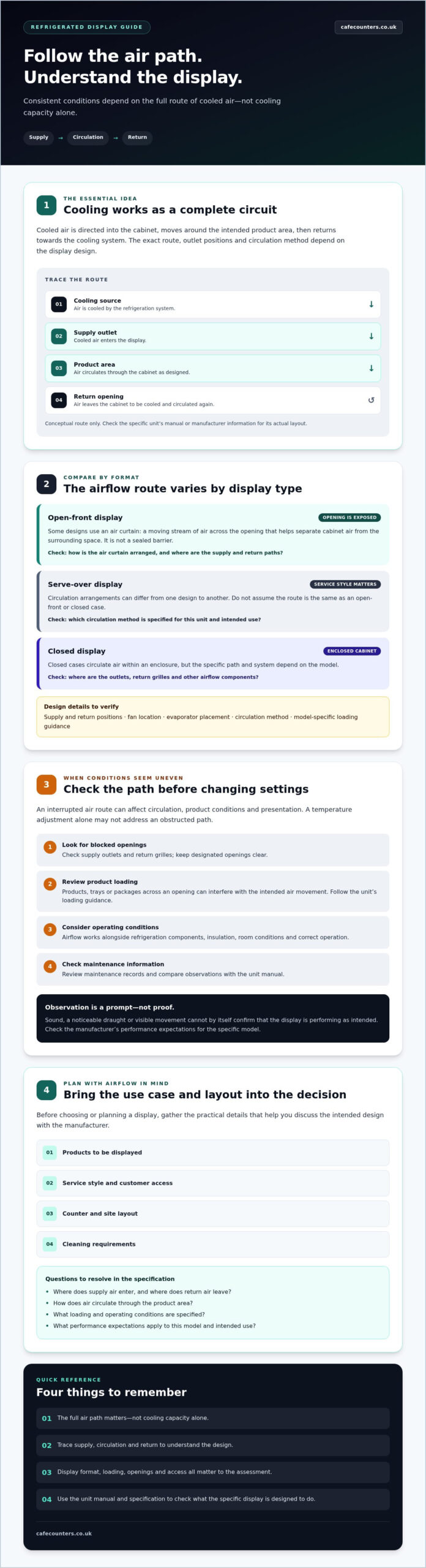
A refrigerated display depends on more than its cooling capacity. Cooled air must move through the cabinet, circulate around the intended product area and return to the cooling system. The route varies by design, so check the conditions a unit is designed to maintain against its specification. Airflow also works alongside refrigeration components, insulation, room conditions and correct operation. No single adjustment explains the whole picture.
Display airflow is the movement of cooled air from its supply point through the cabinet and back to the cooling system. When the unit is operated as specified, this circulation helps support suitable product conditions.
What happens to air inside a refrigerated display?
In general, the system cools air and directs it through a supply opening or outlet into the display. Air moves around the cabinet and products, then returns through an opening to be cooled again. The exact route, outlet position and circulation method depend on the design. A useful diagram would label the cooling source, supply, product area and return, with arrows showing the direction of travel.
Some open-front displays use an air curtain, a moving stream of air across the opening that helps separate cabinet air from the surrounding space. This overview of air curtain technology explains the general principle. An air curtain isn’t a sealed barrier, and its design differs between display formats. Serve-over and closed cases may use other circulation arrangements, so check the manufacturer’s documentation rather than assuming every cabinet works the same way.
Why airflow matters for food presentation and operation
When air follows its designed route, the display is better placed to support the conditions set out in its specification, subject to the operating environment. Air movement can also affect how products look and are presented across the cabinet. It doesn’t guarantee identical conditions at every point, so confirm performance expectations for the specific model and its intended use.
Blocked grilles, products placed across an outlet or loading that restricts the return path can interfere with circulation. Follow the unit’s loading guidance and keep designated openings clear. If conditions seem uneven, lowering the temperature setting or seeking greater cooling capacity may not address an obstructed air path. Airflow management in refrigerated displays means considering how air travels through the cabinet alongside the other factors that affect operation.
How refrigerated display airflow works: supply, circulation and return
To assess a display’s airflow, follow the air as a complete circuit rather than focusing on one grille or fan. The refrigeration system cools air, a supply outlet directs it into the cabinet, circulation carries it through the display space, and a return opening guides it back towards the cooling source. The route depends on the equipment’s design, so confirm it in the manufacturer’s documentation.
Supply air enters the display to support cooling; return air leaves the cabinet to be cooled and circulated again. Understanding these paths makes it easier to see how the case is intended to operate.
Supply air, return grilles and the cabinet air path
Supply outlets release cooled air into the cabinet, while return grilles provide a route back to the refrigeration system. Their positions are part of the design, not spare storage space. A tray, package or product placed across an opening may obstruct the intended movement of air and affect circulation around the display area.
A simple diagram can clarify the arrangement: mark the cooling source, supply outlet, product area and return grille, then draw arrows to show the specified direction of travel. Check the positions against the unit manual or manufacturer’s information. Don’t assume every display follows the same route.
Air curtains, fans and refrigerated display design
Some open-front displays use a designed stream of moving air across the opening, known as an air curtain. It can help separate the cabinet’s cooled air from warmer surrounding air, but its arrangement and operation depend on the display. Other formats may use fan-assisted circulation or a different system. Fan location, evaporator placement and grille positions all influence the route, so verify these details for the specific unit.
Sound, a noticeable draught or visible movement can’t confirm that a display is performing as intended. These observations may prompt a closer check, but compare them with the specification and operating guidance rather than relying on sensation alone. Research also explores alternative display designs: the U.S. Department of Energy’s refrigerated display case research describes work on a concept designed to eliminate the traditional air curtain. It’s a reminder to assess airflow features as part of a specific design, not as universal requirements.
For a new counter, discuss the intended products, service arrangement and site layout alongside the documented air path. This brings the display design and its planned use into the same conversation. If you’re planning a café counter, reviewing café counter options can help frame those design questions.
Comparing airflow in open-front, serve-over and closed refrigerated displays
The right format depends on how customers access products, how staff serve them and how the display will fit into its working environment. Each design has a different cabinet boundary and access pattern, which affects the airflow questions to ask. There isn’t a universal efficiency winner: compare the specifications and operating conditions of the actual units under consideration.
| Format | Typical access arrangement | Airflow consideration | Questions to ask |
|---|---|---|---|
| Open-front | Customers select products from an open display | Some designs use an air curtain across the customer-facing opening; room conditions and customer activity may affect operation. | Where does the air curtain travel? What loading and placement guidance applies? |
| Serve-over | Staff access and serve products from behind the counter | The service-facing arrangement defines the cabinet boundary; product layout must leave intended air paths unobstructed. | How should products be positioned? Which grilles or outlets must remain clear? |
| Closed | Products are accessed through doors or another enclosed arrangement | The enclosure changes how the display interacts with the surrounding space, while shelves and loading still affect internal circulation. | How should the case be stocked? What operating conditions does its specification assume? |
What changes in an open-front refrigerated display?
Without a door between the customer and the display, the designed air curtain is an important feature to understand. It is intended to help separate the cabinet’s cooled air from the room, but how it works depends on the design and operating conditions. Customer movement and nearby room conditions are useful to discuss as part of a site assessment, rather than considering the display in isolation. Check the manufacturer’s instructions for loading, placement and intended operating conditions.
For format-specific buying context, consult a guide to refrigerated grab-and-go display units and compare its advice with the unit specification. Confirm how the chosen design is intended to be used instead of assuming every open case behaves alike.
How enclosed and serve-over formats shape air circulation
Doors create a physical boundary around a closed display, while a serve-over counter is arranged for staff-facing access and service. Neither format removes the need to preserve internal circulation. Shelves, trays and product presentation can still affect the air route, so include expected stock and serving routines when reviewing the layout. A guide to deli counters can help frame questions about serve-over requirements and counter use.
Use airflow management in refrigerated displays as a comparison point: ask manufacturers to explain the air path, loading limits and relevant operating conditions for each proposed format. Then assess their answers against your service style and site layout.
How to assess airflow problems and protect refrigerated display performance
If products appear to be in different conditions, record what you observe before changing the display settings. A methodical check can help distinguish a loading or operating factor from an issue that needs professional attention. It won’t diagnose the cause remotely, but clear notes give the supplier or refrigeration professional useful context.
A practical observation sequence
- Review the loading. Check for overloaded shelves, products beyond recommended loading limits, or trays and packaging that may restrict circulation. Compare the arrangement with the unit’s loading guidance.
- Look at visible openings. Check whether supply outlets or return grilles are obstructed. Don’t remove panels or reach into equipment to investigate hidden components.
- Note operating conditions. Record when concerns occur and what is happening nearby. Room conditions, heat sources or adjacent equipment are useful context, but don’t prove a display fault on their own.
- Review maintenance information. Note recent maintenance and relevant instructions or records. Follow the manufacturer’s specified maintenance intervals and procedures.
Record the product arrangement, surrounding conditions and when the concern occurs. If you take temperature readings, use suitable equipment and procedures, and compare results with the unit instructions and current food-safety guidance from an authoritative UK source. Don’t assume a single reading establishes the cause or confirms that products are safe.
When to request professional inspection
If the concern persists after checking loading and visible openings, contact the equipment supplier or a qualified refrigeration professional. Share the display model, your observations, the loading arrangement and any relevant temperature records. This gives them a clearer starting point for assessing the issue.
Leave fan, refrigerant and electrical components to appropriately qualified professionals. Avoid changing settings or attempting repairs beyond the operator checks described in the manual. Airflow management in refrigerated displays depends on the specific equipment and how it is used, so maintenance and service steps should follow the manufacturer’s instructions.
If you’re planning a café counter, include how the display will be stocked and operated in the layout discussion. Explore café counter options and consider which operating details to raise with the manufacturer.
Planning a refrigerated display with airflow requirements in mind
Airflow requirements are easiest to address before a display is selected and positioned. The products, service style, customer access and available layout all affect how the cabinet will be used. Share those details with the manufacturer so the proposed equipment can be assessed against its intended operating conditions, rather than judged by appearance or headline capacity alone.
Questions to ask when specifying a refrigerated display
Prepare practical details about what the display will hold and how people will use it. Note where products need to sit, whether customers or staff will access them, and how the counter will be cleaned and restocked. Then ask the manufacturer to explain how the proposed design manages its air path.
- Where are the supply outlets and return openings, and which areas must remain clear?
- What loading arrangement does the manufacturer recommend, including any limits on shelf or tray placement?
- How does the design support the intended access and service style?
- Which operating conditions does the specification assume, and what guidance should staff follow?
Request the specification and operating instructions for the exact unit under consideration. This makes it easier to compare designs on a like-for-like basis and understand how loading, access and cleaning routines fit the equipment. Broader equipment planning also benefits from reviewing the commercial refrigeration options for the project, with each unit assessed for its intended role.
From design review to installation and commissioning
Site details matter. The counter position, surrounding equipment, access routes and working routine all help shape a practical layout. These details can inform bespoke counter design, so airflow requirements are considered alongside how staff serve, replenish and clean the display.
TFSE Products Ltd designs and manufactures commercial food displays and bespoke serving counters in the UK. The company offers planning, installation and after-sales support nationally. Discuss the proposed arrangement with the manufacturer, including how installation will follow the unit specification and which commissioning checks are appropriate for the equipment. Confirm setup and operating requirements against the manufacturer’s documentation.
Good airflow management in refrigerated displays starts with clear information: what the case will hold, how it will be accessed and how its air path should be kept unobstructed. Taking those questions into the planning conversation helps align the display with the space and daily operation. Discuss your refrigerated display requirements.
Plan your next refrigerated display with confidence
Choosing a refrigerated display involves more than comparing capacity or appearance. The route air takes through the cabinet, the format’s access arrangement and the planned product layout all shape how the equipment should be specified and used. Keep supply and return paths in mind, and compare each design with its own operating guidance rather than assuming one format suits every setting.
A practical assessment starts with your products, service style, site layout and cleaning routine. Sharing these details with the manufacturer connects airflow management in refrigerated displays to the wider counter design and intended operation.
TFSE Products Ltd designs and manufactures commercial food displays in the UK, with planning, installation and after-sales support available nationally. If you’re developing a new counter or reviewing display requirements, discuss your refrigerated display requirements with the team. Share your product range, service style and layout needs to start a conversation about a display suited to your operation.
Frequently Asked Questions
What is airflow management in a refrigerated display?
Airflow management is the design and operation of the route cooled air takes through a display and back to its cooling system. It includes supply outlets, return grilles and, in some open-front designs, an air curtain. For example, a tray placed over a return grille may obstruct the route. The intended airflow arrangement and performance depend on the specific equipment and its operating instructions.
Why is airflow important in a refrigerated display?
Airflow helps move cooled air through the intended display area and return it to the refrigeration system. If products or packaging obstruct an outlet or grille, circulation may be affected. Airflow is one influence on performance; loading, equipment condition, ambient conditions and operating settings also matter. Follow the manufacturer’s instructions and use appropriate food-safety guidance when assessing product handling and temperature checks.
What can block airflow in a refrigerated display?
Products placed over supply outlets or return grilles can obstruct the designed air path. Loading beyond the manufacturer’s guidance, or changing shelves and display layout, may also affect circulation. Room conditions and nearby heat sources are useful context to record, but they don’t prove that the equipment has a fault. Compare the setup with the unit manual, and seek professional advice if concerns continue.
How does an air curtain work in an open-front refrigerated display?
In some open-front displays, an air curtain is a designed stream of air across the customer-facing opening. It helps manage the exchange between cooled cabinet air and surrounding room air as part of the display’s overall design. The arrangement and performance depend on the specific unit and operating conditions. Keep the opening clear and follow the manufacturer’s guidance on loading, placement and operation.
Can products be placed anywhere inside a refrigerated display?
No. Loading arrangements and limits vary by display, so follow the instructions for the exact unit. Keep products clear of supply outlets and return grilles, and leave shelves in their intended positions unless the manufacturer advises otherwise. If a product size or tray doesn’t fit the recommended layout, ask the supplier before changing the arrangement. Record recurring concerns to help guide further assessment.
How can I tell if a refrigerated display has an airflow problem?
Changes in operation or product conditions may signal a concern, but they can’t confirm an airflow fault on their own. Check whether loading, visible grilles or the setup differs from the manual, then record when the issue occurs and the surrounding conditions. Any temperature checks should use suitable procedures. If the concern persists, share your observations with a qualified professional rather than diagnosing the cause yourself.
Do open-front and closed refrigerated displays manage airflow differently?
Yes. Open-front displays have a customer-facing opening, and some designs use an air curtain. Closed displays use doors or another enclosed arrangement, while internal supply and return paths vary by model. Compare the actual specifications, intended products, access requirements and operating guidance for each option. Don’t assume a feature or performance expectation from one display format applies to another.
Who should I contact about airflow concerns in a commercial display?
Contact the equipment supplier or a qualified refrigeration professional, particularly if concerns persist after checking the loading and visible grilles. Share the display model, operating observations, product arrangement and relevant records. Don’t adjust electrical or refrigeration components yourself. For a planned counter project, discuss intended use, layout and the manufacturer’s guidance during design. TFSE Products Ltd offers planning, installation and after-sales support nationally.