
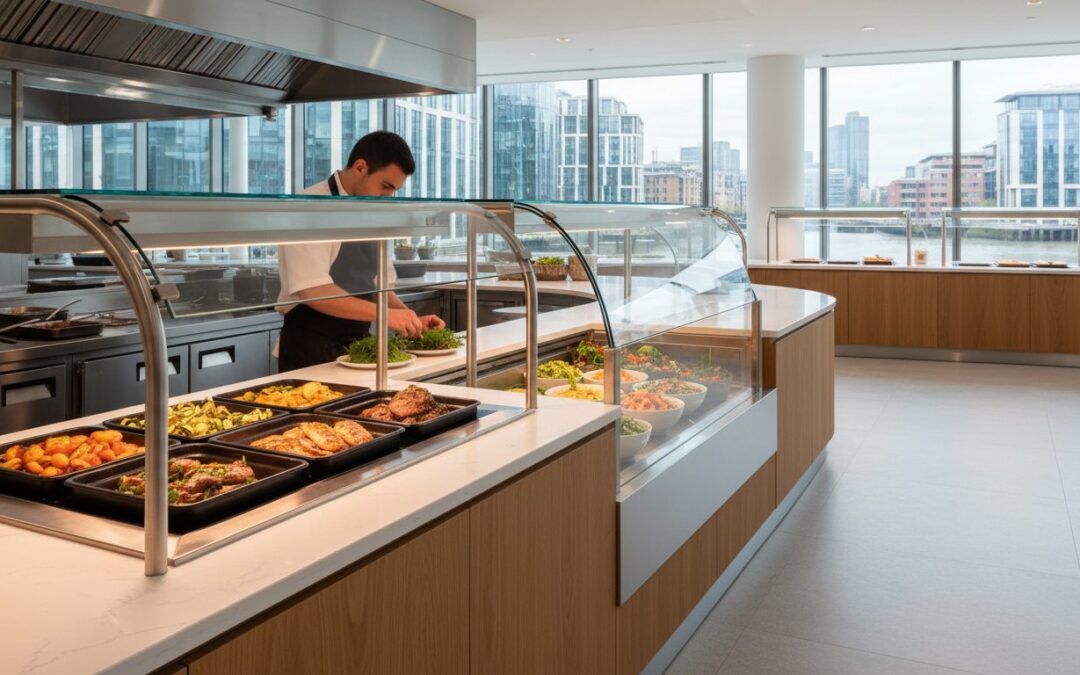
Your front-of-house presentation is more than just a counter; it’s a high-performance engine where even a three-millimetre misalignment can trigger a customer bottleneck that guts your midday revenue. You likely recognize that balancing a sleek, high-impact aesthetic with the grit of heavy-duty operation is a constant struggle. It’s particularly difficult when you’re trying to integrate heated gantries and chilled units without compromising on commercial servery design UK standards or staff ergonomics.
Mastering your layout requires a shift from viewing equipment as standalone pieces to seeing them as a unified, British-made system built for long-term ROI. This guide will show you how to eliminate flow issues and select durable, artisanal-grade equipment that stands up to the rigours of a foodservice market expected to reach USD 110.97 billion in 2026. We’ll explore strategic layout principles, the technicalities of seamless equipment integration, and the exact UK manufacturing standards that ensure your investment remains reliable and compliant for years to come.
Key Takeaways
- Learn how to transform your counter into a high-impact revenue driver by optimizing visual merchandising and customer flow.
- Discover the technical precision required for commercial servery design UK projects, specifically regarding thermal management between heated and chilled units.
- Identify the essential materials that balance front-of-house aesthetics with the hygiene-critical durability of food-grade stainless steel.
- Understand why professional CAD modelling and detailed site surveys act as your insurance policy against installation errors and compliance failures.
- Explore the operational and environmental advantages of partnering directly with a UK-based manufacturer for your bespoke serving counters.
The Strategic Importance of Commercial Servery Design in the UK
A commercial servery is the strategic interface where your kitchen’s culinary precision meets the customer’s high expectations. It’s the most critical point of contact in any hospitality or retail environment. In the UK market, where competition is fierce and consumer spending per visit reached £18.35 in early 2026, your front-of-house presentation must do more than just hold food. It needs to sell it. Professional commercial servery design UK focuses on transforming these functional spaces into primary revenue drivers through sophisticated visual merchandising and operational efficiency.
First impressions are formed in seconds. A disorganized or poorly lit counter suggests a lack of care behind the scenes, whereas a sleek, well-integrated layout projects total competence. We’re seeing a significant shift towards multi-functional spaces that must adapt throughout the day. A counter that hosts a bustling breakfast service with Grab & Go Displays must transition seamlessly into a premium lunch deli or an elegant evening buffet. This flexibility isn’t accidental; it’s the result of meticulous planning and artisanal fabrication.
Optimising Customer Flow and Reducing Bottlenecks
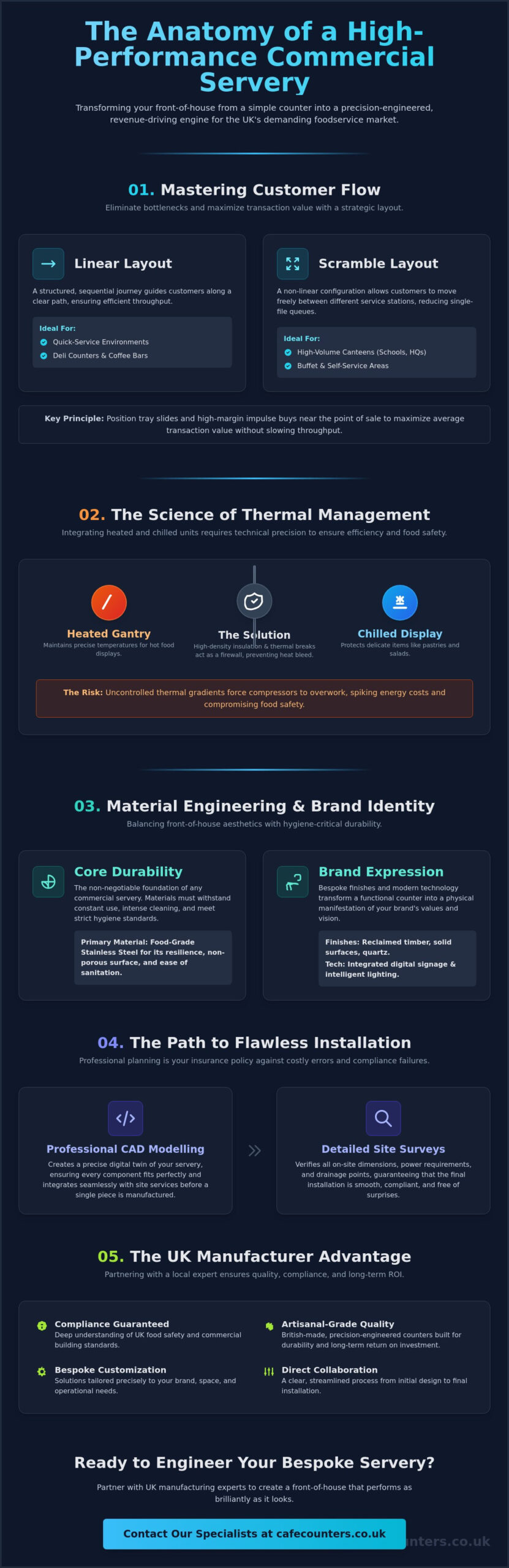
Queue psychology is a vital component of successful layout planning. A stagnant line doesn’t just frustrate customers; it actively kills repeat business. For high-volume environments such as schools or large corporate headquarters, a “scramble” layout often proves superior. This configuration allows diners to move freely between different stations, such as buffet-style service areas or Salad Bars, without being trapped in a single file. It breaks the traditional bottleneck and encourages exploration.
In contrast, a linear layout provides a structured, sequential journey that’s perfect for Deli Counters or quick-service environments. Regardless of the shape, the integration of tray slides is non-negotiable for ergonomics. Positioned correctly, these slides guide the customer past dedicated impulse-buy zones. Placing high-margin items or artisanal sides near the point of sale is a proven method for maximizing average transaction value without slowing down the throughput.
Aligning Servery Aesthetics with Brand Identity
Your servery should be a physical manifestation of your brand’s values. Bespoke Serving Counters allow for a level of customization that off-the-shelf units simply cannot match. Whether you require the warmth of reclaimed timber for a regional cafe or the clinical precision of high-grade stainless steel for a public sector project, the finish must be durable enough for heavy use while remaining visually striking.
Modern commercial servery design UK now frequently incorporates digital signage and intelligent lighting directly into the physical counter structure. This allows for real-time menu changes and targeted product highlighting. Many operators are also embracing “theatre cooking” elements. Integrating items like visible Heated Gantries or open-prep Deli Counters adds a sense of transparency and excitement. It invites the customer into the process, turning a simple transaction into a memorable dining experience.
Strategic Layouts: Integrating Heated, Refrigerated, and Ambient Displays
The core challenge of commercial servery design UK lies in the complex physics of thermal management. Placing a chilled patisserie unit directly adjacent to a heated gantry creates a significant temperature gradient that can undermine your operational efficiency. Without high-performance insulation, heat bleed will force your refrigeration compressors to work overtime, spiking energy costs and potentially compromising food safety. We solve this by using advanced thermal breaks and high-density insulation materials that ensure each zone operates independently within a single counter run.
Strategic placement of ambient zones, such as cutlery stations or condiment areas, acts as a natural buffer between technical equipment runs. This not only protects the integrity of your chilled and heated displays but also improves the customer experience by providing logical transition points in the serving line. We’re also seeing a rise in hybrid counters. These flexible units can switch between hot and cold modes, allowing operators to adapt their offering based on the time of day or seasonal menu changes without requiring additional floor space.
High-Impact Refrigerated and Patisserie Displays
Visibility is the primary engine of sales for chilled items. We utilize UV-bonded glass and internal LED arrays to eliminate bulky frames that often obscure the product. For high-volume retail environments, selecting the right refrigerated grab and go display units is essential for maintaining throughput while ensuring consistent temperatures. While open-front units offer the easiest access for customers, they require precise airflow management to meet the 5°C or below requirement for high-risk foods. Closed-glass units remain the superior choice for efficiency when displaying delicate items like cream cakes and pastries.
Advanced Heated Solutions for Hot Food Service
Maintaining hot food quality requires more than just raw heat; it requires precise humidity and temperature control. Our Vision Heated Counters are engineered to prevent delicate proteins and starches from drying out during prolonged service. In 2026, energy-saving features like induction-ready ceramic glass hobs and intelligent thermostats have become industry standards. These systems reduce ambient heat gain in the room, which aligns with HSE ventilation guidance for maintaining a safe and comfortable working environment for your staff.
Seamless Integration with Drop-in Units
Flexibility is a hallmark of modern commercial servery design UK. By using integrate drop-in units, we provide a modular foundation that evolves with your business. These units allow for a flush, minimalist finish on the counter surface, creating a seamless aesthetic that hides the complex engineering beneath. If your menu shifts from salad bars to hot deli service in the future, drop-in units make equipment upgrades significantly simpler and more cost-effective. To see how these technical elements come together in a physical space, you might explore our range of bespoke serving counters designed for the UK’s leading hospitality venues.
Material Engineering and Ergonomics for Durable Servery Counters
Selecting materials for a commercial servery design UK project is a sophisticated balancing act. You need front-of-house aesthetics that align with your brand’s artisanal pride, but back-of-house surfaces must withstand the relentless pace of a high-volume kitchen. Opting for cheaper, porous materials often results in a false economy. These surfaces typically fail within 2 to 3 years due to moisture ingress or mechanical wear, leading to costly replacements. Investing in high-grade, non-porous materials ensures you meet UK food premises regulations while securing a lower total lifecycle cost.
Durability isn’t just about the counter’s surface; it’s about the structural integrity beneath. A well-engineered counter uses a combination of heavy-duty framing and precision-fitted panels to prevent the warping or rattling that plagues lower-quality installations. By focusing on material engineering at the design stage, we provide a steady, reliable hand that ensures your physical space remains as impressive in five years as it did on opening day.
The Role of Stainless Steel in Professional Fabrication
Food-grade stainless steel remains the non-negotiable standard for any hygiene-critical environment. While the customer sees a beautiful facade, the internal structure and Stainless Steel Back-bar Units do the heavy lifting. We prioritize custom fabrication over off-the-shelf units to navigate the often awkward footprints of historic UK buildings. Our engineers focus on internal radiused corners. These smooth, curved joins prevent bacteria buildup in hard-to-reach areas, making daily sanitization faster and more effective for your team.
Aesthetic Overlays: Corian, Granite, and Bespoke Finishes
To achieve a premium look for high-end deli counter designs, we often integrate solid surface materials like Corian or natural stone like granite. Corian is particularly valued for its ability to create seamless, joint-free counter runs that are entirely non-porous. This eliminates the dirt-traps found in traditional laminate joins. We can meticulously match these cladding panels to your existing interior design, ensuring the servery feels like an organic extension of the room rather than an industrial afterthought.
Ergonomics: Designing for Staff Efficiency
True operational ROI comes from optimizing the “cockpit” where your staff work. We analyze the placement of POS systems, coffee machines, and prep areas to minimize travel distances. Reducing a staff member’s movement by just three steps per transaction can significantly increase throughput during peak hours. We also carefully calculate counter heights to balance staff comfort with customer accessibility. This ensures a smooth hand-off that feels natural for both parties. This meticulous approach to ergonomics transforms a simple serving area into a high-performance workstation that supports your team’s long-term health and efficiency.
The Technical Journey: CAD Modelling and UK Compliance Standards
Precision engineering begins long before the first sheet of stainless steel is cut. Addressing the complexities of commercial servery design UK requires a transition from abstract vision to validated technical data. Professional CAD modelling serves as your primary insurance policy; it identifies potential failures in a digital environment where they cost nothing to fix. This phase is about more than aesthetics. It’s about ensuring every millimetre of your bespoke counter fits perfectly within the physical constraints of your building.
A meticulous site survey is the cornerstone of this process. In the UK, we often work with historic or repurposed buildings where floors are rarely level and services are frequently hidden. We map out plumbing, waste, and high-load electrical requirements to ensure your heated gantries and refrigerated units have the power they need without overloading your site’s capacity. This technical foresight prevents the costly on-site modifications that can derail a project’s timeline and budget.
Precision Planning with 3D Visualisation
3D CAD models allow stakeholders to walk through the customer journey virtually, identifying potential bottlenecks before manufacture. This data doesn’t just sit on a screen. It drives our precision CNC manufacturing processes, ensuring that the physical components we build in our workshop align exactly with the digital plan. This integration of design and production is what separates a professional fit-out from a generic installation. By using the latest versions of AutoCAD 2026 and Revit 2026, we create a digital twin of your space that accounts for every pipe, socket, and structural pillar.
Compliance and Food Safety by Design
Compliance isn’t an afterthought; it’s baked into the design. We ensure your layout supports HACCP principles, making it easy for staff to monitor and record food temperatures throughout the day. Sneeze screens and hygiene barriers are designed to meet UK food hygiene standards without creating a visual wall between your staff and customers. We also account for the Equality Act, ensuring counter heights and access points are inclusive for all users. If you’re ready to move from concept to a fully compliant reality, you can start your technical design journey with our expert team today.
Partnering with a UK Manufacturer for Bespoke Servery Excellence
Choosing a partner for your commercial servery design UK project is a decision that extends far beyond the initial purchase price. By working directly with a UK manufacturer, you bypass the communication gaps and logistical delays inherent in using third-party resellers. This direct line to the engineers who are physically fabricating your counter ensures that every technical nuance discussed during the CAD phase is executed with total precision. In a market where 80% of UK restaurant owners are focusing on sustainability in 2026, sourcing British-made equipment significantly reduces your project’s carbon footprint while supporting regional artisanal skills.
Supply chain resilience has become a cornerstone of successful hospitality operations. Sourcing locally means you aren’t at the mercy of international shipping fluctuations or complex customs requirements. It also guarantees that after-sales support and spare parts are available immediately, rather than weeks away. This geographic proximity allows for a more collaborative design process, where you’re invited to share your vision with a partner who understands the unique pressures of the British commercial landscape.
Bespoke vs. Modular: Making the Right Investment
A bespoke solution is essential when you’re dealing with the unique architectural quirks of historic or specialized UK hospitality venues. While standard modular units offer budget efficiency for simple layouts, a custom counter allows you to optimize every millimetre for your specific menu and staff workflow. We design our Bespoke Serving Counters to be modular internally. This future-proof approach means your investment can adapt as your service evolves. You might start with integrated Salad Bars and later transition to Deli Counters or Grab & Go Displays without needing a completely new counter structure. The ROI of a perfectly fitted counter is measured in years of operational efficiency and reduced staff fatigue.
From Concept to Commissioning: The TFSE Products Ltd Approach
The journey from a raw concept to a commissioned, high-performance space requires a steady, reliable hand. We provide a single point of contact from the initial site survey through to the final handover. Professional commissioning is the final, non-negotiable step in ensuring long-term reliability. Our engineers don’t just install equipment; they ensure every refrigerated unit and Heated Gantry is calibrated to meet UK food hygiene standards and your specific operational requirements. This end-to-end project management minimizes business disruption and provides the peace of mind that only comes from expert-led execution. Contact our design team for a bespoke servery consultation and discover how our internal production facilities can bring your professional vision to life.
Securing Your Operational Future with Precision Design
Transitioning from a conceptual vision to a physical, high-performing space requires a synthesis of precision engineering and artisanal craft. You’ve seen how professional CAD modelling acts as a technical safeguard and how strategic material choice dictates long-term hygiene and durability. Mastering commercial servery design UK isn’t just about selecting equipment; it’s about creating a seamless, efficient interface that drives revenue while supporting your team’s daily workflow.
Since 1991, we’ve focused on internal production and geographic authenticity to ensure every project benefits from total quality control. From the initial advanced CAD modelling to our comprehensive installation and commissioning service, we act as your expert partner at every stage of the journey. We invite you to Request a Professional Site Survey and Design Consultation to begin the process of transforming your front-of-house presentation. Your vision deserves the steady, reliable hand of a manufacturer that values precision and quality as much as you do. We’re ready to help you bring that vision to life.
Frequently Asked Questions
What is the typical lead time for a bespoke commercial servery in the UK?
Lead times for bespoke projects typically range from 6 to 12 weeks following the final approval of CAD drawings. This duration allows for meticulous precision engineering, material procurement, and rigorous internal production testing in our workshop. Sourcing directly from a UK manufacturer often provides a more predictable timeline compared to international imports, as it eliminates the complexities of global logistics and customs delays.
How do I choose between a refrigerated drop-in unit and a full display counter?
Select an Integrate Drop-in Unit if you require a minimalist, flush finish within a custom-built countertop or need the flexibility to replace specific sections in the future. A full display counter, such as our Patisserie Displays, is the superior choice for high-visibility merchandising. These units provide maximum vertical glass area and dedicated internal lighting specifically designed to drive impulse sales in retail environments.
What are the most durable materials for a high-traffic cafe counter?
Food-grade stainless steel is the non-negotiable standard for internal structures and hygiene-critical areas due to its resilience and ease of sanitization. For exterior surfaces, solid materials like Corian or natural granite offer significantly better durability than standard laminates. These non-porous surfaces resist moisture ingress and mechanical wear, ensuring your commercial servery design UK project maintains its premium finish over years of heavy use.
Does my servery counter need to comply with specific UK disability access laws?
Yes, your servery must comply with the Equality Act 2010 to ensure the environment is accessible to all customers and staff. This often involves integrating lower counter sections for wheelchair users and ensuring clear floor space for easy maneuverability. We address these legal requirements during the initial CAD modelling phase to ensure your layout is inclusive without compromising your primary operational flow.
How can I improve the energy efficiency of my heated food displays?
Investing in high-performance insulation and intelligent thermostats is the most effective way to reduce daily energy consumption. You should look for advanced features like induction-ready ceramic hobs and double-glazed gantries that significantly minimize ambient heat loss. Selecting equipment with precise temperature control prevents energy waste and ensures your heated displays operate efficiently, even during the most demanding high-volume service periods.
Is it better to have a fixed servery or a modular mobile unit?
Fixed serveries are the ideal choice for permanent, high-volume locations where seamless integration of services like plumbing, waste, and high-load electricity is required. Modular mobile units offer essential flexibility for multi-functional spaces that must be reconfigured for different events. Your choice depends on whether your commercial servery design UK requires a steady, permanent anchor or a versatile solution that adapts to changing needs.
What electrical requirements should I plan for when designing a hot food counter?
You must plan for high-load electrical supplies, which often require dedicated circuits for items like Heated Gantries and ceramic glass hobs. It’s vital to coordinate with a qualified engineer early in the process to ensure your site’s distribution board can handle the total kilowatt load. We provide detailed electrical schematics during the design phase to simplify the installation and commissioning of your hot food counter.
How often should commercial display units be serviced for optimal performance?
Professional display units should undergo a comprehensive service at least once every six months to maintain peak performance and food safety compliance. Regular maintenance involves checking refrigerant levels, cleaning condenser coils, and calibrating thermostats to prevent unexpected downtime. This proactive approach extends the operational lifespan of your Bespoke Serving Counters and ensures your equipment remains a reliable asset for your business.