
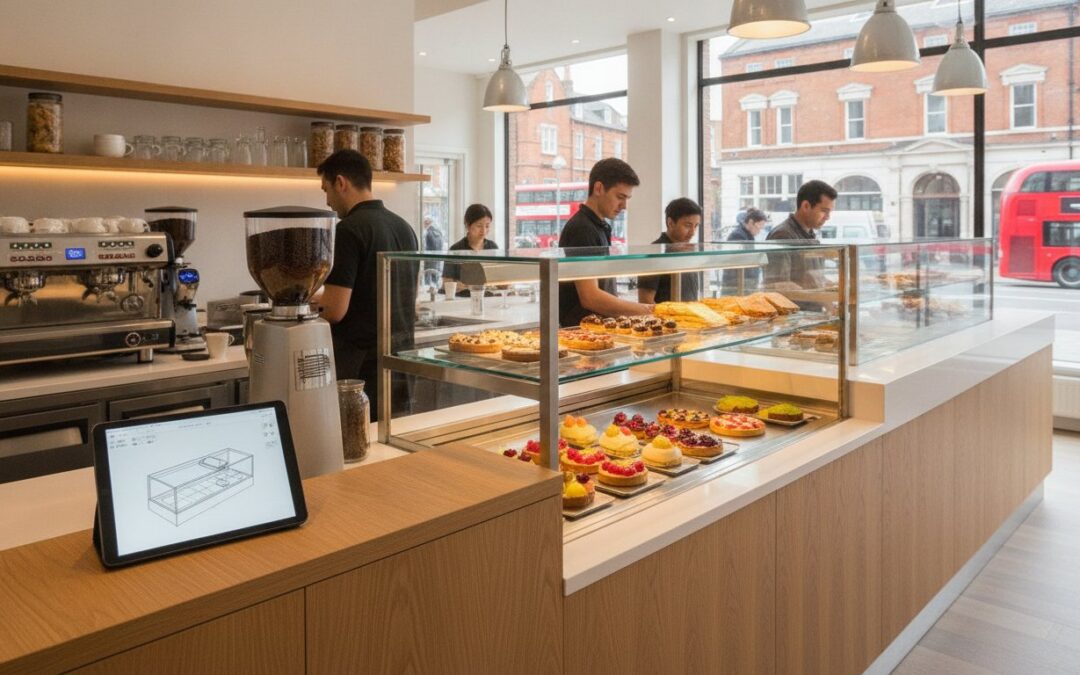
Over 50% of UK restaurant owners cite rising ingredient and energy costs as their primary challenge in 2026, which means your front-of-house equipment can’t just look good; it has to perform. When you’re planning a new cafe servery counter, you’re not just buying furniture. You’re designing a high-traffic engine that determines whether your peak hours are a smooth success or a bottlenecked disaster. It’s a complex task that requires balancing aesthetic appeal with the rigorous demands of a commercial environment.
We understand the pressure of getting these details right, from the confusion over refrigeration versus heated display requirements to the fear of choosing materials that won’t withstand daily wear. This guide provides the expert insights you need to master cafe servery design, focusing on customer flow and the durability of bespoke British manufacturing. We’ll walk through a methodical process that covers technical specifications and hygiene compliance, ensuring your finished space maximizes both impulse sales and long-term operational efficiency.
Key Takeaways
- Learn how to position your servery as the psychological heart of your cafe to drive transaction value through strategic product visibility.
- Master the technical balance of high-performance refrigeration and heated gantries to maintain food quality without compromising the customer journey.
- Discover why selecting food-grade materials like stainless steel or bespoke solid surfaces is essential for long-term operational efficiency in high-traffic environments.
- Understand the critical steps when planning a new cafe servery counter, from initial CAD modelling to the final site survey, to ensure a seamless installation.
- Explore the operational advantages of partnering with a British manufacturer for end-to-end project management, ensuring superior quality control and reliable lead times.
The Strategic Role of a Cafe Servery Counter in 2026
The servery counter is the physical and psychological anchor of any modern hospitality space. It’s where the transaction happens and where your brand’s promise is physically manifested. When planning a new cafe servery counter, you must view it as a precision-engineered tool rather than a mere piece of furniture. It serves as the primary interface between your kitchen’s output and your customer’s expectations, acting as the engine that drives your daily operations.
In 2026, the industry trend has shifted toward culinary theatre. Customers no longer want their food hidden behind high walls; they want to see the freshness of the produce and the skill of the preparation. A well-designed counter increases your average transaction value by placing high-margin items directly in the line of sight. Transparency in food preparation builds trust, which is a vital currency in a competitive market. This visibility transforms a simple transaction into an experience that encourages repeat visits.
Starting the process of planning a new cafe servery counter with a menu-first mentality ensures that every square inch of the footprint serves a functional purpose. If you lead with the floor plan, you risk a beautiful counter that can’t accommodate your specific service requirements. Your menu dictates whether you need specialized Deli Counters or high-volume Patisserie Displays. Logic must precede aesthetics to ensure long-term operational success.
Optimising Customer Flow and Queue Management
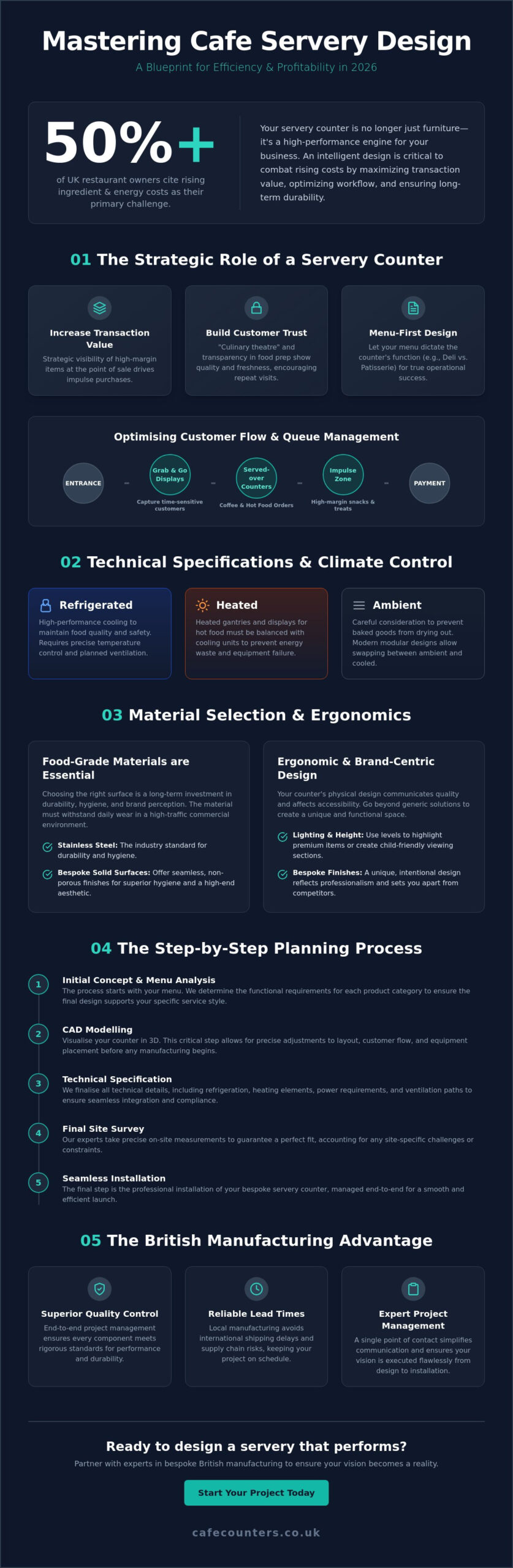
Efficiency is the bedrock of profitability. During the morning rush, your layout must provide the path of least resistance. This often involves a hybrid approach, blending buffet-style service elements for self-service items with dedicated served-over sections for bespoke coffee and hot food. Consider these strategic placements to enhance the journey:
- Grab & Go Displays: Position these near the entrance to capture time-sensitive customers immediately.
- Impulse Zones: Place smaller, high-margin snacks and treats directly adjacent to the point of sale.
- Served-over Counters: Ensure these are deep enough to handle equipment without crowding the customer’s personal space.
A methodical flow prevents bottlenecks and allows your staff to operate with maximum speed and precision. When the journey is seamless, customers feel relaxed and are more likely to add items to their tray.
First Impressions and Brand Identity
Your counter communicates your standards before a customer even tastes the food. Using the servery to project artisanal quality requires a meticulous approach to lighting and height levels. Lowered sections for child-friendly viewing or elevated displays for premium cakes impact perception and accessibility. Bespoke finishes ensure your space feels unique and intentional. This move away from generic, mass-produced aesthetics toward a design that reflects regional pride and professional competence creates a lasting impact. Choosing durable, high-end materials reinforces this message, proving that your business values quality in every detail, from the counter surface to the final product; for those seeking to maximise their brand’s visual impact through specialised thematic branding, Zodiac Event Displays offers expert insights into high-impact presentation.
Technical Specifications: Balancing Refrigeration, Heating, and Display
Successful servery design relies on the invisible infrastructure beneath the surface. When you’re planning a new cafe servery counter, you aren’t just selecting a countertop; you’re coordinating a complex array of climate-controlled zones. Each section of the counter must operate independently to protect the integrity of your menu. Integrating high-performance refrigeration alongside heated gantries requires meticulous planning of power requirements and ventilation paths. Without adequate airflow, even the most expensive cooling systems will struggle, leading to premature equipment failure and increased energy consumption. Maintaining precision temperature control is a fundamental necessity for ensuring consistent compliance with UK food safety standards.
Ambient sections also require careful consideration to prevent baked goods from drying out. In 2026, the focus has shifted toward modularity, allowing operators to swap between ambient and refrigerated displays as the menu evolves. We ensure that every technical component is positioned to facilitate ease of maintenance while keeping the operational noise to a minimum. This level of detail ensures the counter remains a silent partner in your business success.
Refrigerated Display Solutions
The choice between refrigerated grab and go display units and traditional serve-over Deli Counters depends entirely on your service speed goals. Grab and go units encourage high-volume throughput, while serve-over counters allow for more personal interaction and artisanal presentation. For delicate cakes, humidity control within Patisserie Displays is non-negotiable to prevent sponges from hardening. Modern cooling systems now align with strict equipment efficiency standards, significantly reducing the long-term operational costs that currently pressure 50% of UK restaurant owners. Our internal production facilities focus on these high-efficiency builds to provide total reliability.
Heated Display and Hot Food Management
Maintaining the texture of hot food is often more challenging than keeping it cold. Utilising Vision Heated Counters provides a consistent thermal environment that preserves the “just-cooked” quality of your offerings. We’ve moved away from traditional heat lamps, which can discolour food, in favour of advanced LED lighting that highlights the natural vibrancy of ingredients without adding unnecessary heat. Every heated section is designed with easy-clean glass and stainless steel to ensure hygiene standards are met with minimal effort. If you’re looking to refine your technical layout, our team can help you integrate drop-in units that align perfectly with your bespoke counter design.
Material Selection and Ergonomic Design for High-Traffic Environments
Selecting the right materials when planning a new cafe servery counter is a decision that impacts your balance sheet for years. In a high-traffic commercial setting, the surface isn’t just a design choice; it’s a functional tool that must withstand constant impact, heat, and rigorous cleaning schedules. Food-grade materials are non-negotiable for any surface in the service zone. This requirement ensures that your environment remains compliant with the Food Safety Act 1990 while protecting the integrity of your offerings. We focus on materials that offer a balance between aesthetic versatility and the rugged durability required for a 2026 hospitality environment.
The choice of material directly dictates your long-term replacement cycles. While a domestic-grade surface might look appealing initially, it will likely fail within months under the pressure of a commercial coffee rush. We guide our clients through a methodical selection process, ensuring that the physical properties of each material align with the specific stresses of their service model. This precision-engineered approach prevents the common pitfalls of cracks, staining, and thermal shock.
The Durability of Commercial Countertops
Comparing high-end materials requires an understanding of their specific strengths. Quartz and granite are favoured for their exceptional scratch resistance and premium feel. Solid surfaces like Corian offer the unique advantage of seamless joins, which eliminates dirt traps and creates a perfectly hygienic, fluid appearance. For the staff-side work zones, Stainless Steel Back-bar Units remain the industry standard. Their resistance to corrosive cleaning agents and high temperatures makes them indispensable for maintaining a hygienic workflow. Choosing the wrong material for a high-heat zone, such as placing a low-tolerance laminate near a heated gantry, is a mistake that leads to costly mid-season repairs.
Staff Ergonomics and Operational Speed
Operational efficiency is often won or lost in the staff-side work zone. We design around the “Golden Triangle” of cafe service: the strategic positioning of the coffee machine, the point of sale, and the food display. When these three elements are correctly aligned, staff movement is minimised, which directly increases throughput during peak hours. To ensure your beverage offerings match the quality of your new setup, you can check out Worker Bee MCR Tea & Coffee for premium specialty supplies. Correct counter depth is vital; if a counter is too deep, staff will overreach, leading to fatigue and slower service. We also integrate waste management logic directly into the build, using hidden bins and dedicated tray return zones to keep the front-of-house clear. This meticulous attention to ergonomic detail ensures your team can perform with precision and speed, even during the busiest morning rush.
The Step-by-Step Planning Process: From CAD Modelling to Site Survey
The transition from a conceptual menu to a physical installation requires a rigorous, methodical framework. When you’re planning a new cafe servery counter, the process begins long before any metal is cut or stone is polished in our workshops. We initiate every project with a detailed site survey to identify the unique constraints of your professional environment. This stage is critical for mapping out essential services like water, drainage, and multi-phase electrical supplies. Our internal production facilities rely on these precise measurements to craft components with artisanal pride and technical accuracy. By collaborating closely with your architects and interior designers, we ensure that the bespoke counter is structurally compatible with the existing building fabric and service runs.
Central to our design methodology is 3D CAD modelling, which allows us to visualise the final servery flow with absolute precision. This digital prototype serves as a conceptual anchor, ensuring that the “theatre” of food prep and the logic of staff movement are perfectly balanced. By simulating the customer journey within the CAD environment, we can stress-test the layout before a single piece of stainless steel is fabricated. CAD modelling reduces project risk by identifying potential structural or service clashes before the manufacturing process begins. This proactive approach eliminates the stress of on-site adjustments, providing a steady and reliable hand throughout the construction journey.
The Importance of a Site Survey
A site survey is more than just measuring the dimensions of a room. It involves identifying hidden obstacles such as structural pillars, existing plumbing, or sloping floors that could compromise a bespoke fit. We also conduct a thorough assessment of floor loading capacity, which is vital when integrating heavy refrigerated units or large stone countertops. Perhaps most importantly, we measure every access point and corridor to ensure the manufactured counter can actually be moved into its final position. There’s no room for error when delivering high-end, custom-built equipment to a busy commercial site.
Technical Integration and Commissioning
The final stage of the planning process involves the seamless integration of specialised equipment, such as deli counters and drop-in units. Once the physical installation is complete, we move into the commissioning phase to ensure every component reaches its required set-point temperature and operates at peak efficiency. We also prioritise staff training, walking your team through the correct operation of new display technology to maximise the lifespan of your investment. Our regional heritage means we understand the specific pressures of UK hospitality venues, allowing us to act as a steady partner from the first measurement to the final polish. To ensure your project starts on a solid foundation, you can book a professional site survey with our expert team today.
Implementing Your Vision with a British Manufacturing Partner
The final execution of your project determines whether your investment delivers on its operational promise. When you are planning a new cafe servery counter, partnering with a British manufacturer provides a level of quality control that imported, mass-produced units cannot match. Our internal production facilities allow us to oversee every weld and every joint, ensuring the physical product aligns perfectly with the 3D CAD models developed in the earlier stages. This end-to-end service eliminates the friction between design and reality, providing a single point of responsibility for the entire project. It’s a methodical approach that replaces the uncertainty of multiple contractors with the steady hand of a dedicated expert partner.
Geographic proximity is more than a matter of regional pride; it’s a practical business advantage. Buying British-made equipment ensures significantly shorter lead times and a more reliable supply chain. If a component needs adjustment or a spare part is required years down the line, having a local manufacturer means your business doesn’t suffer from weeks of downtime waiting for international shipping. This long-term after-sales support is a vital consideration for maintaining operational efficiency in a sector where over 50% of owners are already battling rising costs. We value our heritage and internal capabilities, using them as signatures of authenticity and reliability.
Bespoke Craftsmanship vs. Mass Production
Bespoke fabrication allows you to reclaim unusable space that modular units simply cannot fill. Whether it’s tailoring counter lengths to wrap around structural pillars or creating unique shapes for awkward cafe footprints, custom builds provide a precision fit. This approach also opens doors for unique branding opportunities, such as integrated logos or specialised lighting that highlights your artisanal quality. While the initial investment in bespoke equipment may be higher, the cost-benefit analysis usually reveals better long-term value through increased durability and the total optimisation of your floor space.
Professional Installation and Project Management
The final installation must be a coordinated operation to minimise business downtime. We often manage overnight installations to ensure your cafe is ready for service the following morning. Our project managers oversee every detail, ensuring all Bespoke Serving Counters comply with current UK health and safety regulations and building codes. Having a single point of contact simplifies the process, alleviating the stress of managing multiple contractors. It ensures the vision you shared during the initial site survey is exactly what stands in your finished space, ready to perform under the pressures of a busy commercial environment.
Future-Proofing Your Hospitality Space
Successful servery design is a synthesis of menu logic, technical precision, and ergonomic flow. By prioritising durable food-grade materials and advanced climate control, you create a space that handles peak-hour pressure while protecting your profit margins. Planning a new cafe servery counter is a significant investment that defines the operational rhythm of your business for years to come. It requires a methodical approach that moves from initial site surveys through to precision fabrication.
We’ve been providing expert installation and after-sales support since 1991, combining advanced CAD modelling with the authenticity of our UK-based manufacturing facility. Our team acts as a steady partner, ensuring your technical specifications meet the highest engineering standards while reflecting your brand’s unique character. You don’t have to navigate the complexities of commercial design alone.
Start your bespoke cafe counter project with a professional consultation
Take the first step toward a more efficient and profitable front-of-house today. Your vision for a world-class cafe environment is within reach with the right technical expertise behind you.
Frequently Asked Questions
How long does it typically take to plan and install a new cafe servery counter?
The timeline for planning a new cafe servery counter usually spans 8 to 12 weeks. This period includes the initial site survey, detailed CAD modelling, and the bespoke manufacturing process in our UK workshop. While modular options might arrive sooner, they don’t offer the precision fit required for unique architectural spaces. Our methodical approach ensures that every technical specification is met before the final installation team arrives on-site.
What is the most durable material for a high-traffic cafe counter top?
Solid surfaces like Corian and high-grade quartz are the most durable options for front-of-house environments. These materials offer exceptional resistance to scratches and stains while providing a premium aesthetic. For staff-side work zones, stainless steel is the professional standard. It withstands high temperatures and rigorous cleaning chemicals, ensuring your counter remains hygienic and structural for years of high-volume service without requiring frequent replacement.
Do I need a bespoke counter or can I use modular units for my cafe?
Bespoke counters are essential when you need to maximise every square inch of an awkward floor plan. Modular units often leave dirt traps or gaps around structural pillars, which compromises hygiene. Custom fabrication allows you to integrate specific equipment like Patisserie Displays or Deli Counters into a seamless run. This tailored approach creates a unique brand identity that generic modular systems simply can’t match.
How do I ensure my servery counter complies with UK food hygiene regulations?
Compliance starts with selecting non-porous, food-grade materials that prevent bacterial growth and allow for thorough disinfection. You must ensure that all surfaces are smooth, following the fundamental principles of the Food Safety Act 1990. Our design process includes precision temperature controls and easy-clean glass displays. These features help you maintain high food hygiene ratings while protecting the safety of your customers and staff during peak hours.
What are the essential electrical and plumbing requirements for a refrigerated counter?
Refrigerated counters typically require a dedicated electrical supply and a reliable drainage solution for condensate. Depending on the equipment load, you might need a standard 13-amp plug or a more robust multi-phase electrical connection. It’s vital to identify these service points during the initial site survey. Correct plumbing prevents water pooling, which is essential for maintaining a safe, dry, and professional workspace behind the counter.
Can a new counter design really improve my cafe’s customer flow and sales?
A strategic layout directly influences your average transaction value by guiding customers toward high-margin items. By designing a path of least resistance, you reduce bottlenecks during the morning rush and improve the overall guest experience. Integrating Grab & Go Displays near the point of sale encourages impulse purchases. A well-planned counter acts as a silent salesperson, increasing staff efficiency and business profitability simultaneously.
How do I choose between a grab-and-go display and a serve-over counter?
The decision depends on your specific service model and peak-hour volume. Grab-and-go units are ideal for self-service environments where speed is the primary driver for the customer. In contrast, serve-over Deli Counters allow for personal interaction and the presentation of artisanal, fresh produce. Many successful cafes use a hybrid approach, combining both formats to cater to different customer needs throughout the trading day.
What is the role of CAD modelling in the counter design process?
CAD modelling is the technical foundation of the entire design journey. It allows us to create a digital prototype of your servery, identifying potential clashes with existing plumbing or electrical runs before manufacturing begins. This precision-engineering step reduces project risk and ensures that the final installation is seamless. It’s a conceptual anchor that brings your vision to life with total accuracy while ensuring structural compatibility.