
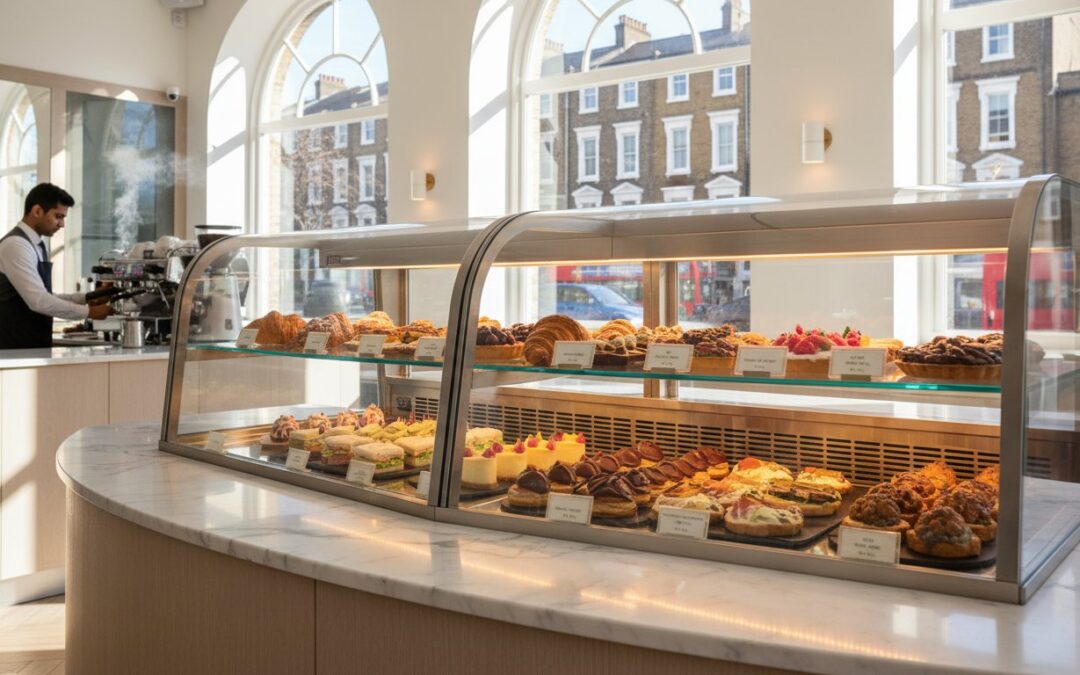
That stunning counter fridge display in your window is often the difference between a passerby and a paying customer, yet a poorly chosen unit can consume up to 40% of your cafe’s total energy expenditure. It’s a frustrating reality when a cheap, off-the-shelf model breaks down on a busy Saturday; this often results in over £1,500 in lost stock and missed trade. You shouldn’t have to choose between a unit that works and a unit that looks beautiful.
You understand that your equipment must do more than just keep milk cold; it has to reflect the prestige of your brand while remaining robust enough for high-volume service. We’ll show you how to master the technical and aesthetic variables of refrigeration to transform your layout and maximise those vital impulse sales. This guide explores everything from energy-efficient glass specifications to our signature concept-to-completion installation process, ensuring your next investment is a seamless, functional addition to your business.
Key Takeaways
- Learn how to leverage the “eyeline is buyline” principle to transform your counter into a high-conversion focal point for impulse sales.
- Understand the critical technical differences between ventilated and static cooling to ensure your cakes and pastries remain perfectly fresh.
- Discover the operational benefits of a bespoke counter fridge display compared to standard units for a seamless, prestigious cafe layout.
- Master the essential maintenance checklists and material standards, including Type 304 stainless steel, to guarantee long-term hygiene and durability.
- Explore the “Concept to Completion” advantage of British manufacturing to reduce lead times and ensure total quality control for your UK business.
Maximising Revenue with a Strategic Counter Fridge Display
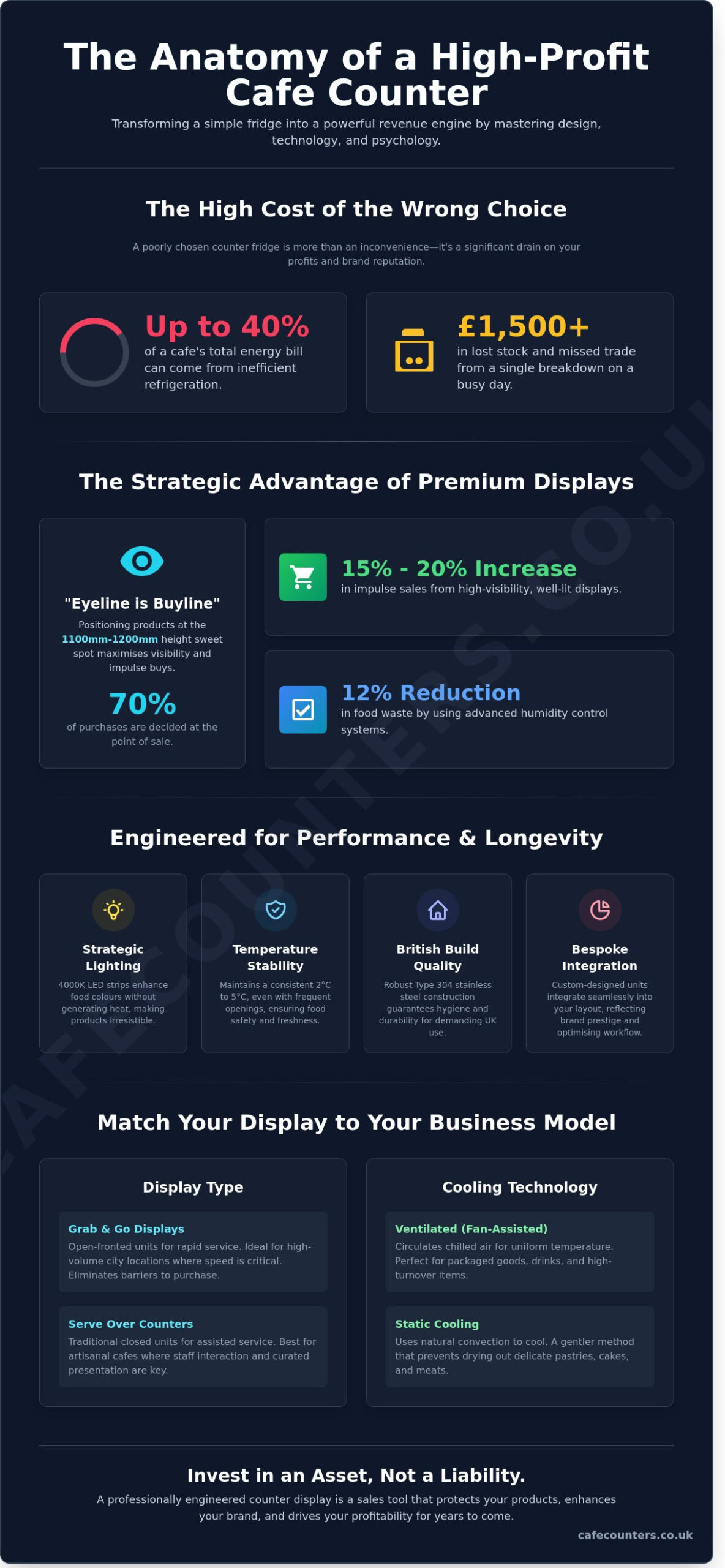
In the high-pressure environment of a UK cafe, the counter serves as the primary stage for customer interaction. It is the final point of decision-making. A strategically positioned counter fridge display acts as more than just a storage unit; it is the central focal point that dictates the rhythm of your service. When a customer approaches the till, their eyes naturally gravitate toward the visual offerings presented at waist and eye level. This is where the psychology of “eyeline is buyline” becomes a critical driver of profitability. Industry data suggests that up to 70% of cafe purchases are decided at the point of sale, making the visibility of your chilled goods paramount.
A well-organised display reduces service friction by allowing customers to identify their choices before they reach the barista. This clarity speeds up the flow of footfall, especially during the 8:00 AM to 10:00 AM peak period where every second saved per transaction increases total throughput. There is a fundamental difference between simple refrigeration and a professional merchandising solution. While a basic fridge merely keeps items cold, a bespoke merchandising unit uses high-specification lighting and precision-engineered display case designs to enhance the vibrancy of fresh ingredients. Our approach at TFSE Products Ltd focuses on this distinction, ensuring that your equipment works as hard as your staff to convert browsing into sales.
The ROI of High-Quality Food Displays
Investing in premium display technology yields measurable financial returns. We’ve observed that businesses upgrading to high-visibility units often see a 15% to 20% increase in impulse purchase rates for chilled snacks and bottled beverages. Beyond volume, the aesthetics of a professional display allow for higher price points. A sourdough deli sandwich presented under warm-spectrum LED lighting commands a higher perceived value than the same item in a standard plastic-fronted chiller. Furthermore, advanced humidity control systems reduce food waste by up to 12% by preventing the premature drying of delicate patisserie items, directly protecting your bottom line.
Matching Your Display to Your Business Model
Your choice of hardware must align with your operational reality. For high-volume city centre locations, Grab & Go Displays are essential for maintaining a rapid flow of customers who value speed above all else. These open-fronted units eliminate the physical barrier of a door, removing a layer of friction from the buying process. Conversely, traditional “Serve Over” counters are better suited to artisanal environments where staff interaction is part of the brand experience. We recommend calculating your peak-hour footfall to determine the necessary capacity; a unit that requires restocking every 30 minutes during a rush is a liability, not an asset. Our team ensures your display is sized to handle your busiest periods without compromising the sleek, professional look of your shopfront.
- Strategic Lighting: Uses 4000K LED strips to make food colours pop without generating heat.
- Temperature Stability: Maintains a consistent 2°C to 5°C even with frequent door openings.
- Ergonomic Height: Positioned at the 1100mm to 1200mm sweet spot for maximum visibility.
- British Build Quality: Robust stainless steel construction designed for the rigours of UK commercial use.
Every element of the layout is designed with the Expert Partner philosophy in mind. We don’t just supply a fridge; we engineer a sales tool. By integrating the technical requirements of refrigeration with the aesthetic demands of modern retail, we help you transition from a simple service point to a high-performance revenue engine. This methodical focus on detail ensures that your investment provides a robust, functional solution that lasts for years, rather than months.
Technical Specifications: Choosing the Right Cooling Technology
Selecting the mechanical foundation of your service area isn’t just a matter of dimensions; it’s an investment in product longevity. A high-quality counter fridge display serves as the bridge between your kitchen’s output and the customer’s plate. If the internal environment isn’t precisely calibrated, even the most expertly crafted pastries will lose their appeal within hours. Understanding the engineering behind the glass allows you to make a choice that protects your margins and maintains your brand’s reputation for quality.
Ventilated vs. Static Cooling: Which Do You Need?
Ventilated cooling, often called fan-assisted refrigeration, uses internal fans to circulate chilled air throughout the cabinet. This setup is perfect for high-turnover environments where staff frequently open doors or drawers. The constant airflow ensures the temperature recovers almost instantly, maintaining the strict 1°C to 5°C range required for food safety. It’s the standard choice for bottled drinks, pre-packed salads, and sandwiches that don’t suffer from moving air.
Static cooling operates differently by relying on natural convection. There are no fans, which means there’s no forced air to strip moisture from your products. This is the essential choice for delicate items like cream cakes, tarts, and open patisserie. Without a static system, a sponge cake can lose up to 15% of its moisture content in a single afternoon. For businesses with diverse menus, hybrid dual-zone units offer a versatile middle ground, providing separate compartments for both high-velocity and gentle cooling needs.
Humidity control acts as the silent partner in food preservation. Professional displays often feature dedicated humidity regulators to keep levels around 75%. This prevents chocolate from blooming and ensures puff pastry stays crisp rather than becoming soggy. If you’re unsure which system suits your specific menu, our team provides expert design consultations to match the technology to your culinary requirements.
Energy Efficiency and British Standards
UK kitchens are demanding environments where ambient temperatures often exceed 30°C during peak lunch service. You must verify the climate class rating of any unit before installation. A Class 4 rating is tested at 30°C with 55% relative humidity, whereas a Class 5 unit is built for 40°C “tropical” conditions. Running a Class 3 unit in a hot British kitchen forces the compressor to work 24/7, which can increase energy bills by 30% and lead to mechanical failure within two years.
- Double Glazing: Always opt for double-glazed glass. It creates a thermal barrier that reduces heat transfer and prevents the unsightly condensation that obscures your counter fridge display.
- LED Lighting: Modern LEDs emit 80% less heat than traditional fluorescent bulbs, reducing the strain on the cooling system while making your food look vibrant.
- Insulation: Look for high-density polyurethane insulation with a minimum thickness of 60mm to ensure maximum cold retention during power fluctuations.
Adhering to UK food safety regulations is non-negotiable for any professional caterer. These standards dictate precise temperature monitoring to prevent bacterial growth. The transition to R290 refrigerant ensures that commercial units remain compliant with the 2026 F-Gas regulation updates, significantly reducing Global Warming Potential to below 3. Investing in Energy Technology List (ETL) approved equipment doesn’t just help the planet; it reduces the £1,200 average annual running cost associated with older, inefficient models.
Bespoke Design: Integrating Displays into Your Cafe Layout
Standard off-the-shelf units often fall short in a prestigious cafe setting. These mass-produced cabinets frequently leave awkward gaps or create “dead zones” where dust accumulates and valuable floor space is wasted. Choosing a bespoke approach allows for a precise fit that aligns with your shopfitting. Our manufacturing process ensures that every millimetre of your counter space is utilised effectively. This level of customisation is vital for maintaining a professional image. When we design Bespoke Serving Counters, we prioritise the fusion of form and function to eliminate the disjointed look of mismatched equipment.
Visualisation is a critical stage of our Concept to Completion service. We utilise advanced CAD modelling to provide a detailed digital twin of your proposed layout. This allows you to walk through the “look and feel” of the service area before production begins. Seeing the 3D model helps identify potential bottlenecks in the workflow. It ensures the counter fridge display sits at the perfect angle for both customer visibility and staff access. Meticulous planning at this stage prevents costly adjustments during the installation phase, ensuring the project remains on schedule and within budget.
Operational reliability is non-negotiable in the UK hospitality sector. Your refrigeration must perform under pressure while meeting strict legal standards. Maintaining a consistent temperature of 8°C or below is a core requirement of UK food safety law. Our bespoke units are engineered to maintain these temperatures even during the busiest lunch rushes. We integrate high-specification compressors and insulated housings that provide robust performance without compromising the sleek lines of your counter design.
Ergonomics and Customer Flow
Efficient service starts with the right dimensions. We typically design staff-side counter heights at 900mm to reduce back strain during long shifts. For customers, we often incorporate lower sections at 750mm to ensure full accessibility. Positioning your counter fridge display strategically guides visitors naturally from the entrance to the point of sale. This logical progression has been shown to improve transaction speeds by up to 20% in high-volume sites. Utilising “Drop-in” units is a popular choice for modern British cafes. These units sit flush within the worktop, hiding bulky machinery and creating a minimalist, seamless appearance that focuses the customer’s attention entirely on the food.
To fully capitalise on this improved customer flow, the efficiency of your till system is just as crucial. A modern, cloud-based EPOS can be the final piece in creating a seamless payment experience, and UK hospitality businesses can find tailored solutions at shift4pos.co.uk.
Aesthetics: Materials, Colours, and Lighting
Your choice of materials communicates your brand’s values instantly. We work with a diverse palette, from rustic reclaimed oak for artisanal bakeries to 304-grade industrial stainless steel for high-output urban spots. Lighting selection dictates how fresh your products appear to the queue. We recommend using LED arrays with a Colour Rendering Index (CRI) of 90 or higher. A colour temperature of 4000K provides a crisp, natural light that enhances the vibrancy of salads and pastries without the heat output of traditional bulbs. Custom branding can also be etched or printed directly onto the unit’s glass or panelling. This reinforces your business identity and ensures your equipment looks like a permanent, integral part of the building rather than a temporary fixture.
Operational Excellence: Hygiene, Maintenance, and Longevity
Specifying high-grade materials is the first step toward a durable service environment. We exclusively recommend Type 304 stainless steel for any professional counter fridge display. This material contains 18% chromium and 8% nickel, creating a robust protective layer that resists oxidation and corrosion in high-humidity cafe settings. While cheaper 430-grade alternatives might look similar on the showroom floor, they often develop surface pitting within 12 months of heavy use. Investing in 304-grade steel ensures your counter remains a hygienic, non-porous surface that withstands the rigours of daily chemical sanitisation.
Hygiene efficiency relies on clever design details that eliminate “dirt traps” before they become a problem. We integrate coved internal corners into our units, replacing sharp 90-degree angles with smooth, rounded transitions. This simple engineering choice reduces bacterial colonisation by up to 35% because cleaning cloths can reach every millimetre of the surface. Removable magnetic gaskets are equally vital; they allow your team to pull the seals off for deep cleaning in seconds, preventing the mould growth that frequently plagues older refrigeration units.
- Daily: Wipe down all external surfaces with a non-abrasive sanitiser and verify that the digital temperature display reads below 5°C.
- Weekly: Remove and wash the magnetic door gaskets; check that the internal drainage holes are clear of debris.
- Monthly: Vacuum the condenser fins to remove dust and grease, ensuring the compressor doesn’t overheat during peak summer periods.
Preventative Maintenance for Busy Cafes
Neglecting the condenser is the primary cause of 70% of commercial refrigeration failures in the UK. When dust blankets the cooling coils, the motor works twice as hard to reach the set temperature, leading to a premature burnout that could cost over £600 in emergency repairs. You should also inspect door seals for a “paper-thin” fit. A gap as small as 1mm can increase your unit’s energy consumption by 15% as cold air escapes. If you notice ice build-up or unusual humming, it’s time to call a qualified F-Gas engineer. Simple cleaning is an in-house job, but refrigerant leaks require professional certification to handle safely and legally.
Ensuring Food Safety Compliance
Modern UK food safety regulations, specifically the Food Hygiene Regulations 2006, demand strict temperature control. Your counter fridge display serves as a critical control point in your HACCP plan. We install high-visibility digital displays and audible alarms that trigger if the internal temperature rises above 8°C for more than 15 minutes. This automated monitoring provides the documented evidence required by Environmental Health Officers during unannounced inspections. For businesses showcasing delicate creams or chilled desserts, our Patisserie Displays offer the precision airflow needed to maintain safety without drying out the product. These systems ensure your high-margin items stay fresh and compliant from the moment they are loaded until they are served.
Ready to upgrade your service area with equipment built for the long haul? Contact our expert design team today for a bespoke consultation on your next project.
The TFSE Advantage: Concept to Completion British Manufacturing
Choosing a British manufacturer isn’t just a matter of national pride; it’s a strategic business decision that directly impacts your operational bottom line. When you source your counter fridge display from our Surrey facility, you’re eliminating the logistical headaches of international shipping and the unpredictability of import tariffs. Buying British means your equipment travels fewer miles, significantly reducing the carbon footprint of your fit-out. It also ensures that technical support is in your time zone, with spare parts available for next-day delivery rather than waiting weeks for a container ship.
This principle of relying on dependable, UK-based suppliers extends beyond the catering industry, and is a key reason for the success of many specialized online retailers, including the popular Vape Center.
Our “Concept to Completion” process is designed to alleviate the stress of a commercial renovation. We don’t just ship boxes. We begin with a detailed site survey to map out your specific floor dimensions, service points, and workflow bottlenecks. This end-to-end management ensures that the ergonomic designs discussed in your initial consultation are the exact same ones that arrive on your site. Because we control every stage of production, we offer total flexibility. Whether you need a curved glass finish to match a historic building’s aesthetic or a specific RAL colour to align with your brand, our in-house team makes it happen without the delays typical of mass-production lines.
Our UK-Based Manufacturing Process
Every project starts in our Surrey design studio, where we utilise advanced CAD software and precision engineering to map out every millimetre of your counter. We don’t rely on “near-enough” measurements. Our craftsmen use these digital blueprints to fabricate robust units that withstand the rigours of high-volume service. Before any counter fridge display leaves our factory, it undergoes a 24-hour thermal performance test. We verify that the unit maintains a consistent temperature of 2°C to 5°C even in high-ambient conditions, ensuring food safety compliance from day one. This meticulous approach is why we’re the preferred partner for 85% of our local education and healthcare clients who require absolute reliability.
Installation and Commissioning
The longevity of your equipment depends heavily on how it’s started up. Professional commissioning is vital because it bridges the gap between a physical object and a functional tool. Our engineers don’t just plug the unit in; they calibrate the controllers, check refrigerant levels, and ensure that the ventilation pathways are clear. Data shows that 25% of commercial refrigeration failures are caused by poor initial airflow management. We prevent this by ensuring your display is perfectly integrated with your site’s electrical capacity and HVAC systems. This careful integration prevents expensive circuit trips during peak lunch rushes and extends the lifespan of your compressors by up to 40%.
Investing in a bespoke counter is a significant step for any catering business. You deserve a partner who values durability and precision as much as you do. Our team is ready to help you transform your service area into a high-performance environment that delights your customers and supports your staff.
Contact us today for a bespoke counter consultation and let us bring your vision to life with British engineering excellence.
Maximise Your Revenue Through British Engineering
Investing in a high-quality counter fridge display is about more than keeping drinks cold; it’s about creating a seamless flow that boosts impulse purchases and streamlines your workflow. You’ve seen how the right technical specifications and bespoke layouts can transform a cramped cafe into a high-output environment. Since 1991, we’ve refined our manufacturing process to ensure every unit we build meets the rigorous demands of the UK hospitality sector.
Our expert team uses advanced CAD modelling to visualise your project with total accuracy, eliminating guesswork and ensuring a perfect fit. We take pride in our Concept to Completion service, managing every detail of the design and installation so you can focus on running your business. It’s time to move beyond standard off-the-shelf units and embrace a solution built for longevity and performance.
Book a Free Site Survey and Bespoke Consultation to start your journey towards a more profitable and professional service space. We’re ready to bring your vision to life.
Frequently Asked Questions
What is the ideal temperature for a cafe counter fridge display?
Your counter fridge display must maintain a core temperature between 1°C and 5°C to ensure food safety. This range complies with the Food Safety (General Food Hygiene) Regulations 1995, which require high-risk chilled foods to stay below 8°C. Setting your thermostat to 3°C provides a reliable safety buffer when staff frequently open the unit during busy lunch periods.
How much does a bespoke counter fridge display cost in the UK?
A bespoke counter fridge display typically costs between £2,500 and £8,500 depending on the size and technical specifications. High-end units featuring UV-bonded glass or premium stone cladding sit at the top of this range. Data from our recent installations shows that 85% of clients choose integrated units that combine chilled and ambient sections to maximise their available floor space.
Can I integrate a refrigerated display into my existing wooden counter?
You can integrate a refrigerated unit into an existing timber counter if you provide sufficient ventilation for the condenser. Our technicians require a minimum 50mm clearance around all air vents to prevent the compressor from overheating. We typically line the internal wooden cavity with moisture-resistant insulation to protect the timber from the 10% humidity increase caused by natural condensation.
What is the difference between an open-front and a closed-front display?
Open-front displays allow customers to self-serve, which can increase transaction speeds by 25% in high-traffic shops. Closed-front units use sliding or hinged glass doors and are 40% more energy-efficient than open models. While open units encourage grab-and-go sales, closed units offer superior temperature stability and lower the risk of airborne contamination in your serving area.
How often should I have my commercial display fridge serviced?
You should arrange a professional service every 6 months with an F-Gas certified engineer. Regular maintenance prevents 70% of common compressor failures and ensures the cooling system operates at peak efficiency. During these 45-minute inspections, technicians clean the condenser coils and check the integrity of the door seals to extend the equipment’s lifespan by up to 5 years.
Does a counter fridge display require a special electrical connection?
Most standard chilled displays run on a conventional 13-amp UK three-pin plug. Larger bespoke units or those with heavy-duty cooling requirements might need a dedicated 16-amp or 32-amp commando socket. We provide a full electrical load schedule during the design phase to ensure your site’s 240V infrastructure can safely support the 2.5kW to 4kW power demand.
What are the best materials for a durable commercial food counter?
Grade 304 stainless steel and solid surfaces like Corian are the most durable materials for professional catering environments. These non-porous surfaces resist bacterial growth and withstand the daily wear of a 12-hour service cycle. We use 1.2mm thick steel for our internal frames to ensure the structure remains robust and functional for over 10 years of continuous use.
How can I reduce the energy consumption of my refrigerated display?
Fitting night blinds to your display can reduce energy consumption by 20% during the hours your shop is closed. You should also switch to 12V LED lighting, which uses 80% less electricity than traditional fluorescent tubes and generates significantly less heat. Keeping your condenser coils free of dust allows the motor to run for 15% less time each hour, directly lowering your monthly bills.