
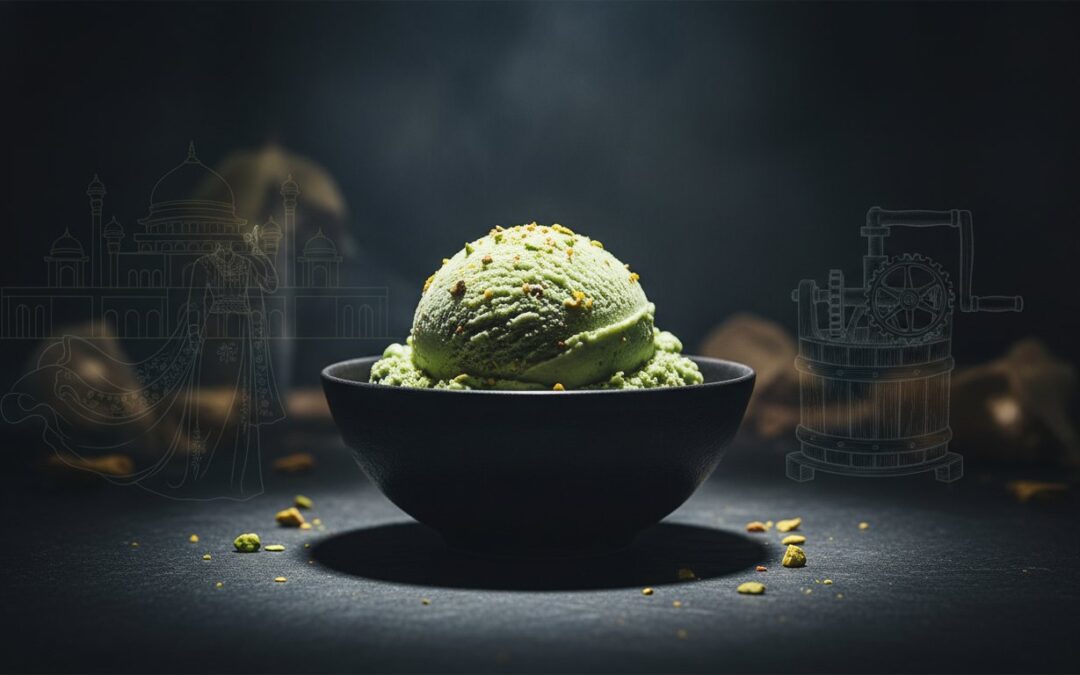
What if the question “who invented ice cream” doesn’t actually have a single, satisfying answer? Despite countless articles claiming definitive origins, the truth is far more complex and fascinating than most food historians would have you believe.
You’ve likely encountered conflicting stories about ice cream’s beginnings. One source credits ancient China, another points to 17th-century Italy, whilst a third insists it was a Roman emperor’s brilliant idea. These contradictory narratives aren’t just confusing, they’re often based on myths that have been repeated so frequently they’ve become accepted as fact. The reality is that ice cream’s development spans millennia and crosses continents, involving ingenious techniques that evolved gradually rather than springing from one inventor’s eureka moment.
This article will guide you through ice cream’s authentic historical journey, separating documented facts from popular misconceptions. You’ll discover how ancient civilisations laid the groundwork, which cultures truly advanced frozen dessert techniques, and how these innovations eventually converged to create the beloved treat we know today.
Key Takeaways
- Discover how frozen desserts originated over 2,000 years ago in ancient Persia, evolving through Chinese innovations during the Tang Dynasty to become the foundation of modern ice cream.
- Learn why the question “who invented ice cream” has no single answer, as this beloved treat developed through centuries of cultural exchange and technological advancement across multiple civilisations.
- Understand how European influences transformed simple frozen treats into sophisticated gelato and sorbet, with Italian and French innovations introducing eggs and cream that revolutionised texture and flavour.
- Explore how 19th-century mechanical refrigeration and industrialisation transformed ice cream from an elite luxury into the globally accessible dessert we enjoy today.
- Uncover the truth behind popular myths surrounding Marco Polo and King Charles I, separating historical fact from folklore in ice cream’s fascinating evolution.
The Ancient Origins: Where Did Ice Cream Begin?
The question of who invented ice cream leads us on a fascinating journey through ancient civilisations, where resourceful cooks first discovered the delights of frozen treats. Rather than a single inventor, ice cream evolved through centuries of cultural innovation and cross-pollination between distant empires.
The earliest recorded frozen desserts emerged in Persia over 2,000 years ago. Persian nobility enjoyed a primitive form of sorbet made from snow collected from mountain peaks, mixed with grape juice and other fruit concentrates. These iced delicacies weren’t merely refreshments but symbols of wealth and sophistication, as procuring snow in the desert climate required elaborate logistics and considerable expense.
Archaeological evidence suggests these Persian innovations spread eastward along trade routes. By 200 BCE, Chinese confectioners had developed their own frozen specialities, though their techniques remained closely guarded secrets within royal courts.
Chinese Royal Desserts
During the Tang Dynasty (618-907 CE), Chinese imperial kitchens perfected sophisticated cooling methods that would influence frozen dessert production for centuries. Palace chefs combined buffalo milk with camphor for flavouring, creating a rich, aromatic mixture that was then frozen using carefully harvested winter ice stored in underground chambers. These desserts were exclusively reserved for the emperor and his immediate circle, making them amongst history’s most exclusive culinary creations.
Persian Iced Delights
Persian frozen treats held deep cultural significance beyond mere refreshment. The ability to serve cold desserts during scorching summers demonstrated a host’s resourcefulness and connections to distant mountain regions. Wealthy Persian families employed networks of runners who transported snow in insulated containers, establishing some of the world’s first cold-chain logistics systems around 400 BCE.
The spread of these frozen innovations accelerated through Arab conquests of the 7th and 8th centuries. Arab traders and scholars encountered Persian and Chinese techniques, adapting them to create sherbet, a sweetened iced drink that would eventually reach European markets through Mediterranean trade routes.
These cultural exchanges fundamentally shaped early concepts of who invented ice cream, demonstrating that frozen desserts emerged from collaborative innovation across multiple civilisations rather than a single moment of inspiration. Each culture contributed unique ingredients, preservation methods, and serving traditions that collectively laid the foundation for modern ice cream production.
The European Influence: From Sorbet to Gelato
The transformation of frozen desserts from simple shaved ice to the creamy delights we recognise today began with Arab sherbet traditions that travelled across the Mediterranean. By the 13th century, Italian merchants had established trade routes that brought these cooling techniques to Venice and Sicily. The Arabs’ sophisticated understanding of sugar preservation and ice storage provided the foundation for what would become Europe’s frozen dessert revolution.
Italian confectioners recognised the potential immediately. They adapted the Arab sherbet recipes, substituting local ingredients and experimenting with textures. The addition of fresh fruit juices created what we now call sorbet, but this was merely the beginning. Italian cooks began incorporating dairy elements, transforming these water-based refreshments into something entirely new.
Catherine de Medici’s marriage to Henry II of France in 1533 marked a pivotal moment in frozen dessert history. Her Italian chefs brought their gelato-making expertise to the French court, where the recipes underwent further refinement. The French nobility’s enthusiasm for these exotic treats sparked widespread adoption across European aristocratic circles. Within decades, frozen desserts had become symbols of sophistication and wealth.
The question of who invented ice cream becomes clearer when examining this European evolution. Italian innovators first combined cream with existing sorbet techniques around 1565, creating custard-based frozen desserts that closely resembled modern ice cream. French chefs perfected these recipes, developing the rich, smooth textures that defined luxury desserts for centuries.
Italian Gelato Innovations
Italian confectioners revolutionised frozen desserts by introducing eggs and cream to traditional sorbet recipes during the mid-16th century. This innovation created custard-style ice creams with unprecedented richness and stability. The Medici court’s chefs developed techniques for achieving smooth, dense textures that became the hallmark of authentic gelato.
French Culinary Refinements
French chefs elevated these Italian foundations into luxurious frozen desserts that captivated European courts. They refined recipes using precise temperature control and sophisticated flavouring techniques. These innovations established France as the epicentre of frozen dessert culture, influencing culinary traditions across the continent for generations.
Just as European artisans perfected their craft through centuries of innovation, modern establishments require the same dedication to quality and precision. Whether you’re planning a traditional ice cream parlour or contemporary dessert café, expert design and manufacturing services ensure your vision achieves the same lasting impact as these historical culinary pioneers.
Technological Advancements: Revolutionising Ice Cream Making
The question of who invented ice cream becomes more complex when examining how technological breakthroughs transformed this frozen dessert from an aristocratic luxury into a mass-market phenomenon. The 19th century marked a pivotal shift that fundamentally changed ice cream production methods and accessibility across Britain and beyond.
Before 1851, ice cream production relied entirely on natural ice harvesting and labour-intensive hand-churning methods. The introduction of mechanical refrigeration in the mid-1800s eliminated seasonal constraints and geographical limitations that had previously restricted ice cream manufacturing to winter months or regions with reliable ice supplies.
Refrigeration and Industrialisation
Jacob Perkins patented the first working vapour-compression refrigeration system in Britain in 1834, though commercial applications didn’t emerge until the 1870s. This breakthrough enabled year-round production and storage, reducing manufacturing costs by approximately 60% within two decades. Factory production replaced artisanal methods, with steam-powered churning machines processing batches 50 times larger than traditional hand-cranked freezers.
The shift from artisanal to industrial production fundamentally altered the ice cream landscape. Where Victorian confectioners once produced small batches for wealthy clientele, mechanised facilities could manufacture hundreds of gallons daily for working-class consumers.
Innovation in Ingredients and Techniques
American innovations significantly influenced British ice cream manufacturing during this period. Nancy M. Johnson’s hand-cranked freezer, patented in 1843, reached British shores by 1850. This device reduced freezing time from several hours to 30 minutes whilst creating smoother textures through continuous agitation.
The 1890s introduced stabilisers and emulsifiers that prevented ice crystal formation and extended shelf life. Gelatin, cornstarch, and later synthetic compounds enabled manufacturers to achieve consistent textures regardless of temperature fluctuations during transport and storage.
Electric motors replaced steam power by 1900, providing precise speed control for optimal texture development. Continuous freezing machines, developed in 1926, enabled non-stop production lines that could process 1,000 gallons per hour compared to earlier batch methods producing just 20 gallons hourly.
These technological advances democratised ice cream consumption whilst answering the broader question of who invented ice cream by demonstrating that its evolution involved countless innovators improving production methods, preservation techniques, and flavour development processes across multiple decades and continents.
Who Really Invented Ice Cream? The Myths and Legends
The question of who invented ice cream has sparked countless debates, but the truth is far more complex than popular culture suggests. Rather than crediting a single genius inventor, we must acknowledge that ice cream emerged through centuries of cultural collaboration, technological advancement, and shared culinary innovation across multiple civilisations.
Two persistent myths dominate public perception. The first claims Marco Polo brought ice cream recipes from China to Italy in the 13th century, yet no historical evidence supports this romantic tale. The second attributes ice cream’s invention to King Charles I’s chef, who supposedly created the dessert exclusively for the royal court in 1630. Both stories lack credible documentation and appear to be Victorian-era fabrications designed to add mystique to ice cream’s origins.
Common Myths and Their Origins
The Marco Polo myth gained traction during the 19th century when publishers sought exotic backstories for popular foods. Victorian storytellers particularly favoured tales connecting European discoveries to Eastern adventures, despite lacking historical foundation. Similarly, the King Charles I legend emerged from 18th-century confectioners who used royal associations to elevate their products’ prestige. These fabricated narratives became so entrenched in popular culture that they’re still repeated in modern encyclopaedias and food histories.
The Reality: A Collaborative Invention
Archaeological evidence reveals that frozen desserts existed in ancient China around 200 BC, where milk, rice, and snow created primitive ice cream. Persian innovations in the 5th century introduced rose water and vermicelli to frozen treats. Arab cultures contributed sugar preservation techniques during the 9th century, whilst Italian Renaissance cooks perfected cream-based recipes in the 1600s.
The industrial revolution transformed ice cream from luxury to accessible treat. Nancy Johnson’s hand-cranked freezer patent in 1843 revolutionised production methods, whilst Jacob Fussell established America’s first commercial ice cream factory in Baltimore in 1851. British confectioners simultaneously developed their own techniques, creating the diverse regional variations we recognise today.
Understanding ice cream’s true collaborative heritage helps us appreciate the diverse cultural contributions that shaped this beloved dessert. Just as bespoke commercial kitchen designs require multiple specialists working together to create exceptional results, ice cream’s development reflects centuries of shared innovation across continents.
Recognising these collective contributions provides a more accurate and inclusive understanding of culinary history, moving beyond simplified origin stories to embrace the rich tapestry of human creativity that brought ice cream to our tables.
Ice Cream in Modern Culture: A Global Phenomenon
Understanding who invented ice cream reveals just the beginning of this dessert’s remarkable journey. Today, ice cream stands as a £2.8 billion industry in the UK alone, with global consumption reaching 15.4 billion litres annually. This frozen treat has transcended its humble origins to become a universal language of comfort, celebration, and cultural identity across every continent.
The evolution from those early inventors’ simple frozen mixtures to today’s sophisticated gelato parlours and artisan ice cream shops demonstrates humanity’s endless creativity with this beloved dessert. Modern ice cream production combines traditional techniques with cutting-edge technology, delivering consistent quality that would astound the pioneers who first experimented with ice and cream centuries ago.
Global Flavour Variations
Cultural preferences have shaped ice cream flavours in fascinating ways across different regions. Japan’s matcha and red bean varieties reflect local tea culture, whilst Italy’s gelato tradition emphasises intense fruit flavours using 30% less air than conventional ice cream. In India, kulfi incorporates cardamom and pistachios, achieving its dense texture through slow cooking rather than churning.
British preferences lean towards classic vanilla, which accounts for 28% of all ice cream sales, followed by chocolate at 22%. However, innovative British producers now craft flavours using locally sourced ingredients like Yorkshire honey, Scottish tablet, and Cornish clotted cream, creating distinctly regional variations.
Ice Cream’s Role in Social Gatherings
Ice cream serves as a social catalyst in countless cultural celebrations. Birthday parties universally feature ice cream cake, whilst summer festivals across Britain see ice cream van sales increase by 300% during peak months. Wedding receptions increasingly offer gelato bars as alternatives to traditional desserts, with 18% of UK couples choosing this option in 2023.
Religious and cultural festivals also embrace ice cream’s celebratory nature. Ramadan’s iftar meals often conclude with kulfi, whilst Christmas pudding ice cream has become a British holiday staple since the 1990s.
Future industry trends point towards plant-based alternatives, which grew 95% in the UK market during 2023. Artisan producers focus on sustainable sourcing and reduced sugar formulations, responding to health-conscious consumers whilst maintaining the indulgent experience that makes ice cream universally cherished. Smart freezer technology and personalised flavour creation represent the next frontier in this endlessly evolving industry.
Building Your Ice Cream Empire: From Ancient Origins to Modern Success
The journey to answer who invented ice cream reveals a fascinating evolution spanning millennia, from ancient Chinese snow treats in 200 BC to the mechanical innovations of Nancy M. Johnson’s hand-cranked churn in 1843. What began as royal delicacies in Tang Dynasty courts has transformed into a £1.3 billion industry across Britain alone, demonstrating how technological advancement and cultural exchange shaped this beloved dessert.
Today’s ice cream entrepreneurs stand on the shoulders of centuries of innovation. Whether you’re planning a traditional parlour or a cutting-edge gelato bar, your success depends on creating an environment that honours this rich heritage whilst meeting modern expectations. The right counter design doesn’t just display your products; it tells the story of craftsmanship that connects ancient origins to contemporary excellence.
Ready to transform your ice cream vision into reality? Discover our bespoke counter solutions for your ice cream business, featuring British-made quality, expert craftsmanship, and custom design solutions tailored to your unique requirements. Your sweet success story starts with the perfect foundation.
Frequently Asked Questions
Who is credited with inventing ice cream?
No single person invented ice cream, as it evolved through centuries of culinary innovation across multiple cultures. The earliest frozen desserts appeared in ancient China around 200 BC, where a mixture of milk, rice, and snow was frozen. Ancient Persia and the Arab world developed sherbets using fruit juices and snow from mountain peaks. The modern ice cream we recognise today emerged through gradual refinements by Italian, French, and British confectioners during the 16th and 17th centuries, each contributing essential techniques that shaped the final product.
What were the earliest forms of ice cream?
The earliest forms were simple frozen mixtures of snow, fruit juices, and sweeteners dating back to 200 BC in China. Roman Emperor Nero reportedly enjoyed crushed ice mixed with honey and fruit in 54-68 AD. Persian faloodeh, created around 400 BC, combined vermicelli noodles with rose water and lime juice, then frozen with snow. These primitive versions lacked the creamy texture of modern ice cream because they didn’t incorporate dairy or use proper churning techniques to prevent large ice crystals from forming.
How did ice cream spread across Europe?
Ice cream spread across Europe through Italian culinary expertise and royal court connections during the 16th century. Catherine de’ Medici brought Italian gelato makers to France in 1533 when she married King Henry II. The technique reached England by 1671, when it appeared at a feast for the Order of the Garter. French chef confectioners refined the recipes and introduced them to other European courts, whilst Italian immigrants established the first commercial ice cream parlours in London during the 1850s, making the treat accessible beyond aristocratic circles.
What role did technology play in ice cream production?
Technology transformed ice cream from a luxury item to a mass-market product through three key innovations. The hand-cranked churn, invented in 1843 by Nancy M. Johnson, enabled consistent texture and faster production. Industrial refrigeration, developed in the 1870s, eliminated dependence on natural ice harvesting. The continuous freezer, patented in 1926, allowed commercial manufacturers to produce thousands of gallons daily. These advances reduced production costs by 90% between 1850 and 1930, making ice cream affordable for working-class families across Britain.
Why are there myths about ice cream’s invention?
Myths about who invented ice cream persist because the dessert evolved gradually across multiple cultures rather than being invented by one person at a specific moment. Popular legends credit figures like Marco Polo or Thomas Jefferson because people prefer simple origin stories to complex historical evolution. Additionally, many early recipes were closely guarded trade secrets, leaving gaps in historical records that allow myths to flourish. The lack of patent protection before the 19th century means many genuine innovators remain unknown, creating space for fictional narratives.
How has ice cream evolved in modern times?
Modern ice cream has evolved through premium ingredients, innovative flavours, and health-conscious alternatives since 1980. Artisanal producers now use single-origin chocolate, organic dairy, and exotic ingredients like lavender or black sesame. The global ice cream market reached £54.8 billion in 2023, driven by dairy-free options using oat, almond, and coconut bases. Molecular gastronomy techniques create unusual textures, whilst liquid nitrogen freezing produces ultra-smooth consistency. British manufacturers have embraced these trends, with premium brands like Jude’s and Marshfield Farm leading innovation in sustainable, locally-sourced ingredients.