
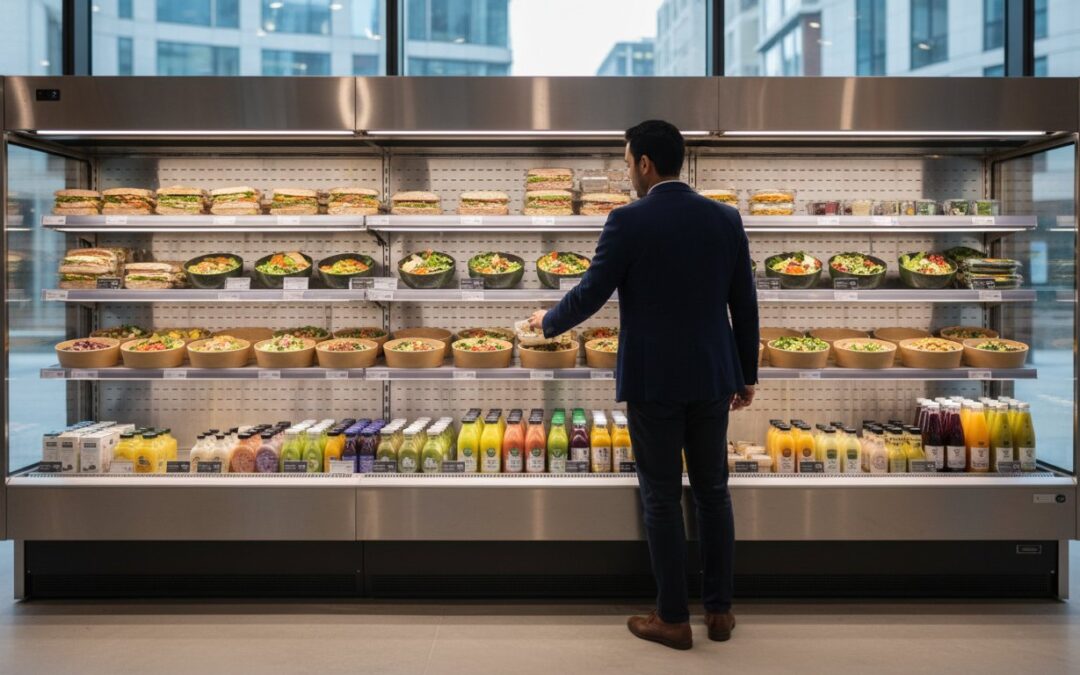
With the UK food-to-go market projected to reach a staggering £24.9 billion by 2026, the difference between a missed opportunity and a high-value transaction often comes down to a matter of millimetres and degrees. We understand that optimising grab and go display for sales isn’t just about aesthetics. It’s a strategic response to the persistent frustrations of rising energy bills and the 270,000 tonnes of food waste that UK retailers face annually. You need a solution that balances the visual pull of a premium brand with the rigorous technical standards required for modern food safety and operational efficiency.
This guide shows you how to transform your floor space into a high-performance sales engine by combining psychological merchandising with technical excellence. We’ll explore how precision engineering, from temperature-controlled grab and go displays to the latest food safety regulations, creates a premium environment that drives impulse purchases while protecting your bottom line. We’ll walk through the journey of selecting materials that ensure durability and how to align your layout with shifting consumer habits to increase your average transaction value during peak hours.
Key Takeaways
- Learn how to capture customer attention within three seconds by aligning your display layout with natural shopper movement and navigation hotspots.
- Master the art of optimising grab and go display for sales by leveraging Golden Zone shelf positioning and advanced colour blocking techniques.
- Discover why high Colour Rendering Index (CRI) lighting and stable temperature control are essential for maintaining product appeal and preventing display fogging.
- Identify and eliminate dead zones in your retail space using the Right-Hand Rule to guide customers through a high-conversion sales journey.
- Understand the long-term operational benefits of choosing British-manufactured, bespoke units that solve specific architectural challenges and withstand high-volume commercial use.
Understanding the Grab-and-Go Consumer Mindset in 2026
In the high-pressure environment of a commercial retail space, you have exactly three seconds to convert a passerby into a customer. This brief window is the foundation of the grab-and-go mission. It’s a psychological race where speed and convenience must be immediately validated by what the eye sees. When optimising grab and go display for sales, we must recognise that the modern customer isn’t just looking for a quick fix. They’re seeking a moment of quality that fits into a fragmented schedule. A well-executed display acts as a silent ambassador for your brand, projecting a sense of meticulous care and reliability that builds immediate trust through total visual competence.
By 2026, the definition of value has evolved significantly. While the UK food-to-go market is projected to reach £24.9 billion, shoppers are increasingly prioritising product integrity and freshness over mere proximity. This shift means your display must communicate a story of quality within those first few seconds. It isn’t enough to simply provide a product; you must provide a premium experience that justifies the purchase. A display that looks neglected or poorly lit doesn’t just lose a single sale. It damages the perceived quality of your entire brand, making the technical performance of your equipment a direct driver of customer loyalty.
The Psychology of Impulse Purchasing
Visual cues are powerful biological triggers. When a customer sees a vibrant salad or a perfectly glazed pastry, it initiates a physical response. This interaction is deeply rooted in the consumer mindset and impulse buying, where hunger hormones override planned shopping lists. In high-value deli and patisserie sectors, the perception of freshness is your most valuable asset. If a display looks cluttered or disorganized, it triggers decision paralysis. Instead of choosing, the customer simply walks away. We focus on creating clean lines and logical groupings that guide the eye rather than overwhelming it, ensuring that every item on the shelf has the space to sell itself.
Meeting the 2026 ‘Conscious Consumer’ Demands
The modern shopper is more informed and more demanding than ever before. They want to see visible product integrity and transparent sourcing. This demand for transparency means your equipment must do more than just hold stock; it must showcase it with absolute clarity. We’ve seen a significant shift toward units that signal environmental responsibility. An energy-efficient unit isn’t just a way to manage rising overheads. It’s a visible commitment to sustainability that resonates with the conscious consumer. Balancing the accessibility of an open-front unit with the technical requirement for thermal efficiency is a core part of optimising grab and go display for sales. It ensures your brand stays relevant in a market that values both speed and ethics.
Merchandising Strategies for Maximum Impulse Conversion
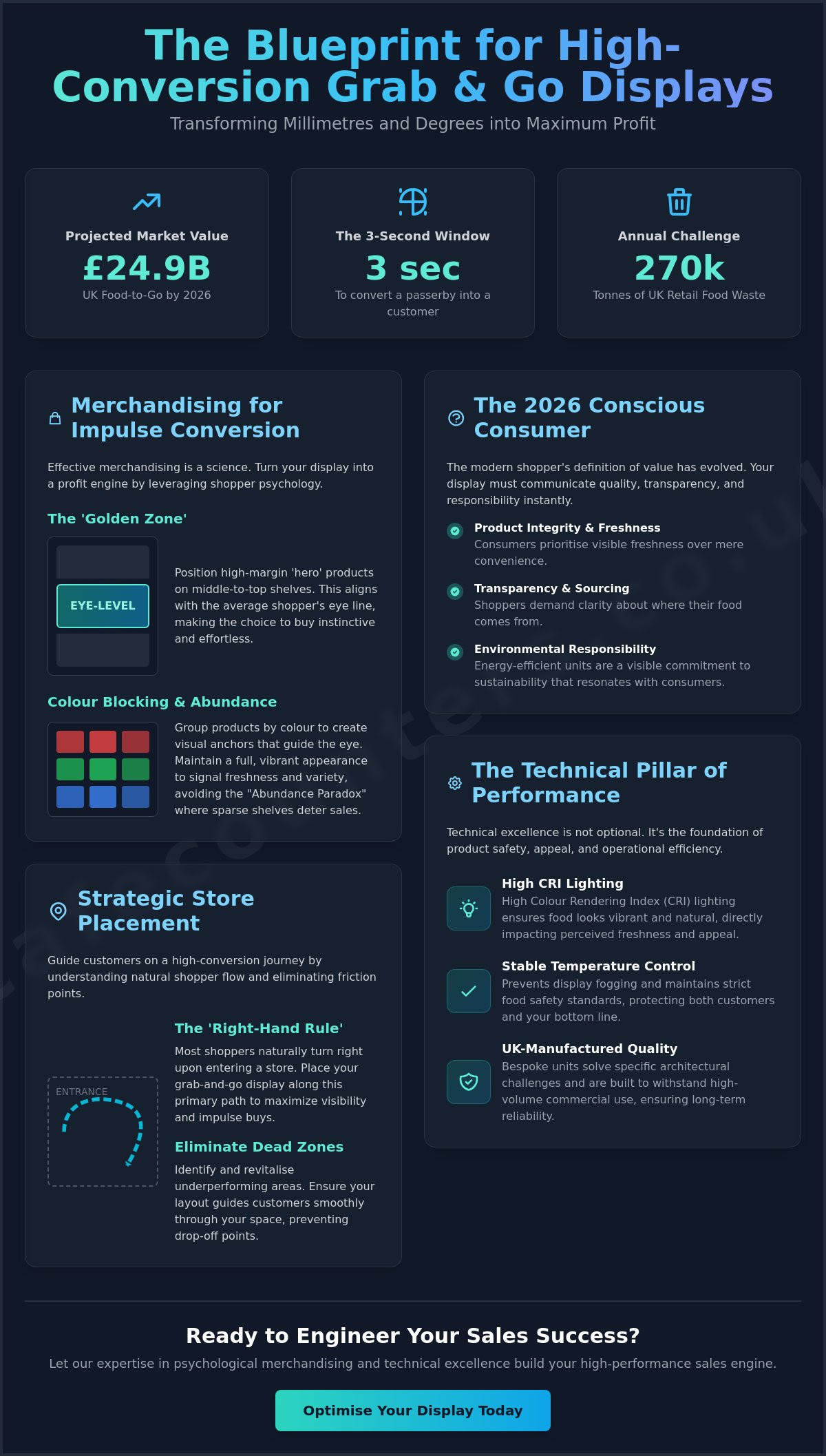
Effective retail merchandising is a calculated science that transforms a physical unit into a profit centre. When you’re optimising grab and go display for sales, the most critical real estate is the ‘Golden Zone’. This area, typically the middle-to-top shelves, aligns perfectly with the natural eye line of the average adult shopper. By positioning high-margin hero products here, you reduce the cognitive load on the customer, making the choice to buy almost instinctive. We design our units to maximise this visibility, ensuring every shelf works as hard as possible to capture that vital three-second attention span mentioned earlier.
The visual impact of your display relies heavily on colour blocking and the ‘Abundance Paradox’. Customers are biologically programmed to seek out variety and plenty. A sparse shelf suggests the best items have already been taken or that the stock is old. Maintaining a full, vibrant appearance, even during the tail end of peak hours, is essential for maintaining brand trust. We recommend using colour blocking techniques to create visual anchors. Grouping products by packaging colour helps the eye navigate the display quickly. This structured approach, combined with meticulous food safety and temperature control, ensures your products look as good as they taste.
Vertical Merchandising and the Eye-Level Rule
Hierarchy is everything in a vertical space. While hero products claim the eye-level shelves, the bottom tiers serve a different purpose. These are ideal for bulkier items or products aimed at children, who have a lower line of sight. To further enhance visibility, we often utilise angled shelving. This technical feature increases the visible surface area of your food, making it appear more accessible and appetising. If you’re looking to upgrade your current setup, exploring our range of Grab & Go Displays can provide the bespoke dimensions needed to perfect this vertical flow.
Strategic Signage and Labelling
Pricing and dietary information should never be a mystery. Clear, bold labelling acts as a friction-reduction tool for hurried customers who don’t have time to ask questions. Highlighting dietary requirements like Vegan or Gluten-Free options helps shoppers make split-second decisions with confidence. In 2026, we’re seeing a move toward digital shelf edge labels. These allow for dynamic pricing and real-time promotions, ensuring your display remains competitive throughout the day. When these labels are integrated into high-quality stainless steel back-bar units or bespoke counters, the result is a premium aesthetic that reinforces your brand’s authority.
The Technical Pillar: Lighting, Temperature, and Efficiency
While merchandising strategies dictate product placement, the technical integrity of the unit determines whether that product actually sells. Precision engineering is the silent partner in optimising grab and go display for sales. If a refrigeration system fails to maintain a stable environment, the visual appeal of your stock diminishes instantly. We use advanced CAD modelling to design air curtains that remain robust even in high-traffic retail zones. This ensures that the cold air stays exactly where it’s needed, preventing the ‘foggy glass’ syndrome that often plagues inferior units and obscures the customer’s view of your premium offerings.
The acoustic environment of your cafe is just as important as the visual one. High-performance fans and compressors shouldn’t dominate the space with intrusive noise. By selecting energy-efficient components, we reduce the decibel levels, creating a more inviting atmosphere where customers feel comfortable lingering. This technical excellence extends to the physical profile of the unit. High-performance insulation allows for slimmer, more elegant frames, providing a larger glass-to-steel ratio that puts your food at the centre of the experience.
Illuminating for Appetite Appeal
Lighting is a technical tool, not just a decorative one. We prioritise a high Colour Rendering Index (CRI) in our LED systems because it ensures that the natural colours of your food are represented accurately. Choosing the right Kelvin temperature is essential; warm 3000K tones enhance the golden crusts of artisanal breads, while cooler 4000K settings highlight the crisp vibrancy of fresh salads. Under-shelf lighting is a non-negotiable feature in our multideck units to eliminate shadows that make lower shelves look uninviting. Low-heat LED technology ensures that the delicate textures of patisseries are preserved, preventing the premature drying that occurs with traditional bulbs.
Energy Efficiency as a Sales Driver
In 2026, sustainability has moved from a corporate goal to a consumer expectation. The rise of ‘Eco-Labelling’ on commercial refrigeration in the UK means shoppers are increasingly aware of the environmental impact of the businesses they support. By investing in British-made, low-GWP (Global Warming Potential) units, you’re making a public statement about your brand’s values. These energy-efficient displays do more than just lower your operational costs; they act as a badge of integrity. Our internal production facilities focus on using recyclable materials and high-density insulation to ensure that every unit we manufacture supports your journey toward a smaller carbon footprint without sacrificing performance.
Strategic Placement: Navigating Customer Flow and Hotspots
The physical layout of your retail space acts as the silent director of customer behaviour. When optimising grab and go display for sales, we look beyond the unit itself to understand how the environment influences the path to purchase. Most shoppers naturally follow the ‘Right-Hand Rule’, navigating spaces in a counter-clockwise direction. By identifying ‘Hot Spots’ along this natural path, you can place your highest-margin items exactly where the customer’s momentum is highest. Identifying ‘Dead Zones’ where flow stagnates allows us to reconsider the placement of structural elements or signage to revitalise those corners before they impact your bottom line.
One common error we frequently observe is the ‘Entrance Trap’. Placing a unit too close to the door often results in customers walking straight past it. This happens because shoppers need a decompression zone to adjust to the indoor environment before they’re ready to engage with products. A more effective strategy involves integrating units into bespoke cafe counters further into the store. This creates a seamless aesthetic that guides the customer deeper into your space, ensuring they’re mentally ready to make a purchase when they reach the display.
The Science of Placement
Strategic positioning near the ‘Point of Sale’ (POS) is a proven method for capturing the queueing customer. As shoppers wait to pay, their focus shifts to immediate impulse items. We also utilise ‘Island’ displays to break up predictable flow patterns, encouraging 360-degree browsing in larger environments. Aligning your floor plan with high-performance refrigerated grab and go display units ensures that your temperature-sensitive items are always in the direct line of sight during these high-intent moments. This approach turns a simple walkway into a high-conversion sales corridor.
CAD Modelling and Site Surveys
A professional site survey is the non-negotiable first step in any successful layout optimisation. We don’t rely on guesswork. Instead, we use 3D CAD modelling to visualise customer bottlenecks and flow patterns before a single piece of equipment is installed. This methodical approach allows us to ensure adequate ventilation and service access, which is critical in tight retail footprints. It’s about more than just fitting a unit into a space; it’s about engineering an environment that facilitates sales while maintaining long-term operational reliability. If you’re ready to refine your layout, our team can help you design bespoke serving counters that perfectly match your vision and operational needs.
Investing in Quality: Why UK-Manufactured Displays Outperform
The final stage in optimising grab and go display for sales involves selecting equipment that can withstand the rigours of a high-volume commercial environment. While mass-produced imports often rely on standardised components that may fail under pressure, British craftsmanship prioritises longevity and structural integrity. We position TFSE Products Ltd as an Expert Partner, ensuring that every unit is not only a functional tool but a durable asset. By manufacturing locally, we provide a level of oversight and technical support that ensures your investment continues to generate revenue long after the initial installation.
Choosing bespoke solutions over off-the-shelf alternatives allows you to solve unique architectural challenges that generic units cannot address. Whether you require integrated drop-in units for a compact kiosk or expansive commercial food display counters for a flagship site, tailored dimensions ensure a perfect fit. This precision prevents wasted floor space and creates a streamlined aesthetic that reinforces your brand’s authority and commitment to quality.
Sustainable Manufacturing in the UK
Environmental responsibility is a core pillar of our production philosophy. By manufacturing in the UK, we significantly reduce the environmental impact of long-distance logistics while maintaining tighter quality control over the materials used. We utilise high-grade stainless steel to ensure hygiene compliance and a long operational lifespan. This regional production model allows TFSE Products Ltd to verify that every component meets our exacting standards before it ever reaches your site.
The TFSE Products Ltd Difference: From Concept to Commissioning
Our approach to project management is methodical and reassuringly structured, guiding you from the initial vision to final commissioning. We offer a breadth of customisation options, allowing you to select finishes like natural stone or wood that match your unique interior design. To create a truly versatile serving area, our Vision Heated Counters can be integrated alongside chilled displays. This comprehensive service ensures that your grab-and-go offering is a cohesive, high-performance engine for sales, backed by the reliability of a seasoned British manufacturer.
Engineering Your Future Retail Success
Success in the food-to-go sector requires more than just high-quality products. It demands a synergy between precision engineering and psychological merchandising. By prioritising high Colour Rendering Index lighting and maintaining the integrity of the cold chain, you ensure your offerings remain visually irresistible. Integrating these technical pillars with strategic floor planning, such as the Right-Hand Rule and CAD-driven layout design, transforms a standard retail space into a high-performance sales environment. We’ve seen how optimising grab and go display for sales directly alleviates the pressure of rising operational costs while simultaneously driving impulse revenue.
Since 1991, we’ve operated as an Expert Partner for hospitality professionals, providing UK-based manufacturing and comprehensive site survey services to bring complex visions to life. Our specialists focus on high-efficiency, bespoke commercial counters that are built to withstand the rigours of modern retail. We invite you to maximise your sales with a bespoke grab-and-go solution from TFSE Products Ltd. With the right technical foundation and a meticulous approach to design, your display will become a steady, reliable engine for business growth.
Frequently Asked Questions
What is the best temperature for a grab and go display unit?
Chilled food must be legally maintained at 8°C or below, though we recommend a best practice of 5°C or lower to ensure maximum shelf life and safety. If you’re using a heated gantry or display, hot food must be held at 63°C or above. Maintaining these precise thermal boundaries is a critical part of optimising grab and go display for sales while ensuring total food safety compliance.
How often should I restock my grab and go display to maintain sales?
You should restock your display continuously throughout the day to ensure shelves always appear full and inviting. A sparse display suggests that the freshest or best items have already been sold, which can discourage impulse purchases. We recommend a full restock before peak lunch hours and regular ‘facing up’ every 30 minutes to maintain a premium, abundant aesthetic that builds customer trust.
Do open-front grab and go displays use more electricity?
Open-front displays naturally consume more electricity than units with doors because they must work harder to maintain a stable air curtain. However, modern precision engineering and high-efficiency compressors significantly reduce this energy gap. By investing in units with advanced insulation and low-GWP refrigerants, you can balance the high-conversion benefits of an open-front display with manageable operational costs.
Where is the best place to put a grab and go fridge in a small cafe?
The most effective placement in a small footprint is along the natural queueing path toward your bespoke serving counters. Positioning the unit on the right-hand side of the shop floor aligns with natural customer movement patterns. It’s essential to leave a decompression zone near the entrance to ensure customers are mentally ready to engage with your products before they reach the display.
Can I use a grab and go display for hot and cold food together?
You cannot store hot and cold food within the same unpartitioned display area because it’s impossible to maintain safe temperature limits for both. Instead, we recommend using integrated drop-in units or separate heated gantries alongside your chilled grab-and-go fridge. This modular approach allows you to offer a full-service menu while strictly adhering to the 5°C and 63°C safety requirements.
What lighting is best for making fresh food look appealing?
High Colour Rendering Index (CRI) LED lighting is essential for making fresh food look vibrant and appetising. We use 3000K warm white tones to enhance the golden hues of pastries and 4000K cool white for the crisp vibrancy of fresh salads. Proper under-shelf lighting is also critical to eliminate shadows, ensuring that every product is clearly visible and enticing to the customer.
How do I prevent my display glass from fogging up?
Preventing glass fogging relies on a high-performance air curtain that creates a robust thermal barrier between the cold interior and the warm cafe environment. If your display is frequently ‘misting up’, it often indicates a failure in the air flow design or excessive ambient humidity. Our CAD-modelled units are engineered to maintain clear visibility, ensuring that your products are always the focal point of the display.
Is it worth getting a bespoke grab and go counter instead of a standard unit?
A bespoke counter is often the superior choice for optimising grab and go display for sales in unique or high-end environments where standard units can’t solve specific architectural challenges. Custom designs allow for tailored dimensions and finishes that integrate seamlessly with your existing back-bar units. This level of customisation ensures that your equipment is a durable, high-performing asset rather than a compromise.