
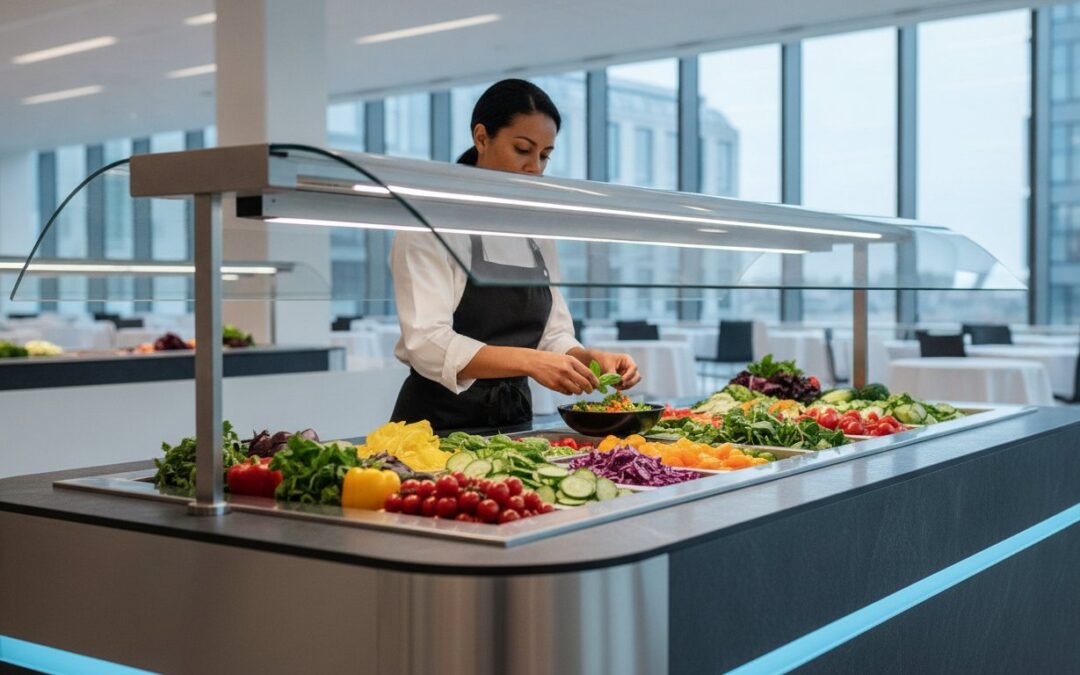
Did you know that refrigeration can account for as much as 50% of the total energy consumption in a food retail environment? It’s a staggering figure that highlights why choosing the right equipment is no longer just about aesthetics. You’re likely facing the triple challenge of rising utility bills, the difficulty of maintaining complex units, and the frustration of standard commercial salad bars that don’t quite fit your specific layout.
We understand that a serving counter must be more than a cold box; it’s a strategic merchandising tool. This guide will help you master the technical and aesthetic requirements needed to enhance food safety and boost impulse sales. You’ll gain the expertise to select reliable, energy-efficient displays that fully comply with 2026 food hygiene regulations and the latest Ecodesign standards. We’ll walk you through everything from bespoke CAD integration to final commissioning, ensuring your investment delivers long-term operational efficiency and a seamless customer experience.
Key Takeaways
- Learn how to transform your display into a strategic merchandising tool that communicates freshness and drives impulse sales through intentional design.
- Understand the technical differences between ventilated and static cooling to maintain the precise temperature stability required for 2026 food hygiene compliance.
- Discover how bespoke commercial salad bars can be engineered to fit unique floor plans while integrating high-performance insulation to lower utility bills.
- Identify the latest advancements in thermal glazing and energy-efficient technologies that help mitigate the impact of rising energy costs in professional environments.
- Gain insight into the logistical advantages of partnering with a UK-based manufacturer for end-to-end project management, from CAD modelling to final site commissioning.
The Strategic Role of Commercial Salad Bars in Modern Foodservice
Modern foodservice is shifting. Customers in 2026 don’t just buy food; they buy into a narrative of freshness, health, and provenance. Your choice of commercial salad bars acts as the primary vehicle for this story. It’s no longer sufficient to treat these units as mere storage. They are high-performance merchandising engines that bridge the gap between the kitchen and the customer’s plate. While the history of the salad bar began with simple buffet lines, today’s units are sophisticated brand statements that communicate a commitment to quality through precision engineering and artisanal aesthetics.
Staff-Assisted vs. Self-Service Models
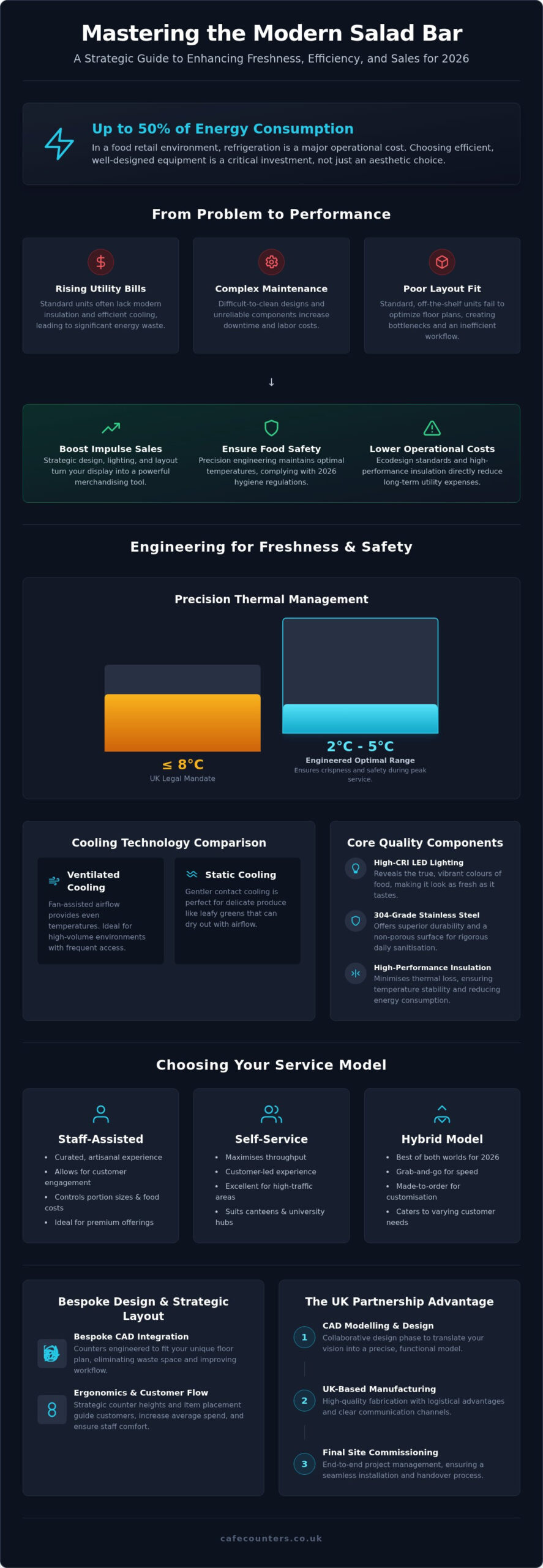
Choosing the right service model depends entirely on your operational goals and customer profile. Staff-assisted counters allow for a curated, artisanal experience. They give your team the chance to engage with the customer, offer recommendations, and control portion sizes, which is vital for managing food costs. In contrast, self-service buffet bars excel in high-traffic environments like university hubs or corporate canteens. They maximise throughput by letting the customer take the lead; if you are developing these facilities as part of a wider office project, you can learn more about Spectrum and their workplace strategy services. Hybrid models are increasingly popular for 2026, featuring sections for pre-packed grab-and-go items alongside a made-to-order station to cater to varying customer speeds.
Integrating Salad Bars into Your Overall Cafe Layout
Strategic placement is a cornerstone of effective cafe layout design. The counter should act as a natural focal point that guides the customer journey from the entrance to the point of sale without creating bottlenecks. Ergonomics play a massive role here. A counter that’s too high creates a physical barrier; one that’s too low can feel unprofessional and lead to staff strain. We prioritise heights that ensure your team can work comfortably during high-volume service while maintaining clear sightlines for the customer. By placing high-margin items at the natural eye level of a standing customer, you can significantly increase the average transaction value while ensuring a smooth, logical flow through your space.
Technical Specifications: Engineering for Freshness and Safety
Precision engineering transforms commercial salad bars from simple furniture into critical food safety equipment. For a professional operator, temperature stability is the non-negotiable foundation of any display. While UK regulations mandate that chilled food must be kept at 8°C or below, we engineer our units to maintain a tighter range of 2°C to 5°C. This ensures that even during peak service hours in busy establishments or high-traffic motorway service stations nationwide, your delicate ingredients remain crisp and safe for consumption.
The choice between ventilated and static cooling often dictates the longevity of your produce. Ventilated cooling uses fan-assisted airflow to provide even temperatures throughout the well, which is ideal for high-volume environments where the unit is accessed frequently. Static cooling, or contact cooling, is gentler on produce that tends to dry out, such as leafy greens or sliced fruits. We often recommend high-CRI (Colour Rendering Index) LED lighting to complement these cooling systems. Unlike standard retail lighting, high-CRI LEDs reveal the true, vibrant colours of your salads and garnishes, making them look as fresh as they taste. This visual appeal is supported by 304-grade stainless steel fabrication, which offers the durability and non-porous surface required for rigorous daily sanitisation.
Precision Thermal Management
Maintaining consistent chilled temperatures requires a deep understanding of thermal dynamics. If your menu expands beyond cold options, incorporating Vision Heated Counters alongside your chilled units allows for a versatile, multi-temperature buffet. High-performance units must also feature efficient pull-down rates. The temperature pull-down rate refers to the time a unit takes to return to its critical safety set point after being loaded with fresh produce or following frequent lid openings. To maintain visibility while preserving these temperatures, we utilise anti-fog glass and precision-angled sneeze guards that protect the food without obstructing the customer’s view. If your layout requires a unique configuration, our team can guide you through the process of designing bespoke serving counters that incorporate these exact technical standards.
Hygiene and Ease of Maintenance
Operational efficiency is won or lost during the end-of-shift clean. We design our commercial salad bars with removable decks and radiused internal corners to eliminate “dirt traps” where bacteria could thrive. By using custom-welded stainless steel joints instead of mechanical fixings, we create a seamless surface that is easier to wipe down. Maintenance is further simplified by ensuring condenser units are easily accessible for routine cleaning. This proactive design approach extends the lifespan of the refrigeration system and ensures your equipment continues to meet the stringent UK Ecodesign standards for energy performance throughout its working life.
Compatibility with Gastronorm (GN) standards is another essential feature. By ensuring every well and refrigerated cupboard is GN-compliant, we enable seamless transitions from the prep kitchen to the service counter. This reduces handling time and maintains the cold chain, further protecting your margins and your customers.
Bespoke Design vs. Standard Units: Tailoring Your Display
Choosing between a standardised unit and a custom-built solution is a pivotal decision that dictates the long-term flow of your professional environment. Standard commercial salad bars offer a reliable, ready-to-deploy option for businesses with conventional floor plans. If your layout follows a straight run, a high-quality deli counter often provides the necessary performance and hygiene standards without the need for extensive modifications. However, the constraints of UK retail spaces, particularly in historic or refurbished buildings, frequently demand a more tailored approach.
Bespoke solutions allow you to maximise restricted footprints that would otherwise result in wasted space. By tailoring dimensions and integrating under-counter storage, you can turn a difficult alcove into a high-margin revenue stream. This level of customisation extends to the service model itself. We often integrate refrigerated grab and go display units directly into the main counter run. This creates a cohesive aesthetic that allows you to serve both the lunchtime rush and customers seeking a bespoke, staff-assisted experience simultaneously.
The Role of CAD Modelling in Precision Manufacturing
We believe that a successful project is rooted in meticulous preparation. Our process utilises advanced CAD modelling to bridge the gap between your initial vision and the finished physical space. This allows you to visualise exactly how the commercial salad bars will sit within your specific layout before a single piece of British steel is cut. These technical drawings are essential for aligning the counter with existing electrical and plumbing requirements, ensuring that integrated drop-in units and gantries fit perfectly. This methodical progression eliminates the stress of on-site adjustments and guarantees a reliable installation.
Material Selection and Aesthetic Customisation
A counter must be as durable as it is visually striking. While we prioritise food-grade stainless steel for its longevity and ease of sanitisation, the exterior finishes offer total aesthetic flexibility. You can choose from rustic wood cladding to evoke an artisanal feel or sleek, high-pressure laminates for a contemporary corporate setting. The worktop material is equally critical; it must withstand heavy commercial use while complementing your brand’s interior palette. By designing bespoke glass structures, we can also enhance product visibility, ensuring that your offerings are showcased without the obstruction of heavy frames or visible fixings. This attention to fine technical detail ensures your investment remains a centerpiece of your business for years to come.
Operational Efficiency: Energy Savings and Sustainability
Operational efficiency in 2026 is defined by how effectively you manage your energy overheads. In food retail environments, refrigeration can account for as much as 50% of total energy consumption. This makes the selection of commercial salad bars a critical financial decision rather than just a logistical one. With UK energy rating tiers from A to G now firmly established, investing in high-performance equipment is the most direct way to protect your profit margins against fluctuating utility costs.
Advancements in thermal glazing and high-density insulation have significantly improved the ability of modern units to retain cold air. For self-service models, the use of night blinds or thermal covers is essential. These simple additions prevent the refrigeration system from working overtime when the front-of-house is closed. We also integrate smart controllers that provide real-time performance monitoring and temperature deviation alerts. These systems allow you to identify potential issues before they lead to food waste or mechanical failure, ensuring your carbon footprint remains as low as possible through intelligent design.
Modern Refrigeration Components
The internal components of your commercial salad bars dictate their daily running costs. High-efficiency fans and variable-speed compressors are standard in our professional builds because they adapt their output to the actual cooling demand rather than running at full power constantly. Low-heat LED lighting further supports this by illuminating your produce without introducing unwanted warmth that the cooling system must then work to remove. While a high-efficiency unit requires a larger initial investment, the reduction in daily kilowatt-hour consumption often results in the unit paying for itself through utility savings within the first 24 months compared to a budget alternative.
Routine Maintenance for Performance Longevity
Long-term energy performance depends on consistent care. Daily and weekly checklists to clear dust from condenser units and ensure unobstructed airflow are vital for maintaining cooling efficiency. One of the logistical advantages of choosing British-made equipment is the faster availability of technical support and replacement parts, which minimises downtime. We also emphasise that professional commissioning is non-negotiable. This final stage of installation ensures that your equipment is perfectly calibrated for your specific site conditions, from ambient room temperature to local ventilation levels. To see how our energy-efficient technologies can be integrated into your project, you can view our full range of professional food display equipment.
Partnering with a UK Manufacturer for Your Project
Investing in commercial salad bars is a significant capital expenditure. While off-the-shelf imports might appear cost-effective initially, they often lack the structural integrity and technical support required for the high-pressure UK hospitality sector. Partnering with a UK-based manufacturer ensures that your equipment is built to withstand the rigours of 24/7 operations while providing a level of quality control that only in-house production can guarantee. Every unit we produce undergoes rigorous testing in our own facility, ensuring that when it arrives on your site, it performs exactly as specified in the initial technical drawings.
A professional site survey is the cornerstone of a successful installation. It identifies potential logistical hurdles, such as restricted access or existing utility locations, before they can cause costly delays. This proactive approach is part of a comprehensive project management service that reduces the complexity of hospitality fit-outs. By choosing British-made stainless steel fabrication, you aren’t just buying a counter; you’re securing a long-term asset that maintains its structural integrity and aesthetic appeal far longer than lighter-gauge alternatives found in budget models.
The TFSE Process: From Concept to Commissioning
We guide you through a methodical, three-stage journey to ensure your vision becomes a physical reality. It starts with an initial consultation and site survey to understand your specific operational needs and customer flow. This leads into the technical design phase, where we use CAD approval to refine the layout and select materials that align with your brand. The process concludes with manufacturing, delivery, and expert on-site installation by specialised engineers who understand the nuances of food display technology. This end-to-end management ensures that every component, from integrated drop-in units to heated gantries, is commissioned to peak performance from day one.
After-Sales Service and Technical Expertise
The relationship doesn’t end once the protective film is removed from the stainless steel. As your Expert Partner, we provide direct access to technical support for future upgrades or routine maintenance. This manufacturer-direct service is invaluable for ensuring your equipment continues to meet evolving food hygiene regulations and energy standards. Regular professional servicing helps maintain the value of your investment and ensures that your commercial salad bars remain a reliable, high-performing centerpiece of your foodservice operation for many years. This steady, reliable hand in a complex field provides the peace of mind you need to focus on your customers.
Future-Proofing Your Foodservice Operation
Selecting the right equipment is a strategic investment in your brand’s longevity and daily profitability. We’ve explored how modern commercial salad bars serve as both high-performance merchandising engines and critical food safety tools. By prioritising precision thermal management and energy-efficient components, you ensure compliance with 2026 regulations while protecting your margins against rising utility costs. Whether you require a standard unit or a tailored solution, the focus must remain on durability and operational flow.
Since 1991, TFSE Products Ltd has acted as a dedicated Expert Partner for the UK hospitality sector. Our in-house manufacturing facility uses advanced CAD modelling to guarantee a perfect fit for every project, backed by a comprehensive national installation and commissioning service. We invite you to leverage our technical expertise to bring your vision to life with precision and reliability. Request a Bespoke Counter Consultation from TFSE Products Ltd today and take the first step towards a more efficient, visually striking serving environment. Your commitment to quality deserves equipment that performs as hard as your team does.
Frequently Asked Questions
What is the difference between a ventilated and a static cooled salad bar?
Ventilated cooling uses fan-assisted airflow to maintain uniform temperatures across the entire display, making it ideal for high-traffic environments where units are frequently accessed. Static cooling relies on contact with chilled surfaces, which helps prevent delicate leafy greens or sliced fruits from drying out. Choosing the right system depends on your specific menu and the expected volume of customer interaction during peak service hours.
How do I ensure my salad bar complies with UK food hygiene regulations?
You ensure compliance by maintaining strict temperature controls and implementing a robust HACCP system as required by the Food Safety Act 1990. Professional commercial salad bars should be engineered to hold food at or below 5°C, providing a safety margin against the legal limit of 8°C. Incorporating precision-angled sneeze guards and ensuring all surfaces are non-porous 304-grade stainless steel further supports these hygiene standards.
Can I customise the exterior finish of my salad bar to match my cafe brand?
Yes, we offer extensive customisation options for exterior finishes to ensure your counter aligns perfectly with your brand’s interior palette. You can choose from high-pressure laminates, rustic timber cladding, or sleek composite stones. These finishes are applied to a durable internal framework, allowing you to achieve a high-end aesthetic without compromising on the practical requirements of a professional kitchen environment.
What are the benefits of choosing a bespoke salad bar over a standard unit?
Bespoke units allow you to maximise every square inch of your retail footprint, especially in oddly shaped or restricted UK high street locations. Unlike standard models, a custom build can integrate specific storage needs and unique service heights that improve staff ergonomics. This tailored approach ensures that your commercial salad bars act as a seamless extension of your workflow rather than a logistical bottleneck.
How much space do I need to allow for staff access behind a deli counter?
We recommend allowing a minimum of 900mm for a single staff member to work comfortably behind a deli counter. For busier environments where two people need to pass each other, increasing this to 1200mm is advisable to prevent operational friction. These dimensions ensure your team can access refrigerated storage and prep areas efficiently during high-volume periods without compromising safety or speed of service.
Are integrated drop-in units better than free-standing buffet bars?
Integrated drop-in units offer a cleaner, more permanent aesthetic that blends into your bespoke counter design for a high-end professional look. Free-standing buffet bars provide greater flexibility for seasonal layout changes or mobile catering requirements. The choice usually depends on whether you value a fixed, architectural focal point or the ability to reconfigure your space to meet changing customer demands.
How long does the manufacturing process take for a custom UK-made counter?
The manufacturing process for a custom UK-made counter typically spans four to eight weeks from the final approval of CAD drawings. This timeline allows for precision fabrication, rigorous factory testing, and the sourcing of specific aesthetic finishes. By keeping production within our UK facility, we maintain strict quality control and can provide reliable delivery schedules that align with your overall project timeline.
What type of lighting is best for displaying fresh salads and deli items?
High-CRI (Colour Rendering Index) LED lighting is the superior choice for displaying fresh salads and deli items. These specialised LEDs reveal the true, vibrant colours of your produce without emitting the heat that can compromise food safety. By choosing a colour temperature that complements your ingredients, you can significantly enhance the visual appeal of your display and drive higher impulse sales.