
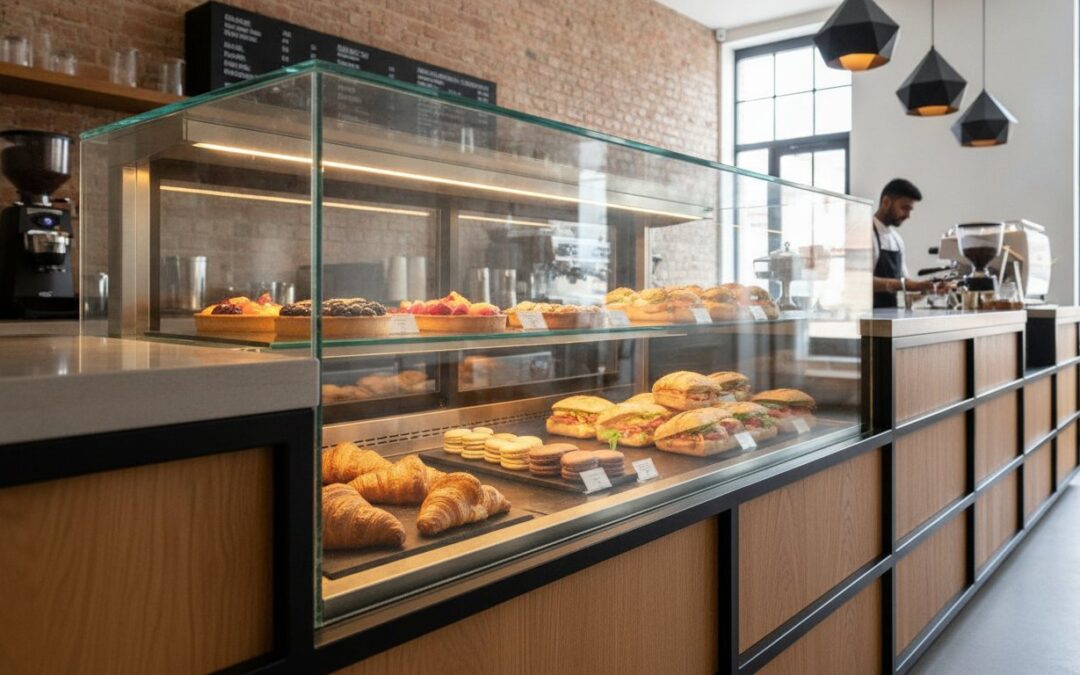
Is your current counter layout inviting a sale or creating a bottleneck? In a high-stakes retail environment, the visual impact of your front of house catering equipment acts as your most powerful silent salesperson. You likely already recognize that poor food visibility and cluttered layouts don’t just look unprofessional; they directly stall your customer flow and lead to missed impulse sales. It’s a common frustration for operators who want their artisanal quality to be reflected in their presentation but find themselves held back by outdated displays and rising energy costs.
This guide will show you how to select and integrate professional equipment that transforms your service area into a high-impact revenue driver. We’ll explore how bespoke counter systems and energy-efficient refrigerated displays can lower your operational costs while meeting strict UK food hygiene standards. You’ll gain a clear roadmap for designing a space that balances aesthetic excellence with the practical durability needed for the 2026 market, ensuring your physical environment supports your long-term hospitality goals and operational efficiency.
Key Takeaways
- Understand how modern front of house catering equipment has evolved into a high-impact revenue driver that prioritizes both visual appeal and long-term energy efficiency.
- Learn how precision-engineered patisserie and deli displays use frameless glass and integrated lighting to maximize product visibility and drive impulse sales.
- Evaluate the operational benefits of bespoke counter systems that eliminate “dead space” and align perfectly with your specific brand aesthetics and floor plan.
- Discover why professional CAD modeling and site surveys are critical for optimizing customer flow and improving ergonomics for your service team.
- Explore the advantages of working with a UK-based manufacturer to ensure total quality control and a seamless transition from design to installation.
What is Front of House Catering Equipment in 2026?
In the hospitality sector, the Front of House refers to every area where customers interact with your brand and staff. While many historical definitions focused on “smalls” like cutlery, plates, or decor, the 2026 landscape defines front of house catering equipment as the high-performance, structural machinery that facilitates service. This includes everything from temperature-controlled display units to the bespoke fabrication of the service counter itself. It’s the physical interface where your kitchen’s artisanal craft meets the customer’s expectations of quality and hygiene.
The service counter is no longer just a piece of furniture; it’s the engine room of your hospitality revenue. A well-engineered counter system manages the transition of food from the back-of-house to the guest while maintaining perfect food safety and aesthetic appeal. By moving away from generic, off-the-shelf units and toward integrated, durable installations, operators can eliminate inefficient “dead space” and ensure every square inch of their floor plan is optimized for sales and workflow.
The Core Categories of FOH Equipment
Modern service environments require specialized solutions to handle diverse menus and demanding customer flows. We categorize these into three primary functional areas:
- Refrigerated Displays: This category includes high-visibility Patisserie Displays, Deli Counters, and Salad Bars. These units must balance precise temperature control with maximum transparency to keep food fresh and vibrant.
- Heated Solutions: Specialized vision heated counters and Heated Gantries ensure hot food remains at safe, regulated temperatures without drying out or losing its visual texture.
- Ambient and Bespoke Counters: These form the structural foundation of your shop. Bespoke Serving Counters and Stainless Steel Back-bar Units are engineered to fit specific layouts, providing the necessary workflow for staff while housing Integrate Drop-in Units and Grab & Go Displays.
Why Display Technology Matters for Your Bottom Line
Visual appeal is the primary driver of impulse purchases in food retail. In 2026, display technology has advanced to include ultra-clear, frameless glass and high-CRI (Color Rendering Index) LED lighting that mimics natural daylight. These technical features remove the physical and visual barriers between the customer and the product. When a guest can see the fine textures of a pastry or the vibrant colors of a fresh salad without the distraction of bulky metal frames or dim lighting, their willingness to spend increases significantly.
Visual merchandising in the context of commercial food display is the strategic arrangement and illumination of food products within specialized equipment to trigger an immediate emotional “buy” response from the customer. By investing in high-quality front of house catering equipment, you aren’t just buying a fridge or a shelf; you’re investing in a sophisticated sales tool that works 24/7 to boost your average transaction value and reinforce your brand’s commitment to quality.
The Impact of Professional Food Display Counters on Sales
Professional presentation is the deciding factor in the critical five seconds a customer spends evaluating your counter. High-quality front of house catering equipment utilizes frameless glass and precision-engineered lighting to remove visual noise, placing the focus entirely on the food. Consider the difference between a standard flat shelf and a tiered patisserie display. Tiered units allow for vertical merchandising, ensuring that products at the back are just as visible as those at the front, which significantly increases the “pick-up” rate during peak hours.
Temperature consistency is equally vital for maintaining what we call “food appeal.” If a chilled product begins to sweat or a salad loses its crispness due to poor airflow, the perceived value plummets immediately. This is why following established Principles of kitchen layout and design is essential even in public-facing areas. Strategic placement of refrigerated grab and go display units in high-footfall zones allows customers to self-serve quickly, capitalising on impulse buying without requiring staff intervention. This shift in front of house catering equipment strategy directly correlates with higher average transaction values in fast-paced retail environments.
Refrigerated Displays: Freshness Meets Aesthetics
Freshness depends on more than just cold air. For a deli counter, humidity control is paramount to prevent meats and cheeses from drying out under display lights. You must also decide between integral refrigeration, which is easier to install, and remote systems that move heat and noise away from the service area. While open-fronted units offer the fastest access for customers, glass-fronted designs provide superior energy efficiency and better temperature stability for delicate products.
Heated Displays: Maintaining Quality for Hot Service
Maintaining hot food quality requires a delicate balance of heat and moisture. Dry heat units are excellent for crispy products like pasties, while humidified counters prevent delicate dishes from becoming tough or rubbery. By using Vision Heated Counters, operators achieve a consistent thermal curtain across the entire gantry. This technology uses energy-efficient heating elements and thermal glass to keep food at the perfect serving temperature while reducing ambient heat loss into the room. If you’re looking to upgrade your display strategy, you can view our full range of bespoke counters to see how we combine engineering with artisanal design.
Bespoke vs. Off-the-Shelf: Choosing Your Front of House Strategy
Standardized units often present an attractive entry point for new ventures, yet they frequently lead to the “dead space” trap. In a professional service environment, every millimeter of your footprint must justify its existence. Off-the-shelf front of house catering equipment rarely aligns perfectly with the unique architectural quirks of UK commercial properties, resulting in awkward gaps that collect dust rather than revenue. By contrast, bespoke solutions allow for a seamless transition from wall to wall, maximizing your display area and ensuring a cohesive brand experience.
The initial investment in custom fabrication is often offset by a superior Return on Investment (ROI). Space optimization means you can display more products or accommodate a more efficient queuing system. Research into the Impact of Visual Merchandising suggests that a deliberate, tailored layout significantly influences consumer purchasing paths. When your equipment is designed around your specific workflow, you reduce staff friction and increase throughput during peak hours. It’s a shift from merely housing food to actively engineered selling.
Quality also plays a decisive role in the bespoke vs. import debate. While budget imports might look acceptable on day one, they often lack the structural integrity required for a high-volume environment. UK-manufactured Stainless Steel Back-bar Units are engineered for longevity, using higher-grade materials that withstand the rigors of daily commercial use. This artisanal approach to manufacturing ensures that your investment remains a functional asset for years, rather than an operational liability that requires frequent repair or replacement.
When to Invest in Bespoke Serving Counters
Bespoke Serving Counters are essential for sites with non-standard floor plans where a modular unit would create a bottleneck. If your brand positioning is high-end, the aesthetic finish of your counter is non-negotiable. Custom builds allow you to integrate multiple functions into a single, streamlined unit. You can house a coffee station, a till point, and chilled Patisserie Displays within one continuous counter, creating a clean visual line that reinforces your professional standards and simplifies the customer journey.
Drop-in Units: The Hybrid Solution
Integrate Drop-in Units offer a sophisticated middle ground between standard and bespoke. These units provide a custom, high-end look by being recessed into a counter carcass, yet they utilize standardized internal components for reliability. This hybrid approach allows for incredible flexibility; if your menu shifts seasonally from salads to hot soups, you can swap out drop-in components without rebuilding your entire counter. Seamless installation requires precise CAD design to ensure the units sit flush with the counter surface, maintaining both hygiene and aesthetics.
Planning and Ergonomics: Designing for Flow and Efficiency
Ergonomics play a decisive role in long term operational efficiency. For example, a counter depth exceeding 800mm may lead to staff fatigue as they reach for products, while a height that doesn’t account for modern till systems can disrupt eye contact with guests. These details dictate the speed of your service and the comfort of your team. Our design process ensures that every piece of equipment, from Heated Gantries to Deli Counters, is positioned to minimize unnecessary movement and maximize output.
Compliance with the Food Safety and Hygiene (England) Regulations 2013 is a non negotiable standard in our manufacturing process. We integrate HACCP principles into the very structure of our counters, ensuring that temperature critical zones are isolated and easy to monitor. This proactive design philosophy protects your Food Hygiene Rating and ensures your equipment meets the expectations of Environmental Health Officers who check for standards such as BS EN 1276 for surface sanitization.
The Role of CAD Modelling in FOH Design
CAD modelling allows you to visualize the theatre of food service in a digital environment. It provides a three dimensional preview of how light hits your Patisserie Displays and how customers will navigate your Grab & Go Displays. By identifying potential service bottlenecks during the digital phase, we can adjust the layout to ensure a smooth flow during the busiest periods of the day. CAD modelling ensures that every component fits the physical space with millimetre precision, which virtually eliminates costly installation errors and on site modifications.
Hygiene and Maintenance: Material Matters
Hygiene and maintenance are simplified through the intelligent use of materials. Food grade stainless steel remains the industry standard for Stainless Steel Back bar Units due to its non porous nature and resistance to corrosion. For high traffic front of house areas, we prioritize easy clean surfaces like Corian or high pressure laminates that can withstand rigorous sanitization. Additionally, we design our units with accessible components, allowing for routine servicing without the need to dismantle the entire service line. To begin your layout optimization, you can book a professional site survey with our technical team today.
UK Manufacturing: The TFSE Advantage for Front of House
Choosing the right partner for your front of house catering equipment involves more than just selecting a unit from a catalogue. It requires a collaborator who understands the nuances of UK hospitality and possesses the technical capability to execute complex designs. By maintaining an in-house UK manufacturing facility, we provide a level of quality control that is simply unattainable through imported alternatives. This artisanal approach ensures that every weld, joint, and glass fitting meets our exacting standards before it ever leaves the factory floor. Furthermore, local production significantly reduces the carbon footprint of your project, aligning your operational needs with modern environmental responsibilities.
Our heritage is built on a foundation of reliability and expertise. Founded in 1991, TFSE Products Ltd has spent over three decades navigating the unique pressures of the commercial catering industry. We act as a steady, reliable hand, guiding clients from the initial conceptual stage through to a finished, physical space. This longevity in the market has allowed us to refine our end-to-end service, ensuring that the transition from a CAD drawing to a fully operational service counter is methodical and transparent. You aren’t just purchasing equipment; you’re investing in a proven process managed by seasoned professionals.
Our Manufacturing and Installation Process
The journey from design to reality is a physical process of precision engineering. Once the technical planning is finalised, our UK facility begins the build using high-grade materials selected for their durability and performance. Professional installation is the final, critical step. Our team doesn’t just place the units; they ensure that every refrigerated and heated element is perfectly calibrated to its environment. During commissioning, we verify that all systems operate at peak efficiency, handing over a service area that is ready to generate revenue from the moment we leave the site. This comprehensive oversight eliminates the stress of coordinating multiple contractors and ensures total system integrity.
Versatility Across Sectors
While our roots are in high-end retail and cafes, our expertise extends across a wide variety of professional environments. We adapt our front of house catering equipment to meet the specific demands of corporate dining, educational facilities, and high-volume public service sectors. Whether you require a sleek, minimalist deli counter for a London office or a rugged, high-capacity salad bar for a university refectory, our solutions are tailored to the specific volume and aesthetic of your site. This versatility is a marker of our deep-seated experience in the regional market. If you are ready to bring your vision to life with a partner who values precision and quality, contact TFSE Products for a bespoke counter consultation today.
Elevating Your Service Standard for 2026 and Beyond
Selecting the right front of house catering equipment is a strategic decision that bridges the gap between culinary excellence and commercial success. By prioritizing bespoke design over generic units, you ensure every square inch of your service area works to maximize customer flow and minimize operational friction. High-performance displays do more than just hold food; they act as your primary sales tool, using precision lighting and temperature control to protect both your margins and your reputation for quality.
Since 1991, TFSE Products Ltd has served as an Expert Partner to the UK hospitality industry, delivering end-to-end solutions from our in-house manufacturing facility. Our process combines comprehensive CAD design and meticulous site surveys with professional installation and commissioning to guarantee a seamless project delivery. We invite you to design your perfect front of house with TFSE Products Ltd and transform your vision into a durable, high-impact reality. We look forward to helping you set a new standard for service excellence in your physical space.
Frequently Asked Questions
What is the most essential front of house catering equipment for a new cafe?
The most essential front of house catering equipment for a new venture includes a bespoke serving counter and a high-visibility refrigerated display, such as a patisserie or grab-and-go unit. These items form the structural and visual foundation of your service area, dictating both customer flow and impulse sales. You’ll also require stainless steel back-bar units to house coffee machines and preparation tools with maximum ergonomic efficiency.
How do I choose between a refrigerated deli counter and a patisserie display?
Choose a deli counter if your menu includes proteins, cheeses, or salads that require specific humidity levels and gentle airflow to remain fresh. Patisserie displays are designed for high-impact vertical merchandising, utilizing tiered shelving and ultra-clear glass to showcase cakes and pastries. The decision rests on whether your products are moisture-sensitive or if they benefit more from maximum visual exposure.
Are bespoke catering counters more expensive than modular units in the long run?
Bespoke catering counters often provide a superior return on investment compared to modular units. While the initial cost may be higher, they eliminate “dead space” and are tailored to your specific floor plan, which increases your total display capacity and speeds up service. Additionally, UK-manufactured bespoke equipment uses higher-grade materials that offer greater durability than mass-produced budget imports.
What are the UK regulations for heated food display temperatures?
In England, the Food Safety and Hygiene Regulations 2013 require hot food to be held at a temperature of 63°C or above. Our vision heated counters and heated gantries are precision-engineered to maintain this thermal threshold consistently across the entire gantry. This ensures your business remains compliant with Environmental Health Officer inspections while protecting the texture and quality of your food.
How can I improve the energy efficiency of my front of house displays?
You can improve energy efficiency by selecting equipment that features thermal glass, high-CRI LED lighting, and high-density insulation. Opting for remote refrigeration systems also helps by moving heat-generating components away from the service area, reducing the load on your air conditioning. Regular maintenance, such as cleaning condenser coils, is also vital for keeping front of house catering equipment running at peak efficiency.
What is included in a professional catering equipment installation service?
A professional installation service includes a comprehensive site survey, technical CAD planning, and the physical integration of units into your existing utilities. Our team handles the calibration of all refrigeration and heating elements to ensure they meet operational standards from day one. Commissioning involves a final handover where we verify that every component is fully operational and safe for staff use.
Can I integrate my existing branding into a bespoke counter design?
Yes, bespoke manufacturing allows for total aesthetic customization to match your brand identity. We utilize CAD modelling to incorporate specific materials such as Corian, natural stone, or unique laminates that align with your decor. This artisanal approach ensures that your service counter isn’t just a functional tool, but a centerpiece that reinforces your brand’s professional image.
How long does the bespoke manufacturing process take for UK catering equipment?
The timeline for bespoke manufacturing depends on the complexity of your project and the specific materials required. Because we operate our own UK-based facility, we can offer more predictable lead times and tighter quality control than companies relying on international shipping. We provide a structured project schedule following the initial design phase, guiding you through every step from CAD approval to on-site installation.