
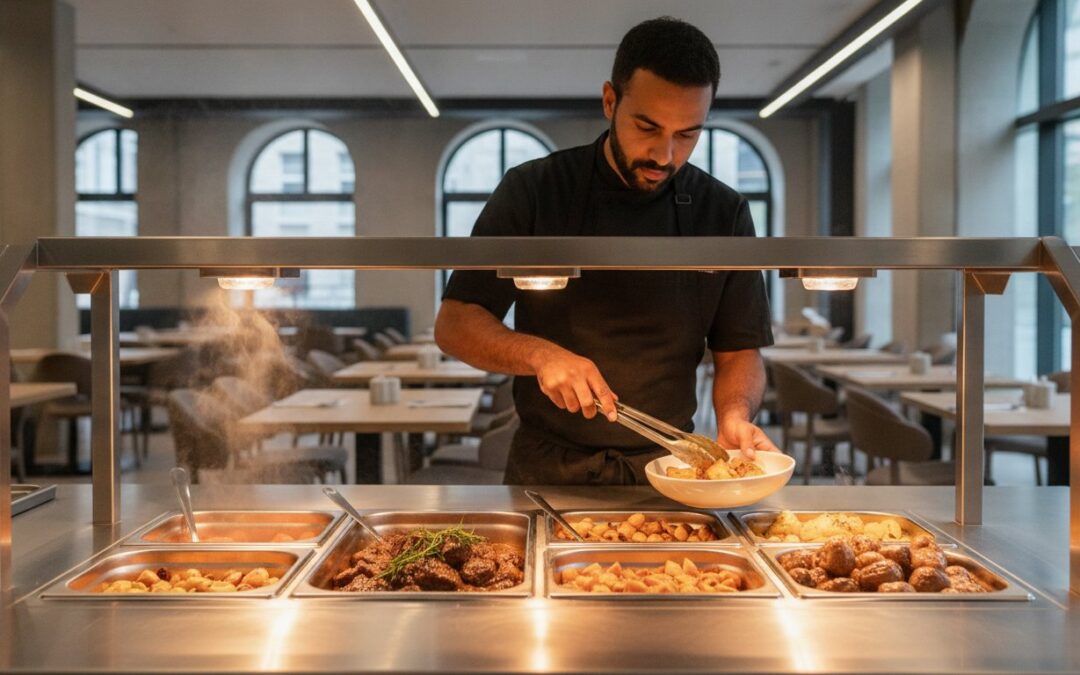
A lukewarm plate isn’t just a culinary disappointment; it’s a silent threat to your reputation and your bottom line. You’ve likely spent years perfecting your recipes, only to watch them lose their texture or dry out while you struggle with how to keep food warm on a serving line effectively. It’s frustrating to see high energy bills climb while you worry if your current setup will pass the next HACCP inspection. You deserve a serving area that reflects the quality of your kitchen and the pride you take in your craft.
This guide provides the technical expertise you need to master hot holding while maintaining the artisanal quality your customers expect. We’ll explore the precision of integrated drop-in units, the efficiency of heated gantries, and the operational strategies required to stay fully compliant with UK food safety laws, including the critical 63°C hot holding threshold. We’ll examine how specific equipment choices lead to long-term operational efficiency, ensuring you can balance thermal engineering with aesthetic presentation to create a reliable, high-performing serving environment.
Key Takeaways
- Ensure total compliance with UK food safety standards by maintaining a consistent internal temperature of 63°C or above using precision-engineered equipment.
- Identify the functional differences between wet and dry heat solutions to select the most efficient method for your specific menu requirements.
- Master technical strategies for how to keep food warm on a serving line while preserving original textures and preventing moisture loss during service.
- Explore how bespoke serving counters and CAD-modelled designs can eliminate operational bottlenecks and improve energy efficiency in high-traffic environments.
The Fundamentals of Safe Hot Holding on a Serving Line
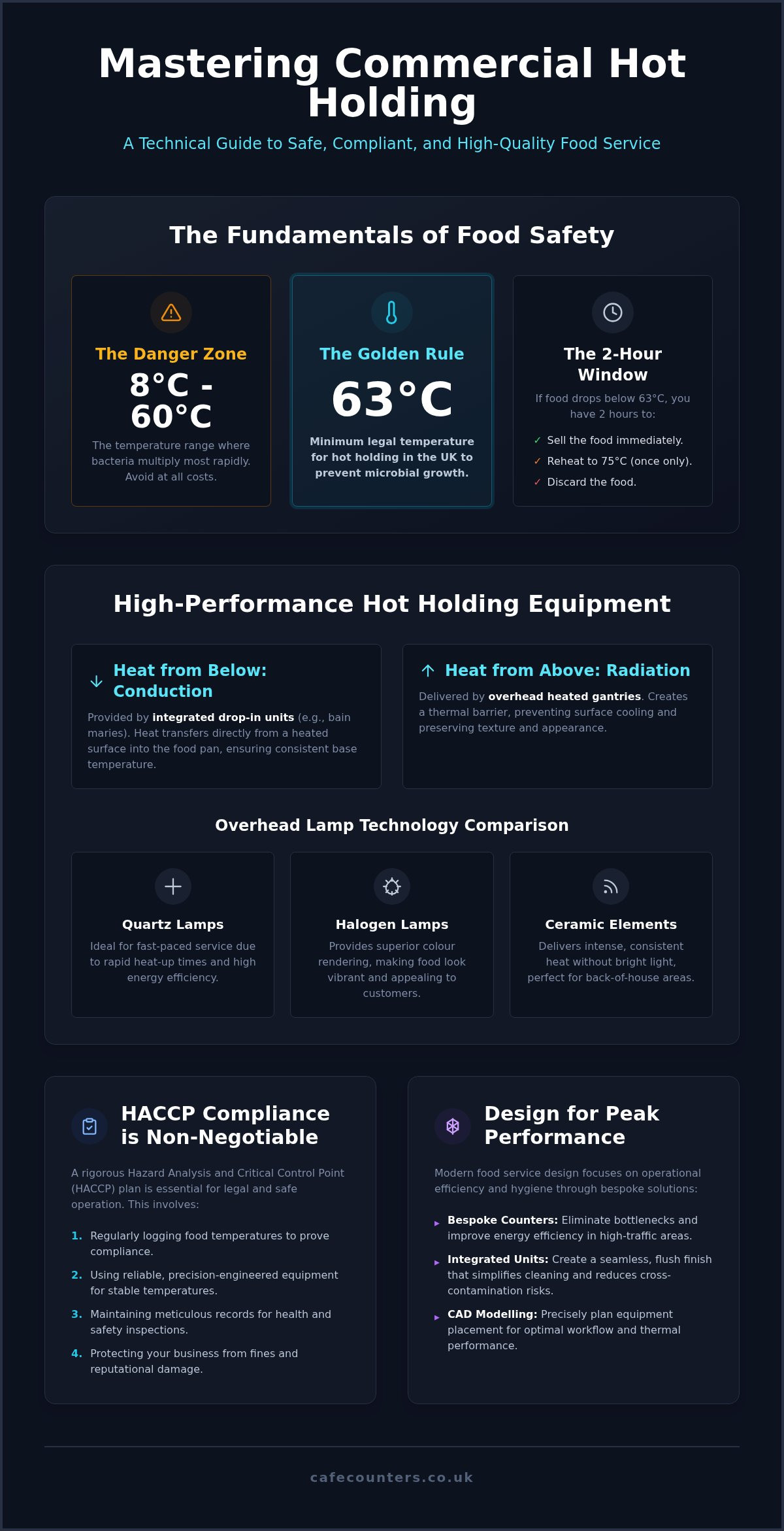
Hot holding is the technical process of maintaining pre-cooked food at a temperature that prevents microbial growth while preserving culinary integrity. In a commercial environment, figuring out how to keep food warm on a serving line isn’t just about customer satisfaction; it’s a legal obligation. According to the UK Food Standards Agency (FSA), hot food must be kept at or above 63°C throughout the duration of service to remain safe for consumption.
Failure to maintain this threshold places food directly in the “Danger Zone,” which is the temperature range between 8°C and 60°C where bacteria multiply most rapidly. Precision is your only defense against waste and risk. If your equipment fails and the temperature drops below the legal limit, you have a maximum of two hours to either sell the food, reheat it to a safe internal temperature of 75°C (permitted once only), or discard it entirely. Understanding these limits is the first step toward a professional, compliant service.
Understanding the Science of Heat Transfer
Effective thermal management relies on a clear understanding of conduction and convection. Conduction involves direct heat transfer from a heated surface, such as a base plate or a heated well, into the GN pan. Convection uses air or steam to circulate heat around the product. Professional food warmers are designed to mitigate the cooling effects of ambient room temperature, which can fluctuate wildly in busy dining halls or drafty retail spaces. We specify high-grade stainless steel for our bespoke units because it offers the perfect balance of thermal conductivity and hygienic durability, ensuring heat remains concentrated where it’s needed most.
HACCP Compliance for Hot Food Service
Maintaining a rigorous HACCP (Hazard Analysis and Critical Control Point) plan is non-negotiable for any modern kitchen. You must log temperatures regularly to prove that your service remains compliant and safe. Mastering how to keep food warm on a serving line also involves meticulous record-keeping to satisfy local authority inspectors. Modern solutions like Vision Heated Counters simplify this process by providing stable, easily monitored environments that reduce the manual burden on your staff. Failing a temperature spot-check can lead to heavy fines or damage to your reputation, making reliable, UK-manufactured equipment a fundamental business protection.
Essential Equipment for Commercial Hot Food Service
Selecting the right hardware is the foundation of a high-performance kitchen. When you’re managing a commercial project, understanding how to keep food warm on a serving line requires a multi-layered approach that addresses heat from both above and below. Standard bain maries provide the necessary base heat through water or air, but they often lack the power to maintain surface temperatures on their own in high-traffic environments. We specify high-grade materials and precision engineering to ensure your equipment stands up to the rigours of daily service.
The Role of Heated Gantries and Lamps
Overhead heated gantries are indispensable for professional service. They act as a thermal barrier, preventing heat from escaping the top of the dish. Without this top-down energy, the surface of your food can quickly drop into the Danger Zone, even if the base of the pan remains hot. Choosing the right lamp type is a technical decision that affects both performance and presentation:
- Quartz Lamps: These offer rapid heat-up times and high energy efficiency, making them ideal for fast-paced service environments.
- Halogen Lamps: These provide superior colour rendering, making your food look vibrant and appetising to customers.
- Ceramic Elements: These provide intense heat without the bright light, which is useful for specific back-of-house holding areas.
We often recommend a strategic positioning of these lamps to ensure full coverage across the GN pans without drying out delicate items like sauces or proteins. This meticulous attention to detail ensures your food looks as good as it tastes.
Integrated Drop-in Units for a Seamless Finish
Modern food service design favours integrated drop-in units over standalone appliances. These units are built directly into the counter, providing a flush, professional finish that enhances both hygiene and customer flow. Because there are no gaps between the equipment and the counter surface, cleaning becomes a much simpler task, reducing the risk of cross-contamination. Our team can help you design bespoke serving counters that integrate these technologies seamlessly into your workspace.
Installing these units requires technical precision. We use CAD modelling to ensure every component fits perfectly within your workflow, accounting for ventilation requirements and electrical access. This methodical approach ensures that your equipment operates at peak efficiency for years to come. By selecting equipment designed for durability and performance, you master the challenge of how to keep food warm on a serving line while protecting your investment and your reputation.
Comparing Dry Heat and Wet Heat Solutions
Determining the most efficient method for how to keep food warm on a serving line requires a technical evaluation of your menu’s specific moisture requirements. Professional operators generally choose between wet heat and dry heat systems, each offering distinct advantages in thermal stability and operational speed. While both methods are capable of maintaining the legal 63°C threshold, the choice often dictates the long-term texture and quality of the food being served.
Wet Heat Bain Maries: Gentle and Humid
Wet heat bain maries utilize a water jacket to surround the GN pans with consistent, humid heat. This method eliminates hot spots, making it the preferred choice for delicate items like béchamel sauces, custards, or thick stews that are prone to scorching. Following FDA guidelines for safe buffet service, maintaining water levels is critical for safety and thermal performance. However, this system demands more rigorous maintenance; regular descaling is necessary to prevent limescale buildup on heating elements, which can otherwise lead to energy inefficiency and equipment failure.
Dry Heat Systems: Rapid and Robust
Dry heat systems use fan-assisted or static air heating to reach service temperatures. These units are significantly faster to heat up than their water-based counterparts, allowing for greater flexibility during sudden peaks in demand. Because they don’t require water, they eliminate the risk of steam burns for staff and simplify the cleaning process by removing the need for drainage. Dry heat is the superior option for fried foods, roasted meats, and pastry-based items where moisture would compromise the crispness of the product.
In terms of energy consumption, dry heat units often prove more efficient as they don’t lose energy to evaporation. However, for a high-end bespoke serving counter, we often recommend a hybrid approach. Using CAD modeling, we can design a layout that incorporates both wet and dry heat sections, ensuring every dish on your menu is held at its optimal state. This level of customization ensures that your operational strategy is as robust as the British-made stainless steel housing it.
Operational Strategies to Maintain Food Quality
High-performance equipment is only half the battle. To truly master how to keep food warm on a serving line, your kitchen team must implement rigorous operational strategies that go beyond simply setting a thermostat. Batch cooking is the most effective way to maintain food integrity throughout a busy service. By preparing smaller quantities more frequently, you reduce the time food spends under heat lamps, preventing the degradation of texture and flavour. This proactive approach ensures that the last customer of the day receives the same high-quality meal as the first; to see how professional providers maintain these standards in practice, check out Catering Kraków.
Evaporation is a constant challenge in professional environments. High-airflow areas and intense heat lamps can quickly strip moisture from proteins and vegetables, leading to a tired and unappealing display. In a high-quality heated food display, the technical balance between temperature and humidity must be managed with precision. While some amateur guides suggest using foil to retain moisture, this practice obscures your product and often creates a “soggy” finish that ruins the crust of fried items. Instead, use precision-fit stainless steel lids for liquids and implement a strict rotation schedule. Regular stirring is also essential; it redistributes heat and prevents the bottom of the pan from scorching while the top surface begins to cool.
Presentation and Merchandising
A serving line shouldn’t just be functional; it should be a powerful merchandising tool that drives revenue. Angled displays are a standard for modern service because they increase visibility and encourage impulse purchases. Lighting plays a dual role in this environment. Professional lamps don’t just illuminate the dish; they provide critical secondary heat that maintains the surface temperature of the food. This top-down energy is vital for keeping items like roasted meats or pastries crisp. However, increased visibility means your food must look impeccable at all times. Use the “First In, First Out” (FIFO) principle to ensure older batches are served first, and use fresh garnishes to keep displays looking vibrant.
Your heated units should never look like an afterthought. When integrated into a bespoke cafe counter, these technical components become part of a seamless, high-end aesthetic that reassures customers of your professionalism and attention to detail. This methodical approach to design and operation creates a reliable, high-performing serving environment that stands up to the pressures of commercial retail.
Effective hot holding is a combination of the right hardware and meticulous staff training. If you’re ready to design a space that prioritises both safety and style, contact our team to discuss your project and view our range of bespoke serving counters.
Designing a High-Performance Bespoke Serving Counter
A truly effective serving area is the result of meticulous planning and technical integration. When you move beyond standalone appliances and begin designing a bespoke solution, the challenge of how to keep food warm on a serving line becomes a question of engineering and workflow. Choosing a UK-based manufacturer ensures a level of quality control and artisanal pride that’s often lost in mass-produced equipment. By handling production internally, we maintain strict oversight of every weld and electrical component, ensuring your counter is built for the specific pressures of your environment.
The integration of diverse temperature zones is a hallmark of modern food service. Many high-traffic environments now require a single, cohesive counter that combines refrigerated grab and go units with heated displays. This requires sophisticated thermal separation to ensure that the heat from your bain maries doesn’t compromise the efficiency of your chilling systems. Professional commissioning is vital here; it ensures that every component is calibrated to operate at peak performance from day one, protecting your equipment’s longevity and your food’s safety.
The Design Process: From CAD to Installation
Our design process begins with a detailed site survey to identify potential ergonomic bottlenecks and power requirements. We use CAD modelling to create a precise digital twin of your counter before a single sheet of stainless steel is cut. This allows us to visualize how your team will move behind the line and how customers will interact with the display. Customization extends to the finish as well; we match our high-grade stainless steel fabrication to your brand’s aesthetic, ensuring a professional look that builds customer trust. This technical precision directly impacts your bottom line by incorporating energy-efficient technology that reduces long-term overheads.
Why TFSE Products Ltd is Your Expert Partner
With a heritage dating back to 1991, we’ve spent over three decades refining our approach to British catering equipment manufacturing. We don’t just supply units; we provide comprehensive project management that guides you from the initial concept to final commissioning. Our focus on durability and professional performance is tailored specifically for the UK hospitality sector, where reliability is the cornerstone of success. We understand the unique pressures you face, and we position ourselves as a collaborative ally to bring your vision to life.
By choosing a partner that values internal production and geographic origin, you’re investing in a steady, reliable hand for your project. We take the stress out of commercial installations by providing a proven, professional process that prioritises quality over speed. Whether you’re managing a public service facility or a commercial retail space, our bespoke counters provide the technical foundation you need to master how to keep food warm on a serving line with total confidence.
Mastering the Art of Thermal Precision
Mastering the technical requirements of how to keep food warm on a serving line is a significant step toward operational excellence. By combining the right hardware with disciplined operational strategies, you protect your culinary standards and ensure total compliance with UK safety regulations. Whether you choose the gentle humidity of a wet heat bain marie or the rapid response of a dry heat system, your equipment must be capable of maintaining that critical 63°C threshold without compromising food texture.
With over 35 years of hospitality expertise, our team understands the unique pressures of commercial service. Our dedicated UK-based manufacturing facility utilizes CAD precision modelling to craft bespoke solutions that integrate seamlessly into your workflow. This meticulous approach eliminates the stress of installation and guarantees a professional finish that stands the test of time. Consult with TFSE Products Ltd for bespoke heated serving solutions and let us provide the technical expertise to bring your vision to life with reliability and style.
Frequently Asked Questions
What is the legal hot holding temperature for food in the UK?
In the UK, the Food Standards Agency (FSA) requires that hot food must be kept at a temperature of 63°C or above. This legal threshold ensures that bacteria don’t multiply to dangerous levels during service. Maintaining this temperature consistently is a non-negotiable part of your kitchen’s food safety management system. Our professional heated units are precision-engineered to maintain this exact heat level throughout the busiest service periods.
How long can I keep food warm on a serving line before it becomes unsafe?
While food can technically be held at 63°C indefinitely for safety, its culinary quality will degrade over time. If the temperature drops below the legal 63°C limit, you can only keep it for a maximum of two hours. After this period, the food must be discarded or reheated to 75°C and sold immediately. This single reheat is only permitted once to ensure the safety and integrity of your product.
Will a heated gantry cook my food further or just keep it warm?
A professionally calibrated heated gantry is designed to maintain surface temperature, not to continue the cooking process. However, if the overhead lamps are positioned too low or set to an excessively high intensity, they can eventually dry out or overcook delicate items. We use CAD modelling to ensure that our gantries provide optimal heat coverage that protects the food’s texture without compromising its original cooked state.
Is dry heat or wet heat better for keeping vegetables warm?
Wet heat is generally the superior choice for vegetables. The humid environment created by a water-based bain marie prevents vegetables from shrivelling or losing their natural moisture. Dry heat units are often too aggressive for greens and root vegetables, leading to a loss of colour and a woody texture. Using a wet heat system ensures your vegetables remain vibrant and appetising for the duration of your service.
How do I prevent my food from drying out on the serving line?
Mastering how to keep food warm on a serving line without losing moisture requires a combination of the right equipment and smart operational habits. You should use precision-fit stainless steel lids for liquids and implement a strict batch-cooking schedule to reduce the time items spend under heat. Regularly stirring sauces and stews redistributes heat and moisture, preventing the surface from forming a skin or the bottom from scorching.
Do I need a special electrical supply for a commercial heated counter?
Many smaller or standalone units operate on a standard 13A plug, but larger bespoke counters often require a more robust electrical supply. Depending on the number of integrated drop-in units and heated gantries, you might need a 16A or 32A single-phase supply, or even a three-phase connection for high-capacity installations. We conduct detailed site surveys to identify these requirements early in the design process to ensure a seamless installation.
Can I integrate a heated display into an existing wooden counter?
Yes, it’s entirely possible to integrate professional heated equipment into wooden structures, provided you use the correct technical safeguards. Wooden counters require specific heat shielding and adequate ventilation to prevent the timber from warping or becoming a fire hazard. Our team uses CAD modelling to design bespoke housings that protect your existing furniture while allowing the heated units to operate at peak efficiency without overheating.
How often should I record temperatures for HACCP compliance?
Best practice for HACCP compliance involves recording food temperatures at the start of service and then at least every two hours. This frequency allows you to identify and rectify any equipment fluctuations before they breach legal safety limits. Keeping a meticulous log is essential for local authority inspections and demonstrates your commitment to food safety. Modern digital displays on our counters make this monitoring process much simpler for your staff.