
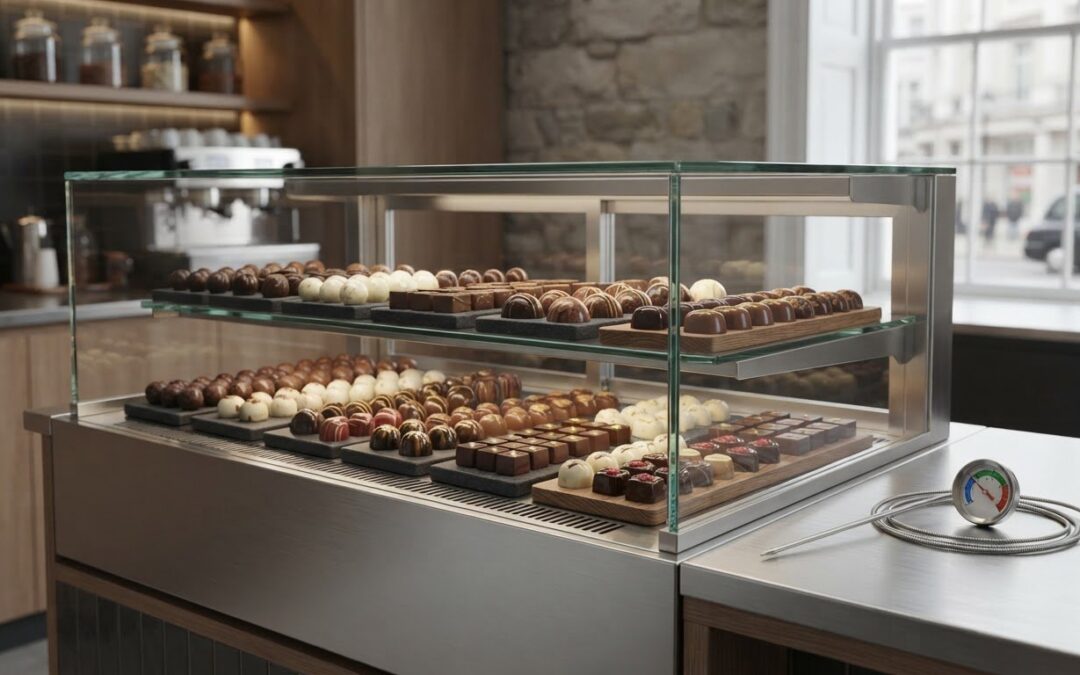
The coolest cabinet isn’t always the best choice for chocolate. The right chocolate display cabinet temperature depends on what you’re serving: most chocolate is commonly stored around 15°C to 18°C, while products with perishable fillings may have different chilling and food-safety needs. Choosing the wrong conditions can lead to bloom, condensation or softened finishes, affecting both handling and presentation.
There isn’t one setting that works for every product. This 2026 UK guide explains how to check the needs of different chocolates, compare ambient and refrigerated displays, and plan a cabinet around your menu and service style. It also covers what to monitor, why temperature stability and humidity matter, and when to check manufacturer instructions or current Food Standards Agency guidance. Set display conditions for the product, not simply for the cabinet.
Key Takeaways
- There’s no single ideal chocolate display cabinet temperature for every product; check each item’s ingredients and handling needs before setting display conditions.
- Use chocolate-maker guidance to confirm suitable storage conditions, and consider how temperature stability and humidity may affect appearance and texture.
- Compare ambient, refrigerated and controlled display options against product suitability, condensation risk and how customers are served.
- Build a consistent setup routine: review products, follow equipment instructions, use a suitable thermometer and include temperature checks in daily operations.
- Choose a cabinet around your product mix, display duration, available space, cleaning needs and verified temperature requirements.
Chocolate display cabinet temperature: why the right setting matters
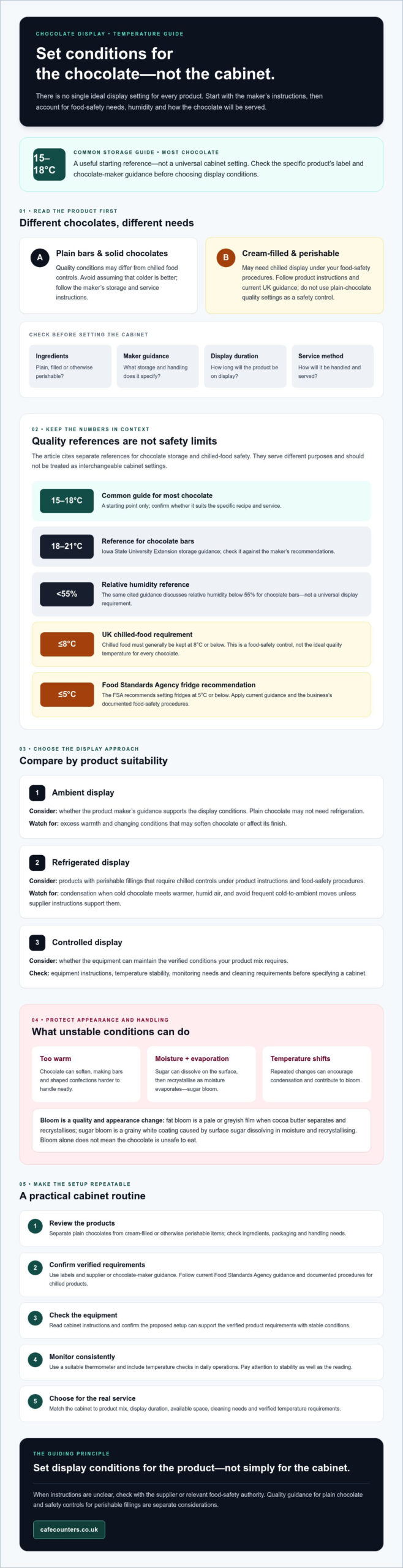
There’s no single ideal setting for every chocolate product. A commonly cited storage guide for most chocolate is 15°C to 18°C, but the chocolate maker’s instructions should determine whether that range suits a particular recipe and service. The chocolate display cabinet temperature needs to support product quality without overlooking any food-safety controls it requires.
A chocolate display cabinet is display equipment selected to present chocolate under conditions suited to the product; general refrigerated storage is designed primarily to keep food cold. That distinction matters: colder isn’t automatically better for plain chocolate, and a display that suits bars may not meet the needs of a perishable filling.
What can happen when chocolate is too warm or temperature fluctuates?
Excess warmth can soften chocolate, making bars and shaped confections harder to handle neatly. Surface changes can also affect the finish customers see. Repeated shifts between cool and warm conditions may encourage condensation, while temperature instability can contribute to bloom.
Fat bloom appears as a pale or greyish film when cocoa butter separates and recrystallises on the surface. Sugar bloom is a grainy white coating that forms when moisture dissolves surface sugar and it recrystallises as the moisture evaporates. Either can make chocolate look less appealing, though bloom alone doesn’t mean it is unsafe to eat. This explanation of fat and sugar bloom outlines the difference.
Why does the product decide the temperature?
Plain chocolate bars and many solid confections have different requirements from chocolates filled with cream, custard or other perishable ingredients. Perishable fillings may require chilled display conditions under the business’s food-safety procedures. In the UK, chilled food must generally be kept at 8°C or below; the Food Standards Agency recommends setting fridges at 5°C or below. These controls address food safety, not the ideal quality conditions for every chocolate.
Ingredients, packaging, display duration and serving method all affect the decision. Check product labels and supplier or chocolate-maker guidance, then follow documented food-safety procedures for perishable items. If your range includes both plain and filled chocolates, don’t assume one setting will suit everything. Confirm requirements product by product before specifying equipment, and seek advice from the supplier or relevant food-safety authority if instructions are unclear.
Chocolate storage temperature, humidity, and food safety explained
Temperature guidance is a starting point, not a universal cabinet setting. Chocolate-maker instructions take precedence because ingredients, recipe and packaging can affect how a product responds to storage and display. For chocolate bars, Iowa State University Extension’s storage guidance discusses 65-70°F (about 18-21°C) and relative humidity below 55%. Treat these figures as a reference to check against the product’s own supplier or maker recommendations, not a setting for every display.
Consistency matters as much as the thermostat reading. A cabinet that repeatedly warms and cools exposes chocolate to changing conditions, which can affect its surface and how easily it can be handled. Before setting the chocolate display cabinet temperature, identify the needs of each product and confirm that the proposed equipment and operating setup can meet them. Quality guidance for plain chocolate is separate from food-safety controls for products that need chilled storage.
Does chocolate need refrigeration in a display cabinet?
Not automatically. Chilling plain chocolate may be unsuitable if the product maker recommends a different storage environment. A cold product moved into warmer, humid air can develop condensation on its surface. To reduce this risk, avoid frequent moves between cold storage and an ambient display unless the supplier’s instructions support that handling.
Cream-filled or otherwise perishable chocolates are different. Follow product instructions and documented food-safety procedures, using current UK guidance to determine the required chilled controls. Don’t assume that conditions chosen to protect the finish of plain chocolate are safe for a perishable filling, or that a general refrigerated setting suits every confection.
How do humidity and temperature changes affect chocolate?
Relative humidity is the amount of water vapour in the air compared with the maximum it could hold at that temperature. It matters because exposed chocolate can encounter moisture as air conditions change. Water can dissolve sugar at the surface; when it evaporates, the sugar may recrystallise as a pale, grainy film known as sugar bloom. A cooler surface meeting warmer, humid air can also encourage condensation.
Iowa State University Extension’s ideal storage temperatures and humidity guidance offers a useful reference, but confirm any target with the chocolate maker before applying it to a commercial display. Don’t rely on one unverified humidity threshold or temperature reading alone. Check product guidance, monitor conditions consistently and include the cabinet instructions in your operating routine.
For operators planning a display around a specialist chocolate range, commercial display planning can help connect product requirements with counter layout and the service environment.
Ambient, refrigerated, or controlled display: compare chocolate cabinet options
The right display type depends on the chocolate’s verified requirements and the equipment’s confirmed capabilities. A cabinet designed for general refrigeration may not provide the conditions a particular chocolate needs, while an ambient display won’t meet the needs of products that require chilled holding. Use this comparison to narrow your options, then confirm details with product suppliers and the cabinet manufacturer.
| Display approach | Product suitability | Stability and condensation | Service considerations |
|---|---|---|---|
| Ambient display | Products whose maker or supplier confirms they can be displayed at ambient conditions. | Room temperature can vary with location, heating and footfall. No refrigeration means less risk from a cold product meeting warm air, but conditions still need monitoring. | Can support accessible, front-of-house presentation. Consider display duration, packaging, customer access and hygienic handling. |
| Refrigerated display | Products whose recipe, supplier instructions or food-safety plan requires chilled holding. | Performance depends on the cabinet and operating conditions. Condensation may occur when cold products meet warmer, humid air. | Check access, loading and service routines, as well as whether the equipment can meet the product’s verified requirements. |
| Controlled specialist setup | Chocolate ranges with specific display requirements confirmed by the maker and equipment supplier. | May be specified to manage conditions more closely, but temperature or humidity control must be confirmed for the actual equipment. | Can be considered for specialist presentation, with the setup planned around the range, service style and operating routine. |
When may an ambient display be more appropriate?
An ambient display may suit plain bars or confections only when supplier or manufacturer guidance confirms it. Assess the room as well as the product: a position near heat sources, changing indoor conditions or frequent customer handling can affect presentation. Packaging and planned display duration matter too. Ambient does not mean unattended; maintain clean handling, protect products from contamination and follow documented procedures.
When should a refrigerated display be considered?
Consider refrigeration when a product’s recipe or food-safety plan calls for chilled holding, particularly for perishable fillings. UK chilled-food controls generally require food to be kept at or below 8°C, with 5°C or below used as the Food Standards Agency’s recommended target. Check the applicable UK chilled food regulations and the product’s documented requirements. Don’t assume every refrigerated cabinet performs identically. For broader selection factors, see this commercial refrigerator guide and guide to commercial refrigerators for UK hospitality.
Before choosing a chocolate display cabinet temperature, match product requirements with confirmed equipment performance, room conditions and service routines. This gives you a sound basis for comparing ambient, refrigerated and specialist options without treating one cabinet type as suitable for every range.
How to set up and monitor a chocolate display cabinet
A reliable routine starts with the product, then checks whether the cabinet and service process can support its requirements. Don’t load stock based on a default setting. Check the chocolate display cabinet temperature against product guidance, equipment instructions and, where relevant, documented food-safety procedures.
What should staff check before loading the cabinet?
Review storage instructions, ingredients and intended display duration first. Check whether fillings are perishable, how packaging affects handling and whether products can share the same display conditions. Before loading, make sure the cabinet is clean and operating as specified. Follow the manufacturer’s instructions and allow it to reach the required operating conditions before placing chocolate inside.
How should temperature be monitored during service?
Use a suitable thermometer and follow the cabinet manufacturer’s instructions for placement and use. Set a consistent checking and recording schedule that fits your site’s food-safety plan and the products on display. Clear records help staff spot patterns rather than isolated changes. Investigate unexplained fluctuations, visible condensation or other changes in product condition.
Use this numbered routine to establish a repeatable process:
- Review the range. Check labels and supplier or chocolate-maker guidance for storage conditions, fillings and display duration.
- Match products to the setup. Separate items with different needs. Confirm which products require chilled holding under your food-safety procedures.
- Prepare the cabinet. Clean it, check that it is operating as instructed and allow it to stabilise before loading.
- Confirm the monitoring method. Use a suitable thermometer in the position specified by the manufacturer. Ensure staff know how and when to take readings.
- Check and record during service. Follow the planned schedule, note readings and watch for condensation, softening or surface changes.
- Respond to deviations. If readings fall outside verified product requirements, document the corrective action and follow your food-safety escalation procedure for perishable items.
Keep quality checks separate from food-safety monitoring. Staff can note appearance, handling and condensation as part of presentation checks, while readings for chilled, perishable products must be managed through the site’s food-safety controls. If conditions remain unexplained or the cabinet doesn’t perform as specified, consult its manufacturer and follow your documented escalation process rather than adjusting settings by guesswork.
Planning a display around specialist products? Discuss your commercial display requirements as part of a considered cabinet and service setup.
Choosing a chocolate display cabinet that suits your business
Specify the display around the products and how they’ll be served, rather than starting with a cabinet or a single temperature target. The right chocolate display cabinet temperature is only one part of the decision. Capacity, access, cleaning, presentation and installation all affect whether the setup works day to day.
What information should you prepare before specifying a cabinet?
A clear brief connects product requirements to cabinet design and service workflow. Gather details such as:
- Product mix: List chocolate types, fillings and packaging, and provide supplier or manufacturer storage instructions.
- Quantity and display duration: Estimate how much stock will be presented and how long products are expected to remain on display.
- Service style: Explain whether customers select products themselves or staff serve them, and consider customer access, replenishment and staff movement.
- Space and installation: Record available dimensions, access routes, counter position and any site constraints that may affect delivery or installation planning.
- Operating requirements: Identify cleaning routines, food-safety procedures and any specialist requirements for the products or display environment.
These details help you assess cabinet dimensions, product visibility, loading access and cleaning access together, rather than treating them as separate decisions.
How can a display manufacturer support the project?
TFSE Products Ltd designs and manufactures commercial food displays at its UK facility. Its offerings include patisserie displays and bespoke serving counters, which may be options to discuss as part of a wider display project. They aren’t universal solutions for every chocolate range, so check the specification against your products, service approach and site requirements.
Project planning can bring those requirements together, while installation and commissioning support the move from an agreed design to an operating display. Ask the manufacturer to confirm the equipment’s capabilities against your documented needs. Don’t assume a particular temperature range or humidity control unless it has been verified for the proposed equipment.
Once you’ve gathered product guidance, site details and operating requirements, you can discuss a commercial display project with the team and explore which approach may suit your business.
Plan a chocolate display that protects quality
The right chocolate display cabinet temperature depends on the products being presented, their maker’s storage guidance and any food-safety requirements for perishable fillings. Stable conditions, suitable equipment and consistent monitoring help protect appearance while supporting safe service. Treat cabinet selection as part of the wider project, including product mix, customer access, staff workflow and installation requirements.
TFSE Products Ltd designs and manufactures commercial food displays in the UK, including patisserie displays and bespoke serving counters. The team can support projects through planning, installation and commissioning, with after-sales support also available. Discussing your product requirements and service environment helps establish an appropriate display approach without assuming one temperature or cabinet suits every chocolate range.
Ready to plan your setup? Discuss your chocolate display requirements with the TFSE team. A considered specification and practical operating plan can help you present your products with care and confidence.
Frequently Asked Questions
What temperature should a chocolate display cabinet be set to?
There isn’t one setting that suits every chocolate product. A commonly cited storage range for most chocolate is 15°C to 18°C, but check the chocolate maker’s instructions before using it as a display target. Recipe, fillings, packaging and service conditions can change what’s appropriate. Set the cabinet according to verified product guidance and confirm that the equipment can maintain the required conditions.
Should chocolate be kept in a refrigerated display cabinet?
Not necessarily. Plain chocolate may not need refrigeration, and chilling can lead to condensation if a cold product meets warmer, humid air. Products with cream or other perishable ingredients may need chilled holding, so follow their labels, supplier instructions and your food-safety procedures. In the UK, chilled food must generally be kept at or below 8°C, with the Food Standards Agency recommending a target of 5°C or below.
Can chocolate bloom if the display cabinet temperature changes?
Yes, temperature fluctuations can contribute to fat bloom, a pale coating that forms when cocoa butter separates and recrystallises on the surface. Moisture from condensation can also contribute to sugar bloom, a grainy white film that forms when surface sugar dissolves and then recrystallises. Bloom affects appearance and texture, but by itself doesn’t necessarily mean the chocolate is unsafe. Stable conditions help protect its finish.
What happens if a chocolate display cabinet is too warm?
Chocolate can soften, making it harder to handle cleanly and present attractively. Warm conditions or repeated temperature changes may also affect the surface and contribute to fat bloom. The impact depends on the product and how it is stored, so don’t use one temperature as a universal limit. Check the maker’s instructions, assess the chocolate’s condition and adjust the display setup only in line with verified guidance.
How do you measure the temperature inside a chocolate display cabinet?
Use a suitable thermometer and follow the cabinet manufacturer’s instructions for placement and readings. Check the temperature consistently during service and record it according to your site’s food-safety procedures, particularly for products that require chilled holding. If readings fluctuate unexpectedly, investigate rather than relying on a single measurement. Check the equipment guidance and product requirements, and document any corrective action required by your procedures.
Can one display cabinet hold plain chocolate and cream-filled chocolates?
Possibly, but only if the cabinet can meet the verified requirements of both products and your food-safety procedures allow them to share the display. Plain chocolate and cream-filled chocolates may need different conditions, so don’t assume one setting suits both. Check each product’s storage instructions and ask the cabinet manufacturer to confirm the equipment’s capabilities. If requirements conflict, use a separate suitable display or revise the range.
Does humidity affect chocolate in a display cabinet?
Yes. Relative humidity describes how much water vapour is in the air compared with the maximum it could hold at that temperature. Moisture can dissolve sugar on exposed chocolate; as it dries, sugar may recrystallise and leave a grainy white sugar bloom. Humidity and temperature changes can also encourage condensation. Follow chocolate-maker guidance and monitor visible surface changes rather than relying on an unverified humidity target.