
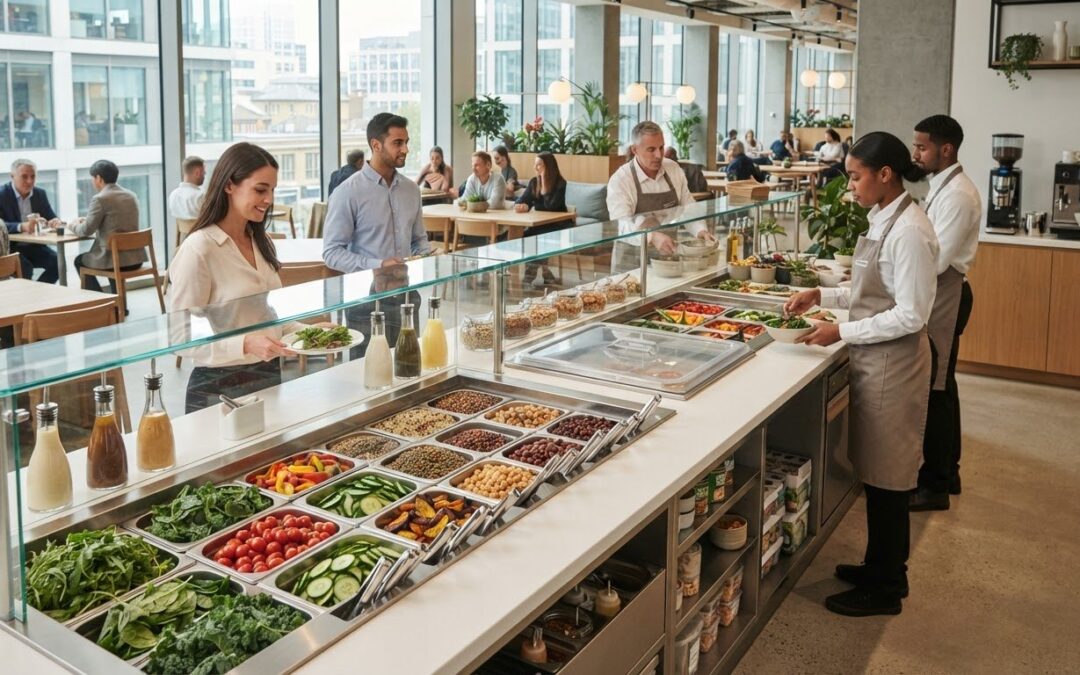
What if a salad bar could attract customers without creating a bottleneck for your team? Offering more ingredients is not enough on its own. How to set up a salad bar for success starts with planning the whole operation around your customers, your space and the way food will be prepared, replenished and served. A well-planned display can make the offer appealing while helping staff keep service moving and ingredients fresh.
Freshness, allergen communication, temperature control and food waste all need to be considered from the start. Build these practical requirements into the plan before choosing a counter or settling the menu, rather than trying to work them out once the display is in place.
This guide covers the main decisions, from defining your concept and building a manageable menu to organising service flow and selecting equipment for your capacity. You’ll see how a salad bar and bespoke serving counter can support a workable day-to-day operation when each element is planned as part of the whole.
Key Takeaways
- Learn how to set up a salad bar for success by matching the offer and service format to your customers and daily operation.
- Build a focused menu that balances familiar ingredients with enough variety to keep the offer appealing and manageable.
- Assess display capacity, replenishment access and staff workflow before choosing equipment for your space.
- Plan clear routines for preparation, labelling, display and replenishment, using food-safety guidance relevant to your UK nation.
- Use a controlled launch to track waste, service flow and customer feedback, then refine the setup based on what you learn.
What makes a salad bar successful? Start with customers and the service model
A successful salad bar offers customers useful choice and gives staff a routine they can deliver safely and consistently. Start by identifying who is likely to use it, when they arrive and how they expect to be served. A lunchtime offer for people in a hurry may need a more direct menu and queue plan than a dining space where customers have time to customise their meal.
Treat the display as part of the operation, not as a stand-alone counter. The general Salad bar overview describes common ingredients and formats, but your decisions should reflect your customers and service pattern. Demand affects how much variety to offer; variety affects preparation and replenishment, which shape staff workload and potential waste.
How do you decide whether a salad bar suits your customers?
Review sales by daypart, note the questions customers ask and look for patterns in dine-in and takeaway orders. Are customers looking for a quick lighter meal, more choice over ingredients or options for different dietary preferences? Use these signals to shape the offer instead of assuming a larger selection will attract more customers.
Test your assumptions before finalising the menu. A small trial or direct customer feedback can reveal which ingredients attract interest and which move slowly. Use what you learn to match menu breadth and replenishment levels to demand, reducing the risk of preparing more than you can sell.
Which salad bar service format fits your operation?
Self-service gives customers control over portions and combinations, but staff still need to monitor the display, replenish ingredients and keep the queue moving. Staff service can help with portion consistency and customer questions, while putting more serving work on the team. A hybrid format might let customers choose from the display while staff handle selected ingredients or support service at busy times.
Compare formats against your available space, staffing, likely queue patterns and customers’ preference for speed or guidance. Map who serves, who replenishes and how customers move through the area. The right format is the one your team can maintain reliably during both busy and quieter periods.
Before launch, set practical measures for uptake, replenishment, waste, service time and customer feedback. Record a baseline where possible, then use consistent measures during the trial. Reviewing them together can distinguish a popular ingredient that needs frequent replenishment from a slow seller that adds work without enough value. These decisions give you a useful brief for menu and display planning, and help answer how to set up a salad bar for success.
Build a focused salad bar menu that stays appealing and manageable
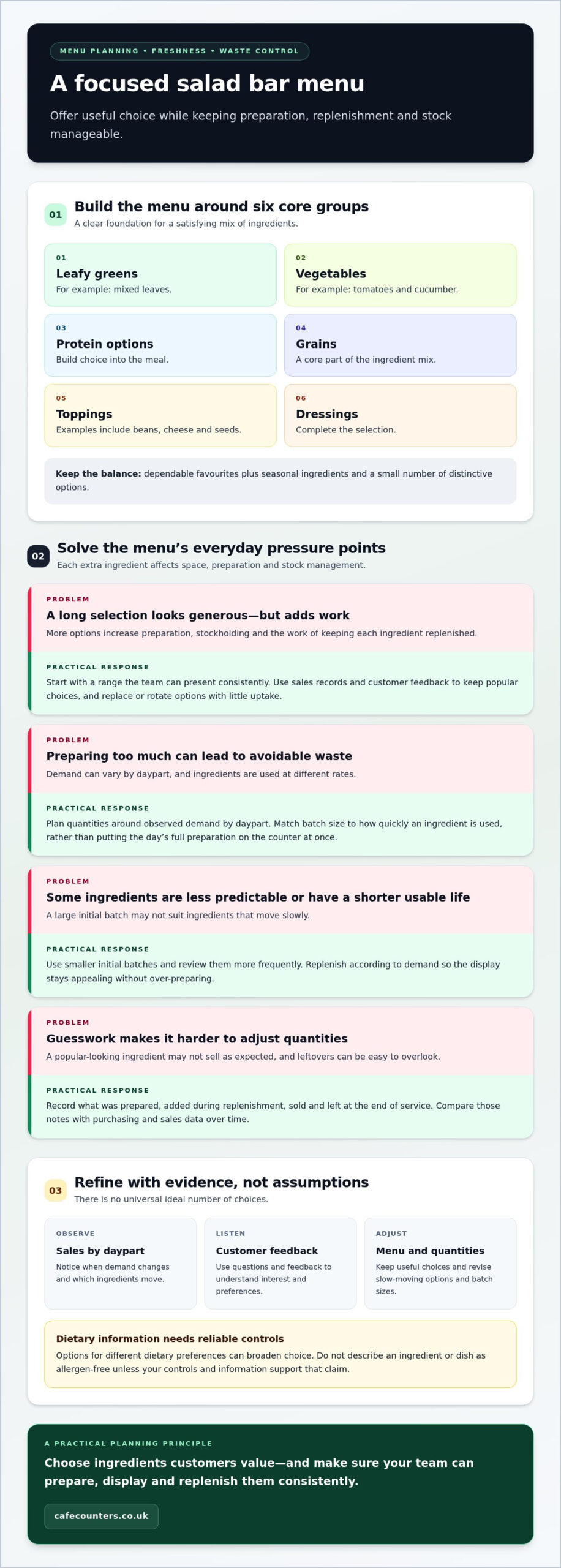
A good salad bar menu offers enough choice for customers to build a satisfying meal without making preparation and replenishment unnecessarily complex. Start with a clear core: leafy greens, vegetables, protein options, grains, toppings and dressings. For example, mixed leaves, tomatoes and cucumber could be offered alongside grains, beans, cheese, seeds and a small number of distinctive options.
Balance reliable favourites with seasonal ingredients that keep the offer interesting. Every extra item takes display space, preparation time and stock management, so consider whether it adds value for customers and fits your service capacity. Options for different dietary preferences can broaden choice, but do not describe an ingredient or dish as allergen-free unless your controls and information support that claim.
How many choices should a salad bar offer?
There is no universal ideal number. A long selection can look generous, but it also increases preparation, stockholding and the work involved in keeping each ingredient replenished. Start with a range your team can present consistently, then adjust it using sales records and customer feedback. Keep popular choices available and replace or rotate options that see little uptake.
How can menu planning help reduce salad bar waste?
Plan quantities around observed demand by daypart, and prepare batches that match how quickly each ingredient is used. Less predictable ingredients, or those with a shorter usable life, may need smaller initial batches and more frequent review. This keeps the display appealing without putting the day’s full preparation on the counter at once.
Make waste visible in your records. Track what is prepared, what is added during replenishment, what sells and what remains at the end of service. Compare these notes with purchasing and sales data over time. Actual figures give you a better basis for adjusting orders and quantities than guesses about popularity.
Seasonal changes work best when they fit the wider preparation plan. Where appropriate, choose ingredients that can be used in more than one menu item to make purchasing and preparation more practical. A seasonal vegetable might feature in a salad and another dish, for example, while still being portioned and recorded separately for the salad bar.
The menu also shapes the counter plan: the number and type of ingredients affect display capacity, staff access and replenishment. As you refine the offer, explore how salad bars and bespoke serving counters can be planned around your menu and operating model. A focused menu based on what customers choose is a practical foundation for how to set up a salad bar for success.
Choose a salad bar display around freshness, capacity, and service flow
The display should support the menu and service format you have planned, rather than dictate them. A refrigerated salad bar can present foods that require chilled display, while ambient presentation is suitable only for foods and service plans where it is appropriate under current food-safety guidance. Confirm the requirements for the specific ingredients and operation before deciding how to display each item. For wider cooling considerations, see this commercial refrigerator guide.
Look beyond appearance. Assess usable ingredient capacity, customer visibility, staff reach, cleaning access and how easily staff can replenish items without disrupting service. A display may look generous but be difficult to manage if containers are awkward to reach or staff have to cross the customer queue to restock. Match its configuration to expected covers and the menu, and use verified equipment specifications when assessing capacity and performance.
What should you compare when selecting a salad bar display?
Compare how each display supports chilled presentation, ingredient access and routine cleaning. Consider how your service format affects the layout: self-service needs clear customer access, while staff-served operation needs practical working access behind or beside the counter. Plan for the serving utensils, ingredient containers and replenishment method your team will use, then confirm the equipment specifications suit the intended application.
How should the display fit into the wider foodservice layout?
Map the customer journey from approaching the display to payment. Allow a clear sequence for picking up a plate or takeaway container, choosing ingredients and moving on. Avoid placing the display where a queue could block another service point. Also plan staff routes for replenishment and cleaning so these routine tasks do not interrupt customer movement.
Check the layout against the actual footprint, including surrounding counters and the space staff need to work safely and comfortably. A tailored counter can bring display capacity, customer access and staff workflow into one plan. For broader layout and equipment considerations, read the professional restaurant equipment guide.
This is the practical core of how to set up a salad bar for success: choose equipment as part of a joined-up plan for food presentation, customer flow and daily operation. Capacity and access should suit the menu and make the intended service easier to run, rather than being chosen for appearance alone.
Set up safe, efficient salad bar service from preparation to close
A reliable salad bar depends on repeatable routines as much as on the display. Document each step, from receiving and storing ingredients through preparation, labelling, display, replenishment and close. Assign responsibility for handwashing, utensil control, cleaning and temperature monitoring, so staff know what to do and who to tell if a check identifies a problem.
Safe chilled display and monitoring practices must follow current official guidance and the equipment manufacturer’s instructions. UK food-safety rules and enforcement guidance can differ across nations, so use the relevant authority for your location. The Food Standards Agency provides guidance for England, Wales and Northern Ireland; Food Standards Scotland covers Scotland.
How do you keep salad bar ingredients safe during service?
Base the routine on your actual preparation and service processes, using a HACCP-based food-safety management approach. Specify what staff check, how they record it, what corrective action to take if something falls outside expected conditions, and when to escalate an issue to a manager. Keep records practical enough to complete during service.
Include stock rotation and clear steps for handling deliveries, storage and replenishment. Staff should know how to respond if a check is missed, an ingredient’s condition is uncertain or equipment is not operating as expected. Review procedures against current guidance from the Food Standards Agency or Food Standards Scotland, as applicable.
How should you communicate allergens and maintain a clean service?
Provide clear, accurate ingredient and allergen information using procedures aligned with current UK guidance. Make sure staff know where the information is kept and how to answer customer questions. Signage can help customers navigate the offer, but labels and separate utensils alone do not guarantee food is allergen-free.
Set out how utensils are assigned and replaced, how spills are handled promptly, and how serving surfaces are cleaned during service and at close. Include handwashing and cleaning tasks in named staff responsibilities, and explain how to prevent cross-contact during preparation and replenishment. Consistent procedures help customers make informed choices and support a clean, orderly counter.
Train staff on the written routine before launch, then revisit it when ingredients, equipment or service practices change. A well-planned salad bar brings the counter, food-handling procedures and team responsibilities together. Explore salad bars and bespoke serving counters designed to fit your operation.
Launch your salad bar, measure results, and refine the setup
A successful launch is a controlled start, not a one-off opening-day test. Use a checklist to confirm that the menu, staff routines, equipment and customer route work together before the first service. This turns the decisions behind how to set up a salad bar for success into a practical operating plan, with clear measures to guide improvements once customers use the display.
What should your salad bar launch checklist include?
Before opening, confirm that staff can prepare and replenish ingredients, clean the counter, communicate allergen information and escalate problems. Commission the equipment according to its instructions, document daily routines and prepare menu information for customers.
Run through a realistic service scenario with customers and staff. Follow the route from approaching the display to selecting food and reaching payment, while team members practise replenishment and cleaning without blocking the flow. Record baseline measures from the outset, including sales mix, replenishment frequency, waste, service time and customer comments.
When should you review the display and operating setup?
Look for patterns across representative service periods rather than changing the setup after one unusually busy or quiet day. Compare what sold with what needed frequent replenishment or remained unsold. If service slows, identify where: the menu may take too long to serve, staff access may be awkward, or the customer route may cause a queue.
Use the evidence to make targeted changes. You might adjust the menu range, prepare different batch sizes, revise staff responsibilities or change the display layout. Review customer feedback alongside operational measures. A fast service that customers find confusing may need a different solution from a popular offer that needs a better replenishment routine.
Include equipment in the wider project plan. TFSE Products Ltd designs and manufactures salad bars and bespoke serving counters in the UK, with planning, installation and commissioning supporting a tailored counter project. Capacity, staff access and customer movement can be considered together instead of treating the display as a separate purchase.
For a salad bar designed around your operation, explore salad bar and serving counter solutions. Keep reviewing results after launch; measured adjustments help the setup remain useful to customers and workable for the team.
Turn your salad bar plan into a reliable service
A successful salad bar is about more than an attractive display. Match the menu and service format to customer demand, choose equipment that supports freshness and staff workflow, then use clear routines to manage food safety and replenishment. Track sales, waste, service time and feedback to refine the setup based on what happens in practice. That’s how to set up a salad bar for success: plan each part as a connected operation, then keep improving it.
TFSE Products Ltd designs and manufactures salad bars and bespoke serving counters in the UK. The company supports projects through planning, installation, commissioning and after-sales support, bringing equipment into a wider service plan.
Explore salad bar and bespoke serving counter solutions to take the next step towards a display tailored to your operation. With a practical plan in place, you can build a salad bar that works for your customers and your team.
Frequently Asked Questions
How do you set up a salad bar step by step?
Start by matching the offer to customer demand, dayparts and service style. Build a focused menu, then plan the display around ingredient requirements, capacity, staff access and customer flow. Write procedures for receiving, storage, preparation, labelling, display, replenishment and cleaning. Train staff, commission the equipment and test the service route before opening. After launch, review sales, waste, service time and feedback to refine the setup.
What equipment do you need for a commercial salad bar?
Most setups need a suitable refrigerated display for foods that require chilled presentation, plus ingredient pans or containers, serving utensils and clear customer-facing menu and allergen information. A sneeze guard may form part of the display, depending on the design and service plan. Plan for temperature monitoring, cleaning and replenishment as well as customer access. Choose equipment capacity and configuration to suit your menu, expected service and available space.
How do you keep food safe on a salad bar in the UK?
Use a written, HACCP-based food-safety management procedure that reflects your actual menu and processes. Cover receiving, storage, preparation, labelling, display, replenishment and close, with named responsibilities for hygiene, cleaning and checks. Record monitoring, define corrective actions and make clear when staff should escalate a concern. Food-safety rules and guidance can differ across UK nations, so check current information from the Food Standards Agency or Food Standards Scotland, as relevant.
How cold should food be kept on a salad bar?
For chilled food, follow current official guidance for your UK nation and the requirements relevant to the food and service. Food Standards Agency guidance advises keeping chilled food at 8°C or below, with fridges set at 5°C or below to help maintain that limit. Monitor the display as directed by your food-safety procedures and the equipment instructions. If a check falls outside your safe limits, follow your documented corrective-action process.
How can a salad bar reduce food waste?
Use sales and preparation records to match quantities to actual demand instead of estimating from the menu alone. Start service with appropriate batch sizes, then replenish according to how quickly each ingredient moves. Record what is prepared, added during service and left unsold at close. Review patterns by item and daypart, then adjust purchasing, preparation and menu range. Ingredients used across suitable dishes can also make purchasing and preparation more efficient.
How do you manage allergens at a self-service salad bar?
Keep ingredient and allergen information accurate, accessible and aligned with current UK guidance. Make sure staff know how customers can obtain details and how to respond to questions. Use clear signage and procedures for utensil separation, spill response, surface cleaning and replenishment to help reduce cross-contact risks. Separate utensils and labels alone do not guarantee food is allergen-free, so communicate carefully and follow the business’s documented allergen controls.
Is a self-service or staff-served salad bar better?
Neither format suits every operation. Self-service lets customers choose portions and combinations, but requires staff to monitor the display, replenish ingredients and manage queues. Staff service can support portion consistency and customer assistance, while increasing the team’s serving workload. A hybrid format may combine customer choice with staff support for selected items or busy periods. Compare each option with your space, staffing, menu, queue patterns and customer expectations before deciding.