
The lead time for custom food counters depends on the project brief, design decisions and how the counter fits into the wider fit-out. Planning the ready-for-use date means looking beyond manufacture: design approval, delivery, installation and the site’s readiness all need to be considered.
A bespoke counter moves through distinct stages, from planning and design to manufacture and installation. Each stage depends on decisions and information from the stages before it. Clarifying what the counter needs to do, sharing available site details and identifying key project dates gives the schedule a practical starting point.
This guide explains the stages and project details that can affect planning. It also includes steps to help you coordinate your counter with other fit-out work and prepare for a project-specific discussion, rather than relying on a one-size-fits-all timescale.
Key Takeaways
- The lead time for custom food counters depends on the individual project, so plan around defined milestones rather than a universal timeframe.
- Understanding the sequence from requirements and bespoke design through manufacture, installation and commissioning can help you coordinate the counter with your wider fit-out.
- Clarifying the counter’s intended use, design preferences and available site information gives the project a stronger starting point.
- Scope, design decisions, site details and installation coordination can all influence the schedule. Use the article’s planning checklist to prepare for each.
- TFSE Products Ltd brings bespoke planning, design and installation together, supported by over 25 years’ experience in the food industry.
Lead Time for Custom Food Counters: Why There Is No Single Project Timeline
For a bespoke counter, lead time is a project-specific planning period, not a universal promise that applies to every buyer. The general definition of lead time covers different contexts, including manufacturing. For a counter project, first identify the milestone you need to plan around: design approval, completion of manufacture, delivery to site or installation.
Custom-counter lead time depends on project scope and coordination. A useful planning discussion starts with what the counter needs to do and how it fits into the wider fit-out. Share your intended opening date, then clarify whether you need a date for delivery, installation or readiness for use. These milestones are related, but they are not interchangeable.
What does lead time mean for a bespoke food counter?
A counter project moves through checkpoints, and each marks a different point in the work. Design approval confirms the agreed brief. It does not mean the counter has been manufactured or installed. Keeping the milestones separate helps you coordinate with other work and understand what a proposed date actually refers to.
- Design approval: the bespoke requirements and agreed design are established.
- Manufacture: the counter is produced to the approved brief.
- Delivery: the finished counter is brought to the project site.
- Installation: the counter is fitted as part of the planned project.
Ask which milestone a date represents and what information or decisions are needed to plan for it. If you are coordinating a wider fit-out, you may need to know when the counter is expected on site. If you are planning to serve customers, include installation and the remaining work before opening in your schedule. The right milestone depends on the project.
Why do custom counters need project-specific planning?
The counter’s intended role shapes its requirements. A serving counter, chilled display and heated display have different functions, so the brief should explain how the business will use the unit. Bespoke planning and design bring those requirements together with the available space, creating a defined scope to work from before later stages are coordinated.
For example, a deli counter needs to support a different type of service from a heated display. The brief should describe what the counter will present and how it will be used, not just how it should look. Changing an important requirement after design approval can mean revisiting the agreed brief, so resolve key decisions early where possible. TFSE Products Ltd provides bespoke planning, design and installation for commercial food display counters. The bespoke counter design process explains how requirements are developed into a finished counter.
There is no single schedule for every project. Define the outcome you need, identify the milestone that matters to your fit-out and treat each stage as a separate planning checkpoint. This gives you a more useful basis for discussing timing than a broad estimate detached from the counter’s purpose and scope.
The Main Stages That Shape a Custom Food Counter Schedule
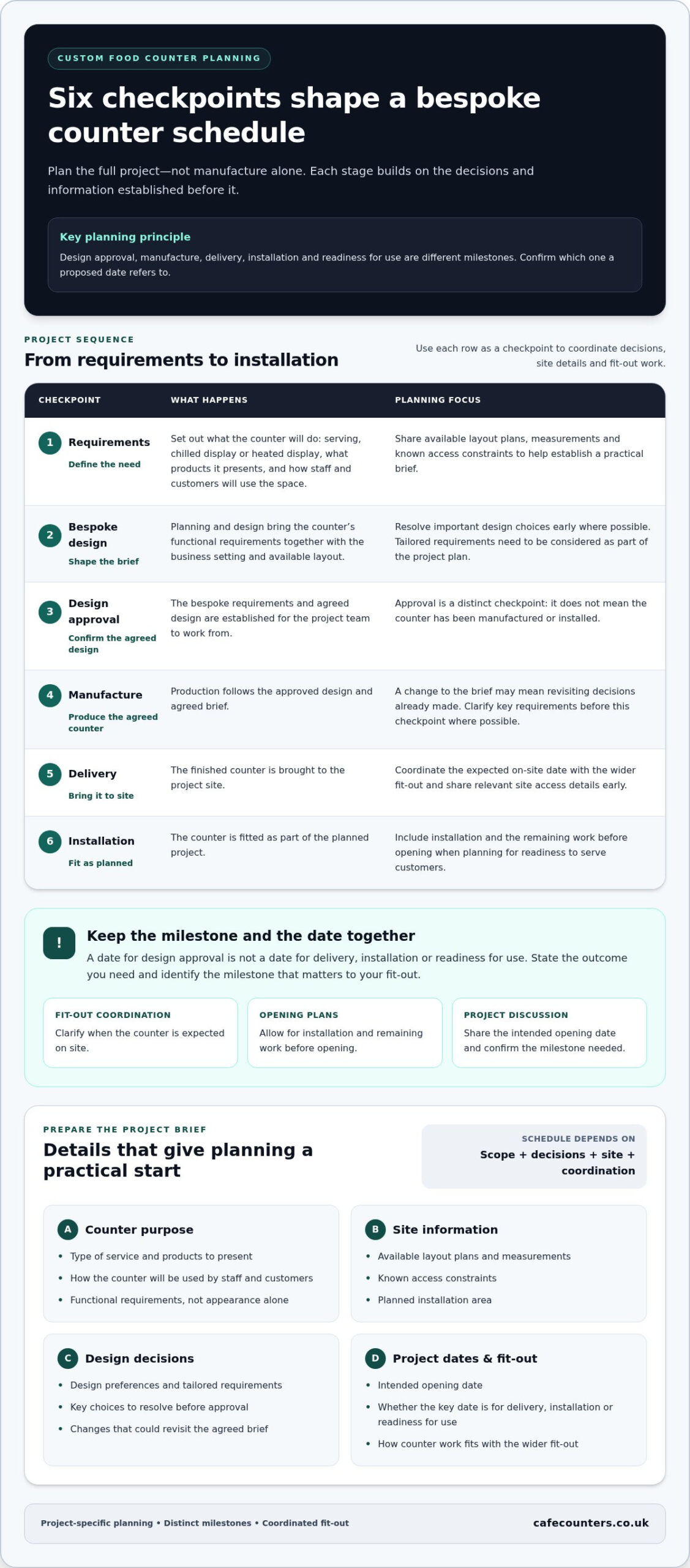
A bespoke counter project is easier to coordinate when each stage has a clear purpose and the information for the next checkpoint is ready. The sequence is requirements, bespoke design, manufacture, delivery, installation and commissioning. Each stage builds on the decisions made before it, so plan for the full project rather than looking at manufacture alone.
From requirements and design to manufacture
Requirements, design, manufacture: define the need, shape the brief, then produce the agreed counter. Clarity at each checkpoint helps carry the counter’s intended use through to the finished unit.
- Requirements: Set out what the counter needs to do. A serving counter, chilled display and heated display have different roles, so describe the type of service, the products to be presented and how staff and customers will use the space. Share available site information, such as layout plans, measurements and known access constraints. This helps establish a practical brief.
- Bespoke design: Planning and design translate the brief into a counter suited to the business and its setting. This stage brings functional requirements together with the layout, giving the buyer and project team a defined design to work from. Tailored requirements need to be considered as part of the project plan. Customization in the Food and Beverage Industry explores how customization can affect production planning more broadly.
- Manufacture: Production follows the agreed design. A change to the brief may affect decisions already made, so resolve important design choices before this checkpoint where possible. That supports a more coordinated handover into manufacture.
TFSE Products Ltd provides bespoke planning and design for commercial food display counters, connecting the initial requirements discussion with manufacture. Buyers can explore the bespoke counter design process to understand how a project brief develops into a finished counter.
Delivery, installation, and commissioning as planning milestones
Manufacture is not the final point to plan around. Delivery and installation need to fit with site access and the wider fit-out. Share relevant details early, including the planned installation area and known access restrictions, so these arrangements are part of the project plan rather than a late consideration.
Delivery, installation, commissioning: coordinate arrival, fit the counter, then complete the final project stage. TFSE Products Ltd provides installation and commissioning as part of its service. Include these milestones when aligning the counter with other work and your intended opening date. The installation and commissioning service outlines this part of the project.
For a practical discussion about the lead time for custom food counters, map each stage against the wider fit-out and note the information or decisions needed at each checkpoint. A clear brief gives bespoke counter planning a sound starting point. Explore bespoke counter planning with TFSE Products as you shape your project requirements.
Which Project Factors Can Affect Custom Food Counter Lead Time?
The lead time for custom food counters depends on the details of the individual project, not one factor in isolation. Scope, design choices, site information and installation arrangements all help shape the plan. These are practical planning considerations, not automatic causes of delay or promises that a project will move faster.
Early decisions support clearer project coordination. Sharing a settled brief and relevant site details gives planning a more informed starting point. Manufacturing lead time can include several connected activities, as explained in NetSuite’s guide to lead time and manufacturing. For a bespoke counter, the useful question is how the requirements and handovers fit together in your project.
Scope, counter type, and design decisions
The intended purpose defines the scope. A temperature-controlled food display counter, a commercial fridge and a heated display unit serve different needs, so the brief should identify the equipment’s role and how it will be used. Settling key design preferences early also gives the bespoke plan a clearer foundation. Use the table below to prepare for the discussion. No single factor determines the schedule.
| Project factor | Why it matters | Useful preparation |
|---|---|---|
| Scope and counter purpose | The intended role helps define what the bespoke project needs to deliver. | Describe the service, products to display and how the counter will be used. |
| Design decisions | Design choices shape the brief that informs planning and manufacture. | Gather preferences and identify which decisions are essential to the project. |
| Site information | Layout and access details help relate the counter plan to the actual premises. | Bring together current plans, available measurements and known access constraints. |
| Installation coordination | Installation needs to fit with other work and the site’s readiness. | Share the wider fit-out sequence and relevant site arrangements early. |
Site information and installation coordination
Site information helps relate the counter plan to the space where it will be installed. A floor plan, available measurements and details about the intended position can clarify how the design fits the layout. If access or other fit-out work may affect installation arrangements, include that context in the planning discussion rather than treating installation as an afterthought.
Keep project information together and update it if the layout or opening plans change. A change will not necessarily alter the schedule, but sharing it promptly makes it easier to understand what it means for the brief and coordination. For wider guidance on selecting a counter to suit your business, the bespoke cafe counter buyer’s guide can help you clarify your requirements before planning progresses.
How to Plan Around a Bespoke Counter Lead Time
A well-prepared brief gives the counter project a clear place within your wider business plans. Instead of relying on an assumed timescale, gather the details that define the work and identify decisions that still need to be made. This makes it easier to discuss the lead time for custom food counters in relation to your fit-out and intended opening plans.
Prepare a clear counter brief
Start with how the counter will be used. Describe what it needs to display or serve, how customers and staff will interact with it, and which design preferences matter to your business. Bring together available site information, such as layout plans, measurements and the proposed counter position. Identify who will make or approve key decisions so the right people are involved in the project discussion.
- Intended use: Record the products or service the counter needs to support.
- Design preferences: Collect visual references and note the choices that matter most.
- Site details: Gather current plans, available measurements and known access information.
- Decision-making: Identify who can approve the brief and resolve design choices.
- Open questions: List details that still need discussion, rather than treating assumptions as settled requirements.
You do not need to answer every technical question before starting the conversation. The aim is to give bespoke planning a useful foundation and make clear what is decided, what is preferred and what still needs to be worked through.
Coordinate the counter with the wider fit-out
Place counter planning alongside the other milestones in your business project. Consider when the layout will be established, when design decisions need to be made, and how delivery and installation fit with the site’s other work. These points frame a practical discussion without assuming dates or a fixed duration for any stage.
- Set out the key fit-out milestones and the intended opening plan.
- Mark where counter design and approval sit within those activities.
- Record any site access or installation arrangements that could affect coordination.
- Share relevant changes to the layout or project plan with the people involved.
Allow time in the plan to review design choices and organise installation alongside other work. If several people are involved, agree how decisions will be shared and who will give final approval. A clear brief helps everyone discuss the same requirements, while a visible milestone plan makes dependencies easier to spot. Neither replaces project-specific scheduling, but both support a more organised discussion about the counter’s place in the fit-out.
Bring your intended use, preferences and site information together before planning progresses. Discuss your bespoke counter project with TFSE Products and use those details to shape the project conversation.
How TFSE Products Supports Bespoke Counter Projects
Planning a bespoke counter involves more than choosing its appearance. The counter needs to suit how your business serves customers, the space available and the wider fit-out. TFSE Products Ltd brings bespoke planning, design and installation together, connecting your requirements with practical decisions about the finished counter.
With over 25 years’ experience in the food industry, TFSE understands the importance of food display equipment in a commercial setting. That experience informs discussion of the counter’s role, design and installation arrangements. It does not translate into a standard delivery duration: the lead time for custom food counters depends on the scope and coordination of the individual project.
Planning, design, and installation in one project conversation
TFSE’s bespoke service links planning and design with installation, so requirements can be considered in the context of the finished space. Explain the counter’s intended use, share available site information and discuss design preferences as the brief takes shape. These details help clarify how the counter should support your business and fit into the project.
A clear conversation relates those priorities to the project without assuming every counter follows the same schedule. The agreed requirements and wider fit-out arrangements provide a basis for planning the work, while the timeline remains specific to the project.
After-care information that should not be confused with lead time
Project planning and after-care relate to different parts of the customer journey. TFSE counters are fully warrantied, and parts are available directly from the manufacturer. These points relate to support after purchase, not the time needed to plan, manufacture, deliver or install a bespoke counter.
Service requests are normally achieved within 24 hours. This refers to after-care, not a manufacturing or delivery timescale, so it should not be used to estimate when a new counter will be ready for use. Keeping the distinction clear helps you plan the fit-out around project milestones and understand the separate support available afterwards.
For a project discussion, bring together the counter’s intended purpose, your design preferences, available site details and the wider fit-out plans. These give the planning conversation a practical starting point. TFSE Products provides bespoke planning, design and installation for food display counters, helping you relate the project stages to your requirements.
Share what the counter needs to display or serve, your design preferences and how it should fit the space. A considered brief makes it easier to discuss the relevant milestones and coordinate the counter with the wider project. The schedule can then be considered in context, with each stage understood on its own terms.
Give Your Counter Project a Clear Starting Point
Use your intended opening date as a planning reference, not an assumption that every project stage will fit neatly backwards from it. First identify which counter decisions need to sit alongside the wider fit-out plan and where the schedule may need to be revisited as the project develops. This gives your team a shared basis for managing expectations.
The lead time for custom food counters is best discussed in the context of your requirements, site and project sequence. Bring the people responsible for design choices and fit-out coordination into the conversation early. A clear brief turns broad intentions into practical points to discuss while leaving room to plan around the needs of your space and business.
Ready to move from initial ideas to a project-specific discussion? Discuss your bespoke food counter project with TFSE Products. Share your intended use, design preferences and available site details to start planning the next steps.