
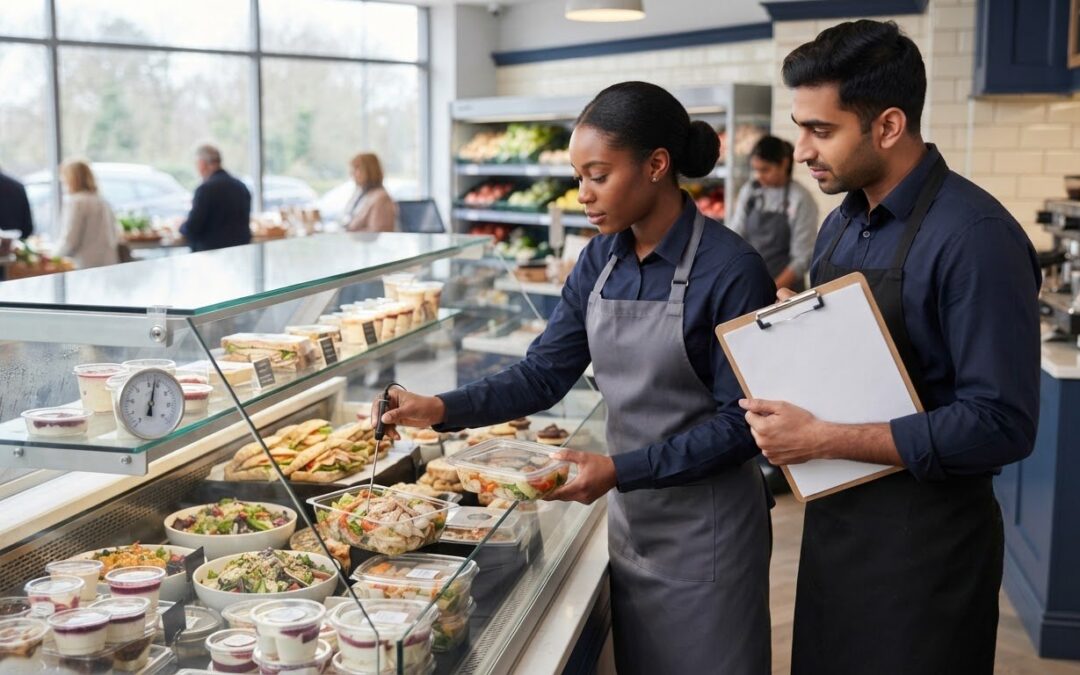
What if a cabinet reading looks safe, but the food on display isn’t? The chilled food display rules UK businesses need to follow focus on the temperature of the food itself, not just the air inside the cabinet. In England, Wales and Northern Ireland, chilled food that needs temperature control must generally be kept at 8°C or below. Scotland’s rules take a different approach, so one figure doesn’t apply in exactly the same way across the UK.
It’s understandable to rely on a display unit’s thermometer, but that reading alone may not show whether the food is being kept safely. A practical routine combines food-temperature checks, clear records and consistent action when a reading falls outside your control limits.
This guide explains how the rules apply to chilled food on display, including the differences between UK nations and the conditions around display periods. It also covers how to check food temperature, document routine readings and corrective actions, and assess the role of your equipment. Temperature-controlled counters and commercial fridges support the process, but reliable service depends on staff procedures and checks working alongside them.
Key Takeaways
- The chilled food display rules UK businesses follow depend partly on where they operate, with different temperature requirements and display provisions across the four nations.
- Cabinet-air readings and food-temperature checks measure different things; learn why checking the food itself matters when demonstrating control.
- Build a consistent routine to check and record temperatures, assess results, and document corrective action when needed.
- Display exemptions have specific conditions, so understand their scope before relying on them for service.
- Temperature-controlled display counters and commercial fridges support food safety, but staff procedures and regular checks remain essential.
Chilled food display rules UK: what temperature control is for
Chilled display temperature control means keeping food that can support the growth of harmful microorganisms or toxin formation within the safety requirements that apply to the business, food and location. That is the practical starting point for the chilled food display rules UK businesses need to understand. The precise duty isn’t identical across the country: jurisdiction matters, and a specific legal exemption may affect how a display period is managed.
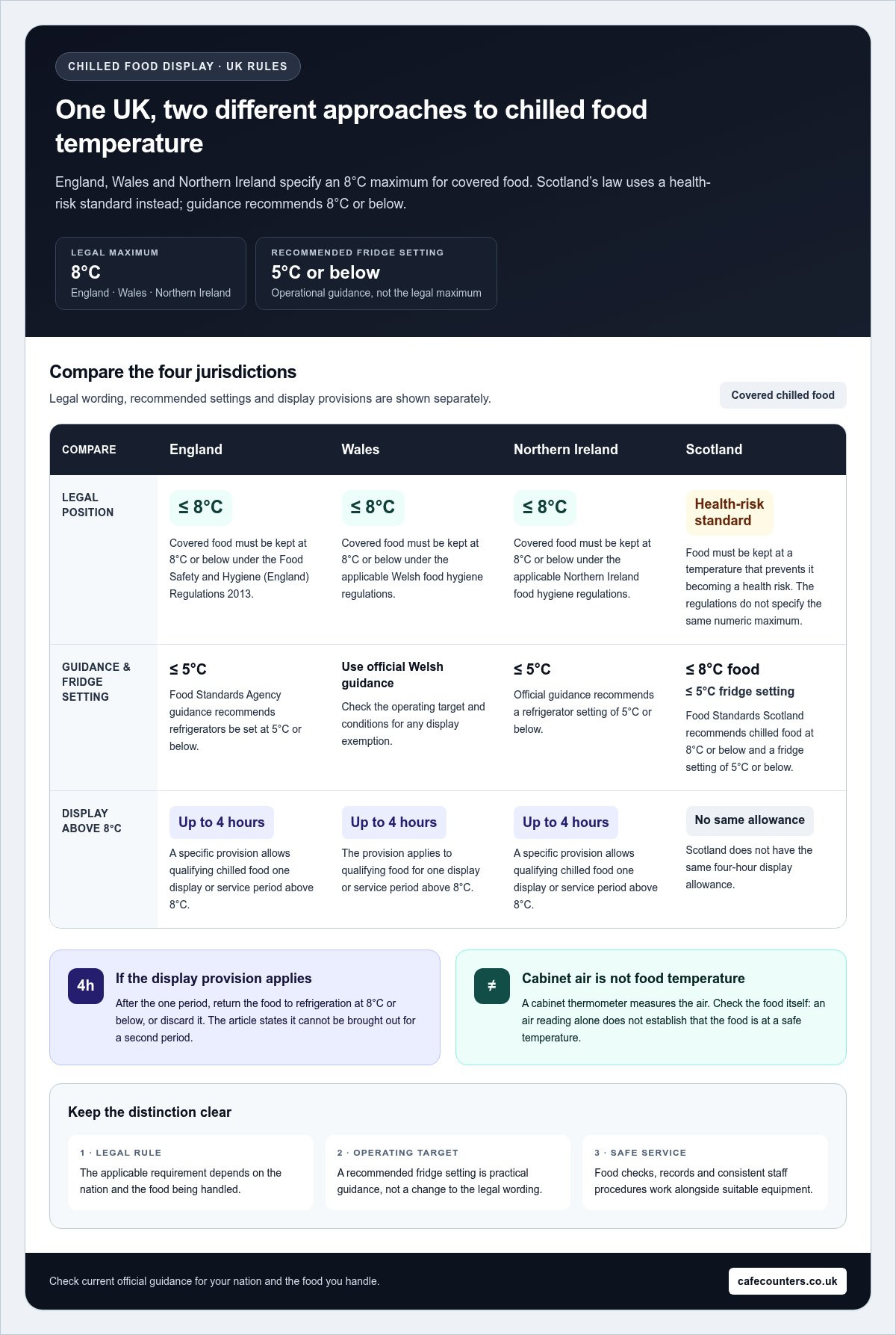
For covered food in England, Wales and Northern Ireland, the legal maximum is 8°C. Scotland’s regulations instead require food to be kept at a temperature that prevents it becoming a health risk, without specifying the same numeric maximum. Food Standards Scotland guidance recommends following the 8°C standard. These legal requirements should be distinguished from operational targets: the Food Standards Agency recommends setting refrigerators at 5°C or below, giving businesses a practical buffer rather than changing the legal limit.
The wider context is outlined in Food safety in the United Kingdom. For day-to-day decisions, businesses should use current official guidance for their nation and the food they handle, rather than treating a general summary as a substitute for the applicable rules.
Which foods may need temperature control?
The requirement concerns food likely to support pathogenic microorganism growth or toxin formation. It isn’t determined by whether food is presented as a meal, ingredient or finished product. Ingredients held for later preparation, food being handled during service, and ready-to-serve items may all need to remain under appropriate temperature control, depending on their characteristics and handling. Consider each food and stage of the process, not just the display cabinet. Where an exemption is relevant, its specific scope and conditions matter; it shouldn’t be assumed to apply to every food or service situation.
Why chilled display temperature matters
For food that requires chilling, refrigeration is a principal control: it helps limit conditions in which harmful microorganisms can grow and supports the food’s quality during storage and service. A display may look clean and well presented, but appearance alone can’t show that temperature control is effective. Equally, a temperature reading is only useful when it relates to the relevant food and is assessed against the rules or operating limits that apply.
That makes safe service a staff responsibility as well as an equipment decision. Procedures need to guide how food is handled, checked and managed during display; equipment needs to support those procedures. A temperature-controlled counter or commercial fridge can form part of a reliable setup, but the choice of unit doesn’t replace suitable handling or monitoring. Establish the food-safety requirement first, then make sure the display process and equipment work together to meet it.
UK chilled food temperature rules: compare the four jurisdictions
The chilled food display rules UK businesses follow depend on which nation they operate in. England, Wales and Northern Ireland share a specific maximum temperature for food that must be kept under temperature control. Scotland uses different statutory wording. The comparison below separates legal requirements from recommended operating targets, so a recommended setting isn’t mistaken for the wording of the law.
| Jurisdiction | Legal position for covered chilled food | Guidance and display provision |
|---|---|---|
| England | Keep covered food at 8°C or below under the Food Safety and Hygiene (England) Regulations 2013. | Food Standards Agency guidance recommends refrigerators be set at 5°C or below. A specific display exemption may apply. |
| Wales | Covered food must be kept at 8°C or below under the applicable Welsh food hygiene regulations. | Use official Welsh guidance for the operating target and conditions of any display exemption. |
| Northern Ireland | Covered food must be kept at 8°C or below under the applicable Northern Ireland food hygiene regulations. | Official guidance recommends a refrigerator setting of 5°C or below. A specific display exemption may apply. |
| Scotland | The Food Hygiene (Scotland) Regulations 2006 require food to be kept at a temperature that prevents it becoming a health risk. They don’t specify the same numeric maximum. | Food Standards Scotland guidance recommends chilled food at 8°C or below and a fridge setting of 5°C or below. Scotland doesn’t have the same four-hour display allowance. |
England, Wales and Northern Ireland: the 8°C requirement
The 8°C requirement applies to food that is likely to support the growth of pathogenic microorganisms or the formation of toxins. It concerns the food temperature, not simply the air around it. The relevant category can include food at different stages of handling, so assess ingredients and items prepared for service according to their characteristics and process. A cabinet display reading alone doesn’t establish the temperature of the food.
In these three nations, a specific provision allows qualifying chilled food to be displayed or served above 8°C for one period of up to four hours. After that, return it to refrigeration at 8°C or below, or discard it. It can’t be brought out for a second period under this allowance. Treat this as a limited exemption with conditions, not a general permission to keep food warmer throughout service.
Scotland: how its approach differs
Scottish law frames the duty around preventing food from becoming a health risk, rather than setting the same numeric chilling limit. The 8°C food limit and 5°C fridge setting are recommended practice in Food Standards Scotland and CookSafe guidance, not the wording of that statutory requirement. Scotland also doesn’t share the four-hour display allowance described above, so don’t assume that exemption applies there.
For a business operating across borders, build procedures around the nation where each site operates and the guidance relevant to its food and service. Temperature-controlled display counters can support a well-planned setup; explore display counter options as part of matching equipment to your service requirements.
Food temperature versus display cabinet temperature: what to check
Where a numeric legal limit applies, it applies to the food itself, not simply the air temperature shown for the display cabinet. A cabinet reading helps staff assess equipment conditions, but it isn’t proof that every item on display is at the same temperature. Understanding the difference is central to applying the chilled food display rules UK businesses need to follow.
How to interpret cabinet readings and food readings
The cabinet’s air temperature indicates the conditions around the food and can help flag changes in equipment performance. It may respond differently from the food itself, so the two readings shouldn’t be treated as interchangeable. A display may show a satisfactory air reading while a food check tells a different story.
For the food reading, use a suitable, calibrated probe thermometer and follow your food safety procedure and current official guidance on measurement. Your procedure should explain which foods or batches to check, how staff should take the reading, and how to keep checks hygienic. Don’t assume a reading from one item represents every product in a cabinet unless your documented method supports that approach.
Interpret each result against the requirement that applies to the food and jurisdiction. In England, Wales and Northern Ireland, the 8°C maximum concerns covered food. In Scotland, the legal duty is framed around preventing food from becoming a health risk, with official guidance recommending chilled food at or below 8°C. A cabinet-air result can support your assessment, but it doesn’t replace the relevant food check.
Building a consistent temperature-check routine
A reliable routine makes clear who checks, what is checked, how readings are recorded and what happens if a result falls outside the business’s control limits. Set the checking frequency and measurement method using current official guidance and your food safety management system, rather than relying on a universal schedule.
Make the record useful to the next person who needs to understand what happened. A clear entry can include:
- The date and time of the check.
- The food, batch or display covered by the reading.
- The measured food temperature and the name or initials of the staff member.
- Any follow-up action, who took it and the result of any subsequent check.
If a reading is outside your control limits, record the decision and action taken rather than simply noting that the temperature was high. The response should follow your documented food safety procedure and applicable official guidance. This creates a traceable account of the reading, assessment and outcome, and helps managers identify whether a concern relates to a particular food, handling step or equipment condition.
Keep the cabinet reading and food reading distinct in the log. Recorded separately, they offer a clearer picture of both equipment conditions and the food being served. If the food result is unsatisfactory, staff can respond to the immediate food-safety concern while also reviewing whether the display setup or operating procedure needs attention.
Daily chilled display controls: records, exemptions and corrective action
A dependable display routine turns food-safety requirements into clear staff actions. The chilled food display rules UK businesses must follow vary by jurisdiction, so set controls against the rules and official guidance that apply to your location and food. A practical sequence is: check, record, assess, act and review. The exact measurement method and checking frequency should be set by your food safety management system and verified guidance, not assumed to be universal.
- Check: Take the relevant temperature readings using the method in your documented procedure.
- Record: Note the date, time, food or display checked, reading and responsible staff member.
- Assess: Compare the result with the applicable legal requirement and your business’s control limits.
- Act: Follow the procedure if a reading falls outside those limits, and document the response.
- Review: Check that the action addressed the issue and consider whether the process or equipment needs attention.
What temperature records should help demonstrate
Useful records make a check traceable. They show what was measured, who completed it and what happened next, so a manager can follow the decision rather than interpret an isolated number. Keep entries legible and specific; a note that says only “temperature checked” gives little context if a concern arises later.
Records support a food safety management system based on HACCP principles, but a completed log doesn’t automatically prove food was safe or that the procedure was followed correctly. The value lies in consistent checks, accurate entries and documented follow-up. Use current official guidance and your documented system to establish the records your operation needs, and make sure staff know where to record readings and exceptions.
When a food-specific exemption may apply
An exemption is a defined legal provision, not a general permission to display chilled food above its normal temperature control. In England, Wales and Northern Ireland, qualifying food may be displayed or served above 8°C for one period of up to four hours. After that, it must be returned to refrigeration at 8°C or below, or discarded; it can’t be brought out for a second period under this allowance. Scotland doesn’t have the same four-hour display allowance.
Before relying on an exemption, make sure the food and service circumstances meet the relevant conditions. Don’t apply a time-based allowance to every product, or treat it as a way to extend shelf life. Your written procedure should identify when an exemption is used and how staff control and document that period, in line with current official guidance for the nation where the business operates.
If a check falls outside your control limits, act promptly in line with your food safety procedure. Record the food affected, the reading, the decision and any follow-up check. Depending on the circumstances, the appropriate action may involve removing or discarding food, or another measure specified in the procedure. Don’t assume a single corrective action or threshold fits every food and situation.
Reliable controls depend on equipment that supports the routine as well as staff who carry it out. Plan a chilled food display counter around your service needs and temperature-control process.
Choosing chilled display equipment as part of a compliant process
Display equipment should support your food-safety procedures, not stand in for them. Staff still need clear instructions for handling food, carrying out temperature checks and responding to readings that fall outside the business’s control limits. The chilled food display rules UK businesses follow are part of a wider process, so consider the unit alongside the daily work it needs to support.
Start with the operation. What food will be displayed? How will staff replenish it and serve customers? Which checks need to fit naturally into the working routine? Thinking through these questions helps you plan for practical service as well as presentation. A display that suits the space and workflow can make established procedures easier to follow, but it cannot prove that food has been kept safely.
Matching the display setup to the food operation
Plan around the food, service pattern and procedures staff will use. For example, a counter serving prepared items may need to fit into a different workflow from one used for grab-and-go retail. Consider how the display connects to preparation and replenishment, and how staff will access food for checks and service. These operational details help shape a useful equipment brief.
TFSE Products Ltd provides bespoke planning, design and installation for food businesses. This allows the display equipment to be considered as part of the commercial space and the operation it needs to support. Temperature-controlled food display counters and commercial fridges are part of that wider picture, alongside staff responsibilities and a documented checking routine.
Equipment support and the next step
Good planning doesn’t end at selecting a unit. Staff need to understand their checking responsibilities, and managers need a clear process for responding to concerns about food or equipment. Build those procedures into the operating plan from the outset, so the display arrangement works with the food-safety system rather than being treated as a separate decision.
TFSE Products Ltd counters are fully warrantied, and parts are available directly from the manufacturer. Service requests are normally achieved within 24 hours. TFSE Products Ltd also brings over 25 years’ experience in the food industry to planning, design and installation projects for cafés and food retailers across the UK.
If you’re planning a new service area or reviewing an existing setup, explore temperature-controlled food display counters as a considered next step. Match the equipment to your operation, then keep staff procedures and checks at the centre of safe service.
Make your next display decision with confidence
A new menu, service format or layout change is a useful point to review how your display fits the way staff work. Consider how the counter will sit within the service area, how food will move through the operation and how your team can carry out its procedures consistently. Planning these details together helps keep equipment decisions grounded in the needs of the business.
The chilled food display rules UK businesses follow are one part of that planning. The next step is to bring your operating requirements into a clear equipment brief, with the display serving both the practical flow of service and the food-safety process. Bespoke planning, design and installation can help connect those considerations from the initial concept through to the finished space.
Explore temperature-controlled food display counters and consider how a tailored display could support your operation. A considered setup gives your team a strong foundation for delivering safe, well-organised service with confidence.