
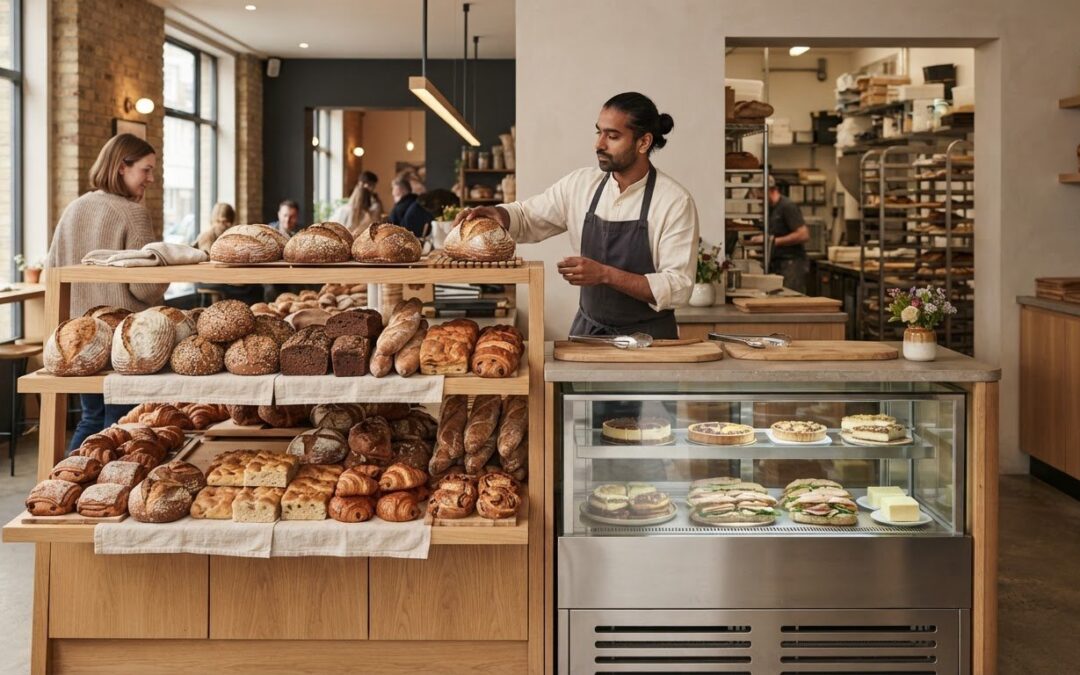
The most striking bread display isn’t always the best display for artisan bread. A tiered shelf can make loaves easy to browse, while a commercial display counter may better suit a wider service layout. The right choice depends on how customers select and receive their bread, what else you sell and how much room your counter allows.
It’s natural to focus on how the loaves will look. But the display also needs to work during busy service, fit the way staff serve products and make the most of the available counter space. An appealing option can fall short if it makes replenishment awkward or takes up space needed for another part of the service.
This guide compares shelf-style presentations with commercial counter approaches, then sets out practical considerations for your product range, service flow and available space. You’ll see how to turn those needs into a clear display brief, so the finished solution is planned around your business rather than appearance alone. If you sell ambient bread alongside other foods that need temperature-controlled display, a joined-up plan can bring both functions into a coherent counter design, from the initial brief through design and installation.
Key Takeaways
- Choose the best display for artisan bread by starting with your product range and how customers will browse and buy.
- Compare shelving and commercial display equipment by how each fits your service style and counter plan, not appearance alone.
- Use a clear brief to define what customers should see, how staff will serve products and how the display fits the wider counter.
- Consider temperature-controlled food display counters, commercial fridges and heated display units as part of a tailored display plan.
- Bespoke planning, design and installation can carry your requirements through to a finished counter solution.
Best Display for Artisan Bread: Start with the Selling Experience
A commercial artisan bread display is the arrangement and equipment used to present bread in a retail setting. Its purpose goes beyond making loaves look appealing: it helps customers see the range, understand what’s available and navigate the buying experience, while fitting the way staff serve products and the counter functions.
The best display for artisan bread starts with the products and how they’re sold, not with a particular shelf or counter style. A bakery focused on whole loaves may need a different presentation from a business offering sliced bread, rolls and other items at the same counter. Plan the layout around the actual range and service routine.
The word “artisan” can suggest a focus on handmade food and traditional methods. Artisanal food offers a broader explanation of that idea, but a commercial display still needs to be planned around the specific products and customer journey. Treat visual references as inspiration, then translate the look you want into practical requirements.
What should an artisan bread display help your business do?
A useful display makes the bread range easy to see and browse, so customers can take in the choice without having to work out where products are or how to order them. Consider the route from approach to purchase: do customers choose a loaf themselves, point to an item for staff to serve, or browse before ordering at another part of the counter?
A useful artisan bread display presents the range clearly and supports the way customers and staff complete a sale. Consider the display as part of the whole counter experience. Its position and relationship to the service area affect how customers approach the products and how staff handle orders.
Why appearance alone is not a buying brief
An image board can help establish a visual direction, such as an open, rustic presentation or a more defined counter display. But a photograph doesn’t show whether that arrangement suits your product mix, counter space or service method. A decorative shelf alone also doesn’t tell you what commercial equipment your business needs.
Turn inspiration into questions that can guide a real brief:
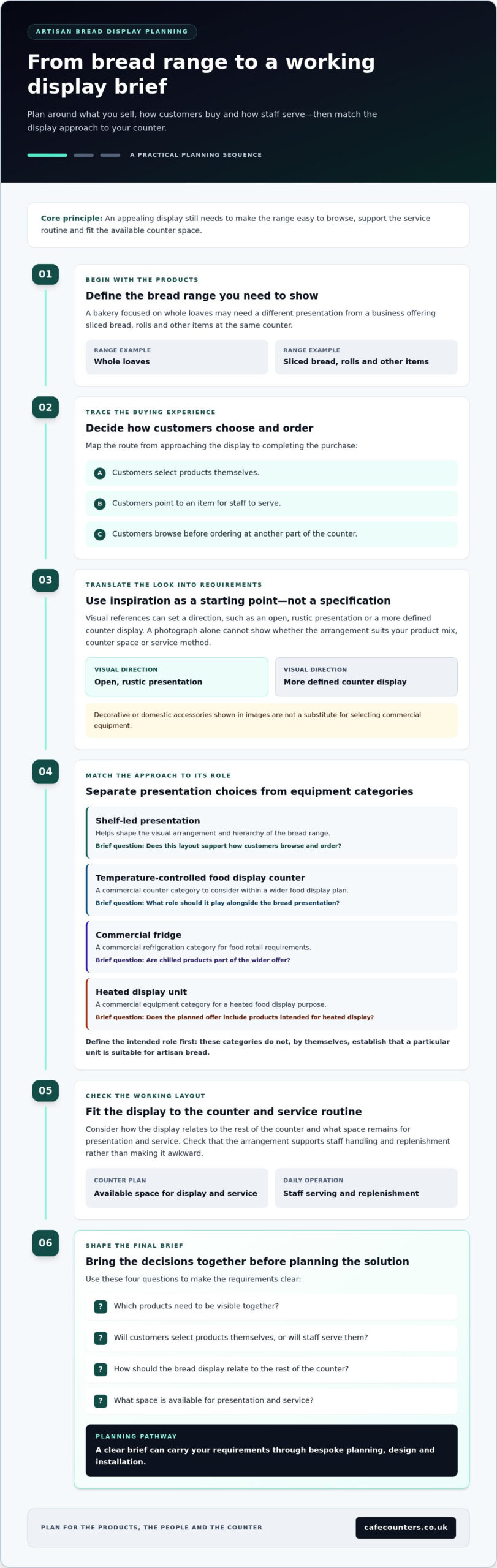
- Which products need to be visible together?
- Will customers select products themselves, or will staff serve them?
- How should the bread display relate to the rest of the counter?
- What space is available for presentation and service?
These answers help distinguish the look you’re aiming for from the equipment and layout that will support it. A shelf-style arrangement may suit one business, while a commercial counter may fit another. There isn’t one display that works for every range and service style. Define the selling experience first, then compare display approaches against that brief.
Artisan Bread Display Options: Shelves, Counters and Commercial Units
Display inspiration and commercial equipment answer different questions. A photograph of bread arranged on rustic shelves can help you settle on a visual direction, but it won’t show how that presentation fits your counter, product range or service routine. A commercial buying decision needs to connect the look you want with the role each part of the display will play.
Use this comparison to separate presentation ideas from equipment categories. It describes broad purposes, not a claim that any one format is right for every bread range.
| Approach | What it helps you consider | Question for your brief |
|---|---|---|
| Shelf-led presentation | The visual arrangement and hierarchy of the bread range. | Does this layout support how customers browse and order? |
| Temperature-controlled food display counter | A commercial counter category to consider within a wider food display plan. | What role should the counter play alongside the bread presentation? |
| Commercial fridge | A commercial refrigeration category for food retail requirements. | Are chilled products part of the wider offer? |
| Heated display unit | A category of commercial equipment for a heated food display purpose. | Does the planned offer include products intended for heated display? |
When a shelf-led presentation may suit the concept
Shelves are useful as a visual reference: they can help you describe whether you want the bread to feel open, ordered or prominent in the shop. Treat them as a layout choice to assess, not a complete commercial specification. Before settling on the idea, map it against the counter plan, the way customers select products and whether staff serve them directly. Decorative or domestic accessories shown in images aren’t a substitute for selecting commercial equipment.
How commercial display categories differ
Food display counters, commercial fridges and heated display units are distinct equipment categories, so compare them by purpose and place in your service plan. TFSE designs, manufactures and installs temperature-controlled food display counters, commercial fridges and heated display units. These categories can help you plan a broader food offer, but they don’t establish that a particular unit is suitable for artisan bread. Define the intended role first.
If your planning extends to chilled food provision, the commercial refrigerator guide offers broader context on commercial refrigeration. The FDA Food Code is a US retail-food reference, not UK guidance; use it as background reading rather than as a substitute for requirements applicable to your UK business.
The best display for artisan bread is a considered combination of presentation and purpose, rather than a shelf or counter selected on appearance alone. Once you’ve identified the display role and counter context, explore bespoke food display counter planning to connect those requirements with a commercial solution.
How to Choose the Best Display for Your Artisan Bread Range
A clear selection process turns a broad idea into a usable display brief. Work from the bread you sell towards how it will be presented, served and incorporated into the counter. That order helps you compare equipment by business purpose rather than choosing a format simply because it looks right in an image.
Define the display brief before choosing the equipment. Use these steps to set out what the display needs to do, where a standard equipment category may fit and when a bespoke counter plan may be more appropriate.
- Define the range. List the bread products you intend to present and group them in a way that reflects how customers will understand the choice. Consider whether your offer centres on whole loaves, includes several bread types or sits alongside other products. This is about what the display needs to communicate, not making assumptions about storage. Note expected changes to the range or service approach so the brief accounts for how the presentation may need to work as the offer evolves.
- Set the customer-facing presentation. Decide what customers should notice first and how they’ll browse the selection. Should the full range be visible at a glance, or should the display guide attention towards particular product groups? Consider the customer’s route from entering the shop to placing an order. Write down what a straightforward purchase should feel like, then use that outcome to assess layout ideas instead of relying on appearance alone.
- Map the service style. Describe how staff will serve the products. Customers might select an item themselves, point to a choice for staff, or order as part of a wider counter service. Each arrangement creates different demands on the relationship between the display and the serving area. Think through how staff receive an order and hand over the product, and identify any points where the display position could interrupt that flow.
- Match the brief to the counter plan and equipment category. Consider how the bread presentation relates to the wider serving counter, customer approach and any other food displays. A standard equipment category describes a general purpose; a bespoke counter requirement arises when the overall layout and display need to be planned together. Include any temperature-control requirements in the brief for consideration, rather than assuming a particular setup.
- Record the decision criteria. Bring the range, customer experience, staff service and counter context into one short brief. This gives the planning process a practical basis for comparing options. Wider restaurant equipment planning can also help you consider how bread presentation relates to other equipment and the overall working layout.
With bespoke planning, design and installation, the initial requirements can be carried through to a counter solution shaped around the business. The brief is the important first step: it gives each design and equipment decision a clear purpose.
Planning an Artisan Bread Display: From Requirements to Installation
A well-planned display starts with a clear account of what the business needs, not a sketch of a counter in isolation. Record the products, the customer-facing presentation and the way staff will serve them. Then place those requirements in the context of the surrounding counter and wider service area. This gives the design process a practical reference point from the outset.
What to include in the initial display brief
Keep the brief concise, but make it specific enough to guide decisions. Describe the bread range and what customers should be able to see, then explain how they approach, choose and receive products. Include the counter context, such as other service functions nearby, and the outcome you want the display to achieve. Leave technical specifications to the equipment planning stage rather than assuming them before selecting a category.
A useful brief can cover:
- Products: the bread range and any related items intended to appear in the same display area.
- Presentation: the order or emphasis customers should notice as they browse.
- Service arrangement: whether customers choose independently or staff handle selection and service.
- Counter context: how the display relates to the surrounding serving area and customer journey.
- Desired outcome: what a clear, practical purchase experience should look like for customers and staff.
These points help distinguish a visual preference from a requirement that affects the counter plan. They also give the design process a consistent basis for considering the display as part of the working space, rather than as a separate feature.
Why design, installation and after-care belong together
TFSE’s bespoke planning, design and installation service connects the first display brief with the finished counter. The design can be shaped around the stated products, service arrangement and counter context, while durable materials support a considered, practical solution. Keeping planning and installation joined up helps carry the original requirements through each stage of the project.
Planning also includes the support available once a counter is in use. All counters are fully warrantied, and parts are available directly from the manufacturer. Service requests are normally achieved within 24 hours. These details form part of the wider project picture alongside the initial design and installation, giving businesses useful context when considering the counter as part of their operation.
The best display for artisan bread is the one planned around the particular range, service model and counter environment. A clear brief makes it easier to develop an appropriate design without relying on assumptions about equipment or technical requirements. Discuss your artisan bread display project to take your requirements into a bespoke planning process.
Plan Your Artisan Bread Display with TFSE Products
Once you’ve defined the bread range, service approach and counter objectives, the next step is to turn those requirements into a workable commercial plan. TFSE Products Ltd designs, manufactures and installs temperature-controlled food display counters, commercial fridges and heated display units. These categories can be considered as part of a wider food retail layout, with the display plan shaped around the intended purpose of the equipment.
TFSE brings over 25 years’ experience in the food industry to food display projects. That experience supports a considered process: establish what the display needs to do, develop the design around the brief, then carry it through to installation. This keeps the original business requirements in view as the project moves from concept to finished counter.
What TFSE brings to a commercial display project
Bespoke planning, design and installation connect the practical details of a display project. The product range and customer-facing presentation inform the plan; the counter design then responds to the service arrangement and wider space. Durable materials and ongoing product research support an approach focused on practical reliability and considered presentation, without relying on decorative choices alone.
Every counter is fully warrantied. Parts are available directly from the manufacturer, providing a clear route to manufacturer-supplied parts as part of the longer-term ownership picture. These points help businesses consider not only how a counter will look when installed, but also how the equipment fits into ongoing operations.
Taking the next step with a clear brief
A detailed specification isn’t needed to begin a useful conversation. Share the information that gives the project direction, such as:
- The bread products and any other items intended for the display.
- How customers will view, choose and receive products.
- How staff will serve them and how the display relates to the counter.
- The main outcome you want the presentation to achieve.
These points give the planning process a clear starting place. TFSE’s bespoke approach carries the project through planning, design and installation, with decisions developed around the requirements of the business. Service requests are normally achieved within 24 hours.
The best display for artisan bread is not simply a piece of equipment selected from an image; it’s a counter solution informed by the products, service and space. A clear brief helps bring those factors together and gives the project a practical foundation.
Discuss your display requirements with TFSE Products to take the next step from your initial requirements towards a planned counter solution.
Turn Your Bread Display Vision into a Clear Next Step
A display can become part of how customers recognise and experience your bakery. Before moving ahead, write down the feeling you want the presentation to create, the products it should bring into focus and how it should sit within the wider shop. These decisions give your artisan bread display a purpose beyond filling counter space and help keep the finished design connected to your business identity.
You don’t need every detail resolved before taking the next step. A clear direction is enough to begin shaping the best display for artisan bread around your products and the experience you want customers to have. Bring your ideas together, then develop them into a considered project plan.
Discuss your artisan bread display project with TFSE Products and take the first step towards a presentation that feels distinctive and works for your business.