
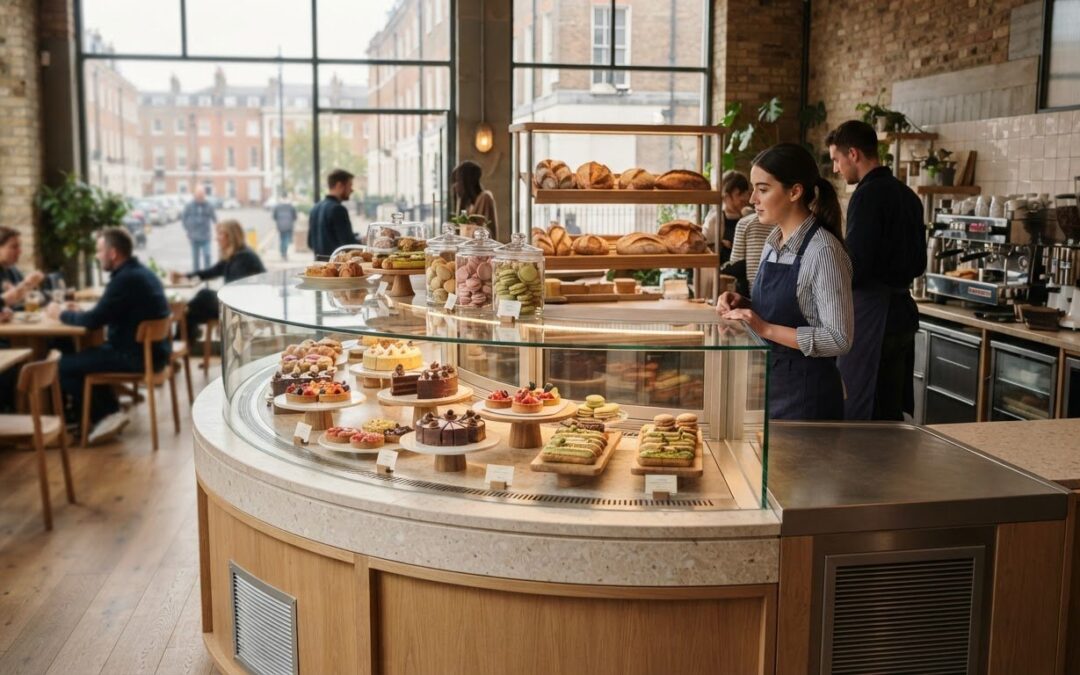
To understand the cost of a bespoke patisserie counter, start with the project requirements rather than an isolated figure. A standard display may not suit your products, premises or service flow, so first define what the counter needs to do and how it will fit into your business.
A clear brief brings those requirements together. Describe the products you plan to display, the presentation you want and how the counter will relate to the serving area. This gives the design discussion a practical starting point and helps you assess the proposed work in context.
This guide covers what to consider before commissioning a bespoke counter, from display priorities and daily use to design, installation and aftercare. TFSE Products brings over 25 years’ experience in the food industry to its bespoke planning, design and installation service. As a manufacturer of temperature-controlled food display counters, the company works with cafés and food retailers to develop counters suited to their requirements, using durable materials with presentation in mind.
Key Takeaways
- Define what your business needs from a bespoke patisserie counter before comparing proposals or options.
- Record the products to display, the presentation you want and how the counter will be used during service.
- Compare buying routes by looking at how requirements, design and installation are handled.
- Prepare for a project by defining its use, sharing display priorities and discussing the installation context.
- TFSE Products is a UK manufacturer with over 25 years’ experience in the food industry. Parts are available directly from the manufacturer.
Cost of a bespoke patisserie counter: define the project before comparing options
If you’re researching the cost of a bespoke patisserie counter, begin by setting out what it needs to do for your business. A café and a food retailer may have different display priorities, even when they sell similar products. Think about how customers choose and receive items, and how the counter should support your usual service.
Record the setting as well as the intended use. Note where the counter will sit, how it relates to the serving area and what customers should be able to see. These details turn a general idea into a project brief. With bespoke equipment, the discussion centres on bringing your requirements together in a considered design and installation plan.
What should a patisserie counter brief include?
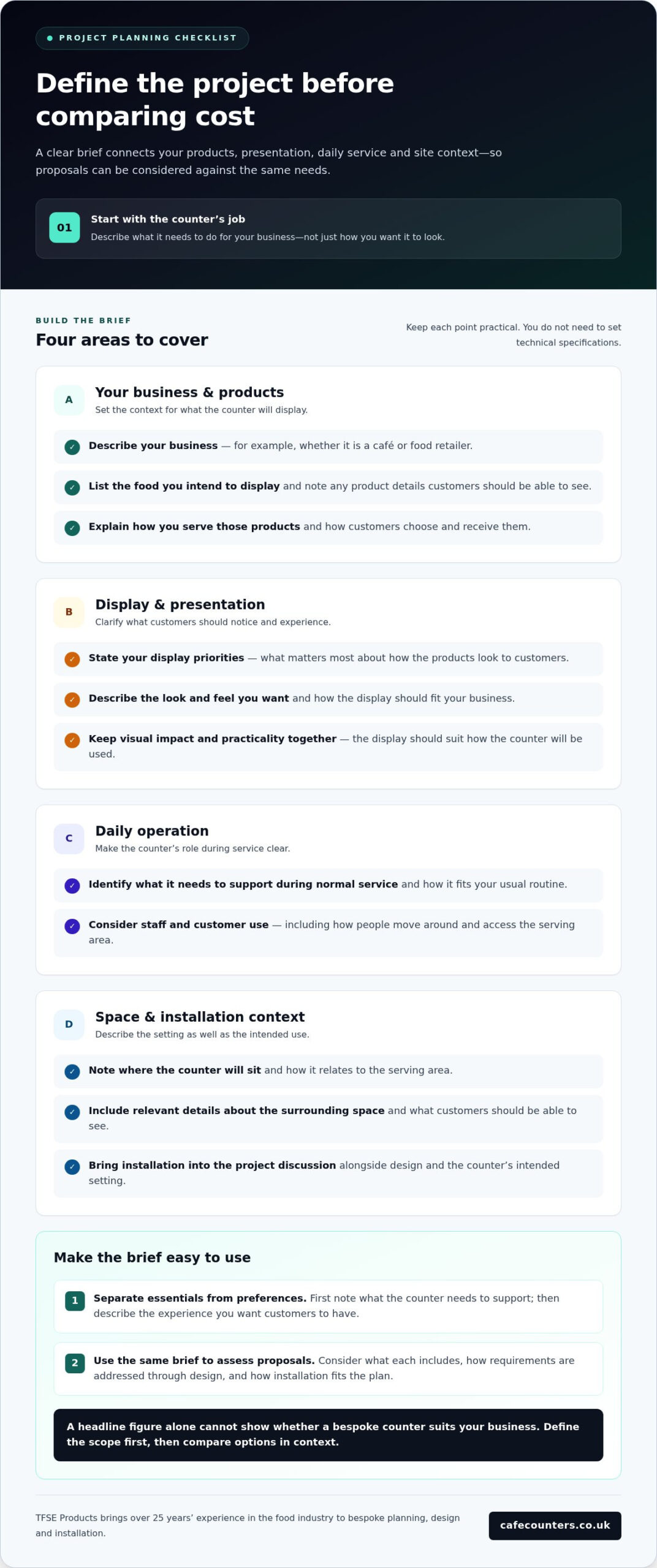
Start with a short description of your business and the food you intend to display. Explain how you serve those products and what matters most about presenting them. Include relevant details about the surrounding space and how staff and customers use it. Keep the brief practical: describe your needs without trying to set technical specifications.
Separate essential requirements from preferences. For example, identify what the counter needs to support during normal service, then describe the look and feel you want customers to experience. This makes the design conversation more focused and gives the project a clear reference point. Bespoke shopfitting connects display equipment with the wider retail space, so consider the counter as part of the customer-facing environment, not as an isolated purchase.
Why a headline figure cannot explain a bespoke project
A figure without a defined project scope gives little context for deciding whether a counter suits your business. First establish what the project needs to cover, including the requirements being addressed through design and how installation fits into the plan. You can then consider proposals against the same brief and compare what each includes.
A clear brief gives a bespoke project a defined starting point. Describe your business, the counter’s intended use, the site context and your presentation priorities before weighing up options. This keeps the discussion focused on what your operation needs rather than treating a catalogue entry as a complete answer. It also makes it easier to discuss design and installation as connected parts of the project.
How bespoke patisserie counter design connects display needs with daily operation
A bespoke patisserie counter needs to present products effectively and suit the way your business operates. Start with what you intend to display, what customers should notice and how the counter will be used during service. Connecting these points helps keep presentation and practical requirements in view together.
For example, if you sell pastries with different shapes and finishes, describe which details customers should be able to see and how the display fits into your service routine. These priorities give the design discussion direction without assuming a particular layout or specification. The aim is a counter developed around your products and operation, not a list of features without a clear purpose.
Turning presentation priorities into a counter design
Explain which products the counter needs to present and what matters most about how they look to customers. You may want decorated items to be easy to see, or the display to feel consistent with your business. These details give the design a visual direction while keeping the intended use of the equipment in view.
Consider visual impact alongside day-to-day practicality. A striking display is most useful when it also suits the way the counter will be used. Your priorities should guide the design, while the equipment’s role in a working retail setting remains central. There is no single look for every patisserie, so begin with the products and the customer experience you want to create.
Planning for a working food retail environment
Project planning should account for the business use and the installation setting. Consider where the counter will sit in the serving area, how it relates to customer access and what staff need from it during service. Sharing this context helps TFSE Products shape its bespoke planning and design around your requirements, then connect that work with installation and on-site setup.
Design and installation are parts of the same project. A counter needs to make sense both as a display and in the setting where it will be used. TFSE Products supports projects from initial requirements through to installation, bringing planning, design and practical setup into one process. Its temperature-controlled food display counters are designed with reliable operation and presentation in mind.
A considered brief helps shape a counter for its intended setting. It connects what you want customers to see with what your business needs from the equipment each day. If you’re developing a project, explore bespoke patisserie counter planning to bring those requirements into the design and installation conversation.
Bespoke or standard patisserie counter: compare the right buying route
A catalogue listing and a bespoke project suit different buying needs. Browsing product categories can help you understand the types of counters available and the information provided about them. A bespoke route is useful when your requirements need to be discussed, developed into a design and carried through to installation. Compare how each route addresses your needs, not just how products appear online.
| Consideration | Catalogue browsing | Bespoke planning, design and installation |
|---|---|---|
| How needs are captured | You assess the information provided with an individual listing. | Your stated business and display requirements inform the project. |
| How design is planned | You compare listed product details with your requirements. | Design is developed around the requirements discussed for the project. |
| Installation support | Review the installation information provided for the listed product. | Planning, design and installation are connected through TFSE Products’ service. |
When a listed counter may meet the brief
Catalogue listings can help you learn about product categories and compare the information shown for individual counters. For example, an online cake and patisserie counter category presents equipment as a set of listed products. Use the details to understand what is available, then consider whether they address your own requirements. A listing is a useful starting point, but it cannot replace a clear description of how the counter needs to work in your business.
Use product information to sharpen your brief. Note what the listing explains and which requirements are specific to your setting. If temperature-controlled display is central to your decision, read this commercial refrigerator guidance for broader context on professional cooling equipment.
When bespoke planning is the more useful route
A bespoke route suits buyers who need a project-specific design process. TFSE Products provides bespoke planning, design and installation for food display counters, connecting your stated requirements with a considered design and on-site setup. This gives the project a way to account for the intended display use and business context, rather than relying only on the information in a standard listing.
When assessing the cost of a bespoke patisserie counter, compare the scope of each option rather than looking at a figure in isolation. Consider how requirements are captured, how design is developed and how installation fits into the service. A defined brief helps you judge which buying route suits your project before making a decision.
Prepare a patisserie counter project brief with these practical steps
A useful project brief does not need technical drawings or specialist terminology. It should explain what your business needs from a patisserie counter, what you want customers to see and how the equipment will fit its setting. Organising this information before discussing the project makes it easier to develop the brief with TFSE Products and gives the planning and design process a clear direction.
Use this sequence to prepare:
- Define the business use. Summarise your business, the products you plan to display and how the counter will support your usual service.
- Document display priorities. Describe the presentation you want and which aspects of the products should be most visible to customers.
- Discuss the design. Share your requirements and preferences so they can inform a counter design suited to the project.
- Plan installation. Include the counter’s intended location and relevant details about the site, then discuss how installation fits into the project.
Information to organise before discussing the project
Keep your notes concise and practical. Include a short business summary, the counter’s intended use, the products it will display and your presentation priorities. Add relevant information about the site and how the counter will relate to its surroundings. Use details you already have to explain the setting. Broader professional restaurant equipment planning can also help you place the counter within your wider equipment requirements.
Be clear about what matters most. Distinguish between an essential day-to-day requirement and a visual preference, such as a display that feels consistent with your business. This keeps the discussion focused while leaving technical decisions to the design process. There is no need to invent measurements or specify equipment features. Describe what you need in plain language.
Questions to resolve through planning and design
Use the design discussion to connect your requirements with a practical counter concept. Consider how the products should be presented, how the counter will support your business and what the installation setting means for the project. TFSE Products’ bespoke service brings planning and design together with installation, supporting the work from initial requirements through to on-site setup.
As the brief develops, clarify which priorities are essential, how the counter should support its intended use and how installation fits into the overall project. These points translate a general idea into a defined scope without assuming a particular method, specification or timeline. A well-organised brief also gives you a stronger basis for discussing the cost of a bespoke patisserie counter, because the project is clear before you consider proposals.
Ready to develop your requirements into a project brief? Start planning your bespoke patisserie counter with TFSE Products.
Plan with TFSE Products: bespoke design, installation and aftercare
A bespoke patisserie counter is an important part of a food retail environment, so consider what support you need from the initial design discussion through to aftercare. TFSE Products Ltd manufactures temperature-controlled food display counters, commercial fridges and heated display units. With over 25 years’ experience in the food industry, the company works with cafés and food retailers on their display requirements.
What TFSE Products brings to a bespoke counter project
TFSE Products provides bespoke planning, design and installation for food display counters, supporting projects from initial requirements through to on-site setup. This connected service brings your stated needs into the design process. The counters are built with durable materials, and the company’s ongoing research focuses on innovation, performance and style.
In a patisserie setting, the counter needs to present food while serving as working equipment in a commercial environment. Sharing your intended use and display priorities gives the project a practical foundation. TFSE Products brings planning and design together with installation, keeping the process focused on how the counter is intended to be used.
Aftercare is another consideration. TFSE Products counters are fully warrantied, and parts are available directly from the manufacturer. Service requests are normally achieved within 24 hours. These details help you understand the support available without making assumptions about warranty duration or terms.
When considering the cost of a bespoke patisserie counter, look at the whole project rather than treating the equipment as a standalone purchase. Think about how your requirements inform the design, how installation connects to the plan and what manufacturer support is available afterwards. A clear scope helps you assess the project in context.
Take the next step with a clearly scoped project
Before discussing your project, gather a short summary of your business, the products you plan to display and the priorities the counter needs to support. You do not need technical specifications to begin. A clear outline gives the conversation a useful starting point and keeps the focus on your requirements, design and installation.
If you’re ready to discuss your patisserie counter requirements, call TFSE Products on 0800 689 5517 or use the bespoke counter project enquiry to begin a conversation about planning, design and installation.
Shape your patisserie counter project with confidence
Before taking the next step, picture the counter in use. What should customers notice, and what should your team find straightforward during service? These questions help you plan a display that suits your products and the experience you want to create.
Thinking about the cost of a bespoke patisserie counter is a good opportunity to clarify what you want the finished project to achieve. Keep those priorities at the centre of the discussion and use them to guide decisions as the design takes shape. Some details may become clearer during planning, but a clear brief gives the work direction from the outset.
Bring your ideas, practical needs and presentation goals together, then take the next step with TFSE Products. Discuss your bespoke patisserie counter project and start planning a display that reflects your business. Call 0800 689 5517 to begin the conversation about your requirements, design and installation.