
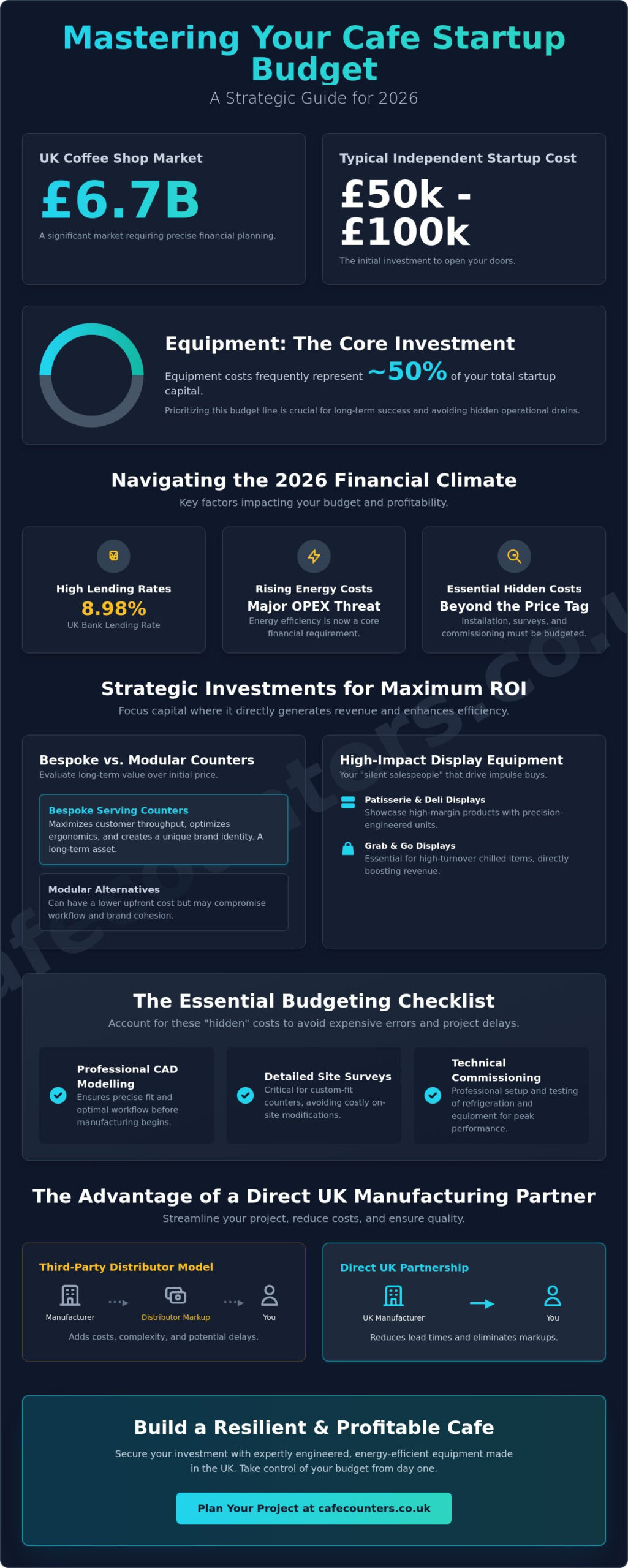
Did you know that while the UK coffee shop market is currently valued at £6.7 billion, most independent owners spend between £50,000 and £100,000 just to open their doors? It’s a significant investment where equipment costs often account for half the total capital. When you’re budgeting for new cafe equipment in 2026, the challenge isn’t just the initial price tag. It’s the hidden layers of installation, commissioning, and the rising pressure of energy overheads that can quietly erode your margins before you’ve served your first customer.
You’ve likely felt the weight of choosing between modular units and bespoke designs while trying to keep your operational costs sustainable. It’s a difficult task to balance your aesthetic vision with the reality of a 3.75% Bank of England base rate and high UK energy prices. This guide will show you how to master your startup costs by using a professional framework that prioritizes long-term ROI and energy efficiency. We’ll break down the true cost of high-impact displays, explain how to navigate technical commissioning, and help you select a UK manufacturing partner who understands the precision required for a successful, durable launch.
Key Takeaways
- Balance your initial capital expenditure against ongoing operational costs by selecting energy-efficient refrigeration that protects your margins from high energy prices.
- Master the process of budgeting for new cafe equipment by identifying which high-impact displays, such as patisserie counters, drive the highest impulse sales and long-term ROI.
- Evaluate the financial benefits of bespoke serving counters over modular alternatives to ensure your layout maximizes customer throughput and operational ergonomics.
- Account for essential hidden costs in your financial framework, including professional CAD modelling, site surveys, and technical commissioning to avoid expensive DIY errors.
- Leverage the logistical advantages of a direct UK manufacturing partnership to reduce lead times and eliminate the markups associated with third-party distributors.
The Financial Landscape for Cafe Startups in 2026
Opening a successful cafe in a market valued at £6.7 billion requires more than just a passion for coffee; it demands meticulous financial precision. In 2026, the economic environment for hospitality is defined by a delicate balance between capital expenditure (CAPEX) and operational expenditure (OPEX). While the initial purchase price of your machinery matters, the long-term cost of running that equipment is what often determines a business’s survival. Comprehensive budgeting for new cafe equipment must account for a UK bank lending rate of 8.98%, making every pound of invested capital a high-stakes decision.
Every successful venture begins with a formal business plan that accounts for both initial capital and long-term durability. In the current climate, inflation and global supply chain shifts have made lead times more volatile for imported goods. This has led many operators to seek out UK-based manufacturers to ensure project timelines remain steady. By identifying your Minimum Viable Product (MVP) equipment list early, you can focus your funds on assets that directly influence your first-year revenue, such as high-visibility displays that drive impulse purchases.
Defining Your Equipment Strategy
Your strategy should clearly distinguish between back-of-house utility and front-of-house sales drivers. While a stainless steel back-bar unit is essential for workflow, your bespoke serving counters are your most important financial assets. They are the physical stage where transactions happen and brand loyalty is built. Professional-grade UK manufacturing ensures these counters aren’t just furniture; they’re engineered tools designed to maximize customer throughput during peak trading hours. This focus on quality over fleeting aesthetics protects your investment from premature wear.
The True Cost of Energy in 2026
Energy efficiency is no longer a sustainable “extra” but a core requirement for financial viability. With the Energy Related Products (ERP) directive setting strict standards for commercial displays, 2026 budgets must prioritize units that minimize power consumption. High-efficiency refrigerated units, like modern patisserie displays, often pay for themselves through significantly reduced utility bills compared to older or lower-spec models. High-efficiency energy ratings serve as a predictable hedge against volatile utility prices, directly reducing the total cost of ownership within a 5-year budget forecast. Investing in superior insulation and advanced cooling technology at the start prevents your operational budget from being drained by inefficient hardware.
Budgeting for new cafe equipment today means looking beyond the showroom floor. It involves understanding how each piece of equipment fits into a larger ecosystem of project management, from initial CAD modelling to the final technical commissioning on site. By choosing equipment that aligns with current UK market trends and energy standards, you create a resilient foundation for your brand’s growth.
Allocating Funds for High-Impact Display Equipment
While back-of-house equipment keeps the kitchen running, it’s the front-of-house display that generates your revenue. For many owners, budgeting for new cafe equipment often focuses too heavily on hidden utility units, leaving the display counters as an afterthought. This is a strategic error. Your display equipment acts as your primary silent salesperson. A disciplined approach to budgeting for new cafe equipment ensures that your capital is allocated to areas with the highest visual impact and customer engagement.
Successful operators match their equipment spend to their menu’s margin. If your profit relies on high-turnover chilled items, an open-front Grab & Go display requires a dedicated budget line. If your brand is built on premium, artisanal cakes, a high-end patisserie unit is your most important investment. For those seeking a seamless look without the full cost of a bespoke build, you might consider integrated drop-in units. These allow you to mount professional-grade cooling or heating components into your own joinery, maintaining a high-end aesthetic while controlling costs.
Investing in Patisserie and Deli Displays
High-quality patisserie display counters are the showpiece of any modern cafe. They require precision engineering to maintain specific humidity levels, ensuring that delicate pastries don’t dry out. When you follow expert financial management tips, you’ll see that the ROI on high-visibility glass displays comes from increased impulse purchase rates. Balancing aesthetic appeal with technical performance is vital; a unit that looks beautiful but fails to hold a steady temperature will eventually cost you more in wasted stock than you saved on the initial purchase.
Hot Food Strategy: Heated Gantries and Counters
Maintaining food quality is both a legal requirement and a financial safeguard. Using Vision Heated Counters ensures that hot food stays above the legal 63°C threshold without compromising texture. Heated gantries play a crucial role in customer flow, acting as a bridge between the kitchen and the service area. They keep plated food at the perfect temperature during the hand-over, ensuring every customer receives their meal exactly as intended. This consistency builds the trust and reliability that define a successful UK cafe brand.
Bespoke vs. Modular: Evaluating the Long-Term ROI
When you’re budgeting for new cafe equipment, the initial purchase price is only one part of the financial equation. It’s common for new owners to be tempted by the lower upfront costs of modular, off-the-shelf units. However, these “cheap” alternatives often become a hidden financial drain. Modular counters rarely fit a specific floor plan perfectly, leading to wasted square footage and awkward gaps that accumulate debris. In a commercial environment where every centimetre of floor space must generate revenue, these inefficiencies represent a significant loss of potential income.
Bespoke serving counters are engineered to maximise customer throughput, particularly during peak UK trading hours when service speed is paramount. A custom fabrication allows for a logical progression of service, from the point of order to the collection of chilled items from patisserie displays. This seamless integration prevents the bottlenecks often found in modular setups. By investing in a tailored solution, you aren’t just buying a counter; you’re purchasing a high-performance tool that enhances your operational flow and brand value.
The Case for Bespoke Counter Design
Professionally manufactured bespoke counters also carry a unique visual authority, signalling to customers that your business is a permanent, high-quality fixture in the local community. This standard of excellence should extend to all architectural features; for example, ensuring your stairs are perfectly finished by specialists like Svenska trappsteg can significantly enhance the overall prestige of a multi-level cafe.
Stainless Steel and Material Selection
The choice of materials is a non-negotiable budget item for any serious operator. Food-grade stainless steel back-bar units are essential for maintaining the hygiene standards expected by Environmental Health Officers. Unlike domestic-grade alternatives, commercial stainless steel is designed to withstand the corrosive nature of cleaning chemicals and the constant physical impact of a busy kitchen. Choosing high-quality materials at the start reduces your long-term cleaning and repair budget, as these surfaces don’t pit or degrade like cheaper laminates. High-quality, British-made catering equipment also maintains a much higher resale value, providing a financial safety net should your business needs evolve in the future.
Budgeting for new cafe equipment involves looking at the total cost of ownership over several years. While a modular unit might save money today, the increased service speed and durability of a bespoke solution often lead to a much higher return on investment by the end of your first year of trading.
The Essential Budgeting Checklist: Hidden Costs to Include
Many new operators overlook the logistical bridge between purchasing a unit and serving their first customer. Budgeting for new cafe equipment involves more than scanning price lists; it requires a detailed accounting of the technical services that bring a physical space to life. While the equipment itself is a capital asset, the process of integrating it into your site involves professional fees and small but essential hardware adjustments—such as using a socket spacer plate UK to ensure electrical outlets sit flush against new wall finishes—that must be ring-fenced early in your financial planning. Neglecting these lines in your budget can lead to stressful shortfalls during the final weeks of your fit-out.
Protecting your investment also means planning for the long term. Most new cafes take 12 to 18 months to break even, so your equipment must perform flawlessly during this critical window. This requires a shift in mindset from seeing after-sales support as an extra to viewing it as a core operational safeguard. Including maintenance contracts and regulatory compliance costs, such as ensuring your setup meets the Food Safety Act 1990 requirements, is essential for a steady, methodical launch.
Technical Planning and CAD Modelling
A site survey is the most cost-effective insurance policy you can buy. It identifies potential issues with access, floor levels, and utility points before they become expensive problems on delivery day. Using CAD models allows you to visualise the customer flow and staff ergonomics before a single piece of stainless steel is cut. CAD modelling serves as a vital safeguard that identifies spatial conflicts and workflow bottlenecks before any physical manufacturing begins, thereby eliminating the need for expensive on-site alterations. This level of precision ensures that your bespoke serving counters fit perfectly into your allocated footprint.
Installation and Commissioning
There is a significant difference between simple delivery and professional technical commissioning. Professional commissioning involves calibrating refrigerated units to manufacturer specifications and ensuring heated gantries maintain the legal hot food threshold of 63°C from the moment they are switched on. You must also budget for professional plumbing and electrical integration. Heavy-duty units often require dedicated circuits or specific drainage, and attempting to manage this through DIY methods is a false economy that can void warranties and compromise safety. To ensure your project remains on track and compliant, consider our professional site survey and installation services as part of your initial planning phase.
Finally, your budget must account for the rigorous standards of the Food Hygiene Regulations 2006. This includes the installation of appropriate hand-wash stations and the integration of easy-to-clean stainless steel back-bar units that satisfy Environmental Health Officers. By accounting for these hidden technical costs now, you ensure that your cafe is not just beautiful, but a fully compliant and efficient commercial environment.
Partnering with a UK Manufacturer for Financial Success
Choosing the right manufacturing partner is a strategic decision that directly impacts the stability of your financial projections. When budgeting for new cafe equipment, the logistical advantages of buying British cannot be overstated. By sourcing your counters and displays from a local manufacturer, you significantly reduce shipping costs and lead times that often fluctuate with global supply chain shifts. This proximity ensures your project timeline remains predictable, preventing the expensive delays that occur when imported units are held at ports or damaged during long-distance transit.
Working directly with a manufacturer like TFSE Products Ltd eliminates the middleman markup often found with third-party distributors. This direct line of communication allows you to speak with the designers and fabricators who are actually building your equipment. It ensures that every penny of your budget is spent on quality materials and precision engineering rather than sales commissions. This transparency is vital for maintaining control over your capital, allowing you to invest in high-performance features like integrated drop-in units or heated gantries without unnecessary overheads.
The TFSE Advantage: Quality and Reliability
Our heritage in UK manufacturing is built on a foundation of artisanal quality and technical competence. We understand that budgeting for new cafe equipment is a high-pressure task for any startup, which is why we provide end-to-end project management to prevent budget creep. From the initial concept to the final technical commissioning, we act as your expert partner. Our internal production facilities allow us to maintain strict quality control, ensuring that every patisserie display or deli counter meets our rigorous standards for durability and energy efficiency. We provide a steady hand for complex hospitality fit-outs, guiding you through the technical requirements of a modern commercial space.
Next Steps for Your Cafe Project
The transition from a spreadsheet to a physical site is a critical moment in your business journey. A professional site survey provides the clarity needed to move forward with confidence, ensuring that your bespoke serving counters fit perfectly and function as intended. We invite you to share your vision with us so we can apply our technical expertise to bring it to life. Our custom solutions offer modularity within bespoke design, providing the flexibility for your equipment to grow alongside your business. To begin your journey with a reliable UK partner, contact TFSE Products Ltd for a bespoke cafe counter consultation and take the first step toward a successful launch.
Securing Your Cafe’s Financial Future with Precision Engineering
Success in the UK’s competitive hospitality sector depends on your ability to look beyond the initial purchase price. Mastering the process of budgeting for new cafe equipment requires a shift from short-term savings to long-term operational value. By prioritising energy-efficient technology and high-impact displays, you protect your margins from rising utility costs while driving the impulse sales essential for early growth. Choosing bespoke, British-made solutions ensures that your equipment isn’t just a fit for your space, but a durable asset that enhances staff efficiency and customer throughput.
Since 1991, we’ve provided cafe owners with the technical expertise needed to navigate complex fit-outs. Our process includes advanced CAD modelling to eliminate installation errors and specialist guidance on energy-efficient food display technology. We’re ready to help you move from a spreadsheet to a high-performing physical site. To ensure your vision is realised with total competence, Request a Professional Site Survey and Bespoke Counter Quote today. Your journey toward a resilient and profitable cafe starts with a steady, expert hand.
Frequently Asked Questions
How much should I budget for a commercial cafe counter in the UK?
Budgeting for a commercial cafe counter depends entirely on the dimensions, materials, and technical integrations required for your specific menu. High-grade stainless steel fabrication and integrated drop-in units will influence the final investment. It’s best to view the counter as a multi-year asset in operational efficiency rather than a simple furniture purchase. Professional manufacturers provide detailed quotes based on your unique site requirements and service goals.
Is it better to buy new or second-hand cafe equipment in 2026?
While second-hand equipment offers lower upfront costs, new equipment is generally superior for long-term financial stability in 2026. Modern units comply with the latest Energy Related Products (ERP) directives, significantly reducing utility overheads. Second-hand items often lack warranties and carry higher repair risks, which can disrupt your service. Investing in new, energy-efficient displays ensures your business benefits from the latest technical performance and lower operational expenditure.
What are the most expensive items in a cafe equipment budget?
The espresso machine and refrigerated display units, such as patisserie displays, typically represent the largest individual lines when budgeting for new cafe equipment. These items are the engines of your revenue, requiring precision engineering to maintain product quality and safety. High-impact front-of-house counters also require a significant allocation. Prioritising these core assets ensures that your capital is directed toward equipment that directly influences customer satisfaction and daily turnover.
How can I reduce the energy costs of my refrigerated display units?
You can reduce energy costs by selecting units with high-efficiency insulation and advanced thermal glazing. Regular maintenance, such as cleaning condenser coils and checking door seals, is also vital for maintaining peak efficiency. Choosing refrigerated displays with LED lighting and high-specification compressors will lower your daily power consumption. These features may have a higher initial cost but deliver a substantial return on investment through reduced monthly utility bills.
Do I really need a professional site survey before ordering equipment?
A professional site survey is an essential safeguard that prevents costly installation errors and on-site modifications. It identifies critical technical details such as floor levels, utility access points, and doorway clearances before manufacturing begins. Skipping this step often leads to delays and additional labour costs during the final fit-out phase. Our surveys ensure that every bespoke serving counter and back-bar unit integrates perfectly into your physical space on day one.
What is the typical lead time for bespoke UK-manufactured counters?
Typical lead times for bespoke UK-manufactured counters range from six to ten weeks, depending on the complexity of the design and current production schedules. One of the primary benefits of sourcing from a UK manufacturer is the reduced risk of shipping delays associated with international freight. This predictable timeline allows you to coordinate your fit-out with confidence. We recommend starting the consultation process early to secure your slot in the production queue.
What hidden costs should I look out for during a cafe fit-out?
Hidden costs often include technical commissioning, delivery access charges, and specialized electrical or plumbing work. You should also account for the cost of regulatory compliance training and initial food safety certifications. Many operators forget to budget for professional CAD modelling, which is vital for visualising customer flow. Including a contingency fund for these logistical requirements ensures that your project remains financially stable through the final stages of construction.
Can I combine modular units with a bespoke counter design?
You can effectively combine modular elements with bespoke design by using integrated drop-in units. This approach allows you to house professional-grade refrigerated or heated components within a custom-built counter shell. It provides the seamless, high-end look of a fully bespoke system while allowing for some flexibility in your budget. This hybrid strategy is an excellent way to achieve a professional aesthetic without the total cost of a fully custom fabrication.