
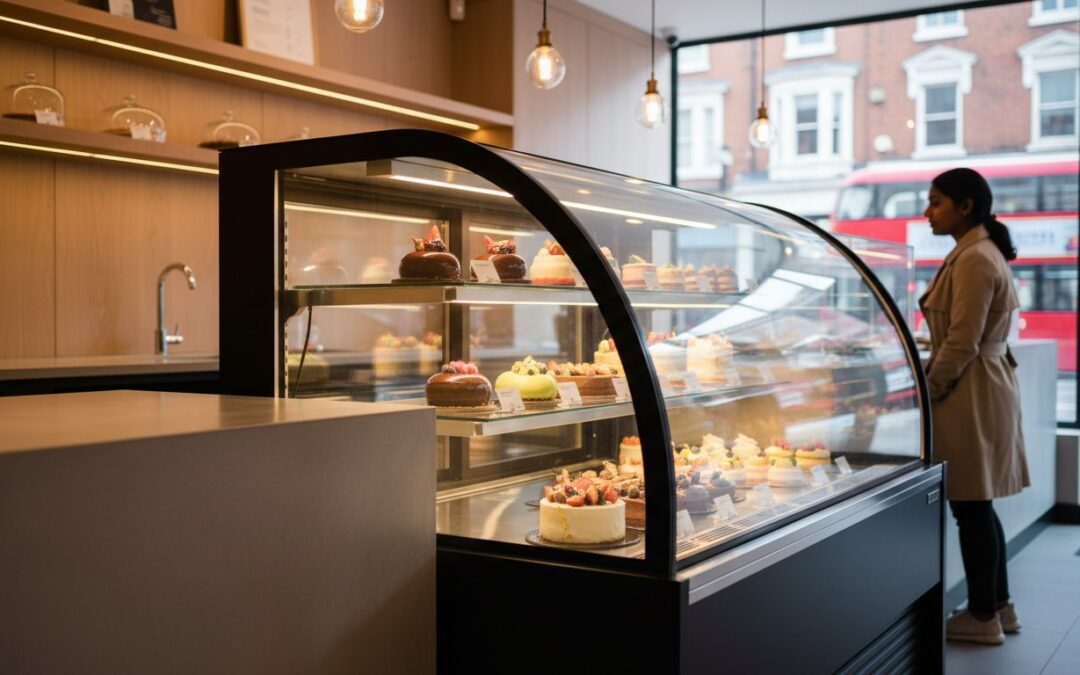
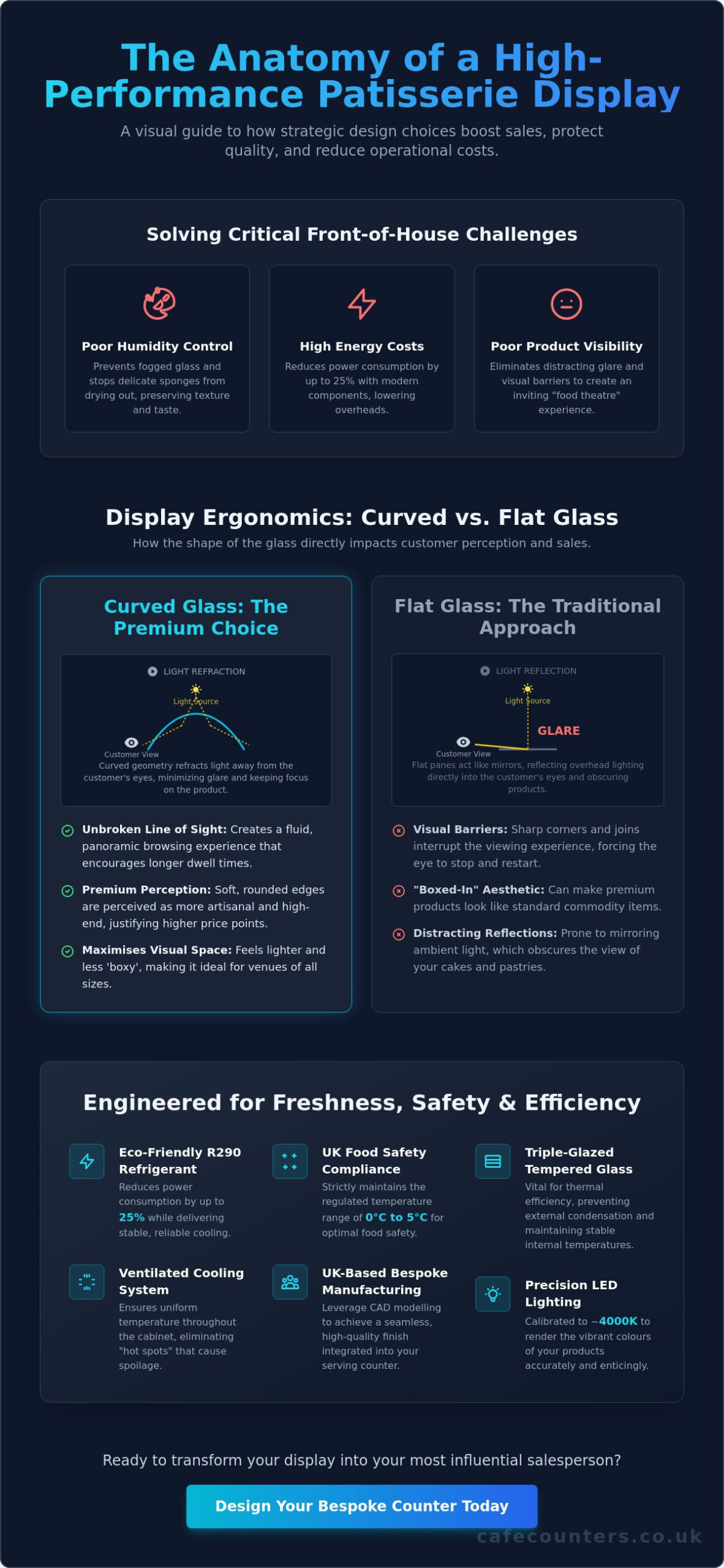
Your front-of-house display is not just a storage unit; it is the most influential salesperson in your shop. We understand that for many hospitality businesses, the frustration of fogged glass or sponges drying out due to poor humidity control can undermine even the finest artisanal creations. It’s a common struggle to balance the high energy costs of commercial units with the need for a high-end, professional aesthetic that invites customers to indulge. Choosing the right curved glass cake display fridge is about more than just looks; it’s a strategic decision to protect your margins and your reputation.
In this guide, we’ll show you how modern patisserie displays leverage engineering to enhance product visibility while strictly maintaining the UK-regulated temperature range of 0°C to 5°C. You’ll discover how features like R290 eco-friendly refrigerant can reduce power consumption by up to 25%, helping you lower overheads without compromising on food safety. We’ll walk you through the technical specifications and design choices that turn a standard counter into a premium presentation space that drives impulse sales and reduces food waste.
Key Takeaways
- Master the principles of visual ergonomics to eliminate distracting glare and create an unbroken line of sight for your customers.
- Safeguard product quality by implementing ventilated cooling and humidity controls that prevent delicate sponges from drying out.
- Determine the ideal configuration for your space by comparing a standalone curved glass cake display fridge against integrated drop-in refrigerated units.
- Leverage the benefits of UK-based bespoke manufacturing and CAD modelling to achieve a seamless, high-quality finish for your serving counter.
- Optimize your operational efficiency by selecting units with energy-efficient components designed for long-term durability and performance.
What is a Curved Glass Cake Display Fridge?
A curved glass cake display fridge is a specialized refrigerated unit engineered specifically for the delicate presentation of patisserie, confectionery, and high-end baked goods. Unlike standard commercial storage, these units act as a bridge between high-performance engineering and retail design. The primary characteristic of these displays is the sweeping, aerodynamic front panel that eliminates the harsh vertical and horizontal joins found in traditional rectangular cases. This design philosophy creates an “unbroken view,” allowing customers to observe the texture and detail of your products from multiple angles without visual interference. In high-end hospitality environments, this transparency is essential for building trust and inviting indulgence.
For boutique cafes and artisan bakeries, the curved glass cake display fridge has become the industry standard because it elevates the perceived value of the items inside. Traditional flat-glass units often suffer from distracting reflections and a “boxed-in” aesthetic that can make premium cakes look like commodity items. By contrast, the curvature of the glass manipulates ambient light to minimize glare, ensuring that the focus remains entirely on your culinary craftsmanship. It’s a strategic investment in “food theatre,” where the display itself signals quality and attention to detail to every person who walks through your door.
Key Components of Professional Chilled Displays
The performance of these units relies on sophisticated materials that go beyond basic cooling. Professional-grade patisserie displays typically utilize triple-glazed tempered glass. This construction is vital for maintaining thermal efficiency and preventing the external condensation that often plagues cheaper models. Within the cabinet, precision LED lighting systems are calibrated to a specific colour temperature, usually around 4000K, to ensure that the vibrant colours of fruit tarts and chocolates are rendered accurately. Internal shelving is equally critical; we often recommend adjustable glass tiers to provide the flexibility needed for seasonal menu changes, ensuring that every shelf remains a focal point regardless of the product’s height.
The Evolution of Patisserie Display Design
Commercial refrigeration has moved far beyond the simple “cool boxes” of the past. Modern refrigeration technology now incorporates CAD-modelled airflow systems that ensure a uniform temperature throughout the cabinet, preventing the “hot spots” that can cause cream to spoil or chocolate to bloom. This evolution reflects a broader shift in the food service industry toward creating a theatrical experience for the consumer. Today’s manufacturing processes have also focused heavily on operational costs. By integrating high-efficiency compressors and eco-friendly refrigerants like R290, modern curved units deliver a high-impact visual presentation while maintaining a significantly smaller energy footprint than their predecessors.
Curved vs. Flat Glass: Which is Better for Your Cafe?
Choosing between flat and curved glass isn’t just a matter of personal taste; it’s a decision that affects how every customer interacts with your products. Visual ergonomics play a central role in this choice. A curved glass cake display fridge follows the natural arc of the human eye as a person walks along a counter. This creates a fluid browsing experience that feels intuitive. Flat glass units, while functional, create sharp corners that act as visual barriers, forcing the eye to stop and restart at every join. By removing these physical edges, you create a more inviting environment that encourages longer dwell times.
The science of light refraction is where the curved design truly outperforms traditional rectangular cases. Flat panes often act like mirrors, reflecting overhead spotlights and windows directly into the customer’s eyes. This glare obscures the very products you’re trying to sell. The geometry of a curved unit refracts light differently, softening the impact and ensuring the contents are visible from multiple heights and angles. There’s also a psychological element to consider. In retail design, softer, rounded edges are consistently perceived as more premium and artisanal. This subtle shift in perception can help justify a higher price point for your specialty cakes and pastries.
When planning your layout, consider how these shapes integrate with your bespoke serving counters. While a curved unit might have a slightly deeper physical profile, its visual footprint often feels lighter because it lacks harsh, boxy lines. This makes it an excellent choice for smaller venues where you want to maximize the sense of space without sacrificing display volume.
Visibility and Light Management
The absence of a heavy metal frame at the front of a curved unit removes the “cage” effect often seen in standard displays. This transparency allows for a more immersive view of your patisserie. To maximize this effect, we recommend units with strategically placed LED strips. Positioning lights along the curve rather than just at the top prevents shadows from forming on the lower tiers. Maintaining this clarity requires adhering to strict food safety standards; consistent internal temperatures are your best defense against the glass fogging that occurs in humid environments.
Operational Efficiency and Maintenance
There’s a common misconception that curved glass is harder to clean. In reality, the lack of sharp corners and internal joins makes it easier to wipe down in a single, continuous motion. For long-term durability, high-quality tempered glass is essential. This material isn’t just about safety; it’s about structural integrity. Curved tempered glass is remarkably resilient to the daily bumps of a busy cafe environment. Additionally, the curved shape can improve thermal retention by reducing the number of joins where cold air might escape, making it a highly efficient choice for high-traffic bakeries.
Technical Specifications: Freshness and Food Safety
A premium presentation is worthless if the product inside loses its integrity. While the visual appeal of a curved glass cake display fridge is undeniable, its true value lies in the technical precision of its cooling system. High-end patisserie requires a stable environment where temperature fluctuations are virtually non-existent. We achieve this through ventilated cooling, a system that uses internal fans to circulate chilled air constantly. This prevents the hot spots common in static units, ensuring that a delicate cream cake on the top shelf remains as fresh as a chocolate tart on the base.
Precision is the hallmark of a professional kitchen. Modern units utilize digital temperature controllers that allow operators to set and monitor the climate to within a fraction of a degree. This accuracy is vital for meeting UK food safety regulations, which require chilled displays to maintain temperatures between 0°C and 5°C. To ensure this performance doesn’t degrade over time, automatic defrost cycles are programmed to prevent ice build-up on the evaporator coils. This methodical approach to maintenance happens behind the scenes, allowing your staff to focus on service rather than equipment troubleshooting.
Advanced Cooling Technologies
Choosing between forced air and static cooling is a critical decision for your venue. Forced air is the preferred choice for high-volume environments because it recovers temperature quickly after the doors are opened. However, this airflow must be gentle; excessive wind speed can dry out sponges and harden frostings. By integrating energy-efficient compressors, we can maintain these delicate conditions while adhering to evolving commercial refrigeration regulations. These systems are designed for long-term operational efficiency, reducing the strain on your utility bills and the environment.
Material Quality in Manufacturing
The internal build of a curved glass cake display fridge is just as important as the glass exterior. We believe food grade stainless steel is the non-negotiable standard for internal bases and shelving supports. It is non-porous, resistant to corrosion, and incredibly easy to sanitize, which is essential for maintaining a sterile environment. To complement this, high-density polyurethane insulation is injected into the cabinet walls to maintain the cold chain effectively. In 2026, sustainability is a core requirement, which is why we utilize R290 refrigerants and low-energy fan motors to ensure your display meets modern ecological standards without compromising on cooling power.
Choosing the Right Model for Your Venue
Selecting a curved glass cake display fridge is a strategic decision that requires a deep understanding of your venue’s operational rhythm. It isn’t just about finding a unit that fits a gap in your counter; it’s about anticipating the volume of your peak service hours. If your bakery specializes in tall, multi-layered cakes, you’ll need the flexibility of adjustable glass tiers. For high-turnover cafes focusing on smaller pastries, a four-tier floor-standing model provides the density required to keep your display looking abundant and enticing from the first customer to the last.
The physical integration of the unit into your workspace dictates the overall professional finish of your shop. You have two primary paths: standalone units or integrate drop-in units. Standalone models offer versatility and can be relocated if you decide to reconfigure your floor plan. However, drop-in units are often the preferred choice for high-end boutique environments because they sit flush with your bespoke serving counters. This creates a seamless, custom-built appearance that suggests a level of permanence and quality that customers instinctively trust.
Sizing and Configuration Options
Standard industry widths typically fall into 900mm, 1200mm, and 1500mm categories. Choosing the right fit requires balancing your display needs with the “breathing room” of your floor plan. A 900mm unit is an excellent companion for a compact boutique cafe, whereas a 1500mm unit acts as a dominant focal point for a busy artisan bakery. Consider the loading mechanism carefully. Rear-loading models are the professional standard for staff-served environments, as they allow for discreet restocking without interrupting the customer’s view or thermal stability. If you’re moving toward a self-service model, front-sliding doors are necessary, though they require more frequent cleaning to maintain that signature clarity.
Maximising ROI through Placement
Strategic placement turns a refrigerated unit into a high-performance profit centre. The “Golden Zone” is the middle shelf, which sits directly in the customer’s natural line of sight. This is the most valuable real estate in your shop and should be reserved for your highest-margin items. By linking your patisserie display counter directly to the till point, you capitalize on impulse purchases. A customer who enters for a coffee is significantly more likely to add a pastry to their order if it is brilliantly illuminated and within arm’s reach during the payment process. If you’re ready to optimize your floor plan for better sales, our team can guide you through the process of selecting the perfect configuration for your specific venue.
The Benefits of Bespoke UK Manufacturing
Investing in a curved glass cake display fridge is a significant step in defining your brand’s physical identity. While off-the-shelf imports might seem convenient, they often lack the structural integrity and precision required for high-end commercial environments. Choosing British-made catering equipment ensures a level of quality control that is deeply rooted in regional artisanal pride. We believe that a display unit should be manufactured to last, acting as a reliable partner in your daily operations rather than a disposable commodity. Our internal production facilities allow us to oversee every weld and join, ensuring that the final product meets our meticulous standards for durability and performance.
The transition from an initial concept to a finished physical space is guided by sophisticated CAD modelling. This technology allows us to create a seamless fit between your refrigeration and your bespoke serving counters, even in venues with challenging architectural features. By visualizing the installation in a digital environment first, we eliminate the guesswork that often leads to delays during on-site assembly. This methodical approach ensures that your custom finishes, whether they involve specific powder-coated colours or integrated stone tops, align perfectly with your brand’s aesthetic. Our end-to-end project management ensures that every detail, from the initial site survey to the final commissioning, is handled with total competence.
Quality Assurance and Longevity
The primary difference between bespoke British equipment and mass-produced imported units is the philosophy of repairability. Imported models often suffer from a lack of available spare parts, leading to costly downtime when a simple component fails. By contrast, our commitment to UK manufacturing means that technical support and replacement parts are always within reach. This long-term perspective is essential for specialized commercial sectors where equipment failure can result in significant food waste. Bespoke design also allows us to solve the problem of awkward floor plans, such as structural pillars or narrow corridors, by tailoring the unit’s dimensions to the specific geometry of your venue.
Professional Installation Services
A successful project doesn’t end when the unit leaves our factory. Professional commissioning is a non-negotiable step to ensure your refrigeration warranty remains valid and the system performs at its peak efficiency. Our project management process includes a comprehensive site survey to assess power requirements and ensure proper ventilation within custom-built counter enclosures. During the final equipment handover, we walk you through a detailed checklist, covering everything from digital controller programming to routine cleaning protocols. This transparency ensures you have total confidence in your new installation from the moment you serve your first customer.
Elevate Your Display Strategy
A successful patisserie presentation requires a deliberate balance between high-end aesthetics and rigorous technical performance. By prioritizing visual ergonomics and precision ventilated cooling, you ensure that your creations remain as safe as they are enticing. We’ve explored how the right equipment choices reduce food waste and lower operational costs while turning your counter into a focal point for customer engagement. Every successful hospitality project begins with a clear vision and the right technical partner to bring it to life.
Since 1991, we’ve specialized in UK-based manufacturing that prioritizes durability over fleeting trends. Our process utilizes advanced CAD modelling to ensure your curved glass cake display fridge integrates perfectly into your unique floor plan. With comprehensive national installation and ongoing support, we provide a steady hand through every stage of your project’s execution. We invite you to explore our range of bespoke UK-manufactured food displays and discover how our expertise can support your business goals. Your vision for a premium, professional space is within reach, and we’re ready to help you build it.
Frequently Asked Questions
How do I stop my curved glass display fridge from fogging up?
Prevent fogging by ensuring your unit features triple-glazed tempered glass and a high-quality anti-condensation fan system. Fogging occurs when warm, humid air hits a cold surface; professional units mitigate this by maintaining a consistent glass temperature. Regular door seal inspections are also vital. If your seals are worn, moist air enters the cabinet and causes immediate condensation, obscuring your premium presentation.
Is curved glass more expensive to repair than flat glass?
Curved glass panels are specialized components that generally carry a higher replacement cost than standard flat panes due to the complex tempering and shaping process. However, sourcing your unit from a UK-based manufacturer ensures these parts are readily available. We recommend using 8mm thick tempered glass to maximize durability, significantly reducing the risk of accidental damage in a busy commercial environment.
What is the ideal temperature for a cake display fridge?
The ideal temperature for a curved glass cake display fridge is between 0°C and 5°C to comply with UK Food Safety Regulations. For maximum protection against bacterial growth, we recommend aiming for a target temperature below 4°C. Precision digital controllers allow you to monitor these levels constantly, ensuring that delicate dairy-based fillings and frostings remain safe for consumption without compromising their texture.
How often should I clean the condenser on my display unit?
You should clean the condenser on your display unit at least once every three months to maintain optimal airflow and cooling efficiency. In dusty environments or high-traffic bakeries, monthly cleaning is often necessary. A blocked condenser forces the compressor to work harder, which increases your energy consumption and shortens the lifespan of your equipment. It’s a simple maintenance task that protects your long-term investment.
Does a curved glass fridge use more electricity than a flat one?
A curved glass fridge doesn’t inherently use more electricity than a flat model; energy consumption depends on the compressor and insulation quality. Modern units utilizing R290 refrigerant and SECOP compressors can reduce power usage by 25% compared to older models. By choosing a unit with high-density polyurethane insulation, you ensure the cold chain is maintained efficiently regardless of the glass geometry or cabinet shape.
Can I get a custom size curved glass display for a small counter?
Yes, bespoke UK manufacturing allows for the creation of custom-sized displays that fit perfectly into compact or non-standard floor plans. We use advanced CAD modelling to scale the curvature and internal shelving to your specific requirements. This ensures that even the smallest cafe counter can benefit from a professional, high-end look without overwhelming the available customer space or disrupting the flow of service.
What is the difference between a deli counter and a patisserie display?
The primary difference lies in the cooling method and shelf design. Deli counters often utilize static or contact cooling for meats and cheeses, whereas patisserie displays require ventilated cooling to distribute air evenly around delicate pastries. Additionally, patisserie units feature multiple glass tiers to maximize vertical visibility, while deli counters prioritize a deep, stainless steel base for high-volume storage of heavier products.
How do I ensure my cakes don’t dry out in a refrigerated display?
Ensure your display uses a ventilated cooling system with controlled airflow to prevent sponges and frostings from drying out. While fans are necessary for even temperature distribution, they must operate at a gentle speed to maintain the natural humidity of your baked goods. Digital humidity controls allow you to fine-tune the internal environment, protecting the integrity of your products for longer periods during service.