
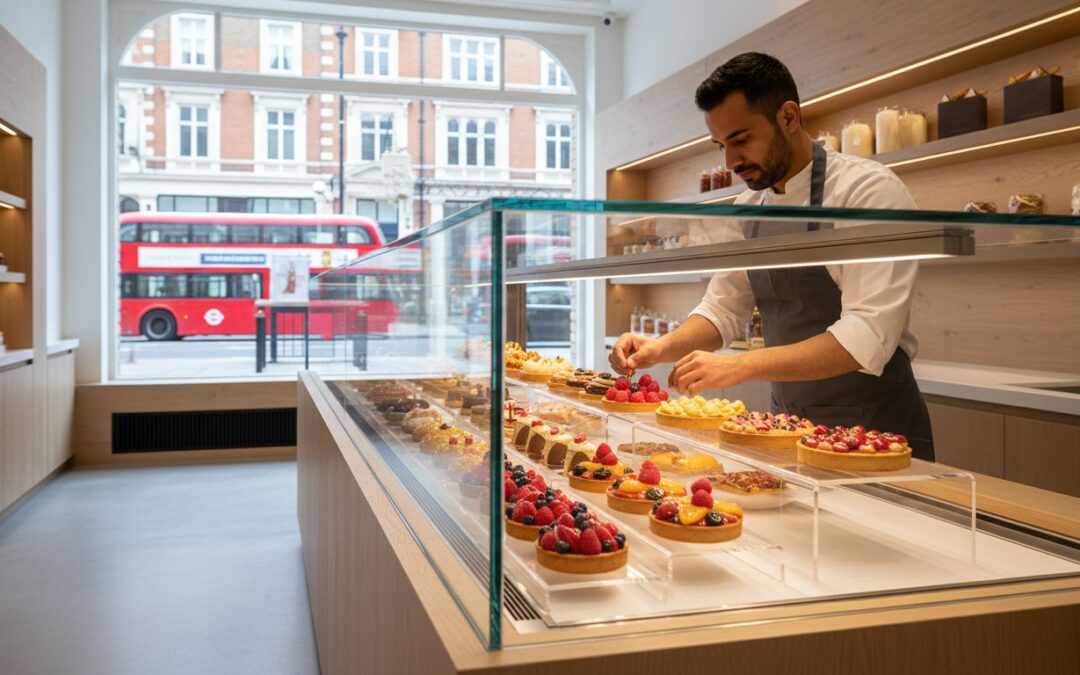
Is your display case a stage for your artistry, or is it quietly compromising the quality of your delicate bakes? Many pastry chefs and cafe owners face the same frustrating reality where vibrant tarts lose their lustre to poor humidity control while energy bills climb due to inefficient cooling. Understanding how to choose a patisserie display counter is no longer just a matter of aesthetics; it’s about selecting a precision-engineered environment that protects your margins as much as your recipes.
We understand that a commercial counter must be both a reliable workhorse and a high-end design statement. This 2026 professional guide will show you how to balance technical precision with thermal efficiency, ensuring your investment meets the latest UK refrigerant regulations without sacrificing visual impact. We will walk you through the transition to low-GWP systems, the rise of minimalist “jewellery box” styling, and the practical steps to integrate bespoke refrigeration into your existing floor plan to drive increased sales.
Key Takeaways
- Learn how glass height and visual positioning influence customer purchasing decisions and drive higher revenue in your cafe or bakery.
- Understand the critical role of humidity control and ventilated refrigeration in preventing delicate creams from skinning and sponges from drying out.
- Discover how to choose a patisserie display counter that aligns with your service model, whether you require high-volume vertical cabinets or interactive serve-over units.
- Master the technicalities of integrating heated and chilled units within a single run to avoid thermal bridging and maintain operational efficiency.
- Gain insights into the importance of professional site surveys and the logistical advantages of opting for UK-based manufacturing for your hospitality project.
The Strategic Impact of Your Patisserie Display Counter
Technical precision must meet psychological appeal. Balancing these impulse purchases with the strict requirements of delicate confectionery is a complex task. A macaron or a cream-filled éclair requires a specific micro-environment to stay fresh and structurally sound. Understanding how to choose a patisserie display counter involves weighing the benefits of bespoke UK manufacturing against modular imports. Units built in the UK are designed for our specific ambient conditions and offer superior longevity. They provide a steady, reliable hand for your business, ensuring that your investment doesn’t just look good on day one but remains a high-performing asset for years to come.
Maximising Product Visibility and Theatre
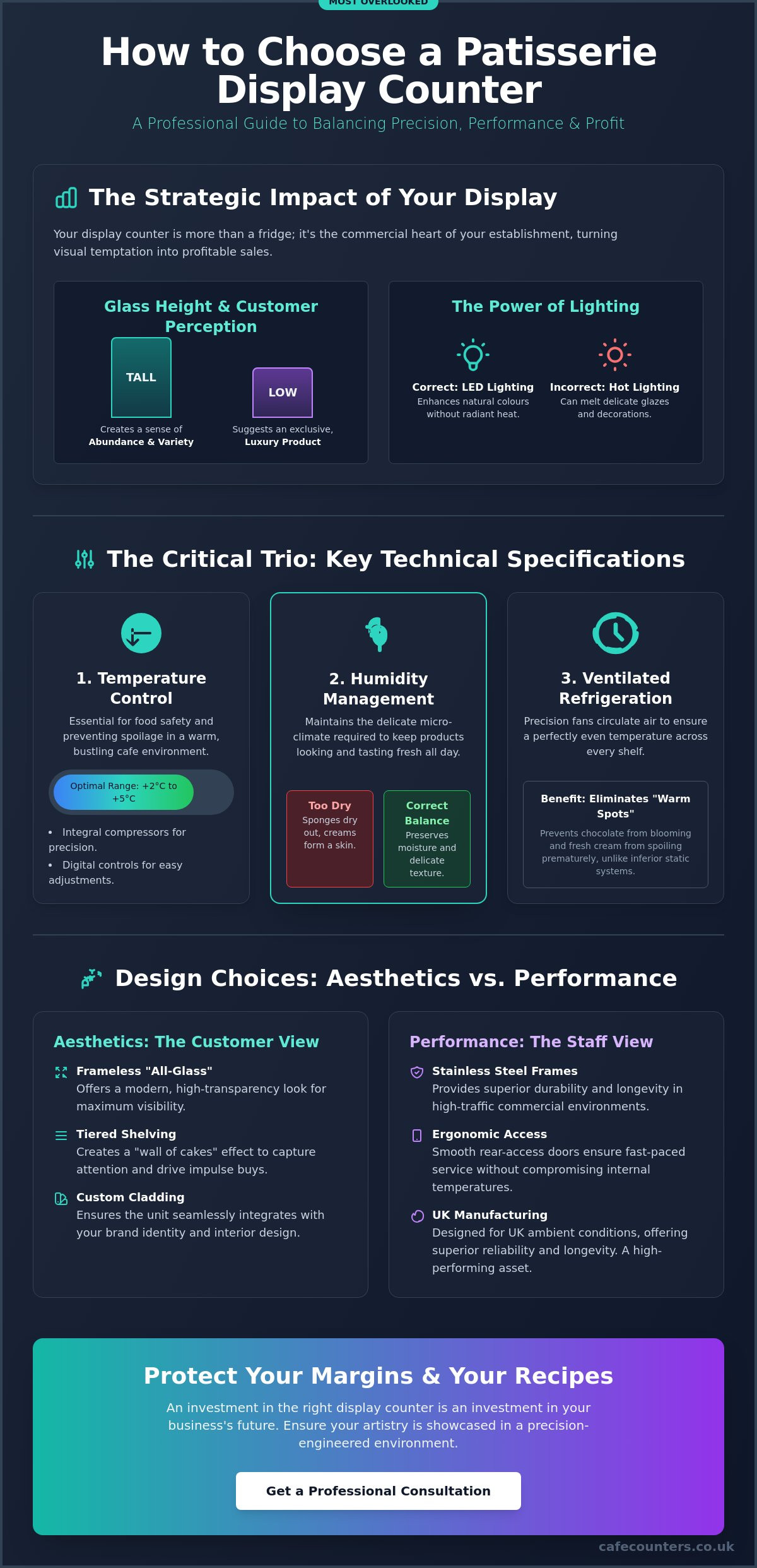
Creating a “wall of cakes” effect using tiered glass shelving is a proven method for capturing attention. The goal is to present your craft as an irresistible experience. The role of LED lighting is vital here; it enhances the natural colours of fruit glazes and chocolate without introducing the radiant heat that can melt delicate decorations. For busy hospitality spaces, integrating refrigerated grab and go display units alongside your served counter allows you to capture different customer segments simultaneously, from the leisurely browser to the time-poor commuter.
Aesthetics vs. Operational Performance
Your choice of materials defines your brand’s physical presence. While frameless “all-glass” designs offer a modern, high-transparency look, robust stainless steel frames provide better durability in high-traffic environments. A well-designed display case must also prioritise the ergonomics of the staff behind it. Rear-access doors should operate smoothly to ensure fast-paced service during the morning rush without compromising internal temperatures. Finally, custom cladding ensures the unit reflects your brand identity, allowing the technical equipment to blend seamlessly with your interior design and project a sense of total competence.
Technical Specifications: Temperature, Humidity, and Efficiency
High-end confectionery is incredibly sensitive to its environment. When researching how to choose a patisserie display counter, the technical specifications are what separate a basic fridge from a professional showcase. Ventilated refrigeration is essential in this sector. Unlike static systems that rely on natural convection, ventilated units use precision fans to circulate air. This ensures a perfectly even temperature across every shelf level, eliminating the “warm spots” that can cause delicate chocolate to bloom or fresh cream to spoil prematurely.
Humidity control is perhaps the most overlooked factor in commercial food displays. If the air inside the cabinet is too dry, your sponge cakes will lose their moisture and cream fillings will develop an unappealing, tough skin. A professional counter manages this micro-climate carefully. It maintains the delicate balance required to keep your products looking as fresh at 4:00 PM as they did at opening time. Adhering to strict food safety and temperature guidelines is a non-negotiable foundation for any reputable hospitality business, and your equipment must be up to the task.
Understanding Temperature Zones
Patisserie requires a specific climate that differs significantly from a standard deli counter. While a deli unit is designed for chilled meats and cheeses, a patisserie display must manage the significant delta between a warm, bustling cafe and the cool cabinet interior. Integral compressors with built-in digital controls allow for precise adjustments. This ensures your éclairs and tarts stay within the optimal +2°C to +5°C range regardless of the shop’s ambient heat or footfall.
The Importance of Thermal Efficiency
Bonded double glazing is the industry standard for 2026. This technology acts as a robust thermal barrier, preventing condensation from obscuring your customers’ view and significantly reducing energy leakage. When combined with heavy-duty seals and double-glazed rear doors, the result is a system that works less to maintain its set point. In 2026 hospitality standards, thermal efficiency is defined as the ability of a unit to maintain precise internal climates while minimising energy consumption through advanced insulation and high-performance component engineering. High-efficiency compressors further reduce long-term operational costs, ensuring your business remains sustainable. If you are planning a new layout, you might view our range of bespoke counters to see these technical features in action.
Choosing the Right Style: Cabinet, Serve-Over, or Drop-In?
The physical configuration of your unit dictates the tempo of your service and the way customers interact with your brand. When evaluating how to choose a patisserie display counter, you must first identify whether your business model prioritises high-volume throughput or an interactive, boutique experience. Cabinet displays are the workhorses of the high-street bakery, utilising vertical space to present a vast array of products in a compact footprint. Conversely, serve-over counters act as a bridge between the artisan and the customer, facilitating a dialogue that often leads to higher average transaction values through assisted service.
For those pursuing a minimalist, high-end aesthetic, integrated drop-in units represent the pinnacle of modern design. These systems allow the refrigeration technology to disappear into the counter structure, leaving only the glass and the product visible to the eye. Regardless of the style you select, ensuring the equipment aligns with Energy Star efficiency criteria is a vital step in managing your long-term overheads. Choosing a style isn’t just about the look; it’s about how that form supports your specific operational flow and customer journey.
Cabinet Style Excellence
In high-traffic UK cafes, vertical cabinets with rear-door access are often the most practical choice. This layout allows your team to restock from behind the counter without interrupting the customer’s view or blocking the shop floor. We recommend units featuring pull-out decks. These are essential for maintaining impeccable hygiene standards, as they allow for thorough cleaning and easy restocking without the need for awkward reaching. When considering your floor plan, standard UK depths of 750mm to 900mm usually offer the best balance between display capacity and clear customer walkways.
The Rise of Integrated Drop-In Units
The demand for bespoke hospitality interiors has led to a significant increase in the use of drop-in units. These are precision-engineered to be installed into custom countertops made from premium materials such as granite, marble, or Corian. This approach achieves a flush, seamless finish that modular units simply cannot match. However, successful installation requires meticulous planning for under-counter ventilation. Without a clear path for heat to escape from the compressor, even the most sophisticated drop-in unit will struggle to maintain performance. This is where professional CAD design and an expert site survey become indispensable to the project’s success.
Engineering the Ecosystem: Integration and CAD Precision
Designing a cohesive servery requires a level of engineering that goes far beyond selecting a standalone unit. Deciding how to choose a patisserie display counter for a full renovation requires you to consider how that unit interacts with adjacent equipment. A frequent oversight in commercial design is “thermal bridging.” This phenomenon occurs when a chilled patisserie unit is placed directly next to a heated display without sufficient insulation. Heat naturally migrates toward the cold zone, forcing your refrigeration system to work significantly harder. This doesn’t just spike your energy bills; it can lead to persistent condensation that obscures your products and ruins the premium “jewellery box” aesthetic.
Building a high-performance servery often involves placing Vision Heated Counters alongside chilled patisserie displays. To ensure both operate at peak efficiency, we engineer thermally broken insulated dividers. These barriers act as a temperature “firewall,” preventing heat transfer between zones. Every unit must also have its own independent airflow path and control system. This independent infrastructure ensures that if one zone requires maintenance, the rest of your display remains fully operational, projecting an image of total competence to your customers.
Precision Planning with CAD
We rely on 3D CAD modelling to eliminate guesswork before any metal is cut in our factory. This process allows us to visualise the entire counter run, ensuring that integrated appliances fit perfectly the first time. It’s about more than just dimensions. We use these technical drawings to map out staff ergonomics and customer flow, identifying potential service bottlenecks before they become physical problems. We frequently collaborate with interior designers at this stage to ensure that the technical requirements of the refrigeration are perfectly balanced with bespoke cladding materials like natural stone or timber.
Managing Heat Transfer in Combined Counters
Effective ventilation is the most critical factor in a combined counter run. Without a clear strategy for heat dissipation, the compressors in your refrigerated units will struggle to maintain the delicate +2°C to +5°C range required for patisserie. Our engineering team designs custom ventilation pathways that pull cool air from the floor and expel warm air away from both the staff and the customers. This meticulous attention to detail is what ensures your equipment remains a reliable partner for years. The durable backbone of this entire system is high-grade stainless steel fabrication, which provides the structural integrity needed to support heavy countertops and precision glass. If you are ready to see how precision engineering can transform your hospitality space, you can contact our design team for a consultation today.
From Factory to Floor: Installation and Commissioning
The transition from a technical CAD drawing to a functioning servery is where many commercial projects falter if they aren’t managed by a steady, experienced hand. When you are deciding how to choose a patisserie display counter, the location of the factory is just as important as the compressor’s wattage. UK-based manufacturing offers a level of quality control and lead-time reliability that imported modular units simply cannot match. It allows for a meticulous site survey, which we consider the most critical step in the entire physical project. This survey ensures that floor levels, access routes, and power supplies are all verified before a single piece of stainless steel is cut in our workshop.
A professional installation alleviates the stress of commercial renovations by projecting total competence from the moment the delivery vehicle arrives. By choosing a partner that manages the process from end to end, you ensure that the technical precision engineered into the unit is preserved during the move. This phase is about more than just positioning equipment; it is about integrating the new display into your existing workflow without causing unnecessary downtime. Understanding how to choose a patisserie display counter also involves looking at the long-term after-sales support and the availability of local maintenance, which are essential for protecting your investment over its operational lifespan.
UK Manufacturing Standards
Choosing a British manufacturer means your unit undergoes rigorous factory testing to ensure it meets exact specifications before it leaves our facility. We pre-assemble counter sections in our workshop, which significantly reduces on-site disruption during the final installation. This approach allows us to maintain a high-end finish while ensuring that every component, from the LED lighting to the heavy-duty seals, performs as intended. The advantage of local parts and UK-based technical support is a signature of quality that provides peace of mind for years to come.
Final Commissioning and Training
The project isn’t finished when the counter is in place; it’s finished when it is fully commissioned and your team is confident in its operation. This final phase involves testing the unit on-site to verify it maintains the precise temperatures and humidity levels required for your specific product range. We guide your staff through essential temperature monitoring and cleaning protocols, ensuring they understand how to preserve the clarity of the glass. Setting these optimal levels is the final touch that guarantees your pastries remain fresh and your display stays premium. Ready to design your perfect display? Consult the experts at TFSE Products Ltd for a bespoke solution.
Investing in Your Establishment’s Future
The team at TFSE Products Ltd brings total competence to every project, from the initial design through to final commissioning. With our UK-based manufacturing facility, we provide a steady hand for businesses seeking high-end customisation and durable performance across the country. We invite you to explore our range of professional patisserie displays at TFSE Products Ltd to see how our comprehensive installation service and technical expertise can bring your vision to life. Let’s build a space that showcases your craft with the precision it deserves.
Frequently Asked Questions
What is the best temperature for a patisserie display counter?
The optimal temperature for a patisserie display counter is between +2°C and +5°C. This specific range ensures that delicate cream fillings and chocolate decorations remain structurally sound while adhering to UK food safety standards. Maintaining this consistent climate prevents the growth of harmful bacteria without freezing the essential moisture in your sponge cakes or tarts.
How do I prevent condensation on my cake display fridge?
You can prevent condensation by selecting a unit equipped with bonded double glazing and ensuring your shop’s ambient humidity is properly controlled. Double-glazed panels act as a robust thermal barrier, keeping the external glass surface closer to the room temperature. It’s also vital to avoid placing the unit in direct sunlight or under air conditioning vents, as these factors trigger external fogging.
Can I put a heated display right next to a refrigerated patisserie unit?
Yes, you can place a heated display next to a refrigerated unit provided you install a thermally broken insulated divider between them. This engineering solution prevents heat from migrating into the chilled zone, which would otherwise force the refrigeration compressor to work significantly harder. Independent control systems for each unit are also necessary to maintain the precise micro-climates required for both zones.
What is the difference between ventilated and static cooling for cakes?
Ventilated cooling uses precision fans to circulate air evenly across all shelves, whereas static cooling relies on natural convection. For professional patisserie, ventilated systems are superior because they eliminate warm spots and ensure every product stays at the same temperature. When researching how to choose a patisserie display counter, prioritising a ventilated system is essential for maintaining the quality of high-density displays.
How much space do I need for a drop-in refrigerated unit?
A drop-in refrigerated unit typically requires a cutout that matches its specific chassis dimensions, plus an additional 100mm to 150mm of clearance beneath the counter for adequate ventilation. You must ensure there is a clear path for the condenser to pull in cool air and expel heat. Failing to provide this space will lead to premature component failure and inconsistent internal temperatures in your display.
Why should I choose a UK-manufactured display counter?
Choosing a UK-manufactured display counter guarantees higher quality control and access to local technical support that imported models cannot provide. Our London-based facility ensures that units are built to withstand specific UK ambient conditions and regulations. Additionally, having a local supply chain means that replacement parts and expert engineers are always within reach, which significantly reduces potential downtime for your business.
Does a patisserie counter need a floor drain?
A patisserie counter doesn’t always require a floor drain if it’s equipped with an automatic condensate evaporation system. These systems use the heat from the compressor to evaporate the water collected during the defrost cycle. However, for high-humidity environments or very large units, a dedicated plumbed drain is often a more reliable choice to prevent water overflow and simplify your long-term maintenance routine.
How often should a commercial display fridge be serviced?
A commercial display fridge should be professionally serviced at least every six months to ensure peak operational efficiency. Regular maintenance includes cleaning the condenser coils, checking refrigerant levels, and inspecting door seals for any signs of wear. This proactive approach helps you avoid unexpected breakdowns and ensures your unit continues to meet the energy efficiency standards required for modern hospitality spaces.