
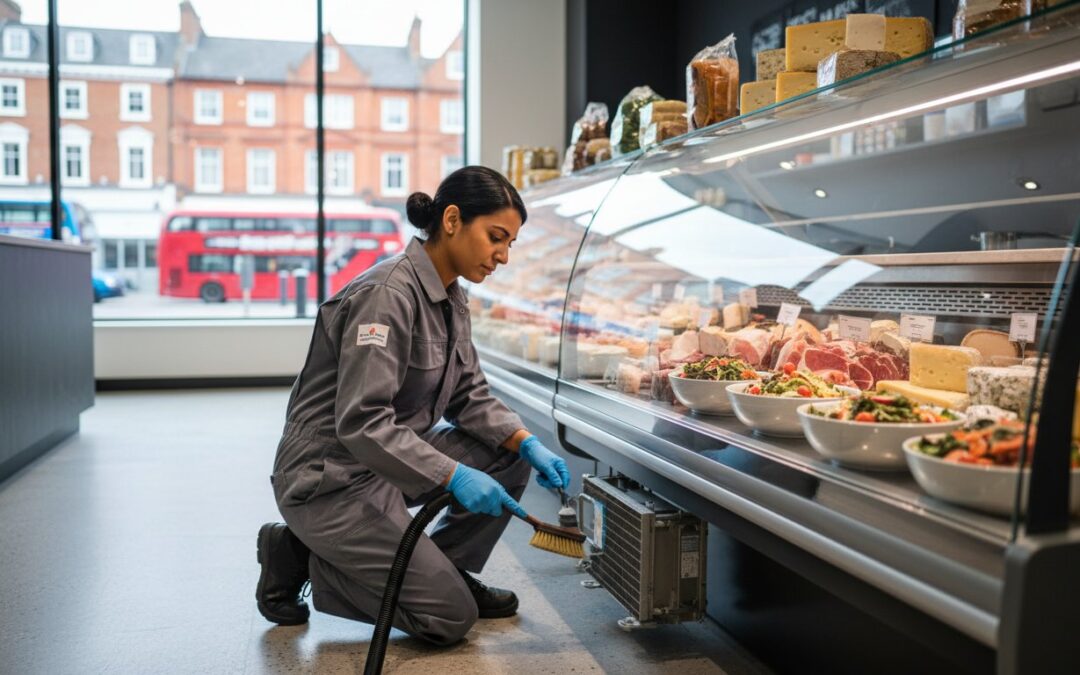
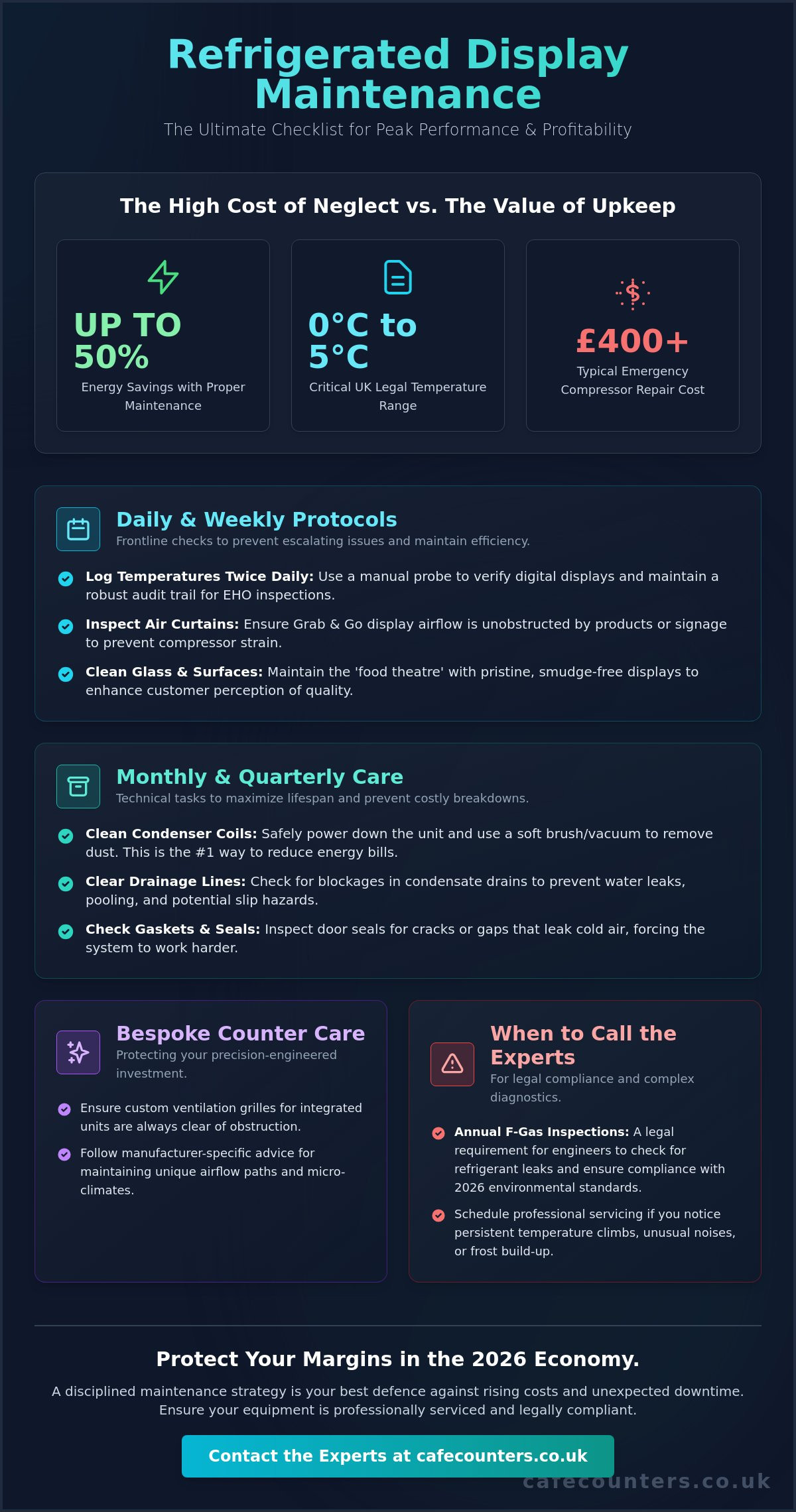
Did you know that a properly maintained cooling system can reduce energy consumption by up to 50% compared to a neglected unit? In 2026, as utility costs challenge the hospitality sector, implementing a robust refrigerated display maintenance checklist is no longer just a recommendation; it’s a financial necessity. Your patisserie displays and deli counters are the frontline of your profitability, and you likely recognize that keeping stock within the legal 0°C to 5°C range is critical for safety, even when the daily rush makes technical upkeep difficult.
We’ve developed this guide to help you master the professional protocols required to protect your investment and ensure your food “theatre” remains pristine. By following these structured steps, you’ll optimize energy efficiency and extend the operational lifespan of your equipment. This article walks you through the necessary daily, monthly, and annual actions to guarantee compliance with UK food safety standards while navigating the complexities of current F-Gas regulations and the latest Ecodesign requirements.
Key Takeaways
- Understand how consistent upkeep prevents emergency compressor repairs and maintains the strict 0°C to 5°C safety range for chilled goods.
- Implement our refrigerated display maintenance checklist to establish daily temperature logging and air curtain inspections that protect your stock and energy efficiency.
- Master the technical steps for monthly condenser coil cleaning and drainage clearing to maximize the operational lifespan of your display units.
- Gain specific insights into managing airflow for bespoke counters and integrated drop-in units to ensure hidden components perform at peak capacity.
- Learn to distinguish between routine internal tasks and the professional F-Gas inspections required to meet 2026 legal and environmental standards.
Why a Refrigerated Display Maintenance Checklist is Vital for UK Business
Maintenance is the silent engine of a successful retail or hospitality space. It isn’t just about fixing components when they fail; it’s about a disciplined approach to asset management that begins the moment a unit is installed. Utilizing a structured refrigerated display maintenance checklist ensures that your deli counters and salad bars operate at peak performance, preventing the sudden, catastrophic failures that disrupt service. In a professional environment, reliability is your most valuable currency.
The financial implications of neglect are stark. While a routine inspection involves a manageable time investment, an emergency call-out typically costs between £60 and £150 before any repairs begin. If a compressor fails due to poor ventilation or dirty coils, the repair bill can reach approximately £400. These figures don’t account for the potential thousands of pounds lost in spoiled stock or the reputational damage caused by an empty display. A proactive strategy is always more cost-effective than a reactive one.
Beyond the mechanics, consistent upkeep preserves the “theatre” of your food presentation. A patisserie display with smudged glass, dim lighting, or frost build-up immediately signals a lack of care to your customers. High-end retail relies on the emotional impact of quality and freshness. When your equipment is pristine and the glass is clear, it reinforces your brand’s commitment to excellence. Understanding the science of refrigeration helps us realize that heat transfer is a delicate balance. Any deviation in component cleanliness disrupts this balance, leading to temperature fluctuations that compromise UK food safety standards, which legally require chilled food to be kept between 0°C and 5°C.
Preserving the Integrity of British Engineering
Bespoke serving counters and integrated drop-in units are precision-engineered investments. Unlike off-the-shelf units, these custom solutions feature specific airflow paths designed to maintain micro-climates within your display. A detailed refrigerated display maintenance checklist caters to these nuances, ensuring that ventilation grilles remain unobstructed and internal production standards are upheld. This level of component care protects your initial capital investment and ensures long-term operational efficiency.
Energy Efficiency in the 2026 Economy
With energy costs remaining a significant overhead in 2026, efficiency is your most effective tool for protecting margins. Statistics show that properly maintained systems can see energy savings of 30% to 50% compared to poorly maintained units. Dirty condenser coils are the primary culprit for skyrocketing electricity bills, as they force the compressor to work harder to achieve the same cooling effect. Regular thermostat calibration and airflow optimization reduce your carbon footprint, making efficient refrigeration a cornerstone of sustainable, modern cafe management.
Daily and Weekly: The Frontline Maintenance Protocols
The success of a high-traffic retail environment relies on the consistency of its smallest habits. While major services are handled by qualified technicians, the longevity of your equipment is often determined by the frontline staff who interact with it every hour. Integrating these specific steps into your refrigerated display maintenance checklist ensures that minor issues don’t escalate into operational crises. It’s about establishing a culture of precision that mirrors the quality of the products you serve.
Daily checks should begin with the air curtain of your Grab & Go displays. These invisible barriers are easily disrupted by overstocked shelves or misplaced signage. If the airflow is broken, the compressor works overtime to compensate for the lost cold air, leading to the energy spikes that drain your monthly margins. A quick visual sweep ensures the path remains clear, allowing the unit to maintain its thermal integrity without unnecessary strain.
The Daily Temperature Log
Digital displays tell one story, but a manual probe often tells the truth. We recommend logging temperatures twice daily to identify fluctuations before they breach the 5°C safety limit. This practice protects high-risk deli products from the bacterial “Danger Zone” and provides a robust audit trail. Consistent records are your best defense during inspections by environmental health officers, proving a standard of total competence and reliability. If you notice a steady climb in temperature over several days, it’s a clear early warning that your cooling system requires professional attention.
Aesthetic Maintenance for Maximum Sales
Weekly protocols focus on the “theatre” of your shop floor. Cleanliness is a silent marketing tool that reinforces your brand’s artisanal pride. When maintaining patisserie display counters, use non-abrasive agents to avoid micro-scratches that dull the glass over time. Crystal-clear visibility is essential for driving impulse purchases. During this deep clean, take a moment to inspect door seals and gaskets for splits or trapped debris. Even a small tear allows cold air to escape, forcing your unit to work harder than necessary and increasing wear on the motor.
Fogging and condensation often result from incorrect humidity settings or blocked internal drainage. Ensure your LED lighting remains bright and is positioned to highlight the textures of your produce without creating heat spots. Maintaining the stainless steel surfaces of your deli counters requires a methodical touch; use a microfiber cloth to preserve the grain of the metal and ensure a hygienic finish. If your current setup struggles with visibility or efficiency, our experts can advise on upgrading to more efficient bespoke serving counters designed for 2026 standards.
Monthly and Quarterly: Technical Component Care
Moving beyond daily habits into quarterly technical care is where you truly protect the mechanical integrity of your investment. While staff handle the aesthetics, your refrigerated display maintenance checklist must include deeper dives into the components that drive thermal exchange. In the 2026 regulatory environment, where the Ecodesign for Energy-Related Products Regulations now mandate clear repairability and energy labelling, keeping these systems at peak performance is a matter of both legal compliance and fiscal discipline.
Quarterly inspections should focus heavily on the moving parts and sensors that regulate your climate. Fan blades, for instance, are often overlooked. Dust accumulation on these blades creates drag, forcing the motor to consume more electricity to maintain the same RPM. A simple wipe-down restores balance and prevents premature motor burnout. Simultaneously, you should test the accuracy of your internal thermostat sensors against an independent, calibrated probe. If your digital readout says 3°C but the probe reads 6°C, your stock is at risk, and your unit is likely cycling incorrectly, leading to unnecessary wear.
Deep Cleaning the Condenser Coils
The condenser coil is the functional heart of your refrigeration system. Its role is to dissipate heat, a process that becomes significantly less efficient when dust and kitchen grease act as an insulating layer. On integral units, these are typically found behind a front or rear grille; remote systems may have their condensers located externally. Using a soft brush or a specialized vacuum attachment, clear the debris from the fins. Be meticulous. Bending these delicate aluminium fins restricted airflow, so work with the grain of the metal. In high-traffic environments or locations near flour-heavy prep areas, this task may need to move from a quarterly to a monthly requirement to maintain the 30% to 50% energy savings associated with clean HVAC systems.
Drainage and Hygiene Protocols
Stagnant water is the enemy of a professional food environment. Biofilm and slime can quickly colonize evaporator trays and drainage lines, leading to blockages and the dreaded “fridge odour” that can permeate your retail space. When maintaining refrigerated grab and go display units, ensure the condensate drainage system is flushed with a food-safe sanitizing solution. This prevents leaks that can damage the internal cabinetry of bespoke counters. During this process, keep a sharp eye out for oily residue or unusual frost patterns on the coils. These are often the first indicators of a refrigerant leak. Given the 2026 restrictions on high-GWP refrigerants and the rising costs of HFCs, catching a leak early prevents an expensive and complex recharge later in the year.
Bespoke Counter Care: Maintaining Integrated Solutions
Bespoke serving counters represent the pinnacle of retail design, merging high-end joinery with precision cooling technology. Unlike standalone units, these integrated solutions require a specialized refrigerated display maintenance checklist that respects the synergy between the shopfitting and the mechanical hardware. Maintaining a custom installation involves protecting the aesthetic finish while ensuring the hidden refrigeration components remain functional. It’s a dual-layered responsibility that preserves both the visual “theatre” and the operational efficiency of your front-of-house space.
When refrigeration is built directly into a counter, the boundary between furniture and machinery blurs. This integration means that a spill on a stone worktop or a blocked decorative grille isn’t just a cleaning issue; it’s a potential mechanical threat. Your staff must understand that every panel and vent serves a purpose in the wider thermal ecosystem of the shop floor. Precision in maintenance ensures that your investment continues to project an image of quality and durability for years to come.
Ventilation and Airflow in Custom Fit-outs
The “air-in, air-out” cycle is the most critical factor for integrated drop-in units. In many custom fit-outs, the refrigeration motor is tucked away within a decorative carcass. If ventilation grilles are obstructed by POS displays, menus, or stock boxes, heat builds up rapidly within the enclosure. This causes the compressor to cycle constantly, leading to the accelerated wear and high repair costs discussed earlier. During our design phase, we utilize CAD modelling to ensure that access panels and vents are positioned logically. This allows your team to clear dust from hidden vents without needing to dismantle the entire counter structure. If you notice the side panels of your counter feeling unusually warm to the touch, it’s a primary sign that your unit is struggling with heat dissipation.
Material-Specific Cleaning Protocols
Specialist materials like Corian, polished stone, and food-grade stainless steel each require distinct care to prevent degradation at the interface points. The hygienic seal between a refrigerated drop-in unit and a bespoke countertop is a high-wear area that needs monthly inspection. Check this seal for signs of lifting or mould. If moisture penetrates the joinery-to-steel interface, it can cause the internal substrate to swell, eventually compromising the structural integrity of the entire counter. For stainless steel back-bar units, always wipe with the grain to avoid micro-scratches that harbour bacteria and dull the professional finish. Specialist patisserie glass often features anti-reflective coatings; use only manufacturer-approved cleaners to prevent “clouding” that ruins the clarity of your food display. If you are planning a new facility or need to replace aging equipment, our team specializes in designing bespoke serving counters that prioritize both visual impact and long-term ease of maintenance.
When to Call the Experts: Professional Servicing Standards
While your internal team manages the daily and monthly tasks on your refrigerated display maintenance checklist, certain technical procedures require the steady, certified hand of a professional. Professional servicing isn’t merely a reactive measure for when a unit fails. It’s a proactive commissioning process that ensures every component, from the thermal expansion valve to the compressor’s electrical draw, aligns with manufacturer specifications. Engaging an expert partner provides the reassurance that your high-end patisserie displays and deli counters are operating with the precision they were designed to deliver. Technical excellence is the foundation of your front-of-house theatre.
The line between routine cleaning and professional servicing is defined by technical risk. Staff can clear a drain, but they cannot calibrate a complex cooling cycle. A professional engineer brings specialized diagnostic tools to measure refrigerant pressures and electrical continuity. This level of detail-oriented care identifies minor component wear before it leads to a catastrophic failure during a busy Saturday service. It’s about total competence.
Understanding F-Gas Regulations and Compliance
The legal landscape for refrigeration has shifted. As of 2026, the service and maintenance of equipment are subject to strict Global Warming Potential (GWP) limits. With the UK’s hydrofluorocarbon (HFC) phasedown targeting a reduction to 24% of the baseline quota by 2027, the availability of older, high-GWP refrigerants is dwindling and costs are rising. Only F-Gas certified engineers are legally permitted to perform leak tests and handle these gases. A professional service ensures your maintenance logbook is fully compliant with UK law; this is often a non-negotiable requirement for equipment warranties and insurance policies. Expert inspections identify microscopic leaks that staff-led checks cannot detect, preventing the gradual loss of efficiency that precedes a total system breakdown.
Planning for Future Performance
A seasoned professional helps you identify the “End of Life” signals that suggest a unit is no longer a viable asset. If you face a compressor repair costing in the region of £400 on a unit designed for high-GWP refrigerants, the return on investment for a modern, energy-efficient upgrade becomes clear. Professional site surveys evaluate the health of your entire display fleet. They provide a roadmap for phased upgrades rather than emergency replacements. When you invest in new bespoke serving counters, professional commissioning is the final, vital step in the installation journey. It verifies that the equipment is perfectly calibrated to your specific environment. This ensures your artisanal vision is supported by a reliable, high-performance technical foundation. This collaborative approach transitions maintenance from a chore into a strategic advantage.
Securing Your Commercial Vision for the Future
Maintaining a high-performance retail environment requires more than just an initial investment; it demands a commitment to technical excellence. By integrating a rigorous refrigerated display maintenance checklist into your operations, you ensure that your deli counters and patisserie displays continue to captivate customers while operating at maximum efficiency. We’ve explored how daily vigilance and quarterly technical care prevent catastrophic failures and protect your margins against the rising energy costs of 2026.
As your expert partner, we understand that every commercial space has unique requirements. Since 1991, TFSE Products Ltd has combined UK-based manufacturing with meticulous CAD modelling and site survey services to bring artisanal visions to life. From the initial concept to comprehensive after-sales and commissioning support, our team ensures your equipment remains a steady, reliable asset in a complex field.
If you’re ready to optimize your display fleet or require guidance on a new installation, Contact TFSE Products Ltd for Expert Advice on Bespoke Counter Solutions. Let’s work together to ensure your retail theatre remains both beautiful and compliant for years to come.
Frequently Asked Questions
How often should I clean the condenser coils on my display fridge?
You should clean your condenser coils at least every three months to maintain mechanical health. In high-traffic environments or locations near prep areas with flour, monthly cleaning is more appropriate to prevent grease and dust buildup. Keeping these components clear is the most effective way to ensure your unit doesn’t consume excessive electricity. Statistics show that clean coils contribute to energy savings of up to 50% compared to neglected systems.
What is the ideal temperature for a refrigerated patisserie counter?
A refrigerated patisserie counter must maintain a temperature between 0°C and 5°C. This range is a legal requirement in the UK to prevent bacterial growth and ensure the safety of chilled food products. Consistently logging these temperatures twice daily helps you identify fluctuations early. It also provides the necessary evidence of total competence and compliance for environmental health officers during their routine inspections of your premises.
Why is my refrigerated display cabinet leaking water on the floor?
Water leaks are typically caused by a blocked drainage line or a cracked evaporator tray. Over time, biofilm and slime can accumulate in the condensate system, preventing water from reaching the tray where it’s meant to evaporate. we recommend flushing the drainage lines with a food-safe sanitizing solution as part of your technical routine. This simple step prevents moisture damage to your bespoke counter joinery and maintains a hygienic floor surface.
Can I use standard household glass cleaner on my commercial display?
You shouldn’t use standard household glass cleaners on commercial displays as they often contain ammonia. These harsh chemicals can degrade food-grade stainless steel and damage specialist anti-reflective coatings on high-end patisserie glass. We suggest using non-abrasive, food-safe agents and a microfiber cloth. This professional approach preserves the clarity of your display without leaving chemical residues that could potentially compromise your delicate food products.
How can I reduce the energy consumption of my refrigerated counter?
Reducing energy consumption is best achieved by following a structured refrigerated display maintenance checklist. Focus on cleaning the condenser coils and ensuring that the air curtain on grab and go units remains completely unobstructed. You should also verify that door gaskets are airtight. Properly maintained systems can see energy savings of 30% to 50%, which helps to offset the rising utility costs facing the 2026 hospitality sector.
What should I do if my display fridge is making a loud buzzing noise?
A loud buzzing noise usually indicates a failing fan motor or a physical obstruction in the fan blades. If the noise is accompanied by a vibration, it’s often a sign that the compressor is under excessive strain due to dirty coils. You should switch off the unit and inspect the fan area for debris or ice buildup. If the sound persists after cleaning, it’s time to call a certified engineer to prevent a total motor burnout.
Is it normal for my open-front grab and go unit to feel warm near the top?
It’s normal for the external top panel to feel slightly warm, but the internal food zone must remain cold. Heat is a natural byproduct of the refrigeration process and the integrated LED lighting systems. However, if the top of the actual display area feels warm, it’s likely that the air curtain is blocked or the fan is failing. Regular visual inspections ensure that the “air-in, air-out” cycle isn’t disrupted by overstocking.
How do I know if my door gaskets need replacing?
You can identify failing gaskets by looking for visible splits, brittle material, or light escaping when the door is closed. A simple method is the “paper test” where you close the door on a sheet of paper; if it slides out easily, the seal is compromised. Replacing a door gasket typically costs around £130. This is a minor investment compared to the energy wasted by a unit that’s constantly leaking cold air.