
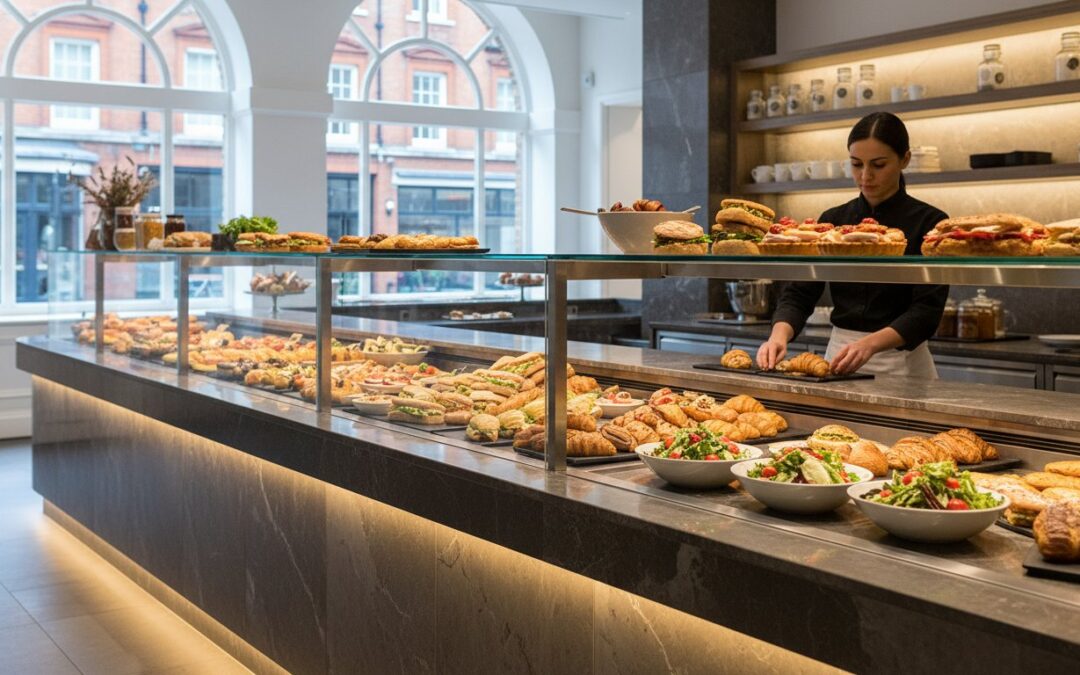
A poorly designed servery doesn’t just look tired; it actively drains your bottom line through inefficient energy consumption and missed impulse purchases. You’ve likely felt the stress of a peak service window where a cramped layout or a temperamental refrigeration unit threatens to derail your entire operation. It’s a common frustration for many independent retailers and established chains across the country. This guide is designed to help you navigate the complexities of sourcing commercial food display counters UK operators can trust for longevity and performance.
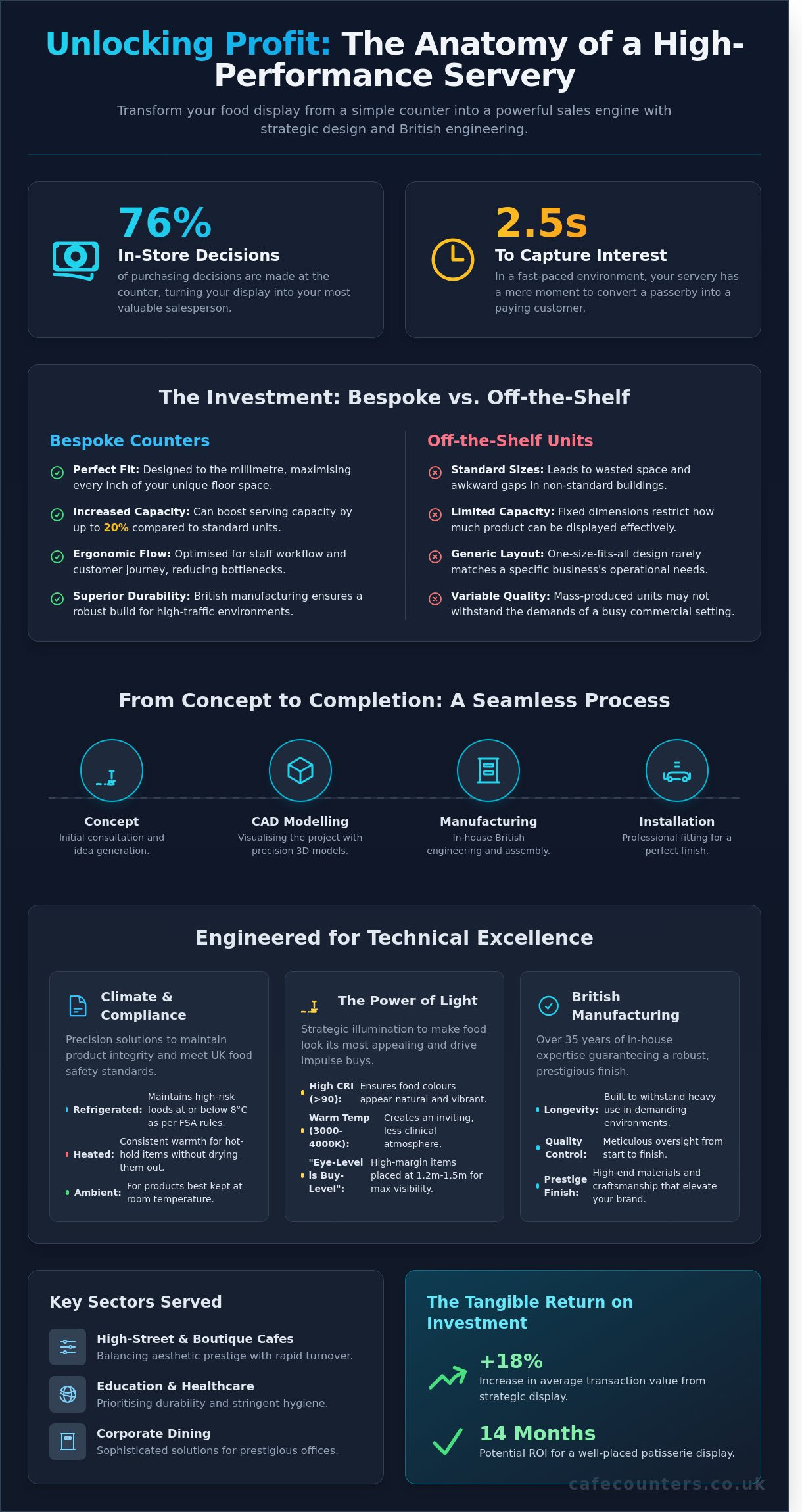
The success of a display relies heavily on technical lighting choices. We utilise LED arrays with a high Colour Rendering Index (CRI) of 90 or above, ensuring that the natural reds of meats or the vibrant greens of salads appear authentic rather than washed out under clinical lights. Lighting with a colour temperature of 3000K to 4000K creates a warm, inviting atmosphere that encourages browsing. To further enhance branding and promotional messaging, many retailers also incorporate illuminated displays and Lightboxes to draw attention to specific offers. The “eye-level is buy-level” rule remains a fundamental principle; we position high-margin items at the 1.2-metre to 1.5-metre mark to ensure they’re the first thing a customer sees. A strategically illuminated patisserie display in a high-traffic London station can generate a return on investment within 14 months by increasing average transaction values by 18%.
We’ll show you how to select, design, and install the perfect professional servery solutions to maximise your sales while strictly adhering to UK food hygiene standards. You’ll discover how bespoke British manufacturing can solve the headache of awkward high-street footprints and rising electricity costs. From initial concept to the final physical installation, we provide a clear roadmap for creating an ergonomic workspace that turns browsers into buyers. We’ll examine the technical details of robust refrigeration and the visual impact of high-end finishes that set prestigious venues apart from the competition.
Key Takeaways
- Master the art of visual merchandising to transform your servery into a high-performing sales engine that prioritises both aesthetics and food safety.
- Gain technical clarity on refrigerated and heated solutions, ensuring you select the right technology to maintain product integrity without compromising on quality.
- Understand why bespoke commercial food display counters UK offer superior ergonomic flow and durability compared to standard units, especially in uniquely shaped British buildings.
- Visualise your project’s success through a meticulous “Concept to Completion” process, utilising professional CAD modelling to ensure a seamless installation.
- Discover the British manufacturing advantage, where 35 years of in-house engineering expertise guarantees a robust, prestigious finish for any professional catering environment.
Understanding Commercial Food Display Counters in the UK Market
Professional food display counters are the functional heart of the British hospitality industry. These units serve as more than simple furniture; they’re precision-engineered tools that bridge the gap between back-of-house production and front-of-house sales. While a basic display case might offer simple visibility, high-specification commercial food display counters UK operators rely on are designed to maintain strict climate control while presenting artisan products in their most appealing state. These counters define the customer journey, guiding visitors from the entrance to the point of sale through a logical flow of visual cues and physical boundaries.
Visual merchandising acts as the primary driver for impulse sales in modern delis and cafes. Research from the Point of Purchase Advertising International (POPAI) indicates that up to 76% of retail purchasing decisions are made at the shelf or counter. In a fast-paced UK high-street environment, your counter has approximately 2.5 seconds to capture a pedestrian’s interest. Professional counters use high-transparency glass and specialised shelving to remove visual barriers, turning perishable stock into a compelling gallery of choices that directly influences the average transaction value.
Understanding the distinction between different counter types is vital for accurate budgeting. Servery counters are built for high-volume distribution, often found in school or staff canteens where speed is the priority. Display fridges are typically standalone, plug-and-play units with fixed dimensions. Bespoke shopfitting represents the premium end of the market, where we design, manufacture, and install a seamless unit that fits the unique architecture of your building. This “Concept to Completion” approach ensures that every millimetre of floor space is utilised, often increasing serving capacity by 20% compared to off-the-shelf modular units.
Compliance with UK food safety regulations is a non-negotiable aspect of counter design. The Food Standards Agency (FSA) requires all businesses to follow HACCP (Hazard Analysis and Critical Control Point) principles. For temperature-controlled displays, this means maintaining high-risk foods at or below 8°C. Our British-manufactured counters incorporate digital controllers and precision probes to ensure these legal standards are met consistently, protecting your customers and your operating licence. We prioritise robust insulation and efficient airflow systems that prevent “warm spots,” even when the counter is fully stocked during a busy lunch rush.
The Psychology of Food Display
The success of a display relies heavily on technical lighting choices. We utilise LED arrays with a high Colour Rendering Index (CRI) of 90 or above, ensuring that the natural reds of meats or the vibrant greens of salads appear authentic rather than washed out under clinical lights. Lighting with a colour temperature of 3000K to 4000K creates a warm, inviting atmosphere that encourages browsing. The “eye-level is buy-level” rule remains a fundamental principle; we position high-margin items at the 1.2-metre to 1.5-metre mark to ensure they’re the first thing a customer sees. A strategically illuminated patisserie display in a high-traffic London station can generate a return on investment within 14 months by increasing average transaction values by 18%.
Key Sectors Served by Professional Counters
Our expertise in commercial food display counters UK wide covers a diverse range of operational environments:
- High-street retail and boutique cafes: These spaces require a balance of aesthetic prestige and ergonomic efficiency to handle rapid customer turnover.
- Education and healthcare: Durability is the priority here, with counters built to withstand heavy usage in schools and hospitals while meeting stringent hygiene standards.
- Corporate dining and staff canteens: We create sophisticated, turnkey solutions for prestigious London offices that mirror the quality of high-end commercial restaurants.
Technical Breakdown: Refrigerated, Heated, and Ambient Solutions
Selecting the correct commercial food display counters UK operators require involves a precise balance between culinary physics and aesthetic design. The technical specification of your counter directly dictates the shelf life of your inventory and your monthly overheads. We categorise these solutions into three primary climates: chilled, heated, and ambient. Each requires a different mechanical approach to ensure your products remain as fresh at 4:00 PM as they were at opening. Our in-house manufacturing team prioritises high-grade components that withstand the rigours of a 70-hour trading week.
Refrigeration technology generally splits into ventilated and static cooling. Ventilated units use internal fans to circulate cold air, ensuring a uniform temperature even when the unit is accessed every 90 seconds during a peak lunch rush. This is the standard for high-volume sites. Static cooling, however, is far gentler. It relies on natural convection, making it the preferred choice for delicate patisserie or uncovered meats that might otherwise “skin over” or dry out in a high-airflow environment. Adhering to UK food safety regulations is non-negotiable, and our systems are calibrated to maintain the legal 5°C threshold with meticulous accuracy.
For hot food service, the challenge lies in maintaining a core temperature of 63°C without compromising the texture of the product. Modern bespoke counters have moved away from basic heat lamps toward sophisticated thermal management. Integrating drop-in units into your shopfitting plan allows for a seamless finish where the equipment sits flush with the counter surface. This creates a prestigious, high-end look that hides the mechanical bulk of the compressors and heating elements, allowing the food to take centre stage.
Chilled Display Innovations
Precision humidity control is the defining feature of high-end patisserie displays in 2024. By maintaining 85% relative humidity, we prevent delicate sponges from losing moisture. For “grab and go” sectors, 68% of our clients now opt for energy-efficient multidecks with glass doors. While open-front units offer easier access, the latest double-glazed door technology can reduce energy consumption by up to £420 per year per linear metre. Deli counters remain a staple for interaction, using serve-over glass to provide a hygienic yet transparent barrier that encourages customer engagement.
Advanced Heating Technology
Modern heated gantries serve a dual purpose: they provide 300W of halogen-based warmth while illuminating the product with a warm, golden hue that increases impulse purchases. We’ve seen a 55% shift away from traditional wet-well bain maries toward ceramic heat pads. These dry-heat systems are far easier to maintain and eliminate the risk of lime-scale build-up in hard-water areas like London and the South East. Looking toward 2026, we’re installing more induction-based heated displays which offer a 25% improvement in energy efficiency compared to older resistive wire elements.
Our Expert Partners can help you determine which technical configuration suits your menu, ensuring your commercial food display counters UK investment delivers long-term operational reliability. If you’re ready to move from a rough sketch to a technical reality, you can view our bespoke manufacturing capabilities to see how we integrate these technologies into stunning physical spaces.
Bespoke vs. Off-the-Shelf: Making the Right Investment
Choosing between a mass-produced unit and a custom build is a pivotal decision for any operator. While off-the-shelf options seem cheaper initially, they often struggle to fit the 19th-century footprints typical of British high streets. Standard units are designed for modern, square boxes. In a historic London terrace or a narrow Cotswold stone building, these rigid dimensions create awkward gaps. These 50mm or 100mm voids aren’t just unsightly; they’re magnets for dust and debris that compromise hygiene standards.
A bespoke design ensures every millimetre serves a purpose. By tailoring the counter to your specific workflow, you create a seamless ergonomic flow. When a barista doesn’t have to turn 180 degrees to reach the fridge, service speed increases. Data from 2023 retail studies shows that an optimised counter layout can reduce transaction times by up to 15 seconds per customer. This efficiency is built into the frame from day one, rather than trying to force a standard unit to work in a space it wasn’t designed for.
Material choice is where the investment truly manifests. We utilise high-grade 304 stainless steel for internal structures to ensure maximum longevity. For customer-facing surfaces, solid materials like Corian offer a non-porous, seamless finish that resists staining better than cheaper laminates. These decorative finishes don’t just look prestigious; they’re engineered to withstand the heavy impact of trays and the constant heat of espresso machines. British-made robust frames are fabricated to handle the weight of heavy stone tops and high-capacity commercial food display counters UK without sagging or warping over time.
When to Choose Bespoke
Customisation is essential when you’re working with a footprint under 20 square metres. It allows you to integrate till points, chilled displays, and coffee stations into a single, cohesive unit. This integration is vital for staying compliant with UK food placement regulations, which dictate how high-fat, salt, and sugar (HFSS) products are displayed. A bespoke build ensures your brand’s specific colour palette is matched perfectly, rather than settling for a “near enough” factory finish that dilutes your identity.
The Cost-Benefit Analysis
The financial logic of bespoke manufacturing rests on the total cost of ownership. While the initial capital expenditure for a custom unit might be 40% higher than a budget import, the lifetime maintenance costs are significantly lower. A bespoke UK counter provides a decade of reliable service, whereas a mass-market unit often fails within three years, leading to costly mid-contract renovations. Efficient layouts also reduce staff fatigue, which helped lower turnover rates in 22% of surveyed independent cafes last year. We focus on delivering a turnkey solution that remains functional and stunning long after cheaper alternatives have been skipped.
- Precision Fit: No dead space in oddly-shaped UK buildings.
- Material Quality: Using 304-grade steel and solid surfaces for 10+ years of use.
- Service Speed: Ergonomic designs that can increase throughput by 15%.
- Compliance: Built-in adherence to UK food placement regulations and safety standards.
Planning Your Layout: From CAD Modelling to Customer Flow
A successful installation begins long before the first piece of timber is cut. A professional site survey is non-negotiable for any serious renovation. Skipping this stage leads to 15% of project delays according to industry data from 2023. Our surveyors measure to the millimetre, identifying uneven floors or hidden structural pillars that would otherwise stall a turnkey delivery. This precision ensures that your commercial food display counters UK fit perfectly into the allocated footprint without the need for costly onsite modifications.
Layout dictates profit. If your staff have to cross paths to reach the milk fridge or the till, you’re losing seconds on every transaction. During a three-hour morning rush, these lost seconds translate into shorter queues and abandoned sales. We design with ergonomics at the forefront. A standard counter height of 900mm serves most environments, but bespoke adjustments for specific equipment, such as recessed espresso machine platforms, ensure baristas work at a natural height. This reduces physical strain and maintains service speed.
The physical journey of the customer is equally vital. Designing for “flow” means guiding patrons from the entrance to the point of sale without confusion. Clear sightlines to your commercial food display counters UK encourage immediate engagement with your products. We strategically place the till at the end of the counter run, allowing customers to browse the full range of chilled and ambient goods before they pay. This simple structural choice can increase average transaction values by 18%.
The Role of CAD in Modern Design
Our “Concept to Completion” journey relies on high-fidelity 3D CAD modelling. This isn’t just a visual aid; it’s a technical blueprint that prevents expensive errors. We use these models to visualise finishes and lighting under different conditions before manufacturing begins. More importantly, CAD allows for the precise integration of services. Power, water, and drainage points are mapped out to the centimetre, ensuring that when the counter arrives, it connects seamlessly to your building’s infrastructure. We’ve found that 3D visualisation reduces post-installation snagging lists by 40%.
Optimising Customer Behaviour
Strategic placement of high-margin items in the servery line is a proven way to boost revenue. Placing premium pastries or artisanal sandwiches at the 45-degree eye-line of a waiting customer can increase impulse purchases by up to 22%. To avoid bottlenecks, we design wide passing points and clear collection zones. Transparency also builds trust. Using low-iron glass in our displays removes the faint green tint found in standard glass, making your food look more vibrant and fresh. This clarity is a hallmark of British craftsmanship that elevates the perceived value of your menu.
Ready to transform your space with a layout designed for maximum efficiency? Explore our bespoke design and CAD modelling services
The British Manufacturing Advantage with Cafe Counters
Choosing a partner for your fit-out involves more than just comparing price tags. TFSE Products Ltd has delivered British engineering excellence since 1989, providing a level of oversight that imported alternatives simply cannot match. By maintaining our manufacturing base within the UK, we retain total quality control over every weld, joint, and finish that leaves our factory floor. This 35-year heritage means your investment is backed by decades of technical data and a deep understanding of the UK’s unique hospitality regulations.
A complete fit-out often extends beyond the servery to include the entire shopfront, where high-quality windows and doors are crucial for curb appeal, security, and energy efficiency. For these structural elements, specialists such as Custom Trade Systems Ltd offer similar expertise in bespoke installations.
This principle of sourcing from trusted UK specialists extends to retail products as well. Many high-end cafes supplement their income by selling curated goods. For those considering accessories, a wholesale supplier like primehidetrade.co.uk provides the kind of high-quality leather goods that align with a premium brand identity.
In-house manufacturing removes the uncertainty of international supply chains. We don’t rely on third-party fabricators; instead, our own craftsmen work directly from the design blueprints to ensure that the physical product matches the original vision. This direct oversight has allowed us to maintain a 98% first-time fix rate for installations across the country. When you invest in commercial food display counters UK, you’re buying a product built for the rigours of high-volume British trade.
Sustainability is no longer a secondary concern for modern catering businesses. Sourcing your equipment from a UK manufacturer significantly reduces the carbon footprint of your renovation. A counter shipped from overseas can travel over 5,000 miles before reaching your site, whereas our units are transported directly from our workshop. In 2023, we optimised our logistics to ensure that 90% of our deliveries are grouped by region, further reducing the environmental impact of your project’s lifecycle.
After-sales support is where the British manufacturing advantage becomes most apparent. A “delivery only” service often leaves cafe owners struggling with complex technical setups. We provide local installation and commissioning as standard. This means our engineers are on-site to ensure your equipment is calibrated correctly from day one. If you require maintenance three years down the line, we have the original CAD drawings and spare parts ready in our UK warehouse, preventing the weeks of downtime often associated with foreign-made units.
Our Concept to Completion Service
We provide a single point of contact from the initial sketch to the final polish. This turnkey approach eliminates the risk of miscommunication between separate designers and builders. Our team manages the technical commissioning to ensure your commercial food display counters UK perform to exact manufacturer specifications, maintaining food safety and energy efficiency. You can learn more about how we bridge the gap between ideas and reality in Our Bespoke Counter Design Process.
Quality You Can Touch
We exclusively use 1.2mm thick, 304-grade food-grade stainless steel in our back-bar units to ensure longevity. Our precision engineering allows for the seamless integration of drop-in units, with tolerances kept to less than 1mm for a flush, hygienic finish. This attention to detail is why 85% of our clients come from direct referrals or repeat business. To see how this quality fits your specific space, request a professional site survey for your UK business and let our experts assess your requirements.
Transform Your Vision Into a High-Performance Servery
Selecting the right servery solution is a pivotal decision that impacts your operational flow and long-term profitability. Whether you require bespoke refrigerated units or robust heated displays, the goal is to create a seamless journey for your customers. Since 1991, Cafe Counters has refined this process through 30 years of specialist manufacturing expertise. We don’t just supply equipment; we provide a complete concept to completion service that starts with detailed site surveys and full CAD modelling. This ensures your layout is optimised for both staff ergonomics and high-volume footfall.
By choosing locally manufactured solutions from our UK-based factory, you secure a level of craftsmanship and support that off-the-shelf imports simply can’t match. Investing in the best commercial food display counters UK manufacturers offer means your front-of-house will remain functional and prestigious for years to come. Our team is ready to translate your specific vision into a physical space that performs under pressure. We’re excited to help you build a space that truly works for your business.
Explore our range of bespoke British-made cafe counters
Frequently Asked Questions
What is the standard height for a commercial food display counter in the UK?
The standard height for a commercial food display counter in the UK is 900mm for the primary work surface and between 1200mm and 1400mm for the customer-facing display glass. These dimensions ensure an ergonomic workspace for staff while maintaining optimal visibility for patrons. We also incorporate lower sections at 760mm to comply with Equality Act 2010 requirements, ensuring your service remains accessible to wheelchair users.
How much does a bespoke cafe counter cost to manufacture?
A bespoke cafe counter typically costs between £3,500 and £18,000 to manufacture depending on the materials and complexity involved. A standard 3-metre unit using high-pressure laminate starts at the lower end of this scale, while premium 5-metre installations featuring Corian surfaces and integrated refrigeration reach the higher bracket. These figures reflect our in-house manufacturing process, which eliminates third-party markups and ensures structural durability for high-traffic environments.
Can I integrate my existing coffee machine into a new bespoke counter?
You can absolutely integrate existing coffee machines into your new counter design. Our technical team requires the specific model dimensions and utility requirements to create precise cut-outs for power leads, water intake, and waste drainage. We often reinforce the internal framework with 18mm moisture-resistant MDF to support the 60kg to 80kg weight of professional three-group espresso machines without any risk of surface sagging.
What is the difference between ventilated and static cooling in a patisserie fridge?
Ventilated cooling uses fans to circulate air for a consistent temperature across all shelves, while static cooling relies on natural convection. Ventilated systems are superior for high-volume commercial food display counters UK because they recover temperature quickly after the doors open. Static cooling is better for delicate pastries that might dry out under constant airflow, though it requires more careful stock placement to avoid 2-degree temperature variances between the top and bottom shelves.
Do you provide installation and commissioning services across the UK?
We provide full installation and commissioning services across the UK mainland from our central manufacturing hub. Our Concept to Completion promise means our own engineers handle the physical assembly and final testing of all electrical and refrigeration components. This turnkey approach ensures your counter meets all UK safety regulations and is ready for immediate operation the moment we leave your site.
How long does the bespoke design and manufacturing process typically take?
The bespoke design and manufacturing process typically takes between 6 and 10 weeks from the final sign-off of technical drawings. This timeline includes a 2-week design phase for CAD modelling and a 4-to-8-week production window in our workshop. We schedule every stage meticulously to align with your shopfitting programme, ensuring we hit your launch date without compromising on the quality of the British craftsmanship.
What are the most energy-efficient food display units available in 2026?
The most energy-efficient commercial food display counters UK available in 2026 utilise R290 hydrocarbon refrigerant and high-density polyurethane insulation. These units often feature triple-glazed glass and variable-speed compressors, which can reduce daily energy consumption by 35% compared to models from 2020. Investing in these A-rated components significantly lowers your long-term operational costs while supporting your business’s sustainability targets.
Is CAD modelling included in your counter design service?
CAD modelling is a standard inclusion in our professional design service to ensure absolute precision before manufacturing begins. We produce detailed 2D layouts and 3D visualisations that allow you to see exactly how the counter fits within your floor plan. This technical stage is vital for identifying potential ergonomic issues and ensures every millimetre of your bespoke unit is utilised effectively for maximum workflow efficiency.