
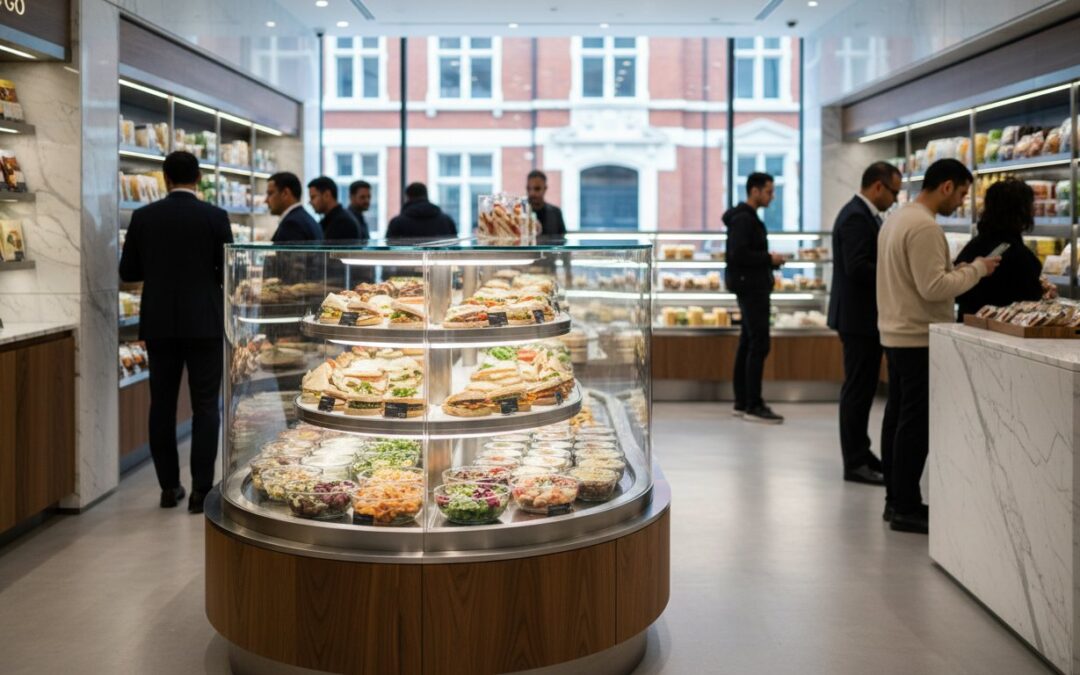
Your high-end retail space is losing up to 15% of its potential daily revenue if your display hardware prioritizes aesthetics over precise thermal regulation. You likely already know that a first impression is everything in the competitive UK hospitality sector. However, it’s incredibly frustrating to see premium ingredients lose their appeal because of dated equipment or poor customer flow. Many operators find that a bottleneck at the counter can reduce peak-time efficiency by as much as 25%, making it essential to invest in smarter commercial food display ideas that prioritize both form and function.
As your expert partner in bespoke shopfitting, we believe your hardware should work as hard as your staff. You’ll learn how to implement professional design strategies that merge British-built durability with ergonomic layouts to eliminate bottlenecks and keep your stock in peak condition for longer. This guide provides a clear roadmap from concept to completion, covering high-performance hardware solutions and the specific 2026 design trends that will define a prestigious, high-conversion retail environment.
Key Takeaways
- Master the psychology of visual merchandising to ensure your presentation serves as the strongest driver for high-margin impulse sales.
- Implement strategic layout techniques, including Grab & Go positioning and Z-pattern browsing, to guide the customer journey effectively through your space.
- Discover how modern innovations in temperature control and energy-efficient hardware protect your margins by reducing food spoilage and operational costs.
- Explore bespoke commercial food display ideas that combine contemporary design trends with the robust durability of professional British craftsmanship.
- Understand the critical role of a professional site survey in ensuring a seamless transition from your initial concept to a high-performance, turnkey installation.
The Psychology of Visual Merchandising in Foodservice
Visual merchandising acts as the silent salesperson of the catering world. Before a customer tastes a single morsel, they’ve already judged the quality, freshness, and value of your offering based on sight alone. This “first bite” occurs purely through the eyes, making the psychology of visual merchandising the strongest driver of impulse sales in a retail environment. Effective commercial food display ideas don’t just show products; they tell a story of quality that justifies a premium price point.
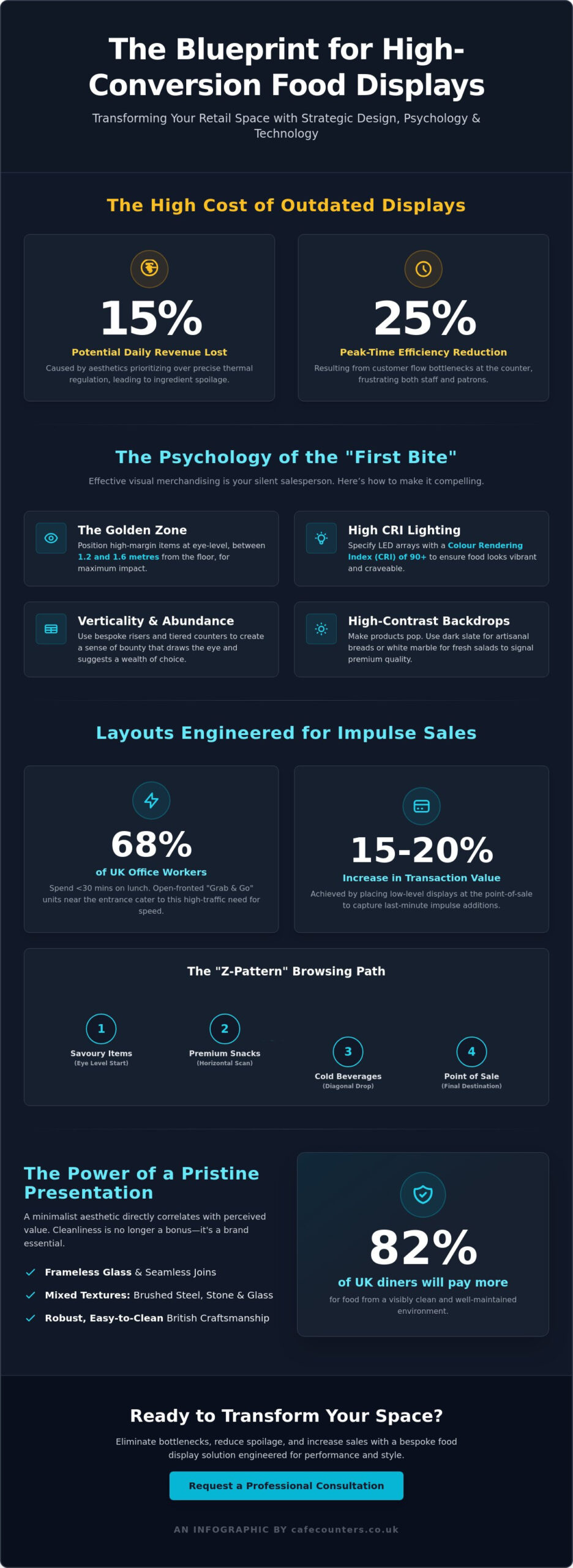
Colour theory is a primary tool in this process. We use high-contrast backdrops to highlight the natural vibrancy of food, such as placing artisanal breads against dark slate or fresh salads against white marble. This contrast signals freshness to the brain instantly. Lighting serves as the technical backbone of this effect. We specify LED arrays with a Colour Rendering Index (CRI) of 90 or higher. A high CRI ensures that the deep reds of a roast or the delicate pastels of a patisserie aren’t washed out by artificial yellow tones, directly increasing the perceived tastiness and “craveability” of the items.
Verticality is another essential design element. By using bespoke risers and tiered counters, we create a sense of abundance that flat displays lack. This architectural approach draws the eye upward and suggests a bounty of choice, which is a proven psychological trigger for consumer confidence and satisfaction. It transforms a simple counter into a destination.
Creating Focal Points in Your Layout
Success in food retail requires identifying the “Golden Zone,” the area between 1.2 and 1.6 metres from the floor. This eye-level real estate is where your highest-margin items must live. We anchor these layouts with “hero products” positioned on central plinths to draw customers across the floor. To keep the journey interesting, we break visual monotony by mixing textures like brushed steel, toughened glass, and natural stone. This variety keeps the customer’s gaze moving and engaged for longer periods.
The Impact of Cleanliness and Minimalist Design
Modern British retail demands a minimalist aesthetic where the food remains the undisputed star. We utilise frameless glass and seamless joins to reduce visual clutter, providing an unobstructed view of the produce. There’s a direct correlation between perceived hygiene and premium pricing. A 2023 industry survey indicated that 82% of UK diners are willing to pay more for food displayed in pristine, well-maintained environments. By implementing robust, easy-to-clean commercial food display ideas, you protect your brand’s prestigious image while ensuring long-term operational efficiency.
Strategic Layout Ideas for Maximum Impulse Sales
The layout of your retail space dictates how customers interact with your products. For 2026, successful commercial food display ideas focus on removing friction. High-traffic convenience relies on the strategic positioning of open-fronted units near the entrance. This “Grab & Go” revolution caters to the 68% of UK office workers who spend less than 30 minutes on their lunch break. By using a Z-pattern browsing technique, you guide the customer eye naturally. Start with savoury items at eye level, move horizontally across premium snacks, and finish with cold beverages at the base.
Integrating drop-in units provides a flush, high-end aesthetic that feels like a permanent part of the building’s architecture. These units eliminate the bulky appearance of standalone equipment, creating a seamless flow. Don’t overlook the queue line. Low-level displays at the point of sale (POS) capture last-minute additions, often increasing average transaction values by 15% to 20% in busy urban environments. If you’re planning a refurbishment, our team can help you design a bespoke retail environment tailored to your specific floor plan.
Grab & Go vs. Serve-Over Strategies
Choosing between refrigerated grab and go display units and traditional serve-over counters depends on your service model. Self-service units speed up throughput during peak periods, while serve-over counters allow staff to build rapport and upsell premium items. Hybrid models are becoming the industry standard. These combine a managed deli station for bespoke sandwiches with self-service sections for pre-packaged salads and bottled drinks. This approach balances the need for speed with the desire for a personalised service experience.
Ergonomic Counter Design for Staff Efficiency
Efficiency isn’t just for customers; it’s vital for your team. Reducing reach distances during the UK lunch rush improves service speed and reduces physical fatigue. Our bespoke designs ensure easy access for cleaning, helping you maintain a 5-star EHO rating without excessive downtime. We also prioritise the seamless integration of POS systems and payment terminals. This ensures the final step of the customer journey is as smooth as the first. When implementing commercial food display ideas, always consider how the height and depth of the counter affect the staff’s ability to serve and restock simultaneously.
- Strategic Placement: Position high-margin items at a height of 1.2m to 1.5m for maximum visibility.
- Lighting: Use LED strips with a high Colour Rendering Index (CRI) to make fresh produce look vibrant.
- Accessibility: Ensure all displays comply with the Equality Act 2010 to provide a welcoming environment for all customers.
Integrating Technology: Refrigerated and Heated Display Innovations
Technology in 2026 is defined by invisible precision. When you explore modern commercial food display ideas, the focus shifts from simple shelving to sophisticated, climate-controlled environments. British engineering now allows for micro-adjustments in humidity and temperature that were physically impossible a decade ago. This precision directly impacts your profit margins. Data from WRAP suggests the UK hospitality sector loses over £3 billion every year to food waste. Investing in displays that maintain exact atmospheric conditions can reduce your specific spoilage rates by 15% within the first year of operation.
Operational efficiency is the second pillar of modern retail. UK manufacturers are now prioritising R290 natural refrigerants and high-density insulation to meet tightening environmental regulations. These advancements help businesses manage rising energy costs; modern units often reduce electricity draw by 30% to 40% compared to legacy models. We also see a significant rise in dual-temperature zones. These units allow you to place chilled salads directly next to hot rotisserie items without any thermal transfer. We achieve this through advanced thermal breaks and independent airflow systems. By hiding compressors and mechanical components within the plinth or using remote plant rooms, we ensure the design aesthetic remains sleek and uninterrupted.
Heated Display Solutions for Hot Food Success
Maintaining the integrity of hot food requires more than just a heat lamp. Using Vision Heated Counters allows operators to choose between dry heat for crispy textures or humidified heat for delicate proteins and pastries. Humidified systems prevent the unappealing “skinning” effect on sauces and keep meats succulent for up to four hours. Safety is equally vital for a 2026 commercial food display ideas strategy. We utilise double-glazed, toughened glass that stays cool to the exterior touch, protecting customers in high-traffic retail environments while the interior holds a steady 65°C.
Refrigeration Excellence for Patisserie and Deli
A specialised deli counter is a technical requirement for any high-end food hall or patisserie. Low-quality fridges often use aggressive fans that strip moisture from fresh meats and cheeses, leading to weight loss and product degradation. Our designs utilise gentle, laminar airflow to maintain a consistent 2°C to 5°C without dehydrating the stock. We also integrate LED lighting with a high Colour Rendering Index (CRI). These lights make your produce look vibrant and fresh while emitting zero heat into the chilled zone, ensuring your refrigeration system doesn’t have to work harder to compensate for its own illumination.
Bespoke Design Trends for Modern British Eateries
The 2026 British retail landscape demands more than off-the-shelf solutions. We’re seeing a significant shift toward industrial-chic aesthetics that bridge the gap between clinical hygiene and rustic warmth. This trend combines the sterile reliability of food-grade stainless steel with the organic textures of reclaimed timber and natural stone. High-end patisseries and artisan bakeries are increasingly adopting “Jewellery Box” displays. These units utilise ultra-clear, low-iron glass and minimal framing to treat delicate pastries like precious gems. This minimalist approach removes visual barriers between the product and the consumer, creating an atmosphere of luxury and exclusivity.
Sustainability has moved from a secondary concern to a core design requirement in the UK market. A 2024 industry survey indicated that 62% of UK consumers prefer to spend money with businesses that demonstrate environmental responsibility. We respond to this by integrating recycled materials into counter fabrications and using low-energy LED lighting systems. Modern commercial food display ideas also focus on deep personalisation. We now regularly incorporate brand colours and laser-cut logos directly into the counter fascia, ensuring that your physical space communicates your brand identity from the first glance.
Material Selection for Durability and Style
Food-grade stainless steel remains the gold standard for back-bar units. It’s non-porous, resists corrosion, and stands up to the rigorous cleaning schedules required in high-volume environments. For front-of-house surfaces, prestigious materials like Corian and quartz are the preferred choice for 2026. These surfaces offer a seamless finish that’s incredibly easy to sanitise; they don’t have the grout lines or joins where bacteria can hide. Our design process focuses on balancing aesthetic warmth with the robustness required for heavy commercial use. We ensure your counter looks stunning on opening day and remains functional five years later.
The Aesthetic Power of Bespoke Shapes
British retailers are moving beyond the standard rectangle to improve customer flow and operational efficiency. Curved counters and organic shapes help guide customers through a space, reducing congestion during peak morning rushes. We utilise advanced CAD modelling to visualise exactly how these units fit into your specific footprint before manufacturing begins in our workshop. Bespoke design is the only way to truly maximise a unique floor plan. Our in-house team manages every detail of the journey, ensuring a seamless transition from your initial vision to a physical, high-performing retail environment.
Ready to transform your retail space with a custom build? Explore our bespoke manufacturing services to see how we bring British craftsmanship to your business.
From Concept to Completion: Implementing Your Display Strategy
Turning ambitious commercial food display ideas into a functional retail environment requires more than just an aesthetic vision. It starts with a rigorous site survey. This technical audit identifies constraints like floor levels, drainage points, and existing electrical capacities before manufacture begins. Skipping this step often results in site delays that can increase installation costs by 15% or more. By identifying these hurdles early, we ensure the final build fits your space with millimetre precision.
Collaborating with a UK manufacturer offers distinct advantages for your 2026 strategy. You’ll benefit from shorter lead times, often reducing delivery schedules by six to eight weeks compared to sourcing from overseas. This proximity allows for tighter quality control and direct communication. A “Turnkey” approach is the most effective way to manage risk. When one partner handles the design, build, and installation, there’s no room for the miscommunication that typically happens when juggling multiple contractors. It ensures a seamless transition from the initial sketch to the first day of trading.
Future-proofing is another vital consideration. Food trends shift rapidly, so we prioritise modular designs. These systems allow you to swap ambient sections for refrigerated units or adjust shelving configurations as your menu evolves. It protects your investment and ensures your servery remains relevant for years to come.
The Professional Design Process
Detailed CAD drawings are the backbone of a successful hospitality space. These visualisations help stakeholders understand the flow of foot traffic and the ergonomics of the service area. They also act as a technical roadmap. We use these plans to coordinate with electricians and plumbers well in advance. This preparation allows for a “plug and play” installation, where equipment is connected and commissioned rapidly. Our focus on after-sales support means we don’t just leave once the units are in place. We ensure every component performs at its peak from day one.
Choosing a Manufacturing Partner
British-made equipment is synonymous with reliability and longevity. Choosing local production means that if you ever need a replacement part, it’s available in 24 to 48 hours rather than weeks. It’s also essential to verify a partner’s experience in diverse sectors. Whether you’re operating in education, healthcare, or high-street retail, each environment has unique durability and hygiene requirements. We bring decades of expertise to every project, ensuring your counters are both robust and prestigious. Contact TFSE Products Ltd to begin your journey from concept to completion and secure a display strategy that delivers results.
Future-Proofing Your Retail Space Through Precision Design
Elevating your retail strategy for 2026 requires a deliberate blend of visual psychology and advanced technology. Successful operators understand that high-performance refrigerated and heated units do more than hold stock; they act as silent salespeople that drive impulse purchases. By integrating bespoke commercial food display ideas, you ensure your eatery remains competitive in a demanding UK market while maintaining strict operational efficiency.
Since 1991, Cafe Counters has championed the pride of British craftsmanship from our dedicated UK manufacturing facility. We use advanced CAD modelling to ensure every design is precise and functional before our teams provide expert installation and commissioning services nationwide. This methodical approach removes the stress of renovation, providing you with a robust, prestigious environment that’s built to last. We’re ready to translate your specific requirements into a physical space that performs as beautifully as it looks.
Explore our bespoke food display solutions and start your Concept to Completion journey today.
We look forward to partnering with you to create a display that truly defines your brand’s future.
Frequently Asked Questions
How do I choose between a refrigerated grab-and-go and a serve-over counter?
Choosing between a refrigerated grab-and-go and a serve-over counter depends on your service speed and customer interaction goals. Grab-and-go units increase throughput by 25 percent in high-traffic UK transport hubs. Serve-over counters allow staff to upsell premium products through direct engagement. We manufacture both styles in our UK facility to ensure they meet your specific commercial food display ideas and operational requirements.
What is the best lighting for a commercial food display?
High Colour Rendering Index (CRI) LED lighting with a rating of 90 or above is the industry standard for food displays. Warm white tones around 3000K enhance bakery items, while cooler 4000K lights keep salads looking fresh. This technical choice ensures your products appear vibrant and appetizing. Our design process integrates these LEDs into the counter structure to provide a seamless visual experience without heat transfer.
How can I make my food display more energy efficient in 2026?
You can improve energy efficiency by selecting units that use R290 natural refrigerant and high-density polyurethane insulation. Modern commercial food display ideas now focus on meeting the UK Ecodesign and Energy Labelling Regulations, which can reduce electricity consumption by 35 percent compared to 2020 models. We prioritise these robust components during our in-house manufacturing to help you lower long-term utility costs and meet sustainability targets for 2026.
Are bespoke food counters significantly more expensive than modular units?
Bespoke food counters require a higher initial investment than modular units, but they eliminate the 15 percent of wasted space often found with off-the-shelf solutions. A custom build ensures every millimetre of your floor plan is functional and productive. While modular units offer a quick fix, our bespoke British craftsmanship provides a prestigious, durable finish that withstands the rigours of a high-street retail environment for over a decade.
What materials are easiest to clean for a high-hygiene food environment?
Grade 304 stainless steel and non-porous solid surfaces like Corian are the most effective materials for maintaining a high-hygiene environment. These materials are resistant to bacteria growth and comply with UK Food Standards Agency guidelines. We use seamless joining techniques during installation to remove dirt traps. This approach makes daily cleaning routines faster and ensures your food display remains both stunning and compliant with health regulations.
Can I display hot and cold food in the same counter unit?
You can display hot and cold food in the same counter by using dedicated thermal breaks and independent refrigeration and heating circuits. This dual-temperature technology allows a single 2.5-metre unit to house chilled sandwiches alongside hot savoury pastries. Our technical expertise ensures that heat from the hot section doesn’t affect the chilled side. This setup maximises your product range within a compact footprint, improving your overall retail strategy.
How does CAD modelling help in the cafe counter design process?
CAD modelling allows you to see a precise 3D representation of your project before manufacturing begins. This tool ensures 100 percent accuracy in measurements, which is vital for a seamless installation in tight urban spaces. It’s a core part of our Concept to Completion service, allowing us to identify potential ergonomic issues early. You’ll have total confidence in the layout and flow of your cafe before a single piece of timber is cut.