
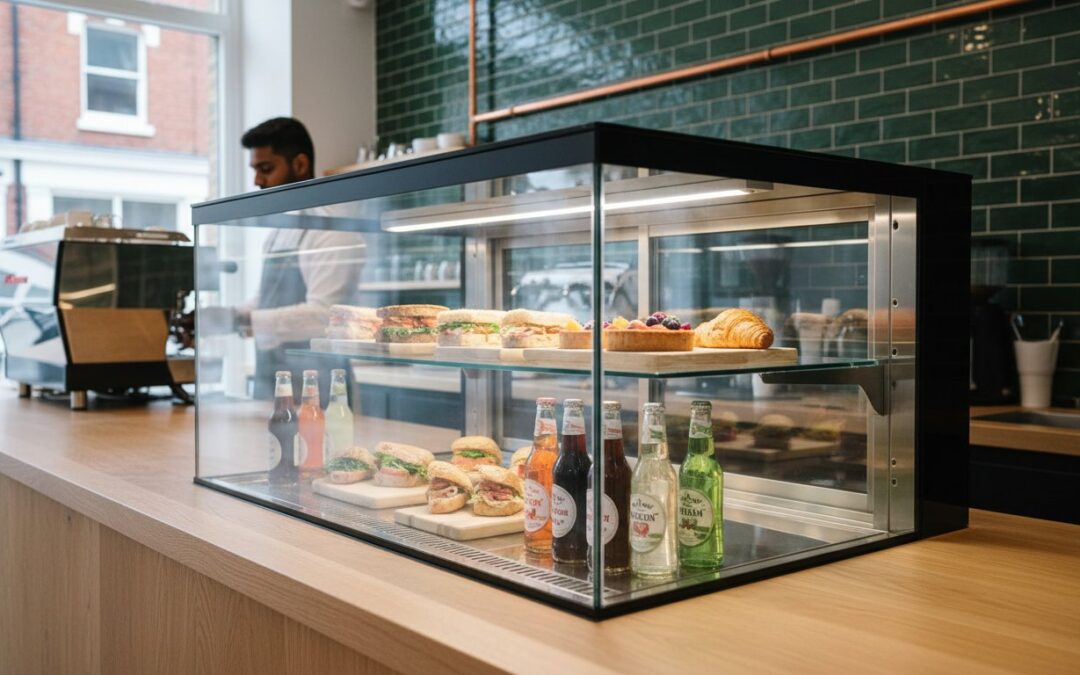
Did you know that refrigeration can account for as much as 50% of the total energy consumption in a professional retail environment? For a busy cafe or deli, choosing the right countertop refrigerated display case isn’t just about keeping drinks cold; it’s a strategic decision that impacts your bottom line and your brand’s visual identity. We understand the frustration of seeing bespoke interiors compromised by generic units or high-value stock spoiled by inconsistent temperatures. It’s a delicate balance to find equipment that maintains the strict Food Standards Agency requirement of 0°C to 5°C while remaining reliable and visually stunning.
You deserve a solution that eliminates condensation issues and maximizes impulse sales through crystal-clear visibility. This guide provides the technical expertise you need to select a high-performance unit that integrates perfectly with your design. We’ll examine how to leverage the 100% Annual Investment Allowance for 2026 and navigate the latest F-Gas regulations to ensure your equipment is future-proof. By the end of this article, you’ll have a clear roadmap for transitioning from an initial concept to a fully installed, energy-efficient display that elevates your professional space.
Key Takeaways
- Learn how a professional display serves as a vital merchandising tool that defines your brand’s high-end retail identity.
- Understand the technical differences between forced-air and static cooling to ensure your countertop refrigerated display case maintains food safety and compliance.
- Discover how to choose between modern square glass and traditional curved designs to align your equipment with your specific cafe aesthetic.
- Gain practical insights into planning for adequate airflow and ergonomic staff access to prevent equipment failure and streamline service.
- Explore the benefits of UK manufacturing and how CAD modeling ensures your bespoke unit fits your counter space with total precision.
The Strategic Role of a Countertop Refrigerated Display Case
A professional display case is far more than a simple storage unit; it’s a precision-engineered merchandising tool designed to influence customer behavior. In high-end retail and hospitality environments, your choice of equipment defines the first impression. A countertop refrigerated display case acts as a silent salesperson, framing your artisanal patisserie or premium deli selections in a way that signals quality and care to every visitor. It’s the physical point where your culinary craftsmanship meets the customer’s visual expectations.
The primary goal is to drive impulse sales by presenting food in its best possible light. We’ve seen how a well-placed unit transforms a generic service area into a curated destination. In a busy cafe or boutique food hall, the counter is your most valuable real estate. You need a unit that balances footprint efficiency with maximum internal volume. This ensures you can hold enough stock to meet peak demand without cluttering the service area or obstructing the view of your staff. It’s about creating a dedicated destination for your high-margin items while maintaining an elegant, professional atmosphere that encourages browsing.
Maximising Visual Merchandising Impact
Presentation is everything. We recommend using high-CRI LED lighting to ensure the colors of your products remain vibrant and true to life. Unlike standard lighting, high-CRI bulbs highlight the rich textures of pastries and the natural freshness of deli items. Using tiered shelving within your display allows you to create a sense of abundance, even when stock levels are lower. This “theatre of food” engages customers at the point of sale, making it nearly impossible for them to walk away without adding a treat to their order. It’s a proven method for increasing the average transaction value through visual storytelling.
Space-Saving Cooling for Modern Hospitality
Modern hospitality design often prioritizes sleek, minimalist aesthetics. This makes the integration of cooling equipment a challenge for many operators. A well-chosen countertop unit serves as a vital bridge between your back-of-house preparation area and the front-of-house service. By selecting a unit that matches your establishment’s customer flow, you ensure that staff can replenish stock quickly while customers enjoy an unobstructed view of the offerings. We focus on selecting equipment that integrates seamlessly with bespoke serving counters, ensuring that the cooling technology supports your operational flow rather than hindering it. It’s a strategic way to optimize your counter real estate without sacrificing the cooling performance required for food safety.
Essential Technical Features for Consistent Performance
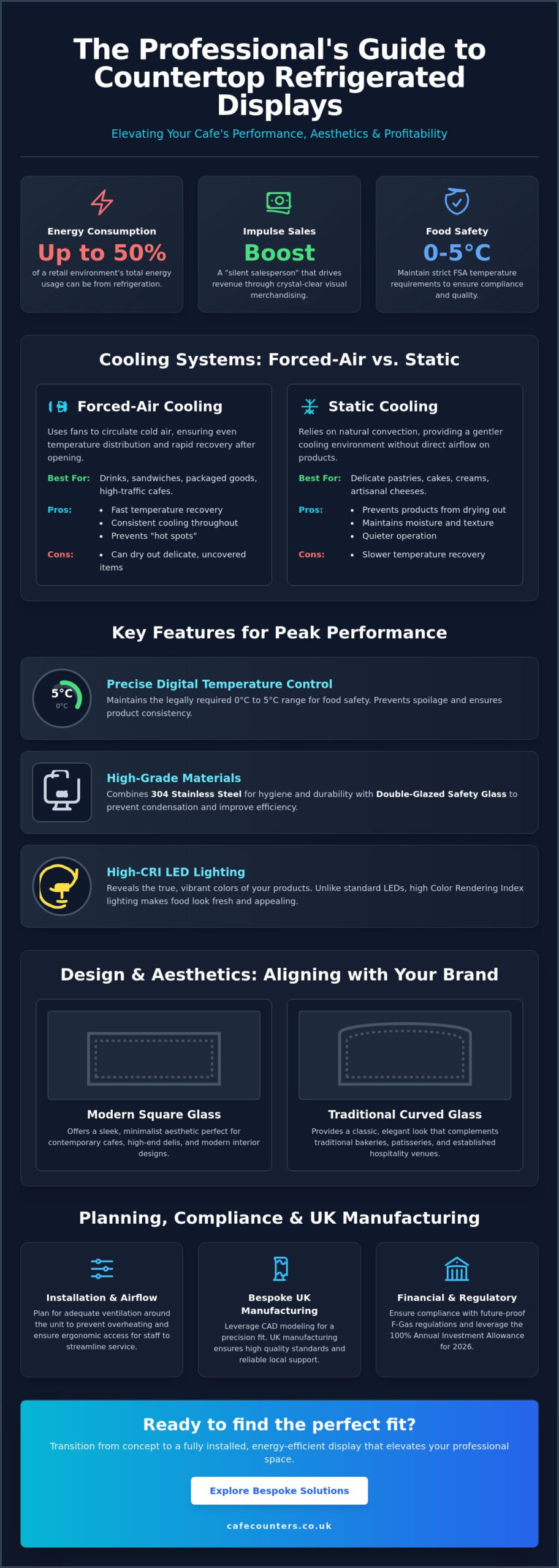
A countertop refrigerated display case must do more than just look the part; it must perform under the rigorous pressure of a commercial environment. Understanding the mechanical heart of your unit is the first step toward ensuring long-term operational efficiency. Choosing between forced-air and static cooling is a critical decision based on your specific product range. Forced-air systems use internal fans to circulate chilled air, providing rapid temperature recovery in high-traffic cafes where doors are opened frequently. Conversely, static cooling systems are often better suited for delicate patisserie, as the lack of direct airflow prevents sponges and creams from drying out during service.
Material choice is another area where professional standards diverge from domestic or generic alternatives. High-grade 304 stainless steel is the industry benchmark for a reason. It offers a non-porous, corrosion-resistant surface that is essential for maintaining strict hygiene standards. When combined with double-glazed safety glass, these materials create a robust thermal barrier. This glazing is vital for preventing condensation, ensuring that your customers always have an unobstructed view of your offerings while the compressor operates at peak efficiency. For those looking to integrate these high-performance features into a seamless front-of-house design, our range of bespoke serving counters provides the perfect foundation for specialized cooling units.
Temperature Precision and Food Safety
Maintaining a consistent core temperature between 0°C and 5°C is a legal requirement under UK food safety regulations. Professional units utilize precise digital temperature controllers to monitor these levels in real-time. These controllers don’t just display numbers; they manage automatic defrost cycles that prevent ice build-up on the evaporator coils. This automation is crucial for maintaining airflow and preventing the temperature fluctuations that can spoil high-value stock. In high-ambient environments, such as a busy shop floor or a sunlit storefront, this precision engineering protects both your customers and your investment.
Material Quality and Long-Term Durability
We believe in the superiority of internal production quality over mass-produced generic imports. A unit built with artisanal attention to detail features robust hinges and high-quality door seals that withstand hundreds of openings every day. These components are often the first to fail on cheaper models, leading to energy leaks and inconsistent cooling. We prioritize easy-clean surfaces and removable glass panels to ensure that daily maintenance is straightforward for your team. This focus on durability ensures that your equipment remains a reliable partner in your business for years to come, rather than a recurring maintenance headache.
Selecting the Right Style for Your Brand Aesthetic
Your choice of equipment does more than just maintain temperature; it defines the visual language of your establishment. Selecting a countertop refrigerated display case requires a deliberate balance between operational logic and your brand’s unique identity. We believe that professional equipment should never clash with a carefully curated interior. Instead, it should act as a seamless extension of your architectural vision. Whether you’re aiming for the warmth of a traditional bakery or the clinical precision of a modern espresso bar, the silhouette and finish of your unit will dictate how customers perceive the quality of your offerings.
Functional layout is just as critical as visual appeal. The choice between rear-loading and front-loading units often depends on your service model and staff workflow. Rear-loading cases allow your team to replenish stock discreetly from behind the counter, maintaining a tidy appearance for the customer. Front-loading or self-service units, on the other hand, encourage speed and autonomy. Beyond the doors, you must consider the finish. While brushed stainless steel remains the professional standard for its durability, black powder-coated finishes or bespoke cladding options can help the unit blend into darker, more intimate interior designs.
Curved vs. Square Glass Designs
The glass profile of your unit significantly impacts the “theatre” of your food presentation. Curved glass designs offer a softer, more traditional charm that enhances the visibility of delicate patisserie and tiered cakes from multiple angles. This silhouette is often preferred in boutique settings where the focus is on artisanal craftsmanship. Conversely, square glass units provide a sharp, minimalist look that aligns with modern industrial aesthetics. Square designs also tend to maximize internal shelf space, allowing for more efficient vertical stacking. Choosing the right silhouette is essential to complement your bespoke cafe counter, ensuring the unit sits flush and looks intentional rather than like an afterthought.
Open Front vs. Enclosed Display Cases
Deciding between an open-front or enclosed system is a choice between convenience and climate control. You might opt for a refrigerated grab and go display if your business model prioritizes high-volume transactions and customer speed. These open systems remove the physical barrier between the buyer and the product, which is proven to increase sales in busy retail environments. However, for items like cured meats or complex salads found in a deli counter, enclosed cases are superior. They maintain strict temperature stability and protect food from environmental contaminants. It’s also worth considering that enclosed systems are generally more energy-efficient, as they don’t have to constantly work against the ambient air of the room.
Planning for Installation and Operational Flow
Successful installation begins long before your equipment arrives on-site. Integrating a countertop refrigerated display case into your service line requires more than just clear counter space; it demands a meticulous understanding of ventilation and ergonomics. We often see high-performance units struggle because they’ve been “boxed in” without adequate airflow. Your compressor must dissipate heat efficiently to maintain internal temperatures. Without a minimum clearance of 50mm to 100mm around the vents, the system will overwork, leading to premature component failure and spiked energy bills. It’s a technical detail that protects your long-term investment.
Ergonomics play an equally vital role in your daily operational flow. You must position the unit so the primary display shelf sits at the customer’s natural eye-level, often referred to in the industry as the “buy-line.” Simultaneously, the rear access doors must be at a comfortable height for staff to replenish stock without straining. Power requirements are another critical factor. While most countertop units run on a standard 13-amp plug, we strongly recommend a dedicated electrical circuit. Sharing a circuit with high-draw appliances like espresso machines can cause voltage drops that interfere with the digital controllers and cooling cycles.
Integration with Existing Countertops
When placing heavy equipment on a bespoke counter, you must verify the weight-bearing capacity of the surface. A fully stocked unit, combined with the weight of double-glazed glass and the compressor, can exceed 100kg. We utilize vibration-dampening feet to ensure the mechanical hum of the unit doesn’t resonate through the counter, maintaining a peaceful atmosphere for your guests. If you’re coordinating a larger fit-out, it’s essential to ensure your display units align aesthetically and functionally with your undercounter commercial refrigerators. Avoiding common installation errors, such as blocking the intake of “drop-in” style units, ensures your warranty remains valid and your cooling remains consistent.
Energy Efficiency and Operational Costs
In 2026, managing operational costs is as much about maintenance as it is about initial selection. Investing in units with high-efficiency EC fans and LED lighting provides a significant ROI by reducing the heat load the compressor must fight. However, even the most efficient unit loses performance if the condenser coils are neglected. Research shows that cleaning these coils twice a year can improve efficiency by up to 30%. This simple routine, combined with checking door seals for a tight vacuum, keeps your electricity bills manageable and your stock safe. If you’re ready to design a high-performance service area that balances technical precision with artisanal style, contact our design team to discuss your project requirements.
Why UK Manufacturing Matters for Your Display Equipment
Choosing a countertop refrigerated display case manufactured in the UK provides a level of security that global supply chains simply cannot match. We take immense pride in our regional artisanal heritage, ensuring every unit reflects a commitment to durability and precision engineering. When you invest in British-made equipment, you’re not just buying a product; you’re securing a partnership with a manufacturer that understands the specific pressures of the local market. This proximity allows for shorter lead times and a significantly reduced carbon footprint compared to imported alternatives.
Precision is at the heart of our process. We utilize advanced CAD modelling to ensure your chosen display integrates perfectly with your existing architecture. This eliminates the guesswork often associated with generic equipment. Beyond the initial installation, the security of UK-based after-sales support is invaluable. If you need a replacement seal or a technical adjustment, our internal production facility ensures that spare parts are readily available. You won’t be left waiting for weeks for a shipment from overseas while your stock sits at risk. It’s a level of reliability that only a local partner can provide.
Bespoke Design and Project Management
Our approach moves beyond simple equipment sales into comprehensive project management. We believe a successful installation starts with a professional site survey to determine the exact requirements of your space. This meticulous planning allows us to transition from a standard unit to a custom-engineered display solution that fits your operational flow perfectly. TFSE Products Ltd manages every step of the journey, providing a steady, reliable hand from the initial design phase through to the final commissioning and operational setup of your patisserie displays or deli counters.
The TFSE Quality Assurance
The quality of our internal production facility is the cornerstone of our reputation. We maintain strict control over every material choice, favouring high-value components and energy-efficient technologies that align with 2026 standards. Professional installers often prefer working with British-manufactured units because the build quality is consistently higher and the technical documentation is clear. This commitment to excellence ensures that your equipment is built to last, providing a stable foundation for your commercial success. By choosing a countertop refrigerated display case from a UK manufacturer, you’re investing in a legacy of quality that supports your business long after the initial delivery.
Elevating Your Retail Vision with Precision Cooling
Selecting the right countertop refrigerated display case is a fundamental step in balancing food safety with high-impact visual merchandising. It’s about more than just maintaining a set temperature; it’s about framing your culinary work in a way that captures the customer’s imagination and drives impulse sales. We’ve explored how technical precision, such as the use of 304 stainless steel and digital controllers, ensures long-term reliability. We also highlighted how British manufacturing provides the security of local support and bespoke CAD modelling to ensure a perfect fit for your specific space.
TFSE Products Ltd has been rooted in UK-based manufacturing since 1991. We offer full installation and commissioning services nationwide to alleviate the stress of your commercial project and ensure your equipment performs from day one. Explore our range of professional food display units to discover how our technical expertise can bring your vision to life. We look forward to partnering with you as a steady, reliable hand in creating a space that reflects your commitment to quality and durability.
Frequently Asked Questions
How do I choose the right size countertop refrigerated display case for my cafe?
Choosing the right size depends on your available counter footprint and the volume of stock required to meet peak demand. You must measure the counter depth and width precisely, ensuring you account for the 50mm to 100mm ventilation gap required for the compressor. Balancing external dimensions with internal shelf capacity prevents overcrowding and ensures your products remain the focal point of the service area.
What is the difference between static and ventilated (forced-air) cooling?
Ventilated cooling uses internal fans to circulate chilled air for rapid temperature recovery, while static cooling relies on natural convection to maintain humidity levels. You should choose ventilated systems for high-traffic environments where doors are opened frequently. Static cooling is the professional standard for delicate pastries or sponges that might dry out if exposed to direct, constant airflow.
Do countertop display fridges require a special power supply?
Most professional countertop refrigerated display case units operate on a standard 230V UK 13-amp plug. While they don’t typically require three-phase power, it is vital to use a dedicated electrical circuit. This prevents voltage fluctuations from other high-draw equipment, such as espresso machines, which can interfere with the digital temperature controllers and damage the cooling system over time.
How often should I clean the condenser on my display case?
You should clean your condenser coils at least twice a year to maintain peak operational efficiency and prevent compressor failure. In dusty or high-traffic environments, we recommend quarterly cleaning to ensure the system doesn’t overwork. This simple maintenance task can improve energy efficiency by up to 30% and significantly extends the overall lifespan of your professional equipment.
Can I get a bespoke countertop display case made to a specific width?
Yes, our internal UK manufacturing facility allows us to engineer a countertop refrigerated display case to specific widths that fit your unique counter layout. We utilize CAD modelling to ensure a millimetre-perfect fit for bespoke projects. This eliminates the unsightly gaps found with standard off-the-shelf units and creates a seamless, professional finish that integrates perfectly with your interior design.
Why is my display case glass fogging up, and how can I stop it?
Glass fogging usually occurs when there is a significant temperature difference between the chilled interior and a humid ambient environment. To stop this, professional units utilize double-glazed safety glass or advanced heated glass technology to maintain a thermal barrier. Ensure your unit isn’t placed in direct sunlight or near heavy steam sources, as these factors can overwhelm standard condensation management systems.
What are the most energy-efficient countertop refrigerated displays available?
The most energy-efficient displays are those with high energy ratings and features like LED lighting and high-efficiency EC fans. Look for units that utilize natural refrigerants like R290, which comply with 2026 F-Gas regulations and offer lower Global Warming Potential. These models reduce heat load and energy consumption while providing a better long-term return on investment through lower electricity bills.
Is it better to have a rear-loading or front-loading display for a deli?
Rear-loading displays are ideal for assisted-service delis, while front-loading units are better suited for self-service retail environments. Rear-loading allows your staff to replenish stock discreetly from behind the counter without interrupting the customer’s view of the products. Front-loading designs prioritize speed and convenience, making them the preferred choice for high-volume “grab and go” settings where customers serve themselves.