
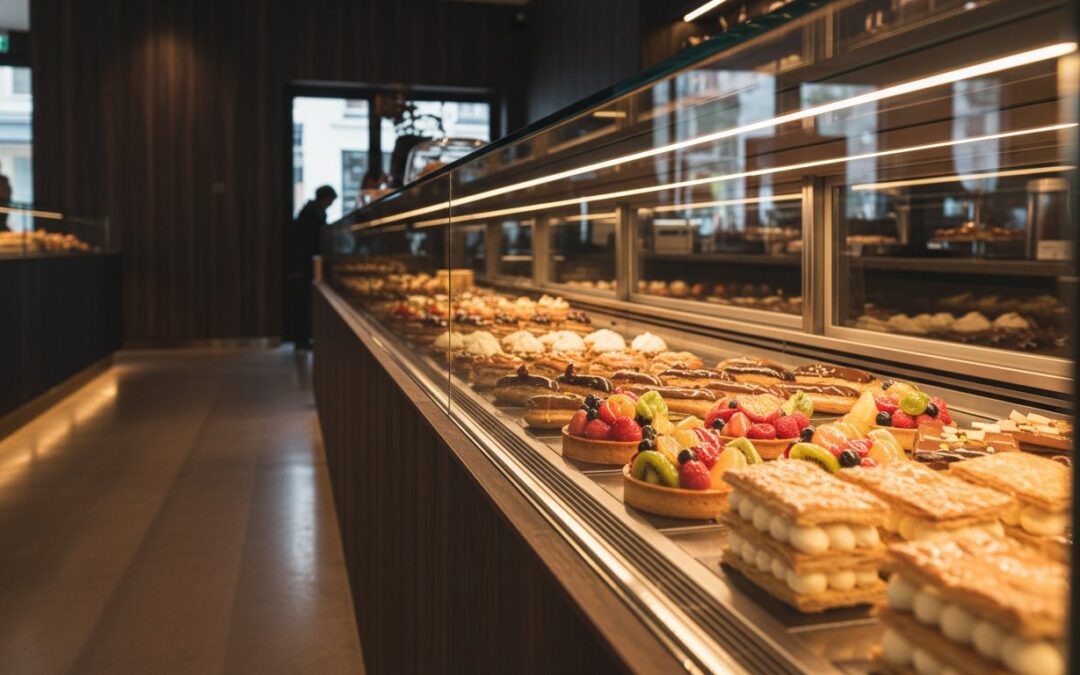
The difference between a luxury pastry and a mundane snack often comes down to a single Kelvin shift. Your most exquisite mille-feuille can lose its premium appeal the moment it sits under the wrong bulb, turning a masterpiece into a missed opportunity. Investing in professional patisserie display cabinet lighting is no longer just about visibility; it’s about the precise intersection of thermal engineering and psychological merchandising.
We understand the pressure of balancing visual impact with strict food safety requirements. It’s frustrating when high energy costs eat into your margins or when heat from outdated lighting systems threatens to ruin your delicate creams. This guide reveals how strategic lighting choices can transform your displays into high-conversion sales tools that respect both your craftsmanship and your bottom line. You’ll learn how to navigate the 2026 California Title 24 standards and choose the exact CRI levels needed to make colors pop. We’ll walk you through the journey from technical Kelvin selection to installing energy-efficient systems that are built to last for years, ensuring your display remains a beacon of quality in a competitive market.
Key Takeaways
- Understand how strategic patisserie display cabinet lighting influences customer behavior by creating a “glow effect” that signals luxury and quality.
- Identify the specific CRI and Kelvin levels required to highlight natural product vibrancy while maintaining complete visual authenticity.
- Discover how CAD modeling and bespoke fabrication integrate lighting into serving counters to eliminate glare and focus attention on the pastry.
- Learn how advanced LED thermal management protects delicate ingredients from heat while ensuring compliance with 2026 energy efficiency standards.
- Explore the benefits of UK-based manufacturing for fully customized lighting solutions that are built directly into the structural fabrication of your display.
The Psychology of Patisserie Lighting: Driving Subconscious Impulse Sales
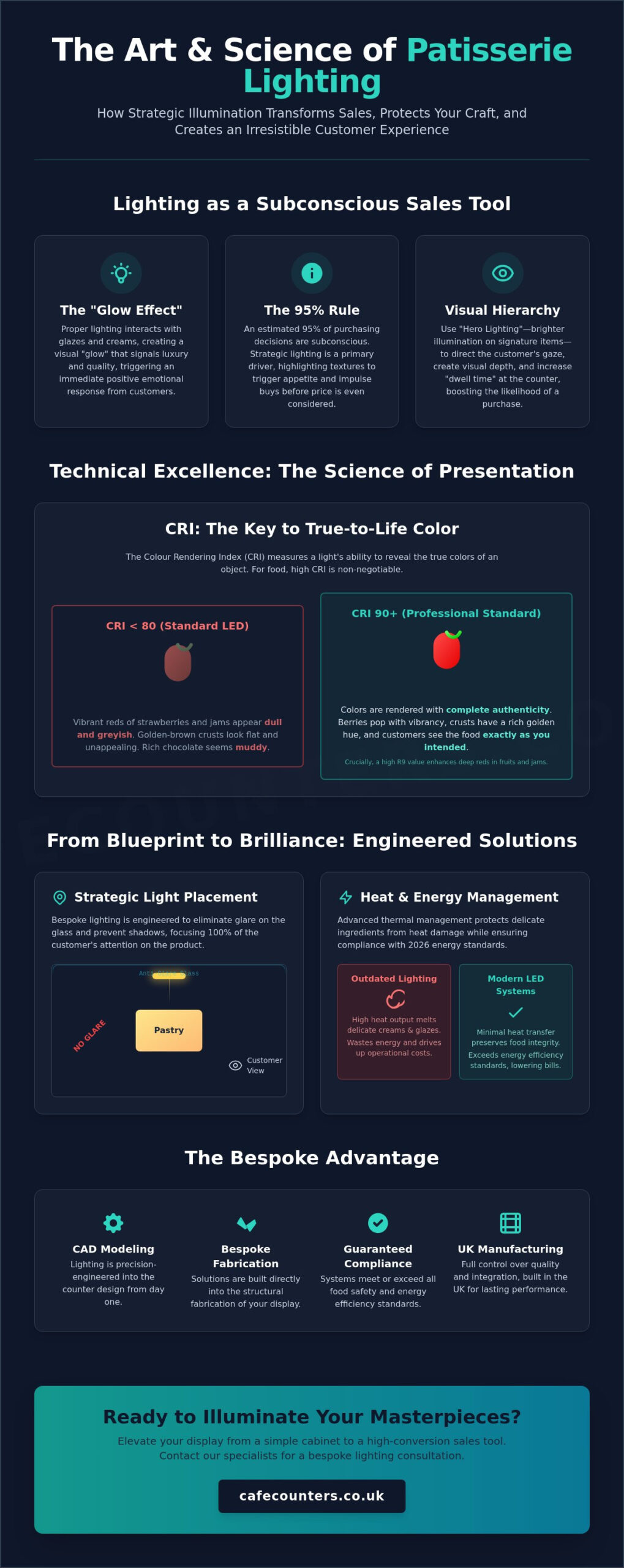
High-end patisseries don’t just sell food; they sell an experience of luxury and indulgence. The “Glow Effect” is a professional term for the specific way light interacts with sugar, glaze, and cream to create an emotional connection with the customer. When a customer approaches your counter, the lighting should trigger an immediate, positive response before they’ve even read a single price tag. Professional patisserie display cabinet lighting acts as a visual magnet, drawing the eye toward the intricate details of your craftsmanship.
In high-traffic cafe environments, the competition for a customer’s attention is fierce. By applying specific Architectural lighting design principles, we can create a high-contrast environment where the cabinet becomes the brightest, most inviting point in the room. There’s a vital distinction between ambient shop lighting and focused cabinet illumination. Ambient light helps people navigate the space, but focused light creates a stage for your products. This contrast isn’t just about visibility; it’s a signal to the brain that what’s inside the glass is premium, rare, and worth a higher price point. If the lighting is flat or dim, even the most expensive artisanal pastry will look like a mass-produced commodity.
The 95% Rule: Merchandising for the Subconscious
Marketing experts often suggest that 95% of purchasing decisions happen in the subconscious mind. Lighting is the primary driver of these snap judgments. It triggers the appetite by highlighting the moistness of a sponge or the crispness of a puff pastry. To achieve this, shadow-free illumination is essential. Deep shadows can make fresh products look old or unappealing, whereas even, bright light emphasizes complex textures. Merchandising light is a precision tool used for visual storytelling that guides the customer’s emotions toward the urge to indulge.
Visual Hierarchy in Food Display
Effective display design uses “hero lighting” to direct the customer’s journey. By slightly increasing the light intensity on signature cakes or seasonal specials, you tell the customer exactly where to look first. This creates a sense of depth within a patisserie display counter, preventing the “flat” appearance common in budget setups. When products are layered with light, it increases the time a customer spends looking at the display. This “dwell time” is a critical metric; the longer someone looks, the more likely they are to make a purchase. Well-engineered patisserie display cabinet lighting doesn’t just show the food; it manages the flow of the entire shop floor, leading visitors naturally from the entrance to the point of sale.
Technical Excellence: CRI, Kelvin, and the Science of Pastry Presentation
Achieving a high-impact display requires more than just brightness; it demands a technical understanding of how light interacts with specific food textures and pigments. When we engineer patisserie display cabinet lighting, we focus on the science of color rendering and color temperature to ensure every product looks as appetizing as the moment it left the oven. Beyond aesthetics, professional installations must also adhere to FDA Food Code lighting standards, which dictate specific intensity levels to ensure food safety and operational clarity during service and cleaning.
The technical foundation of any premium display rests on the Colour Rendering Index (CRI). While standard commercial LEDs often hover around a CRI of 80, this is insufficient for food retail. A low CRI makes vibrant strawberries look grey and rich dark chocolate appear dull or muddy. For professional results, we specify a CRI of 90 or higher, with a particular emphasis on the R9 value. The R9 saturated red constant is critical for pastries, as it enhances the deep berries, jams, and golden-brown crusts that define the sector. CRI 90 is the minimum standard for professional food displays aiming for true-to-life color representation.
The Importance of High CRI (90+) for Food
High-end retail environments rely on visual authenticity to justify premium pricing. When light lacks the full spectral range, customers subconsciously perceive the food as less fresh. By utilizing high-CRI chips in our bespoke serving counters, we ensure that the subtle pastels of a macaron or the glossy finish of a ganache are rendered with absolute precision. This technical choice directly supports long-term operational efficiency by reducing the “visual waste” caused by poorly lit, unappealing stock.
Kelvin Selection: From Golden Crusts to White Creams
Color temperature, measured in Kelvin (K), determines the “mood” of the light. There’s no universal setting for all pastries, but there is a sweet spot for specific categories. For artisanal breads and golden puff pastries, a warmer range of 2400K to 2700K is ideal because it accentuates the buttery, baked tones. However, if your display features heavy use of white creams, silver leaf, or cool-toned icings, a neutral 3000K to 3500K rating is superior. This range provides a crisp, clean appearance without the clinical, blueish tint of 5000K+ lighting, which often makes a warm cafe atmosphere feel cold and uninviting. Choosing the correct Kelvin level ensures your display feels like a part of the bakery’s heritage rather than a laboratory fixture.
Strategic Light Placement: Engineering Visibility Without Glare
Many retailers treat lighting as an afterthought, simply mounting a standard fixture to the internal ceiling of a display case. However, professional patisserie display cabinet lighting requires a structural approach that begins long before the first bulb is fitted. We use CAD modelling to calculate the exact incident angles required to illuminate your products without blinding the customer. By integrating these systems directly into the bespoke cafe counter during the fabrication phase, we ensure the light source remains completely hidden from the customer’s direct line of sight. This creates an inviting “glow” that feels natural rather than intrusive.
Engineering visibility is about more than just brightness; it’s about controlling where the light goes and, more importantly, where it doesn’t. A poorly placed light strip creates “hot spots” on the product and distracting glare on the glass. Our design process involves positioning luminaires so they highlight the three-dimensional form of your pastries. This meticulous planning allows us to use high-intensity LEDs that drive sales while maintaining a comfortable, high-end atmosphere for your guests. It’s a balance of technical precision and artisanal pride that defines a truly professional installation.
Eliminating Reflections on Display Glass
Glass is a double-edged sword in food retail. While it provides a hygienic barrier and clear view, it also acts as a mirror if lighting isn’t managed with care. The physics of light bouncing off flat panels differs significantly from curved glass panels; curved surfaces often concentrate reflections into a bright spot that obscures the view of the food. We solve this by using recessed lighting tracks that sit deep behind the counter frame. Combined with high-quality anti-glare diffusers, this setup softens the output and ensures the customer sees the texture of the pastry rather than the reflection of the light strip. This level of detail is essential in commercial food environments where visual clarity is directly linked to conversion rates.
Top-Down vs. Under-Shelf Lighting
Relying solely on top-down illumination is a common engineering mistake that leads to “shadow cast.” The top shelf may look brilliant, but it casts a dark shadow over every product below, making the lower tiers look neglected or less fresh. In multi-level deli display counters and patisserie units, we implement a layered lighting strategy. This involves installing low-profile LED strips under every individual shelf. For maximum impact, we often incorporate vertical LED pillars in the corners of the cabinet. This provides 360-degree visibility, ensuring that even the back of a large cake is properly highlighted. This structured approach creates a sense of abundance and quality that flat, single-source lighting simply cannot replicate.
Balancing Aesthetics with Operational Efficiency: Heat and Energy
Every watt of energy converted into heat within a refrigerated unit is a watt that your cooling system must actively work to remove. While visual allure is paramount, the technical performance of your patisserie display cabinet lighting must never compromise the integrity of your products. Traditional halogen systems effectively act as miniature heat lamps, which is a catastrophic choice for delicate ganaches, tempering chocolate, and fresh cream. Transitioning to advanced LED systems is a critical strategy for thermal management that directly extends the shelf-life of your most sensitive inventory.
Operational efficiency is deeply linked to how you manage the internal climate of your display. High-quality LEDs generate significantly less radiant heat than their predecessors, ensuring that the surface temperature of your pastries remains stable even under high-intensity “hero” lighting. This stability is essential for maintaining the glossy finish of glazes and preventing the “bloom” on chocolate that occurs when temperatures fluctuate. By prioritizing thermal engineering, you protect your craftsmanship and your margins simultaneously.
Managing the Thermal Load in Refrigerated Units
Poor lighting placement forces commercial refrigerators to work harder, leading to increased wear on the compressor and uneven internal temperatures. We mitigate this challenge by utilizing remote drivers, which allow the heat-generating electrical components to sit outside the refrigerated zone. LED lighting reduces the heat load by up to 80% compared to traditional bulbs. This architectural choice ensures that your refrigeration system maintains a steady, food-safe environment without fighting against its own illumination, ultimately reducing maintenance costs and energy consumption.
Energy Efficiency and Sustainability in 2026
As of January 1, 2026, new energy standards like California’s Title 24 have set a high bar for retail efficiency, reducing the allowable threshold for retail spaces to 0.9 watts per square foot. These regulations are shaping the global market, making high-efficacy LEDs and smart sensors the only viable choice for professional counters. When selecting fixtures for our bespoke serving counters, we prioritize L70 ratings, which guarantee the light maintains at least 70% of its initial output for over 50,000 hours. Investing in high-efficiency lighting provides a long-term ROI by slashing operational costs while keeping your shop compliant with the latest environmental standards.
Bespoke Lighting Solutions: The TFSE Products Manufacturing Advantage
While many suppliers rely on off-the-shelf components that offer little flexibility, our UK-based manufacturing facility provides a distinct advantage for clients seeking a truly tailored solution. We don’t just add lights to a case; we engineer the entire environment from the ground up. By integrating patisserie display cabinet lighting into bespoke serving counters during the fabrication phase, we ensure that every electrical run, housing, and diffuser is a structural part of the unit. This level of internal production allows us to maintain total quality control, ensuring that the finished product reflects your brand’s unique identity and heritage.
Our methodical approach begins with our internal CAD designers. We collaborate with you to create a unique “light signature” that defines your space. This isn’t just about brightness; it’s about the specific way light interacts with your shop’s architecture and your products. This collaboration transforms a standard retail space into a destination, providing the reassurance of UK-made quality that stands the test of time. Choosing a partner with internal production capabilities means you’re not just buying a fixture; you’re investing in a steady, reliable hand that understands the nuances of professional food presentation.
From CAD Concept to Installed Reality
Our process moves from a digital CAD concept to a physical, installed reality through a series of rigorous checks. We test light levels in 3D models before production starts, allowing us to predict exactly how the patisserie display cabinet lighting will perform in your specific environment. This precision prevents costly adjustments on-site. When the counter arrives, it’s commission-ready, meaning the lighting is pre-wired, tested, and perfectly angled. Our steady manufacturing timeline ensures that quality is never sacrificed for speed, providing a reliable journey from the initial idea to the final installation.
Versatility Across Professional Environments
We’ve spent years crafting bespoke solutions for a diverse range of UK sectors, from public sector catering to luxury hospitality and high-end retail. This versatility means we understand the unique pressures of different professional environments, whether you need a high-impact display for a boutique bakery or a durable solution for a busy hospital canteen. Our local after-sales support provides the final layer of confidence, ensuring your investment remains a high-conversion sales tool for years to come. Our deep-seated experience in the primary regional market allows us to navigate complex projects with total competence.
Consult with TFSE Products on your bespoke patisserie display to discover how our engineering expertise can elevate your visual impact.
Elevating Your Patisserie with Precision Engineering
Your display is the silent ambassador of your brand. Achieving the perfect balance between visual allure and technical performance requires a meticulous approach to thermal management and spectral precision. From selecting high CRI chips to ensuring your refrigeration system remains unburdened by radiant heat, every detail contributes to long-term operational success. Professional patisserie display cabinet lighting is the essential final layer that transforms a simple counter into a high-conversion sales tool.
At TFSE Products, we’ve refined our UK-based manufacturing facility since 1991 to deliver solutions as durable as they are beautiful. Our team utilizes expert CAD modelling for every project, ensuring your lighting is seamlessly integrated into the structural fabrication of your display. With our comprehensive national installation and commissioning services, we manage the technical journey from initial concept to a finished, high-performance space. Explore our bespoke patisserie display solutions and request a consultation today to bring your vision to life with total confidence.
Frequently Asked Questions
What is the best colour temperature for a patisserie display?
The ideal colour temperature depends on your specific product range. For golden-brown pastries and artisanal breads, a warm 2400K to 2700K range accentuates the buttery tones of the crust. If your display features white creams, silver leaf, or vibrant fruit tarts, a neutral 3000K to 3500K setting provides a crisper, more modern appearance without the clinical feel of higher Kelvin ratings.
Do LED lights in cake fridges produce heat that can melt chocolate?
Professional LED systems produce significantly less radiant heat than traditional halogen bulbs, reducing the thermal load by up to 80%. However, heat management still requires careful engineering. We utilize remote drivers located outside the refrigerated zone to ensure that the internal temperature remains stable, protecting delicate chocolates and tempered glazes from the risk of melting or blooming under high-intensity patisserie display cabinet lighting.
Why does the Colour Rendering Index (CRI) matter for food displays?
CRI is a technical measure of how accurately a light source reveals the true colours of an object. For high-end food retail, a CRI of 90 or higher is the professional standard. Standard LEDs often make fresh strawberries look grey or chocolate appear dull. A high CRI ensures that every pigment, from deep berry reds to rich cocoa browns, looks vibrant and authentic to the customer.
Can I upgrade the lighting in my existing patisserie cabinet?
While it is possible to retrofit LED strips, achieving a professional result is technically challenging due to existing wiring and thermal constraints. For the best visual impact, we recommend integrating advanced lighting during the fabrication of a bespoke unit. This allows for recessed tracks and hidden cabling, ensuring the final installation meets modern energy efficiency standards while maintaining a clean, high-end aesthetic.
How does lighting placement affect reflections on the display glass?
Poorly placed lights create distracting hot spots and glare that obscure the customer’s view of the food. We use CAD modelling to determine the precise incident angles required to illuminate products while keeping the light source hidden. Using recessed tracks and anti-glare diffusers ensures the light is directed onto the pastry rather than bouncing off the glass panels, which is essential for maintaining visual clarity.
Are there specific UK regulations for lighting in food display units?
Yes, professional units must comply with energy efficiency regulations and food safety standards. As of 2026, stricter thresholds for wattage per square foot have been implemented to reduce commercial energy consumption. Additionally, lighting must be shatterproof and easy to clean to prevent contamination. Our manufacturing process ensures that every patisserie display cabinet lighting installation meets these rigorous safety and environmental requirements.
What is the difference between warm white and neutral white for cakes?
Warm white lighting (2700K) creates a traditional, cozy atmosphere that highlights the golden sugars and fats in baked goods. Neutral white (3500K) offers a cleaner, more daylight-balanced appearance that is superior for showcasing intricate piping and colourful fruit toppings. Choosing between them involves balancing your brand identity with the specific textures and colours of your artisanal pastry range.
How long do professional LED strips in commercial displays typically last?
High-quality LED strips with a professional L70 rating are designed to last over 50,000 hours of continuous operation. In a typical retail environment, this equates to several years of reliable service before any noticeable drop in brightness occurs. This longevity, combined with lower energy consumption, provides a superior return on investment compared to older lighting technologies that require frequent bulb changes and higher maintenance costs.