
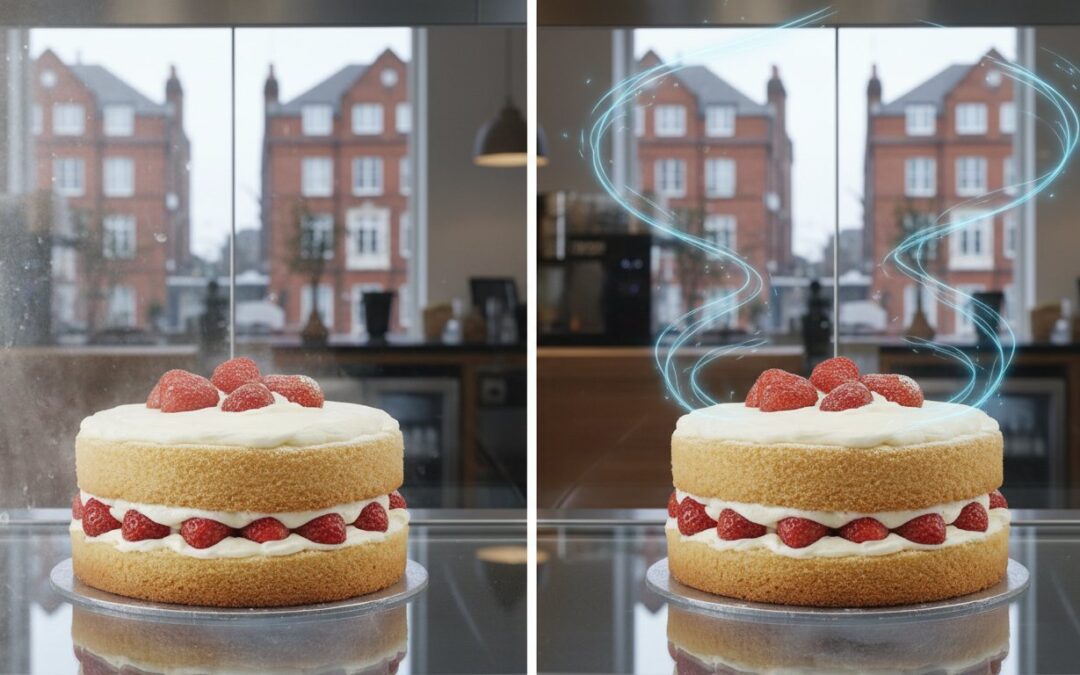
The most powerful refrigeration system in your cafe might actually be the very thing destroying your most delicate patisserie. It’s a frustrating reality for many UK bakers who find their signature sponges drying out or their fresh cream icing losing its structure because they haven’t found the right balance in ventilated vs static cooling for cakes. You’ve likely felt the stress of seeing high-quality ingredients go to waste because of inconsistent cabinet temperatures or poor humidity control. We understand that in a professional environment, your display counter is more than just furniture; it’s a critical tool for preserving your craft and your reputation.
This guide helps you master the technical differences between these cooling methods to ensure your products stay fresh, moist, and perfectly displayed. We’ll show you how to match airflow technology to your specific menu requirements, helping you maintain perfect aesthetics while reducing food waste and energy costs. We will break down the mechanics of air circulation and temperature stability, providing you with the technical expertise needed to make an informed investment for your business.
Key Takeaways
- Understand how natural convection differs from mechanical forced-air systems to protect the integrity of your specific bakes.
- Learn why static cooling is the preferred choice for delicate, moisture-sensitive patisserie like fresh cream cakes and mousses.
- Discover how to maintain consistent temperatures across every shelf during busy service periods with ventilated cooling technology.
- Master the technical comparison of ventilated vs static cooling for cakes to select the system that balances rapid temperature recovery with product hydration.
- Explore how bespoke CAD modelling and UK-based manufacturing can align your display counter’s cooling mechanism with your unique menu requirements.
Understanding the Core Difference: Ventilated vs Static Cooling for Cakes
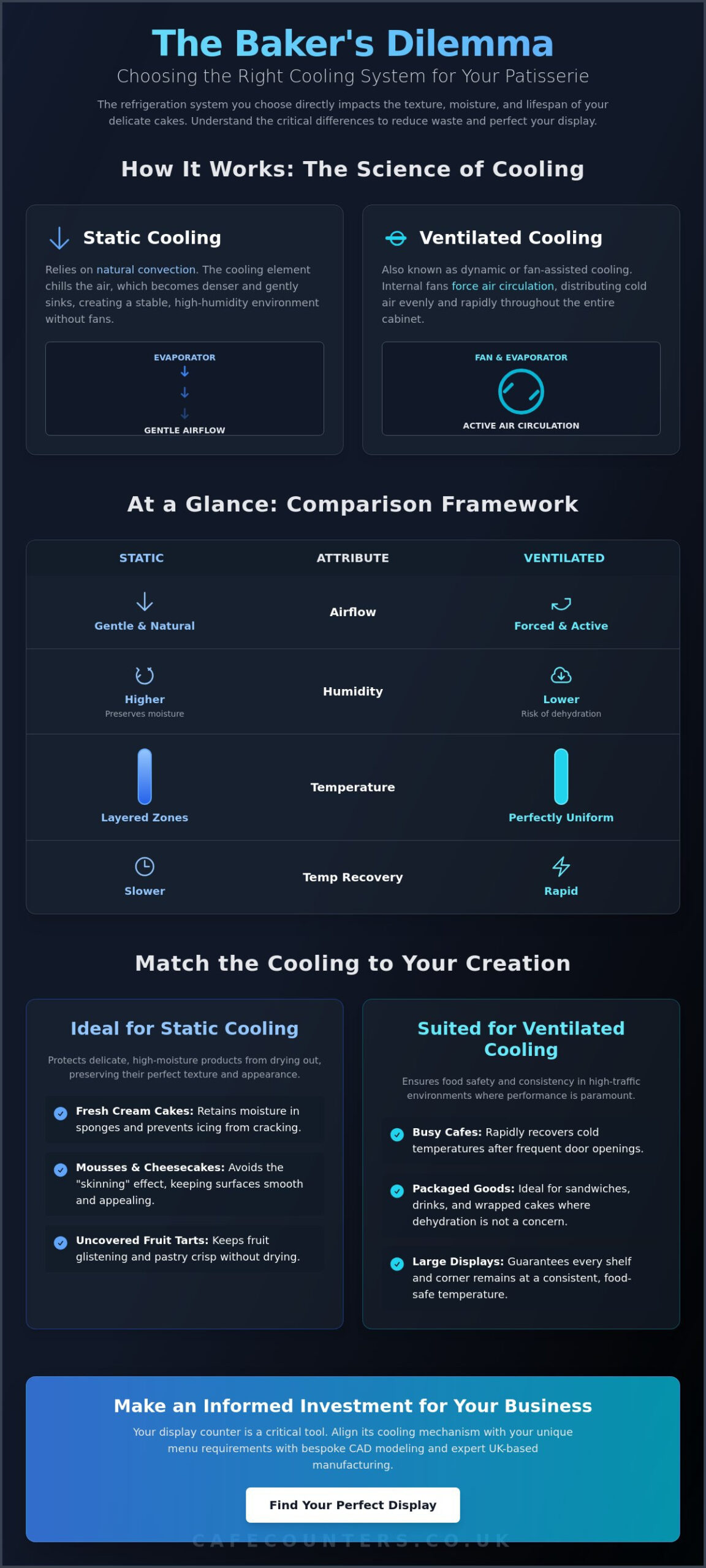
Choosing the right refrigeration system is a foundational decision for any high-end UK cafe or patisserie. When we evaluate ventilated vs static cooling for cakes, the primary distinction lies in how air moves within the display. Static cooling relies on natural convection. In this system, the cooling element (the evaporator) is usually located at the back or top of the unit. Cold air naturally sinks because it is denser, creating a gentle, layered environment without the use of mechanical fans. It is a quiet, traditional approach that respects the delicate nature of artisanal bakes.
Ventilated cooling, often called fan-assisted or dynamic cooling, takes a more active approach. This system uses internal fans to pull air over the evaporator and force it throughout the cabinet. This mechanical circulation ensures that every corner of the display maintains an identical temperature. For a busy cafe where the door is opened frequently, this rapid air movement is essential for maintaining food safety standards. However, these technical differences directly impact the physical properties of your patisserie. Cakes are uniquely sensitive because their structure relies on a precise balance of moisture within the crumb. Understanding the principles of food engineering helps us see that heat transfer isn’t just about the set temperature; it’s about the speed and volume of air movement across the product surface.
The Science of Cake Preservation
Air movement is the primary driver of product dehydration. In a ventilated system, the constant flow of air can strip moisture from an exposed sponge, leading to a dry, crumbly texture within hours. Conversely, temperature stability is vital for delicate finishes. If a cabinet cannot maintain a steady climate, you’ll often see icing ‘sweat’ as condensation forms on the surface, or buttercream lose its sharp, professional edges. Humidity management remains the hidden factor in display success. A static system naturally maintains higher humidity levels, which is often the secret to preserving that ‘just baked’ quality in sponges and creams.
Why Your Choice of Cooling System Matters
Your choice of cooling system dictates your daily food waste figures and operational efficiency. A cake that stays fresh and saleable for three days instead of one represents a direct boost to your bottom line. Visual presentation is equally critical; a perfectly preserved ganache or a moist, glistening sponge acts as your most effective marketing tool. You must also consider your service style. High-traffic environments require the rapid temperature recovery offered by ventilated systems, while specialized patisserie displays benefit from the gentle, humid environment of static cooling.
Static Cooling: The Gentle Approach to Delicate Patisserie
Static cooling operates on the simple physical principle that cold air is denser and heavier than warm air. In these units, the evaporator chills the air, which then descends naturally through the cabinet. This process creates a stable, humid environment without the intervention of mechanical fans. For the professional baker, this lack of aggressive air movement is the primary advantage. When comparing ventilated vs static cooling for cakes, the static method is often preferred for items that are prone to drying out. By reducing the rate of evaporation, sponges remain moist and fresh cream retains its delicate texture for longer periods.
This silent operation is a hallmark of static systems. Without the constant hum of internal fans, these units contribute to a more tranquil atmosphere in smaller, high-end establishments. It’s a choice that reflects a commitment to traditional quality, ensuring that the sensory experience of the cafe isn’t interrupted by mechanical noise. However, maintaining UK food safety standards remains paramount. Even with natural convection, the unit must reliably stay below 8°C, though we recommend a professional target of 5°C or lower to ensure total compliance and product longevity.
Best Applications for Static Displays
Static units excel when displaying high-moisture products that are often left uncovered. Fresh cream cakes, fruit tarts, and elaborate mousses thrive in this humid environment. Because there is no forced air to strip the moisture away, the “skinning” effect often seen on custards and creams is significantly delayed. This makes static cooling a staple in artisanal deli counters where visual appeal and product integrity are the highest priorities. For cafes with a lower turnover where items might sit in the display for a full day, this preservation of quality is vital.
The Limitations of Static Systems
Despite the benefits, static cooling presents specific technical challenges. The most notable is temperature stratification, often called the “warm top shelf” effect. Because cold air sinks, the lower shelves are almost always colder than the upper ones. This requires a meticulous approach to product placement to ensure every item stays within a safe range. You also have to consider recovery time. Once the door is opened, a static unit takes longer to reach its target temperature again compared to a fan-assisted model. If your staff frequently access the display during a busy lunch rush, you may struggle to maintain consistent cooling. It’s also easy to accidentally block the natural flow of air by overfilling shelves, which can lead to localized “hot spots” that compromise food safety. If you are unsure which system fits your workflow, exploring our range of bespoke patisserie displays can help you find the right technical balance.
Ventilated Cooling: Precision Temperature for High-Volume Service
Ventilated cooling, also known as fan-assisted or dynamic cooling, is the industrial standard for busy UK cafes that require rapid temperature recovery. Unlike the natural convection of static systems, this mechanism employs internal fans to pull air across an evaporator before distributing it evenly throughout the cabinet. This creates a constant, forced-air cycle that ensures the climate remains stable regardless of where a product is placed. When weighing up ventilated vs static cooling for cakes, the primary advantage here is precision. Every shelf, from the base to the top tier, receives identical cooling, which is essential for maintaining strict food hygiene standards in a high-traffic environment.
One of the most significant visual benefits of this technology is the prevention of condensation. In the humid British climate, glass panels can often fog up when a display is opened and closed frequently. Ventilated systems effectively sweep the glass with dry, chilled air, ensuring your patisserie remains clearly visible to customers at all times. This clarity is a vital component of the sales process, as it allows the intricate details of your bakes to serve as their own advertisement. It’s a technical solution that ensures your high-end design remains effective as a marketing tool throughout the working day.
Maintaining Consistency in Busy Environments
During peak morning and lunch rushes, the display door may be opened dozens of times per hour. A ventilated system is designed to handle this stress by recovering the target temperature almost immediately after the door is closed. This eliminates the risk of temperature zones where products at the front might warm up faster than those at the back. It’s this reliability that makes fan-assisted technology the baseline for commercial refrigerators in professional kitchens. For a business with high customer turnover, the speed of recovery is often more important than the gentle air movement of a static unit.
Managing the Dehydration Risk
The trade-off for such precise temperature control is the increased risk of product dehydration. Because air is constantly moving, it can strip moisture from exposed surfaces much faster than a static unit would. This is particularly noticeable with uncovered sponges or delicate pastries. To mitigate this, we recommend several practical strategies:
- Protective Barriers: Use fat-rich coatings like chocolate ganache or thick buttercream to act as a seal for the sponge.
- Enclosed Display: Keep delicate items under glass cloches or within airtight containers to maintain their internal humidity.
- Strategic Placement: Position moisture-sensitive items away from direct fan outlets to minimize the impact of the air current.
By implementing these simple adjustments, you can enjoy the benefits of total temperature uniformity without compromising the moist texture of your signature bakes. This ensures that even in a high-volume setting, the artisanal quality of your product remains intact.
Ventilated vs Static Cooling for Cakes: The Comparison Framework
Selecting between ventilated vs static cooling for cakes is a strategic decision that directly affects your daily wastage and customer satisfaction. While previous sections detailed the mechanics, a direct comparison reveals how these systems perform under the unique pressures of a UK cafe environment. Temperature uniformity is the primary strength of ventilated units. Internal fans ensure that the climate remains identical across every shelf, eliminating the “warm spots” that can compromise food safety. Conversely, static units prioritize humidity. Because they don’t use aggressive mechanical airflow, they maintain a moisture-rich environment that prevents the delicate crumb of a sponge from drying out. Maintenance requirements also diverge; ventilated systems require more frequent condenser cleaning and fan motor checks because they process a higher volume of ambient air and dust.
Operational efficiency isn’t just about the energy rating on the label; it’s about how the unit interacts with your staff and customers. In a professional setting, the cost of a ruined batch of cakes far outweighs minor differences in electricity bills. You must evaluate whether your priority is the rapid recovery of a busy service or the long-term preservation of moisture-sensitive artisanal products. We find that the most successful cafes choose their cooling technology based on their specific menu turnover and the physical layout of their serving area.
Recovery Times and Operational Efficiency
Imagine a typical 30-minute lunch rush where the display door is opened every few minutes. In a static unit, the heavy cold air escapes and is replaced by warm ambient air, which then takes a significant amount of time to cool down naturally. This can lead to internal temperatures rising above the mandatory 8°C limit. Forced-air systems are engineered to recover their target temperature up to 50% faster than static models. This rapid stabilization protects the structural integrity of your products and ensures you remain compliant with food hygiene regulations during your busiest periods. While the fans require power, the ability to reach a stable state quickly often provides a better long-term cost-to-benefit ratio for high-traffic sites.
Product-Specific Recommendations
Your menu should be the ultimate guide for your equipment specification. Cheesecakes, mousses, and elaborate dairy-based patisserie demand absolute temperature stability. For these items, the precision of a ventilated display is king, as it prevents the softening that leads to aesthetic failure. Traditional sponges, however, are the most vulnerable to the drying effects of moving air. If your signature products are uncovered Victoria sponges or fruit tarts, a static unit’s gentle, humid climate is often superior for moisture retention. Modern design can often bridge this gap. By utilizing bespoke patisserie displays, we can help you specify a system that balances airflow with protection, ensuring your products look as good as they taste from the first slice to the last.
Specifying Your Professional Patisserie Display with TFSE Products
Deciding between ventilated vs static cooling for cakes is only the first step in a larger journey toward a finished physical space. At TFSE Products, we position ourselves as your expert partner, bridging the gap between technical refrigeration theory and practical, high-end design. Our bespoke UK manufacturing capabilities allow us to move beyond standard off-the-shelf units. We understand that your menu is unique, often requiring a delicate balance of airflow and humidity that mass-produced equipment cannot always provide. By keeping our production facilities local, we maintain total control over every weld, seal, and fan placement, ensuring the final product reflects our sense of regional artisanal pride and total reliability.
Our CAD modelling process acts as a conceptual anchor for your project. It allows us to visualize how specific cooling technologies will interact with your shop’s layout before a single piece of steel is cut. This meticulous planning ensures that the airflow is tailored to your specific product mix, whether you are showcasing delicate cream patisserie or robust sponges. We don’t just deliver a display; we execute a full project management strategy that guides you from the initial vision to a fully commissioned serving environment.
Bespoke Solutions for Unique Cafe Environments
Every cafe environment presents its own set of environmental variables, from ambient shop temperature to the frequency of customer service. We specialize in integrating cooling technology into custom-built, high-end counter systems that prioritize both visual impact and operational durability. This bespoke approach means we can specify the exact internal climate required for your cakes, sandwiches, or salads. By choosing a manufacturer that understands the unique pressures of the UK commercial sector, you ensure your equipment is built to handle the rigours of daily service without compromising on its aesthetic appeal.
Expert Planning and Installation
The long-term success of your refrigeration depends heavily on professional installation and commissioning. We conduct thorough site surveys to assess ventilation needs and power requirements, preventing the common technical failures that plague poorly planned projects. This is particularly critical for high-volume units like refrigerated grab and go display units, which must recover their internal climate rapidly throughout the day. Buying British-made equipment from TFSE ensures that your after-sales support is rooted in the same facility where your unit was fabricated, providing a level of transparency and trust that imported models cannot match.
Contact TFSE Products for an expert consultation on your next display project and let us bring your vision to life with technical precision.
Elevating Your Patisserie Presentation
Selecting between ventilated vs static cooling for cakes is a fundamental decision that balances the delicate moisture of your sponges against the operational demands of a busy cafe. We’ve explored how static systems provide a gentle, humid environment for fresh creams, while ventilated technology offers the rapid temperature recovery essential for high-traffic environments. It’s a choice that ensures your products remain saleable for longer, directly reducing food waste and protecting your brand’s reputation for quality.
Since 1991, TFSE Products has combined technical refrigeration expertise with high-end British manufacturing. We provide specialized CAD modelling for every bespoke counter project, ensuring your cooling system is perfectly calibrated to your menu requirements. Our comprehensive service includes full installation and commissioning, giving you total peace of mind from the initial design to the final physical space. We position ourselves as your Expert Partner, providing the steady, reliable hand needed for complex commercial projects.
Book a site survey with our UK design experts to find the ideal cooling solution for your establishment. We look forward to helping you bring your vision to life with precision and reliability.
Frequently Asked Questions
Is ventilated cooling better than static cooling for cream-based cakes?
Static cooling is the preferred choice for cream-based cakes because it maintains the high humidity levels required to keep dairy products fresh. In a ventilated vs static cooling for cakes comparison, the forced airflow of a ventilated unit can cause cream to form a dry skin or lose its structure. If you must use a ventilated system for cream items, ensure they are kept under cloches to mitigate the drying effect of the fans.
Can I use a static cooling display for high-volume service?
You can use static cooling for high-volume service, but it requires meticulous management of door openings. Because static units rely on natural convection, they take longer to recover their target temperature after the cabinet is accessed. In a busy UK cafe, frequent openings can lead to internal temperatures exceeding the 8°C safety limit. For high-traffic environments, a ventilated system is generally the more reliable option for maintaining food safety.
How do I stop my cakes from drying out in a ventilated display fridge?
To prevent dehydration in a ventilated display, you should focus on creating physical barriers between the air and the product. Applying a rich ganache, thick buttercream, or a professional glaze helps seal moisture within the sponge. Alternatively, displaying cakes in airtight containers or under glass cloches provides a micro-climate that resists the drying effects of forced-air fans. These simple adjustments allow you to enjoy temperature uniformity without sacrificing product quality.
Which cooling system is more energy-efficient for a UK cafe?
Static cooling systems are generally more energy-efficient in low-traffic environments because they lack the power-consuming internal fans found in ventilated models. However, the calculation changes in a busy commercial setting. Ventilated units reach their target temperatures much faster after the doors are opened, which can reduce the total workload on the compressor. When specifying equipment, we recommend looking at the energy label while considering your specific daily footfall and service style.
Do I need a special type of cooling for gluten-free or vegan cakes?
Gluten-free and vegan cakes do not require a specific cooling technology, but they do benefit from careful moisture management. Gluten-free sponges often have a different protein structure that can make them prone to drying out more quickly than traditional bakes. For these delicate items, a static cooling environment or a well-protected ventilated shelf is ideal. The priority should always be maintaining the specific texture and crumb integrity of your unique recipes.
What is the typical recovery time for a ventilated patisserie display?
A high-quality ventilated patisserie display typically recovers its target temperature within two to five minutes after the door is closed. This rapid stabilization is achieved by the internal fans immediately circulating chilled air across every shelf. In contrast, a static unit may take significantly longer to reach a uniform state. This speed is a critical factor for cafes that experience intense peak periods where staff are frequently accessing the display to serve customers.
Can a bespoke counter manufacturer combine both cooling types?
A bespoke manufacturer can certainly integrate both cooling technologies into a single counter system. This multi-zone approach allows you to dedicate specific areas to different product types, such as a static section for delicate mousses and a ventilated section for sandwiches. We utilize CAD modelling to plan these complex configurations, ensuring that each zone operates independently and efficiently. This level of customization is the hallmark of a professional, UK-fabricated serving solution.
How often should I service the fans in a ventilated cooling unit?
You should have the fans and internal components of a ventilated unit professionally serviced at least every six months. Because these systems move a high volume of air, dust and grease can accumulate on the fan blades and evaporator coils over time. Regular maintenance prevents these deposits from stressing the motor and reducing cooling efficiency. Keeping your system clean ensures long-term operational reliability and helps you avoid the high costs of emergency mechanical repairs.