
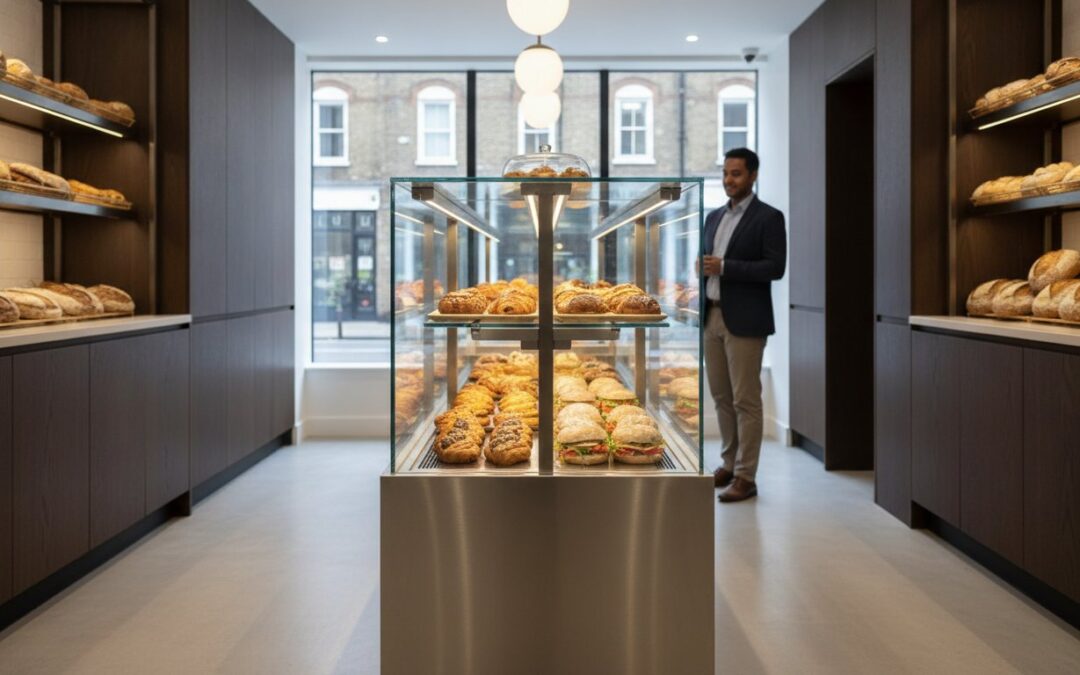
A meticulously designed retail space should do more than just house products; it must serve as your most persuasive salesperson. Many shop owners find that generic, imported units often fail to fit unique layouts or succumb to frequent breakdowns, leading to costly downtime. Selecting the ideal ambient display cabinet UK professionals require means looking beyond the price tag to find a partner that values durability and regional craftsmanship.
It’s frustrating when equipment doesn’t live up to your brand’s standards or the latest 2026 energy expectations. This guide promises to help you navigate the complexities of food safety compliance and high-performance display strategy. We’ll explore how bespoke CAD modelling and internal production facilities allow for a seamless fit-out that drives grab-and-go revenue. By the end of this article, you’ll have a clear roadmap for choosing a display that combines artisanal quality with the technical precision your business deserves. We will walk you through the essential selection criteria, from safety glass compliance to strategic placement, ensuring your next project is grounded in both style and operational excellence.
Key Takeaways
- Understand why precision-engineered commercial units outperform generic storage by acting as active sales tools that elevate your brand’s visual impact.
- Learn to differentiate between patisserie, heated, and ambient temperature profiles to ensure your food safety compliance remains uncompromised.
- Discover how choosing a British-made ambient display cabinet UK specialists recommend can lower long-term costs through superior stainless steel durability and energy-efficient LED lighting.
- Unlock the merchandising power of the “Golden Zone” to drive impulse purchases while optimizing your shop floor for better customer flow and staff efficiency.
- Explore the advantages of bespoke CAD modelling, which allows you to visualize and refine your retail space before the manufacturing process even starts.
Defining the Commercial Ambient Display Cabinet: Strategic Value Beyond Storage
In the high-pressure environment of a UK cafe or deli, your equipment must do more than simply hold stock. A professional ambient display cabinet UK operators select is a precision-engineered retail asset. It’s designed to showcase products under optimal conditions while withstanding the heavy usage of a commercial floor. Unlike domestic storage, which prioritises low-frequency access and lightweight materials, a commercial-grade display case uses food-grade stainless steel and toughened safety glass to ensure long-term structural integrity and hygiene compliance.
Think of your display as a silent salesperson. It frames your artisanal breads, pastries, or gourmet snacks in a way that justifies premium pricing and reinforces your brand’s commitment to quality. In 2026, we’re seeing a distinct shift among British businesses. They’re moving away from generic, standalone units in favour of integrated solutions that match their specific spatial requirements and aesthetic vision. This move toward high-end, bespoke manufacturing ensures that every millimetre of the shop floor is working to generate revenue.
The Role of Display in Modern UK Hospitality
The UK’s grab-and-go sector continues to expand, putting immense pressure on visual merchandising. Customers now expect convenience without sacrificing the “artisanal” feel. High-quality displays don’t just look better; they signal to the consumer that the food is fresh and handled with care. This perception of quality is directly linked to your brand’s value. Furthermore, a well-engineered ambient display cabinet UK businesses invest in will help manage internal airflow. This reduces food waste by preventing the premature drying out of baked goods, which is a common issue in poorly ventilated, cheaper alternatives.
Key Terminology for Professional Buyers
Understanding the technical language of the industry is essential for making an informed investment. In a professional kitchen or retail space, temperature profiles are strictly defined to meet UK Food Standards Agency requirements.
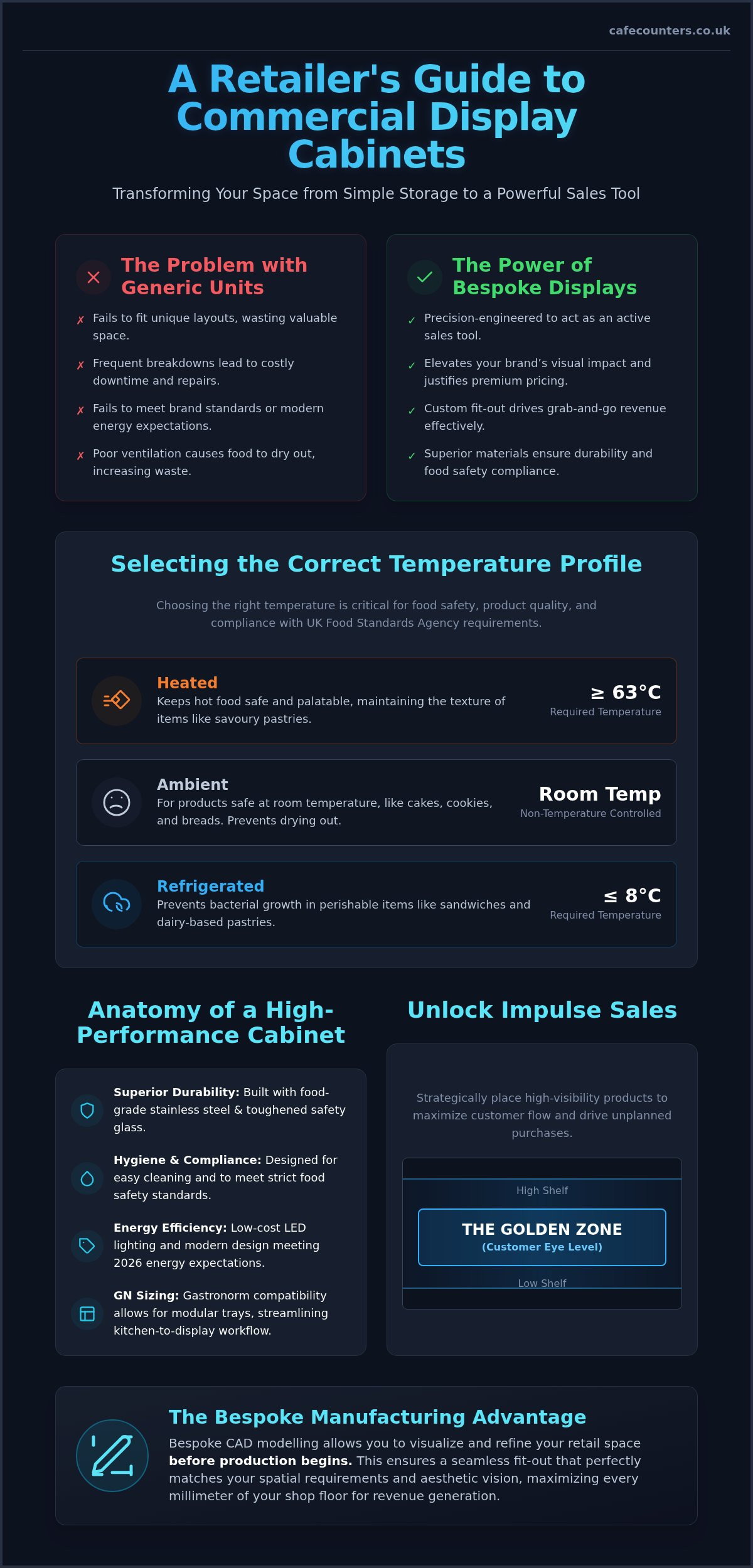
- Ambient: These units are non-temperature controlled, typically used for products that are safe at room temperature, such as cakes, cookies, and breads.
- Refrigerated: Chilled units must maintain food at or below 8°C to prevent bacterial growth in perishable items like sandwiches or dairy-based pastries.
- Heated: These units keep hot food at or above 63°C to ensure safety and palatability.
- GN (Gastronorm) Sizing: This refers to the standard European sizes for trays and containers, allowing for modularity and easy transfer between different pieces of equipment.
Impulse sales are unplanned purchases triggered by the strategic, high-visibility placement of products at eye level or near the point of sale. By choosing equipment that is GN compatible, you ensure your workflow remains efficient while your products stay front and centre for every customer walking through the door.
Refrigerated, Heated, or Ambient: Selecting the Correct Temperature Profile
Selecting the correct temperature profile is a critical decision that impacts both your operating costs and the shelf life of your inventory. It’s not merely a matter of hot or cold. You must consider the specific biological and textural requirements of your menu. A patisserie display requires delicate refrigeration with high humidity to prevent fine sponges from dehydrating. In contrast, a heated unit for savoury snacks relies on dry, consistent heat to maintain the structural integrity of pastry. Getting this balance wrong leads to food waste and diminished product quality.
Modern retail environments often benefit from a hybrid strategy. By integrating different temperature zones into a single bespoke counter, you create a cohesive visual experience for the customer while maintaining strict food safety standards. This methodical approach ensures that your sourdough remains crusty in an ambient display cabinet UK setting while your premium deli meats stay perfectly chilled just inches away. It allows for a streamlined workflow where staff can serve diverse menu items from a centralised location.
Refrigerated Grab and Go Display Units
Maintaining a robust cold chain is non-negotiable for pre-packaged sandwiches, salads, and bottled beverages. In high-traffic national retail areas, the choice between open-front and glass-door units often comes down to a balance of accessibility and energy efficiency. Open-front models encourage fast-paced transactions, though they require more powerful cooling systems to compensate for ambient air intrusion. For a deeper dive into these technical specifications, consult our guide on refrigerated grab and go display units. Consistent airflow is the backbone of these systems, ensuring that every item on every shelf remains at or below the legal 8°C threshold.
Heated and Ambient Solutions
For hot snacks like pasties, pies, and sausage rolls, heated displays are essential for both safety and palatability. These units must maintain a core temperature of at least 63°C to comply with UK regulations. If your business model focuses heavily on the lunch-time rush, exploring Vision Heated Counters provides a blueprint for high-performance hot food merchandising.
Ambient cabinets are frequently the most cost-effective way to present muffins, cookies, and artisanal loaves. Because they don’t require thermal intervention, a well-built ambient display cabinet UK businesses rely on can focus entirely on visibility and ergonomics. These units use natural ventilation and high-clarity glass to make your products the star of the show. If you’re unsure which configuration best suits your menu, our team of experts can help you design a bespoke serving counter that integrates every necessary temperature zone with precision.
Technical Specifications: Durability, Hygiene, and Energy Efficiency
The structural integrity of your merchandising equipment determines its true value over time. While plastic or acrylic alternatives might offer a lower initial outlay, they quickly degrade under the rigours of a professional kitchen. Scratches on acrylic surfaces don’t just look unprofessional; they create microscopic pockets where bacteria can thrive. Choosing an ambient display cabinet UK manufacturers have crafted from food-grade stainless steel ensures a non-porous, corrosion-resistant surface that remains pristine for years. This material choice is a hallmark of British engineering, prioritising longevity over fleeting cost savings.
Lighting plays a dual role in modern display strategy. High-quality LED arrays do more than just make your pastries look irresistible. They operate at significantly lower temperatures than traditional halogen bulbs. This reduction in heat emission is vital for maintaining a stable environment, especially in refrigerated units where every degree of heat must be countered by the compressor. By integrating cool-running LEDs, you protect the texture of your food while reducing your daily energy consumption. Hygiene is equally dependent on design; removable shelving and seamless internal corners allow for deep cleaning that meets the strictest UK food safety standards.
Materials and Construction Quality
In the UK hospitality sector, 304-grade stainless steel stands as the gold standard for construction. Its high nickel and chromium content provides exceptional resistance to the acidic environments common in food preparation. Pairing this with toughened safety glass ensures your display can handle the accidental bumps of a busy lunch rush without risk to staff or customers. High-density polyurethane insulation minimizes thermal transfer, significantly lowering the energy required to maintain stable internal temperatures over the unit’s lifespan. These technical choices reflect a commitment to artisanal durability that cheap imports simply cannot match.
Energy Performance and UK Regulations
As we move through 2026, compliance with the Ecodesign for Energy-Related Products and Energy Information Regulations is a top priority for professional buyers. For refrigerated units, this means seeking out equipment with high-efficiency fans and precision thermostats that prevent energy spikes. Night blinds are another essential feature for open-front units, acting as a thermal barrier during closing hours to retain cold air. Even for a non-refrigerated ambient display cabinet UK businesses use, selecting a model with high-efficiency internal components contributes to a more sustainable and cost-effective retail environment. Precision thermostats ensure that heating or cooling elements only engage when absolutely necessary, providing the methodical control required for modern energy standards.
Strategic Placement: Maximising Customer Flow and Impulse Sales
Strategic placement transforms a static piece of equipment into a dynamic revenue driver. The “Golden Zone” refers to the area between chest and eye level, where customers naturally focus their attention. Placing high-margin items like artisanal pastries or premium snacks in this space within an ambient display cabinet UK retail environments use can increase sales volume significantly. It’s about aligning the product with the customer’s natural line of sight. Lighting also plays a pivotal role here. Warm colour temperatures around 3000K enhance the golden hues of bread and crusts, while cooler tones are better suited for fresh, vibrant salads or pre-packaged drinks.
When planning your layout, consider the difference between counter-top and floor-standing units. Counter-top models are excellent for high-value, small-footprint items that sit directly at the point of purchase. Floor-standing cabinets, however, act as architectural anchors that can guide the customer through a specific path. A methodical shop floor plan uses these units to prevent bottlenecks, ensuring that the journey from entrance to till is both intuitive and profitable. To ensure your layout is perfectly optimised, we recommend using bespoke serving counters that are designed specifically for your building’s unique dimensions.
The Psychology of the Queue
Waiting times at the till represent a prime opportunity to monetise the customer journey. By positioning an ambient display cabinet UK shoppers can easily browse while queuing, you tap into the psychology of the “last-minute add-on.” This is where cross-selling becomes most effective. Pairing a luxury flapjack or a gourmet brownie with a coffee order can increase the average transaction value by 15% to 20% in high-traffic cafes. This strategy works best when the display complements your main service area, similar to how professionals approach choosing the perfect deli counter to balance service and speed.
Ergonomics and Loading Logistics
Efficiency behind the scenes is just as important as the customer-facing experience. Rear-loading cabinets are the standard for staff-assisted service, allowing your team to replenish stock without interrupting the customer’s view or blocking the aisle. For self-service areas, front-loading units are necessary, but they require a design that facilitates First-In, First-Out (FIFO) stock rotation. This methodical approach to loading reduces food waste by ensuring older stock is always sold first. If you are integrating drop-in units into an existing counter, you must ensure adequate ventilation space. Without proper airflow around the internal components, even the most robust unit will suffer from reduced performance and a shorter lifespan.
Integration Checklist for Retail Success:
- Ensure clear sightlines from the main entrance to your primary display.
- Position high-margin snacks within 1.5 metres of the coffee ordering point.
- Maintain a minimum aisle width of 1.2 metres to comply with UK accessibility standards.
- Match lighting colour temperatures to the specific food group being displayed.
- Verify that integrated units have at least 50mm of clearance for ventilation.
Bespoke British Manufacturing: The TFSE Advantage
Our CAD modelling service acts as the conceptual anchor for your project. We don’t just sell equipment; we provide a visual roadmap of how a unit will function within your specific environment. This is particularly valuable for awkward retail layouts or listed buildings where standard, off-the-shelf cabinets often fail to fit. By seeing a digital twin of your display in situ, you can refine the ergonomics and customer flow before a single piece of metal is cut. This end-to-end project management, from the initial site survey to the final commissioning, eliminates the stress of coordinating multiple contractors.
Customisation Beyond Dimensions
True bespoke design goes beyond adjusting the width or height of a counter. We offer a breadth of finishes, including durable powder coating in any RAL colour and premium stone tops, to ensure your equipment aligns perfectly with your brand’s visual identity. Modern retail also demands technical integration. We can incorporate digital signage directly into the cabinet fascia or prepare the unit for RFID payment points. This level of high-end customisation ensures your display isn’t just a functional box; it’s an integrated part of your digital and physical sales strategy. The long-term ROI of a unit built for its specific environment is found in its perfect fit and reduced operational friction.
The TFSE Commitment to Quality
Our service doesn’t end when the unit leaves our factory. We provide a comprehensive site survey and professional installation service to ensure your equipment is positioned for maximum impact and safety. Because we manufacture in the UK, we offer significantly better long-term parts availability than many third-party resellers. You won’t be left waiting weeks for a specific component to arrive from overseas. For those looking to expand their setup, our ultimate guide to professional cooling solutions offers deeper insights into maintaining the same high standards across your entire refrigerated inventory. We position ourselves as your expert partner, ensuring your vision is brought to life with technical excellence.
Elevating Your Retail Environment for 2026 and Beyond
A successful retail fit-out relies on a methodical balance of aesthetics, durability, and strategic placement. By understanding the specific temperature requirements of your menu and the psychological power of the “Golden Zone,” you can transform a standard counter into a high-performance sales asset. Selecting a professional ambient display cabinet UK manufacturers have built to last ensures that your business remains compliant with 2026 energy standards while projecting an image of total quality and artisanal pride.
Since 1991, TFSE Products Ltd has served as an expert partner for hospitality professionals across the country. Our process begins with advanced CAD modelling to ensure every millimetre of your space is utilised effectively; this is followed by expert fabrication in our UK facility and a full national installation and commissioning service. We handle the technical complexities so you can focus on delivering an exceptional customer experience. Design your bespoke commercial snack display with TFSE Products today and take the first step toward a more efficient and profitable future. We look forward to helping you bring your vision to life with precision and care.
Frequently Asked Questions
What is the difference between an ambient and a refrigerated snack display?
Ambient units are designed for products that remain safe and palatable at room temperature, such as muffins, cookies, and artisanal breads. Refrigerated displays are necessary for items requiring a cold chain, such as dairy-based pastries or sandwiches, which must stay at or below 8°C. Choosing the right profile depends entirely on your menu’s biological needs. An ambient display cabinet UK specialists provide focuses on visibility and natural airflow rather than active thermal management.
Do I need a floor-standing or a counter-top display cabinet?
Floor-standing units act as architectural anchors that can guide customer flow and hold higher volumes of stock. They’re ideal for self-service areas or as central features in larger retail spaces. Counter-top displays are precision-engineered for the point of sale, capturing high-margin impulse purchases during the payment process. Your choice should align with your available floor space and the specific role the display plays in your customer journey.
How much energy does a commercial snack display cabinet use in 2026?
An ambient display cabinet UK businesses operate uses minimal energy, primarily for high-efficiency LED lighting. For refrigerated models in 2026, energy consumption is significantly reduced through precision thermostats and advanced compressor technology. These units are designed to meet the latest Ecodesign regulations, ensuring that operational costs remain low. We focus on integrating high-density insulation and night blinds to prevent thermal loss, making modern commercial units far more sustainable than legacy equipment.
Are bespoke snack displays more expensive than off-the-shelf units?
Bespoke displays require a higher initial investment than mass-produced acrylic boxes, but they offer superior long-term ROI. A custom-built unit is manufactured from 304-grade stainless steel, ensuring it withstands the rigours of a busy commercial environment for decades. Off-the-shelf units often fail to fit unique shop layouts, leading to wasted space and lost revenue. Investing in a tailored solution ensures your equipment integrates perfectly with your brand identity and operational workflow.
What are the UK food hygiene requirements for heated snack displays?
UK food hygiene regulations require that hot food intended for service must be kept at or above 63°C. Heated display cabinets must be equipped with precision temperature controls and visible thermometers to ensure compliance with Food Standards Agency guidelines. It’s essential to monitor these temperatures regularly throughout the day. Proper airflow within the unit is also vital to prevent cold spots, ensuring that every pasty or pie remains safe for consumption.
How do I maintain and clean my commercial display cabinet?
Maintaining your display cabinet requires a methodical daily cleaning routine. You should use non-abrasive, food-safe cleaners on stainless steel surfaces and high-clarity glass. Our designs incorporate removable shelving and seamless internal corners to make this process as efficient as possible. Regularly checking door seals and ensuring ventilation grilles are free from dust will also prevent the internal components from overworking. This proactive approach extends the life of your equipment and ensures high hygiene standards.
What is the typical lifespan of a British-manufactured food display unit?
A British-manufactured food display unit typically has an operational lifespan of 10 to 15 years when properly maintained. Because we use high-grade materials like 304 stainless steel and toughened safety glass, these units are far more durable than cheaper, imported alternatives. Our UK-based facility also ensures that replacement parts remain available for the long term. This durability makes them a steady, reliable hand for any commercial project, providing peace of mind through decades of service.
Can I integrate a snack display into an existing cafe counter?
You can absolutely integrate a professional snack display into an existing cafe counter using our drop-in units. This process begins with an advanced CAD model to ensure a precision fit within your current cabinetry. We meticulously plan the ventilation and electrical requirements to ensure the new unit operates at peak efficiency without compromising the structural integrity of your counter. This approach allows you to upgrade your merchandising capabilities without the cost of a full shop fit-out.