
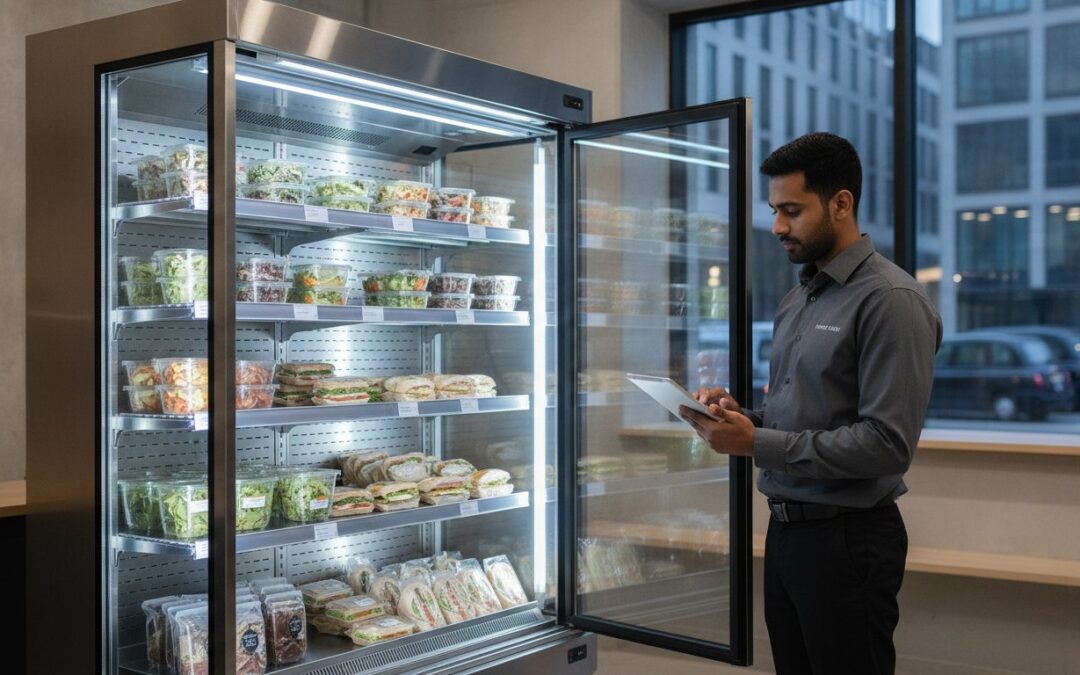
With an estimated 2.4 million cases of foodborne illness in the UK costing the economy over £10 billion annually, the margin for error in your display strategy has never been slimmer. You likely feel the constant pressure of maintaining a perfect 5°C chill while facing the looming July 2026 BPA ban and complex HFSS placement restrictions. It’s a stressful balancing act to keep your shelves stocked and your health ratings high, especially when the fear of wasted stock or a failed inspection looms over your daily operations. We understand that ensuring food safety in grab and go units is about more than just a thermostat; it’s about protecting your reputation and your bottom line.
This guide provides the expert clarity you need to master the technical and regulatory requirements of the 2026 landscape. We’ll walk you through the essential hardware specifications that guarantee a legal temperature hold and explain how to navigate the latest FSA standards with total confidence. You’ll learn how to combine precision engineering with operational excellence to create displays that are as safe as they are visually striking. From understanding the nuances of Natasha’s Law to selecting equipment that eliminates the “danger zone,” we’re here to help you build a compliant, high-performance food service environment.
Key Takeaways
- Navigate the complexities of the Food Safety Act 1990 and current FSA standards to protect your business from regulatory penalties.
- Discover how precision ‘Air Curtain’ technology maintains a stable thermal barrier in open-front units, even in high-traffic environments.
- Learn why strategic hardware design and food-grade stainless steel are essential for ensuring food safety in grab and go units while simplifying your cleaning routines.
- Implement a robust HACCP framework and meticulous maintenance schedules specifically tailored to the unique demands of high-volume grab-and-go retail.
- Explore the operational advantages of partnering with a UK-based manufacturer for bespoke installations and reliable long-term technical support.
Understanding UK Food Safety Regulations for Grab and Go Retail
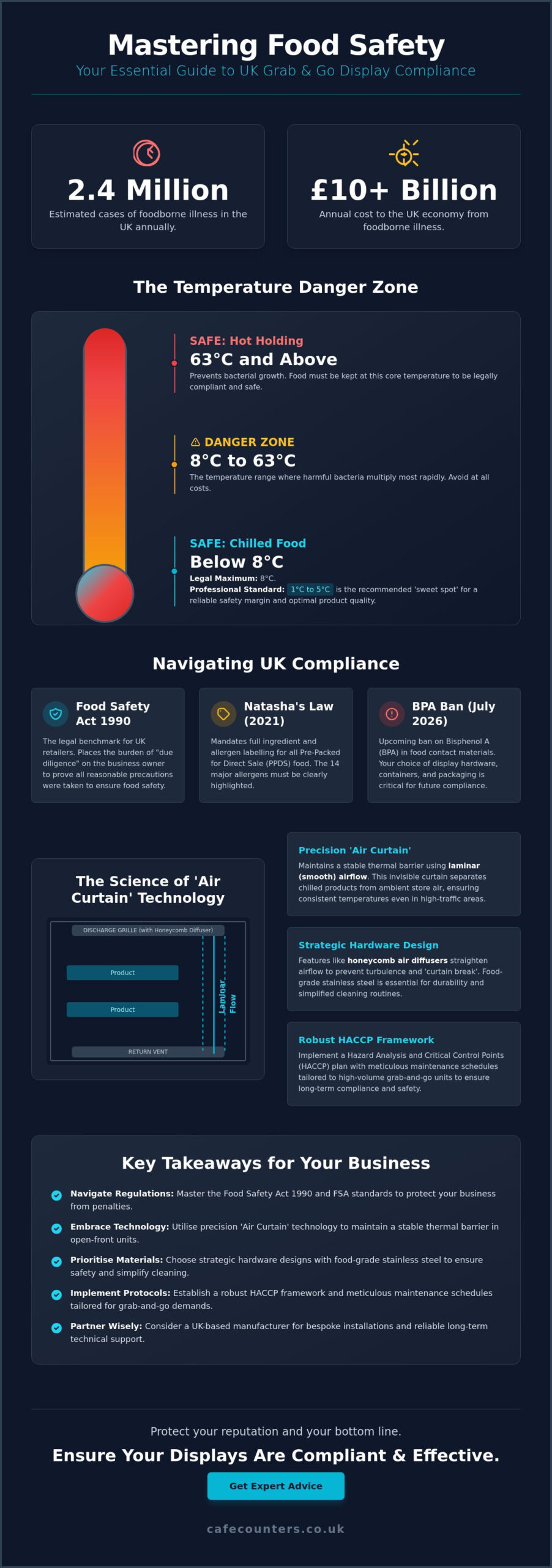
The Food Safety Act 1990 remains the definitive legal benchmark for UK retailers. It places the burden of proof on the business owner to demonstrate “due diligence” in every aspect of food handling. The Food Standards Agency (FSA) enforces these standards through rigorous inspections, where your display equipment’s performance is often the first thing they scrutinize. When you are focused on ensuring food safety in grab and go units, you’re managing a complex interaction between legislative compliance and commercial presentation. Adhering to fundamental food safety principles isn’t just about avoiding fines; it’s about mitigating the risk of foodborne illness, which affects an estimated 2.4 million people in the UK every year.
The Legal Temperature Framework in the UK
The “danger zone” is the temperature range where bacteria multiply most aggressively. This spans from 8°C up to 63°C. While the law allows for a maximum chilled temperature of 8°C, we advise our clients that 5°C is the professional standard for a reliable safety margin. Modern refrigeration must maintain this 1°C to 5°C “sweet spot” even during peak hours when customers frequently break the air curtain. Precision engineering ensures that the core temperature of your products remains stable regardless of how often the unit is accessed.
Hot-holding presents its own set of challenges. To remain compliant, food must be held at a core temperature of 63°C or above. While the “two-hour rule” allows for some flexibility in displaying food at room temperature, it’s a high-risk strategy that often leads to unnecessary waste. We recommend equipment that provides consistent, gentle heat to preserve food quality without allowing temperatures to dip into the danger zone. Managing these temperatures accurately is the only way to avoid the significant societal costs associated with foodborne outbreaks, currently estimated at £10.4 billion annually.
Natasha’s Law and Allergen Labelling
The introduction of Natasha’s Law in 2021 significantly increased the requirements for Pre-Packed for Direct Sale (PPDS) food. Every item prepared and packaged on your premises must now feature a full ingredients list with the 14 mandatory allergens clearly highlighted. Implementing a robust system like LabelFood helps ensure these labels remain accurate and compliant. With a review of this official guidance scheduled for September 2026, staying ahead of these requirements is vital for any professional kitchen.
Your grab-and-go displays must be designed to facilitate this transparency. Customers should be able to read every label clearly through the glass or within the open-front unit without needing to handle multiple products. Additionally, your stocking protocols must prevent cross-contamination. Even a small amount of an allergen transferred from a gloved hand during the morning restock can have life-threatening consequences for the 6% of UK adults with confirmed food allergies. As we approach the July 20, 2026 ban on Bisphenol A (BPA) in food contact materials, your choice of display hardware and packaging becomes even more critical for ensuring food safety in grab and go units.
The Science of Temperature Control in Open-Front Displays
Open-front units are a masterclass in fluid dynamics. Unlike a domestic fridge that relies on a sealed door to trap cold air, these commercial systems use a continuous stream of high-velocity air to maintain a stable environment. This is not a static process. It’s a dynamic system that must constantly fight against ambient heat and humidity. At the design stage, we utilize CAD modelling to predict exactly how air will move within a bespoke counter. By simulating environmental variables like ambient room temperature and nearby draughts, we ensure that the invisible thermal barrier remains intact even during peak trading hours. This technical precision is the foundation for ensuring food safety in grab and go units.
Understanding Air Curtain Dynamics
The success of a refrigerated display depends on laminar flow. This is a smooth, uninterrupted path of air that travels from the top discharge grille to the bottom return vent. When this flow is turbulent, it mixes with the warm air of the shop, causing a “curtain break” that forces the refrigeration system to work harder and potentially allows internal temperatures to rise. We incorporate honeycomb air diffusers into our designs to straighten the airflow and minimize this turbulence. This technical feature directly supports your legal obligations under UK food safety regulations, providing a reliable chill that keeps products at that critical 5°C professional target.
External factors frequently disrupt this delicate balance. Air conditioning vents, open doors, and even fast-moving foot traffic can pull the air curtain away from the unit. Our engineering team accounts for these workplace realities by calibrating the fan speeds and discharge angles for each specific environment. This meticulous approach to construction ensures that energy efficiency doesn’t come at the cost of thermal integrity, protecting your stock and your reputation simultaneously.
Thermal Mass and Product Loading
A display unit is designed to maintain temperature, not to pull it down. For the system to function correctly, every item must be pre-chilled to 5°C or below before it’s placed on the shelves. Warm products introduce a significant heat load that can destabilize the entire air curtain, putting surrounding items at risk. Proper loading is equally vital. Overstocking often leads to blocked return vents, which chokes the system and creates warm pockets where bacteria can thrive. The physical distance between the air discharge grille and the return vent determines how effectively cold air envelops each shelf layer.
Consistency is the hallmark of a professional operation. By training your team to respect the load lines and avoid “stacking high,” you preserve the laminar flow that our engineers worked so hard to perfect. If you’re planning a new retail layout, choosing professionally engineered Grab & Go Displays ensures that your hardware is built to withstand the rigours of a high-volume commercial environment while ensuring food safety in grab and go units remains your top priority.
Strategic Hardware Design: Materials and Hygiene Standards
While the precision of airflow maintains the thermal barrier, the physical structure of your display determines how effectively you can prevent bacterial proliferation. The selection of materials is never merely an aesthetic consideration; it is a critical pillar in ensuring food safety in grab and go units. High-quality food grade stainless steel remains the non-negotiable industry standard. Its non-porous surface is essential for preventing the formation of biofilms, which are resilient layers of bacteria that can cling to inferior materials like plastic or low-grade metals. With the UK’s ban on Bisphenol A (BPA) in food contact materials taking effect on July 20, 2026, the shift toward inert, durable metals is more than a preference; it’s a regulatory necessity.
Designing for ‘clean-ability’ is what separates professional-grade hardware from standard retail shelving. Dirt traps are the enemy of any HACCP plan. We prioritize coved internal corners rather than sharp 90-degree angles in our fabrication process. This allows staff to wipe surfaces clean in a single, fluid motion, leaving no crevices for debris or pathogens to accumulate. Similarly, when installing Integrate Drop-in Units, the seal between the unit and the counter must be seamless. A gap of even a single millimetre can harbour moisture and food particles, creating a hidden breeding ground that is impossible to reach during standard cleaning cycles.
Material Integrity and Bacterial Resistance
The grade of steel you choose impacts both longevity and hygiene. While Grade 304 is the standard for most commercial environments, Grade 316 offers superior resistance to corrosion in high-moisture settings. This is particularly relevant for units that undergo frequent deep-cleaning with chemical sanitisers. Modern food display units also benefit from antimicrobial coatings on high-touch surfaces, providing an extra layer of protection against cross-contamination. These material choices ensure your hardware doesn’t just look professional but actively supports your hygiene goals over years of heavy use.
Bespoke Fabrication for Enhanced Safety
Off-the-shelf solutions often fail to account for the unique drainage and maintenance needs of a specific site. Working with bespoke cafe counter manufacturers allows you to integrate safety features directly into the build. We design units with easy-access evaporators and removable grilles to ensure that even the internal components can be thoroughly decontaminated. This level of customization is vital for ensuring food safety in grab and go units, as it allows for a logical cleaning progression that matches your operational workflow. By investing in tailored fabrication, you eliminate the compromises that lead to hygiene failures and stock loss.
Practical Maintenance and HACCP Protocols for Display Units
Operational excellence is the bridge between high-end hardware and a compliant business. Even the most advanced refrigeration system requires a structured Hazard Analysis and Critical Control Point (HACCP) plan to function as intended. This plan shouldn’t be a generic document; it must be a live protocol tailored specifically to the unique thermal challenges of open-front retail. When ensuring food safety in grab and go units, your HACCP plan must identify the air curtain’s stability as a critical control point. Staff need to understand that their actions, such as blocking a return vent with a stray sandwich box, can directly lead to a temperature failure that compromises an entire batch of stock.
A rigorous cleaning schedule is your first line of defence against bacterial growth. Daily tasks should focus on high-touch surfaces and internal shelves using food-safe sanitisers. Weekly, your team must inspect and vacuum the air intake grilles to prevent dust accumulation from choking the laminar flow. Monthly, a deeper inspection of the condenser coils is vital. A dusty condenser coil is the leading cause of premature compressor failure and temperature spikes. By maintaining these components, you ensure the unit operates at peak efficiency, protecting both your food hygiene rating and your energy bills.
Temperature Monitoring Best Practices
The UK is moving toward a “digital-first” enforcement model, with the FSA increasingly favouring remote, data-driven audits. While manual probing remains a valid verification method, automated data logging provides a continuous record of performance that manual checks simply can’t match. To get the most accurate readings, place independent thermometers in the warmest part of the unit, usually the front of the top shelf. If a unit falls out of the 1°C to 5°C range, your staff must have a clear, documented corrective action. This might include moving stock to a backup unit or calling a technician immediately to prevent the “danger zone” from being reached.
Hardware Maintenance Checklist
Regular physical inspections prevent small issues from becoming expensive safety failures. Check air vents daily for obstructions and ensure that the defrost cycles are running correctly to prevent ice build-up on the evaporator coils. Ice acts as an insulator, blocking airflow and forcing the unit to run constantly without providing the necessary chill. We recommend a professional service by a qualified technician at least twice a year to check refrigerant levels and electrical components. If you’re looking to upgrade your facility with equipment designed for easy maintenance, explore our range of Grab & Go Displays to see how professional engineering simplifies your hygiene routines.
Training your team is just as important as maintaining the hardware. Staff should be taught to “load to the line,” ensuring that products never protrude into the air curtain path. They should also be trained to recognize the early signs of a struggling unit, such as excessive condensation or unusual fan noise. This proactive approach turns your employees into the final safeguard in ensuring food safety in grab and go units, transforming your operational standards from basic compliance into a hallmark of professional excellence.
Choosing a UK Manufacturer for Food Safety Compliance
The technical integrity of your food service environment is only as reliable as the manufacturer behind the hardware. While global supply chains offer numerous options, choosing a UK-based manufacturer provides a level of traceability and immediate support that is essential for long-term compliance. When you source British-made equipment, you’re not just purchasing a unit; you’re securing a direct line to the engineers who designed and fabricated it. This proximity is a vital asset for ensuring food safety in grab and go units, as it allows for rapid response times and a deeper understanding of local UK regulatory shifts, such as the upcoming 2026 allergen guidance reviews.
Professional installation and commissioning act as the final safeguard against early-stage operational failures. A unit that is delivered but not properly commissioned is merely a piece of stainless steel. True safety requires the equipment to be calibrated to the specific ambient conditions of your site. Our approach to end-to-end project management ensures that every component, from the compressor to the display lighting, is validated before a single product is placed on the shelf. This methodical process provides the reassurance that your investment is fully prepared to maintain the critical 5°C chill or 63°C heat required by law.
The Value of Commissioning
Commissioning is a precise technical exercise that goes far beyond a simple function check. For equipment like Vision Heated Counters, the commissioning process involves testing thermal performance in situ to ensure consistent core temperatures across every shelf. We validate that the airflow or heat distribution meets all UK health and safety specifications under real-world conditions. This step is non-negotiable for ensuring food safety in grab and go units, as it identifies potential environmental disruptions, like draughts or heat pockets, before they can impact your food hygiene rating.
Partnering for Success
At TFSE Products Ltd, we position ourselves as an expert partner rather than a simple supplier. We utilize advanced CAD modelling during the design stage to simulate performance and eliminate hygiene risks before fabrication begins. This allows us to tailor bespoke units to your specific site drainage and maintenance workflows, ensuring that cleanliness is “baked in” to the physical structure of your counters. Having direct access to our regional production facility means you can consult with our technical team on complex queries, from material grades to energy efficiency targets.
Operational safety is a long-term commitment that requires reliable after-sales support. We provide the technical expertise needed to keep your units running at peak performance year after year, protecting your stock and your reputation. If you are ready to elevate your retail environment with equipment that prioritizes both aesthetics and rigorous safety standards, contact us for a consultation on your next deli counter or grab-and-go project. Our team is here to bring your vision to life with the precision and durability that only a specialist UK manufacturer can provide.
Future-Proofing Your Retail Food Safety Standards
Success in the 2026 retail landscape requires more than just high-quality products; it demands a meticulous synergy between precision engineering and rigorous operational discipline. We’ve examined how air curtain dynamics, food-grade material selection, and structured maintenance schedules create a reliable thermal barrier against bacterial growth. Ensuring food safety in grab and go units is a continuous commitment to quality that protects your brand reputation and your customers’ well-being.
Since 1991, we’ve positioned ourselves as an Expert Partner for commercial projects, utilizing advanced CAD modelling to solve complex thermal challenges long before fabrication begins. Our team offers comprehensive end-to-end project management, ensuring that every installation is commissioned to meet the highest UK standards. To take the next step in your facility’s evolution, Request a Professional Site Survey for Your Grab and Go Project. We are ready to help you build a safe, efficient, and visually striking food service environment that stands the test of time.
Frequently Asked Questions
What is the legal temperature for a grab and go fridge in the UK?
The legal limit for chilled food storage in the UK is 8°C or below. However, we recommend a target of 5°C to provide a necessary safety buffer against ambient fluctuations. Maintaining this “sweet spot” is a fundamental part of ensuring food safety in grab and go units, as it significantly slows the growth of pathogenic bacteria.
How often should I check the temperature of my food display unit?
You should check and record the temperature of your display unit at least twice daily as part of your HACCP protocol. For high-volume environments, we suggest checking three times: once at opening, once during the peak lunch period, and once at closing. Automated data loggers are increasingly preferred by the FSA for providing a continuous record of thermal performance.
Can I use an open-front unit for high-risk foods like sushi or dairy?
Yes, open-front units are suitable for high-risk foods like sushi or dairy if they are engineered to maintain a consistent 5°C core temperature. These units rely on a laminar air curtain to block out warm shop air. If your unit is professionally commissioned and your staff follow strict loading guidelines, you can safely display these items while maintaining maximum accessibility.
What happens if my grab and go unit rises above 8°C?
If the temperature exceeds 8°C for more than four hours, the food is legally considered unsafe and must be discarded. For shorter periods, you must move the stock to a functioning chiller immediately and investigate the cause of the failure. This might involve checking for blocked air vents or a dusty condenser coil. Documenting these corrective actions is a critical requirement for your hygiene records.
Is a bespoke display counter as safe as a standard off-the-shelf unit?
A bespoke display counter is often safer than an off-the-shelf unit because it’s designed using CAD modelling to account for your site’s specific draughts and ambient temperatures. Custom fabrication allows us to eliminate dirt traps and integrate easy-access maintenance features. This tailored approach ensures the hardware supports your specific operational needs while ensuring food safety in grab and go units through superior engineering.
How does Natasha’s Law affect how I display food in a grab and go unit?
Natasha’s Law mandates that all Pre-Packed for Direct Sale (PPDS) food must display a full ingredients list with the 14 mandatory allergens clearly highlighted. In a grab-and-go environment, your display must ensure these labels are clearly visible to the customer before purchase. This means shelf heights and lighting must be optimized so that buyers can make informed safety choices without needing to touch every product.
Do I need a heated gantry for hot grab and go items?
A heated gantry is essential for hot-holding items as it provides consistent top-down heat to maintain a core temperature of 63°C or above. Without a gantry, the top surface of the food can quickly drop into the “danger zone,” even if the base is heated. Combining a heated base with an overhead gantry ensures uniform thermal distribution, which is vital for both safety and food quality.
What is the best way to clean a commercial food display counter?
The most effective cleaning method involves a daily wipe-down of all food-contact surfaces using a non-tainting, food-safe sanitiser. You must pay close attention to shelf supports and internal corners where debris can accumulate. Weekly, you should remove the internal base plates to clean the area around the fans and evaporator. This prevents the build-up of mould and bacteria in hard-to-reach internal components.