
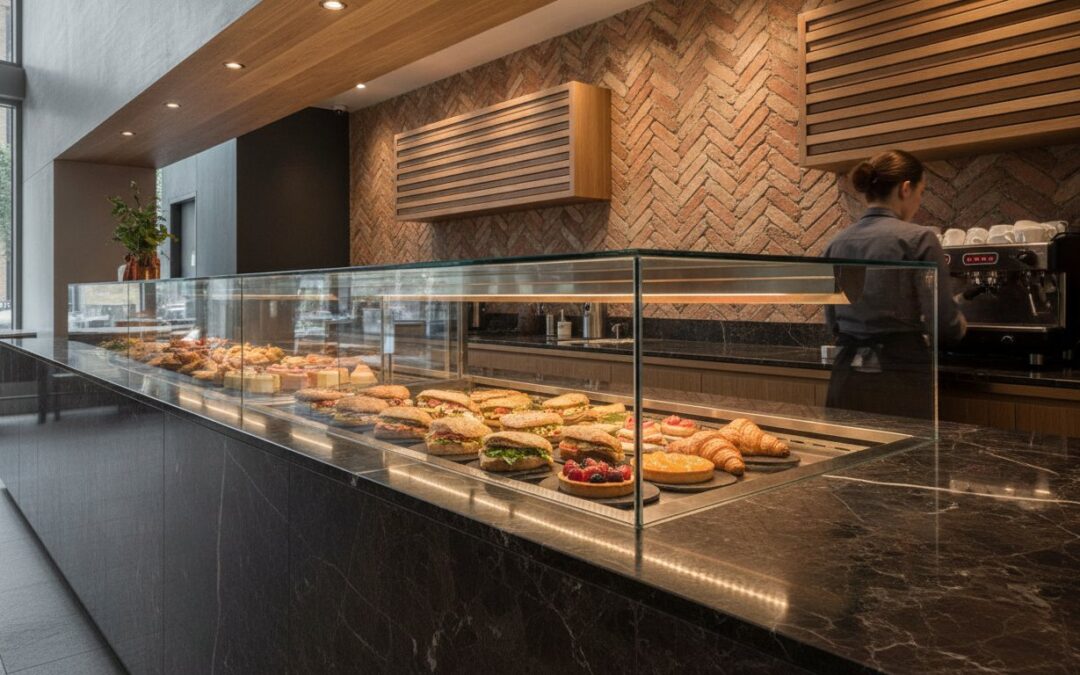
The most sophisticated food displays in the world aren’t defined by the equipment you see, but by the technology you don’t. When hospitality professionals ask what is a drop-in counter unit, they’re typically looking for a way to bridge the gap between heavy-duty commercial performance and a bespoke, minimalist aesthetic. It’s a constant challenge to maintain strict food safety temperatures, such as keeping cold items at or below 5°C, without letting bulky, mismatched appliances ruin the visual flow of a meticulously designed front-of-house space.
We understand the frustration of seeing a premium stone or timber worktop interrupted by cluttered equipment that feels like an afterthought. You deserve a solution that prioritises both form and function. This guide explores how integrated drop-in units provide a seamless, high-end finish for commercial displays while maximising your worktop real estate and operational efficiency. We’ll walk through the technical requirements for flush-fitting installations and the reliable temperature controls needed to ensure your deli or patisserie offerings remain safe, compliant, and visually stunning.
Key Takeaways
- Define what is a drop-in counter unit as a self-contained, flush-fitting display that transforms standard worktops into high-end serving zones.
- Differentiate between specialized units, such as blown-air refrigerated wells and heated gantries, to meet specific food safety and display needs.
- Learn how integrated designs optimise staff workflow and keep the focus on your food rather than bulky equipment.
- Master the technical essentials of installation, including the importance of aperture precision and adequate airflow for refrigeration compressors.
- Explore the benefits of partnering with a UK manufacturer for end-to-end project management to ensure quality control from CAD to commissioning.
Understanding the Drop-In Counter Unit Concept
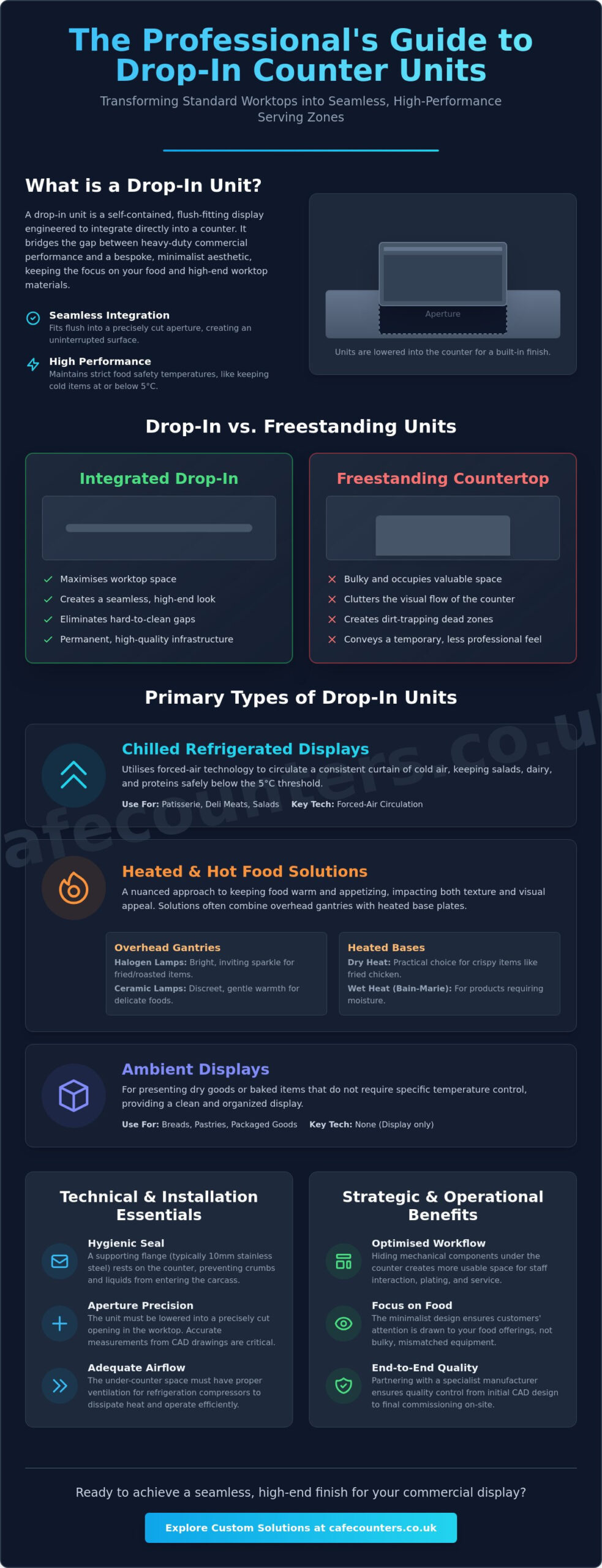
A drop-in unit is the invisible engine of a professional food service counter. When clients ask what is a drop-in counter unit, they’re usually looking for a self-contained display system designed to be lowered into a precisely cut aperture in a worktop. While traditional equipment sits on top of a surface, these units integrate directly into the fabric of your counter. This design choice is the gold standard for bespoke cafe environments, high-end deli counters, and professional buffet lines where a sleek, uninterrupted visual flow is non-negotiable. It allows the counter material, whether it’s granite, solid surface, or timber, to remain the focal point while the equipment does the heavy lifting out of sight.
These units are versatile enough to handle a wide range of menu requirements. You’ll find them utilised for:
- Chilled Patisserie: Maintaining delicate cakes and pastries at precise temperatures.
- Heated Deli Items: Keeping savory goods warm and appetizing.
- Ambient Displays: Presenting dry goods or baked items that don’t require temperature control.
The Anatomy of a Drop-In Display
The engineering behind these displays focuses on stability and hygiene. A supporting flange, typically a 10mm stainless steel lip, rests on the counter surface to suspend the unit securely. This lip isn’t just for support; it creates a hygienic seal that prevents crumbs or liquids from entering the counter carcass. Below this visible edge sits the engine of the display. For refrigerated models, this includes the compressor and cooling coils, while heated units house the elements and insulation. Choosing food-grade stainless steel for the well ensures the unit resists corrosion from food acids and stands up to the rigorous daily cleaning schedules of a busy commercial kitchen.
Drop-In vs. Freestanding Countertop Units
The difference between an integrated unit and a freestanding countertop alternative is immediate. Freestanding units are often bulky, taking up valuable worktop area and creating hard-to-clean dead zones between the machine and the wall. Integrated units reclaim this real estate. By hiding the mechanical components under the counter, you create more space for customer interaction and plating. These units are built for longevity. While a lightweight countertop unit might be convenient for temporary setups, a professionally manufactured drop-in is a permanent investment in your shop’s infrastructure. It provides a built-in look that communicates quality and permanence to your customers, rather than the temporary feel of portable appliances.
Primary Types of Drop-In Units for Foodservice
Selecting the right equipment requires a balance of technical capability and aesthetic intent. Once you’ve established the basic premise of what is a drop-in counter unit, the next step involves choosing a model that suits your specific menu. These units aren’t one-size-fits-all; they’re precision tools designed for specific thermal environments. Whether you’re presenting delicate patisserie or hearty hot lunches, the hardware must reflect the care you put into the food itself.
Chilled Drop-In Refrigerated Displays
Professional refrigerated wells typically use forced-air technology to maintain food safety. This system circulates a consistent curtain of cold air across the top of Gastronorm containers, ensuring that salads, dairy, and proteins stay below the 5°C safety threshold required by UK standards. The depth of the well is a critical consideration. A shallower well is perfect for showcasing fresh produce in 65mm deep pans, while deeper wells accommodate larger quantities for high-traffic periods. For higher volume retail environments where speed is essential, you might consider how these integrate with larger refrigerated grab and go display units to maintain a consistent design language across your shop floor.
Heated and Hot Food Solutions
Heating requires a more nuanced approach than cooling because it directly impacts the texture and appeal of the food. Vision Heated Counters demonstrate how overhead gantries and heated base plates work in tandem to provide a comprehensive thermal envelope. When choosing a gantry, consider the light spectrum. Halogen lamps provide a bright, inviting sparkle to fried or roasted foods, whereas ceramic heat lamps offer a more discreet, gentle warmth for delicate items.
The choice between a dry or wet heat Bain-Marie depends entirely on your product’s moisture requirements. Dry heat is the practical choice for crispy items like fried chicken or pastries, as it prevents the food from becoming soggy. Conversely, wet heat provides the humidity needed to prevent sauces, stews, and gravies from skinning over during a long service. Our team can help you determine the best configuration for your specific menu items to ensure quality remains high from the first guest to the last.
Ambient and Multi-Purpose Displays
Ambient units are often overlooked but remain crucial for artisanal breads and morning pastries. These protected glass cases prevent air currents from drying out your bakes while keeping them visible and enticing. By mixing and matching these different thermal types within a single counter run, you can create a versatile serving line that handles everything from morning coffee and pastries to a full lunch service. This modularity is why integrated units are the preferred choice for modern, multi-functional cafe layouts.
If you’re planning a new layout, you can view our full range of integrated drop-in units to find the perfect match for your vision.
Strategic Benefits for Modern Cafe Layouts
The decision to integrate equipment directly into your cabinetry isn’t merely an aesthetic choice; it’s a strategic move that fundamentally alters the customer’s journey. When you move beyond the basic question of what is a drop-in counter unit and begin to look at its impact on spatial design, the operational advantages become clear. By removing the visual clutter of bulky countertop machines, you create an open, inviting environment where the food takes centre stage. This transparency builds trust and allows for a more natural interaction between your staff and your guests.
Operational efficiency relies heavily on ergonomics. Integrated units allow for precise placement based on the “serve-over” journey, ensuring that your team isn’t reaching over unnecessary obstacles or moving across the floor for common items. Unlike freestanding units that dictate your layout, drop-in models adapt to your specific workflow. You can customise the counter materials around these units using premium stone, reclaimed wood, or modern composites, ensuring your brand identity remains consistent from the entrance to the point of sale. These units also offer superior temperature stability. Their insulated, under-counter housing protects the mechanical components from ambient shop heat far better than many open-front freestanding models.
Maximising Merchandise Visibility
Visibility is the primary driver of impulse purchases. Drop-in units sit at a natural counter-level height, which aligns perfectly with the customer’s line of sight as they approach the till. We use integrated LED lighting to highlight the textures of fresh salads or the glaze on a patisserie selection, drawing the eye exactly where it needs to be. This positioning encourages guests to add a final item to their order, significantly boosting the average transaction value without requiring a hard sell from your staff.
Durability and Hygiene Standards
Maintaining a pristine environment is effortless when your equipment sits flush with the worktop. Traditional countertop units often create “dead zones” where crumbs and liquids accumulate, making deep cleaning a laborious task. A drop-in unit eliminates these gaps, allowing staff to wipe down surfaces in seconds. Every unit we produce uses high-grade stainless steel fabrication to meet UK environmental health standards. While the initial investment in a high-quality UK-manufactured unit may be higher than a portable alternative, the long-term ROI is found in reduced maintenance costs and a significantly longer operational lifespan. It’s a reliable solution for a high-pressure commercial environment.
Technical Installation and Maintenance Requirements
Achieving a flush, high-end finish requires more than just a rough cut-out in a worktop. When you understand what is a drop-in counter unit from a technical perspective, you realise it’s a precision-engineered component that relies on exact tolerances. Successful installation begins with accurate CAD drawings. These technical blueprints ensure the aperture in your bespoke stone or timber counter is milled to the millimetre. A gap too large ruins the aesthetic, while a gap too small prevents the unit’s supporting flange from seating correctly. We prioritise this level of detail during the design phase to guarantee a “fit first time” result on-site.
Electrical planning is equally critical. While many smaller units operate on a standard 13amp plug, larger heated gantries or multi-well refrigerated displays may require 3-phase power to handle the increased thermal load. You must also design the counter carcass with future serviceability in mind. Ensuring there’s a removable panel or a hinged door allows engineers to access the mechanical engine for routine checks without dismantling the entire front-of-house setup. If you’re in the planning stages of a renovation, you can browse our bespoke serving counters to see how we integrate these technical requirements into a finished design.
The Critical Role of Ventilation
Refrigeration units generate significant heat as they pull warmth away from your food. If a refrigerated drop-in cannot “breathe”, the compressor will overwork, leading to premature failure and increased energy bills. We recommend a minimum clearance gap of 50mm around the condenser, though specific requirements vary by model. To maintain the visual integrity of your bespoke counter, we often incorporate decorative ventilation grilles that match the overall design while providing the necessary airflow for heat dissipation. This prevents the “hot pocket” effect that often plagues poorly installed units.
Ongoing Maintenance for Longevity
The secret to a long-lasting display isn’t complex; it’s consistent. Cleaning the condenser coil is a simple task, yet industry data suggests it prevents approximately 90% of cooling failures in commercial environments. Dust buildup acts as an insulator, forcing the machine to run longer than necessary. You should also inspect the gaskets regularly to ensure the glass-to-counter seal remains watertight, preventing moisture from seeping into your cabinetry. Finally, always insist on professional commissioning. A qualified technician will verify that the gas pressures and thermostat settings are calibrated correctly for your specific environment before you serve your first customer.
Choosing the Right Partner for Your Counter Project
Selecting a partner for your hospitality fit-out is about more than finding a supplier; it’s about finding a collaborator who understands the operational pressures of your industry. When you’ve decided what is a drop-in counter unit for your specific needs, the execution of that vision requires a steady, reliable hand. Choosing a UK-based manufacturer offers distinct advantages that imported equipment simply cannot match. You benefit from significantly shorter lead times and the reassurance of local after-sales support. More importantly, you gain access to a team that values artisanal pride and internal quality control, ensuring that every weld and seal meets a professional standard.
A successful project moves methodically from the initial idea to a finished physical space. We don’t just sell equipment. Instead, we guide our clients through a proven process that prioritises durability and long-term operational efficiency. This journey involves integrating diverse thermal zones, allowing you to combine chilled, heated, and ambient drop-in units within a single, seamless counter run. By choosing components that are built to last, you protect your investment and ensure your display remains as enticing in five years as it is on opening day.
The Bespoke Design Advantage
The journey from a blank floor plan to a finished serving space relies on technical precision. We use advanced CAD modelling for counters to ensure that every drop-in unit fits its aperture with surgical accuracy. This digital phase allows us to simulate the entire counter run, checking for potential clashes between refrigeration compressors and structural supports before any material is cut. We also conduct comprehensive site surveys to eliminate the risk of measurement errors, which are common in complex hospitality environments. This meticulous approach allows for total customisation, from unique glass shapes to finish options that match your brand’s specific aesthetic.
Why TFSE Products is the Expert Choice
With over 30 years of experience in UK commercial food display manufacturing, TFSE Products positions itself as the expert partner for your next project. We manage the entire process from initial concept through to professional commissioning. This end-to-end service provides total peace of mind, as you’re dealing with a single point of contact for design, fabrication, and installation. Our commitment to sustainability is reflected in our choice of energy-efficient components and our preference for UK-sourced materials, reducing the carbon footprint of your supply chain.
If you’re ready to bring your vision to life with a partner who values precision and quality, we invite you to Contact TFSE for your bespoke counter needs. Our team is ready to guide you through every technical detail to ensure your project is a resounding success.
Elevating Your Commercial Display Standards
Integrating high-performance equipment into a bespoke counter is a defining step for any professional food service environment. We’ve explored how understanding what is a drop-in counter unit allows you to move beyond basic functionality toward a design that prioritises both customer experience and operational efficiency. By focusing on technical precision, from accurate CAD apertures to essential ventilation requirements, you ensure that your investment is both visually stunning and built to last.
Since 1991, we’ve remained dedicated to UK-based manufacturing, providing the regional artisanal pride and technical expertise required to bring complex visions to life. Every project we undertake benefits from expert CAD modelling and a comprehensive national installation and commissioning service. This end-to-end approach ensures your display meets the highest standards of food safety while maintaining long-term performance and reliability.
Ready to transform your serving area? Explore our range of integrated drop-in units and bespoke counter solutions. We look forward to partnering with you to create a space that truly reflects the quality and craft of your brand.
Frequently Asked Questions
Do drop-in units require a special type of counter material?
Drop-in units are compatible with most high-quality commercial surfaces, including granite, quartz, and heavy-duty stainless steel. The primary requirement is that the counter material must be capable of supporting the unit’s weight and withstand precision milling for the aperture. We provide detailed CAD templates to ensure your fabricator achieves a perfect fit, preventing moisture ingress and ensuring a long-lasting, hygienic seal between the flange and the worktop.
Can I install a refrigerated drop-in unit myself?
We strongly advise against DIY installation for any commercial food display. Professional commissioning is essential to ensure that electrical loads are managed correctly and that refrigeration gas pressures are calibrated for your specific environment. When you ask what is a drop-in counter unit in a professional context, you’re looking for a system that meets UK safety standards. Our national installation service guarantees that your warranty remains intact and your equipment operates at peak efficiency from day one.
What is the difference between a drop-in well and a drop-in display?
A drop-in well typically refers to a recessed container designed to hold Gastronorm pans for bulk items like salads or soups. A drop-in display usually incorporates a glass gantry and internal shelving to showcase plated items such as patisseries or sandwiches. While both integrate into the counter, the display model focuses more on visibility and merchandising, whereas the well is a functional tool for high-volume service and easy replenishment.
How much ventilation does a drop-in refrigerated unit need?
Adequate ventilation is the most critical factor for the longevity of a refrigerated unit. Most models require a minimum of 50mm clearance around the condenser to allow for effective heat dissipation. Without this airflow, the compressor will overheat, leading to increased energy consumption and eventual mechanical failure. We often design bespoke ventilation grilles into the counter carcass to ensure the system can “breath” without compromising the clean lines of your front-of-house aesthetic.
Are drop-in units available in standard Gastronorm sizes?
Yes, almost all professional drop-in units are manufactured to standard Gastronorm (GN) dimensions. This allows you to swap out pans easily for different menu cycles, whether you’re using 1/1, 1/2, or 1/3 GN configurations. This standardisation is a key reason why many operators choose this equipment, as it ensures compatibility with existing kitchen hardware and simplifies the daily process of food preparation and service replenishment.
Can I combine a heated and refrigerated unit in the same counter?
You can certainly combine heated and refrigerated units within the same counter run to create a versatile serving station. However, it’s vital to include thermal breaks and sufficient insulation between the two apertures to prevent heat transfer. When we design bespoke serving counters, we calculate the thermal load of each section to ensure that the chilled items stay crisp while the hot food remains at safe temperatures, maintaining strict compliance with UK food safety regulations.
What happens if the built-in unit needs a repair?
Professional counter designs always include access panels or hinged doors to facilitate future maintenance. If a unit requires repair, a qualified engineer can access the mechanical components from beneath the counter without needing to lift the entire unit out of the worktop. This modular approach to design reduces downtime and ensures that routine servicing, such as cleaning the condenser or checking gaskets, can be performed quickly and efficiently in a live commercial environment.
Are drop-in units energy efficient compared to freestanding models?
Drop-in units are often more energy efficient than freestanding models because the counter carcass acts as an additional layer of insulation. While freestanding units have exposed metal sides that absorb ambient heat, an integrated unit is shielded from the shop’s environment. This natural thermal barrier reduces the workload on the cooling or heating elements. Understanding what is a drop-in counter unit from an efficiency perspective helps you justify the initial investment through lower long-term utility costs.