
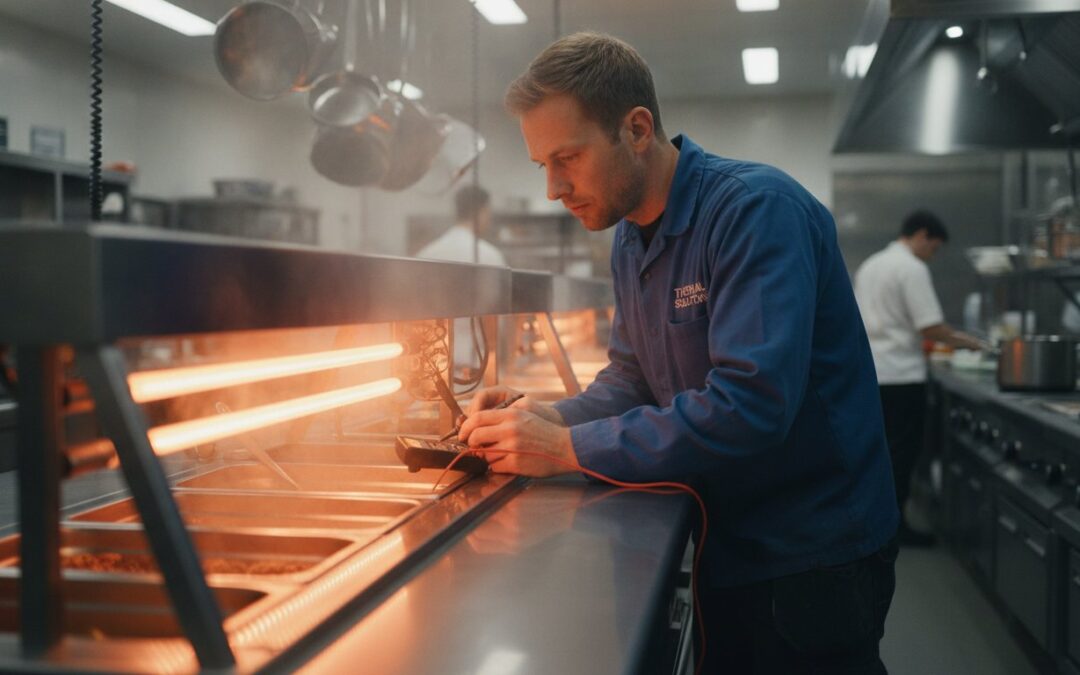
A lukewarm pass is more than just a service bottleneck; it’s a significant liability that puts your reputation and your customers at risk. When the heat fades during a busy service, the pressure to maintain the legal 63°C core temperature can feel overwhelming. We understand the frustration of troubleshooting a heated display gantry while watching perfectly prepared dishes lose their quality. You’re often caught between the fear of a health violation and the sting of an emergency engineer’s call-out fee.
This guide provides a methodical approach to identifying faults, drawing on our deep expertise in high-end manufacturing and commercial design. You’ll learn how to restore heat consistency and maintain operational efficiency without immediately resorting to expensive external support. We will examine the technical nuances of quartz lamps, thermostat calibration, and wiring integrity to help you confidently decide if a simple fix is possible or if it’s time to invest in a more durable, bespoke solution.
Key Takeaways
- Learn how to perform immediate assessments of power sources and quartz lamps to resolve common outages without delay.
- Master the process of troubleshooting a heated display gantry by identifying how kitchen draughts and simmerstat faults lead to inconsistent holding temperatures.
- Recognise the critical warning signs, such as persistent RCD tripping or burning odours, that indicate a professional engineer is required for electrical safety.
- Implement a structured preventive maintenance schedule to extend the operational life of your equipment and ensure long-term food safety compliance.
- Understand the long-term efficiency benefits of choosing bespoke, UK-manufactured serving counters over standard imported units.
Quick Fixes for a Non-Functional Heated Gantry
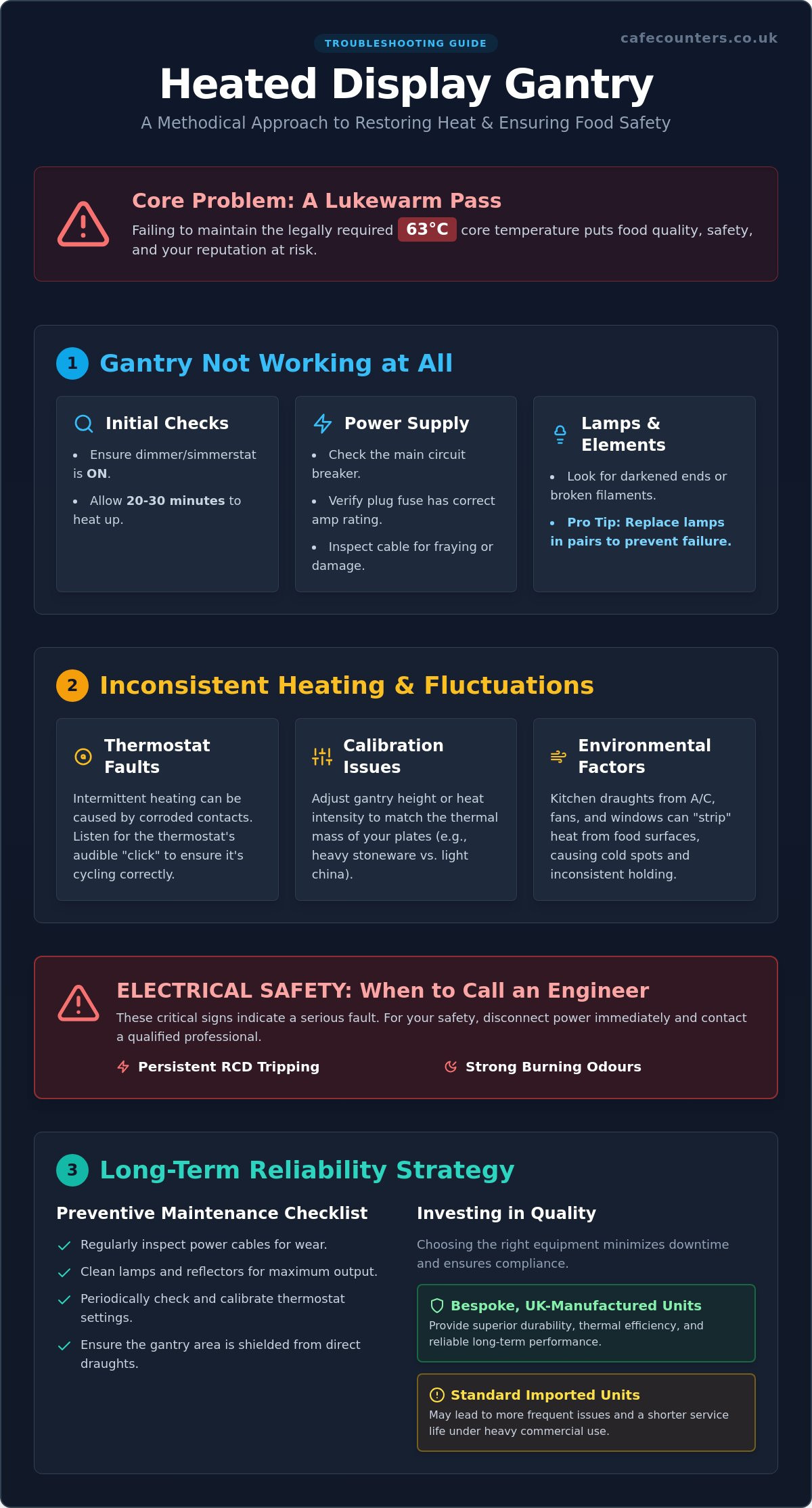
When the pass goes cold during a peak service, the immediate reaction is often one of stress. However, troubleshooting a heated display gantry frequently reveals simple, rectifiable issues that don’t require a full service call. Before assuming the unit is beyond repair, verify that the dimmer switch or simmerstat hasn’t been knocked into the “off” position during a busy shift or while cleaning. It’s also vital to allow the unit at least 20 to 30 minutes to reach its full operating temperature. A heated gantry is a specialised category of commercial food warmers, and its performance is dictated by the integrity of its heating components and consistent power delivery.
The Power Supply and Fuses
Your first step should be a methodical check of the electrical supply. Start by looking at other equipment on the same circuit; if your stainless steel back-bar units or prep fridges have also lost power, the issue likely lies with a tripped circuit breaker in the main distribution board. This is often caused by a temporary surge rather than a terminal fault in the gantry itself.
If the circuit is live, inspect the plug fuse. Commercial gantries often require a specific amp rating to handle the start-up load. You must ensure the fuse matches the manufacturer’s specification, as using an underrated fuse will cause immediate failure under load. While you’re at the plug, inspect the power cable for signs of fraying or heat damage. In a busy kitchen, cables are frequently pinched against sharp edges or exposed to high ambient heat, which can compromise the insulation and lead to intermittent power loss.
Lamps and Heating Elements
Most modern gantries rely on quartz halogen lamps to provide instant, directional heat, while heavy-duty units may utilise ceramic elements for long-term heat retention. Quartz lamps are delicate components. If you notice darkening at the ends of the glass tube or a visible break in the internal filament, the lamp has failed. Troubleshooting a heated display gantry often involves identifying these blown bulbs before they impact your food safety margins.
To safely test a lamp, ensure the power is disconnected and the unit has cooled completely. We recommend replacing lamps in pairs, even if only one has blown. This balanced approach prevents the remaining older lamp from experiencing a voltage spike, which often leads to it failing shortly after its partner. This level of meticulous care ensures that every component operates at peak efficiency, reflecting the same commitment to durability we apply in our own UK production facilities.
Diagnosing Temperature Fluctuations and Inconsistent Heating
Inconsistent heating is often more frustrating than a total failure because it suggests the equipment is functional while still compromising food safety. When you begin troubleshooting a heated display gantry that seems to have a mind of its own, the simmerstat is a primary suspect. This component regulates the pulse of electricity to the heating elements. Over time, internal contacts can corrode or weaken, leading to intermittent connectivity. You might find the unit holds temperature perfectly for an hour, only to drop significantly during the next service cycle. Testing this requires monitoring the audible “click” of the thermostat or using a multimeter to ensure a steady output when the dial is set to a specific level.
Calibration is equally vital. Not every kitchen requires the same intensity of heat. A gantry used for heavy stoneware plates in a busy bistro needs a different setting than one holding delicate pastries on fine china. We often see chefs struggling with cold spots simply because the gantry hasn’t been calibrated to the specific thermal mass of their plating. Adjusting the height of the gantry or the intensity of the lamps can solve these discrepancies without needing a full component replacement. This level of precision is something we prioritise in our internal production facilities to ensure every unit meets the unique pressures of a commercial kitchen.
Environmental Factors at the Pass
The pass is rarely a static environment. It’s a high-traffic zone where air conditioning, open windows, and extraction fans create constant air movement. These draughts effectively “strip” the heat from the surface of the food before it can reach the customer. If your unit is positioned directly under a ventilation intake, the thermostat may read a lower temperature than the food actually requires, causing it to overwork. Adhering to electrical safety standards ensures that your setup remains safe even when adjusting the layout to avoid these draughts. In particularly challenging environments, adding glass side screens can help trap the heat, creating a micro-climate that protects the integrity of your dishes.
Reflector and Lens Maintenance
Maximum infrared output depends entirely on the cleanliness of the internal reflectors. Grease and carbon build-up act as an insulator, absorbing the heat rather than reflecting it down towards the pass. A dull or dirty reflector can reduce heating efficiency by as much as 30%. Regular cleaning with a non-abrasive degreaser is essential. Additionally, check for warped reflectors. If the metal has buckled due to extreme heat over many years, it will scatter the light unevenly, creating frustrating cold spots. For kitchens facing persistent environmental challenges, upgrading to bespoke serving counters allows for a more integrated design where heat retention is built into the very fabric of the unit.
Electrical Safety and Component Failure: When to Call an Engineer
While troubleshooting a heated display gantry can often resolve minor issues, some symptoms demand the immediate attention of a qualified electrician or commercial engineer. Electrical faults aren’t just inconvenient; they’re hazardous. If you encounter a burning smell or see smoke originating from the control box, isolate the power immediately. These signs often point to a catastrophic failure of the internal wiring loom or the ceramic terminal blocks. High-heat environments naturally degrade insulation over time, and once the wiring is compromised, the risk of a fire or a short circuit increases significantly.
Perhaps the most dangerous scenario is when the unit becomes live to the touch. This indicates a serious earthing failure that could lead to fatal shocks. Adhering to OSHA Kitchen Equipment Safety Standards is essential, as these guidelines highlight the severe risks of electrical shock and fire when operating faulty thermal equipment. Never attempt to “work around” a unit that gives even the slightest tingle when touched. This is a non-negotiable signal to decommission the gantry until a professional can certify its safety.
Understanding RCD Tripping
If your gantry repeatedly trips the Residual Current Device (RCD) or the main fuse board, don’t keep resetting the breaker. This is usually caused by moisture ingress into the heating element. Over time, the seals on quartz or ceramic elements can perish, allowing steam from the pass to enter the electrical path. This creates a “leak” to the earth, triggering the safety switch. Differentiating between a faulty gantry and a wider circuit issue is simple: if the breaker only trips when the gantry is switched on, the fault lies within the unit. Resist the temptation to bypass safety switches or use higher-rated fuses as a “quick fix”; doing so removes your primary protection against electrical fires.
Control Switch and Thermostat Failures
Internal components like simmerstats and thermostats are mechanical devices that eventually wear out. A common sign of failure is a “pitted” contact, where the electrical points have sparked so many times they’ve welded shut or become coated in carbon. This results in the gantry remaining on full power regardless of the dial setting, or failing to turn on at all. When these components fail, we strongly advise using genuine UK-manufactured spare parts. Our experience as a manufacturer shows that cheaper, mass-produced imports often lack the thermal resistance required for long-term reliability in a professional kitchen. Investing in high-quality components ensures that the repair lasts, maintaining the operational efficiency we build into every bespoke serving counter we produce.
Preventive Maintenance: Maximising the Lifespan of Your Hot Pass
A reactive approach to equipment care is the most expensive way to run a commercial kitchen. By the time you’re troubleshooting a heated display gantry for a total failure, you’ve already lost service hours and potentially compromised food quality. Adopting a structured maintenance schedule transforms your gantry from a potential point of failure into a reliable asset. This process begins with professional commissioning. An expert engineer ensures the unit is balanced for your specific electrical load and kitchen environment, setting the stage for years of trouble-free operation. A well-commissioned unit resists the common wear and tear that leads to premature component failure.
We advocate for an “Expert Partner” approach to lamp replacement. Instead of waiting for a bulb to blow mid-service, track the operational hours and replace them proactively every six months or at the start of a busy season. This prevents the voltage fluctuations and sudden outages that disrupt the flow of the pass. It also ensures your display always operates at peak luminosity, making your food look as good as it tastes. Regular monthly inspections should include a visual check of the terminal blocks and a responsiveness test of the simmerstat to catch minor issues before they escalate.
Cleaning for Performance
Maintaining the reflective surfaces of your gantry is critical for thermal efficiency. Use non-abrasive degreasers on the stainless steel and specialised quartz glass cleaners for the lamps. It’s vital that you never spray water or cleaning chemicals directly onto a heated gantry. Moisture ingress is the leading cause of the RCD tripping issues we’ve previously discussed. If carbonised food debris builds up on the elements or reflectors, it creates an insulating layer. This forces the unit to work harder to achieve the same temperature, which significantly shortens the lifespan of the heating components.
Staff Training and Operational Best Practices
Operational longevity is often determined by how your team interacts with the equipment controls. Many kitchen teams fall into the “full power” habit, turning every dial to maximum regardless of the food volume on the pass. This unnecessary thermal stress wears out simmerstats and degrades internal wiring prematurely. Train your staff to match the heat intensity to the current requirements and ensure that nothing blocks the airflow around the control housing. Restricting ventilation leads to heat soak in the electronics, which is a common reason for needing professional troubleshooting a heated display gantry. If you are looking to upgrade your current setup to a more durable solution, explore our range of bespoke serving counters designed for long-term reliability.
Investing in Reliability: The TFSE Approach to Heated Displays
When troubleshooting a heated display gantry reveals a pattern of recurring electrical failures, the financial argument for replacement becomes clear. We often speak with operators who find that the cost of troubleshooting a heated display gantry on a weekly basis quickly outweighs the investment in a new, high-specification unit from TFSE Products Ltd. A single engineer call-out fee, combined with the risk of food spoilage and potential health violations, creates a significant drain on your margins. Our role as an Expert Partner is to help you determine whether your current pass can be restored to safety or if it’s time to upgrade to a system built for the rigorous demands of a modern commercial kitchen.
Effective hot holding requires more than just a heat source; it demands a system designed for the specific thermal dynamics of your service area. TFSE Products Ltd relies on internal UK production facilities to manufacture gantries that prioritise durability and operational efficiency. By managing the project from the initial idea to the final physical installation, we ensure that your equipment isn’t just a purchase, but a long-term solution for food safety and service quality. This methodical approach to manufacturing eliminates the vulnerabilities often found in mass-produced alternatives.
Bespoke vs. Off-the-Shelf Gantries
Standard units frequently fail because they aren’t designed for the specific airflow and thermal mass of your unique kitchen environment. By utilising integrated CAD modelling, we ensure a perfect fit that eliminates the draughts and cold spots that often plague off-the-shelf models. Integrating these high-performance units into bespoke cafe counters provides a level of durability that mass-produced alternatives simply can’t match. We take pride in our artisanal heritage, using high-grade stainless steel to ensure your gantry resists warping and maintains its reflective efficiency for years to come.
Upgrading Your Hot Holding Strategy
Modern technology has moved far beyond basic heat lamps. Transitioning to Vision Heated Counters offers a significant leap in performance and energy efficiency. These units are designed with precision as a core principle, using advanced insulation to focus heat exactly where it’s needed while keeping the surrounding surfaces cool. Similarly, modern commercial food display counters don’t just hold temperature; they actively reduce food waste by preventing the drying out of delicate dishes. If you’re tired of the constant cycle of repairs, request a site survey for a total pass overhaul. We provide the steady, reliable hand needed to bring your vision to life.
Securing the Future of Your Service Pass
A reliable service pass is the heartbeat of any commercial kitchen. Throughout this guide, we have explored how methodical maintenance, correct calibration, and an understanding of electrical risks can prevent the stress of a cold pass. By prioritising the health of your heating elements and reflectors, you ensure that every dish reaches the customer at the legally required temperature. Mastering the basics of troubleshooting a heated display gantry allows you to maintain service flow while keeping maintenance costs under control.
TFSE Products Ltd has been a steady, reliable hand in UK manufacturing since 1991. We bring total competence to every project, using advanced CAD modelling and meticulous commissioning to ensure your equipment stands the test of time. If your existing pass is no longer performing, we invite you to consult with a team that values quality and durability over fleeting aesthetics. Contact TFSE Products Ltd for Expert Gantry Advice and Bespoke Solutions. Let us provide the technical expertise required to bring your kitchen vision to life.
Frequently Asked Questions
How often should I replace the quartz lamps in my heated gantry?
You should replace quartz lamps every six months or after approximately 3,000 hours of use to maintain peak performance. Proactive replacement prevents the sudden loss of heat during a busy service and protects the internal wiring from the voltage spikes that often occur when a lamp finally fails. We recommend replacing lamps in pairs to ensure an even distribution of heat across the entire length of your pass.
Why does my gantry keep tripping the electricity in the kitchen?
Persistent electrical tripping is typically caused by moisture ingress into the heating elements or a perished seal. Troubleshooting a heated display gantry in a steam-heavy environment often reveals that water has entered the electrical path, triggering the RCD for safety. If the unit trips immediately upon being switched on, it’s a clear sign of an internal short circuit that requires professional inspection to prevent a fire hazard.
Can I use a domestic dimmer switch to control my heated gantry?
No, you cannot use a domestic dimmer switch because they aren’t designed to handle the high electrical loads of commercial heating elements. Commercial simmerstats are robustly engineered to manage the heat generated by the unit and provide precise control over the infrared output. Using a domestic alternative will lead to rapid component failure and poses a significant fire risk in a professional kitchen environment.
What is the difference between a heated gantry and a heated pass?
A heated gantry refers specifically to the overhead structure containing the lamps or elements, whereas a heated pass includes the entire station, including the work surface. The gantry provides top-down heat to keep the surface of the food warm. The pass is the broader area where chefs plate up and service staff collect the finished dishes for the dining room.
How do I clean a heated gantry without damaging the heating elements?
You must clean a gantry only when it’s completely cool, using a damp, non-abrasive cloth and a mild degreaser. Never spray water or cleaning chemicals directly onto the lamps or the internal reflectors, as this causes moisture ingress and electrical faults. Maintaining clean reflectors is essential for thermal efficiency; grease build-up can reduce the heat output by nearly 30% over time.
Is it worth repairing an old gantry or should I invest in a new bespoke unit?
If your repair costs are rising or you’re frequently troubleshooting a heated display gantry for recurring faults, a new bespoke unit is a better investment. High engineer call-out fees and the risk of food safety violations quickly erode the savings of a repair. A UK-manufactured unit offers superior durability and energy efficiency, providing a much higher long-term return on investment than keeping an aging gantry.
What temperature should a heated gantry maintain for food safety?
In the UK, food held hot for service must be maintained at a core temperature of 63°C or above to comply with the Food Safety and Hygiene Regulations 2013. Your heated gantry is designed to provide the necessary top-down heat to sustain this temperature once the food has been cooked. Regularly checking food temperatures with a probe ensures your equipment is calibrated correctly and your customers remain safe.
Why is one side of my heated gantry colder than the other?
Uneven heating usually indicates a blown quartz lamp or a warped internal reflector that is scattering heat incorrectly. If one side of the pass is consistently colder, check the lamps for darkening at the ends or visible breaks in the filament. Environmental draughts from kitchen extraction fans or air conditioning units can also strip heat from one side of the gantry more quickly than the other.