
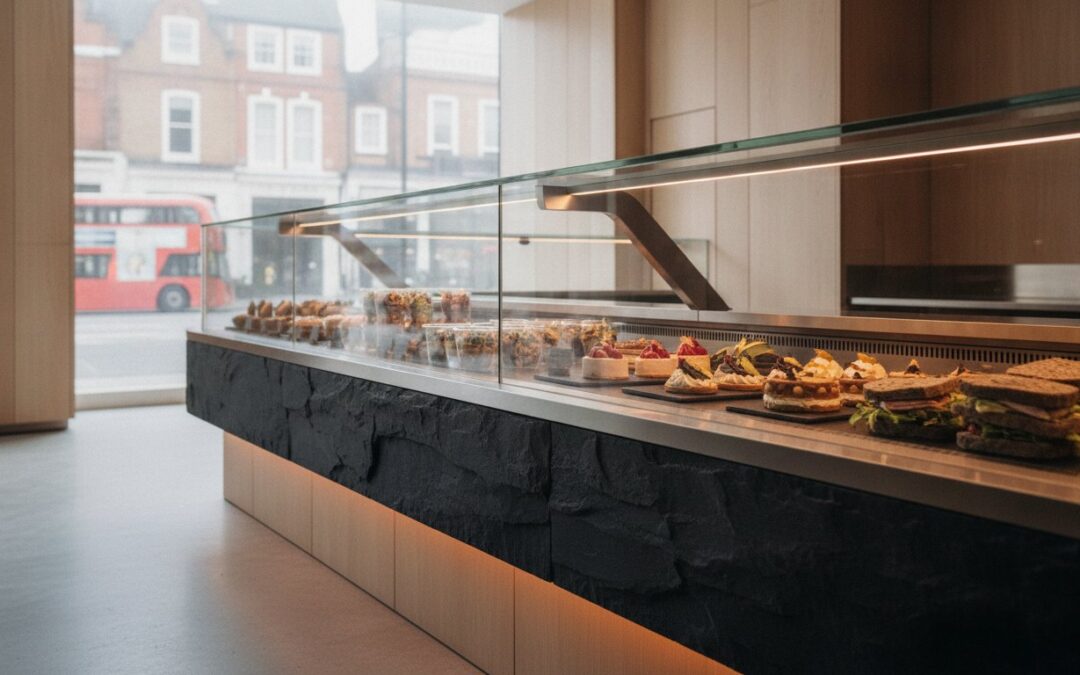
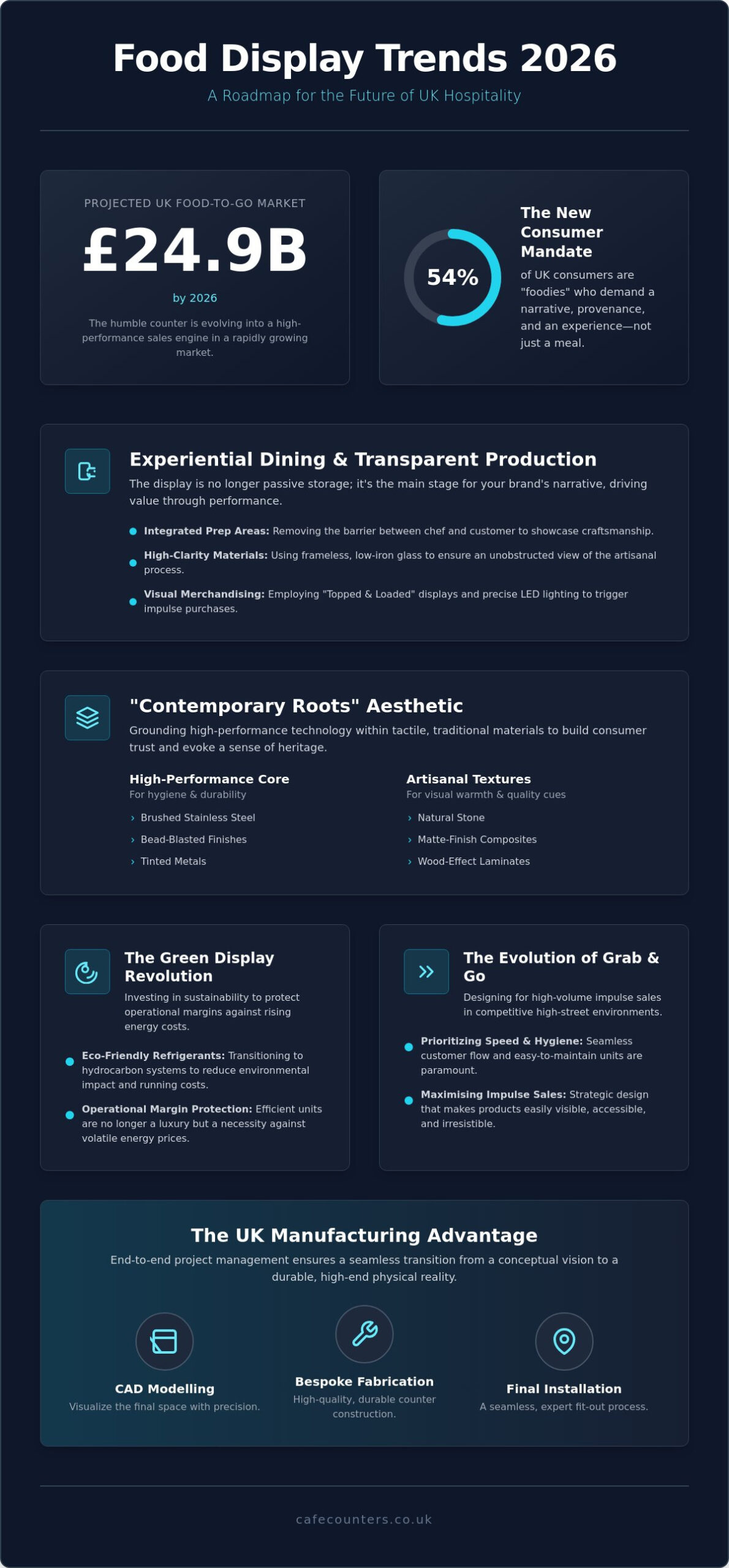
With the UK food-to-go market projected to reach a staggering £24.9 billion by 2026, the humble counter has evolved from a simple storage unit into a high-performance sales engine. You likely feel the mounting pressure of rising energy costs and the constant challenge of standing out in a saturated high-street market. It’s a reality where old, inefficient units aren’t just dated; they’re actively draining your margins. Success now requires a calculated balance between technical precision and visual storytelling.
In this article, we’ll explore the pivotal food display trends for 2026 that are redefining the UK hospitality landscape. We’ll show you how to align your front-of-house with the shift toward “premium convenience” and health-conscious consumer habits. From the rise of artisanal “quiet luxury” aesthetics to the integration of energy-efficient drop-in units, we provide a roadmap to future-proof your space. You’ll discover how bespoke patisserie displays and intelligent deli counters can transform your operational efficiency while driving the impulse sales necessary to thrive in the coming years. We’ll guide you through the journey from a conceptual vision to a durable, high-end physical reality.
Key Takeaways
- Learn how to leverage theatrical presentation and visual transparency to appeal to the 54% of UK consumers who now demand a narrative behind their food purchases.
- Discover how the food display trends for 2026 embrace a “Contemporary Roots” aesthetic by pairing high-performance stainless steel back-bar units with artisanal textures.
- Understand the transition to hydrocarbon refrigerants and how investing in sustainable display technology protects your operational margins against rising energy costs.
- Identify design strategies for high-volume grab-and-go displays that prioritise speed and hygiene while maximising impulse sales in competitive high-street environments.
- Explore the strategic advantages of British-made counters and how end-to-end project management ensures a seamless transition from CAD modelling to final installation.
The Shift to Experiential Dining: Why Presentation Matters in 2026
In 2026, the boundary between the kitchen and the customer has effectively vanished. We’ve seen a decisive pivot where food display is no longer a passive storage solution but a primary driver of the brand narrative. This evolution is largely fueled by the fact that 54% of UK consumers now identify as “foodies,” according to industry data. These individuals aren’t just looking for a meal; they’re searching for a story, a sense of provenance, and a moment worth sharing. The Shift to Experiential Dining reflects this urgent need for theatrical presentation that captures attention in a crowded high street.
We approach every commercial project as a design consultant first. By using advanced CAD modelling, we help clients visualise how food display trends for 2026 will manifest in their specific physical space. It’s about creating an “Instagrammable” environment where the lighting, materials, and bespoke counter design work in harmony to elevate the product from a commodity to an experience. When the display itself is a performance, the value of the food increases in the eyes of the consumer.
The Rise of “Transparent Production”
Modern consumers want to see the craftsmanship behind their food. There’s a growing appetite for the “char, smoke, and flame” often associated with high-end Michelin dining, and this expectation has trickled down to local cafes and delis. To meet this demand, we integrate prep areas directly with bespoke serving counters. This removes the physical barrier between the chef and the customer. Technically, this is achieved through the use of frameless patisserie displays and high-clarity, low-iron glass. These materials ensure that nothing obscures the view of the artisanal process, making the preparation part of the performance.
Emotional Drivers in 2026 Food Choice
Visual aesthetics are the primary trigger for “curiosity and desire,” a sentiment highlighted in recent Bidfood dessert trend reports. In 2026, successful operators use “Topped and Loaded” visual merchandising to create a sense of abundance that practically compels an impulse purchase. However, the technical details matter just as much as the arrangement. We pay meticulous attention to the colour temperature of LED lighting within our heated gantries and chilled units. The right Kelvin rating can make the difference between a salad that looks vibrant and fresh or one that appears dull. By aligning these technical features with food display trends for 2026, we help you tap into the emotional drivers that turn a casual browser into a loyal customer.
Artisanal Aesthetics: Materials and Textures for 2026
The aesthetic direction for the coming years is defined by a concept we call “Contemporary Roots.” This trend involves grounding high-performance technology within traditional, tactile materials that evoke a sense of heritage and artisanal pride. We’re seeing a shift where food display trends for 2026 prioritise surfaces that feel authentic to the touch. This isn’t merely a decorative choice; it’s about building consumer trust through material honesty. While stainless steel back-bar units remain the non-negotiable standard for hygiene and durability, their role has evolved. Modern finishes, such as brushed, bead-blasted, or tinted steel, allow these units to integrate seamlessly into high-end interiors rather than appearing as cold, industrial fixtures.
The industry is moving toward a more sophisticated and varied palette. There is a significant rise in the adoption of natural stone, matte-finish composites, and wood-effect high-pressure laminates. These materials offer the visual warmth of natural elements while providing the rugged durability required for a high-traffic commercial environment. According to insights on Artisanal Aesthetics: Materials and Textures, these visual cues are essential for signalling quality and freshness to a discerning public. By carefully selecting these textures, you create a physical space that feels permanent and reliable, reassuring customers of your brand’s commitment to excellence.
Modernising the Deli Counter
The clinical, stark white deli environments of the past are being replaced by warmer, earthy tones that suggest a more natural origin. Incorporating organic textures into deli display counters signals a “Whole Lotta Goodness” ethos that resonates with today’s health-conscious shoppers. Material choice also plays a critical technical role here. High-quality laminates and stone composites aren’t just for show; they contribute to the insulation and thermal performance of the unit. This ensures that chilled products stay strictly within the mandatory 0°C to 5°C range while simultaneously reducing the operational load on your refrigeration system.
Bespoke Serving Counters as a Brand Signature
Bespoke serving counters have become a brand’s unique signature in a crowded market. Through advanced CAD modelling, we now fabricate non-linear, flowing counter shapes that guide customers naturally through their retail journey. This is a perfect example of how ergonomic counter design can improve staff efficiency by placing essential tools within easy reach while enhancing customer comfort at the point of sale. Integrating your custom branding directly into the counter fabrication process creates a cohesive, professional look that builds long-term brand equity. If you’re looking to future-proof your layout, you can view our latest work on bespoke serving counters to see these materials in a live environment.
Energy Efficiency and The “Green” Display Revolution
Operational efficiency has moved from a boardroom discussion to the absolute top priority for UK hospitality operators in 2026. With energy costs continuing to squeeze margins, the focus has shifted toward the technical performance of every unit on the floor. The food display trends for 2026 are as much about what happens behind the scenes as what customers see through the glass. We’re seeing a green revolution where sustainability is baked into the manufacturing process. This ensures that high-end design doesn’t come at a high operational cost. Display units aren’t just for show anymore; they’re hard-working assets that must prove their worth on the balance sheet.
Smart monitoring is now a standard feature in our bespoke projects. When we guide you through the CAD modelling phase, we now plan for the placement of digital sensors that act as an early warning system. These sensors don’t just track temperature to ensure compliance with legal safety standards; they monitor energy consumption patterns to identify when a unit might need a service before it fails. This meticulous attention to detail is what defines our role as an expert partner. It’s a proactive approach that moves away from reactive maintenance, allowing you to run a leaner, more profitable operation while protecting your stock from costly temperature fluctuations.
Sustainable Cooling Solutions
The industry is currently navigating a significant transition toward high-performance commercial refrigerators that utilise hydrocarbon refrigerants like R290. These gases have a significantly lower Global Warming Potential (GWP) compared to older synthetic alternatives, aligning with the UK’s broader environmental targets. We’ve found that simple additions like night blinds and thermal glass are no longer optional. They’re essential tools that provide a massive ROI by retaining cold air during off-peak hours. In multi-deck grab-and-go units, precision airflow management is critical to prevent “cold air spill,” ensuring that temperature regulations (0°C to 5°C) are met without overworking the compressor.
Heat Retention Technology
Hot food presentation has also seen a technical overhaul. We’ve moved beyond basic, inefficient heat lamps to precision-controlled Vision Heated Counters. The 2026 efficiency gap between induction heating and traditional elements is now too wide to ignore. Induction offers targeted heat that only activates when a vessel is present, reducing ambient heat gain in the room and lowering air conditioning loads. By integrating heated gantries into bespoke serving lines, we ensure that hot food stays safely above the legal 63°C threshold while maintaining the sleek, artisanal look discussed in previous sections.
The Evolution of Grab & Go: Maximising Impulse in 2026
The UK’s food-to-go market is projected to reach a value of £24.9 billion in 2026. This growth is accompanied by an 8.5% increase in average spend per visit, now sitting at £12.98. For operators, the mandate for 2026 is clear: success depends on speed, visibility, and uncompromised hygiene. As consumers move faster than ever, your display must do the heavy lifting of the sale within seconds. This requires a shift from static shelving to high-performance food display trends for 2026 that prioritise the customer’s line of sight and the product’s immediate appeal.
Designing refrigerated grab and go display units for high-volume urban environments involves more than just cooling. It’s about strategic placement within the retail flow. We’re seeing a rise in the “Tea Tonic” trend, where units are specifically adapted to house cold-brew canisters and bubble tea dispensers alongside traditional snacks. To maintain this level of variety, we use modular integrate drop-in units. These allow you to swap out sections of your counter as your menu evolves throughout the day, ensuring your space remains productive from the breakfast rush to the evening commute.
Merchandising “Topped and Loaded” Foods
The demand for “Topped and Loaded” dishes, such as gourmet fries or nutrient-dense bowls, presents a unique merchandising challenge. To prevent these visually rich products from looking cluttered, we utilise tiered display shelving. This creates vertical visual impact, ensuring every layer of the dish is visible to the customer. Because these trending foods can be messy, we prioritise easy-clean surfaces and seamless fabrication. Additionally, adjustable humidity controls are no longer a luxury. They are essential for keeping “FastForward” ingredients fresh and vibrant for longer periods, reducing waste and maintaining the “premium convenience” that 2026 consumers expect.
Self-Service Salad Bars 2.0
The next generation of salad bars is moving toward a “Whole Lotta Goodness” philosophy. These displays are hyper-fresh and meticulously chilled to meet the 58% of consumers who now prioritise healthy options. We integrate contactless payment systems and digital weighing scales directly into the bespoke serving counters to streamline the transaction. Hygiene remains a top priority, but the bulky plastic guards of the past are gone. In their place, we install 2026 “invisible barriers” high-clarity glass screens that protect the food without obscuring the product. If you’re ready to upgrade your high-volume site, you can explore our full range of grab & go displays to find a solution that matches your operational pace.
Partnering for Success: The UK Manufacturing Advantage
Navigating the complex shifts in food display trends for 2026 requires more than just a supplier; it demands a collaborative ally with deep-seated technical expertise. We believe that “British Made” is the ultimate reassurance for the UK hospitality sector. By maintaining internal production facilities, we exercise total quality control over every weld, joint, and finish. This regional artisanal pride isn’t just about heritage; it’s a practical business advantage. Local manufacturing significantly reduces lead times and insulates your project from the volatility of global supply chains. When you’re working toward a hard opening date, having a manufacturer based in the UK provides a level of certainty that international wholesalers simply can’t match.
The journey from a broad concept to a finished physical space starts with a non-negotiable site survey. Every commercial environment has its own unique architectural quirks, especially within the historic or specialized buildings common in our primary regional market. An Expert Partner understands these pressures and positions themselves as a steady, reliable hand throughout the process. We guide you through each stage, ensuring that the ambitious designs discussed in previous sections are grounded in practical, durable engineering. This methodical approach ensures that your investment in food display trends for 2026 delivers both visual impact and long-term operational reliability.
This level of professional planning is also essential for temporary outdoor hospitality; for instance, when staging large festivals or weddings in Scotland, tentsandevents.co.uk offers the marquee infrastructure required to showcase premium food displays in any location.
CAD Modelling and Bespoke Engineering
Visualising the future is a critical step in alleviating the stress of commercial projects. We use advanced CAD modelling to create detailed 3D representations of your space before a single sheet of steel is cut. This process is vital for preventing costly installation errors and ensuring that bespoke integrate drop-in units fit perfectly into unique architectural layouts. It also allows us to meticulously plan the technical integration of refrigeration and heated components. By mapping out the internal airflow and electrical requirements in a digital environment, we guarantee that your display will perform with maximum efficiency from day one.
Installation and Commissioning
The final stage of the process is as methodical as the initial design. Professional installation and commissioning are essential for ensuring the long-term reliability of your equipment. Our team doesn’t just deliver a unit; we ensure it’s tuned to the specific environmental conditions of your site. This structured approach creates a sense of transparency and trust, as you’re walked through a proven, professional process. We also provide ongoing support and after-sales service within a national UK context, ensuring your investment remains protected. If you’re ready to bring your vision to life, speak with our design experts about your 2026 project to see how we can future-proof your business.
Future-Proofing Your Commercial Presentation for 2026
The landscape of UK hospitality is undergoing a fundamental shift. To remain competitive, operators must bridge the gap between high-end artisanal aesthetics and rigorous operational efficiency. We’ve explored how the food display trends for 2026 prioritise visual storytelling, sustainable cooling technologies, and the strategic merchandising of “premium convenience” products. These aren’t just aesthetic choices; they’re essential adaptations to a market that values transparency and environmental responsibility.
Since 1991, we’ve provided the UK hospitality industry with deep-seated manufacturing expertise and a steady, reliable hand for complex commercial projects. Our approach relies on full end-to-end project management, utilizing advanced CAD modelling for precision bespoke engineering that fits your specific architectural space. Whether you require integrated drop-in units or custom patisserie displays, our team is ready to bring your vision to life. Explore our range of bespoke and standard food display solutions to begin your journey. The future of commercial presentation is a performance stage. We’re here to help you build it with confidence and durability.
Frequently Asked Questions
What are the biggest food display trends for 2026?
The biggest food display trends for 2026 focus on “Premium Convenience” and digital storytelling through integrated technology. Consumers expect high-quality, nutrient-dense options in grab-and-go formats, often accompanied by QR codes that provide immediate information on ingredient provenance. We’re also seeing a shift toward “Quiet Luxury” in aesthetics, where refined textures and subtle LED lighting replace flashy, over-the-top designs to create a more authentic atmosphere.
How can I make my cafe counter more energy efficient in 2026?
Making your cafe counter more energy efficient starts with upgrading to units that utilise R290 hydrocarbon refrigerants and high-performance thermal glass. Implementing precision airflow management in multi-deck units prevents cold air spill, while night blinds can significantly reduce the load on compressors during closing hours. These technical adjustments help your business meet modern energy standards while protecting your profit margins from rising operational costs.
Are bespoke food display counters worth the investment for a small cafe?
Bespoke food display counters are often the most cost-effective long-term choice for small cafes because they maximise every square inch of available floor space. Unlike off-the-shelf units, a custom counter is engineered to fit your specific architectural layout, improving both customer flow and staff efficiency. This tailored approach ensures your brand identity is front and centre, helping you stand out in a crowded high-street market.
How does CAD modelling help in designing a food display?
CAD modelling acts as a technical bridge between your initial vision and the final installation, allowing you to visualise the layout in a 3D environment. This precision engineering identifies potential installation errors before manufacturing begins, ensuring that refrigeration and heated components integrate seamlessly with your existing services. It’s an essential step for complex commercial projects, providing a transparent and reliable roadmap for the entire construction process.
What materials are trending for commercial countertops in 2026?
Materials that define food display trends for 2026 include bead-blasted stainless steel, stone composites, and matte-finish high-pressure laminates. These choices move away from clinical, high-gloss surfaces toward tactile textures that signal quality and regional artisanal pride. These materials are selected not just for their visual impact but for their durability and ease of maintenance in high-traffic retail environments where hygiene is paramount.
How can I increase impulse sales using grab and go displays?
Increasing impulse sales requires a focus on vertical visual impact and strategic cross-merchandising within your grab and go displays. By using tiered shelving and high-clarity glass, you ensure that products are visible from multiple angles as customers approach the counter. Placing high-margin “snack-tails” or functional beverages next to main meal options encourages add-on purchases during the crucial seconds of the decision-making process.
Why should I choose a UK-based food display manufacturer?
Choosing a UK-based manufacturer ensures total quality control through internal production facilities and significantly shorter lead times. Local expertise allows for a non-negotiable site survey, which is vital for identifying technical challenges before they become expensive problems. You also benefit from reliable after-sales support and a shared understanding of the specific regional market pressures and UK safety regulations that affect your business.
What is the “Z-pattern” in food display merchandising?
The “Z-pattern” is a merchandising technique based on how the human eye naturally scans a display, moving from top-left to top-right, then down to bottom-left and bottom-right. By placing high-margin or trending items along this visual path, you increase the likelihood of them being noticed and purchased. This method is particularly effective in patisserie displays and deli counters to guide the customer’s journey toward your most profitable products.