
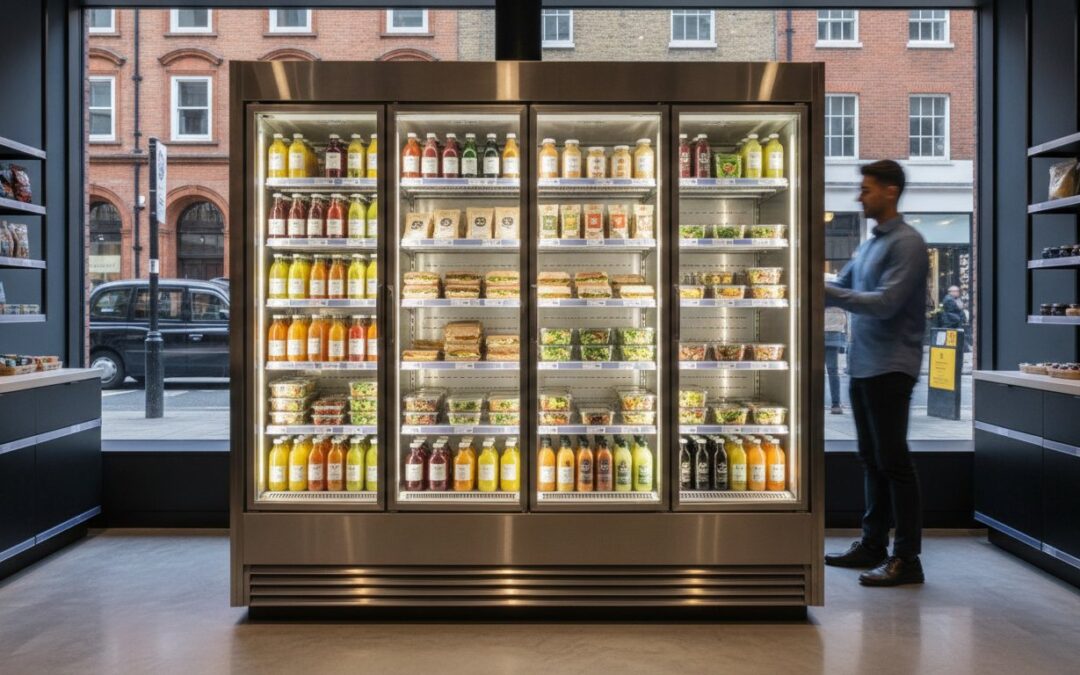
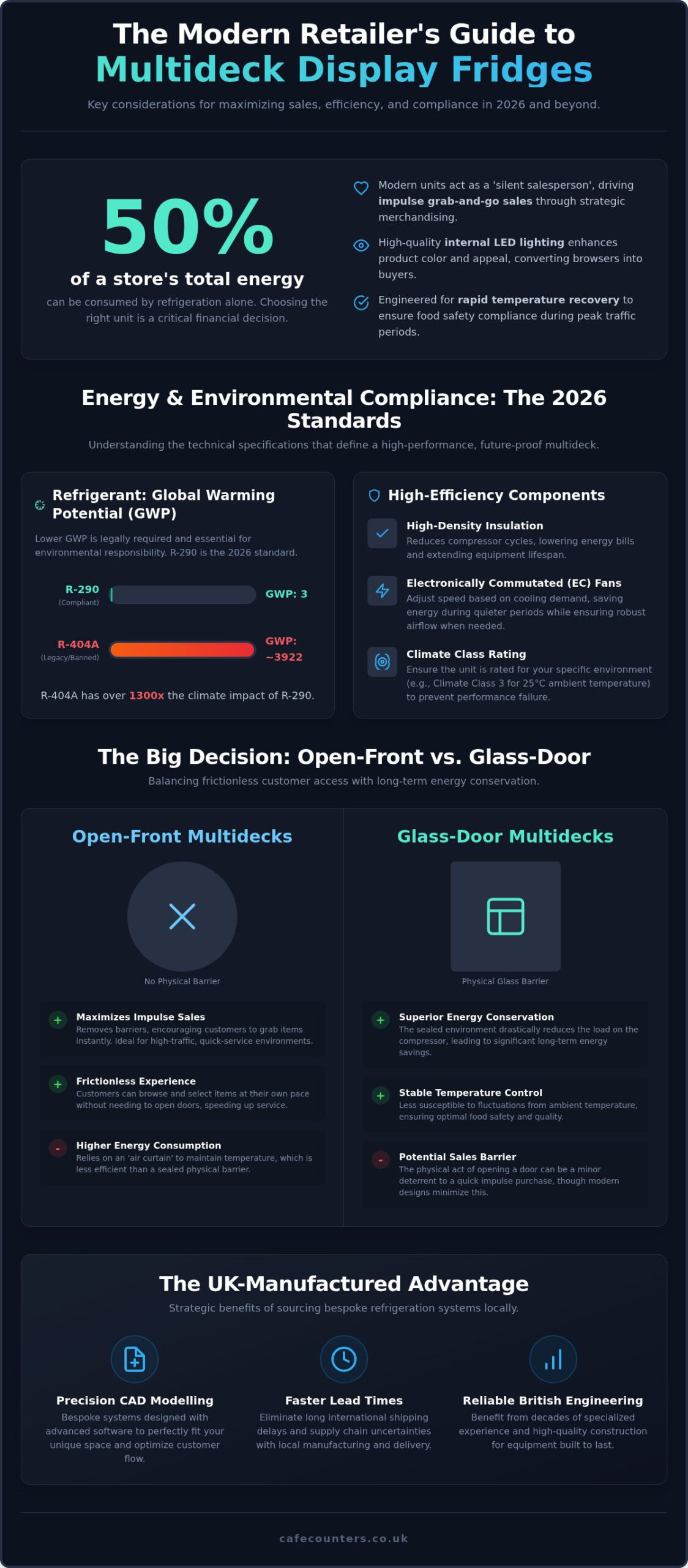
Did you know that refrigeration can account for up to 50% of the total energy consumption in a typical UK convenience store? In 2026, choosing a multideck display fridge isn’t just about finding a place to keep drinks cold; it’s a high-stakes decision that impacts your bottom line and your brand’s visual identity. We recognize the daily stress of managing rising utility costs while trying to maximize every square inch of a compact urban cafe. It’s a delicate balance to maintain food safety standards during peak traffic periods without sacrificing the aesthetic appeal that draws customers in.
This guide is designed to help you navigate these complexities by selecting equipment that enhances product visibility and drives impulse sales. We’ll provide a clear path through the latest Ecodesign energy regulations and the transition to low-GWP refrigerants like R-290. By the end of this article, you’ll understand how to integrate high-performance engineering into your space to achieve lower utility bills and a stunning retail presentation that reflects the quality of your craft. We’ll look at everything from the benefits of glass-door models to the reliability of British-made bespoke systems.
Key Takeaways
- Learn how modern grab-and-go models act as the heart of self-service retail to drive higher impulse purchase rates in hospitality environments.
- Understand the 2026 UK energy labelling requirements and how high-performance insulation directly reduces your long-term operational costs.
- Compare the merchandising benefits of an open-fronted multideck display fridge against the superior energy conservation of glass-door designs.
- Discover the specific formulas for calculating footprint-to-capacity ratios to ensure optimal customer flow and equipment ventilation.
- Explore the strategic advantages of UK-based manufacturing, including faster lead times and the precision of advanced CAD modelling for bespoke installations.
Understanding the Role of Multideck Display Fridges in Modern Retail
The multideck display fridge serves as the operational anchor for any modern retail or hospitality environment. In high-rent urban centres across the UK, floor space is a premium asset that must be managed with precision. Traditionally, food retail relied on serve-over counters that required staff intervention for every transaction. Today, the industry has pivoted toward self-service models that empower the customer to browse and select at their own pace. This shift is not merely a matter of convenience; it’s a strategic response to the demand for speed and the rising costs of labour. Vertical merchandising allows you to stock a diverse range of products, from fresh artisan salads to premium vegan snacks, without expanding your physical footprint. As a specialist manufacturer, we understand that a display is more than a cooling unit; it’s a silent salesperson that presents your brand’s quality to the world.
How Multidecks Drive Impulse Grab and Go Sales
Successful retail relies on frictionless shopping, where the distance between a customer’s desire and their purchase is minimized. When a customer sees a vibrant display at eye level, the average transaction value often increases because the decision-making process is nearly instantaneous. High-quality internal LED lighting plays a critical role here. It doesn’t just illuminate the product; it enhances the natural colours of fresh produce and premium beverages, making them more enticing. This visual clarity, combined with easy access, converts casual browsers into active buyers during high-traffic periods. By removing the physical or psychological barrier of a counter, you invite the customer to engage directly with your offerings.
The Difference Between Standard Refrigeration and Merchandisers
It’s vital to distinguish between units designed for back-of-house storage and those engineered for the retail floor. While commercial refrigeration technology provides the foundation for food safety, a multideck merchandiser is a specialized tool built for visibility and rapid temperature recovery. Unlike a standard kitchen fridge, a multideck display fridge uses sophisticated air-curtain technology to maintain a consistent 0°C to 5°C environment, even in open-fronted models. This invisible barrier of cold air prevents ambient heat from entering the unit and spoiling sensitive stock. In busy environments where doors are frequently opened or the unit is entirely open, the ability to recover temperature quickly is the only way to ensure compliance with Food Standards Agency regulations. Choosing a unit that balances this thermal efficiency with high-impact design is the hallmark of a professional retail installation.
Key Technical Specifications and Energy Efficiency Standards
Selecting a multideck display fridge requires a deep understanding of the technical frameworks that govern modern retail. In 2026, UK energy labelling and Minimum Energy Performance Standards (MEPS) have become more stringent, moving the industry toward higher efficiency benchmarks. These energy conservation standards ensure that every component, from the compressor to the lighting, contributes to a lower total cost of ownership. We utilize high-performance, high-density insulation in our builds to reduce the frequency of compressor cycles. This engineering choice directly extends the lifespan of the equipment while lowering your monthly utility bills. It’s a practical approach to durability that we’ve refined over decades of UK manufacturing.
The transition to R290 refrigerant is now a legal and ethical necessity for the hospitality sector. With a Global Warming Potential (GWP) of just 3, R290 is the standard for 2026 compliance, replacing older, high-GWP gases like R-404A which carries a climate impact nearly four thousand times greater. When combined with Electronically Commutated (EC) fans, the operational efficiency of your display increases dramatically. Unlike traditional shaded-pole motors, EC fans adjust their speed based on cooling demand. This ensures that energy isn’t wasted during quiet periods while maintaining the robust airflow needed during the lunch rush.
Decoding Climate Classes and Temperature Ratings
It’s a common mistake to overlook climate classes during the procurement process. A Climate Class 3 unit is tested at 25°C, which might suffice for a temperature-controlled lobby but could fail during a UK summer heatwave in a busy, south-facing cafe. We often recommend Climate Class 4, rated for 30°C, to provide a reliable safety margin for urban environments. You must also match the temperature rating to your specific inventory. M1 ratings are essential for fresh meat and sensitive deli items, maintaining a strict 0°C to 5°C range, while M2 ratings are perfectly suited for dairy and bottled drinks. Ensuring your equipment is fit for purpose prevents stock loss and maintains Food Standards Agency compliance.
Energy-Saving Technologies in Modern Display Units
For open-fronted units, night blinds are an indispensable tool that traps cold air during closing hours, preventing the compressor from working overtime when the shop is empty. If your priority is long-term savings, double-glazed doors can reduce energy consumption by up to 50% compared to open models. We also implement Dynamic Defrost technology; this system uses intelligent sensors to initiate a defrost cycle only when ice build-up is detected, rather than on a fixed, wasteful timer. This maintains a more stable core temperature for your products, effectively extending their shelf-life. If you’re planning a new layout, our team can help you integrate drop-in units and bespoke multidecks into your existing counter run.
Open Front vs. Glass Door Multidecks: Which is Right for You?
Choosing between an open-fronted unit and a glass-door model is a pivotal decision for any retail layout. It’s a balance between pure accessibility and the long-term operational efficiency we explored in our technical overview. While the visual impact of an open multideck display fridge is undeniable, the legal and environmental landscape in the UK is shifting. Operators must now align their equipment choices with the UK Ecodesign and Energy Information Regulations 2021. This legislation has pushed manufacturers like us to innovate, ensuring that both styles meet strict performance benchmarks without compromising on the aesthetic quality your brand demands.
The Psychology of the Open Front Merchandiser
The primary advantage of an open-fronted unit is the removal of all physical barriers between the customer and the product. This “frictionless” experience is essential in high-velocity environments like train stations or urban cafes during the lunchtime peak. When shoppers are in a rush, even the small action of opening a door can be a deterrent. By presenting items directly, you encourage immediate engagement and higher impulse purchase rates. To mitigate the natural energy loss of these units, we recommend positioning them away from external drafts or air conditioning vents. These external airflows can disrupt the protective air curtain, forcing the compressor to work harder and increasing your utility costs.
Why Glass Doors are Becoming the UK Industry Standard
In 2026, glass-door multidecks are no longer seen as a hindrance to sales; they’re a hallmark of a modern, responsible business. Customers increasingly associate closed units with hygiene and a commitment to sustainability. From a practical standpoint, these models offer superior temperature stability. This consistency reduces food waste and ensures that delicate items, such as artisan patisserie or dairy-heavy vegan snacks, remain in peak condition for longer. Modern door designs have evolved significantly; frameless glass and soft-close mechanisms provide a sleek, high-end appearance that rivals the visibility of open units. These features don’t just save on utility bills; they protect your inventory and project a premium brand image that resonates with eco-conscious consumers.
Maintenance requirements also differ between the two styles. While open units require meticulous attention to air-grille cleanliness to maintain air-curtain integrity, glass-door models demand regular polishing to ensure the display remains crystal clear. As your expert partner, we help you weigh these daily operational tasks against your sales volume and energy goals. Whether you prioritize the rapid flow of a grab-and-go station or the refined presentation of a patisserie counter, the choice should reflect the specific rhythm of your hospitality environment.
Planning Your Layout: Sizing and Positioning for Maximum Flow
A multideck display fridge shouldn’t be treated as an afterthought or a standalone piece of “white goods.” To truly maximize your return on investment, the unit must be integrated into the physical workflow of your retail space. We approach layout planning by calculating the precise footprint-to-capacity ratio, ensuring you aren’t sacrificing valuable floor space for shelf depth that your inventory doesn’t require. Strategic positioning near the entry or the point of sale capitalizes on natural customer paths, turning high-traffic zones into high-revenue areas. For a truly seamless operation, this placement should be balanced with ergonomic counter design to ensure staff can restock efficiently without obstructing the customer’s journey.
Ventilation is a critical factor that many off-the-shelf suppliers overlook. Every refrigeration unit requires specific clearance space to exhaust heat effectively. Without this gap, the compressor works harder, energy costs spike, and the equipment’s lifespan is shortened. We use advanced CAD modelling to visualize these clearances before a single piece of stainless steel is cut. This level of precision guarantees that your equipment performs reliably during peak periods while maintaining the clean lines of your interior design. It’s a methodical process that removes the guesswork from complex commercial installations.
Slimline vs. Standard Depth: Optimising Limited Floor Space
In narrow high-street coffee shops or urban boutiques, every centimetre matters. A standard 800mm deep unit might provide vast storage, but if it creates a bottleneck for your customers, it will ultimately hurt your sales. Choosing a 600mm slimline multideck display fridge allows for comfortable walkways while still providing enough vertical shelving to keep your bestsellers in stock. It’s often better to trade a little shelf depth for improved customer flow; a relaxed shopper who can move freely is far more likely to browse and return.
Integrating Multidecks into Bespoke Cafe Counters
The most visually stunning retail spaces avoid the cluttered look of mismatched appliances. By using integrated drop-in units or built-in multidecks, you create a cohesive aesthetic that projects total competence and brand quality. This approach requires careful engineering to ensure proper airflow within custom-fabricated housings, preventing the heat build-up that leads to equipment failure. If you’re looking for design inspiration on how to achieve this high-end look, our guide to bespoke cafe counters explores the possibilities of modern shopfitting. We can help you design a system that fits your brand’s unique vision perfectly. Speak with our specialist design team to discuss your project requirements.
Why Choose a UK-Manufactured Solution from TFSE Products Ltd
Selecting a multideck display fridge is a significant investment that requires more than just a transaction with a distributor. It demands a partnership with a manufacturer that understands the unique pressures of the UK hospitality sector. At TFSE Products Ltd, we’ve spent decades refining our internal production facilities in London to offer a level of customization that mass-produced imports cannot match. By maintaining direct communication between our clients and our engineering team, we ensure that every technical specification aligns with your operational reality. This collaborative approach eliminates the stress of commercial projects, as you’re supported by a steady, reliable hand from the initial survey to the final installation.
UK-based manufacturing provides a distinct advantage in terms of lead times and long-term support. In an industry where equipment downtime results in immediate revenue loss, having a partner with a local facility is essential. We don’t just supply a unit; we manage the entire project. This includes ensuring that our high-grade stainless steel used in commercial kitchen fabrication meets the rigorous demands of high-traffic retail environments. Our artisanal pride is reflected in the durability of our equipment, which is built to withstand the daily wear and tear of a busy shop floor while maintaining its premium aesthetic.
The Benefits of CAD Modelling and Custom Engineering
Our process begins with advanced CAD modelling, allowing you to visualize exactly how your multideck display fridge will sit within your existing layout. This precision is vital when you’re trying to achieve a perfect alignment with other refrigerated grab and go display units or bespoke counters. We offer the flexibility to customize finishes, from specific RAL colours to high-end materials, ensuring the equipment reinforces your brand identity rather than clashing with it. This meticulous attention to detail ensures that the final physical space matches your original vision with absolute accuracy.
Professional Installation and Long-Term Performance
The reliability of your refrigeration depends heavily on professional commissioning. An incorrectly installed unit often suffers from premature compressor failure or inefficient airflow, leading to the high energy costs we discussed earlier. Our team of specialists handles the technical integration and commissioning to ensure your equipment operates at peak efficiency from day one. We provide UK-wide service and support, positioning TFSE Products Ltd as your expert partner for complex hospitality fit-outs. By choosing a solution that’s engineered, manufactured, and installed by a single dedicated team, you gain the peace of mind that your retail operation is built on a foundation of quality and technical excellence.
Securing Your Retail Future with Precision Engineering
Choosing the right multideck display fridge is a strategic decision that balances the visual merchandising goals we’ve explored with the technical rigour required by 2026 standards. From the energy-saving benefits of glass doors to the spatial precision of slimline units, every design choice contributes to a more profitable and sustainable hospitality environment. It’s about more than just cooling; it’s about creating an efficient, high-impact retail journey for your customers while maintaining total control over your operational costs.
At TFSE Products Ltd, we’ve spent over 30 years perfecting this balance through bespoke UK manufacturing. Our London-based facility and end-to-end project management ensure that your equipment isn’t just a purchase, but a long-term operational asset. We invite you to request a consultation for your bespoke multideck display solution to see how our engineering expertise can transform your retail flow. We’re ready to help you build a space that reflects the quality of your brand and stands the test of time.
Frequently Asked Questions
What is the ideal temperature for a multideck display fridge?
The ideal temperature for a multideck display fridge is between 0°C and 5°C. This specific range is mandated by the Food Standards Agency to ensure food safety and prevent the growth of harmful bacteria. Maintaining this consistency is vital in high-traffic retail environments where frequent customer access can fluctuate internal conditions. High-quality digital controllers help manage these levels precisely, protecting your inventory and ensuring full regulatory compliance.
How much energy does a commercial multideck use on average?
Refrigeration can account for up to 50% of the total energy consumption in UK convenience stores and supermarkets. The specific energy draw depends on the unit’s size, age, and whether it features modern efficiency tech like EC fans or glass doors. Choosing a 2026-compliant multideck display fridge with a high energy rating is a strategic move to lower long-term utility bills and reduce your business’s carbon footprint.
Can I use a multideck fridge for raw meat storage?
You can use a multideck for raw meat storage provided the unit carries an M1 temperature rating. This classification ensures the equipment maintains a strict temperature between -1°C and +5°C, which is necessary for fresh protein safety. Standard merchandisers often carry an M2 rating for drinks and dairy; however, for raw meats, the thermal precision of an M1-rated system is non-negotiable to prevent spoilage and meet health standards.
What is the difference between integral and remote refrigeration?
Integral refrigeration units house the motor and condenser within the fridge itself, offering a plug-and-play solution that’s easy to install and move. Remote systems place the heat-generating components outside the building. While integral units are more flexible for smaller cafes, remote systems are often preferred for larger retail installations to keep the shop floor quiet and cool, though they require professional pipework and dedicated external space.
How often should I clean the condenser on my multideck?
You should clean the condenser every one to three months, depending on the dust levels in your specific environment. A blocked condenser forces the compressor to work harder, leading to higher energy costs and potential equipment failure. Regular maintenance involves gently vacuuming the fins to remove debris. This simple task is a critical part of protecting your investment and ensuring the long-term reliability of your refrigeration system.
Do multideck fridges need a floor drain?
Most modern units don’t require a floor drain as they feature automatic condensate evaporation trays. These systems use heat from the refrigeration cycle to turn water into vapour. However, in very high-humidity environments or for larger remote systems, a permanent floor drain might be recommended to prevent overflow. We typically assess your site conditions during the initial survey to determine the most reliable drainage solution for your space.
Are glass doors on multidecks worth the extra investment?
Glass doors are a valuable investment that can reduce energy consumption by up to 50% compared to open-fronted models. Beyond the financial savings, they project a brand image of sustainability and hygiene that resonates with modern consumers. Modern frameless designs ensure that product visibility remains exceptionally high, meaning you don’t have to choose between the aesthetic appeal of your multideck display fridge and its operational efficiency.
What is a night blind and do I really need one?
A night blind is a retractable thermal barrier used on open-fronted units during closing hours to retain cold air. You definitely need one if you operate an open unit, as it significantly reduces the workload on the compressor overnight. By preventing cold air from spilling into the empty shop, the blind lowers energy usage and extends the life of your equipment, making it a simple yet effective tool for cost control.