
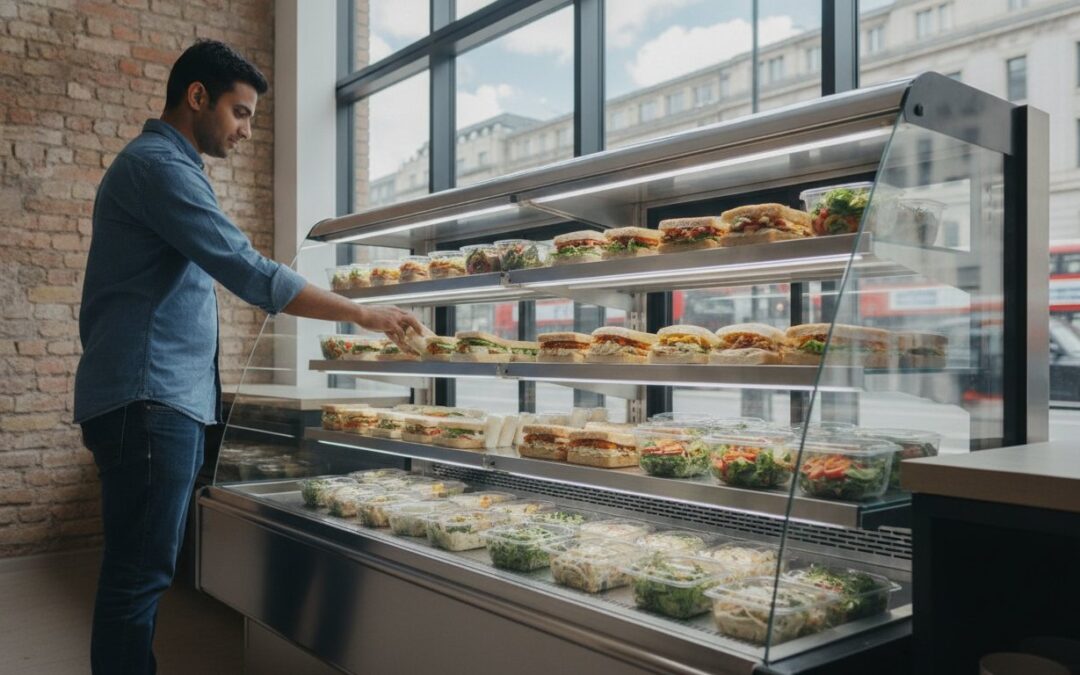
Refrigeration can account for up to 50% of the total energy consumption in a commercial retail environment, making the selection of a chilled sandwich display cabinet a significant factor in your bottom line. You likely recognize the frustration of watching high energy bills climb while struggling to keep your premium sandwiches from losing their freshness or drying out under poor airflow. It’s a delicate balance to maintain. As an expert partner in food display, we believe your equipment should be a precision sales tool that bridges the gap between technical preservation and high-impact merchandising.
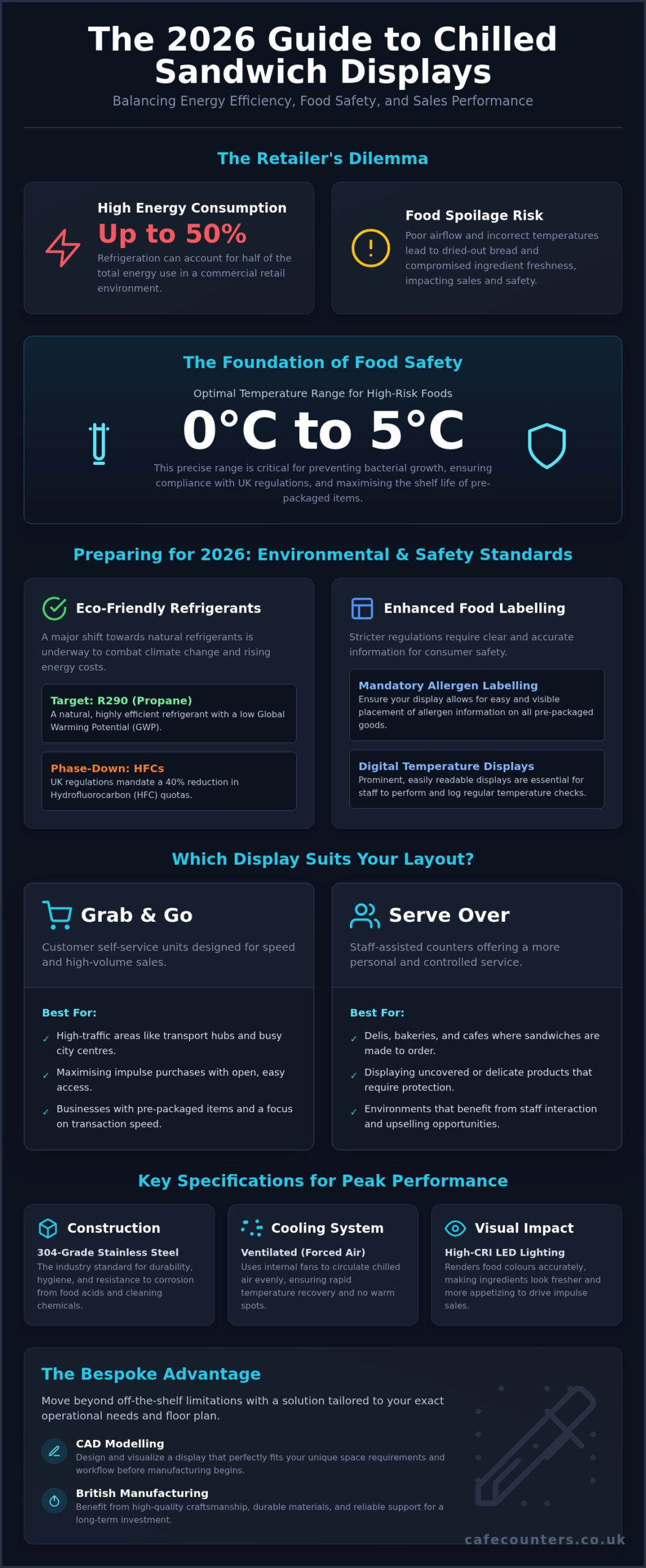
This 2026 guide will show you how to select a display that prioritizes food safety and energy efficiency without compromising on style. We’ll examine the latest UK regulations, including the 40% reduction in HFC quotas and mandatory allergen labelling, to ensure your business remains fully compliant. You’ll also learn how a bespoke, UK-manufactured solution can be tailored to your specific shop layout, helping you drive grab-and-go revenue through superior visibility and reliable cooling performance. By focusing on quality and durability, you can invest in a cabinet that supports your operational needs while enhancing the aesthetic of your commercial space.
Key Takeaways
- Understand the 2026 shift toward natural refrigerants like R290 to ensure your business stays ahead of environmental compliance and rising energy costs.
- Learn how to maintain a consistent 0°C to 5°C temperature range using ventilated cooling and 304-grade stainless steel for maximum food safety.
- Identify whether a high-traffic Grab & Go unit or a staff-led Serve Over chilled sandwich display cabinet is the most efficient choice for your specific floor plan.
- Use CAD modelling and bespoke British manufacturing to design a display that fits your exact space requirements rather than settling for off-the-shelf limitations.
- Discover how strategic lighting and merchandising techniques can influence buying decisions and increase your daily food-to-go sales.
Maximising Freshness and Sales: The Role of a Chilled Sandwich Display Cabinet
A professional chilled sandwich display cabinet is a specialized refrigerated unit engineered to maintain safe temperatures while acting as a silent salesperson for your business. Unlike standard storage, these units are designed to hold products between 0°C and 5°C, ensuring that high-risk ingredients remain safe for consumption throughout the trading day. While foundational refrigeration technology focuses on simple heat extraction, a commercial display must balance temperature with precise humidity control. This creates a specific micro-climate that prevents bread from drying out while keeping salad fillings crisp and vibrant. A standard domestic fridge is never an acceptable substitute in a professional setting. It lacks the powerful compressors and rapid temperature recovery needed for a retail environment where doors or fronts are frequently accessed by customers and staff. Domestic units often suffer from cold spots or uneven airflow, which can ruin the texture of a premium baguette in just a few hours.
The Impact of Visual Merchandising on Impulse Purchases
Visual appeal is the primary driver of grab-and-go revenue in the food-to-go sector. Tiered shelving is a critical design feature, as it creates a sense of abundance and variety that naturally draws the customer’s eye upward. We utilize high-CRI LED lighting to ensure that the natural colours of your ingredients are rendered with total accuracy, making food appear more appetizing and fresh. When a customer sees a neatly organized, brightly lit display, it triggers a psychological freshness cue that justifies a premium price point. By employing glass-to-glass joints, we provide an unobstructed view of the product, removing visual barriers and emphasizing the artisanal quality of your sandwiches.
Maintaining the Cold Chain: Safety Standards for 2026
Current UK regulations require rigorous monitoring of high-risk chilled foods to prevent bacterial growth and ensure public safety. Modern units feature prominent digital temperature displays, which are essential for staff to perform quick, regular checks during a busy service shift. The Food Standards Agency emphasizes that even small deviations in temperature can significantly reduce the window of safety for pre-packaged items. Reliable equipment acts as your first line of defense against non-compliance. For optimal food safety and maximum shelf life in 2026, a chilled sandwich display cabinet must operate within a range of 0°C to 5°C to account for fluctuations in the surrounding environment.
Key Technical Specifications for Professional Refrigerated Displays
Selecting a chilled sandwich display cabinet requires a deep understanding of the materials and mechanisms that drive longevity. The foundation of any high-quality unit is its construction material; 304-grade stainless steel remains the absolute standard for the hospitality industry. Its high chromium and nickel content provides exceptional resistance to corrosion from food acids and cleaning chemicals. We prioritize this material because it ensures the structural integrity of the cabinet over years of intensive use while providing a surface that is easy to sanitize, meeting the strictest hygiene requirements of 2026.
Refrigeration Systems: Forced Air vs. Static Cooling
Ventilated cooling, often called forced air, utilizes internal fans to circulate chilled air consistently across every shelf. This is vital for maintaining a uniform temperature and preventing warm pockets that could compromise food safety. Forced air systems are particularly effective at recovering the internal temperature rapidly after a customer opens a door or accesses a grab-and-go front. Static cooling, which relies on natural convection, is less common in high-traffic sandwich displays but remains an option for delicate, uncovered products where high airflow might cause surface drying. Modern professional units also incorporate automatic defrost cycles. These systems use a timed heater or hot gas to melt ice build-up on the evaporator, ensuring the refrigeration cycle operates at peak performance without manual intervention.
Glass Styles: Flat, Curved, and UV-Bonded
The choice of glass significantly impacts both thermal performance and visual merchandising. Double-glazed units offer superior insulation, reducing the workload on the compressor and lowering operational costs. For a contemporary architectural aesthetic, flat glass is the preferred choice in many modern retail environments. Curved glass provides a more traditional deli feel and can help reduce glare from overhead lighting. For high-end retail environments, UV-bonded glass-to-glass boxes are the gold standard. This technique uses a specialized adhesive cured by ultraviolet light to create seamless, transparent joints without the need for bulky metal frames, offering an unobstructed view of your products.
Reliable operation depends on routine maintenance, so we design our cabinets with easy-access components. Removable grills and slide-out condensers allow staff to clean filters without specialized tools, which is a key factor in long-term Energy efficiency. When a system is kept clean and well-maintained, it consumes less power and experiences fewer mechanical failures. If you are planning a new layout, our team can help you integrate these technical requirements into bespoke serving counters that match your brand’s unique aesthetic.
Grab & Go vs. Serve Over: Which Sandwich Display Suits Your Layout?
Selecting the ideal chilled sandwich display cabinet is a strategic decision that dictates how customers move through your commercial space. Your choice between a grab-and-go unit and a serve-over counter should be driven by your specific service model and peak-hour volume. Grab-and-go displays are designed for high-traffic environments where speed is the primary metric. By removing physical barriers like doors or glass screens, you allow customers to self-serve, which significantly increases throughput during the morning and lunch rushes. For a comprehensive look at the technical aspects of open-front models, see our guide on refrigerated grab and go display units.
Conversely, deli-style serve-over counters are better suited to artisanal establishments where staff interaction adds value. These units allow your team to recommend specific pairings or offer portion-controlled items that aren’t pre-packaged. In many high-end projects, we create hybrid bespoke counters that integrate both styles. This allows for a self-service section for pre-made items alongside a staffed counter for made-to-order sandwiches, ensuring you capture both the time-poor commuter and the leisurely diner.
Analysing Customer Flow and Service Speed
Effective cafe layout design ensures that your refrigeration units don’t create bottlenecks. Placing a chilled sandwich display cabinet near the entrance but away from the till area encourages a logical flow. This reduces congestion at the payment point and allows the staff at the serve-over section to focus on upselling premium items without the pressure of a growing queue. Integrating these units seamlessly into your counter run prevents customers from doubling back, which is essential for maintaining a calm and professional atmosphere during busy periods.
Storage and Capacity Considerations
Capacity isn’t just about what is visible on the shelves; it’s about the efficiency of restocking. Integrated refrigerated under-storage is a critical feature for busy sites, as it allows staff to replenish the display without leaving the shop floor. When designing your cabinet, we calculate shelf depth based on standard sandwich wedge packaging or baguette sleeves to maximize every square centimetre of cooled space. To determine the required display area, multiply your peak hourly customer volume by the average number of items per transaction and divide by the stacking capacity of your chosen shelving.
Energy Efficiency and Food Safety Standards for 2026
In 2026, the transition to natural refrigerants has become a regulatory necessity rather than a choice. Most modern chilled sandwich display cabinet units now utilize R290, a hydrocarbon refrigerant with a Global Warming Potential (GWP) of just three. This shift is driven by the 40% reduction in HFC supply quotas effective this year, making older refrigerants both scarce and expensive to maintain. By choosing a system designed for natural refrigerants, you future-proof your investment against changing environmental laws and ensure your equipment remains serviceable for its entire lifespan.
Energy conservation is particularly challenging for open-front units, where cold air naturally spills into the shop floor. To combat this, we integrate high-efficiency EC (electronically commutated) fans and variable-speed compressors that adjust their output based on demand. Night blinds and thermal curtains are also essential tools, acting as a barrier during closing hours to retain internal temperatures and reduce the workload on the motor. For retailers operating both hot and cold service lines, our Vision Heated Counters offer a complementary solution for businesses needing dual-temperature setups while maintaining a consistent aesthetic.
Understanding 2026 Energy Labelling
The UK energy labelling system provides a clear A to G rating, helping you calculate the total cost of ownership before you purchase. While an A-rated chilled sandwich display cabinet may require a higher initial capital outlay, the reduction in annual electricity spend typically offsets this difference within 24 months. It’s vital to check the climate class of your unit. A cabinet rated for Climate Class 3 (25°C ambient) will struggle and consume significantly more power if placed in a shop that reaches 30°C during summer peaks, potentially compromising food safety.
Maintenance for Peak Performance
A high-efficiency rating is only sustainable if the equipment is maintained with precision. Dust accumulation on condenser coils is a leading cause of compressor strain, often increasing energy consumption by up to 20% before the component eventually fails. We recommend a monthly cleaning schedule for all air-cooled condensers to ensure heat is rejected efficiently. Additionally, checking the integrity of door seals or the tension in night blinds prevents the leakage of expensive chilled air. Professional commissioning during the initial installation is the final, crucial step, ensuring that the internal sensors and thermostats are calibrated to your specific environment.
To explore how our energy-efficient technologies can reduce your overheads, contact our team to discuss bespoke serving counters tailored to your operational needs.
The Benefit of British-Manufactured Bespoke Display Solutions
Standard, off-the-shelf units often force retailers to compromise on their floor plan, leading to dead space or awkward customer flow. When you invest in a bespoke chilled sandwich display cabinet, you’re ensuring that every millimetre of your retail environment is working to generate revenue. Unlike imported models with fixed dimensions, custom-built units can be engineered to wrap around structural pillars or fit perfectly into narrow alcoves. This level of precision is only possible through a dedicated British manufacturing process that prioritizes the unique architectural challenges of UK high streets. By choosing local production, you also benefit from a significantly reduced carbon footprint and the peace of mind that comes with reliable, local after-sales support.
Our CAD modelling process acts as the bridge between your initial vision and the final physical installation. It allows you to see exactly how your unit will sit within the wider counter run before a single piece of steel is cut. This phase is essential for integrating different service elements, such as combining your sandwich display with specialized deli counters, to create a seamless, branded system. We understand that a commercial project is a significant investment, and our technical expertise ensures that the final product is as functional as it is visually striking.
From CAD Concept to Physical Installation
Custom engineering provides solutions for complex spaces where standard equipment simply doesn’t fit. Whether it’s a curved counter designed to guide customer movement or a specific height requirement to match existing furniture, our design team works as your expert partner throughout the journey. We coordinate finishes ranging from natural wood and stone to modern powder-coated metals, ensuring the equipment reinforces your brand identity. Having a single partner for design, build, and installation eliminates the stress of coordinating multiple contractors and ensures total accountability for the finished space.
Quality Assurance in UK Manufacturing
Internal production facilities allow for far more rigorous quality control than is possible with imported alternatives. Every chilled sandwich display cabinet undergoes strict testing protocols to ensure the refrigeration systems meet 2026 energy standards and operational demands. Because we manufacture locally, we provide the added reassurance of rapid after-sales support and immediate parts availability, preventing the long downtimes associated with overseas supply chains. Founded in 1991, TFSE Products Ltd brings over 30 years of experience to every British-manufactured project we undertake.
Investing in Future-Proof Food Display
Selecting a chilled sandwich display cabinet in 2026 is a strategic decision that balances environmental compliance with high-impact visual merchandising. We’ve explored how the transition to natural refrigerants and the adoption of energy-efficient components protect your margins while ensuring total food safety. By prioritizing bespoke British manufacturing over restricted off-the-shelf units, you guarantee that your equipment fits your unique floor plan and operational needs perfectly.
Since 1991, we’ve acted as an expert partner for commercial retailers, offering full CAD design and meticulous project management from our UK-based facility. Our internal production capabilities ensure that energy-efficient technologies are integrated as standard, providing you with a durable, high-performance solution. We invite you to share your vision and allow our technical expertise to bring your retail space to life with precision and care.
Explore our range of bespoke chilled display solutions to discover how quality craftsmanship can drive your grab-and-go revenue. We look forward to supporting your next commercial project.
Frequently Asked Questions
What is the ideal temperature for a chilled sandwich display?
The ideal operating temperature for a chilled sandwich display cabinet is between 0°C and 5°C. While UK food safety regulations require high-risk chilled foods to be kept at 8°C or below, maintaining a lower range provides a necessary buffer for frequent door openings. This specific window ensures that fillings remain fresh and bacteria-free while preventing the bread from becoming overly firm or unappetizingly dry during service.
How much electricity does a commercial sandwich fridge use?
Refrigeration typically accounts for up to 50% of the total energy consumption in a commercial food-to-go environment. Exact usage varies based on the unit’s energy rating and whether it’s an open-front or glass-door model. Modern systems utilizing R290 natural refrigerants and high-efficiency EC fans significantly reduce daily wattage. We recommend checking the energy label for the annual kWh estimate to calculate precise operational overheads for your retail site.
Do I need an open-front or a glass-door display for my cafe?
The choice depends entirely on your service volume and speed requirements. Open-front units are superior for high-traffic sites where rapid self-service is essential to prevent queues during peak lunch hours. However, glass-door displays offer better thermal insulation and significantly lower energy bills. If you prioritize visual merchandising and staff interaction, a glass-fronted serve-over counter provides a more controlled environment for artisanal products while maintaining a premium aesthetic.
Can I integrate a chilled display into a bespoke wooden counter?
We specialize in integrating drop-in refrigerated units into bespoke serving counters finished in wood, stone, or metal. Our CAD modelling process ensures that technical requirements, such as adequate airflow and ventilation for the condenser, are perfectly balanced with your brand’s visual identity. This approach allows you to maintain a high-end, artisanal appearance without compromising the mechanical performance or safety standards of your professional food display equipment.
How often should a commercial display cabinet be serviced?
A commercial display cabinet should receive a professional service at least every six to twelve months. Regular maintenance includes checking refrigerant levels, inspecting door seals, and verifying thermostat calibration. In addition to professional servicing, your staff should clean the condenser coils monthly. Removing dust build-up prevents compressor strain and ensures the unit operates at peak energy efficiency, extending the lifespan of your investment in a busy environment.
What is the difference between a patisserie display and a sandwich unit?
The primary difference lies in humidity control and airflow design. A patisserie display is engineered to maintain higher humidity levels to prevent delicate pastries and cakes from drying out, often featuring glass on all sides for 360-degree visibility. Sandwich units, particularly grab-and-go models, prioritize rapid temperature recovery and high-velocity air curtains to keep pre-packaged items safe in a high-traffic retail environment where customers access the display constantly.
Are there grants available for energy-efficient catering equipment in the UK?
Various regional and national schemes often provide financial incentives for upgrading to energy-efficient catering equipment. Businesses should investigate the Super Deduction capital allowance or local green business grants provided by UK councils. Investing in A-rated equipment that utilizes natural refrigerants like R290 often makes a business more eligible for these environmental incentives, as they align with national net-zero targets and carbon reduction goals for 2026.
What happens if my chilled display cabinet stops holding temperature?
If your unit fails to maintain the required 0°C to 5°C range, first check for blocked condenser coils or obstructed air vents. Ensure that the door seals are intact and that the unit hasn’t been overstocked, which can prevent proper air circulation. If these basic checks don’t resolve the issue, contact a professional engineer immediately. Operating a faulty chilled sandwich display cabinet risks food spoilage and non-compliance with UK food safety standards.